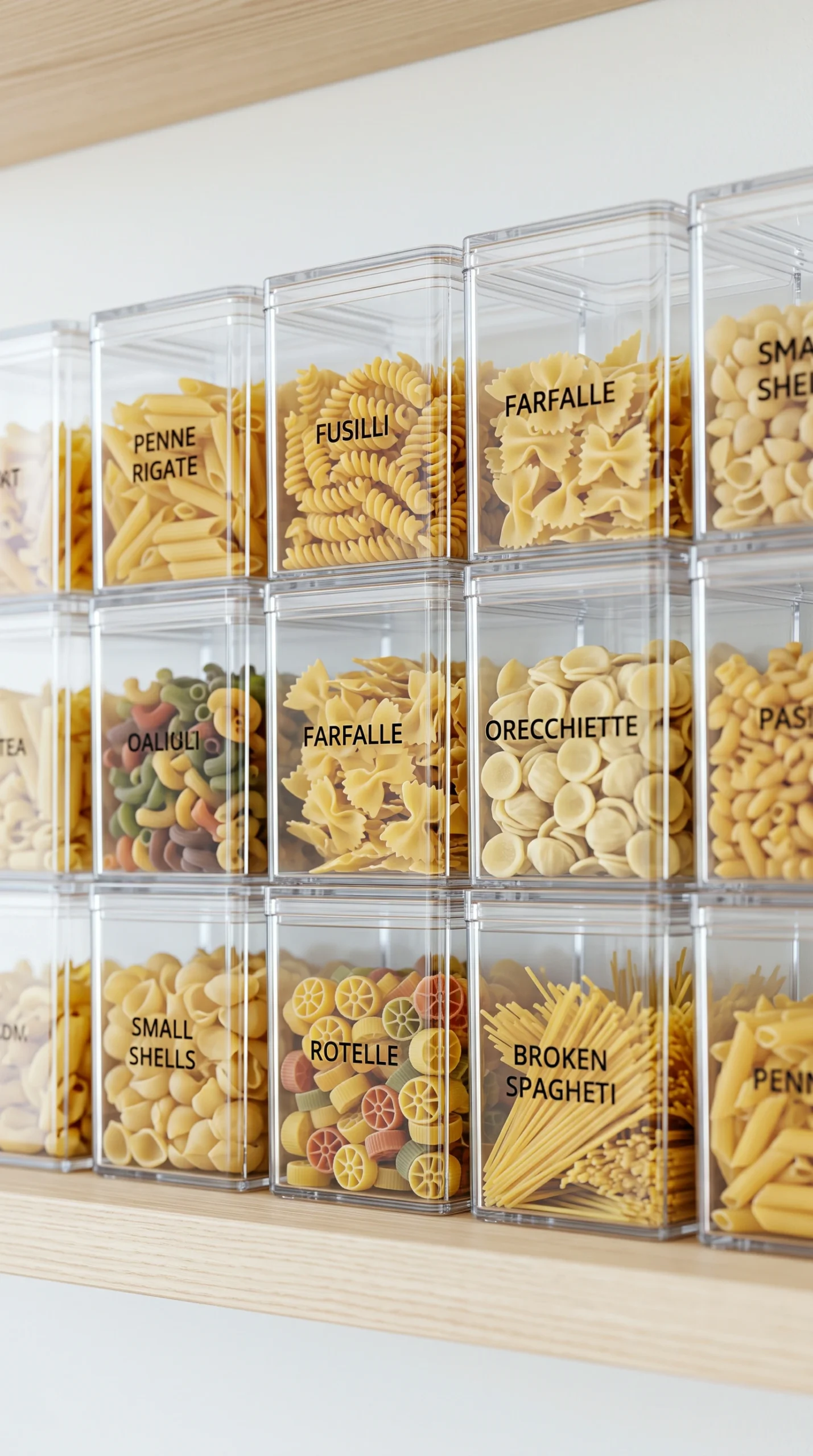
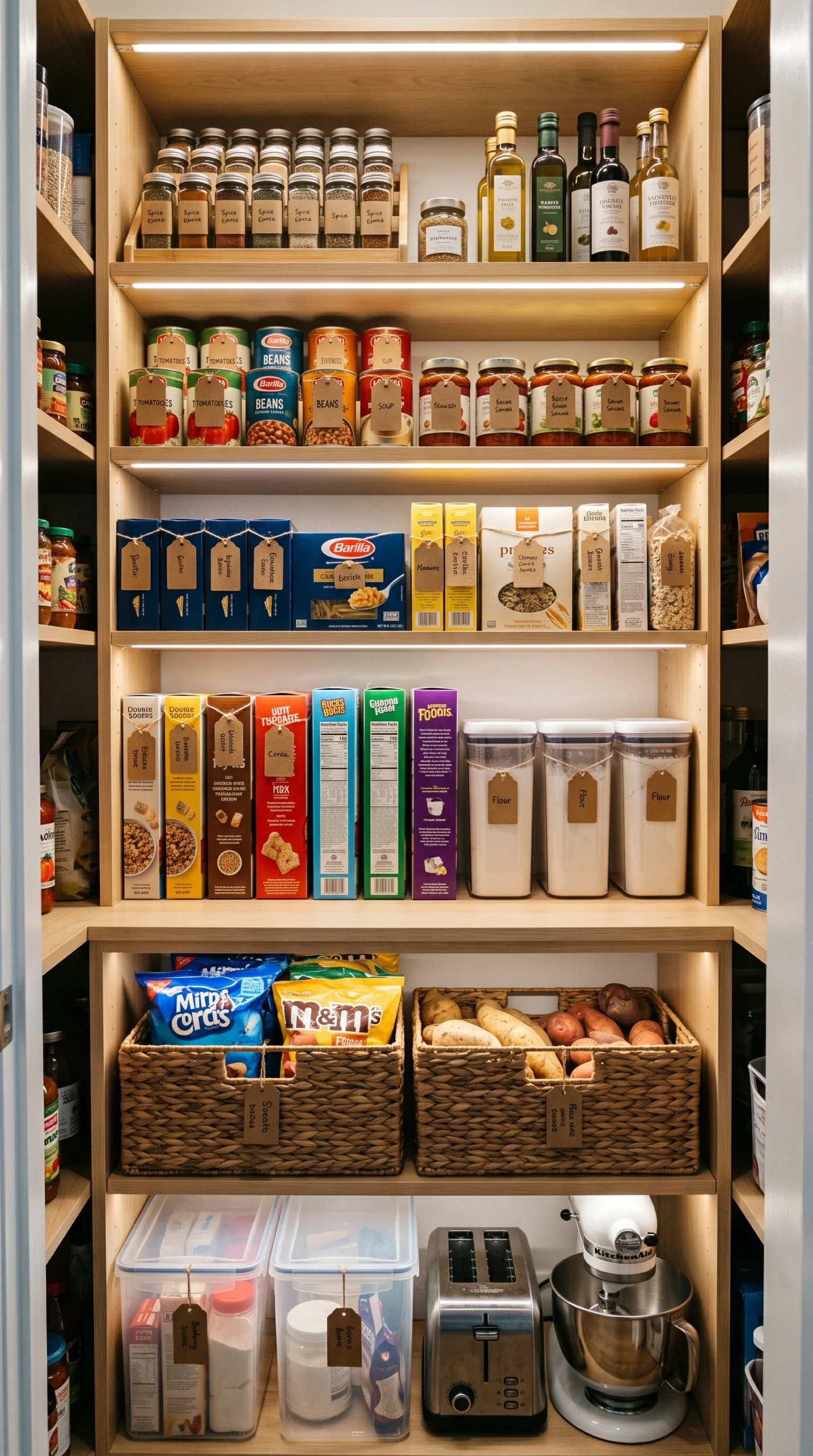
Square clear canisters with airtight silicone seals eliminate visual clutter, protect dry staples from pests, and display stock levels at a glance without opening lids.
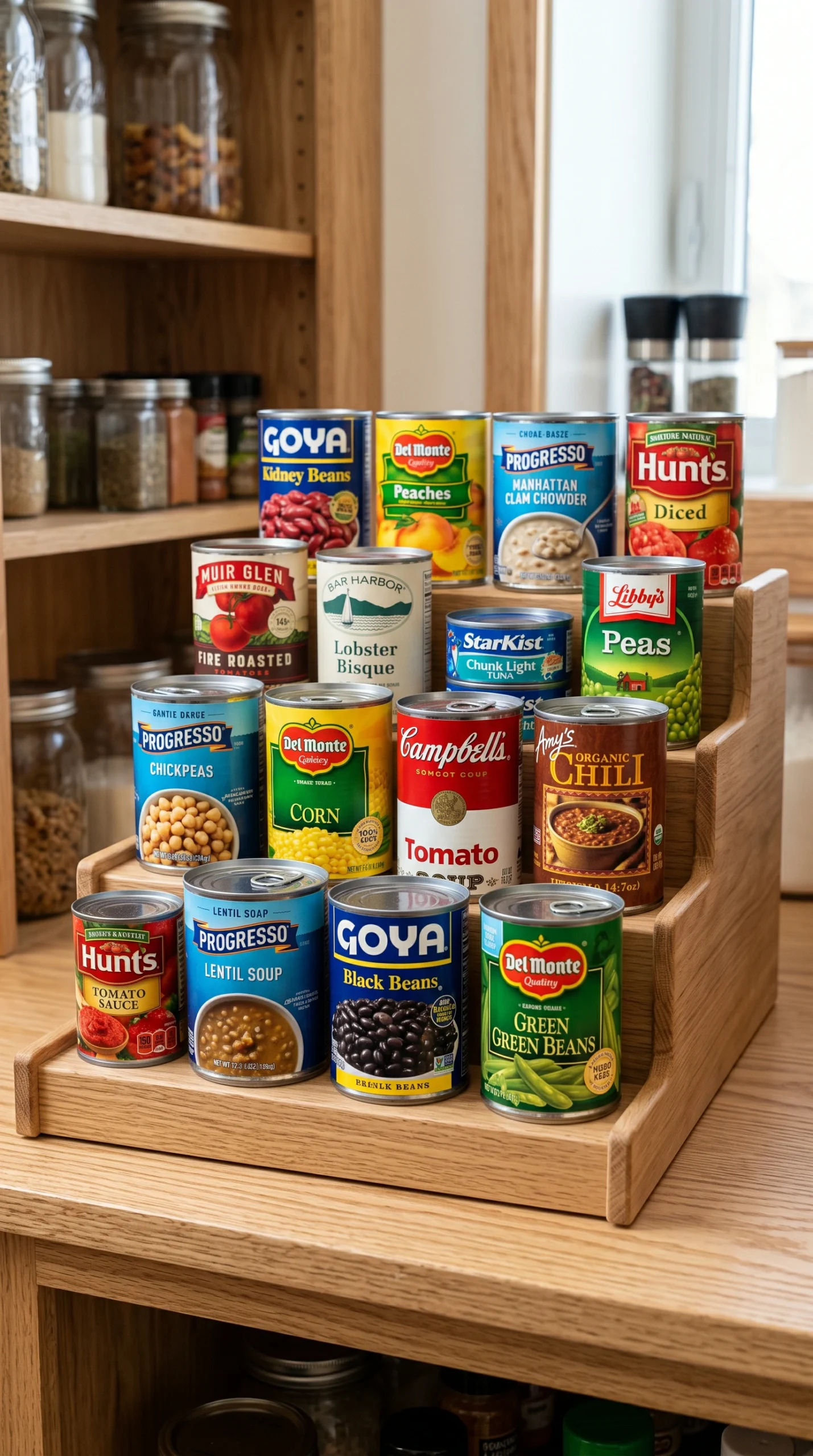
Stepped stadium risers elevate rear canned goods by 1.5-inch increments, ensuring every single label remains fully legible from eye level without knocking over front cans.
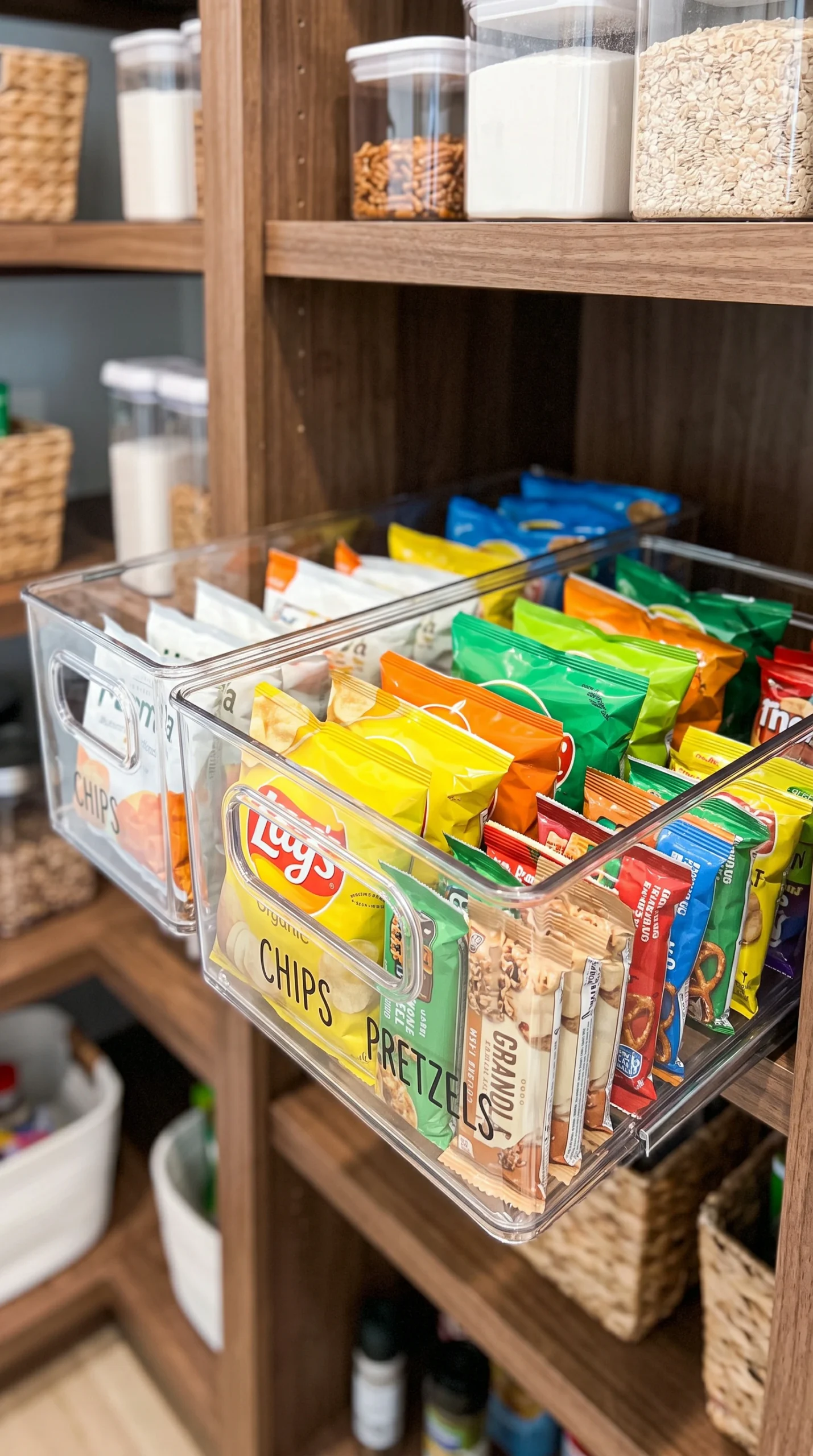
Full-depth acrylic bins equipped with molded handles act as modular drawers on deep shelves, allowing easy access to items stored at the back in two seconds.
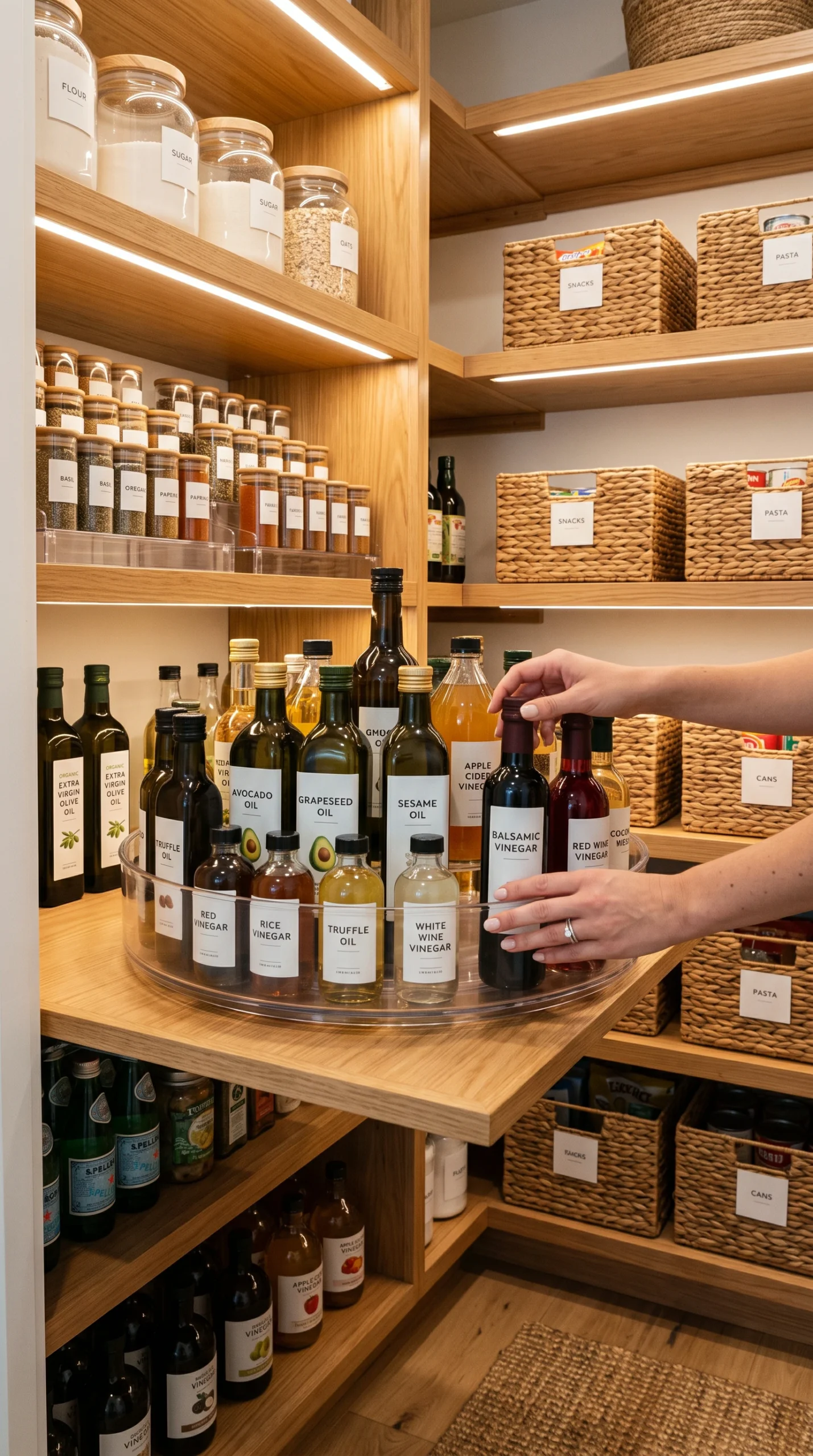
Smooth 360-degree ball-bearing lazy Susans with raised edges bring tall vinegar bottles, oils, and sauces out of deep corners in a single effortless spin.
Adjusting vertical shelf spacing to match specific container dimensions eliminates dead overhead space and prevents chaotic vertical double-stacking.
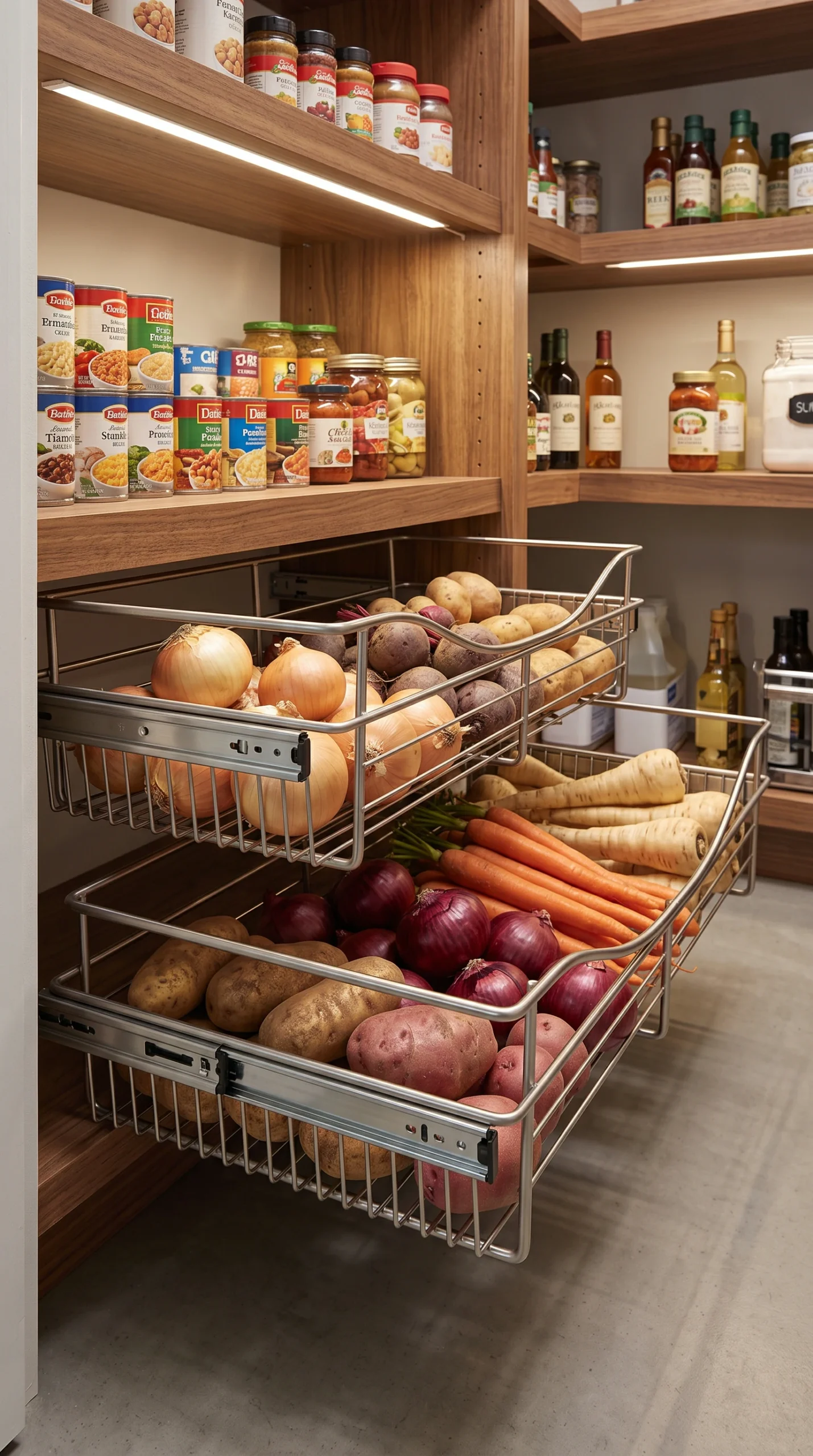
Lower-level brushed metal wire baskets provide 360-degree airflow around onions and potatoes while gliding forward on smooth ball-bearing undermount tracks.
How often do you purchase a bottle of balsamic vinegar or a can of diced tomatoes, only to return home and discover two identical containers hidden behind cereal boxes in the back of your pantry? The average household discards hundreds of dollars in expired food every year—not because the food was unwanted, but because it was visually lost behind layers of clutter.
Creating an organized pantry where every item is effortless to find is not a luxury; it is an ergonomic necessity that saves time, reduces grocery expenses, and streamlines meal preparation. Achieving high visual accessibility requires moving beyond basic shelving and adopting a systematic inventory structure. As explored across our comprehensive curation of pantry design and organization, understanding vertical clearances, visual accessibility, and joinery transforms everyday home storage and organization into an enduring domestic pleasure.
The primary reason pantry goods get lost is the “reach-over” barrier. When items of uniform height sit behind one another on a deep, flat shelf, the front items create an opaque visual wall. Anything placed behind that wall becomes invisible.
To keep ingredients visible without constantly shuffling containers:
By elevating each subsequent tier, the top third of every can or bottle remains exposed to your direct line of sight. You can read labels, monitor stock levels, and grab ingredients in a single motion without disturbing surrounding items. For structural woodworking guidance on shelf depths and vertical spacing, consult our guide on pantry shelving ideas.
Canned goods are among the heaviest, highest-volume items in any kitchen pantry. Stacking cans directly on top of one another creates precarious towers that topple easily and scratch paint finishes. Standard three-tier can risers measure 9 to 10 inches in total depth, with each step measuring approximately 3 to 3.25 inches deep—perfectly sized for standard 15-ounce consumer food cans.
Ensure the vertical clearance between shelves is at least 9.5 to 10 inches to allow your hand to comfortably lift the rear can off the top step without scraping your knuckles on the shelf above. If you are configuring a tight reach-in closet, see our recommendations in small pantry ideas.
Deep shelves (measuring 14 to 18 inches) are ideal for maximizing raw volume, but terrible for reaching small items. Reaching into the back of a deep shelf requires awkward stretching and blindly feeling around behind other items.
Clear acrylic pull-out bins bridge the gap between stationary shelves and custom sliding cabinetry:
Every pantry has hard-to-reach perimeter corners where square containers fit poorly. Rotating turntables (lazy Susans) are the gold standard for organizing high-frequency liquid condiments. Always select turntables with a raised lip measuring at least 1.5 inches to prevent tall, slender glass bottles from toppling off when spun briskly. For comprehensive spatial blueprints on managing corner pantries, explore corner pantry ideas.
Decanting food into uniform clear containers is not just decorative—it prevents pantry pests (such as flour weevils and pantry moths) from infesting your dry goods, protects ingredients from humidity, and allows you to audit stock levels at a glance. Always specify square or rectangular modular canisters rather than round jars; square containers nest flush against one another, saving up to 25 percent of linear shelf space.
For rustic kitchen styles, compare these containers with mason jars in our guide on farmhouse pantry ideas. If your pantry features an unutilized door, capture vertical space by reviewing pantry door organization ideas.
Commercial restaurant kitchens rely on the First-In, First-Out (FIFO) inventory methodology to ensure food quality and prevent costly waste. When unloading groceries, pull older stock forward and place newly purchased items at the rear. Consuming from the front guarantees older items are used before expiration.
To see how high-visibility organization integrates into complete kitchen renovations, explore our before-and-after guide on pantry makeover ideas, browse contemporary minimalist cabinetry in modern pantry ideas, examine luxury prep suites in walk-in pantry ideas, and discover holistic kitchen layout rules in our master capstone on pantry organization ideas.