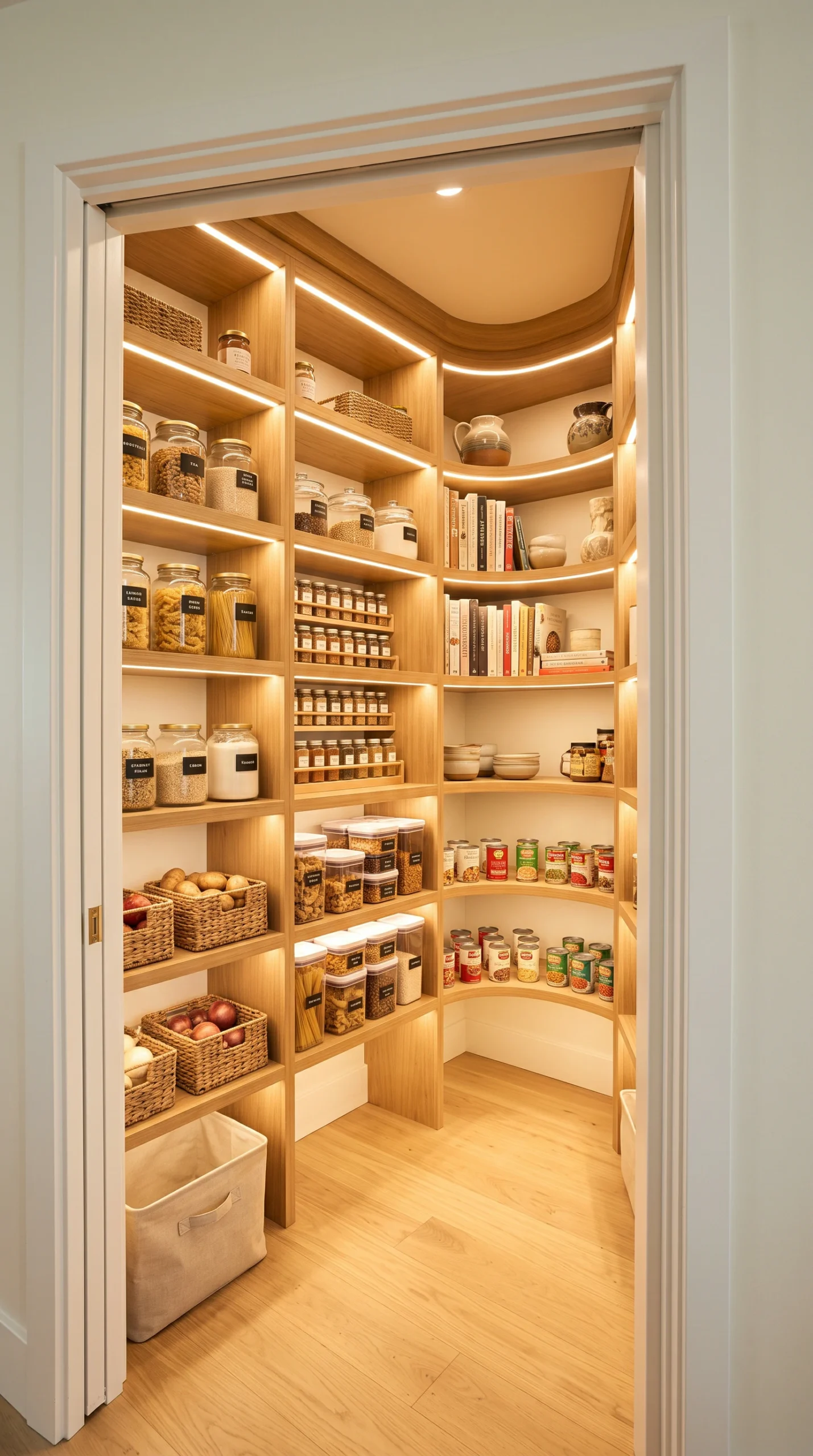
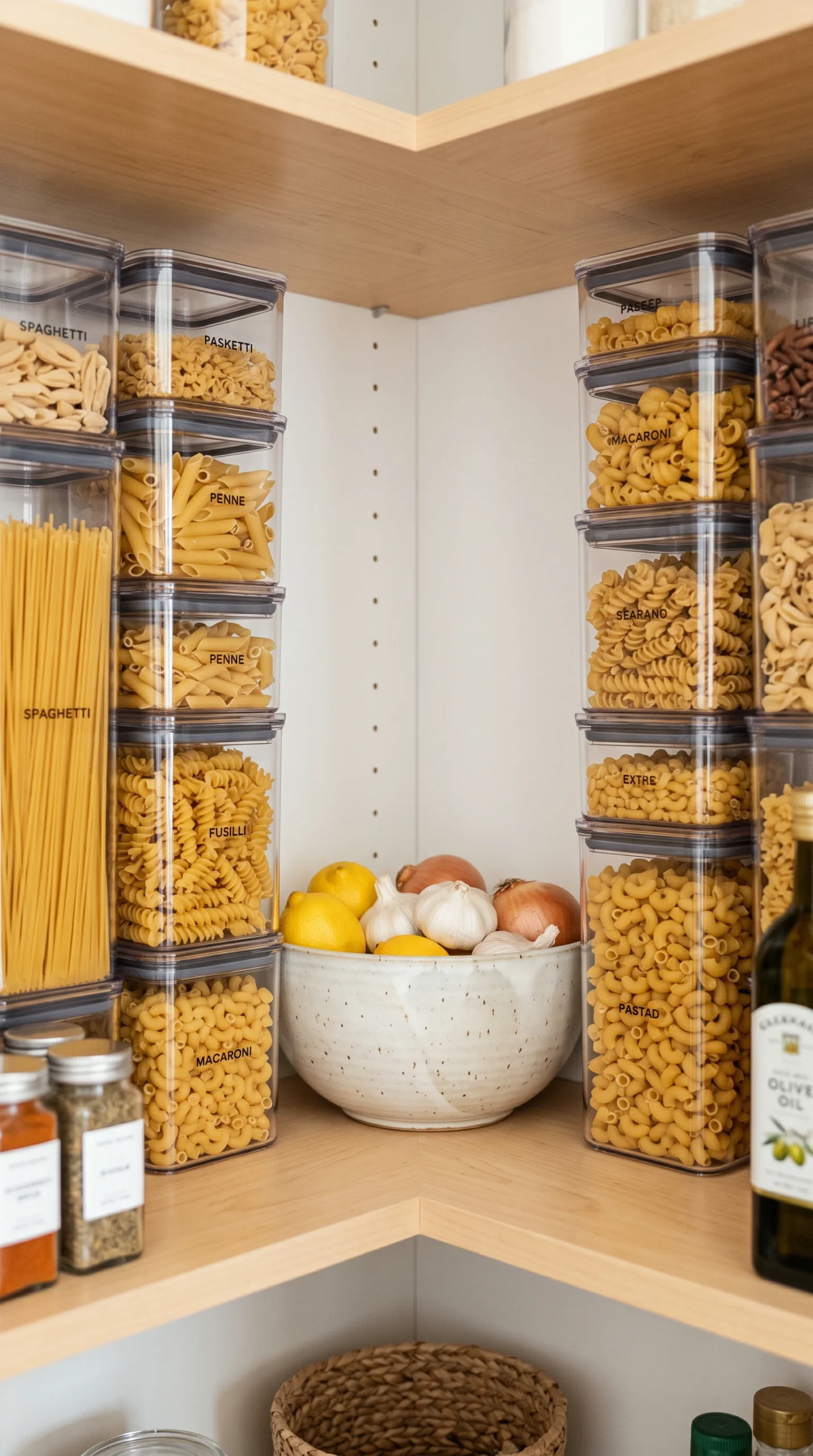
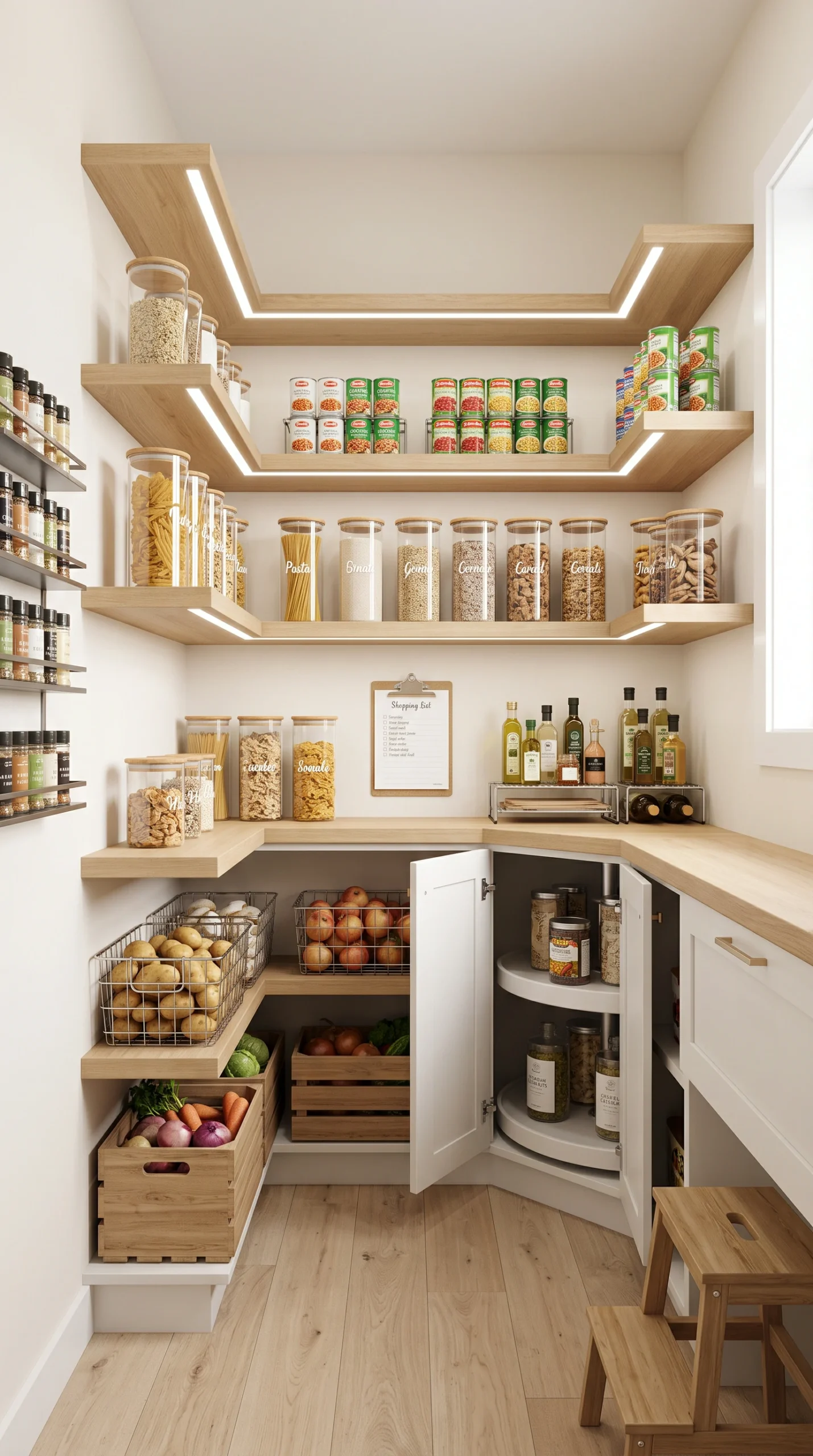
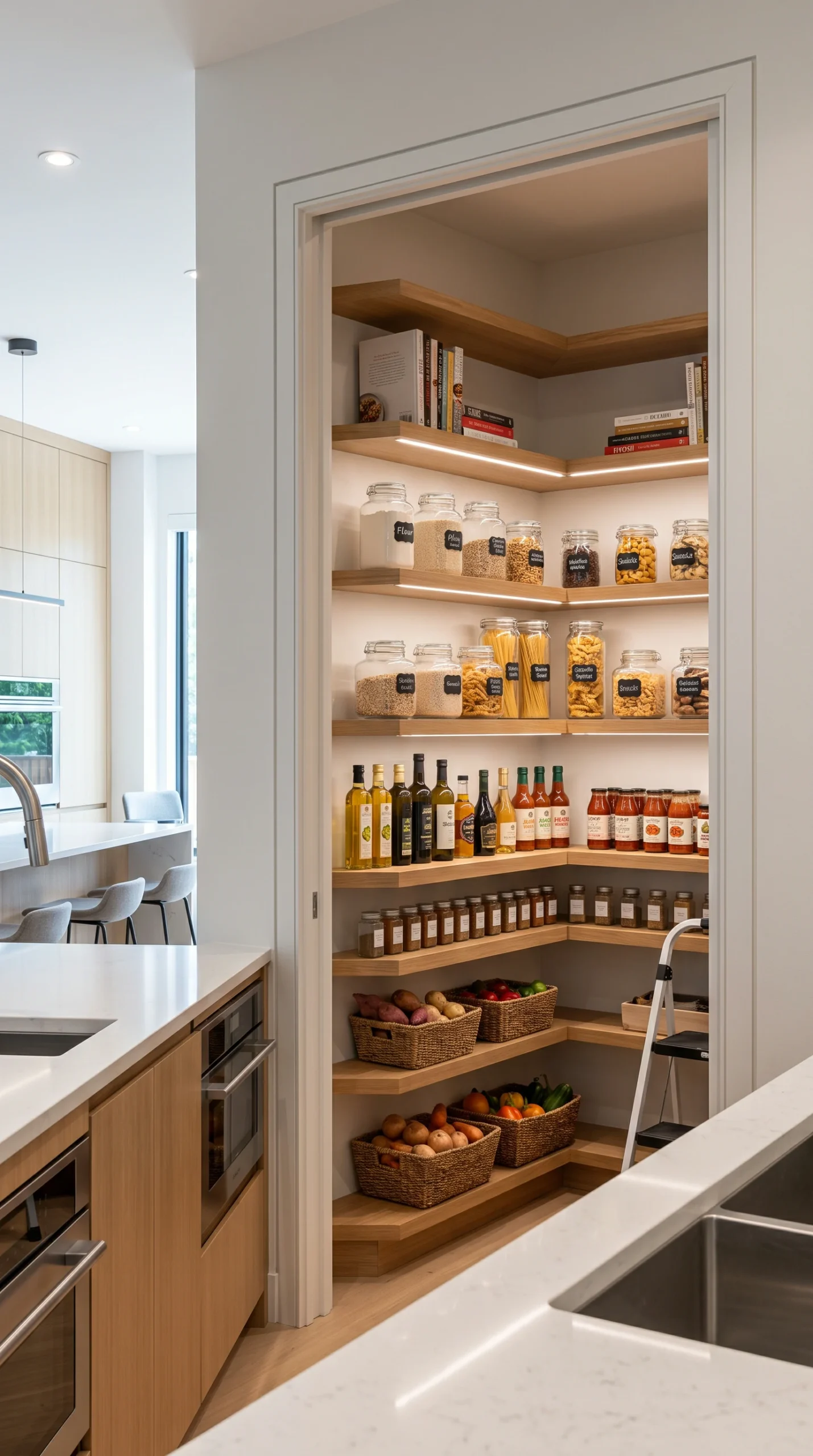
Seamless 90-degree continuous shelving supported by rear perimeter wall cleats eliminates awkward center vertical support posts, keeping the entire corner line completely open and accessible.
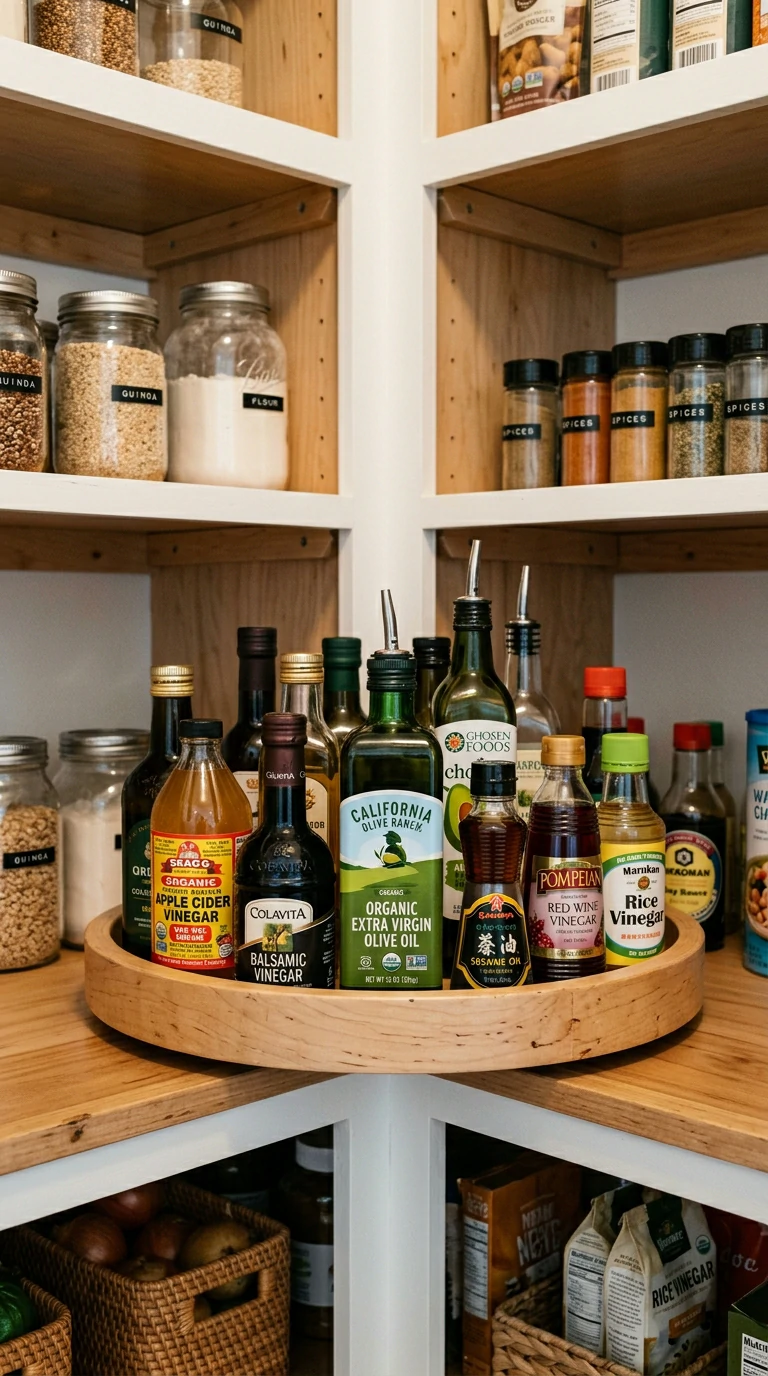
Heavy-duty 28-inch rotating wooden turntables with steel ball-bearing swivels bring buried oils, vinegars, and condiments from deep corner shadows into immediate reach with a light spin.
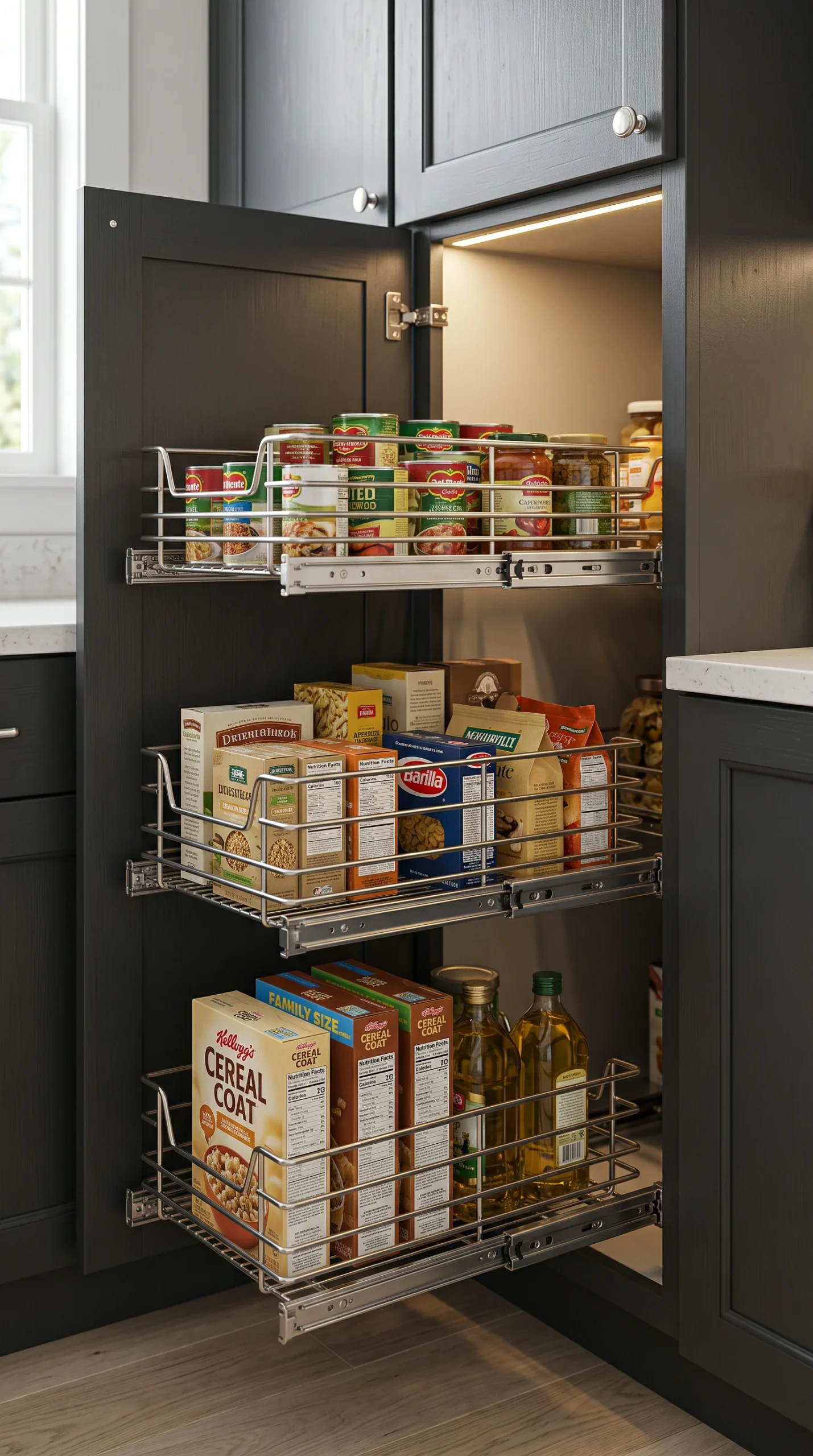
Multi-tier chrome steel slide systems swing hidden rear baskets completely outside the cabinet carcass, eliminating painful kneeling and reaching into blind kitchen voids.
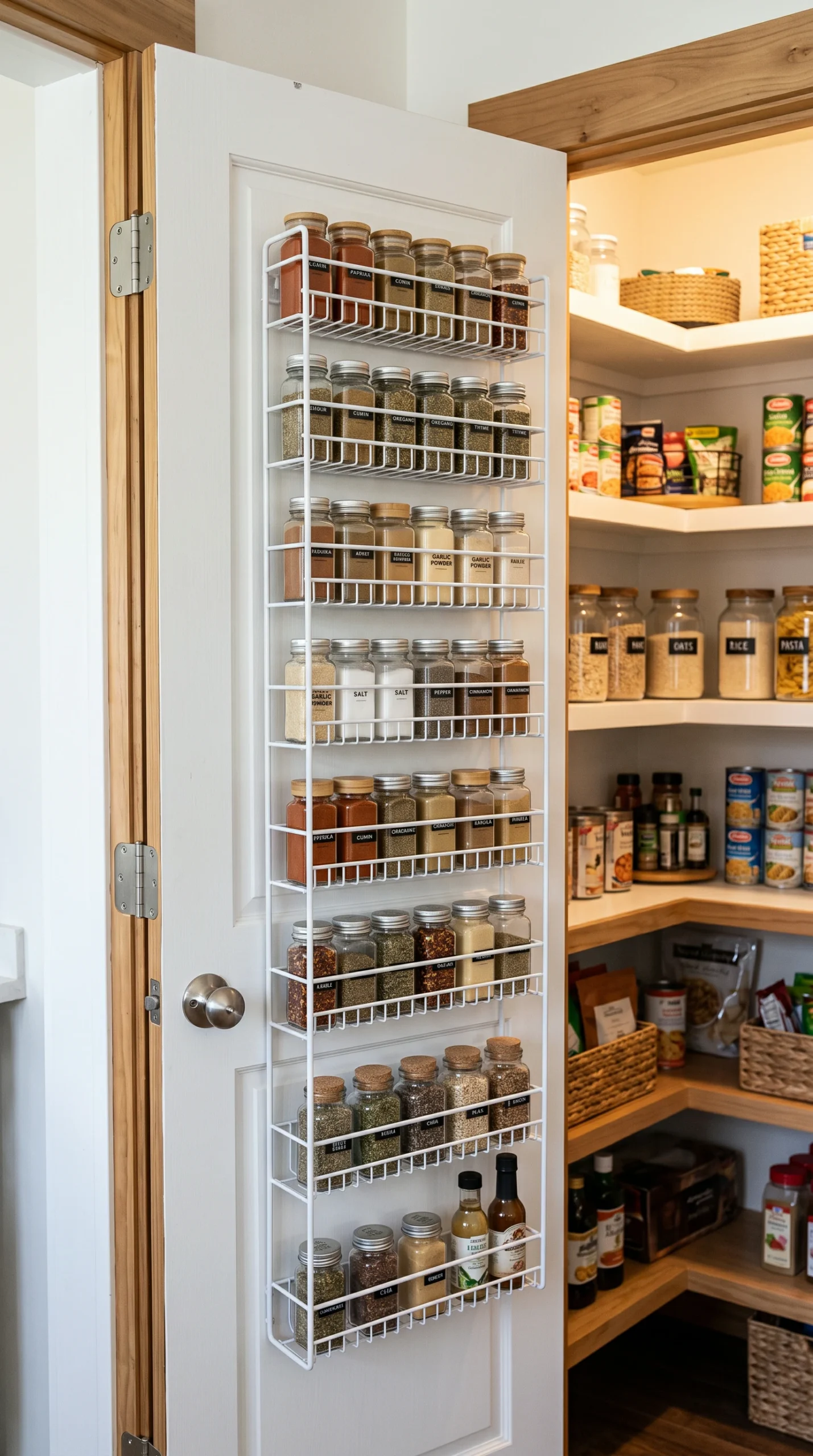
Angled 45-degree corner pantry doors fitted with slim vertical wire racks utilize shallow door clearances while preserving internal shelf reach for spices and lightweight extracts.
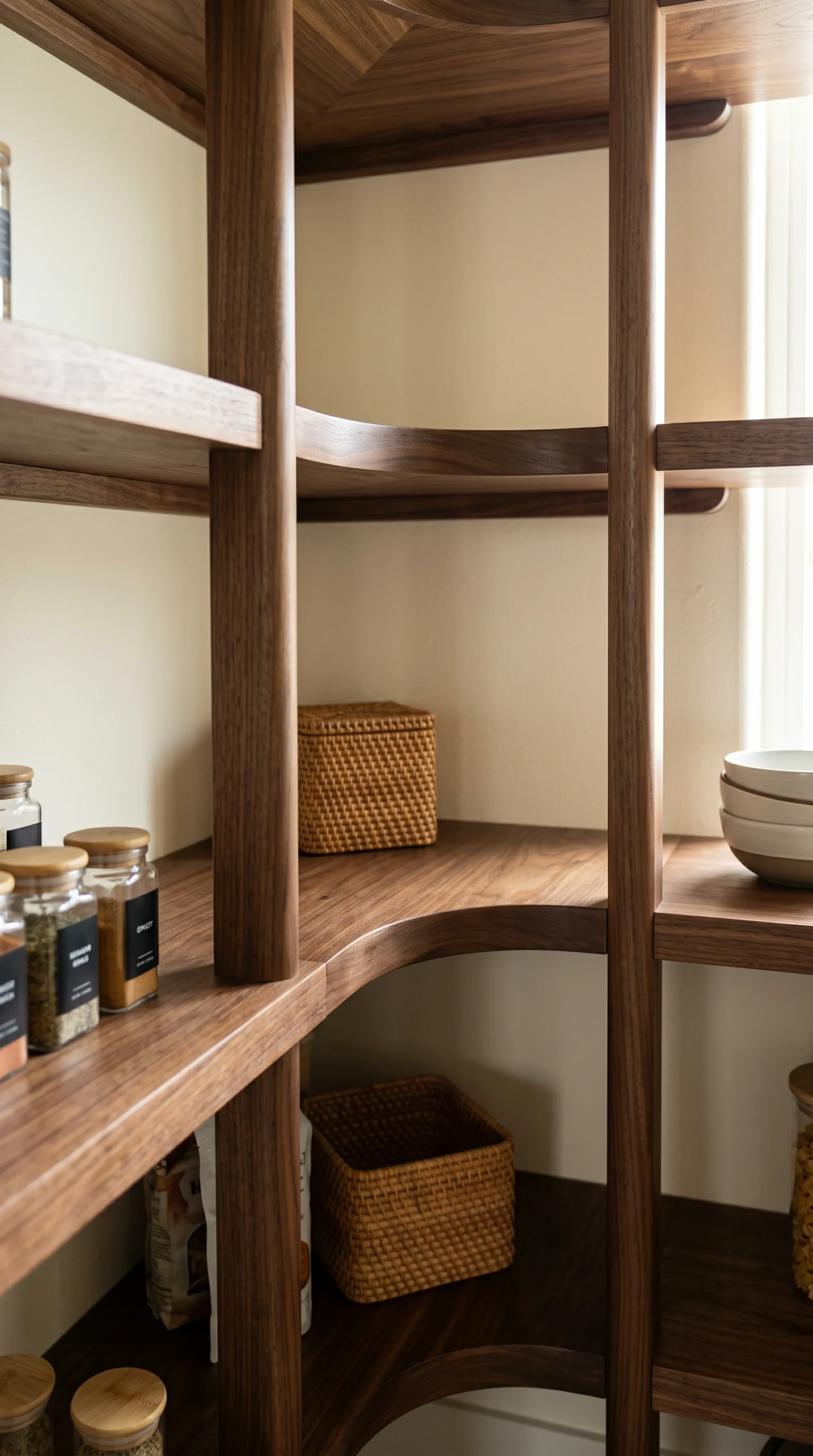
Custom-milled curved shelf corners eliminate sharp 90-degree pinch points, facilitating smooth arm reach and dynamic storage container navigation across intersecting walls.
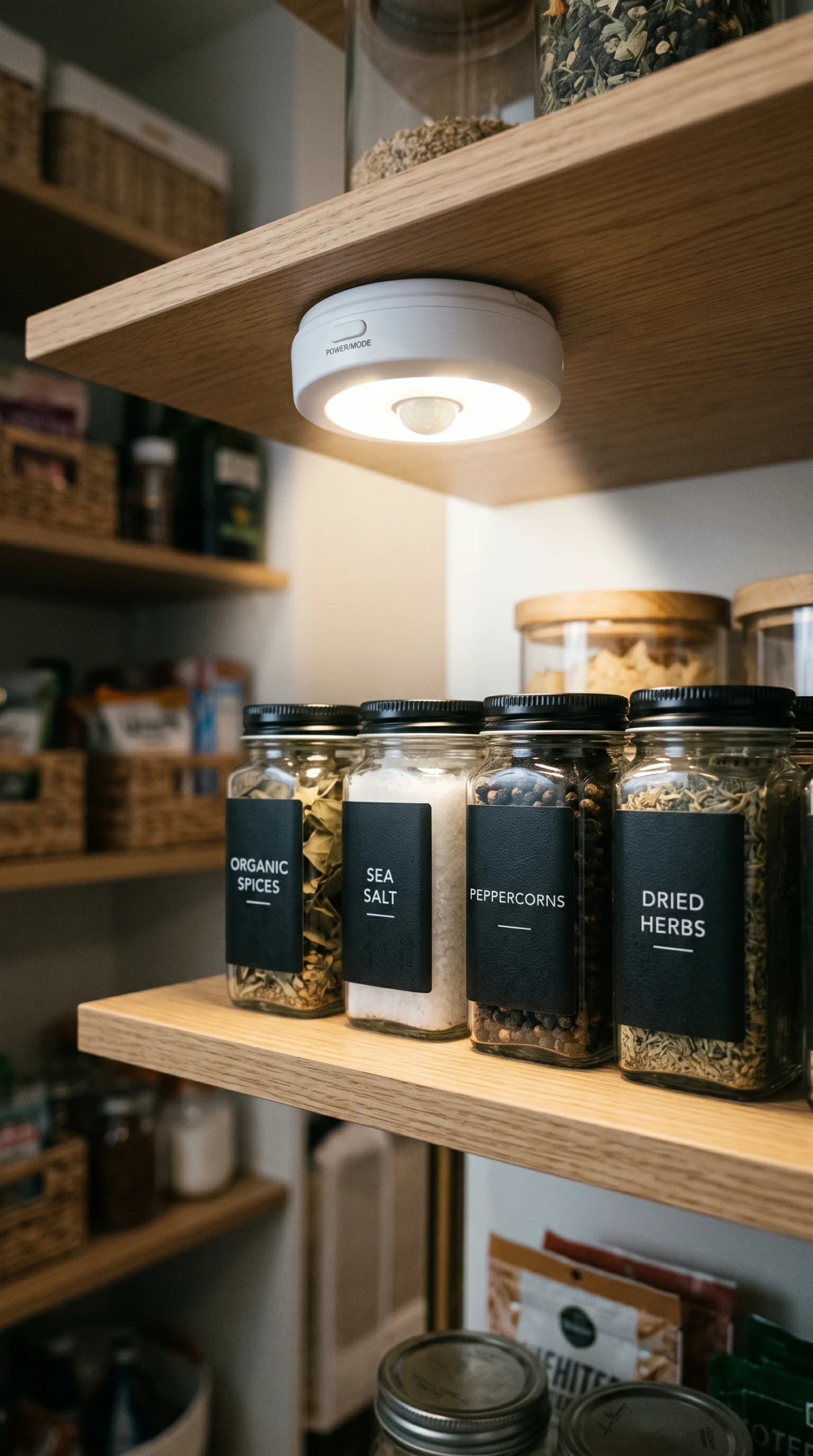
Continuous vertical LED lighting channels mounted inside the internal corner seam flood awkward shelf intersections with shadowless 3000K warm white task light from floor to ceiling.
Kitchen floor plans frequently leave corners as underutilized afterthoughts. Whether dealing with a dedicated walk-in corner pantry set at a 45-degree diagonal angle, an L-shaped reach-in closet, or a blind lower corner cabinet, awkward angles present significant storage challenges. Items placed in deep corner recesses are easily pushed out of sight, leading to accidental hoarding, duplicate purchases, and wasted food budgets.
Transforming an awkward corner into a functional storage asset requires precise spatial geometry, heavy-duty load calculations, and ergonomic organization. As explored across our comprehensive curation of pantry design and organization, understanding vertical clearances, visual accessibility, and joinery transforms everyday home storage and organization into an enduring domestic pleasure.
The root difficulty of corner storage lies in the mismatch between rectangular storage containers and 90-degree structural corners. When two standard 12-inch or 16-inch deep shelves intersect at a right angle, they create a deep inner void measuring over 28 to 34 inches diagonally from the front edge to the rear wall intersection.
Because an average adult arm reaches comfortably between 20 and 24 inches without severe torso bending, anything stored in that deep apex requires awkward reaching. Homeowners naturally abandon this hard-to-reach zone, creating an inactive vacuum. Resolving this spatial issue requires choosing one of three structural configurations:
If you are reconfiguring existing shelving substrates, review our engineering calculations on load limits and span capacities in pantry shelving ideas.
The most common mistake in amateur corner shelving is installing a vertical support 2×4 or metal stanchion directly at the inner 90-degree juncture. This vertical post acts as a physical barrier, halving the usable entry width and making it nearly impossible to slide large containers in and out.
Professional continuous L-shaped shelving eliminates center posts entirely by securing continuous 1×2-inch solid hardwood cleats into wall studs and joining shelf boards with precision half-lap joints glued and screwed from beneath. If your corner pantry is situated within a compact kitchen footprint, explore our space-saving recommendations in small pantry ideas.
For pantry corners dedicated to high-frequency items like cooking oils, vinegars, hot sauces, and canned goods, a built-in rotating turntable eliminates reaching altogether. Commercial heavy-duty Baltic birch or stainless steel lazy Susans equipped with 12-inch steel ball-bearing swivel plates support up to 75 to 100 pounds with effortless fingertip rotation.
Always ensure corner turntables feature a raised outer lip measuring at least 1.5 inches. Without this retaining rim, the centrifugal force of spinning the turntable will cause tall glass bottles to tip over into the dark rear void. For comprehensive container and condiment zoning tips, explore our guide on pantry storage ideas.
In base cabinetry or lower pantry modules, reaching into a blind corner requires kneeling and reaching into a dark cavity. In contemporary kitchen design, stationary blind-corner shelves have been superseded by articulated pull-out mechanisms like LeMans swing-out trays and Magic Corner hardware. These multi-tier chrome systems swing rear baskets completely outside the cabinet carcass, supporting up to 55 pounds per tray for heavy Dutch ovens and stockpots.
If your corner pantry features a swinging door, verify proper hinge clearances and door-mounted storage limits by checking our dedicated guide on pantry door organization ideas.
Corners are natural shadow traps. When a central ceiling fixture is installed in the center of the kitchen or pantry, the user’s head and shoulders cast a broad shadow directly over the corner work zone. The most effective method for lighting a 90-degree corner is installing a continuous vertical aluminum channel directly into the internal corner seam where the two walls intersect.
Running high-density 3000K warm-white LED ribbon behind a frosted opal diffuser washes every shelf layer with shadowless illumination from floor to ceiling. To see how architectural lighting integrates with modern minimalist millwork, explore modern pantry ideas.
Organizing an awkward corner pantry requires strict zoning based on item physical dimensions, shelf life, and frequency of use:
For large walk-in footprints with dedicated corner prep alcoves, explore our complete analysis of walk-in pantry ideas, and discover holistic kitchen layout rules in our master guide on pantry organization ideas.