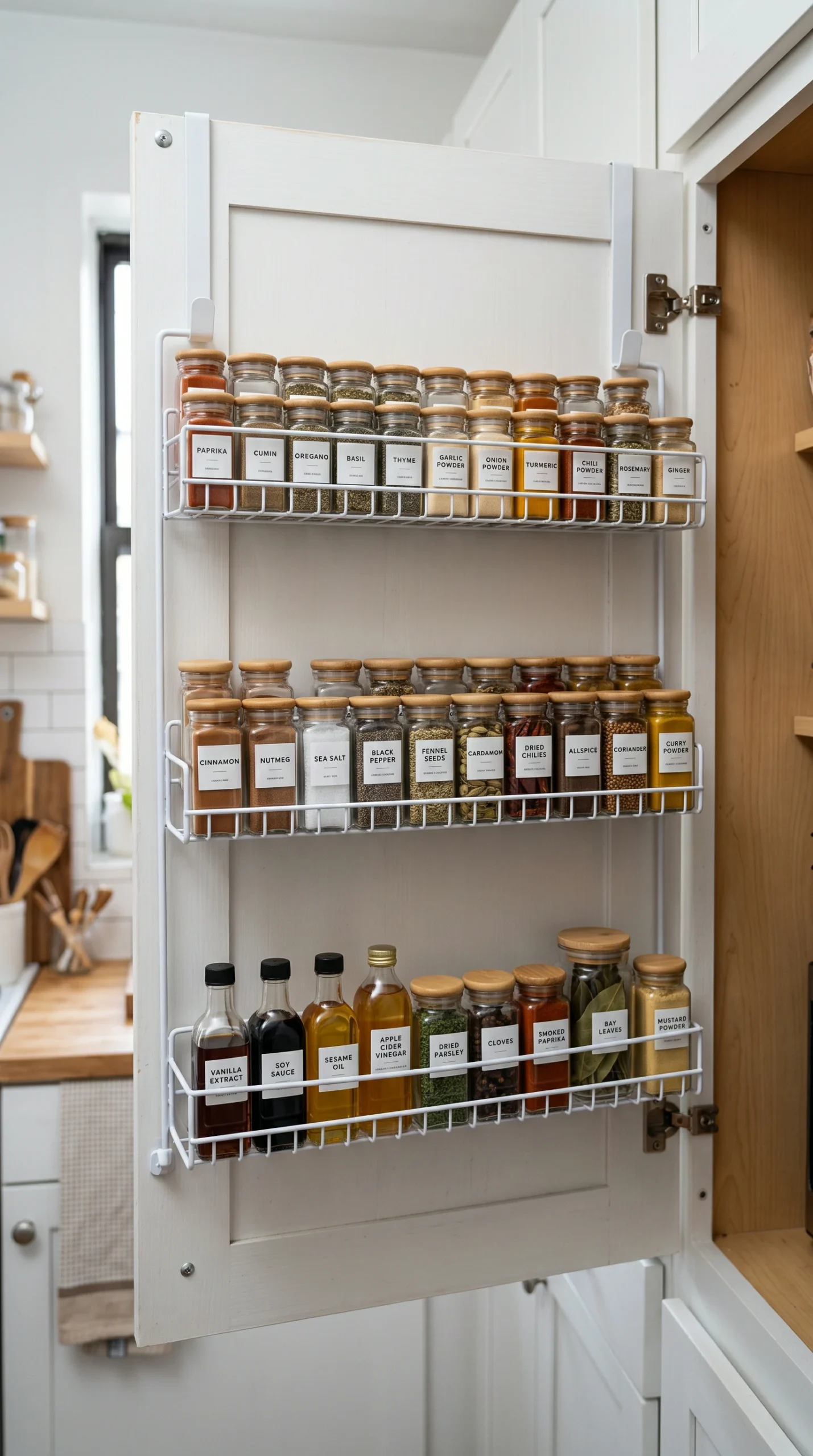
Transform the unutilized interior face of a pantry door into an organized culinary spice library. Install an adjustable powder-coated white steel rack featuring 4- to 5-inch deep baskets holding uniform glass spice jars with matching labels. Mount the rack securely using top door brackets and bottom screw anchors to eliminate swinging or rattling during door movement.
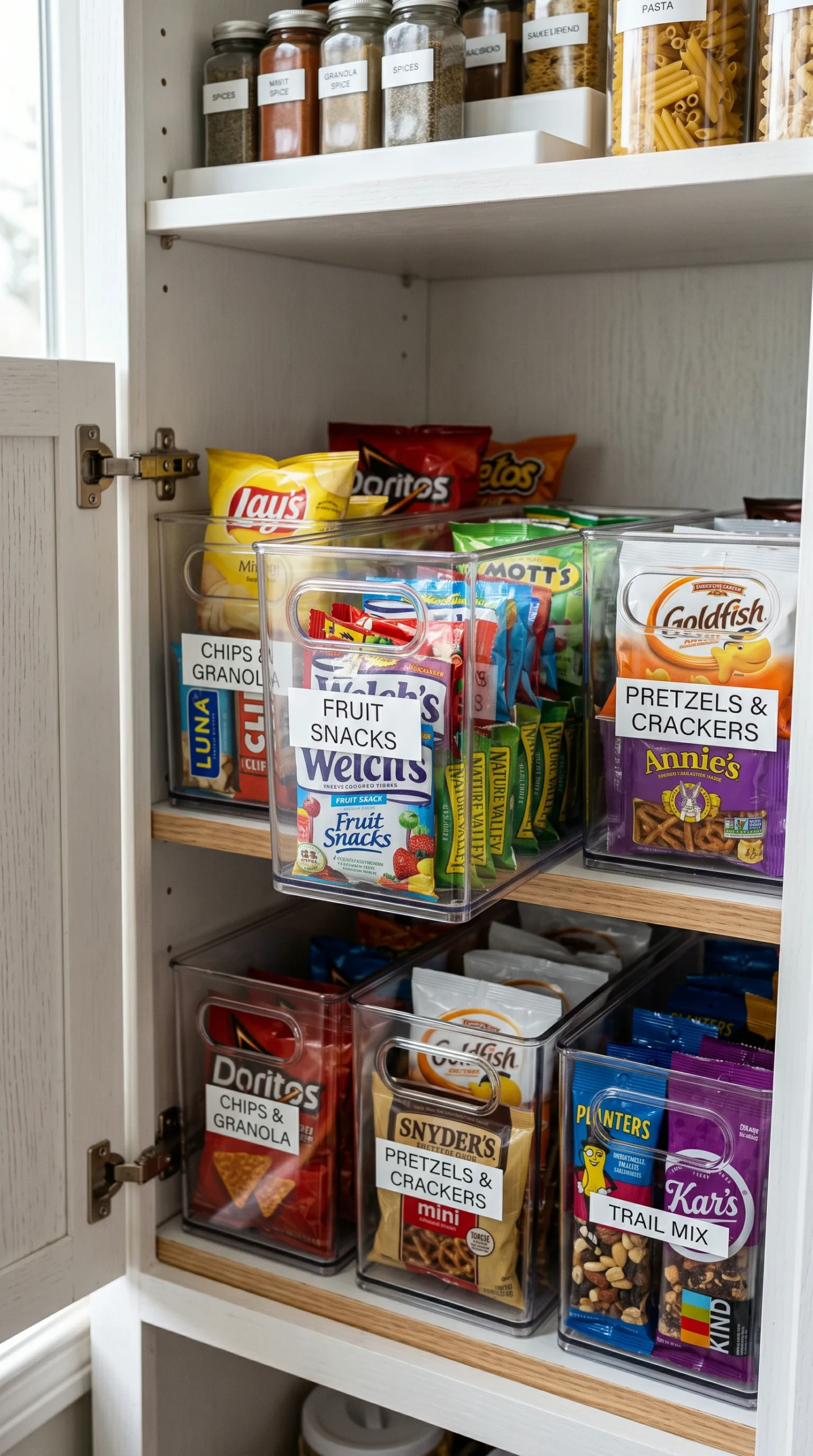
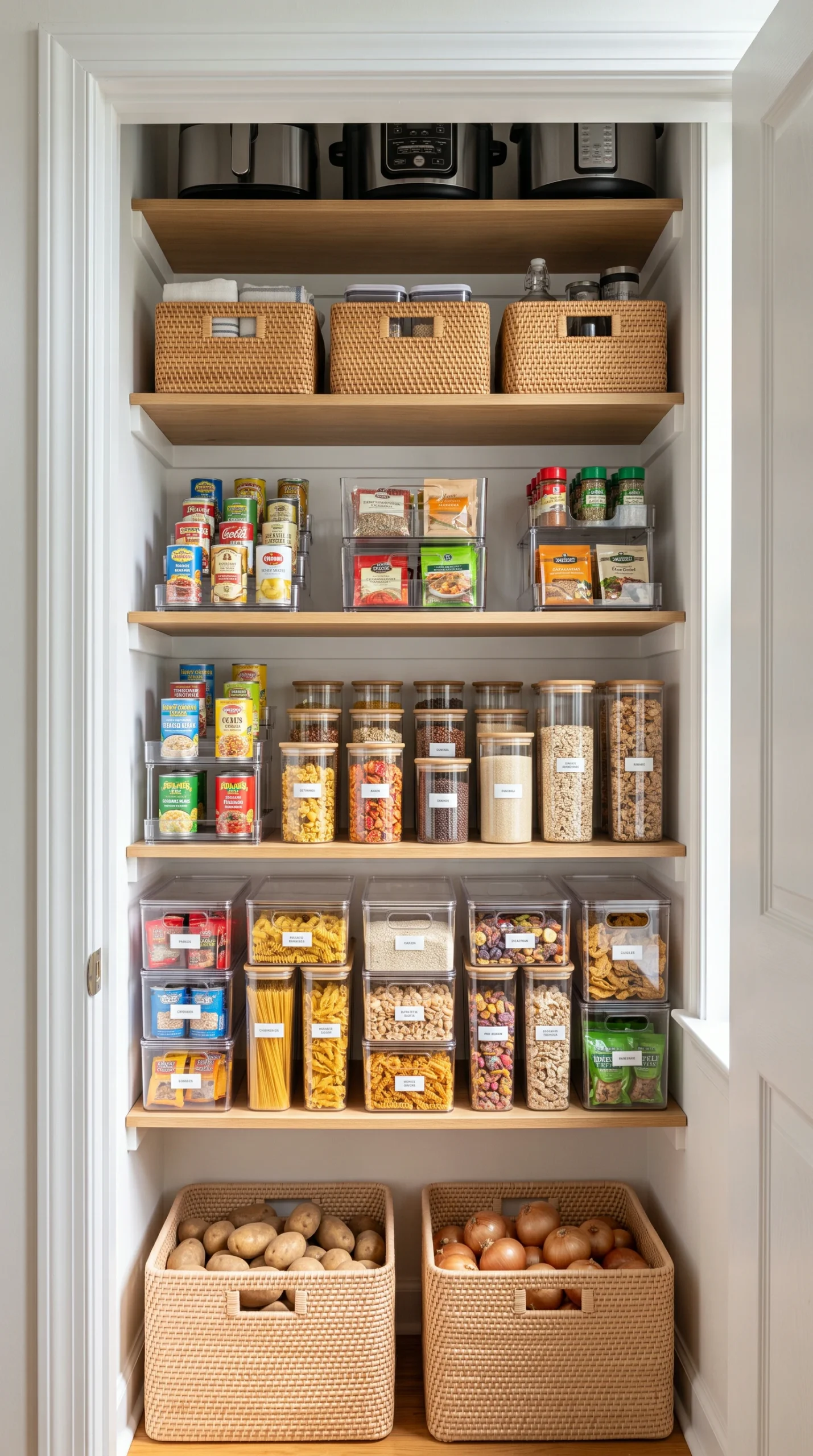
Convert static shelving into smooth modular pull-outs using 1/4-inch heavy-duty shatterproof acrylic bins with cutout handles. Grouping small, lightweight items—such as snack pouches, baking extracts, or tea boxes—into categorized bins allows entire food zones to be pulled forward effortlessly, eliminating the need to dig through deep shelves to find items.
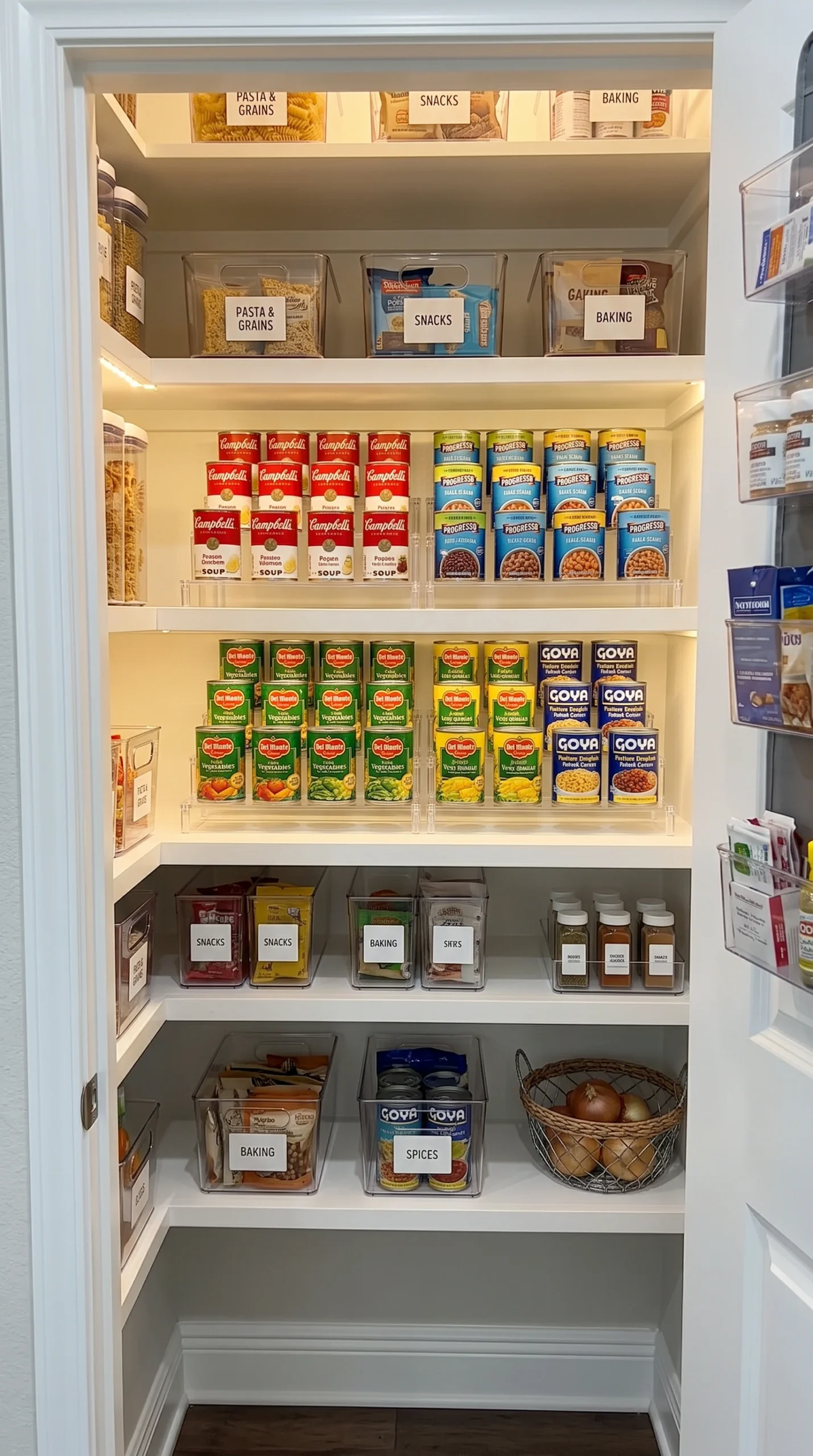
Overcome canned good clutter by implementing 9- to 10-inch deep clear acrylic stadium risers on mid-level pantry shelves. Elevating rear cans 1.5 inches above front rows ensures every single food label remains 100% visible at a glance. This simple tiered system prevents duplicate grocery purchases and eliminates buried, expired pantry staples.
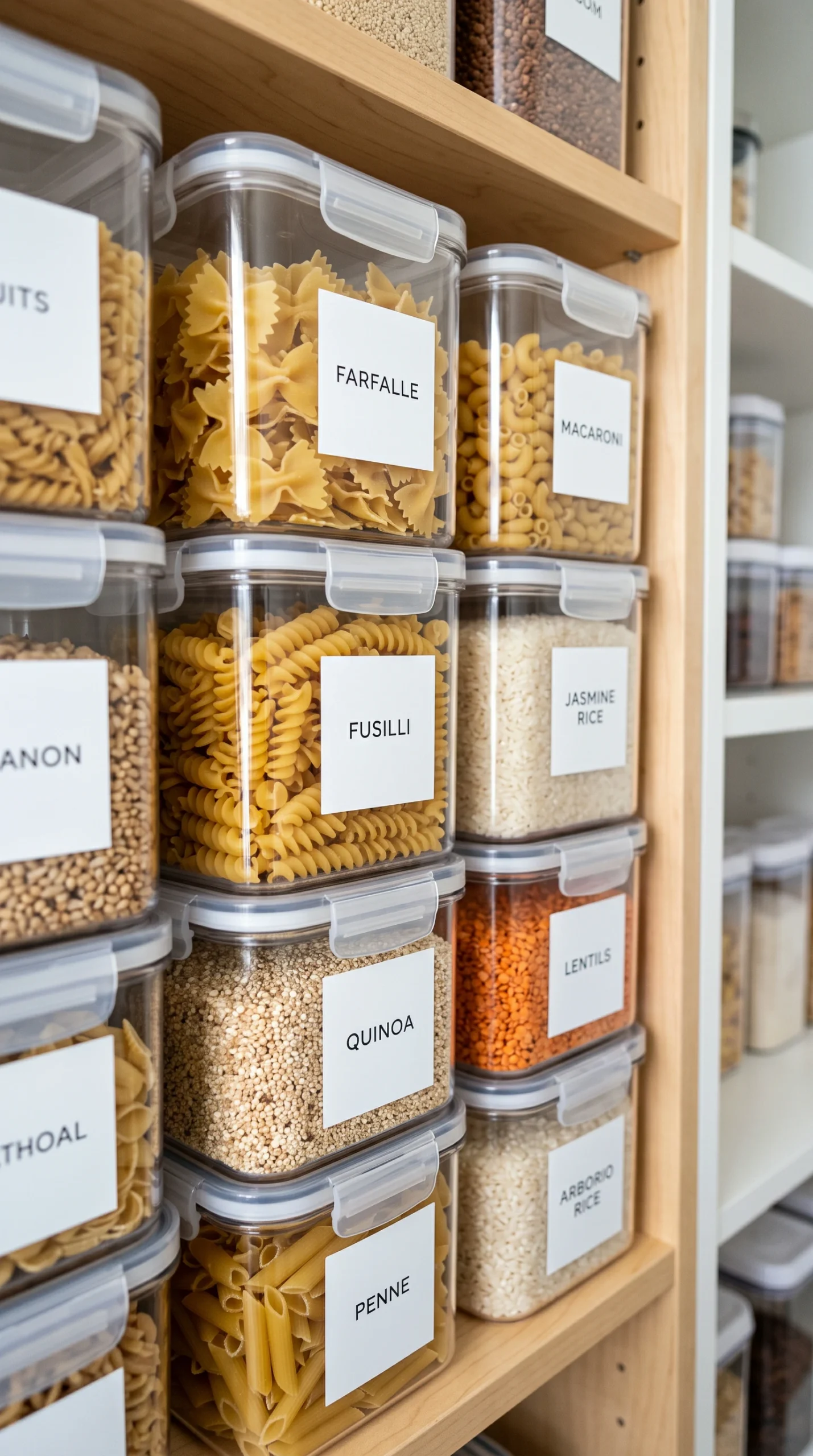
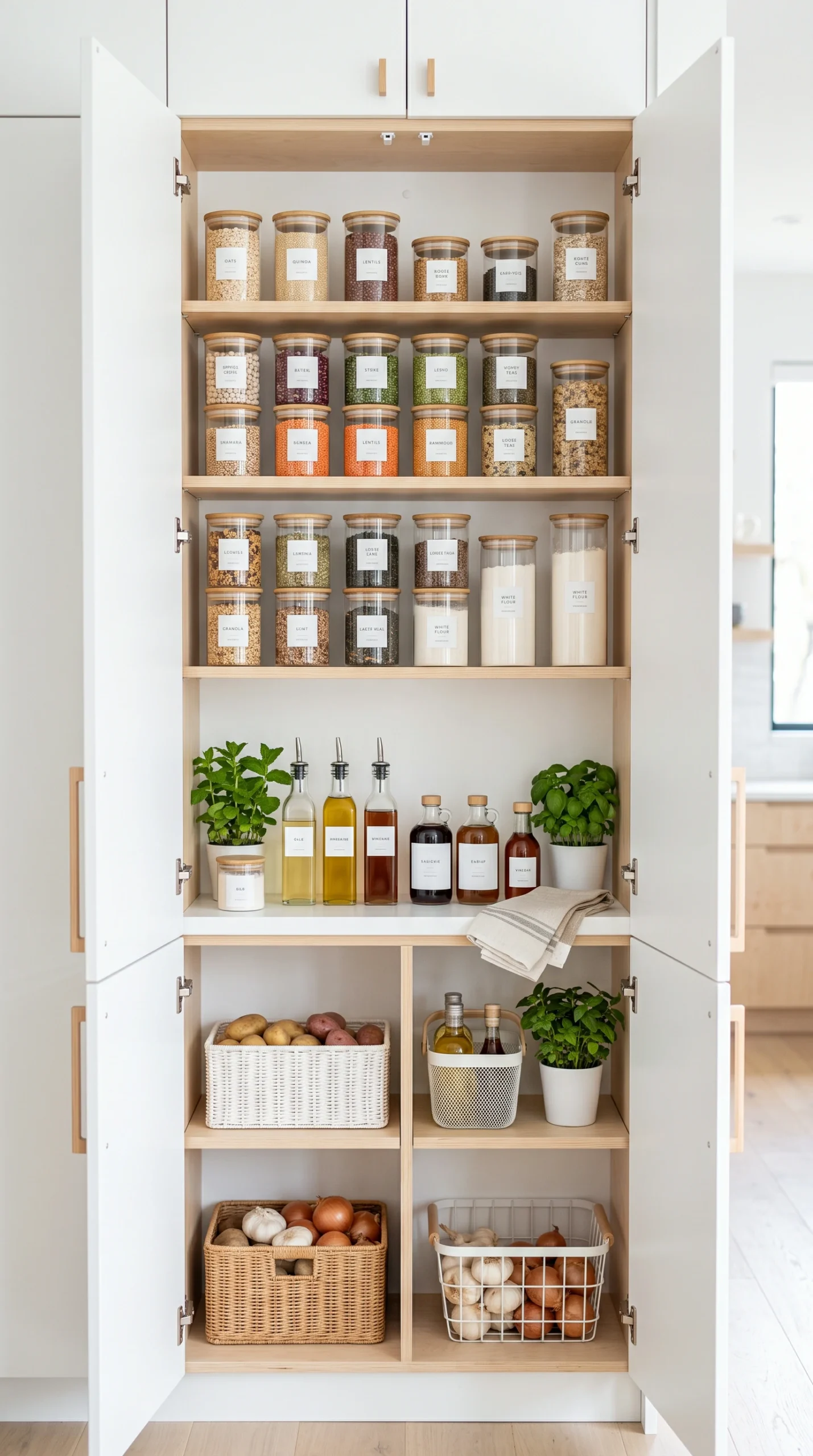
Maximize shelf geometry by replacing mismatched grocery bags and cardboard boxes with stackable, modular square canisters. Constructed from crystal-clear BPA-free plastic with airtight silicone lever-locking lids, these containers protect flours, sugars, and dried legumes from pantry moths while utilizing every square inch of shelf depth without wasted dead space.
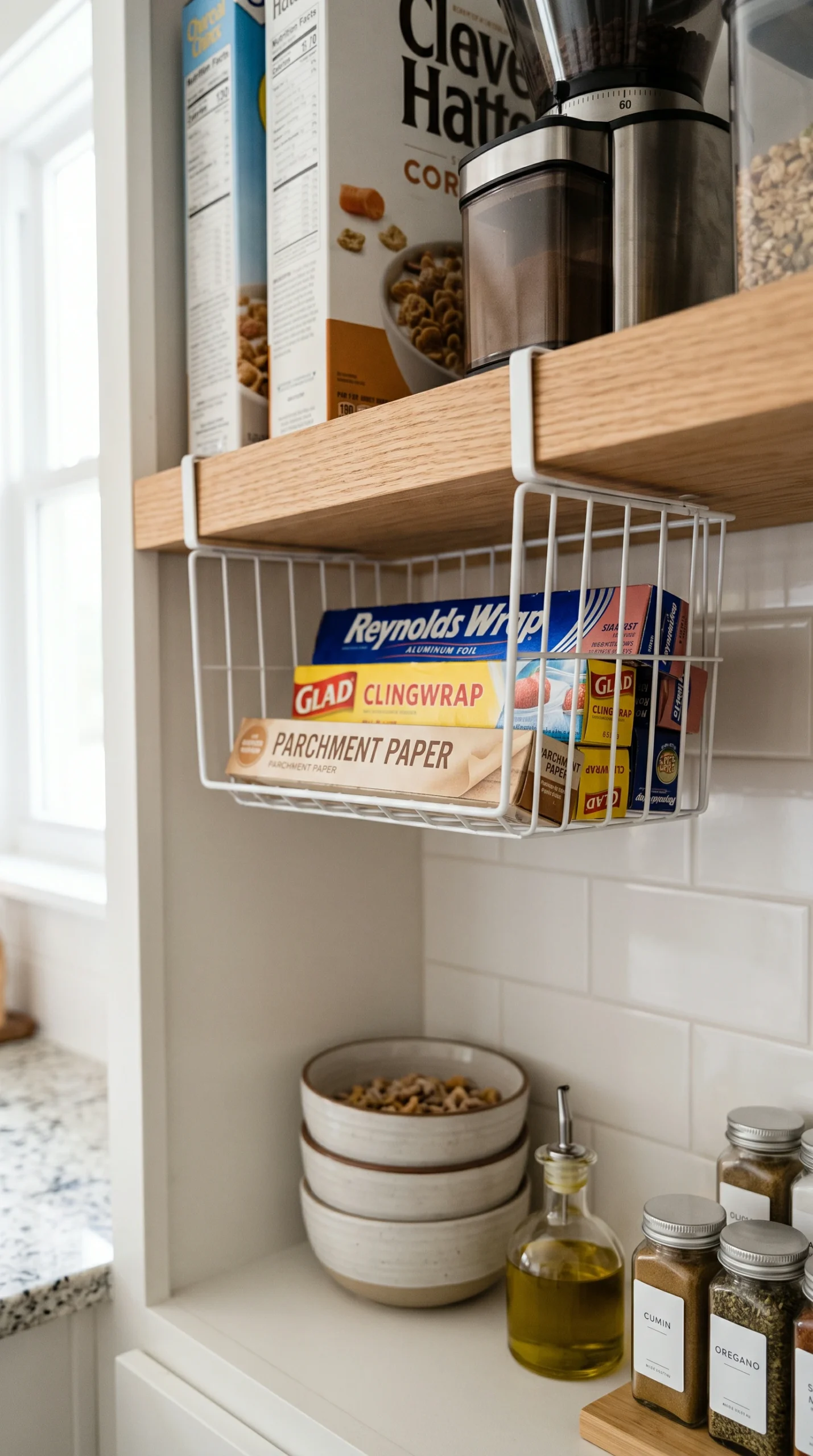
Capture the dead 4- to 6-inch vertical clearance between shelves by sliding vinyl-coated steel friction baskets onto shelf edges. These suspended wire cradles perfectly house long, flat boxes of aluminum foil, parchment paper, wax paper, and food storage bags, freeing up primary shelf real estate below for bulk canned goods and cereal boxes.
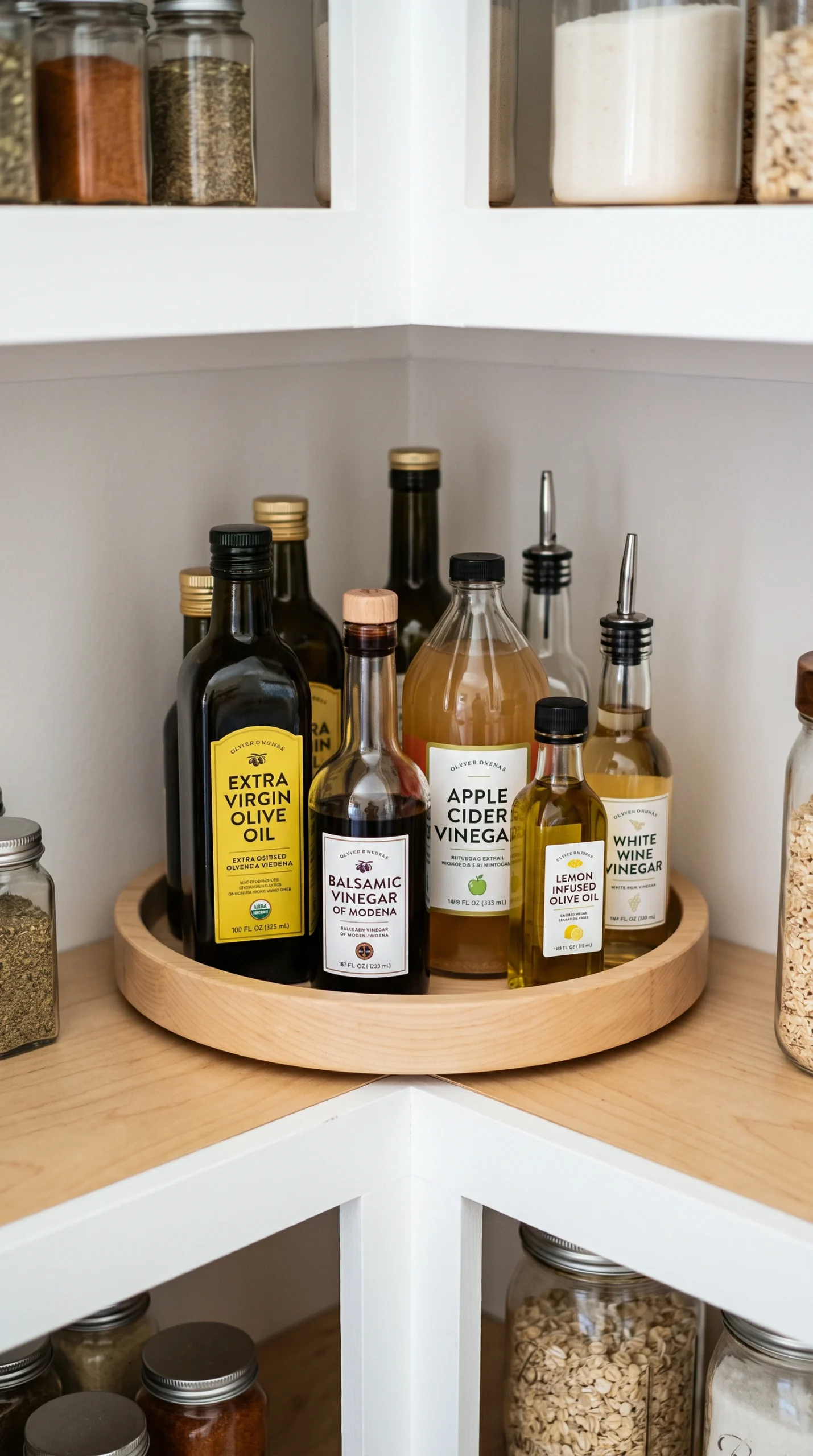
Eliminate awkward corner blind spots with a 10-inch to 12-inch rotating birch wood lazy Susan fitted with smooth steel ball bearings. Housing vinegar bottles, specialty oils, hot sauces, and syrup containers on a turntable prevents sticky glass-on-wood residue and allows quick 360-degree fingertip access without knocking over adjacent bottles.
In compact homes and urban apartments, the kitchen pantry is frequently relegated to an awkward reach-in closet, a narrow 24-inch cabinet tower, or an unutilized alcove. When outfitted with standard fixed builder-grade shelving, these small spaces quickly descend into chaotic disarray: half-empty cereal boxes crowd the front, canned goods vanish into dark rear corners, and valuable vertical airspace between shelves remains entirely wasted. However, small kitchen pantries possess immense untapped efficiency when treated with rigorous architectural storage planning.
Maximizing a compact pantry requires shifting focus away from raw square footage toward cubic volume optimization. As highlighted across our comprehensive curation of pantry design and organization, understanding vertical clearances, visual accessibility, and container geometry elevates everyday home storage and organization into an enduring domestic pleasure.
The single greatest design mistake in small pantries is installing shelves that are too deep. Homeowners often assume that a 20-inch or 24-inch shelf provides more storage capacity. In reality, deep shelves in reach-in pantries create an inaccessible rear zone where ingredients are pushed backward and forgotten, resulting in expired food, duplicate grocery purchases, and visual clutter.
Adhere to these calibrated depth guidelines:
Standard fixed pantry shelves are often spaced 16 to 18 inches apart, yet the average soup can or cereal box stands only 5 to 9 inches tall. This discrepancy wastes up to 50% of the closet’s cubic airspace. Reclaim this lost vertical volume through two essential accessories:
First, incorporate 3-tier clear acrylic or bamboo stadium can risers measuring 9 to 10 inches deep. By elevating rear cans 1.5 inches above front rows, tiered risers give you complete visual inventory across 15 to 20 cans per shelf without unstacking. Second, slide vinyl-coated steel under-shelf hanging baskets onto shelf fronts. These wire cradles capture the dead 5-inch airspace beneath upper shelves, providing dedicated resting spots for long, awkward boxes of parchment paper, plastic wrap, and foil.
Commercial grocery packaging is engineered to catch consumer eyes on supermarket shelves, not to fit efficiently in a home pantry. Bulky cardboard boxes and flimsy plastic bags create visual chaos, trap stale air, and leave empty corners between packages.
Decanting dry goods into uniform, stackable square and rectangular canisters captures up to 95% of shelf surface area, compared to round jars that lose 25% of shelf volume to empty perimeter gaps. Select BPA-free airtight containers featuring silicone gasket pressure lids. Airtight seals protect dry flours, oats, and sugars from ambient humidity and prevent pantry moth (weevil) infestations. Affix minimalist, water-resistant vinyl labels and record expiration dates on the underside of container lids using a grease pencil.
When interior shelf real estate is exhausted, look to the vertical planes of your door and corners:
An over-the-door hanging organizer converts an ordinary door into an expansive 5-tier spice and condiment depot. Ensure the door rack measures no more than 4 to 5 inches deep to maintain clearance with interior shelves upon closure. For detailed strategies on door weight limits, hinge reinforcement, and rack configurations, consult our guide on pantry door organization ideas.
If your pantry features a challenging 90-degree corner, avoid stacking boxes into the corner cavity. Install 10- to 12-inch rotating birch wood turntables (lazy Susans) to bring vinegar, oils, and honey bottles into effortless view. For complete spatial blueprints on managing corner pantries, explore corner pantry ideas.
A well-planned small pantry coordinates seamlessly with broader kitchen cabinetry and structural joinery. When designing or reconfiguring adjustable tracks, wood brackets, and shelf spans, adhere to the weight-bearing calculations in pantry shelving ideas.
To establish systematic visibility across every tier and prevent grocery clutter, review the labeling and container protocols in pantry storage ideas. For comprehensive kitchen-wide workflow strategies and pantry layout rules, explore our master capstone on pantry organization ideas.
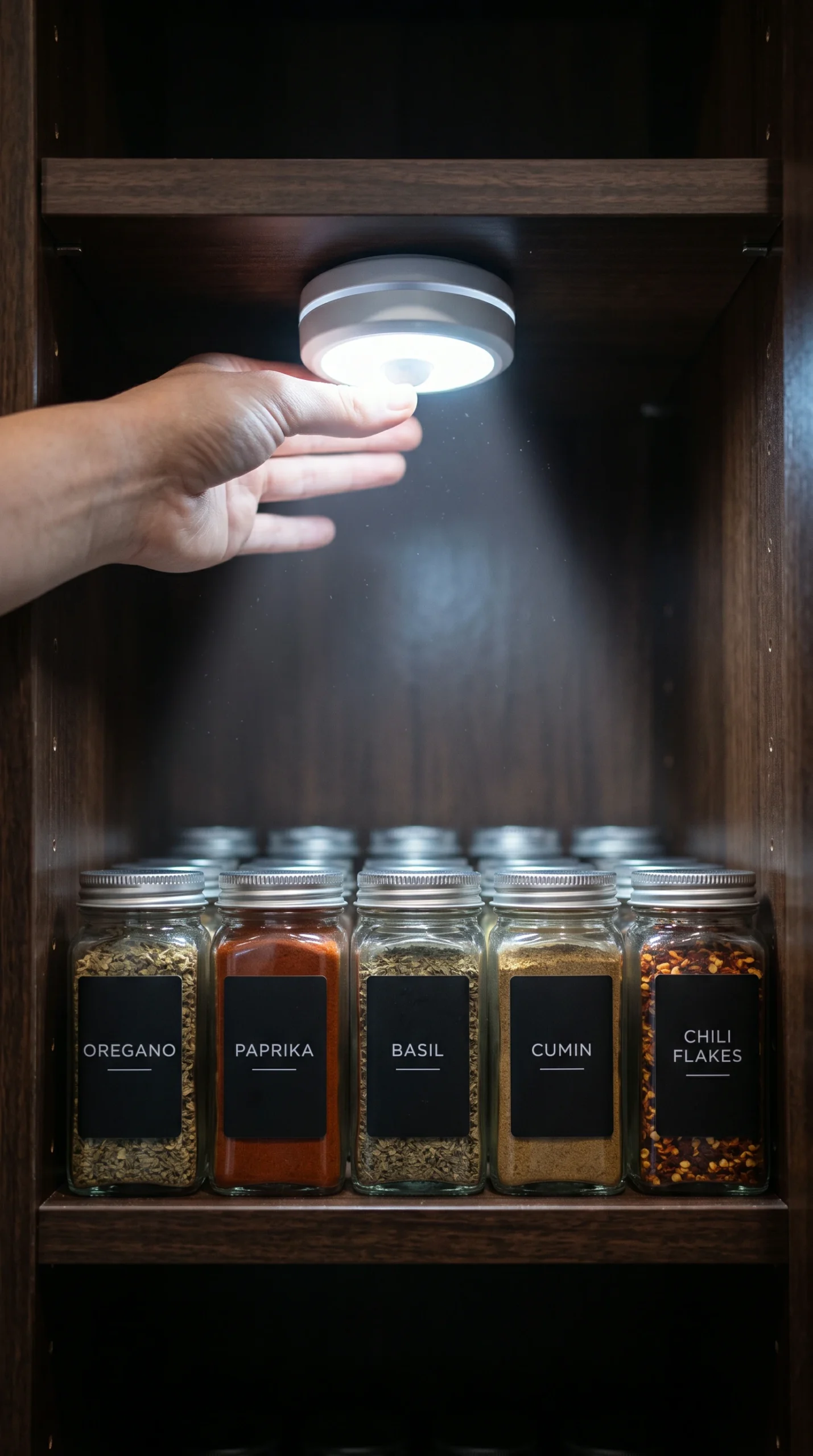
Dark, shadow-drenched corners make small pantries feel uninviting and claustrophobic. Install low-profile 2700K to 3000K warm white PIR motion-sensor LED light bars or battery-operated puck lights underneath shelf lips. Operating on automatic sensors, these fixtures illuminate instantly when the door swings open, flooding shelves with daylight-grade clarity without wiring or forward heat emission.
Maintain your small pantry by enforcing the “first-in, first-out” (FIFO) grocery rotation protocol: when unpacking new groceries, slide older cans and decanted jars to the front and place newly purchased items at the rear. Conduct a quick 10-minute audit every three months to wipe down acrylic bins and verify container seals. With thoughtful vertical planning, shallow shelf calibration, and clear modular decanting, your small pantry will function with the ease and elegance of a luxury chef’s scullery.