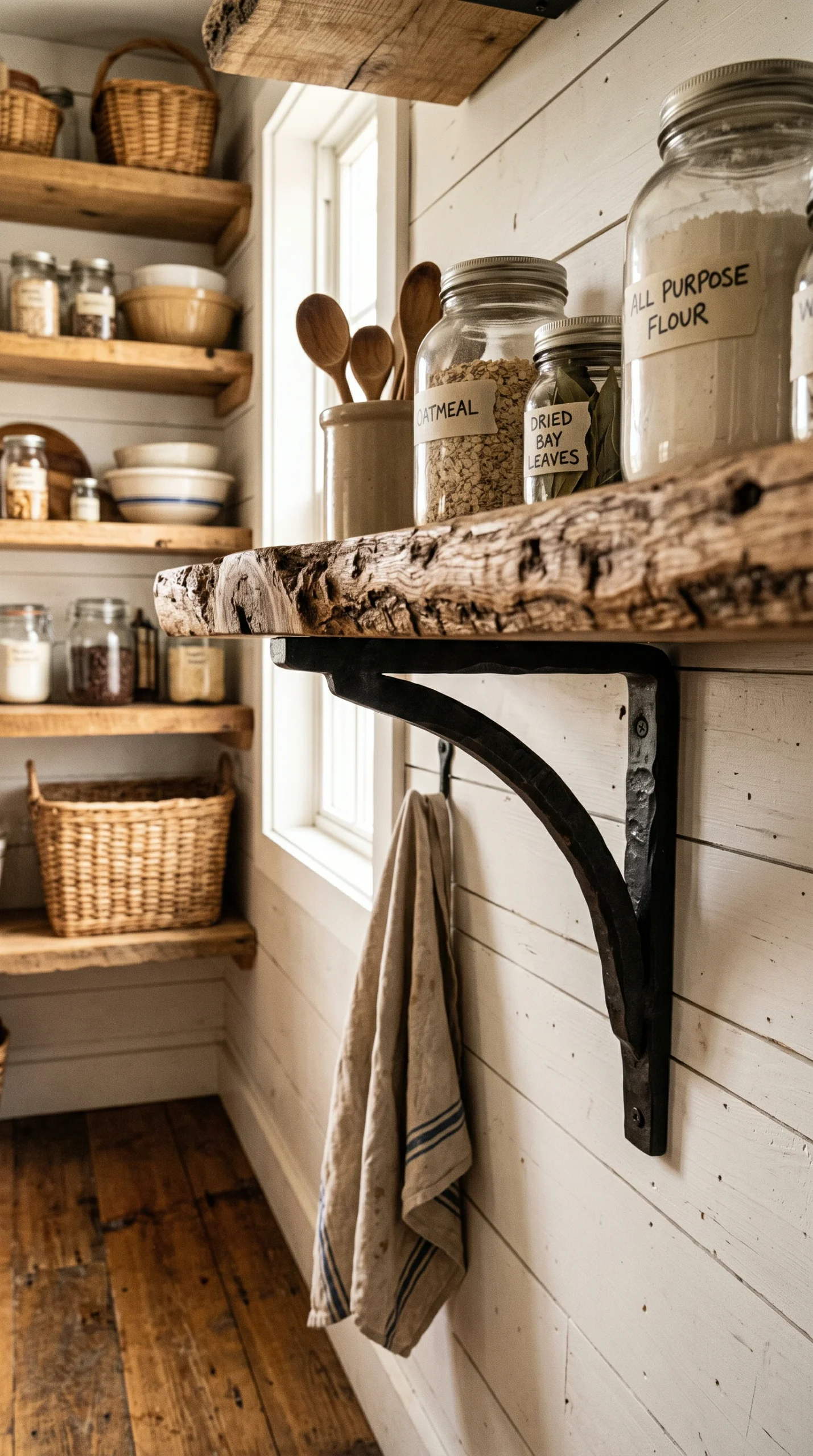
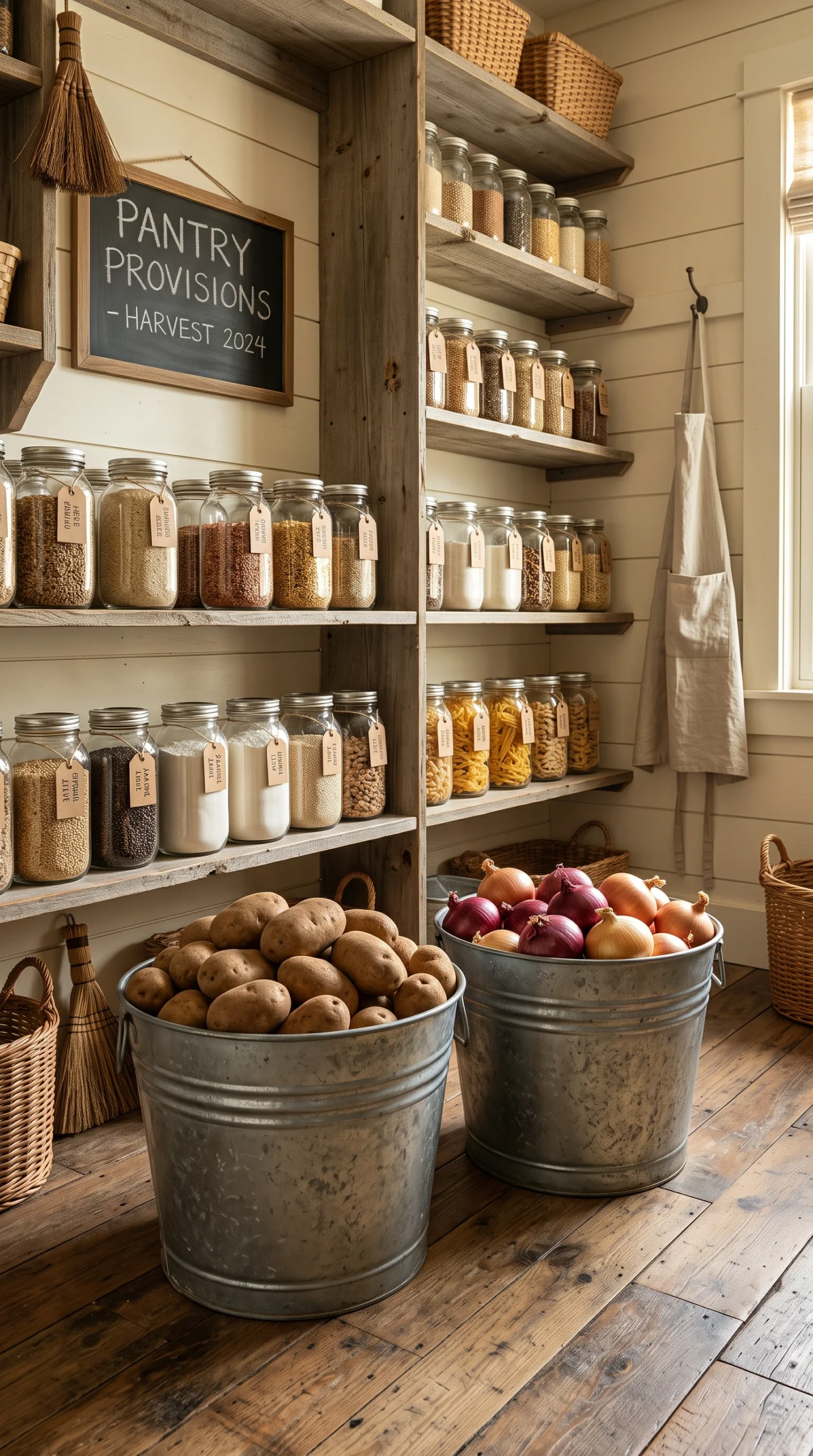
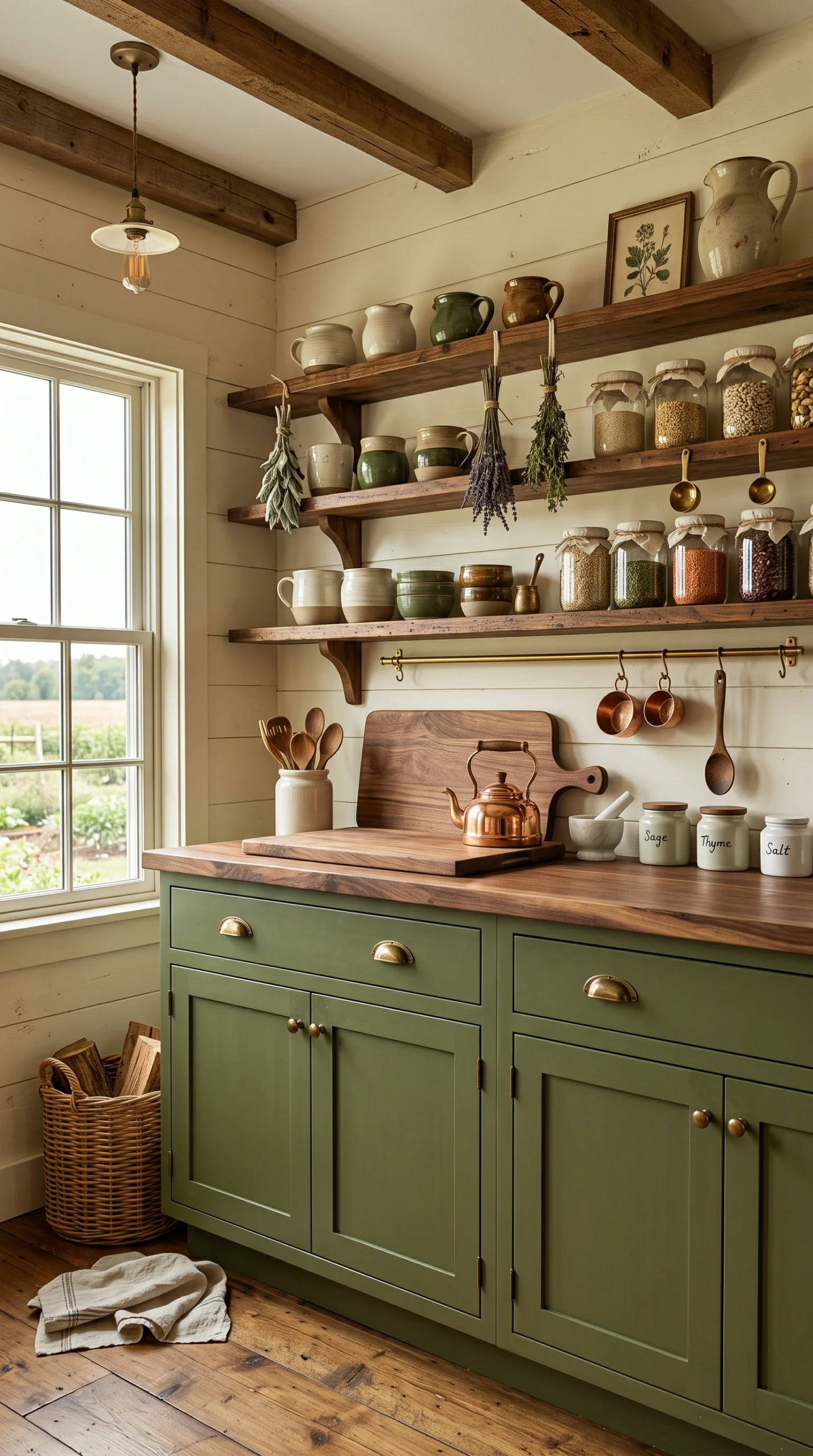
Horizontal whitewashed or warm cream shiplap boards provide durable structural backing that conceals stud framing while imparting classic cottage charm to open shelving.
Substantial 2-inch thick white oak or salvaged heart pine shelves planed flat and sealed with matte hardwax-oil offer enduring strength without sagging under heavy canned goods.
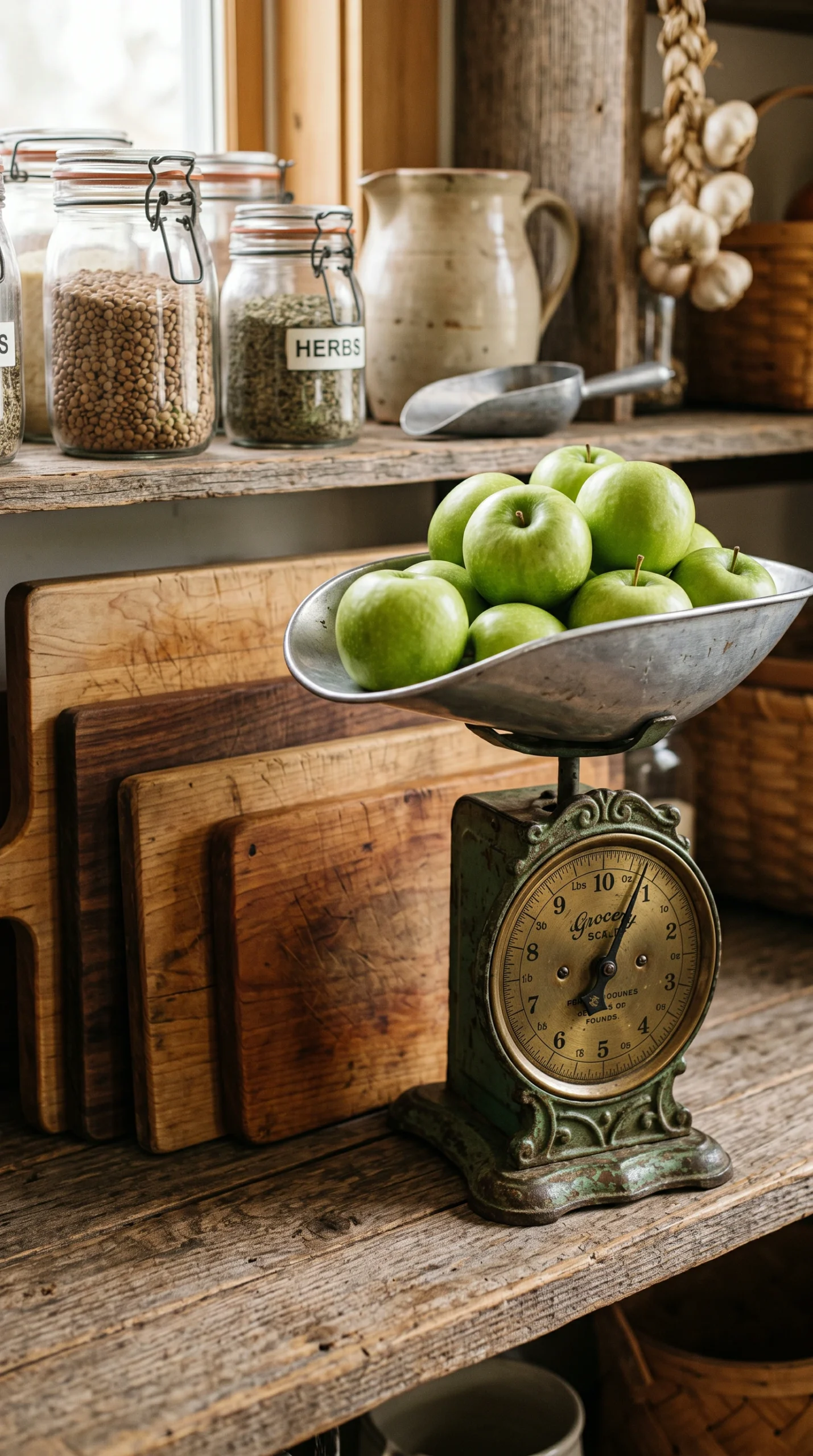
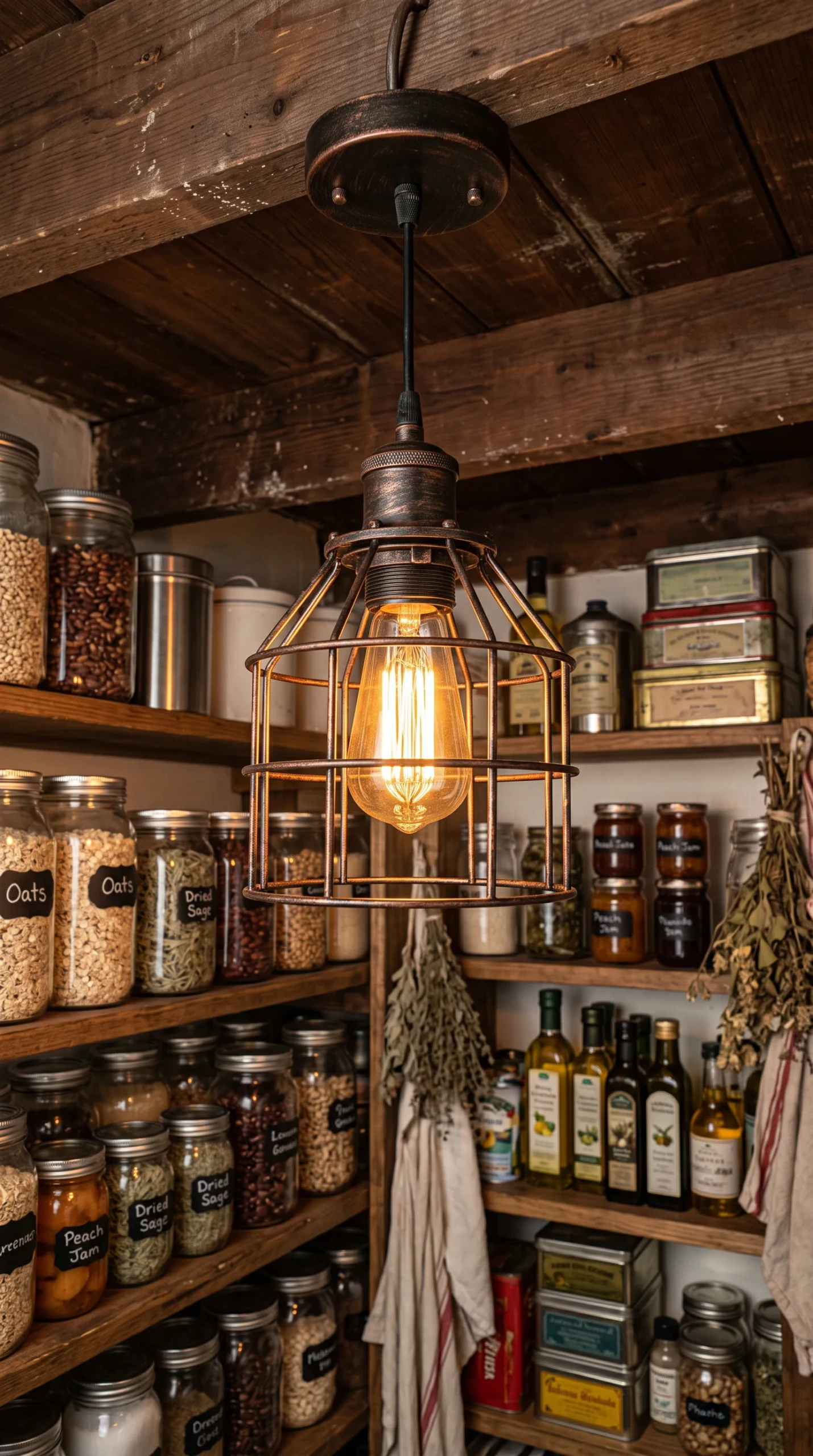
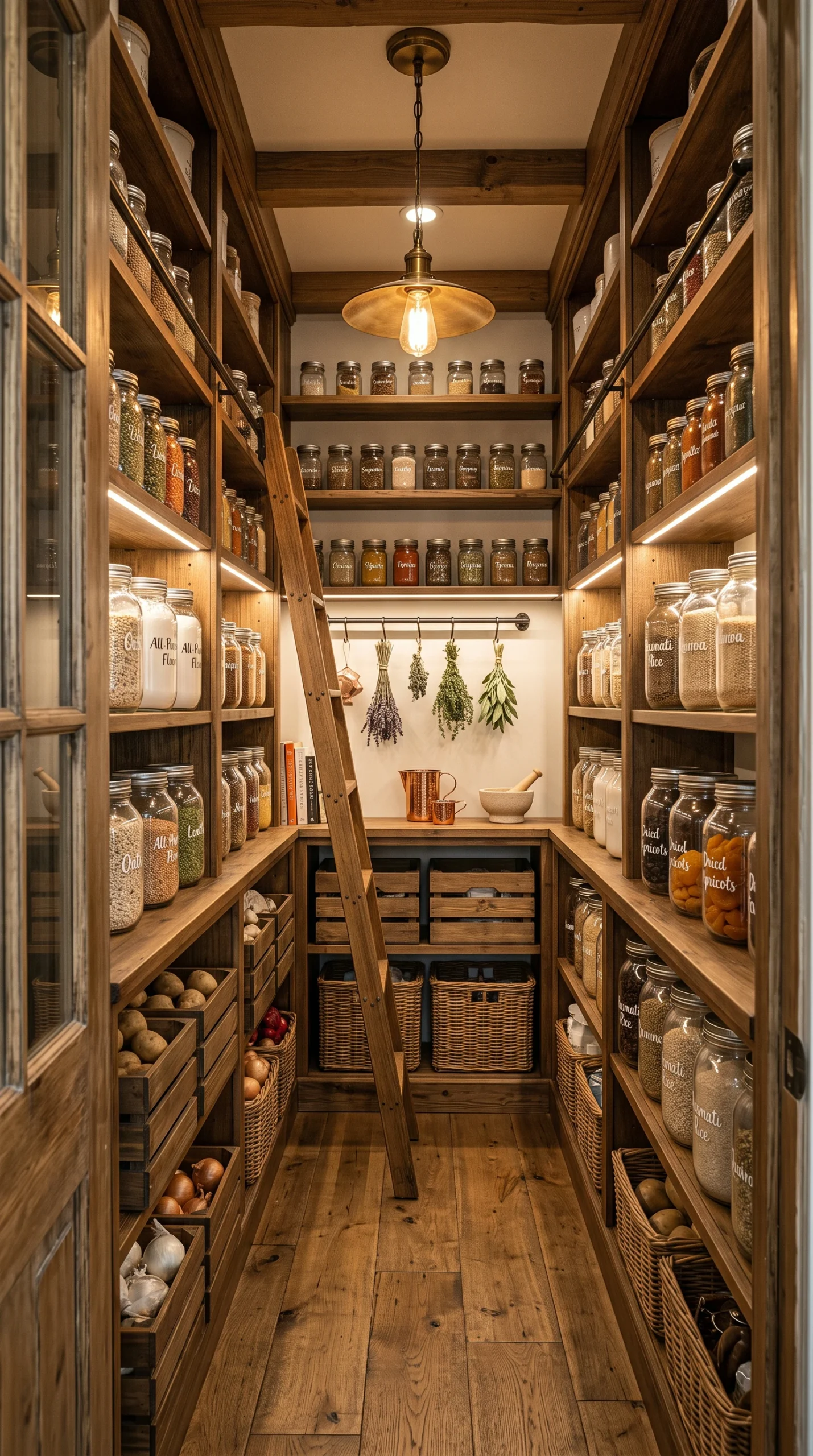
Airtight glass canning jars arranged in tiered rows replace commercial packaging, keeping dry grains fresh while displaying organic culinary colors.
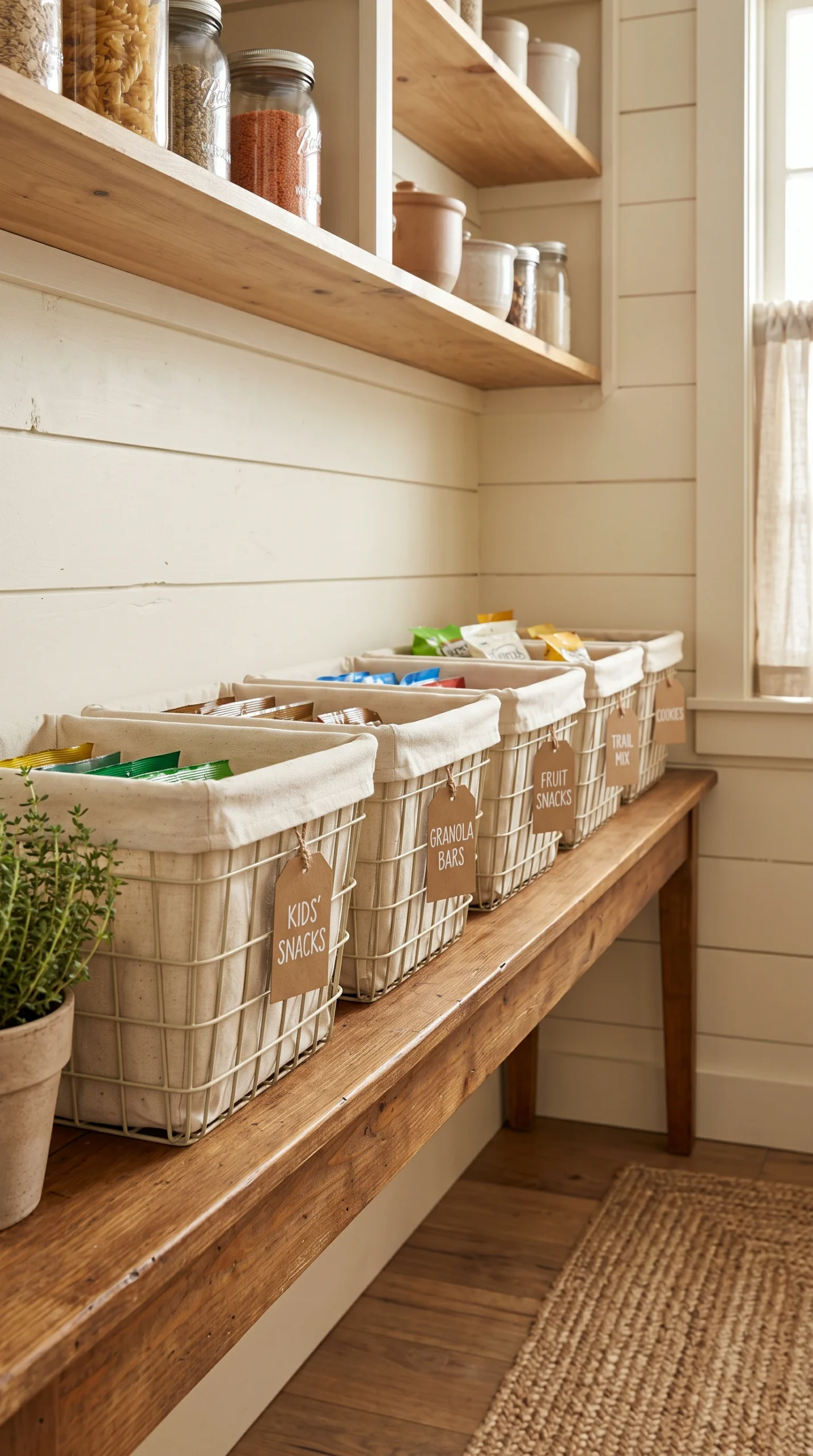
Rustic black wire baskets with washable linen canvas liners contain loose produce and snack bags while preventing onion skins and dirt from dropping through shelves.
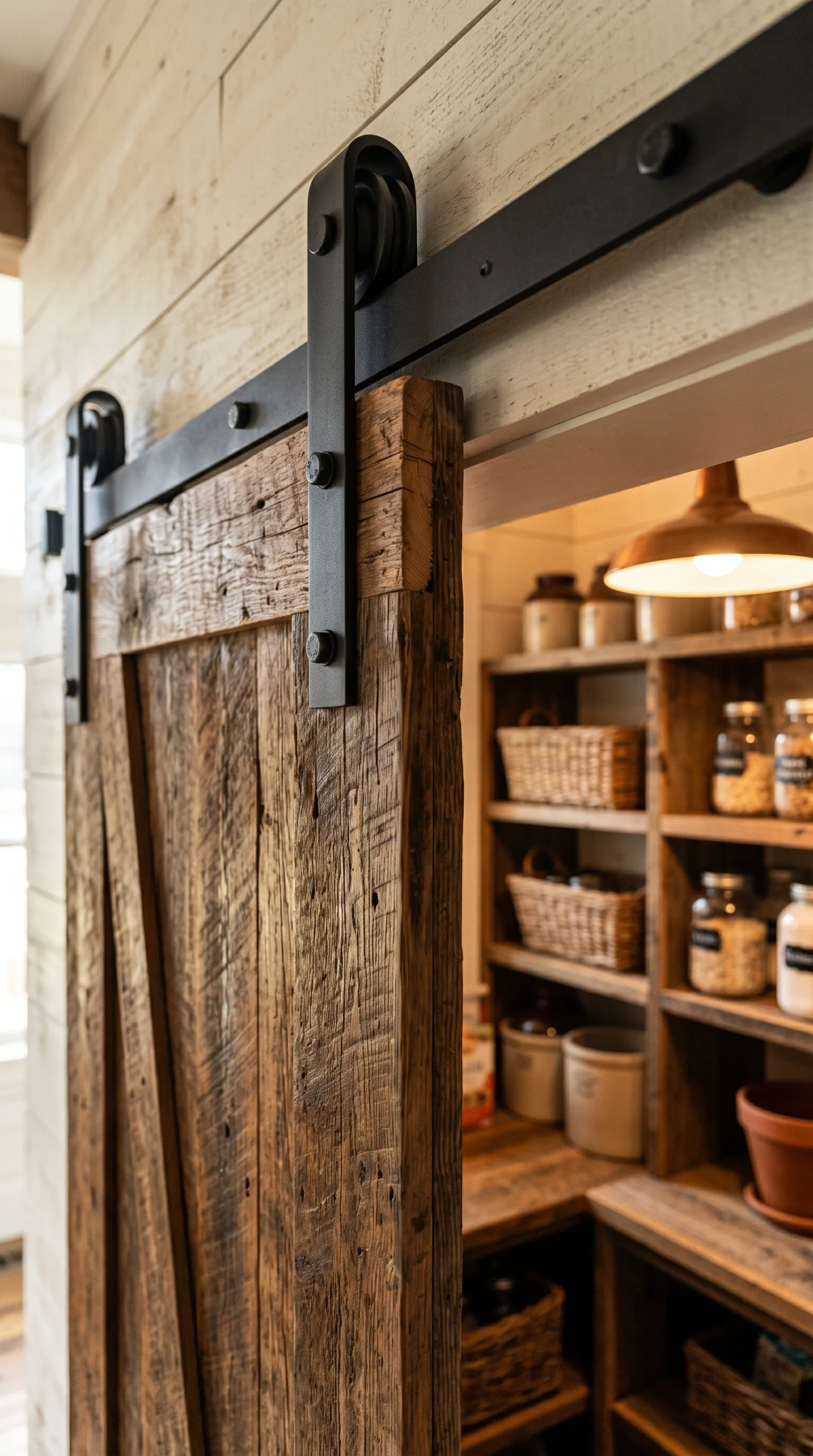
Heavy-duty top-hung track hardware paired with a salvaged timber door adds architectural drama while conserving exterior kitchen floor clearance.
Structural matte black iron brackets anchored directly into 2x4 framing studs support heavy stoneware crocks and seasonal cast iron cookware safely.
The modern farmhouse aesthetic remains one of the most enduring movements in residential kitchen design. At its heart, the farmhouse philosophy celebrates warmth, practical craftsmanship, and a deep connection to culinary traditions. Unlike sterile, ultra-slick contemporary spaces, a farmhouse pantry feels grounded, lived-in, and inherently welcoming. It recalls an era when the household larder was the operational engine of the home, storing home-canned preserves, sacks of stone-ground flour, and fresh garden root vegetables.
However, designing an authentic farmhouse pantry requires a delicate balance. Without thoughtful architectural restraint and precision organization, rustic charm can quickly devolve into visual clutter and inefficient storage. As explored across our comprehensive curation of pantry design and organization, understanding vertical clearances, visual accessibility, and joinery transforms everyday home storage and organization into an enduring domestic pleasure.
In a farmhouse pantry, the walls should never be treated as plain drywall afterthoughts. Cladding vertical surfaces with horizontal nickel-gap shiplap or vertical beadboard establishes immediate texture and historic authenticity while creating a rugged surface that withstands daily pantry traffic.
Choose solid 1/2-inch or 3/4-inch pine or poplar boards rather than thin MDF paneling. Solid wood boards provide substantial screw-holding power, allowing you to anchor lightweight utility hooks, aprons, and market bags directly into the wall cladding without searching for studs. Paint shiplap in durable satin or eggshell enamels in historic neutrals: warm linen, antique cream, or heritage sage green. If you are comparing farmhouse aesthetics with contemporary styles, explore modern pantry ideas.
Thin, builder-grade laminated boards feel out of place in a rustic aesthetic. Instead, farmhouse design celebrates substantial, chunky wooden planks measuring 1.5 to 2 inches thick. However, raw reclaimed barn wood presents practical food storage challenges: antique boards often cup or twist, and porous grain absorbs cooking oils, leaving permanent dark stains that harbor rancid odors and bacteria.
To retain the natural, untreated look of timber without sacrificing hygiene, plane the top face of the board perfectly flat with a thickness planer, sand smooth to 180-grit, and apply two coats of a premium matte hardwax-oil (such as Rubio Monocoat or Osmo Polyx). This molecularly seals the wood pores, creating an impermeable, food-safe surface that can be wiped clean with warm water. For structural calculations on shelf thickness and stud anchoring, review our guide on pantry shelving ideas.
Farmhouse design rejects hidden shelf brackets in favor of expressive, structural hardware that celebrates craftsmanship. Heavy hand-forged matte black wrought iron corbels or industrial 3/4-inch black pipe flanges add rugged architectural definition. Always lag brackets directly into wall studs using 3-inch black structural screws spaced no more than 32 inches apart to safely support heavy cast iron cookware, Dutch ovens, and home-canned jars.
If you are reconfiguring a small pantry closet, see how chunky shelving coordinates with compact layouts in our guide on small pantry ideas.
Installing a sliding barn door mounted on an exposed black steel track is a quintessential farmhouse design feature. It introduces rustic texture to the kitchen while conserving exterior walkway space. However, a heavy sliding barn door hanging from top trolley rollers behaves like a pendulum without bottom tracking.
Route a 1/4-inch wide by 1/2-inch deep continuous groove along the bottom edge of the door slab, and anchor a concealed nylon T-guide directly into the flooring beneath the door overlap. This keeps the door tracking in a perfectly straight, rattle-free line and prevents friction against baseboards. For alternative swinging door styles and hinge mounting tips, review our detailed guide on pantry door organization ideas.
A farmhouse pantry avoids synthetic plastics in favor of natural glass, ceramic, wire, and woven fibers:
For container decanting tips, airtight seals, and inventory labeling, explore pantry storage ideas.
If your farmhouse pantry includes awkward 90-degree corners, integrate continuous L-shaped wooden shelves or heavy-duty rotating turntables as detailed in our guide on corner pantry ideas.
For large walk-in back kitchens with rolling library ladders and butcher-block counters, explore our comprehensive guide on walk-in pantry ideas. If you are executing a complete room makeover, review step-by-step demolition and paint protocols in pantry makeover ideas, and discover holistic kitchen layout rules in our master capstone on pantry organization ideas.