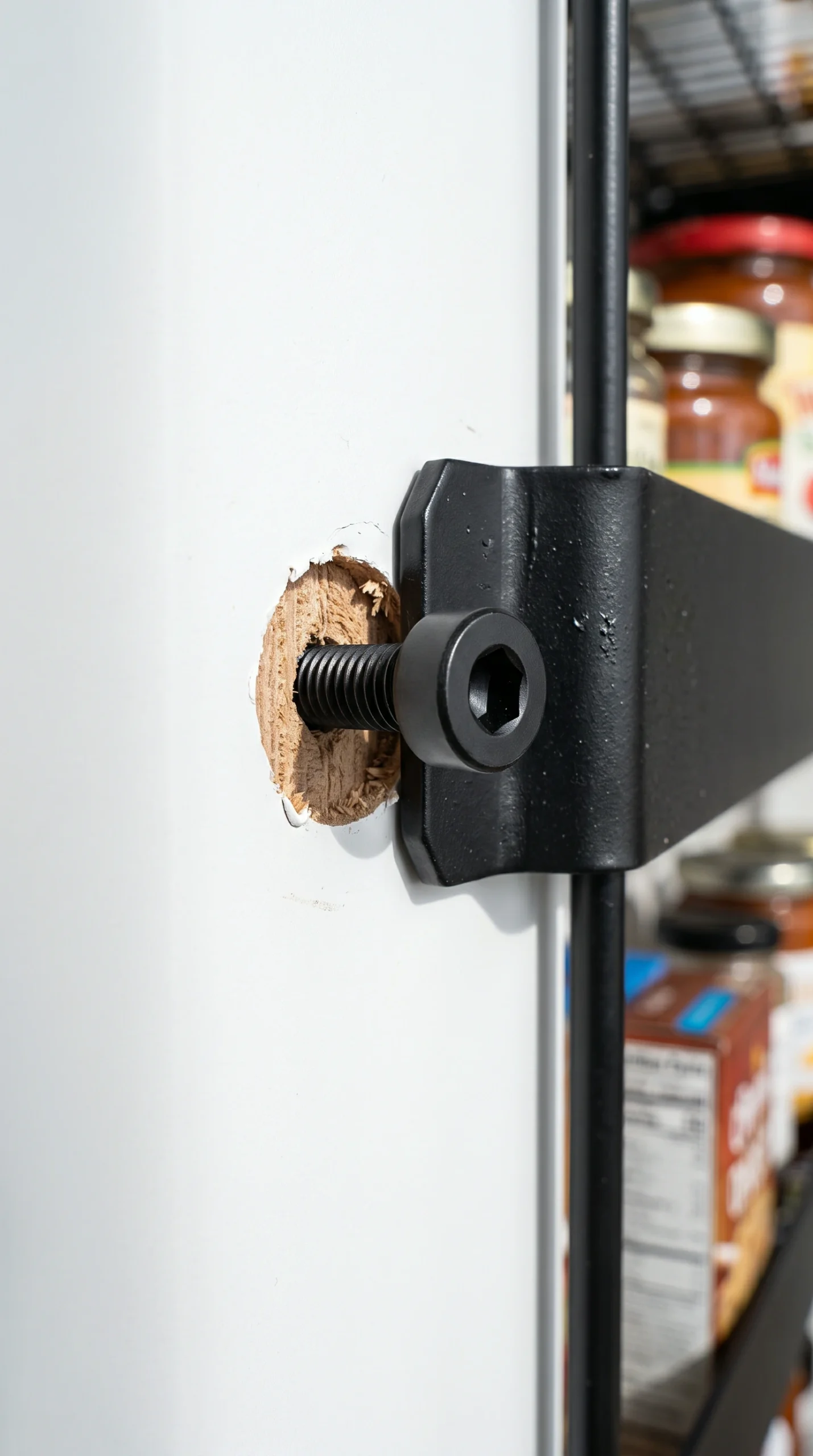
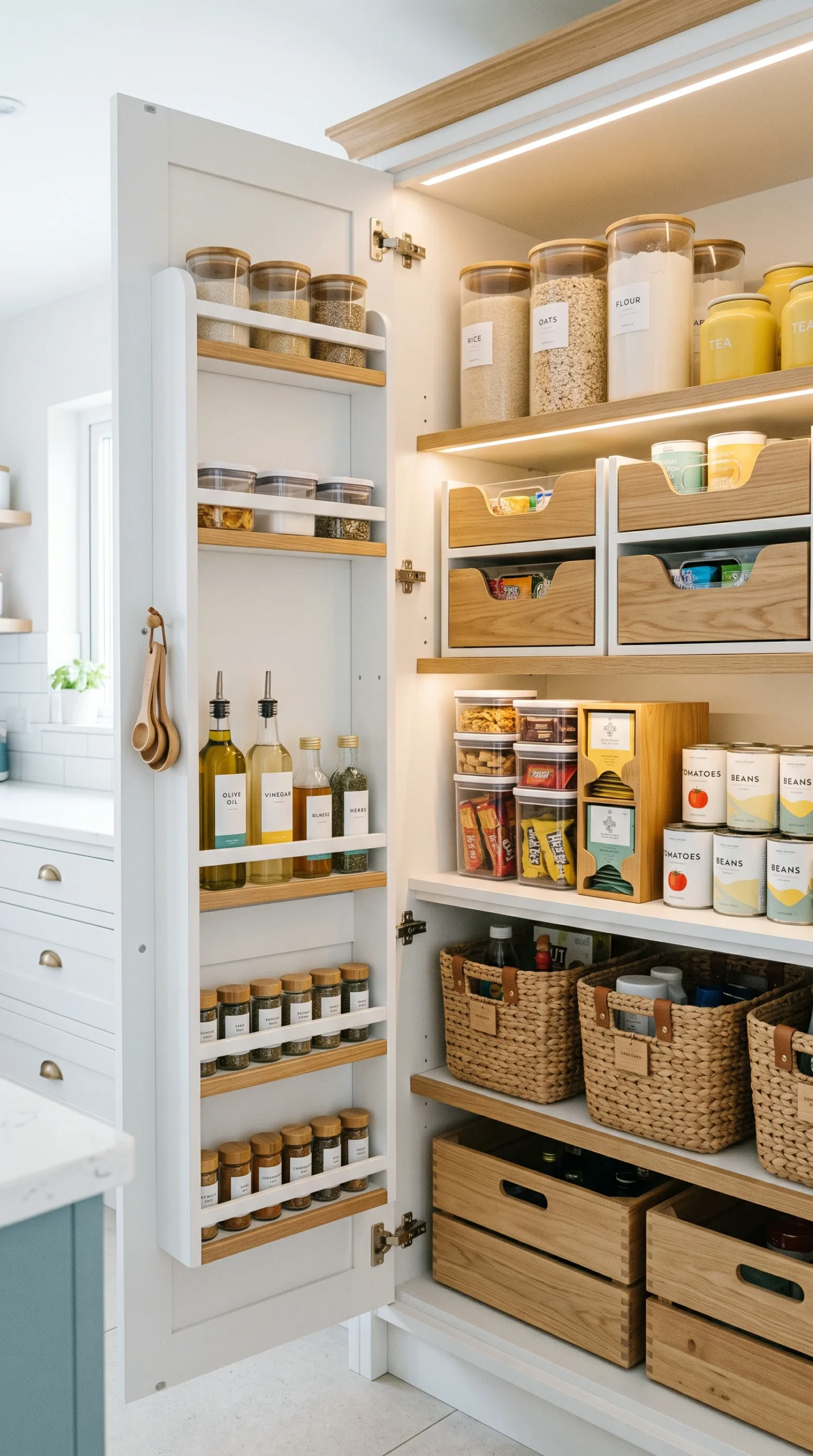
Replacing upper hinge screws with 3-inch framing screws anchors the door directly into structural wall studs, safely supporting up to 25 pounds of dynamic door storage without sagging.
Maintaining a minimum 5-inch setback between interior shelf fronts and the closed door face prevents mounted baskets from colliding with internal dry goods upon closure.
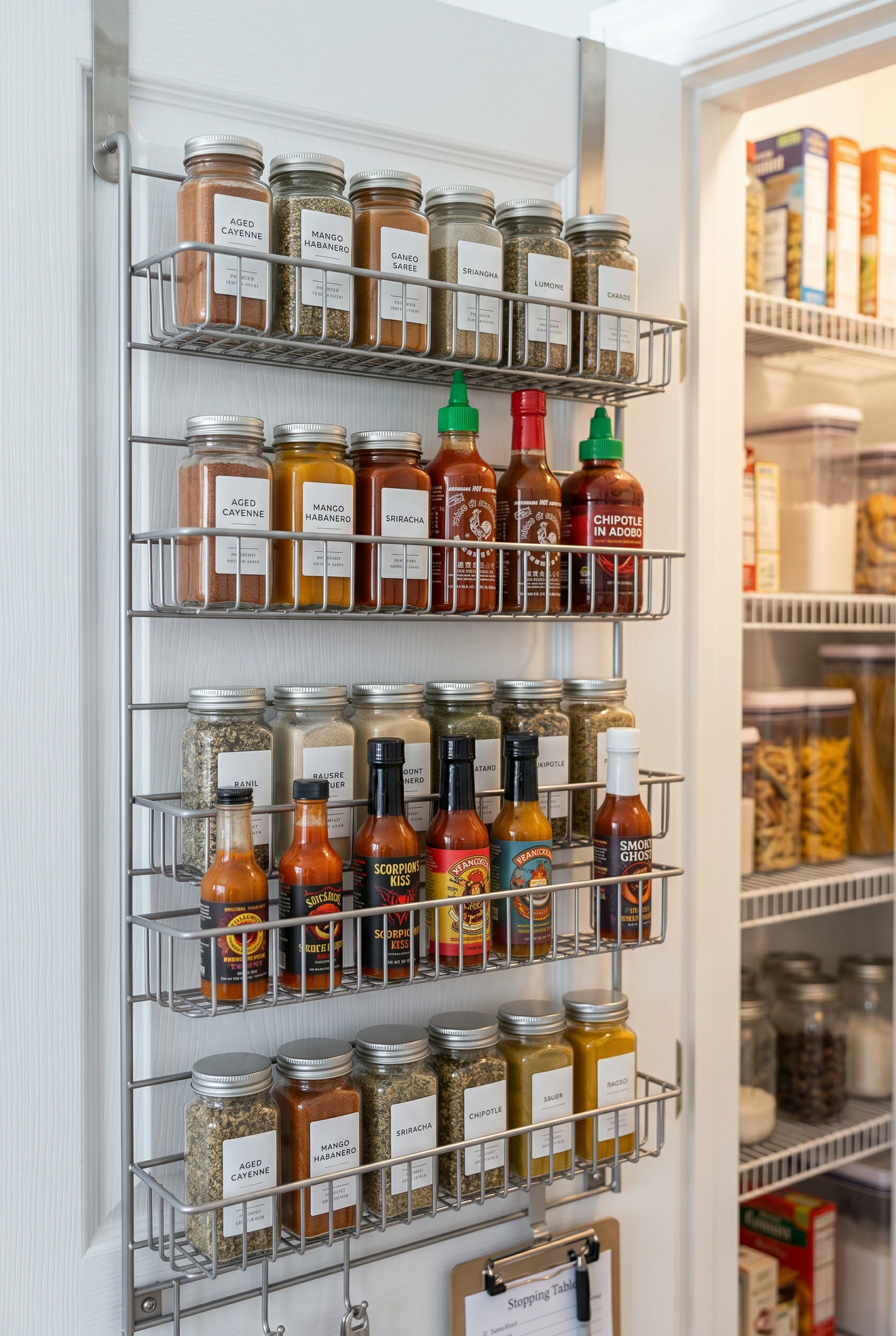
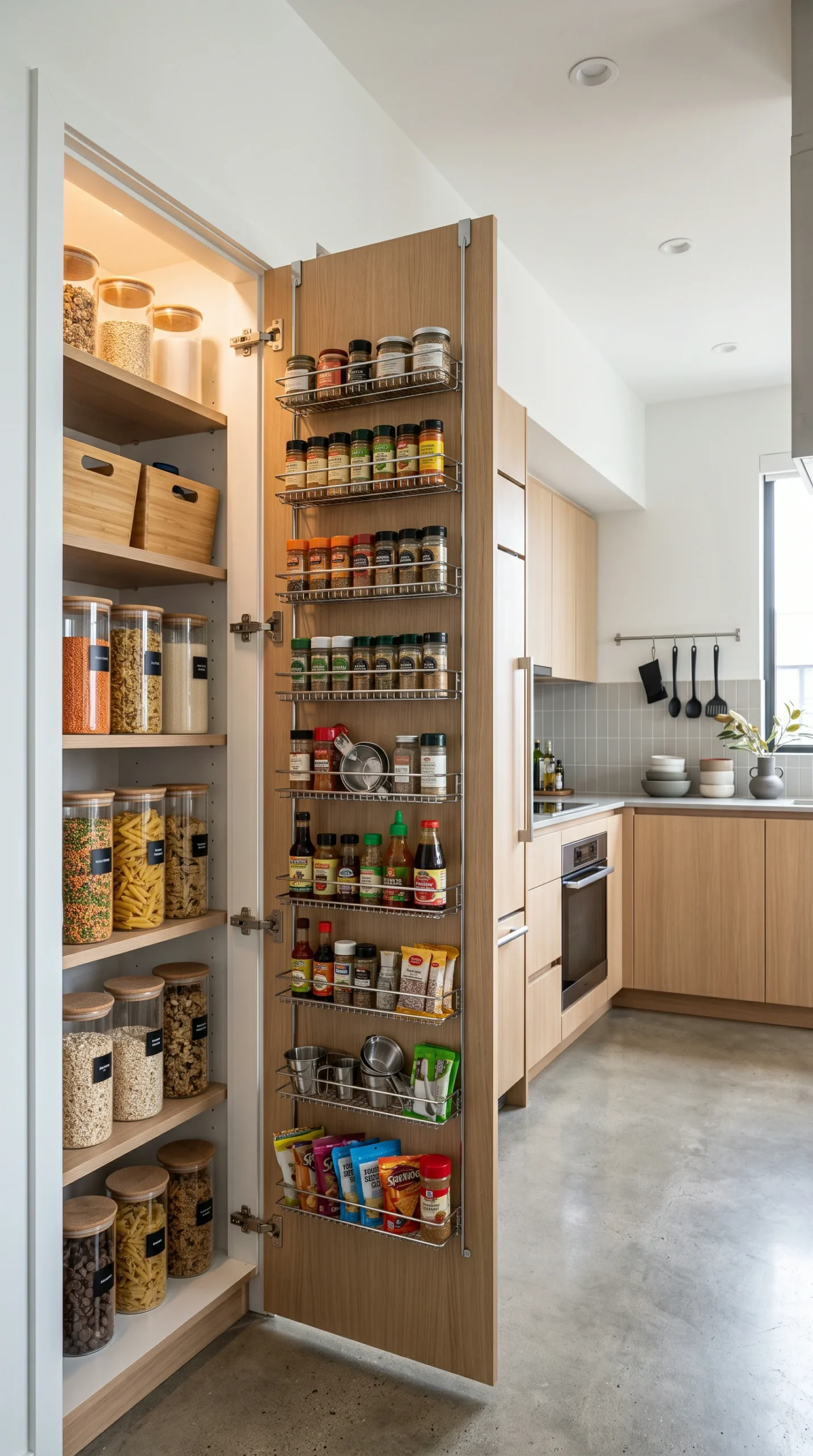
Central steel standard track rails allow continuous vertical adjustments for wire baskets, accommodating tall hot sauce bottles and short spice tins alike.
Utilizing specialized hollow-door snap toggles or over-the-door top brackets prevents screw tear-out on lightweight builder-grade interior pantry doors.
Shallow transparent front bins keep seasoning packets, gravy mixes, and small baking extracts upright, visible, and separated without sliding around.
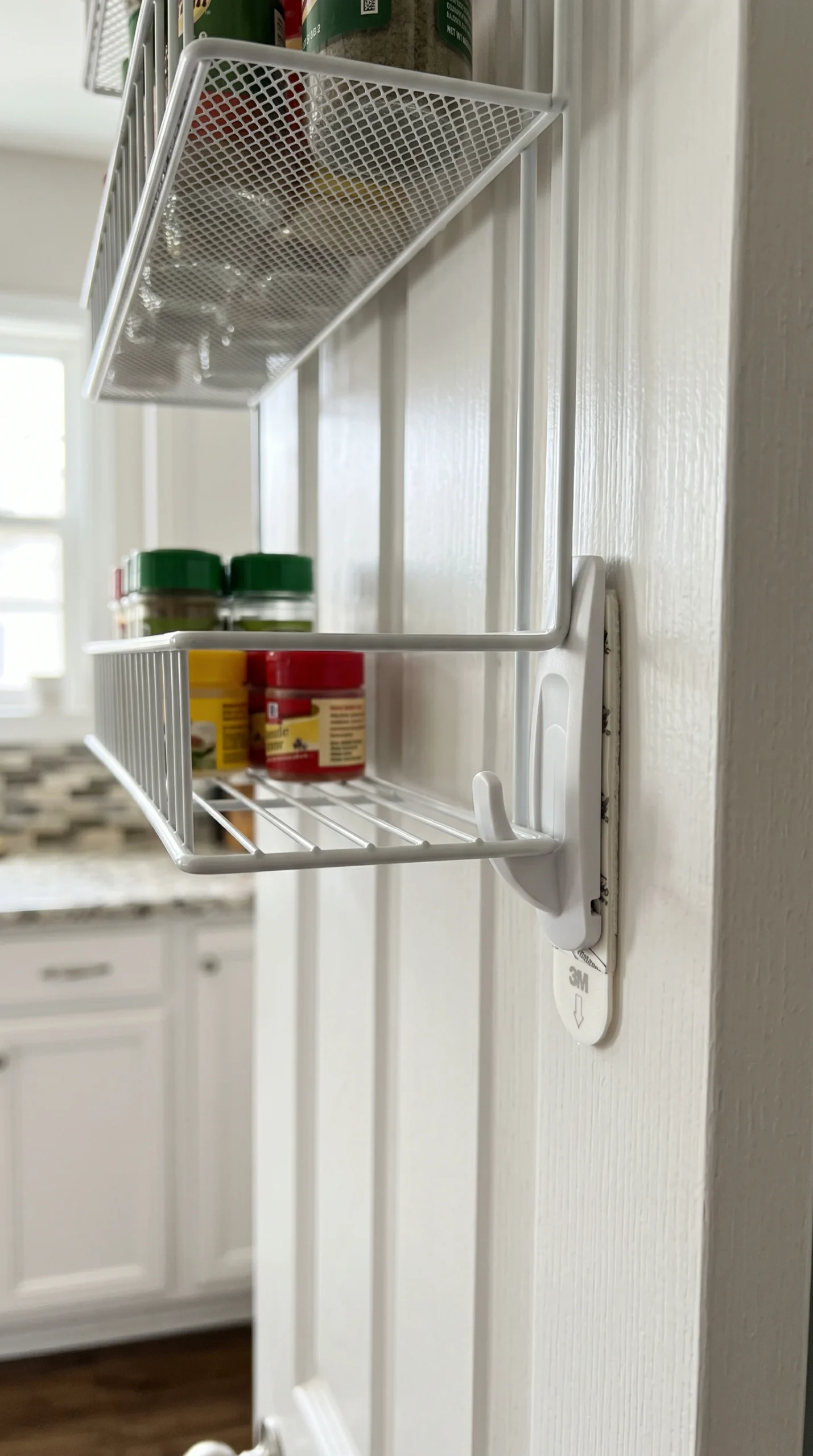
Heavy-duty interlocking adhesive pads or silicone bumpers placed behind the lower rack frame eliminate rattling and metal-on-wood knocking during door swings.
In compact and mid-sized kitchens, floor space and shelf real estate are perpetually constrained. Every cubic inch of storage matters, yet homeowners frequently overlook one of the highest-yielding storage surfaces in their homes: the back of the pantry door. A standard interior door provides between 14 and 17 square feet of flat vertical area that can comfortably organize dozens of small items that otherwise clutter deep pantry shelves.
However, mounting an effective pantry door organizer is an engineering exercise that demands more than hooking a wire rack over the top rail. Without careful planning, door racks cause interior doors to sag, scratch jambs, collide with internal shelving, or clatter noisily with every open and close. As explored across our comprehensive curation of pantry design and organization, understanding vertical clearances, visual accessibility, and joinery transforms everyday home storage and organization into an enduring domestic pleasure.
The single most common mistake in pantry door organization is purchasing an over-the-door rack without verifying the clearance between the closed door and the interior pantry shelves. Most commercial door-mounted wire racks and modular basket systems project between 4 and 5.5 inches outward from the interior door face. When the pantry door closes, these baskets swing directly into the pantry interior.
A functional door organizer installation requires a minimum 5.5-inch void between the interior face of the closed door and the front leading edge of your interior pantry shelves. If your shelves extend flush to the door jamb, you must step back the front edges of existing wooden shelves by 5 to 6 inches, or position door rack baskets only at elevations corresponding to vertical gaps between shelves. For structural woodworking guidance on shelf depths, consult pantry shelving ideas.
Before driving fasteners, you must determine whether your pantry door is hollow-core or solid-core:
If you are optimizing a tight kitchen footprint, see how door storage coordinates with overall closet layout in our guide on small pantry ideas.
Standard residential interior doors are hung with two or three 3.5-inch brass or zinc butt hinges held in place by short 3/4-inch screws that penetrate only into the 3/4-inch pine door jamb. Because a door rack holds weight suspended 1 to 2 feet away from the hinge pivot, every door swing multiplies the perceived rotational torque on the top hinge.
Strictly cap total door storage contents at 20 to 25 pounds. Furthermore, reinforce the top hinge by backing out two 3/4-inch screws from the wall leaf and driving two 3-inch hardened #9 construction screws through the jamb directly into the 2×4 framing studs behind the wall. This anchors the door’s rotational weight directly into your home’s structural framing.
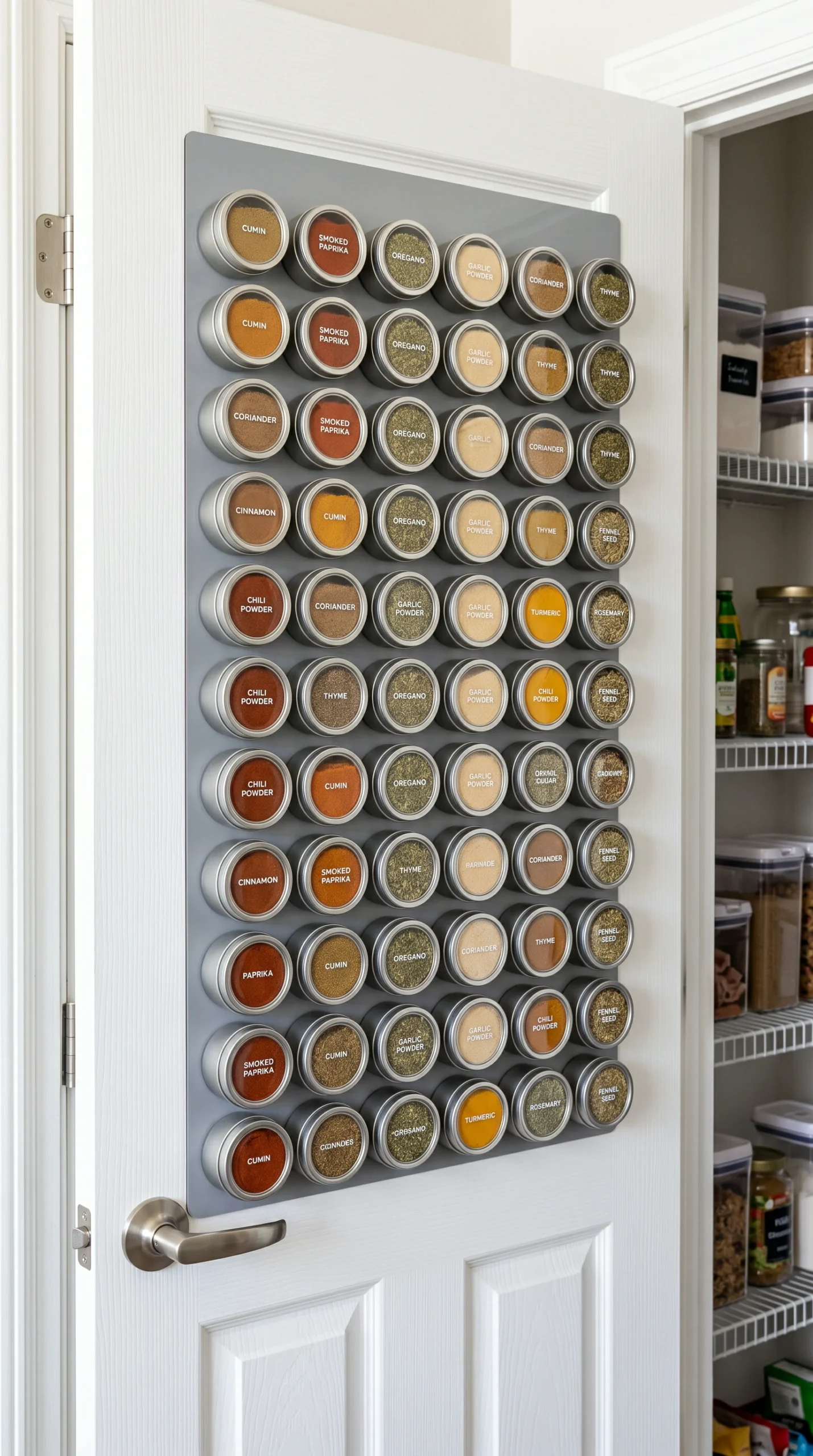
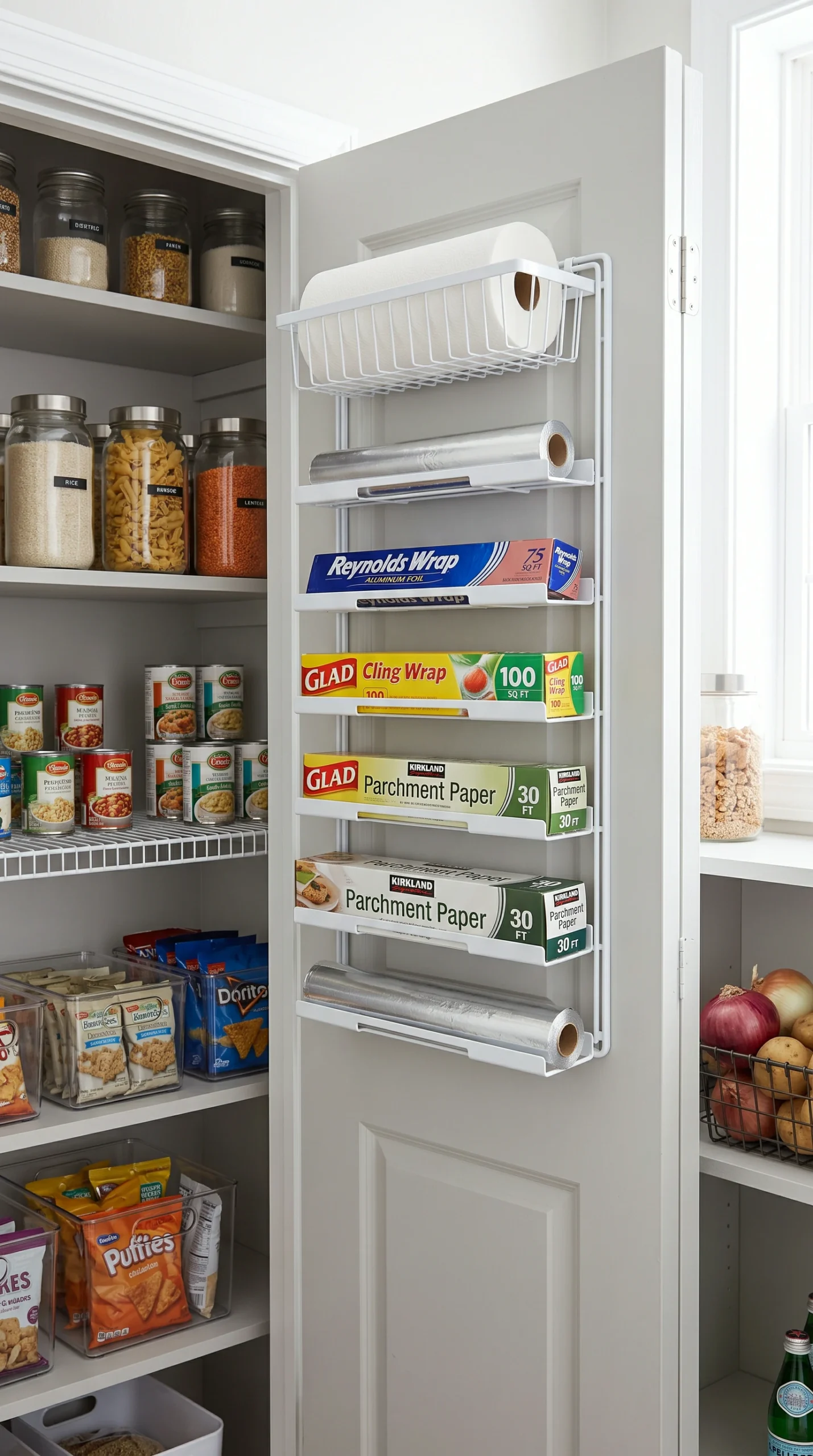
Because a pantry door sweeps through a 90-to-180-degree arc, items stored on the door are subjected to centrifugal force. Thoughtful vertical zoning ensures daily efficiency while preventing dropped containers:
For advice on canister decanting and high-visibility labeling across all kitchen spaces, explore our comprehensive guide on pantry storage ideas.
The biggest daily annoyance of over-the-door pantry racks is mechanical noise. Every time the door moves, loose metal hooks rattle against the top of the door, and the bottom of the rack knocks against the wood frame. Apply self-adhesive high-density felt tape along the interior contact surfaces of over-the-door brackets, secure the bottom rail with heavy-duty Command interlocking picture hanging strips, and line wire basket bottoms with thin silicone shelf liners to cushion glass jars.
If your pantry features an angled corner door, verify diagonal doorway clearances by checking our guide on corner pantry ideas. For modern aesthetic integration, explore modern pantry ideas, examine luxury prep suites in walk-in pantry ideas, and discover whole-room workflow planning in our master capstone on pantry organization ideas.