Pantry Shelving Ideas for Better Storage and Organization

The structural integrity and daily efficiency of any kitchen larder depend entirely upon the engineering of its shelving system. Moving beyond flimsy, sagging wire racks requires an architectural approach: calibrating load-bearing 3/4-inch hardwood substrates, implementing stepped vertical depth profiles from 10 to 18 inches, and utilizing adjustable twin-track standards or bespoke walnut joinery to create a permanent, high-capacity food storage foundation.

Curated Visual Gallery: High-Performance Architectural Pantry Shelving

Explore eight masterfully engineered pantry shelving installations, showcasing floor-to-ceiling adjustable white track systems, aged brass architectural brackets supporting solid ash planks, stepped vertical depth configurations, wraparound L-shaped walnut joinery, under-shelf wire bread baskets, and dark oak floating shelves. Each design highlights the union of structural joinery and culinary organization.

Core Architectural Principles for Pantry Shelving

Six structural woodworking guidelines detailing load-bearing plywood substrates, stepped vertical depths, adjustable wall tracks, and oil-resistant finishes.

Floor-to-Ceiling Wall-Track Systems with Adjustable Timber Planks

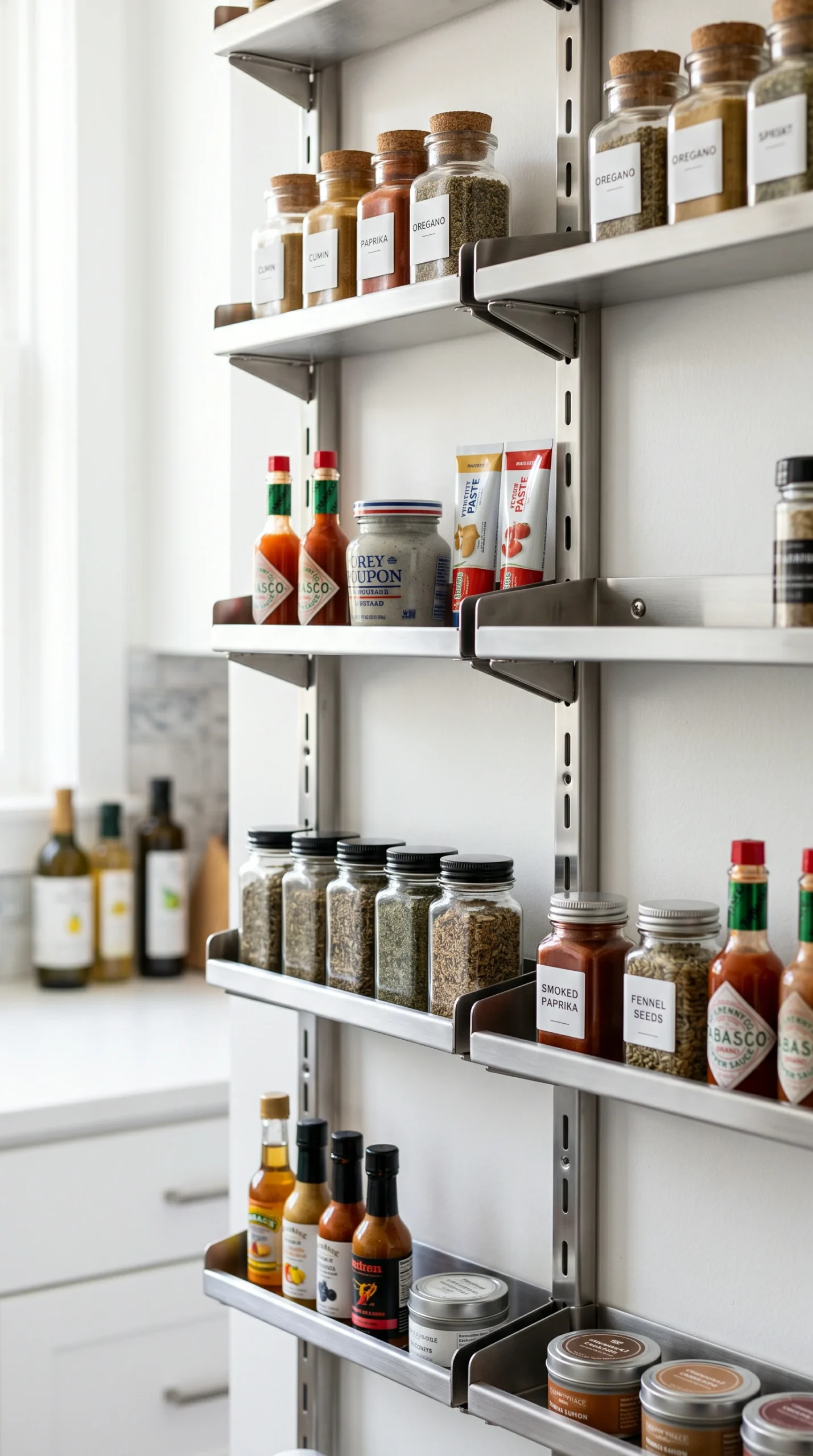
Maximize vertical capacity with heavy-duty dual-slotted steel wall tracks paired with crisp white painted timber shelves. Anchored directly into wall studs with 3-inch cabinet screws, this industrial-strength system allows effortless reconfiguration of shelf heights as storage needs shift between seasonal bulk shopping and everyday meal prep.

Aged Brass Heavy-Duty Architectural Brackets with Solid Ash Planks

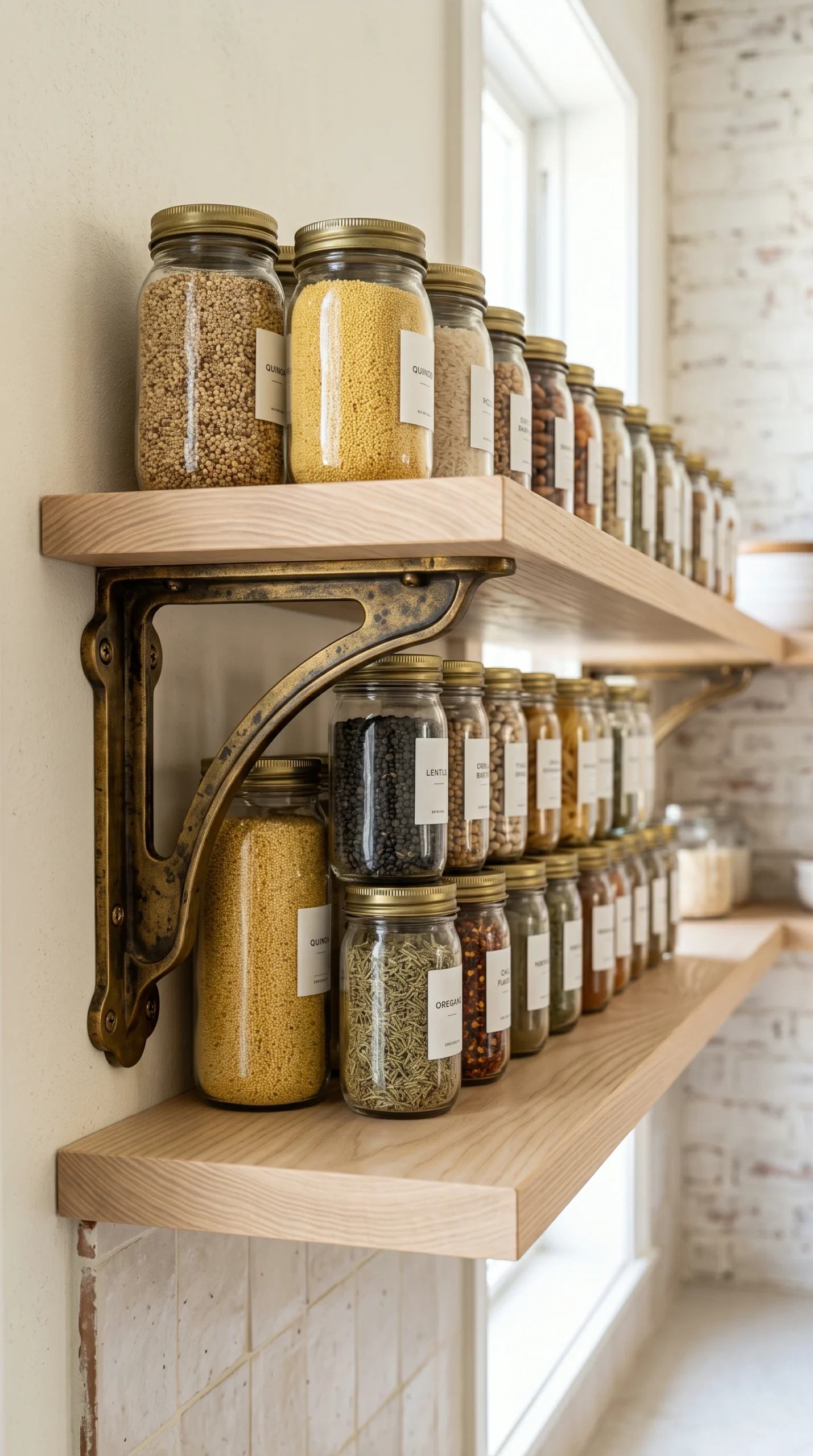
Elevate a residential larder with vintage-inspired solid cast aged brass brackets supporting 1-1/2-inch thick solid ash wood shelves. The warm, honeyed tones of natural ash paired with artisanal brass hardware transform utilitarian storage into a high-end pantry showcase. Seal the wood with matte hardwax-oil to resist grease stains while preserving raw organic wood grain.

Stepped Vertical Hierarchy: Shallow Upper Tiers and Deep Lower Bases

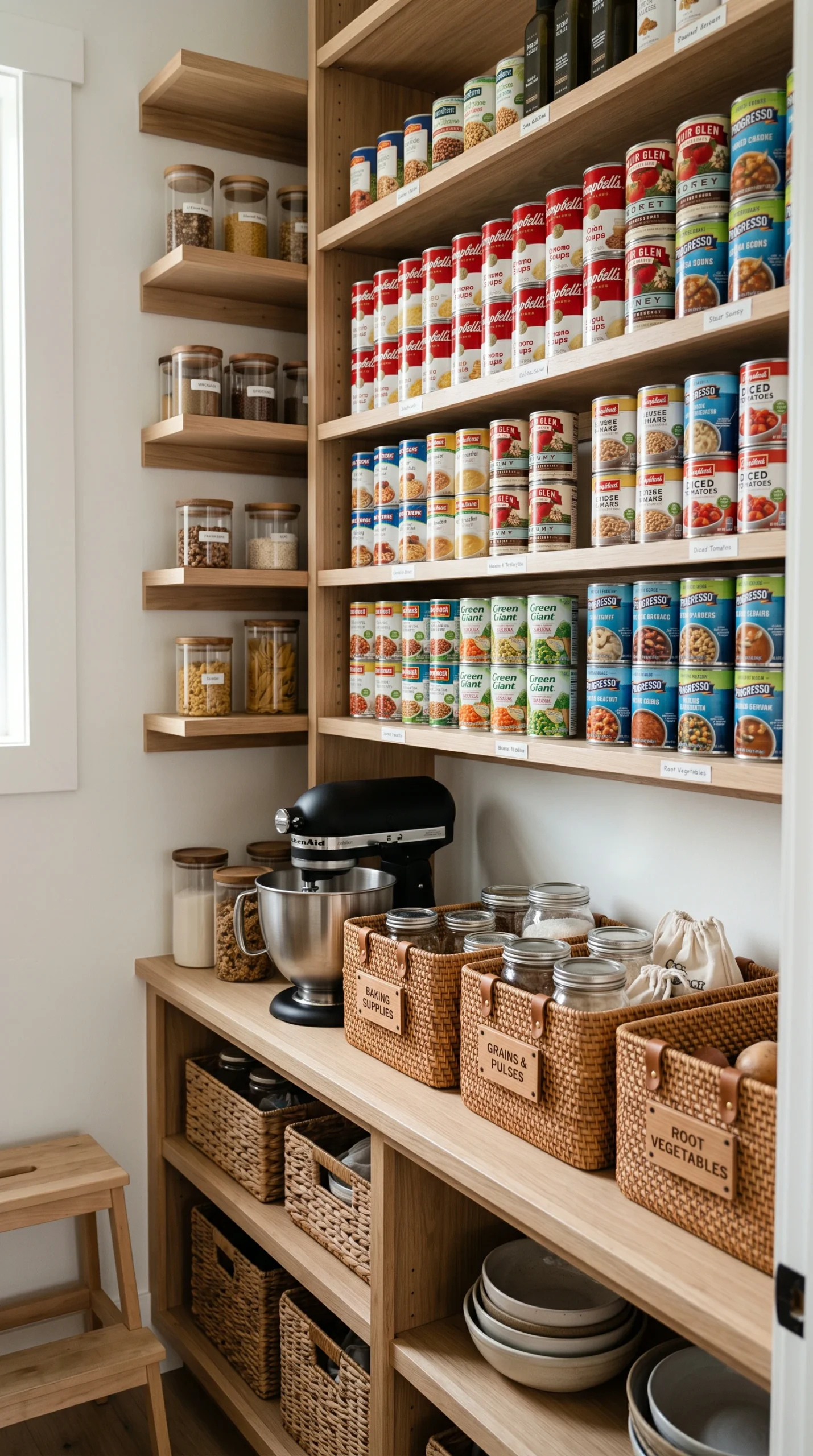
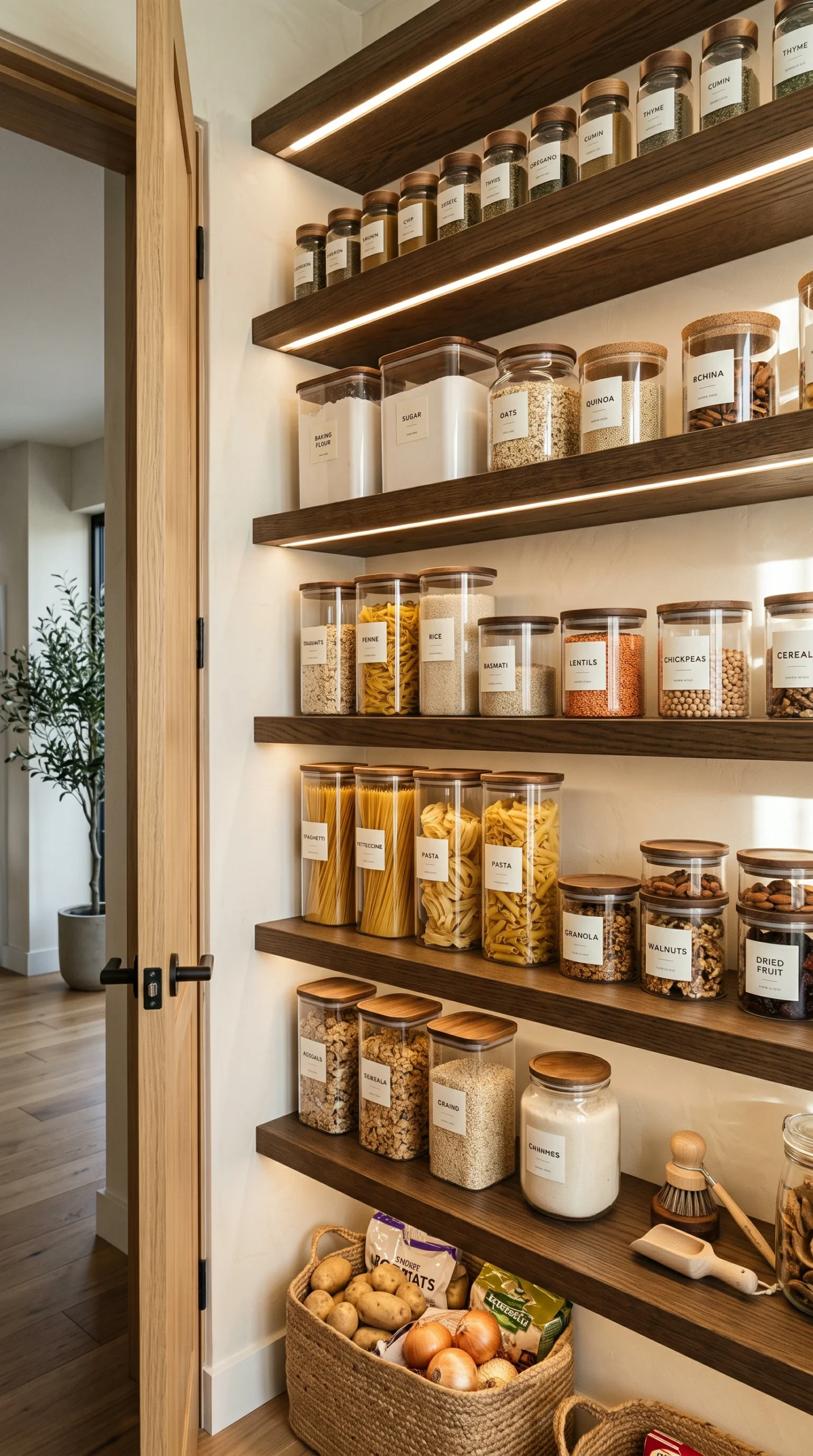
Eliminate hidden food items by engineering a stepped depth profile: position shallow 10-inch shelves at eye level for canned goods and spices, expanding to an 18-inch reinforced base shelf below waist height. Staging heavy kitchen appliances—such as stand mixers and food processors—on the deep lower ledge keeps them accessible without consuming high-frequency eye-level space.

Seamless L-Shaped Wraparound Walnut Corner Shelving

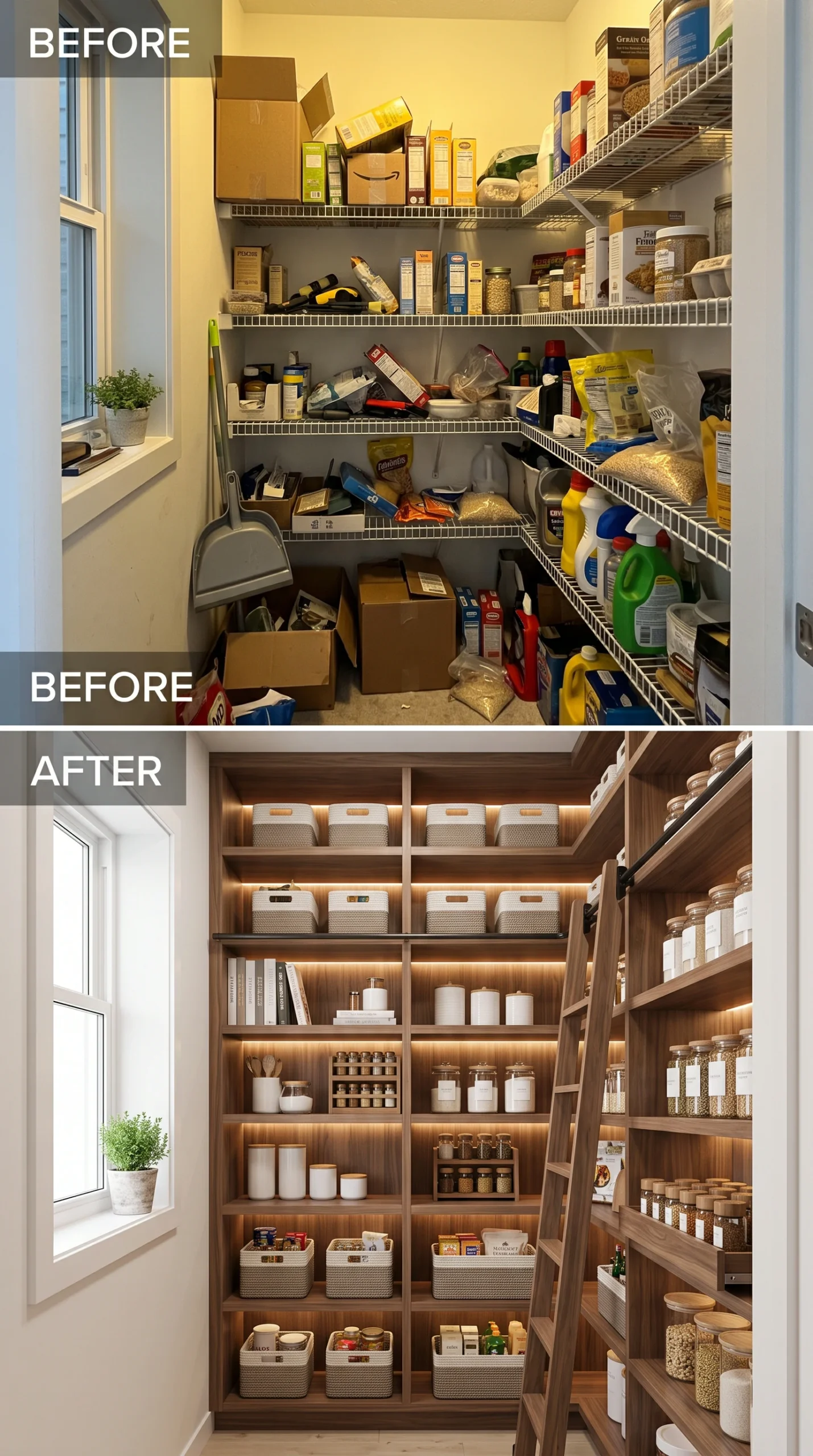
Conquer difficult 90-degree corners with custom American walnut shelving joined with precision biscuit or mortise joinery. A continuous L-shaped corner shelf eliminates awkward gaps and supports heavy stoneware bowls and decanted glass jars without dead zones. The rich dark walnut grain provides a sophisticated, moody backdrop that highlights white ceramic storage pieces.

Under-Shelf Wire Baskets for Artisan Bread and Fresh Linens

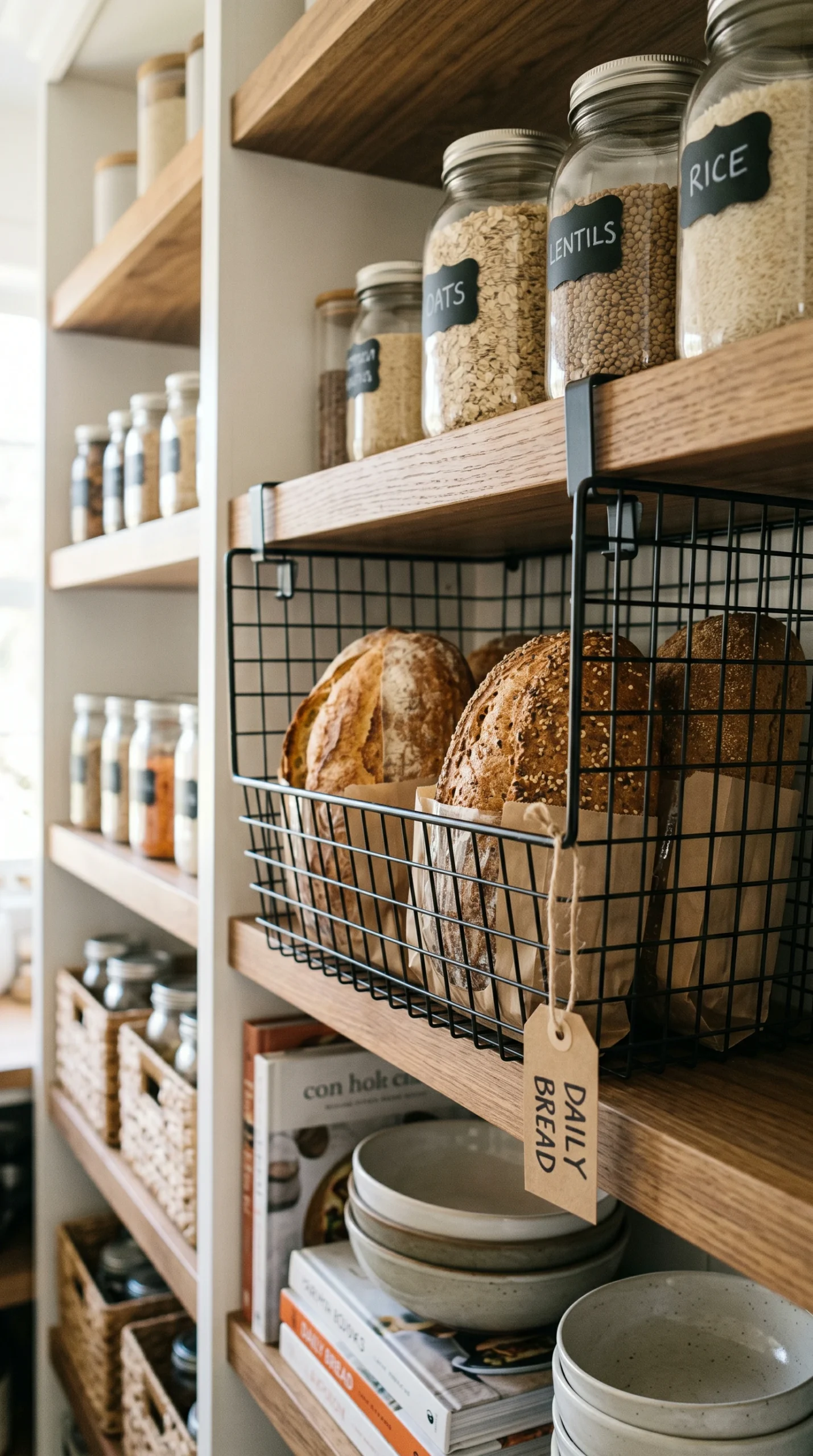
Capture unutilized vertical airspace between shelves by sliding matte black wire friction baskets onto shelf fronts. These suspended ventilated wire cradles provide the ideal airy resting environment for fresh artisan bread loaves, rolled kitchen towels, and snack packages, keeping delicate food items from getting crushed beneath heavier canned goods.

Full-Extension Clear Acrylic Deep Shelf Pull-Out Bins

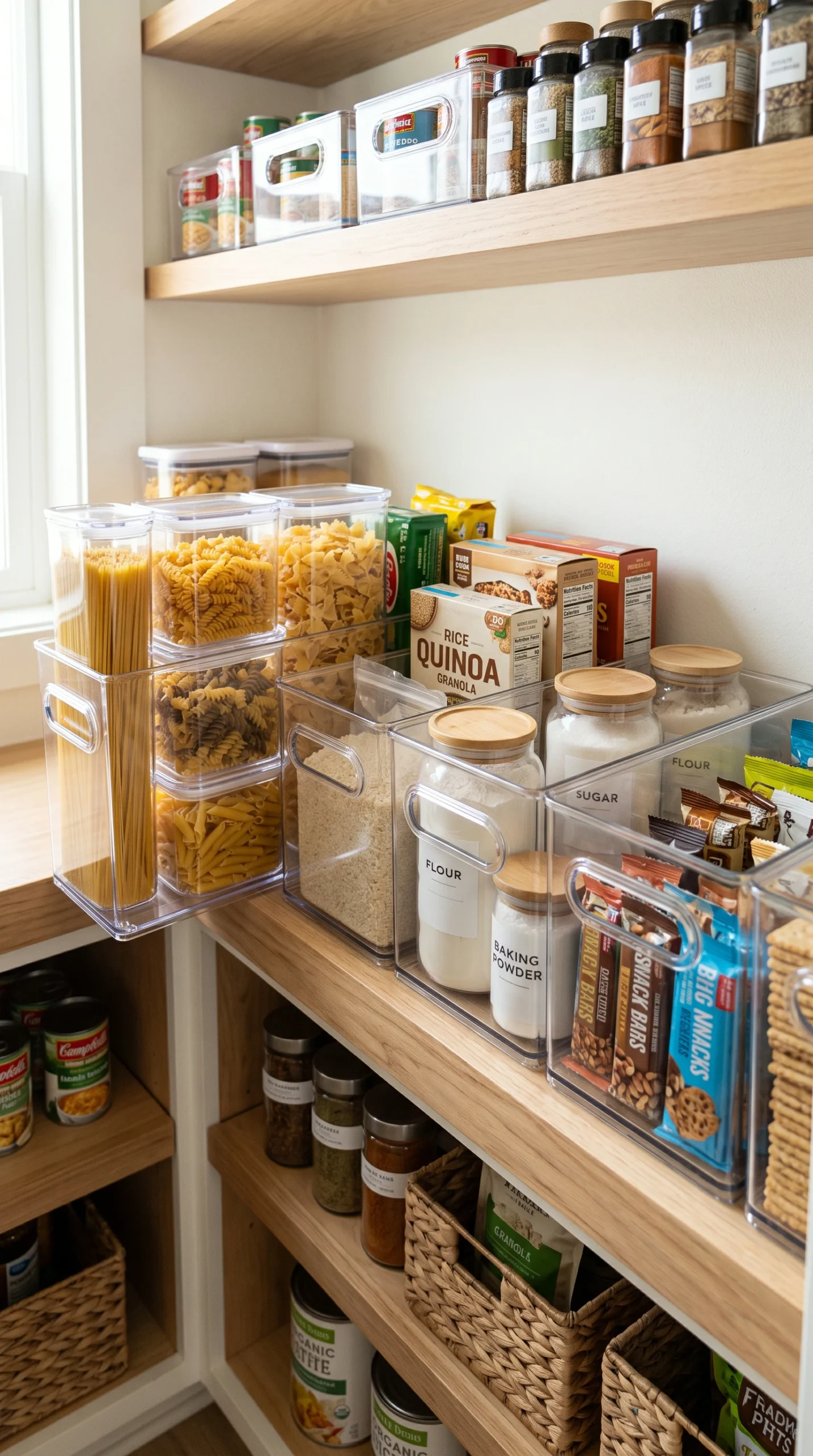
Transform deep 16-inch lower timber shelves into high-visibility pull-out drawer systems using heavy-duty clear acrylic bins with handles. Sliding entire categorized bins forward gives immediate access to bulk pasta, dry legumes, and specialty sauces stored in the back, preventing items from being pushed into dark corners and forgotten.

The Architectural Blueprint for Pantry Shelving and Structural Joinery

The pantry shelf is the workhorse of the residential kitchen. While decorative cabinet doors and stone islands command visual attention in open living areas, the domestic infrastructure of food preservation and meal preparation relies entirely on the structural integrity of internal shelving. Poorly designed pantry shelves—whether sagging particleboard, cavernous depths where food expires, or flimsy wire grids that topple tall spice bottles—generate daily friction and food waste. Exceptional shelving is an exercise in structural woodworking and human ergonomics.

Before cutting lumber or mounting wall tracks, analyze your available footprint and walkway envelopes by consulting our comprehensive guides on small pantry ideas and spacious scullery layouts in walk-in pantry ideas. As demonstrated across our curation of pantry design and organization, intelligent joinery elevates everyday home storage into an enduring art form.

Engineering Shelving Substrates and Sag Calculations

The primary point of failure in residential pantries is shelf deflection (sagging). A 36-inch shelf holding canned goods, flour canisters, and cast-iron cookware frequently supports between 60 and 90 pounds of sustained dead load. Understanding material physics prevents structural failure:

  • Builder-Grade Particleboard / Melamine: Made of compressed wood particles and glue, 5/8-inch particleboard has very low elasticity. Across spans exceeding 28 inches, a particleboard shelf under 30 pounds of canned goods will develop a permanent, unsightly sag within six months. Furthermore, humidity from boiling pots or cooking steam causes raw particleboard edges to swell and crumble.
  • 3/4-Inch Cabinet-Grade Birch Plywood: The industry standard for bespoke cabinetry. Composed of 7 to 9 alternating cross-laminated hardwood veneers, 3/4-inch plywood easily supports 85 to 100 pounds across a 36-inch span with less than 1/32-inch deflection.
  • Solid Hardwood Planks (White Oak, Ash, Walnut): Exceptional natural beauty and load-bearing strength. Kiln-dried 3/4-inch to 1-inch solid hardwood boards support heavy loads without bending and can be sanded and refinished across decades of use.
  • Front Lip Stiffener Cleats: If a shelf span must exceed 36 inches (up to 48 inches), glue and nail a solid 1×2 hardwood face nosing along the underside of the front edge. This creates an L-beam structural profile that increases deflection resistance by more than 300%.

The Stepped Depth Pyramid Elevation Strategy

One of the most persistent errors in pantry planning is installing shelves of identical depth from floor to ceiling. A 16-inch deep shelf at eye level blocks natural light, creates dark under-shelf shadows, and encourages items to hide behind front rows. Conversely, an 11-inch shelf near the floor wastes valuable base square footage.

Implement the architectural ‘pyramid’ stepped depth profile:

  1. Base Tier (Floor to 36 Inches): Calibrate shelves to 16 to 18 inches in depth. This zone holds heavy stockpots, bulk beverage cases, and appliances (stand mixers, bread machines). Incorporate full-extension slide-out wooden drawers to bring heavy items out into the room without kneeling.
  2. Eye-Level Tier (36 to 65 Inches): Calibrate shelves to a shallow 10 to 12 inches. This shallow depth forces single- or double-row storage, ensuring every decanted jar, spice container, and canned soup label remains 100% visible at a glance.
  3. Upper Tier (65 to 96+ Inches): Calibrate shelves to 14 to 16 inches. This high zone holds lightweight, bulky seasonal items: roasting pans, paper towel bundles, and matching storage baskets accessed via a step stool.

Mounting Systems: Adjustable Twin-Tracks vs. Fixed Dados

While permanent dado joinery—routing 1/4-inch grooves into vertical casework panels—creates seamless furniture-grade cabinetry, it locks you into rigid shelf heights that cannot accommodate changing grocery packaging over time.

The superior modern solution is the heavy-duty twin-track vertical standard system. Fasten heavy-gauge dual-slotted steel tracks directly into wall studs spaced 16 inches on-center using 3-inch #10 cabinet screws. Heavy-duty brackets click into the tracks, supporting 3/4-inch timber shelves that can be reconfigured vertically on 1-1/4-inch increments in seconds. For minimalist floating shelves, install solid 1/2-inch blind steel bracket rods drilled directly into wall studs.

Corner Geometry and Seamless Wraparound Joinery

In L-shaped and U-shaped pantries, corner intersections frequently create dark, inaccessible dead zones where canned goods get lost. Avoid overlapping perpendicular straight shelves that block corner access. Instead, build custom 90-degree wraparound corner shelves using continuous mitered biscuit or pocket-hole joinery. For complete blueprints on managing awkward corner pantry spaces, explore corner pantry ideas.

Harmonizing with the Complete Pantry Suite

Your shelving architecture must support your family’s specific aesthetic and functional workflow. If you love rustic pastoral charm with exposed timber and wire bins, explore farmhouse pantry ideas. To establish foolproof labeling, bin curation, and item visibility, review our storage manual on pantry storage ideas.

Finally, connect your custom shelving into kitchen-wide zoning protocols by exploring our master capstone on pantry organization ideas.

Timber Finishing Protocols and Food Safety

Raw wood grain contains natural tannins and rough microscopic fibers that absorb cooking oil drips, honey, and balsamic vinegar spills, leading to permanent dark stains and bacterial growth. Never leave pantry shelving unsealed.

Finish hardwood and plywood shelves with two to three coats of clear, food-safe waterborne polyurethane or a hardwax-oil finish (such as Osmo Polyx-Oil). These finishes seal the wood pores, resist yellowing, and allow sticky syrup or oil drips to be wiped clean with a damp microfiber cloth and mild castile soap. With proper substrate selection, stepped depth calibration, and durable finishes, your pantry shelving will provide flawless, sag-free service for a lifetime.

Frequently Asked Questions About Pantry Shelving

Woodworking and architectural answers regarding shelf thickness, stepped depth profiles, wall track systems, corner joinery, and weight load capacities for pantry shelves.
Always use 3/4-inch (nominal 23/32-inch) cabinet-grade hardwood plywood or solid hardwood (such as white oak, ash, or maple). Never use 5/8-inch particleboard or melamine for spans exceeding 28 inches, as heavy canned goods will cause permanent, unsightly sagging. A 3/4-inch plywood shelf supports 85 to 100 pounds across a 36-inch span with zero visible deflection.
The stepped depth strategy calibrates shelf depths vertically: install shallow 10- to 12-inch shelves at eye level (42 to 65 inches) for complete visibility of canned goods and decanted jars, expanding to deeper 16- to 18-inch lower shelves below waist height for heavy appliances, bulk beverage cases, and pull-out storage bins.
Calibrate shelf spacing based on food types: 7 to 8 inches for canned goods and spices; 10 to 12 inches for cereal boxes and decanted canisters; 14 to 16 inches for countertop appliances (stand mixers, slow cookers); and 18 to 20 inches on the floor level for large rolling potato and onion crates.
Yes, for long-term versatility. Heavy-duty dual-slotted steel wall tracks screwed into studs every 16 inches permit effortless vertical shelf adjustments on 1-1/4-inch increments. Fixed shelves look built-in but lock you into permanent dimensions that cannot adapt to changing grocery packages.
For standard 3/4-inch plywood holding canned goods, 36 inches is the maximum unsupported span. If you must span 42 to 48 inches, you must glue and nail a solid 1×2 hardwood stiffener nosing cleat along the front edge, or install an intermediate vertical partition panel.
Apply two to three coats of clear, food-safe waterborne polyurethane or a hardwax-oil finish (such as Osmo Polyx-Oil). This creates a durable, non-porous barrier that repels liquid stains, prevents food odor absorption, and allows sticky spills to wipe clean with a damp cloth.
Wire shelving has several functional drawbacks: tall narrow spice and oil bottles easily tip over between wire rungs, small packets fall through, and the wire leaves permanent horizontal pressure indentations on cereal boxes and produce. Solid wood or plywood shelving provides flat, stable surfaces.
Build continuous L-shaped wraparound corner shelves using mitered joints reinforced with biscuits or pocket-hole screws. Alternatively, install a 12- to 14-inch rotating lazy Susan in the corner to ensure condiment bottles and jars remain easily accessible with a light spin.
Yes, provided they are installed using commercial blind steel shelf support rods welded to a heavy steel plate lag-screwed directly into wall studs. When paired with a 1-1/2-inch to 2-inch thick solid timber shelf, each floating bracket pair safely supports 75 to 100 pounds.
Lower shelves deeper than 14 inches force you to kneel and dig through dark corners. Installing full-extension wooden pull-out drawers on 100-pound ball-bearing slides brings heavy stockpots, bulk grains, and root vegetables completely forward into the light with zero back strain.