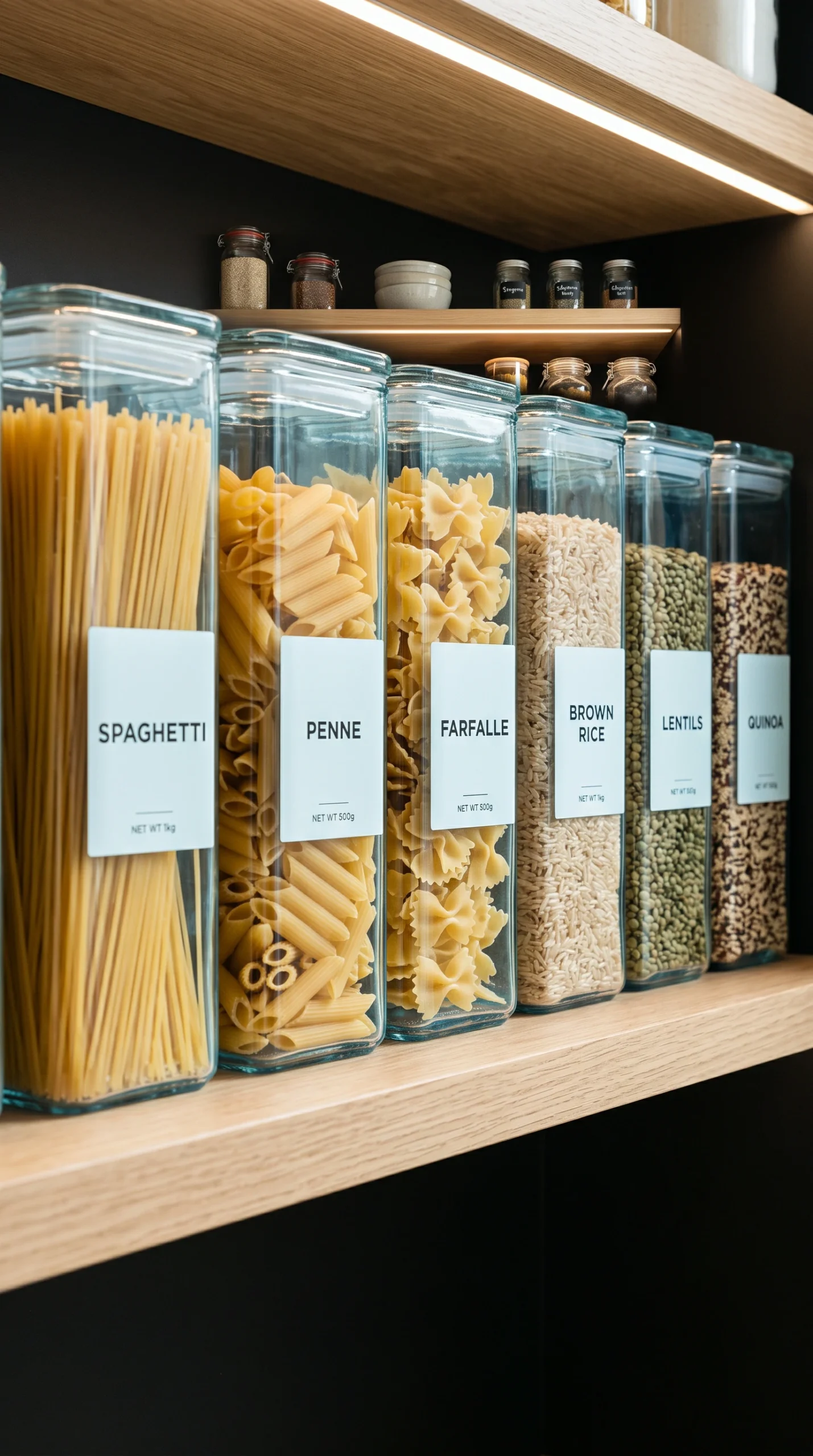
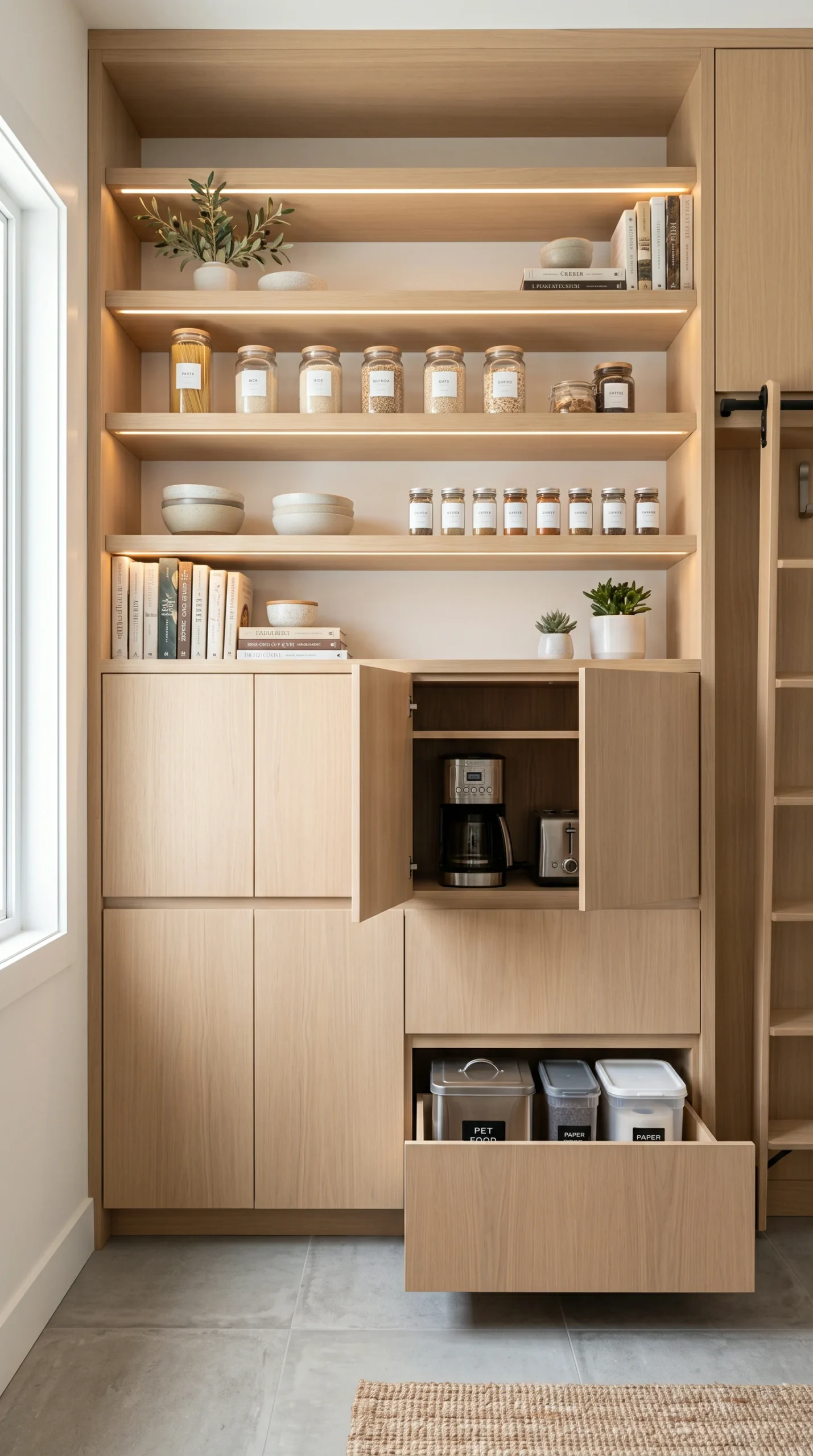
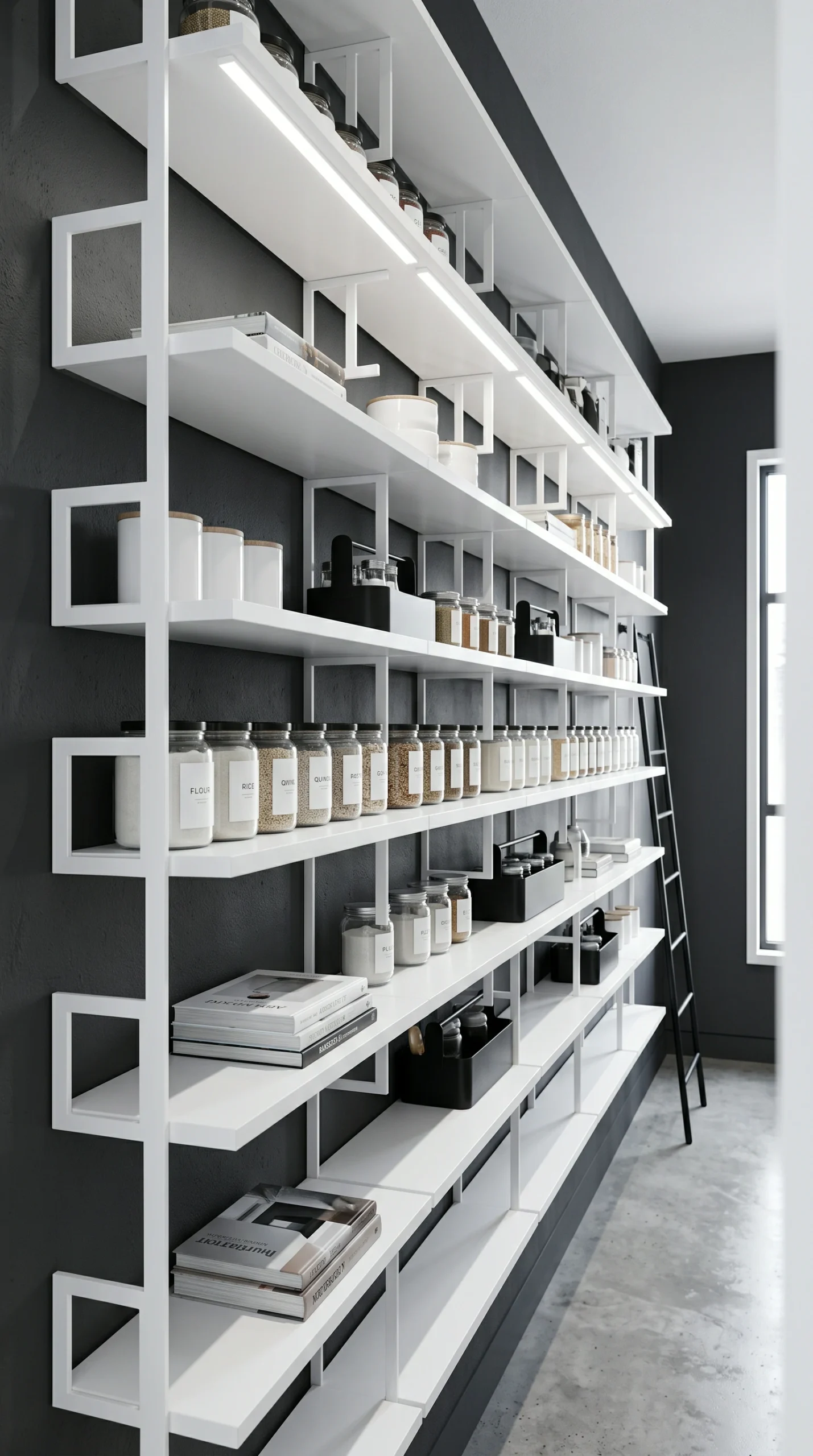
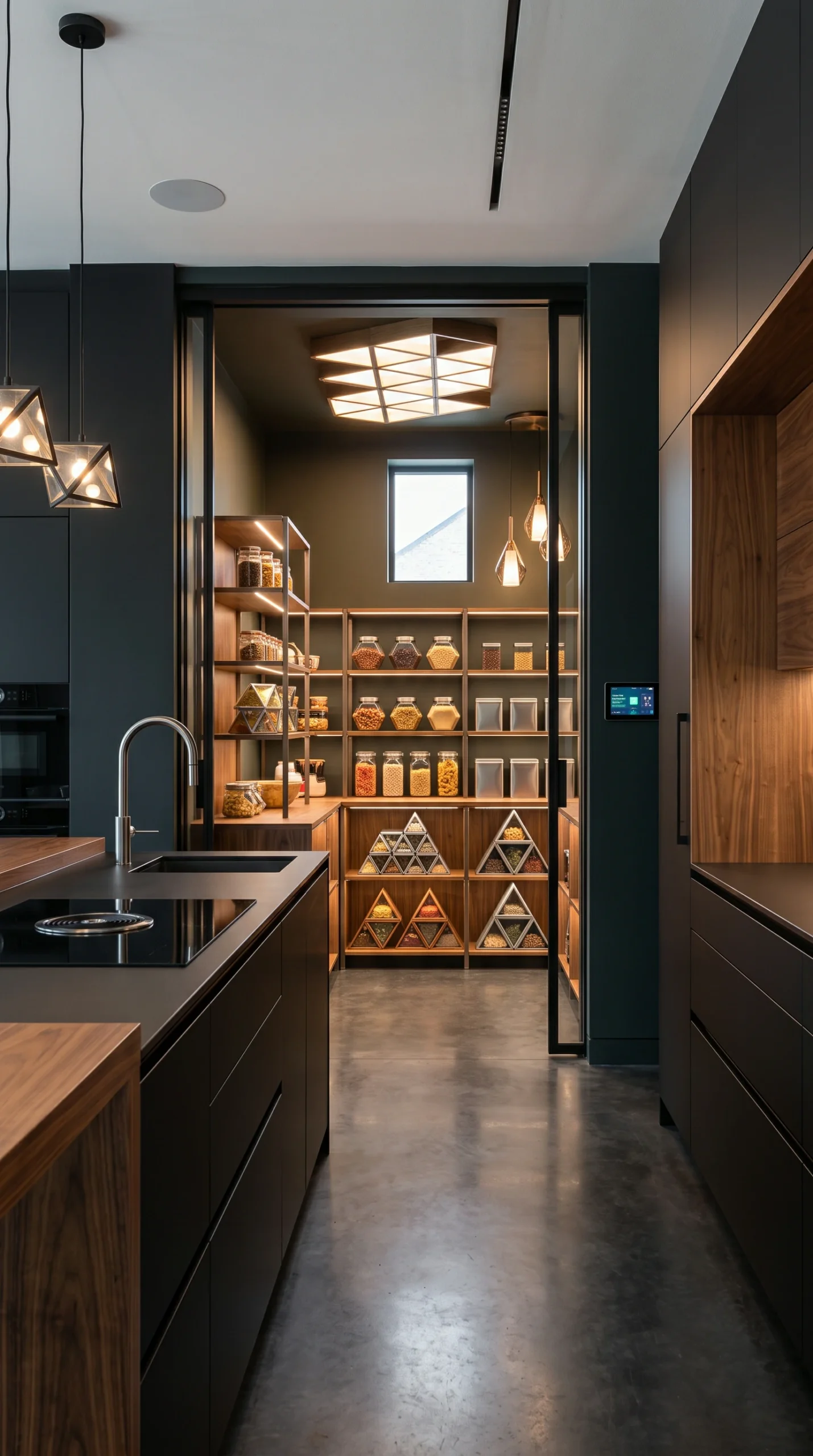
Pairing floating rift-sawn white oak shelves with deep charcoal or matte black accent walls establishes dramatic visual depth, framing neatly decanted dry goods with crisp geometric definition.
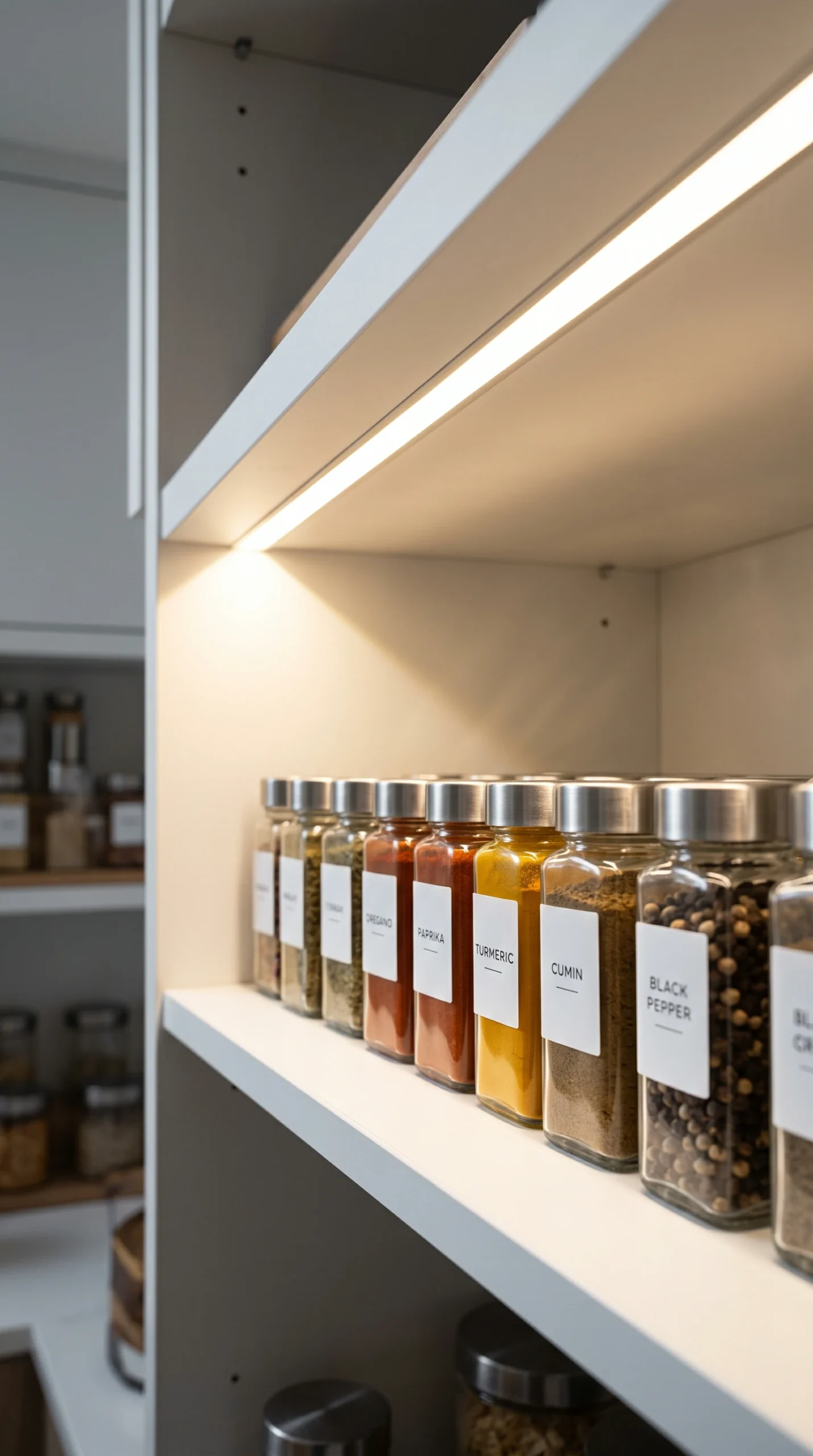
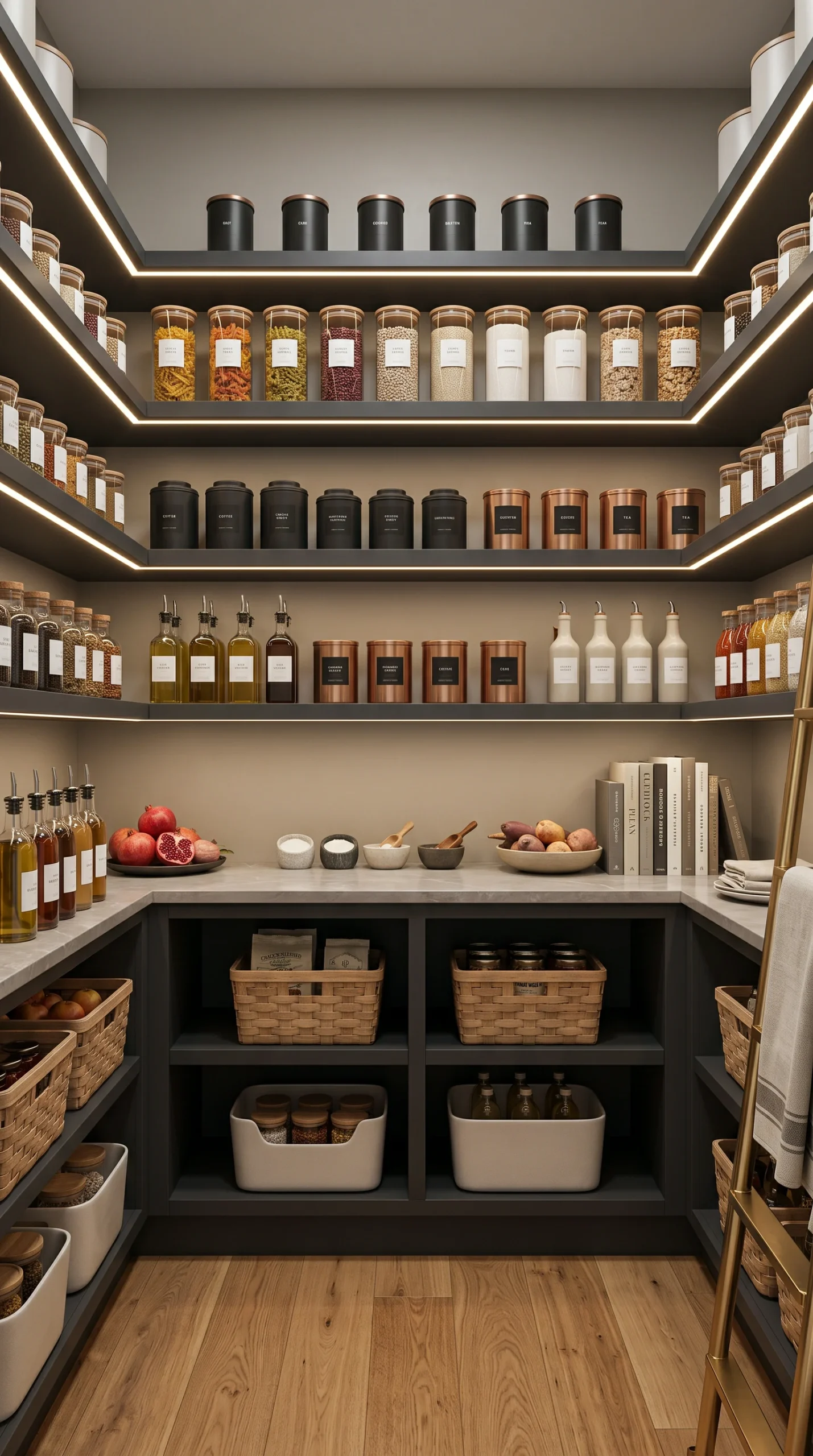
Standardizing pantry staples into square borosilicate glass canisters with airtight bamboo or black lids eliminates packaging clutter, maximizes linear shelf space, and allows instant inventory auditing.
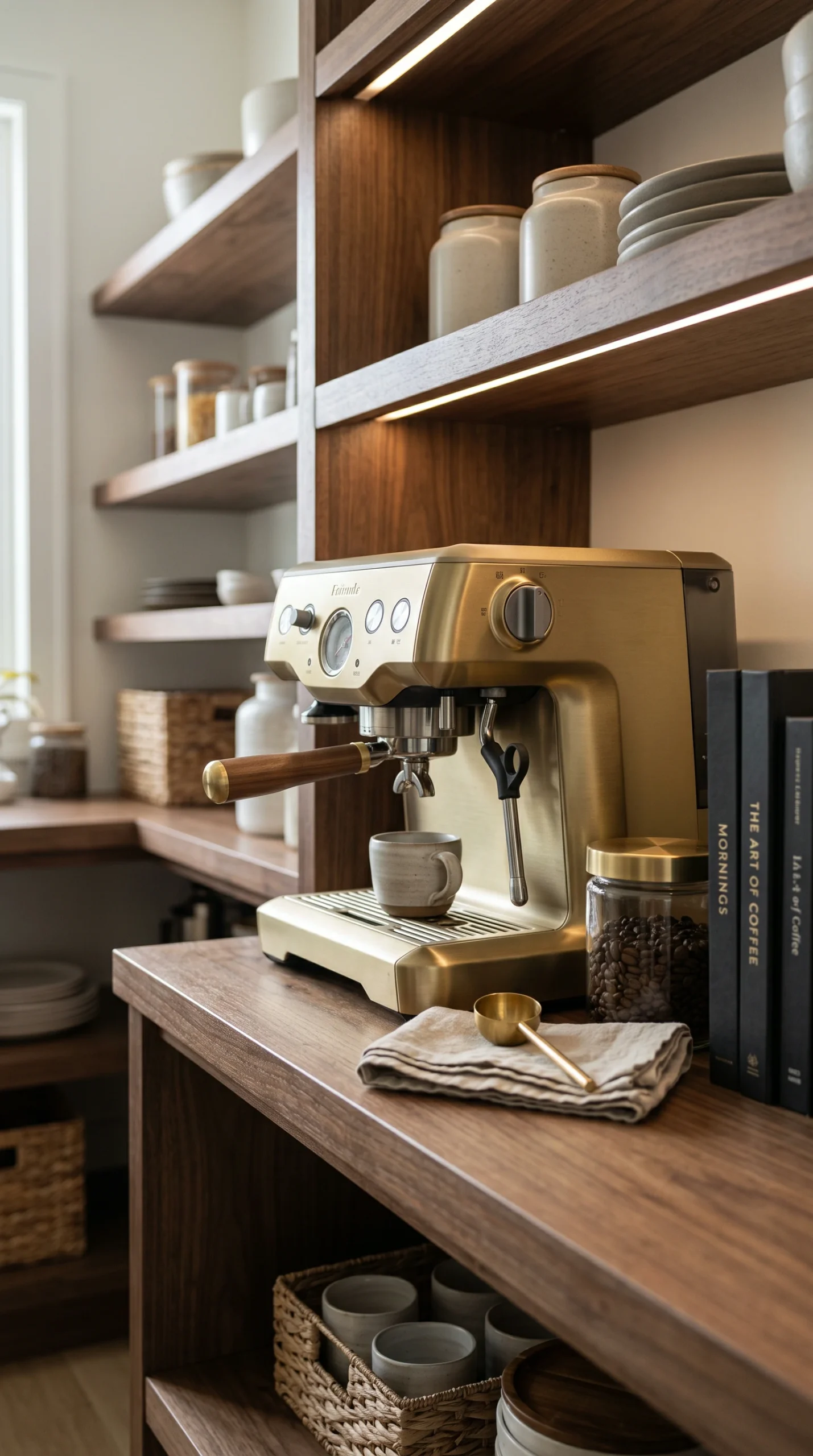
Full-height pocket doors slide flush into side wall recesses, exposing a dedicated countertop for coffee bars and blenders while concealing culinary clutter when entertaining guests.
Routing low-profile aluminum extrusion channels beneath shelf lips creates continuous, shadow-free illumination with frosted diffusers that prevent harsh LED diode reflections on countertops.
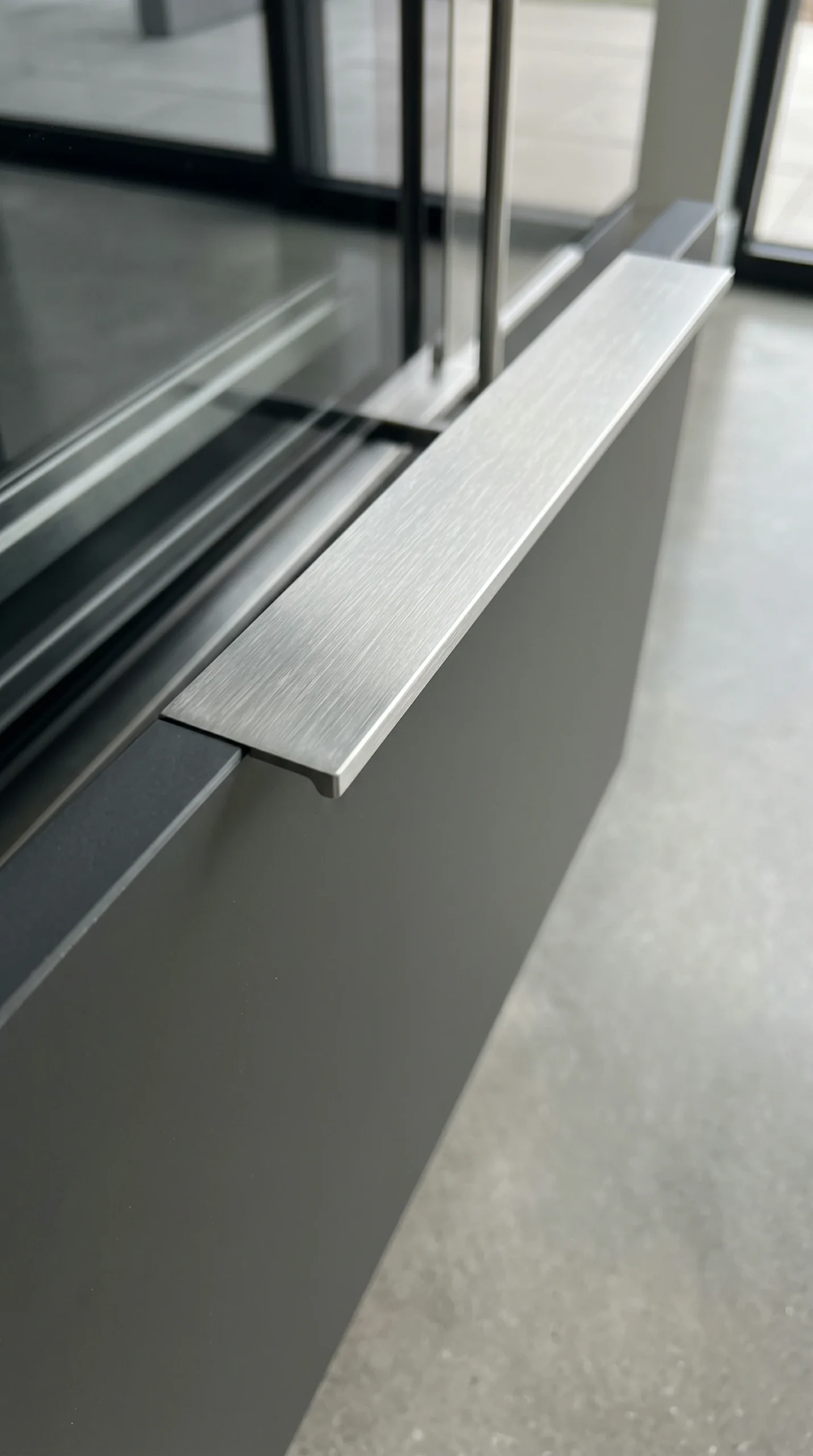
Brushed stainless steel or matte black anodized aluminum edge pulls provide ergonomic leverage on heavy drawers while maintaining the sleek, uninterrupted sightlines of modern minimalist cabinetry.
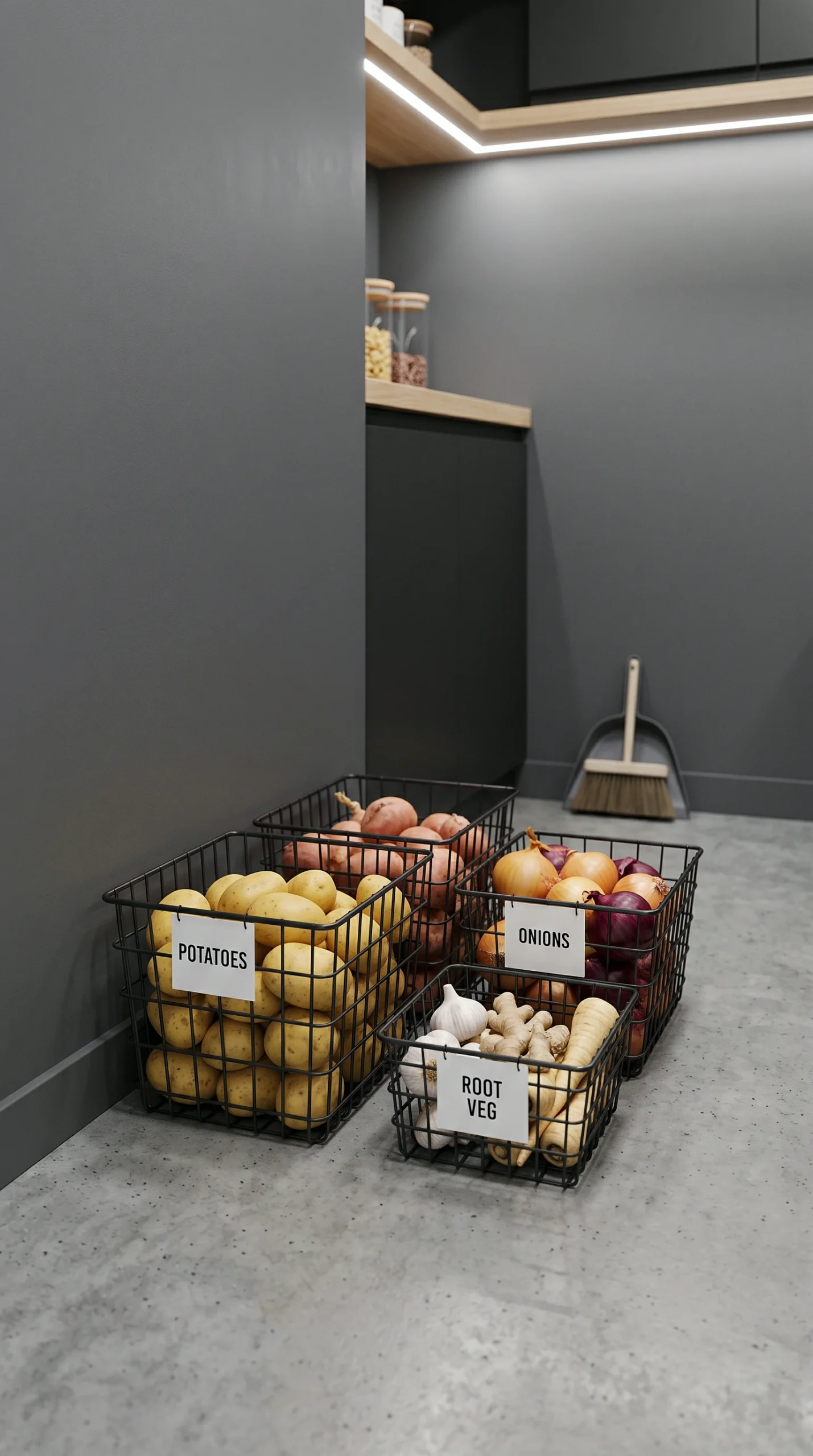
Matte black wire pull-out baskets mounted on soft-close undermount slides provide 360-degree airflow around onions and potatoes, preventing moisture buildup and premature produce spoilage.
Modern kitchen architecture has fundamentally redefined the pantry. What was once treated as a hidden utility closet or a simple drywall recess has evolved into a centerpiece of high-performance residential design. In open-concept floor plans where the main kitchen is continuously visible from living and dining zones, the modern pantry acts as both a tactical prep zone and an architectural sanctuary. It cleanly conceals culinary chaos while celebrating minimalist aesthetics through bespoke millwork, disciplined material palettes, and precision storage planning.
Creating a modern pantry that remains effortless to maintain requires more than purchasing identical containers and applying dark paint. True modernism is the seamless union of form, structural durability, and spatial ergonomics. As explored across our comprehensive curation of pantry design and organization, understanding vertical clearances, sightlines, and joinery transforms everyday home storage and organization into an enduring domestic pleasure.
A common mistake in contemporary pantry makeovers is defaulting entirely to open shelving. While floating shelves filled with uniform glass jars look striking in architectural photography, everyday household food consumption requires storing items that resist aesthetic curation—large snack bags, economy-sized cereal boxes, paper goods, and specialized culinary gadgets.
A successful modern pantry follows a disciplined 60-40 storage rule:
By maintaining this proportional discipline, the pantry preserves its minimalist atmosphere without forcing homeowners to abandon realistic grocery purchasing habits. If you are configuring a compact floor plan, explore our specialized strategies for small pantry ideas to preserve visual serenity within tighter footprints.
Modern design relies heavily on authentic, high-tactile materials that age gracefully under heavy culinary use. Because pantries encounter constant contact with food oils, moisture, sharp utensil edges, and abrasive spice grains, material durability is non-negotiable.
Rift-sawn timber is a defining hallmark of modern architectural millwork. Unlike plain-sawn wood, which displays wide cathedral grain patterns, rift sawing cuts the log at a 45-degree angle, yielding exceptionally straight, parallel grain lines. This linear consistency creates a quiet, refined backdrop that complements minimalist cabinetry. When specifying timber shelves, specify 1.5-inch to 2-inch thick floating shelves with high-density engineered cores to prevent sagging across spans exceeding 30 inches. For deeper structural joinery calculations, consult our comprehensive guide on pantry shelving ideas.
For cabinet doors, fluted (reeded) glass and smoked grey tempered glass enclosed in 20mm matte black anodized aluminum frames provide the ideal architectural compromise. Fluted glass refracts incoming light, transforming interior items into subtle, blurred silhouettes while shielding dry goods from airborne kitchen grease.
In modern pantries, lighting is treated as an integrated building material rather than an afterthought ceiling fixture. A single overhead flush-mount light casts harsh shadows directly over prep counters and shelf surfaces, forcing you to cook and search in your own shadow.
A sophisticated modern scheme incorporates these lighting layers:
Decanting food into uniform clear containers is synonymous with modern pantry imagery. However, decanting solely for visual appeal often leads to kitchen burnout if the system is too complicated to maintain during busy weeknights.
Always choose square or rectangular canisters crafted from borosilicate glass or BPA-free acrylic. Round jars waste up to 25% of usable shelf volume in circular dead spaces, whereas square containers nest flush against one another, maximizing every cubic inch of linear shelf frontage. Double-ribbed silicone gaskets guarantee airtight seals that safeguard dry goods against humidity and pantry pests. For comprehensive container labeling strategies, explore our detailed guide on pantry storage ideas.
In luxury contemporary architecture, the pantry frequently doubles as a secondary culinary workstation—often referred to as a “back kitchen” or “scullery.” By migrating messy, high-vibration countertop appliances off primary island counters into a designated pantry alcove, the central kitchen remains immaculately clear for dining and entertaining. To explore how this concept scales up to complete back-kitchen suites, read our analysis of walk-in pantry ideas.
Operating high-heat appliances inside semi-enclosed cabinetry requires strict electrical safety: install two dedicated 20-amp circuits backed by GFCI breakers to permit simultaneous brewing and toasting without tripping. Incorporate an automated micro-switch contact sensor connected to pocket doors that automatically cuts power to internal receptacles when doors are closed, eliminating accidental fire risks.
When planning a modern pantry layout, 90-degree internal corners and door planes demand smart hardware solutions. In corners, avoid vertical center support posts that obstruct arm reach; instead, install continuous L-shaped shelves supported by wall cleats or heavy-duty 24- to 28-inch rotating turntables. For detailed corner blueprints, see our guide on corner pantry ideas.
On swinging pantry doors, install low-profile adjustable track racks to hold spices and cooking vinegars, ensuring a minimum 5-inch interior clearance gap to prevent door collision upon closure. For complete hinge load calculations, consult our dedicated resource on pantry door organization ideas. To see how these principles integrate across complete kitchen renovations, explore our master guide on pantry organization ideas.