In standard residential design, kitchens are frequently treated as sterile utility stations where every surface is wiped clean of human personality. While sanitary efficiency is necessary for food preparation, an environment entirely devoid of character can feel cold and uninspiring. Whimsical kitchen decor ideas challenge this clinical austerity by treating the kitchen with the same decorative affection traditionally reserved for living rooms and libraries. By introducing unexpected art, artisanal ceramics, playful hardware, and soft ambient lighting, your workspace becomes an inviting sanctuary that celebrates daily domestic rituals.
However, successful whimsical decorating requires thoughtful restraint. There is a critical difference between a sophisticated, curated collection and disorganized countertop chaos. If every corner is covered in novelty trinkets and plastic knickknacks, cooking becomes frustrating and visual fatigue sets in. By establishing clear focal points, adhering to intentional scale ratios, and selecting durable, authentic materials, you can curate a whimsical kitchen that feels high-end, deeply personal, and effortless to work in.
Hardware Curation: The Art of Intentional Mismatching
Cabinet hardware functions as the jewelry of the kitchen. While traditional kitchens enforce strict uniformity with matching metallic bar pulls, a whimsical space embraces expressive individuality across cabinet faces.
Balancing Variety with Dimensional Consistency
To prevent mismatched cabinet hardware from looking like an accidental replacement mistake, apply the designer rule of unifying dimensions:
- Standardized Diameter: Collect hand-painted ceramic knobs, colored blown-glass pulls, or cast-brass animal motifs that share a consistent diameter of 1.25 to 1.5 inches (32 to 38 mm). While the hand-painted floral motifs, glazes, and colorways vary, the consistent physical volume provides an underlying architectural rhythm.
- Zoned Application: Maintain structural calm by using uniform metal cup pulls or simple brass latches on high-traffic lower drawers. Reserve the eclectic, mismatched knobs strictly for upper wall cabinets or a freestanding furniture larder where they catch the eye at standing eye level.
- Installation Mechanics: Ensure replacement antique knobs use standard 8-32 machine screws. Because handmade ceramic knobs occasionally feature shallow threaded inserts, apply a drop of blue medium-strength threadlocking compound to prevent knobs from spinning or pulling loose during daily use.
For broader ideas on integrating unique hardware into complete room makeovers, review our foundational pillar guide to whimsical kitchen ideas, as well as our hybrid architectural analysis in modern whimsical kitchen spaces.
Fine Art in the Culinary Workspace: Oil Paintings and Backsplash Displays
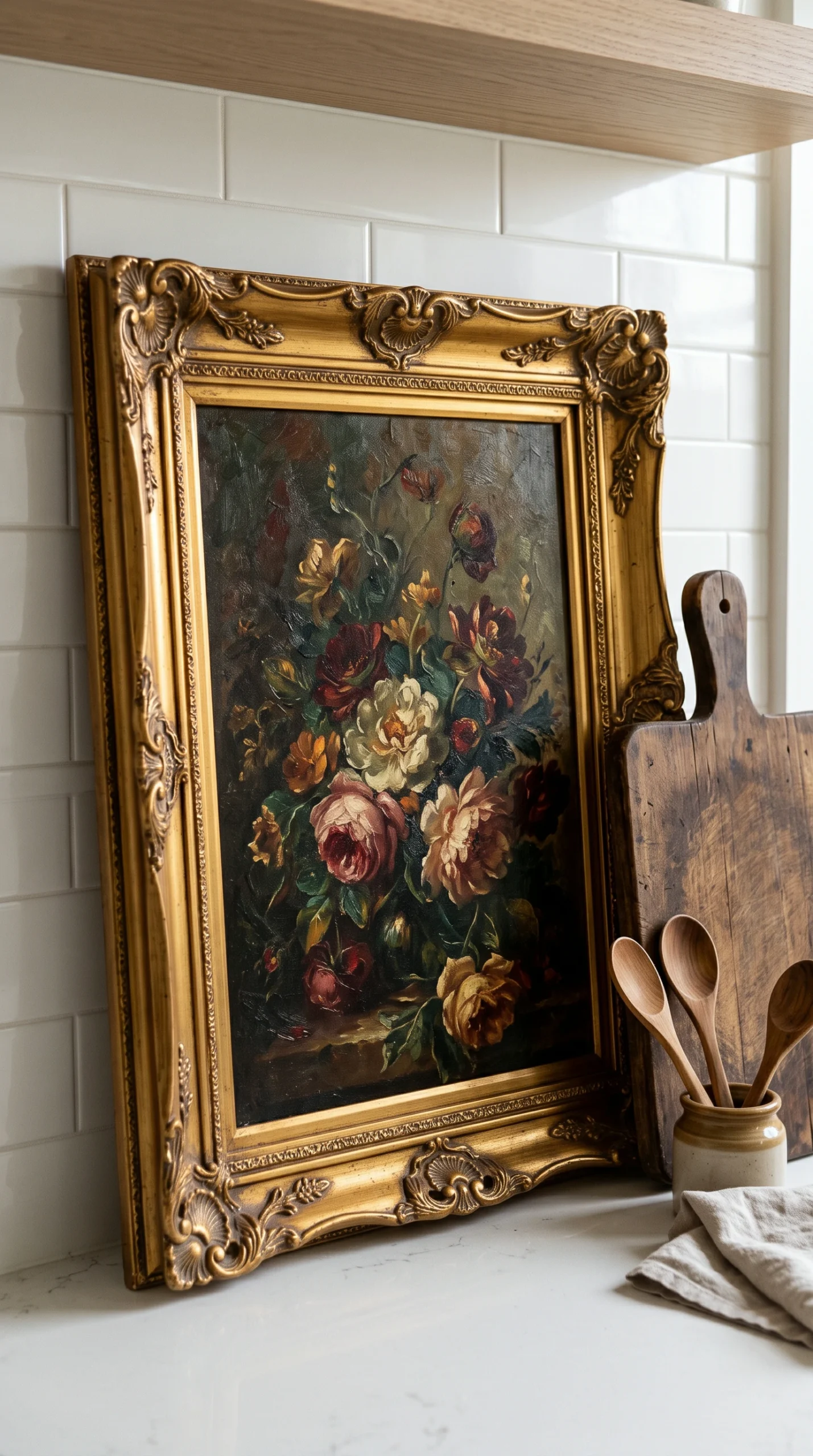
One of the most transformative whimsical kitchen decor ideas is incorporating authentic fine art directly into the cooking zone. Hanging an ornate, classical painting where guests expect to see a microwave immediately elevates the room’s aesthetic sophistication.
Artwork Proportions, Framing, and Siting Clearances
Positioning fine art in a kitchen requires careful attention to scale and environmental safety:
- Canvas Scale: Select vintage oil paintings or watercolor studies measuring 11×14 to 16×20 inches (28×35 to 40×50 cm). Subject matter featuring classical fruit still lifes, pastoral meadows, botanical studies, or heirloom livestock naturally complements the kitchen’s culinary purpose.
- Gilded and Carved Frames: Frame art in substantial carved timber or ornate gilded frames featuring an aged, unpolished patina. The warm, metallic luster of antique gold leaf contrasts beautifully against crisp subway tile, honed soapstone, or continuous microcement backsplashes.
- Heat and Splatter Clearances: Never hang unglazed oil canvases directly behind a gas cooktop or deep fryer where airborne grease and heat plumes will ruin the paint within weeks. Position artwork at least 18 to 24 inches away from primary burners, or lean the framed piece against the perimeter backsplash tile near prep counters. If art is displayed near a sink, protect the painting behind non-reflective UV-filtering glass and seal the frame backing with moisture-barrier kraft paper.
For tips on styling artwork alongside functional dishware, explore our dedicated guide to whimsical kitchen shelf decor, as well as our companion guide on whimsical kitchen backsplash designs.
Textile Layering: Vibrant Block-Prints, Sink Skirts, and Runner Rugs
The vast majority of kitchen surfaces—solid stone counters, ceramic tiles, and metal appliances—are hard, cold, and sound-reflective. Introducing tactile textiles infuses immediate color, movement, and acoustic softness.
Artisanal Tea Towels and Natural Fibers
Everyday linens offer an effortless medium for rotating joyful seasonal patterns:
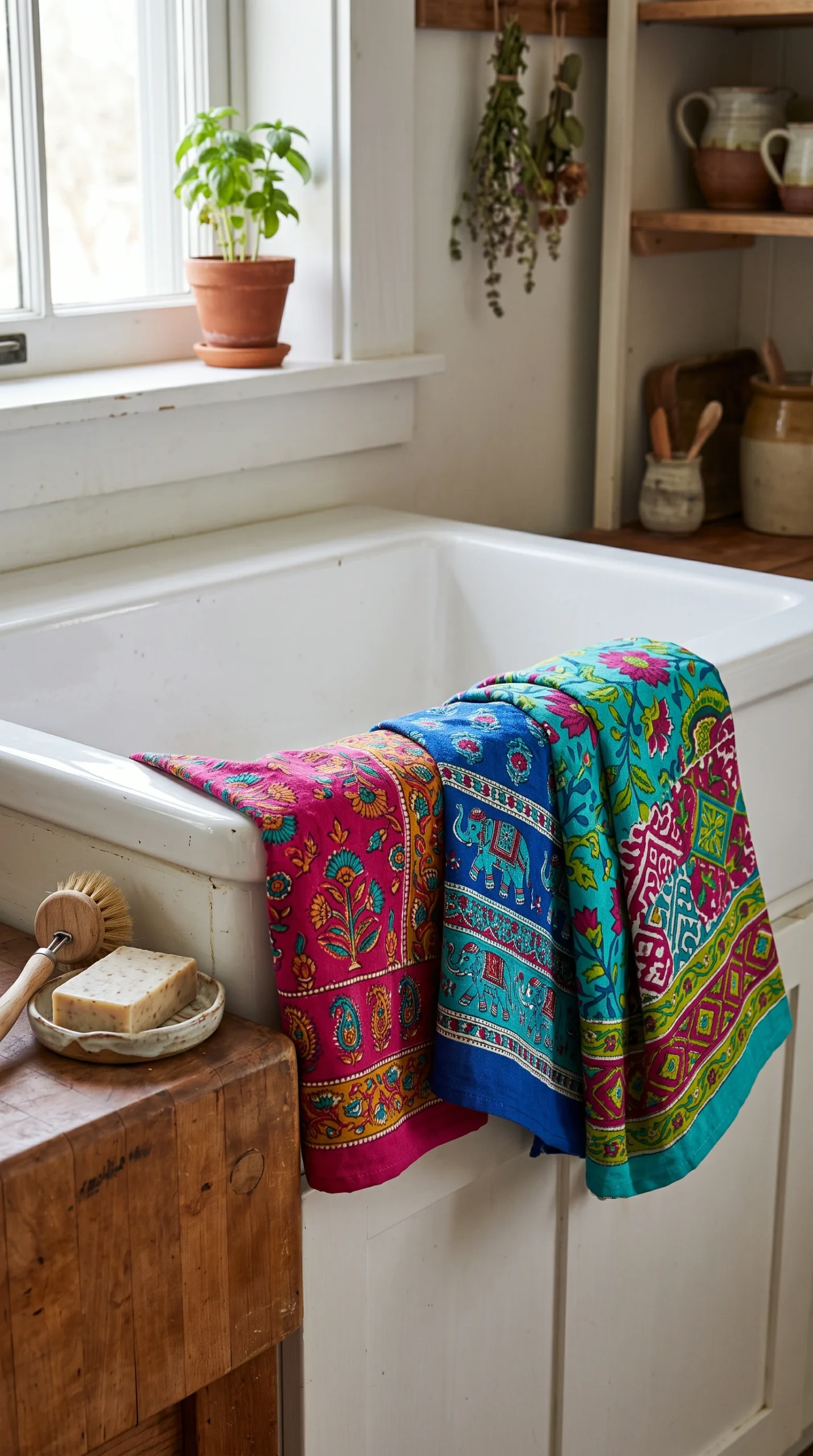
- Block-Print and Chintz Linens: Replace generic solid-colored dish towels with authentic Indian wood-block prints, French Provençal florals, or classic ticking-stripe linens measuring roughly 18×28 inches (45×70 cm). Drape two or three complementary towels casually over the front apron of a fireclay sink or through the oven door rail.
- Absorbency and Washing: Choose unbleached 100% natural cotton or pure flax linen. Natural fibers become softer and more absorbent with every wash, withstanding frequent hot-water laundry cycles without losing structural integrity.
Vintage Runner Rugs and Floor Comfort
A patterned runner rug anchors the circulation spine of the kitchen:
- Runner Dimensions: Lay a 2.5 to 3 foot wide by 8 to 10 foot long (75 to 90 cm by 240 to 300 cm) vintage-style runner down the central prep aisle. A saturated palette—featuring terracotta, indigo, and faded apricot—hides minor kitchen crumbs while introducing soft underfoot comfort.
- Non-Slip Grip: Always place a dense 1/4-inch rubberized felt non-slip rug pad beneath the runner to prevent shifting on slick hardwood or polished tile.
To see how rich textiles pair with nostalgic architectural elements, consult our guides on vintage whimsical kitchens and rustic cottagecore kitchen design.
Countertop Lamps: Low-Level Ambient Lighting
Standard kitchen illumination relies heavily on bright overhead downlights and recessed ceiling cans. While functional for chopping, intense overhead lighting washes out material textures in the evening. Introducing a dedicated countertop lamp transforms the culinary mood into an intimate, cozy lounge.
Lamp Scale and Cord Safety
Tucking a small table lamp into a kitchen corner introduces unexpected residential luxury:
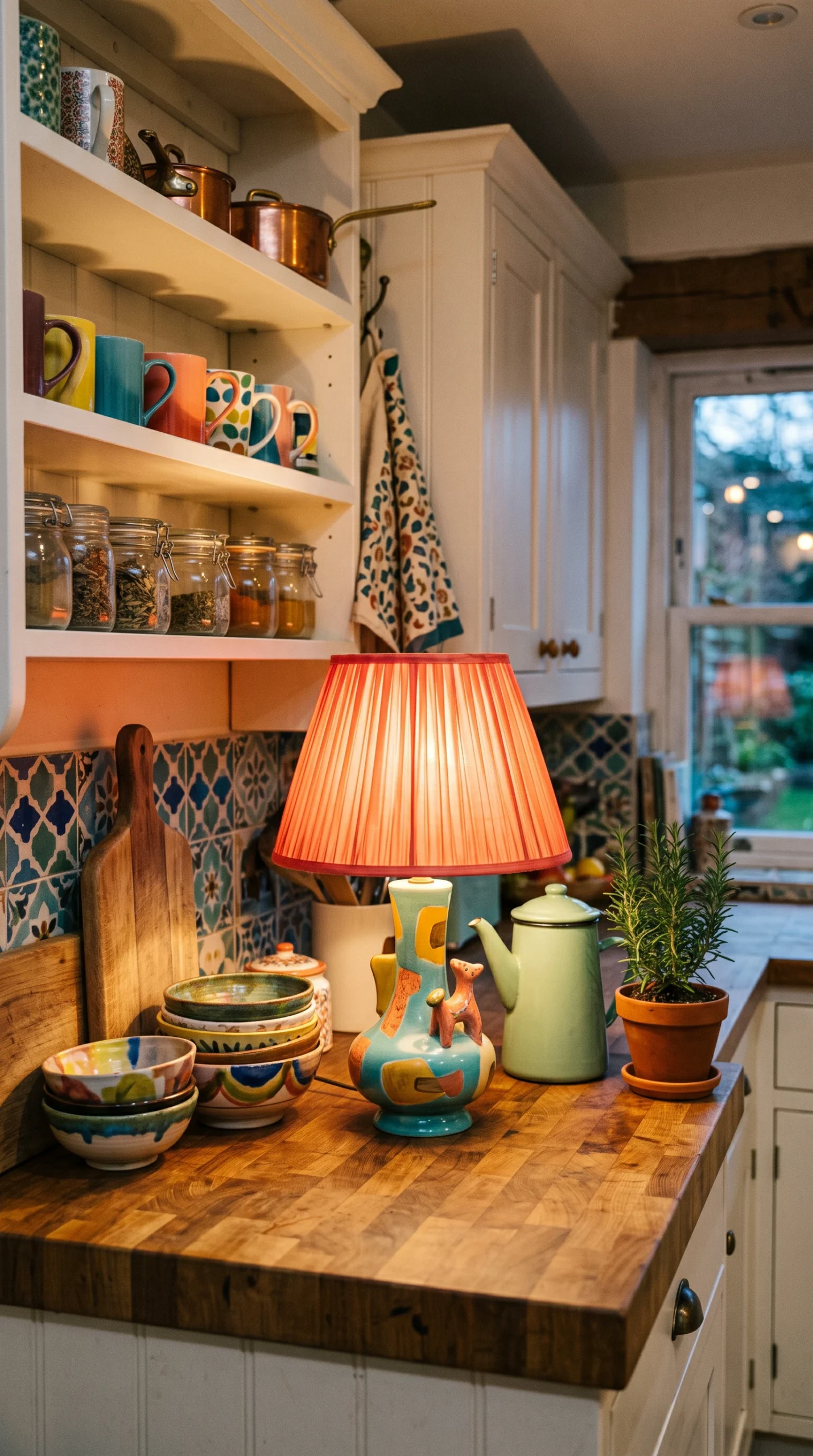
- Compact Proportions: Choose a small accent lamp standing 12 to 16 inches tall (30 to 41 cm) with a narrow base footprint of 6 to 8 inches. Ceramic animal-form bases, fluted brass urns, or painted porcelain ginger jars paired with pleated fabric or rattan lampshades provide delightful visual interest.
- Warm Spectrum Bulb Selection: Equip the lamp with a low-wattage (4W to 6W LED) bulb delivering an ultra-warm 2400K to 2700K color temperature. When main task lights are switched off after dinner, the gentle ambient glow makes pouring a late cup of tea or glass of wine feel restful and restorative.
- Electrical Safety: Position countertop lamps at least 24 inches away from open sink basins and running faucets. Plug exclusively into GFCI-protected countertop electrical outlets, routing the power cord neatly behind utensil crocks or cutting boards.
For guidance on coordinating lighting and color palettes across the entire home, review our specialized guides on whimsical kitchen color strategies and colorful whimsical kitchens.
Functional Sculpture: Majolica Ceramics and Statement Utensil Vessels
In a whimsical kitchen, functional utensils and small appliances are curated to serve as primary decorative accents rather than concealed utilities.
Repurposing Antique Majolica Pitchers
Everyday cooking spoons and spatulas do not belong in generic stainless steel cylinders:
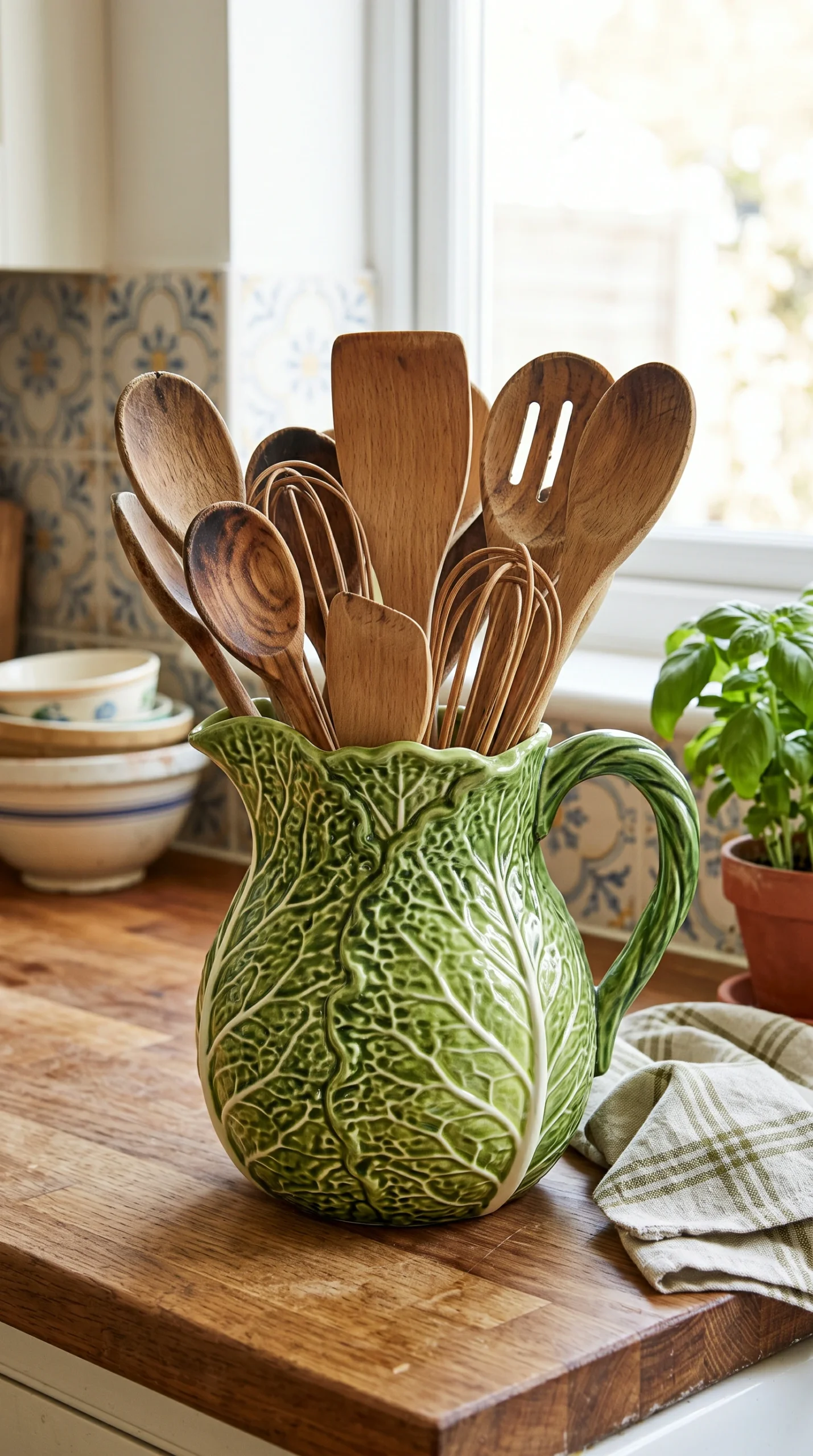
- Sculptural Vessels: Source vintage English or Italian majolica pitchers modeled after organic cabbage leaves, artichokes, or playful animals. Standing 8 to 10 inches tall with a stable, wide base, a heavy ceramic pitcher securely holds a dense bouquet of olivewood spoons, silicone scrapers, and wire whisks.
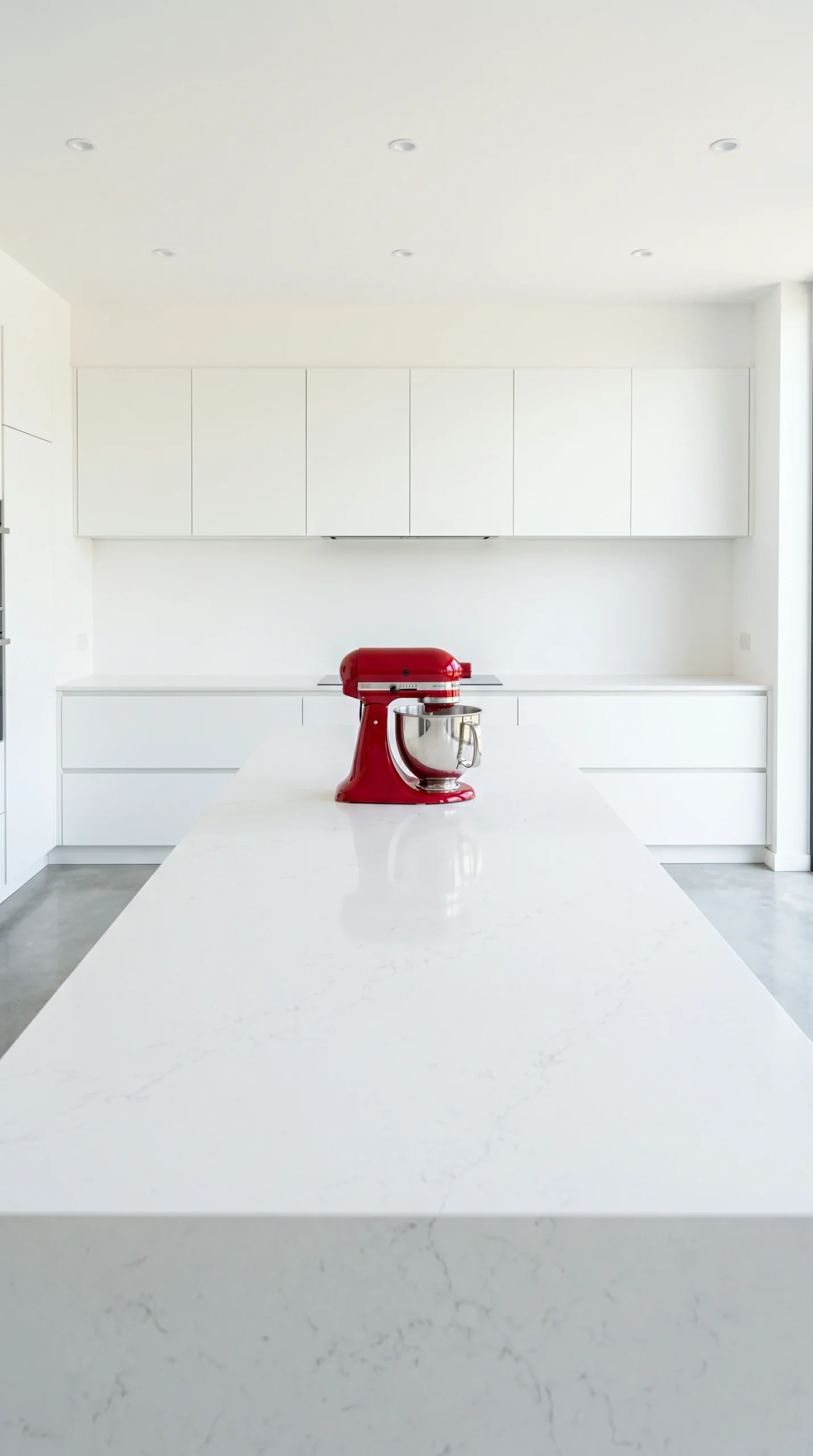
- The Centerpiece Stand Mixer: If you own a high-performance retro stand mixer finished in glossy cherry red, pastel pistachio, or buttercup yellow, position it proudly in the center of an otherwise clear countertop run. Treating colorful appliances as functional sculptures honors practical utility while celebrating playful design.
The Wall-Mounted Platter Gallery
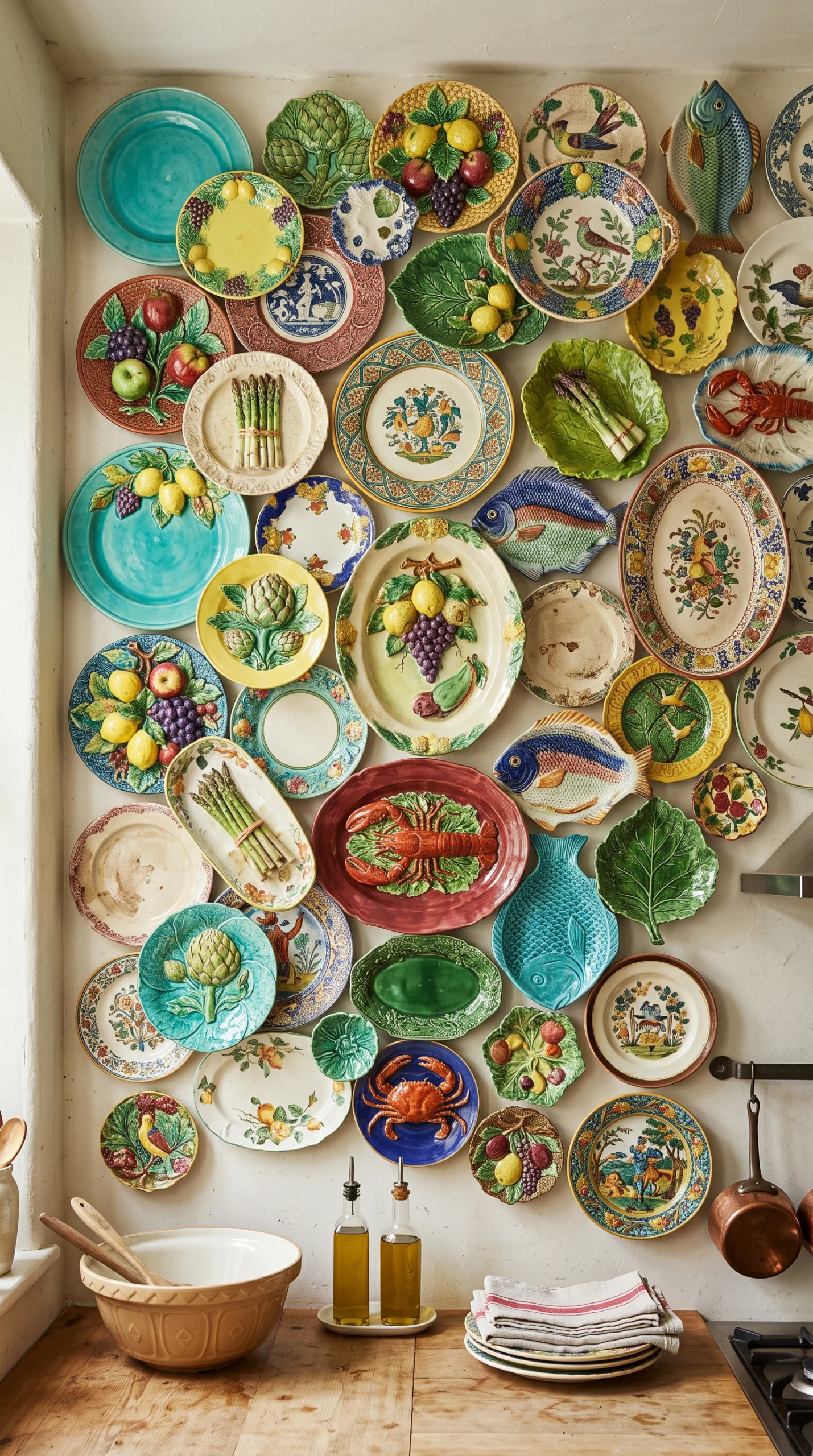
An empty wall or breakfast nook offers the perfect canvas for an asymmetrical plate installation:
- Platter Curation: Collect 5 to 9 vintage transferware platters, botanical ironstone dishes, and scalloped majolica trays varying in size from 8 to 14 inches in diameter.
- Spring-Wire Plate Hangers: Affix vinyl-coated spring-wire plate hangers to the rear rim of each platter, ensuring the wire hooks feature protective rubber sleeves to prevent glaze chipping. Mount the arrangement with consistent 2 to 3 inch (5 to 8 cm) edge spacing, grouping the pieces in an organic, cloud-like silhouette that flows up the wall.
For small-footprint styling hacks that maximize tight galley kitchens, explore our companion piece on small whimsical kitchens.
The 80/20 Rule: Preventing Clutter in an Active Kitchen
The most challenging aspect of whimsical decorating is knowing when to stop. Excessive decorative items on prep counters make cleaning tedious, trap airborne cooking grease, and eliminate functional chopping zones.
Strict Countertop Surface Discipline
To keep your kitchen functional and aesthetically sharp, implement the 80/20 styling formula:
- 80% Unobstructed Prep Zones: Keep at least 80% to 85% of all horizontal countertop surfaces completely bare. This clear perimeter is vital for rolling dough, assembling ingredients, and maintaining sanitary food safety.
- 20% Curated Decorative Islands: Confine whimsical decor to designated “moments” across the remaining 15% to 20% of surface area—such as a styled wooden cutting board vignette next to the range, an accent lamp in an awkward dead corner, or a single majolica pitcher beside the sink.
- Seasonal Rotation: Avoid displaying every cherished heirloom simultaneously. Store half of your decorative ceramics, seasonal tea towels, and novelty salt cellars in pantry cupboards, rotating them every few months. This keeps the kitchen feeling fresh and exciting while preserving everyday operational simplicity.
Honest Drawbacks, Maintenance Demands, and Fragility Warnings
A whimsically styled kitchen brings immense daily joy, but displaying antique ceramics, fine art, and soft textiles in an active cooking environment introduces practical realities that must be managed.
Care and Maintenance Protocols
Understand these functional considerations before styling your workspace:
- Airborne Cooking Grease Accumulation: High-heat searing and boiling release microscopic grease aerosols that slowly coat countertop lamps, framed art glass, and decorative majolica. Without daily hood ventilation rated for at least 300 to 500 CFM, decorative items will develop a sticky film. Plan to gently wipe down framed art glass and ceramic utensil holders with a warm, soapy microfiber cloth monthly.
- Fragility in High-Traffic Zones: Delicate vintage porcelain, pressed glass knobs, and antique platters are prone to chipping if accidentally struck by heavy cast-iron skillets or stockpots. Position fragile heirloom ceramics away from primary sink washing zones and active knife stations.
- Fabric Lampshade Staining: Pleated silk or cotton lampshades absorb kitchen cooking odors and grease vapors over time. Choose wipeable paper, woven rattan, or enameled metal lampshades for countertop lamps, avoiding delicate dry-clean-only fabrics.
- Lead Safety on Decorative Dishware: Many antique majolica and transferware platters manufactured before the 1970s contain lead in their decorative glazes. Display these antique pieces strictly as decorative wall art or non-food storage, never using them to serve warm, acidic foods like pasta sauce or citrus salads.