In an increasingly digitized world driven by rapid technological turnover and sleek industrial synthetic materials, the cottagecore movement has emerged as a deeply romanticized return to traditional domesticity. Rooted in the pastoral heritage of English country cottages, rural French farmsteads, and early-twentieth-century homesteading, cottagecore interior design champions craftsmanship, natural materials, and an intimate connection to food and nature. When translated into kitchen architecture, this philosophy creates a space that feels comforting, grounding, and richly layered with memory.
Executing an authentic cottagecore kitchen is not simply about pinning floral fabrics or placing dried flowers in a vase. It requires establishing genuine structural authenticity: choosing dense architectural materials that age with grace, designing around unfitted freestanding furniture, prioritizing traditional plumbing fixtures, and integrating functional food preservation tools into daily sightlines. By understanding how to balance romantic vintage detailing with modern food safety and ergonomic durability, you can build a cottagecore kitchen that functions as a durable, joyful culinary workshop.
The Wet Zone: Fireclay Apron Sinks and Gathered Skirts
In a pastoral cottage kitchen, the sink is the functional center of food preparation—used for washing garden vegetables, soaking sourdough proofing bowls, and arranging fresh floral cuttings. Modern undermount stainless steel sinks feel too clinical and industrial; authentic cottage design demands substantial ceramic mass.
Heavy Fireclay Farmhouse Sinks and Bridge Plumbing
A traditional white fireclay sink anchors the perimeter counters with historic gravity:
- Basin Dimensions and Apron Reveals: Specify a solid fireclay apron-front sink measuring 30 to 36 inches wide (76 to 91 cm) and 9 to 10 inches deep. Mount the sink so the front apron projects 1 to 2 inches (2.5 to 5 cm) proud of the adjoining base cabinetry. This subtle forward projection directs water drips into the basin rather than down the wooden cabinet face while showcasing the sink’s substantial glazed ceramic profile.
- Cabinet Reinforcement: Solid fireclay sinks weigh between 120 and 180 lbs (55 to 82 kg) empty, easily exceeding 300 lbs when filled with water. Construct an internal 2×4 structural timber support cradle inside the base cabinet to transfer weight directly to the subfloor before setting the sink.
- Unlacquered Brass Bridge Faucets: Center the sink with an authentic two-hole bridge faucet featuring porcelain-inlaid cross handles and an arched gooseneck spout. Made from unlacquered raw brass, the fixture reacts naturally with water, citrus oils, and hand touch, developing a darkened, mottled patina that celebrates living history.
The Gathered Fabric Sink Skirt
Softening rigid wooden cabinetry with a fabric skirt is one of the most recognizable hallmarks of cottagecore design:
- Fabric Specifications: Sew the skirt from heavy, machine-washable natural fibers such as floral linen chintz, ticking stripe, or small-scale gingham cotton. Calculate fabric yardage using a 1.5x to 2x gathering fullness ratio to produce generous, romantic drapery folds.
- Tension Rod Mounting: Mount a 1/2-inch solid brass rod directly beneath the sink basin. Hem the bottom of the skirt so it hovers exactly 1/2-inch above the finished floor. This elevation prevents the fabric from absorbing water during floor cleaning while providing effortless zero-clearance access to compost pails, water filters, and cleaning essentials.
For ideas on pairing sink stations with waterproof wall tiles, review our specialized guide on whimsical kitchen backsplash designs, as well as our overarching overview in whimsical kitchen ideas.
The Unfitted Kitchen: Reclaimed Farm Tables and Antique Larders
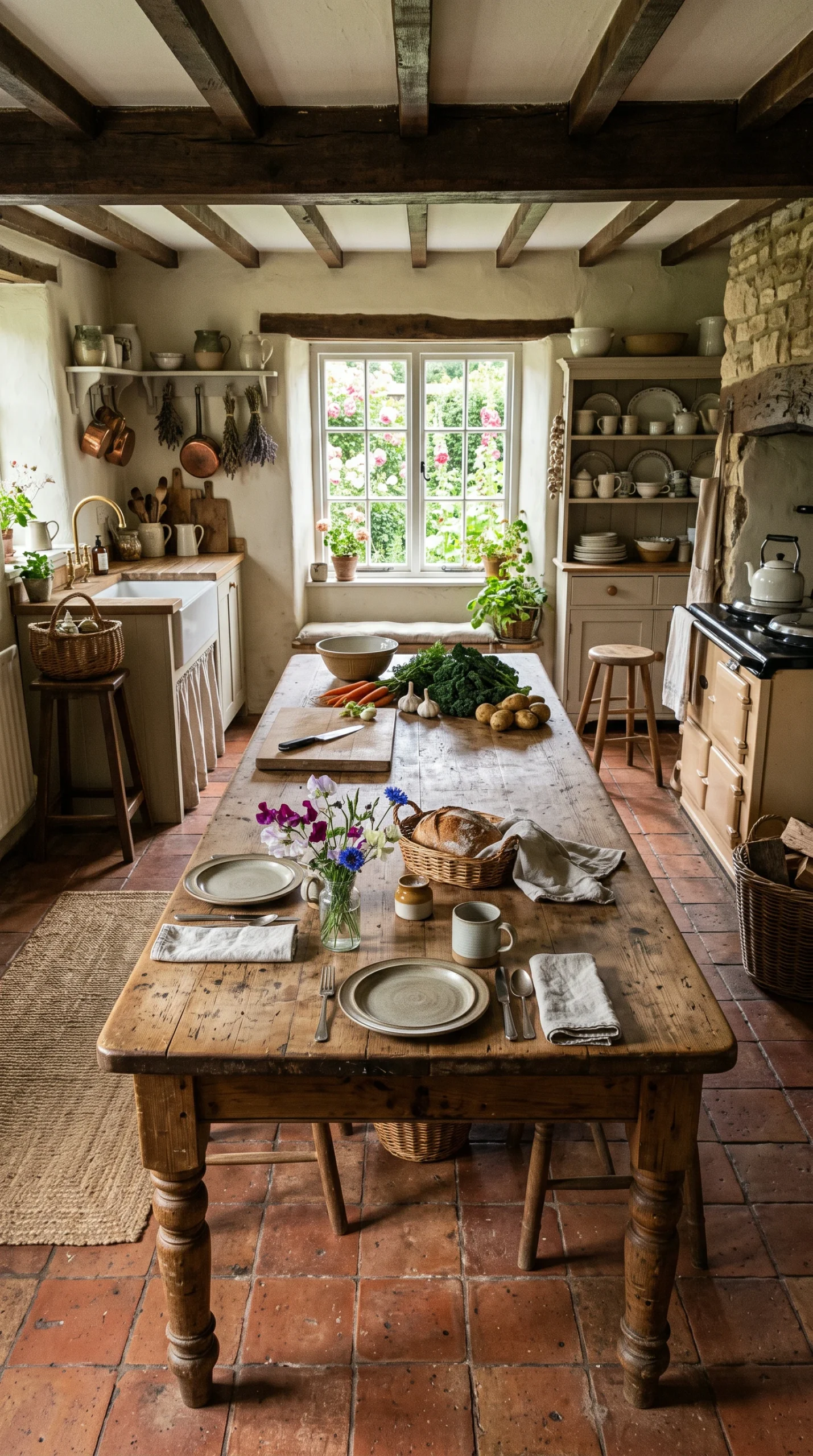
Standard modern kitchens rely on continuous, wall-to-wall cabinetry with matching toe-kicks and flush cabinet runs. In historic rural cottages, kitchens were unfitted rooms furnished with independent pieces of furniture accumulated over generations.
The Central Farm Table as Prep Island
Replacing a built-in island with an authentic antique farm table transforms the room’s social dynamic:
- Table Proportions: Source an antique scrubbed pine, sycamore, or European oak farm table measuring 6 to 8 feet long (180 to 240 cm) and 32 to 36 inches wide. The tabletop functions as an expansive prep space for rolling pastry and shelling beans during the day, easily transitioning into an intimate family dining surface at dinner.
- Working Heights: If utilizing the table purely for standing food preparation, elevate standard 30-inch dining table legs to 35 to 36 inches by having a woodturner add turned timber footing extensions to the four corners.
- Aisle Clearances: Preserve generous circulation paths of 36 to 42 inches (91 to 107 cm) on all four sides of the farm table to allow multiple cooks to navigate between perimeter counters and the table without restriction.
Antique Pie Safes and Welsh Dressers
Independent storage pieces introduce varied heights and authentic vintage patina:
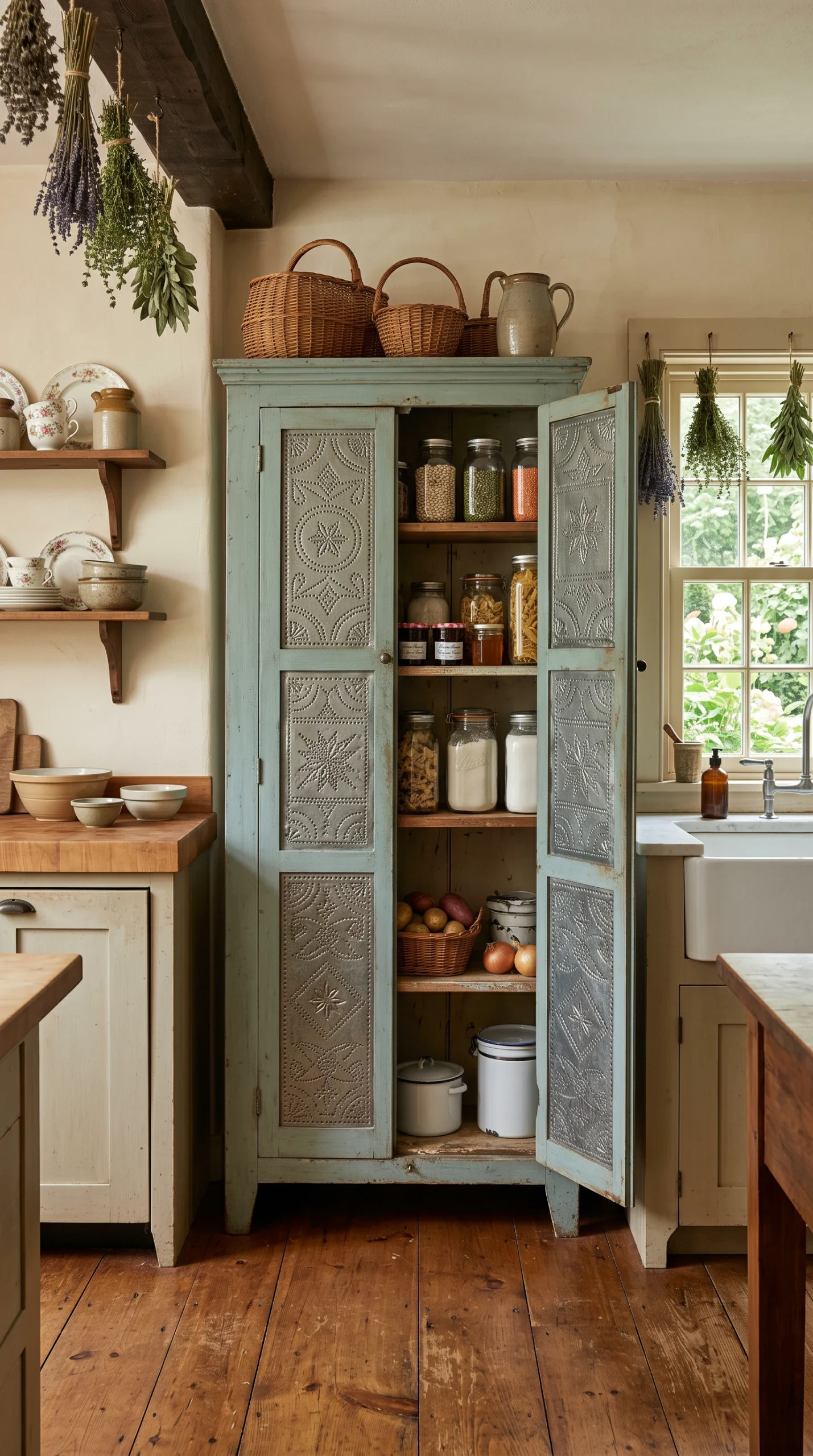
- Punched-Tin Pie Safes: An antique painted pine pie safe featuring hand-punched tin door panels provides ventilated storage for root vegetables, baked sourdough bread, and dry pantry staples while introducing handcrafted texture.
- Glazed Welsh Dressers: A tall step-back hutch standing 72 to 84 inches high allows you to display cherished ceramic collections behind glass upper doors while concealing bulky pots in lower timber cupboards.
For more inspiration on incorporating freestanding furniture and vintage architectural elements, explore our detailed companion piece on vintage whimsical kitchens.
Textured Wall Treatments: Beadboard Wainscoting and English Florals
Flat, smooth drywall painted in cold greys feels modern and sterile. Cottagecore design demands rich architectural texture across all vertical surfaces.
Beadboard Wainscoting and Shaker Peg Rails
Vertical wood paneling provides durable protection and classic rural character:
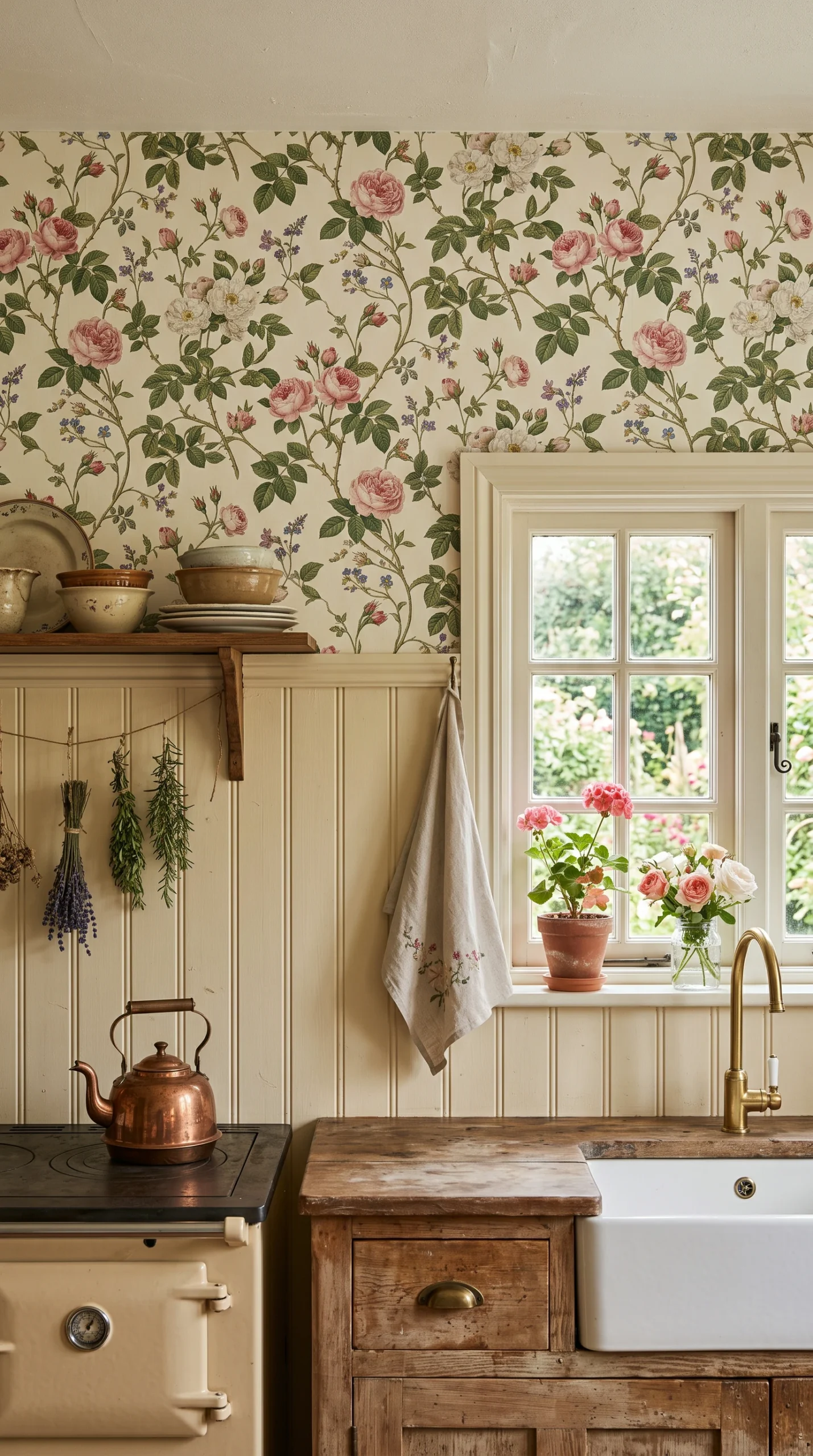
- Wainscoting Proportions: Install traditional tongue-and-groove pine beadboard running 36 to 48 inches high (91 to 122 cm) up the wall from the baseboard, terminating at chair-rail height. Painted in soft buttermilk cream, sage green, or warm mushroom, the vertical beaded grooves introduce shadow lines that draw the eye upward.
- Integrated Peg Rails: Cap the beadboard wainscoting with a 3 to 4 inch deep horizontal shaker peg rail featuring turned maple pegs spaced 6 to 8 inches apart. Use the pegs to hang linen aprons, twisted garlic ropes, wire egg baskets, and brass measuring spoons within arm’s reach.
Romantic Botanical Wallpapers
Above the timber beadboard, layer evocative floral prints that celebrate the English garden:
- Pattern Selection: Select high-quality non-woven wallpapers featuring historical botanical illustrations—such as cabbage roses, wild honeysuckle, sweet peas, and woodland ferns. The combination of painted wood below and dense botanical wallpaper above creates a layered, storybook atmosphere.
- Varnish Protection: In areas subject to occasional moisture splash, apply two coats of clear dead-flat decorator’s varnish over the wallpaper to seal paper seams and allow gentle wiping with a damp cloth.
To master the delicate art of balancing botanical patterns with cabinetry finishes, consult our comprehensive guide on whimsical kitchen color strategies, as well as our curation of colorful whimsical kitchens.
Hanging Storage: Wrought-Iron Pot Racks, Copper, and Dried Botanicals
In a cottagecore kitchen, culinary tools and garden bounty are celebrated as primary visual decor rather than hidden inside cupboards.
Suspended Pot Racks and Solid Copper Cookware
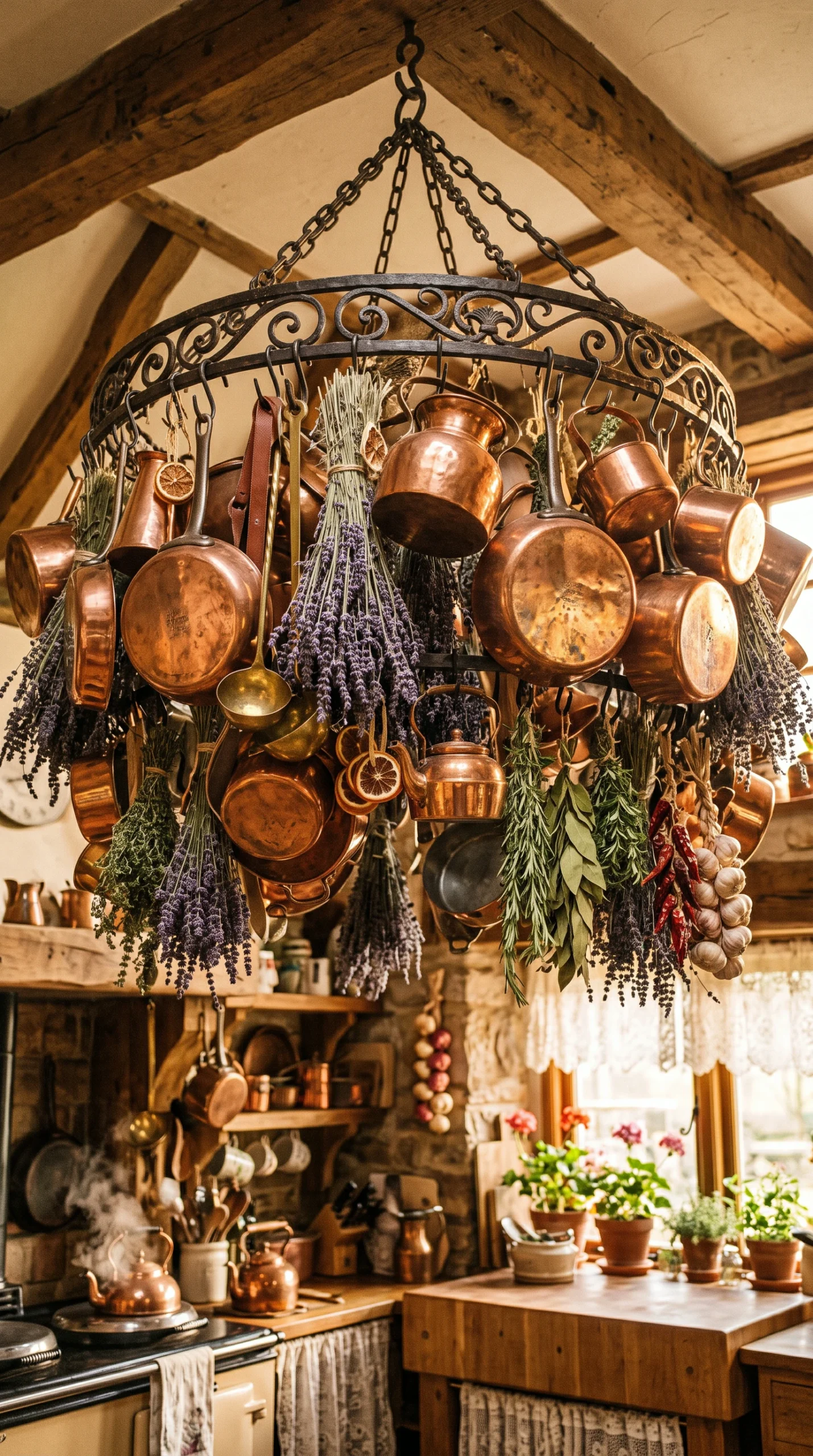
A loaded ceiling pot rack establishes an impressive centerpiece of functional maximalism:
- Mounting Engineering: Suspend a heavy wrought-iron or solid brass pot rack directly from structural ceiling joists using heavy-duty lag hooks and welded link chain. A full collection of copper cookware easily weighs 40 to 60 lbs; never attempt to anchor a pot rack into hollow drywall.
- Hanging Clearances: Adjust chain lengths so the bottom rims of hanging pans clear 72 to 78 inches (183 to 198 cm) above the finished floor plane. When hung directly over a central prep table, ensure a clearance of at least 30 to 36 inches above the tabletop so cooks maintain clear sightlines while working.
- Living Copper Patina: Authentic heavy copper cookware (2 to 2.5 mm thickness) delivers superior heat distribution while introducing warm rose-gold tones. Allow the copper to develop an uneven, matte cooking patina through daily use, avoiding aggressive chemical polishing to preserve an authentic country aesthetic.
Drying Garden Herbs and Seasonal Botanicals
Bridging the gap between the culinary garden and the indoor kitchen is a vital cottagecore ritual:
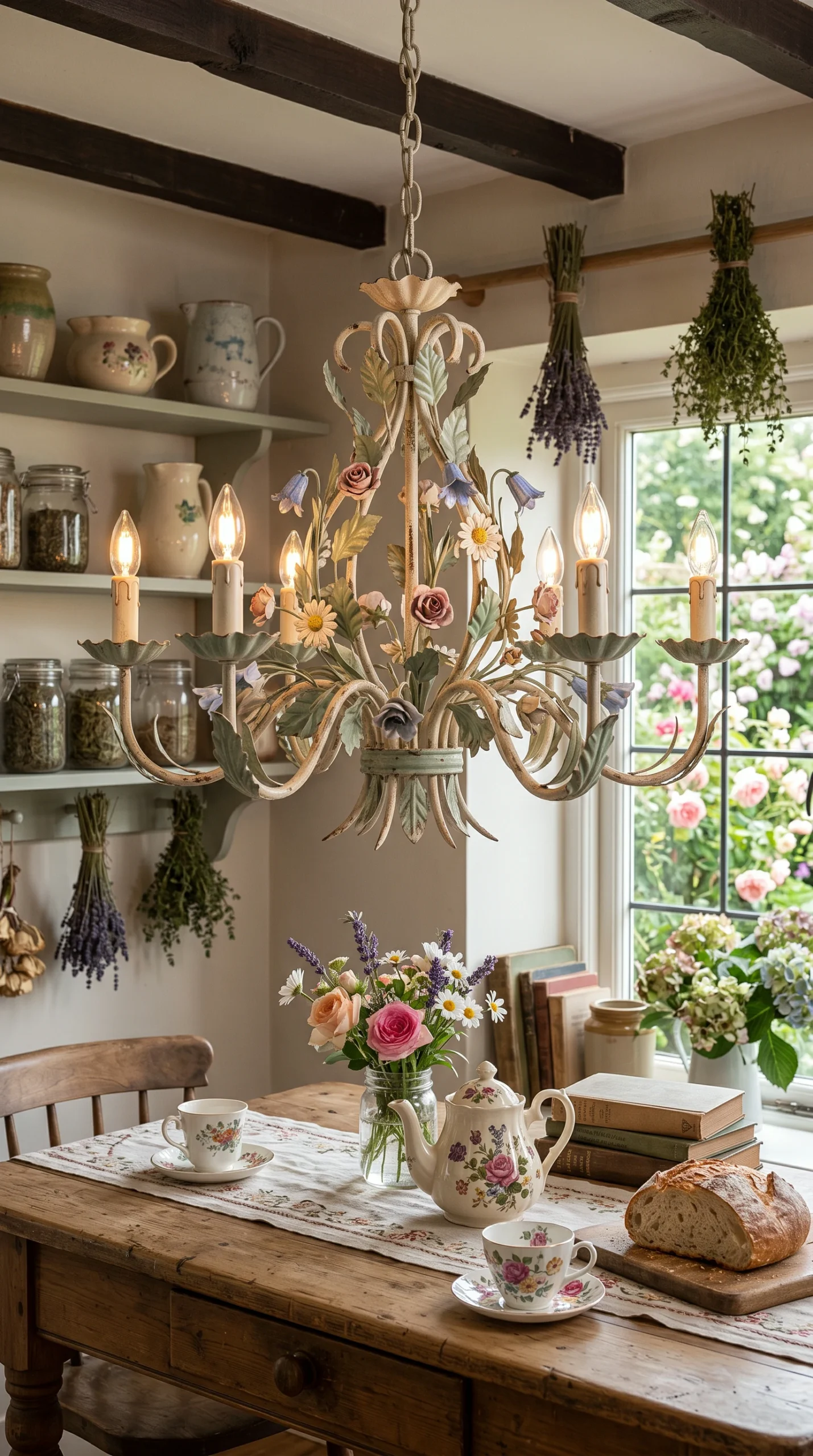
- Botanical Bundles: Harvest bundles of fresh lavender, sage, rosemary, and thyme, binding the stems tightly with natural jute twine. Hang the bundles upside down from the perimeter of the iron pot rack or beneath open window frames.
- Fire Safety Clearances: Never hang dry flora directly above an active gas cooktop or wood-burning stove. Maintain a minimum lateral clearance of 36 inches from open flames and high-heat surfaces to prevent fire hazards.
For ideas on styling decorative accessories and ceramics, review our dedicated guide on whimsical kitchen decor pieces, as well as our advice on whimsical kitchen shelf decor.
Displaying Daily Utility: China, Stoneware, and Food Displays
Cottagecore shelving prioritizes dense, functional beauty. Open ledges display everyday dishware and pantry staples within easy reach of the cook.
Layering Open Timber Shelves
Avoid sparse, minimalist arrangements; celebrate the rich accumulation of beloved antiques:
- Shelf Proportions: Mount 10 to 12 inch deep (25 to 30 cm) solid pine or oak open shelves supported by decorative cast-iron or carved timber brackets, mounted 15 to 18 inches above counters.
- Ceramic Mixology: Stack delicate floral-patterned bone china teacups alongside heavy, thick-walled stoneware mixing bowls and earthenware butter crocks. The contrast between refined porcelain and rustic pottery epitomizes country living.
Functional Food as Countertop Decor
Fresh pantry items double as dynamic, seasonal styling:
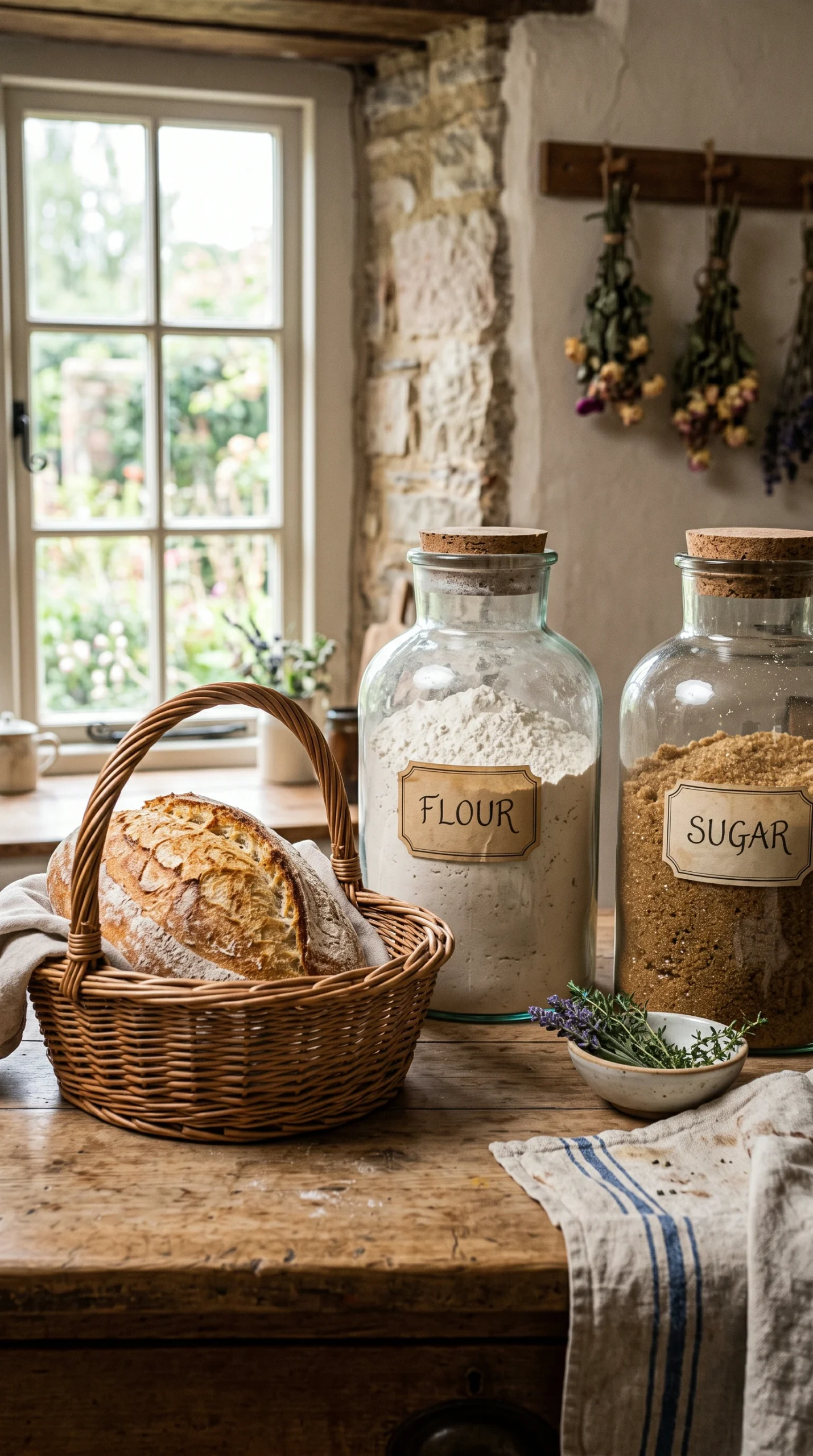
- Wicker Bread Baskets: Store fresh artisan sourdough loaves inside hand-woven wicker bread baskets lined with ruffled linen napkins.
- Apothecary Jars: Decant stone-ground flours, rolled oats, dried beans, and loose-leaf teas into heavy antique glass apothecary jars with ground-glass stoppers, arranging them in neat rows on open shelves.
If you are designing a pastoral kitchen within a compact urban footprint, explore our tailored spatial recommendations in small whimsical kitchens, or examine contemporary interpretations in our guide to modern whimsical kitchen spaces.
Honest Drawbacks, Maintenance Demands, and Material Realities
Living in an authentic cottagecore kitchen offers immense romance, but managing porous natural wood, living metals, and unsealed textiles requires informed stewardship.
Practical Challenges and Care Protocols
Keep these functional maintenance realities in mind during your planning:
- Butcher Block and Wood Countertop Upkeep: Solid wood counters and scarred pine farm tables are vulnerable to standing water, acidic vinegars, and heat scorch marks. Treat unsealed wood monthly with food-safe mineral oil and beeswax paste to maintain water repellency. Wipe up standing sink splashes immediately to prevent dark fungal staining around faucet bases.
- Copper Cookware Polishing Demands: Unlacquered copper reacts rapidly with heat, cooking oils, and acidic spills, darkening into an irregular, oxidized brown patina. If you prefer a gleaming metallic shine, copper requires regular polishing with lemon juice and salt or specialized copper cream every 4 to 6 weeks.
- Dried Flower Dust and Pest Risks: Bundles of dried herbs and florals collect airborne cooking grease and dust over time. Additionally, improperly dried botanicals can attract pantry moths and flour beetles. Treat dried florals as seasonal decor: rotate fresh bundles every 3 to 6 months, discarding brittle old botanicals.
- Fabric Skirt Laundering: Under-sink fabric skirts will inevitably absorb water droplets and kitchen splatters. Choose preshrunk, 100% machine-washable cotton or linen fabrics, laundering skirts monthly to keep the washing zone fresh and sanitary.