Standard modern kitchen renovations tend to follow an almost formulaic trajectory: unbroken rows of prefabricated white cabinetry, matching stainless steel appliances, and polished quartz counters that can feel impersonal. While efficient, this rigid uniformity strips away individuality. In contrast, vintage whimsical kitchen ideas invite emotional resonance, historic craftsmanship, and playful nostalgia into the heart of the home. Drawing inspiration from early-to-mid twentieth-century domestic life—spanning 1920s sculleries, 1930s cottage larders, and cheerful 1950s retro diners—this design philosophy celebrates the imperfect beauty of lived-in spaces.
Creating an authentic vintage kitchen does not require turning your home into an unlivable museum archive. The secret lies in selective historical curation: combining genuine antique architectural salvage, un-fitted freestanding furniture, and nostalgic color palettes with modern plumbing valves, reliable electrical circuitry, and energy-efficient refrigeration. When executed with thoughtful spatial discipline and careful material restoration, a vintage whimsical kitchen provides a deeply grounding, joyful environment that makes daily cooking feel like an enduring ritual.
The Unfitted Kitchen: Freestanding Hutches, Baker’s Racks, and Furniture Larders
Prior to the post-war building boom of the 1950s, residential kitchens did not feature seamless, wall-to-wall fitted cabinetry. Instead, kitchens functioned as working sculleries furnished with independent, freestanding furniture pieces that could be rearranged or moved to a new home. Reintroducing unfitted storage is the single most effective way to establish an authentic vintage silhouette.
Sourcing and Anchoring Antique Hutches
A substantial freestanding storage piece serves as the architectural soul of the room:
- Dimensions and Proportions: Source an authentic antique step-back hutch, glazed Welsh dresser, or ventilated pie safe measuring 72 to 84 inches high (183 to 213 cm), 36 to 48 inches wide, and 18 to 22 inches deep. The natural patina of crazed milk paint or scarred antique pine instantly introduces genuine age that machine-distressed reproduction furniture cannot emulate.
- Structural Wall Anchoring: Because antique hardwood hutches are top-heavy—especially when loaded with heavy ironstone platters and ceramic mixing bowls—safety anchoring is mandatory. Fasten heavy-duty 2-inch steel L-brackets to the top rail of the hutch, driving structural screws directly into wall studs. This prevents accidental tip-over hazards while remaining invisible from floor level.
- Circulation Clearances: Freestanding furniture pieces have projecting crown moldings and deep plinth bases. Maintain at least 42 to 48 inches (107 to 122 cm) of clear walking space between the hutch doors and center prep tables to ensure cabinet doors can swing open without obstructing traffic.
The Farmhouse Prep Table vs. Built-In Islands
Rather than a rigid, solid-base island clad in matching cabinet panels, vintage kitchens rely on open-legged work tables:
- Scrubbed Pine and Butcher Block: A salvaged farmhouse table standing at a comfortable 34 to 36 inch working height features turned timber legs, shallow cutlery drawers, and a scrubbed maple or end-grain butcher block top. The open space beneath the tabletop maintains sightlines across the room, making the kitchen feel airy and spacious.
- Under-Table Basket Storage: Utilize large woven wicker laundry baskets or wire egg crates resting on lower slatted stretchers to organize root vegetables, rolling pins, and seasonal baking pans out of direct sight.
For more architectural perspectives on balancing playful historical elements with contemporary layouts, explore our overarching pillar guide to whimsical kitchen ideas, as well as our hybrid overview of modern whimsical kitchen spaces.
The Statement Sink: Salvaged Cast-Iron, Exposed Plumbing, and Fabric Skirts
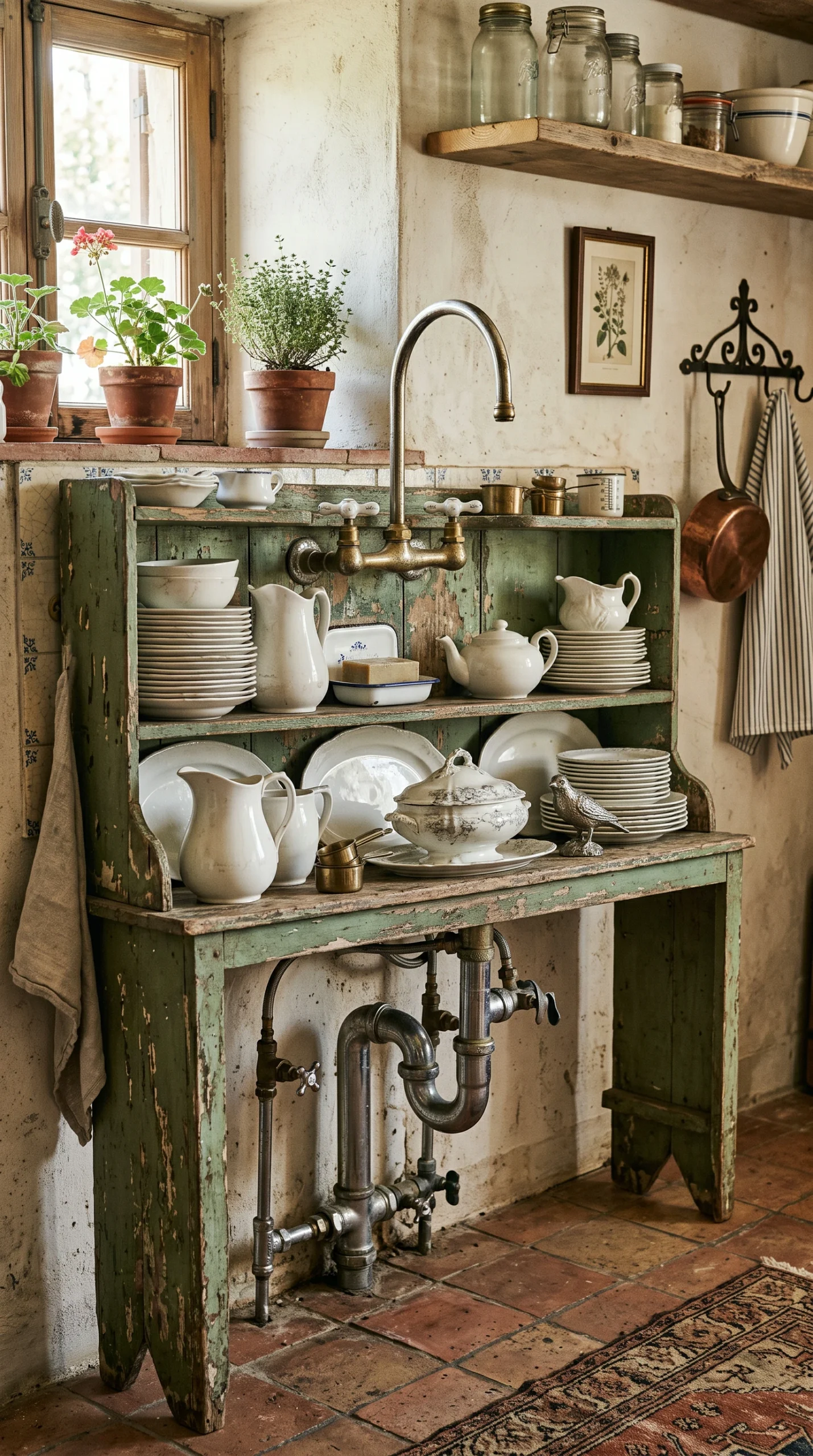
The wet zone in a vintage whimsical kitchen serves as a primary decorative anchor rather than a concealed utility. Modern undermount stainless steel basins feel historically disconnected; instead, vintage scullery design centers on massive, enameled cast-iron or heavy fireclay vessels.
Salvaged Cast-Iron Utility Sinks and Framing Reinforcement
Authentic 1920s wall-mounted utility sinks with integral backsplashes and fluted drainboards are prized focal points:
- Weight and Framing Requirements: An authentic salvaged cast-iron sink measuring 30 to 42 inches wide (76 to 107 cm) with an 8 to 12 inch deep basin weighs between 180 and 320 lbs (80 to 145 kg) empty. Never attempt to hang this fixture on standard drywall. Before closing walls, frame horizontal doubled 2×6 structural timber blocking securely between wall studs, bolting heavy cast-iron wall brackets into the framing with structural lag screws.
- Exposed Plumbing Geometries: Because wall-mounted sinks leave the underside completely visible, standard white PVC plastic drainpipes must be avoided. Install heavy 17-gauge polished chrome or raw unlacquered brass P-traps and supply lines with decorative porcelain-inlaid cross-handle shutoff valves.
- Lead Paint and Glaze Swab Testing: Architectural salvage manufactured prior to 1978 must be tested for lead hazards. Use chemical sodium rhodizonate swab kits on porcelain chips and exterior cast-iron paint. If lead is detected, have the sink professionally re-enameled using baked-on porcelain techniques or seal the exterior casing in lead-encapsulating epoxy enamel.
Fabric Sink Skirts as Soft Millwork Alternatives
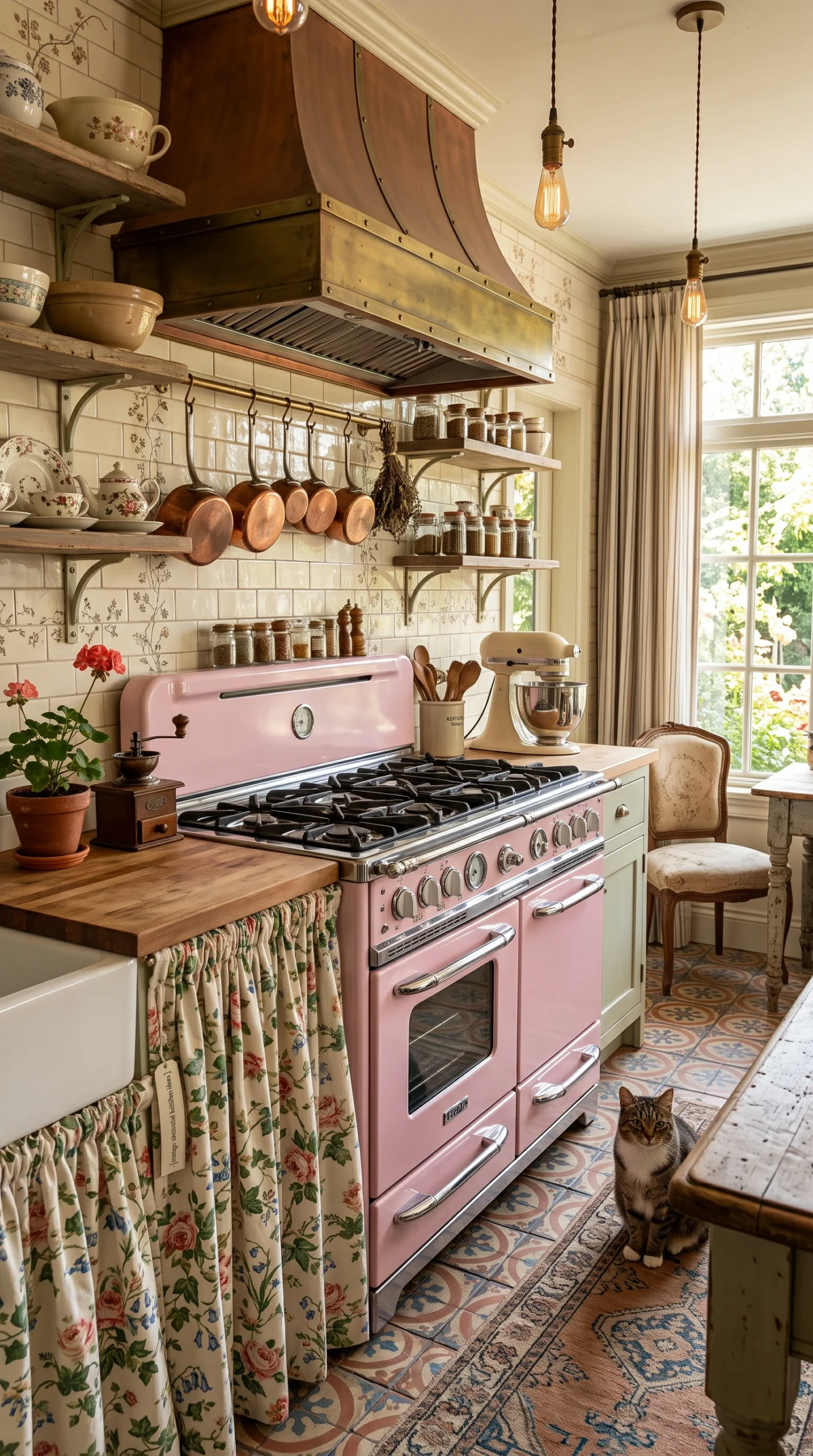
Beneath farmhouse sinks or open base cabinets, fabric skirts offer authentic historic charm while providing functional concealment:
- Textile Specifications: Select heavy, washable natural fabrics such as ticking-stripe linen, floral chintz, or woven gingham cotton. Sew the skirt with a 1.5x to 2x gathering fullness ratio, allowing soft, rich folds.
- Tension Rod Installation: Mount a 1/2-inch brass or wrought-iron sash rod directly beneath the sink rim. Hem the bottom edge so it hangs exactly 1/2-inch above the finished floor plane; this clearance prevents the fabric from absorbing floor mop water or gathering dust while concealing water filters, compost bins, and dishwashing soap.
For ideas on framing sinks with historic tilework and waterproof surrounds, review our guide to whimsical kitchen backsplash designs.
Retro Appliances: Modern Performance in Mid-Century Casings
Nothing shatters vintage charm faster than glowing digital LED touchscreens, black glass induction cooktops, and industrial stainless steel finishes. The kitchen’s major appliances must harmonize with the nostalgic narrative.
Color-Saturated Retro Refrigerators and Ranges
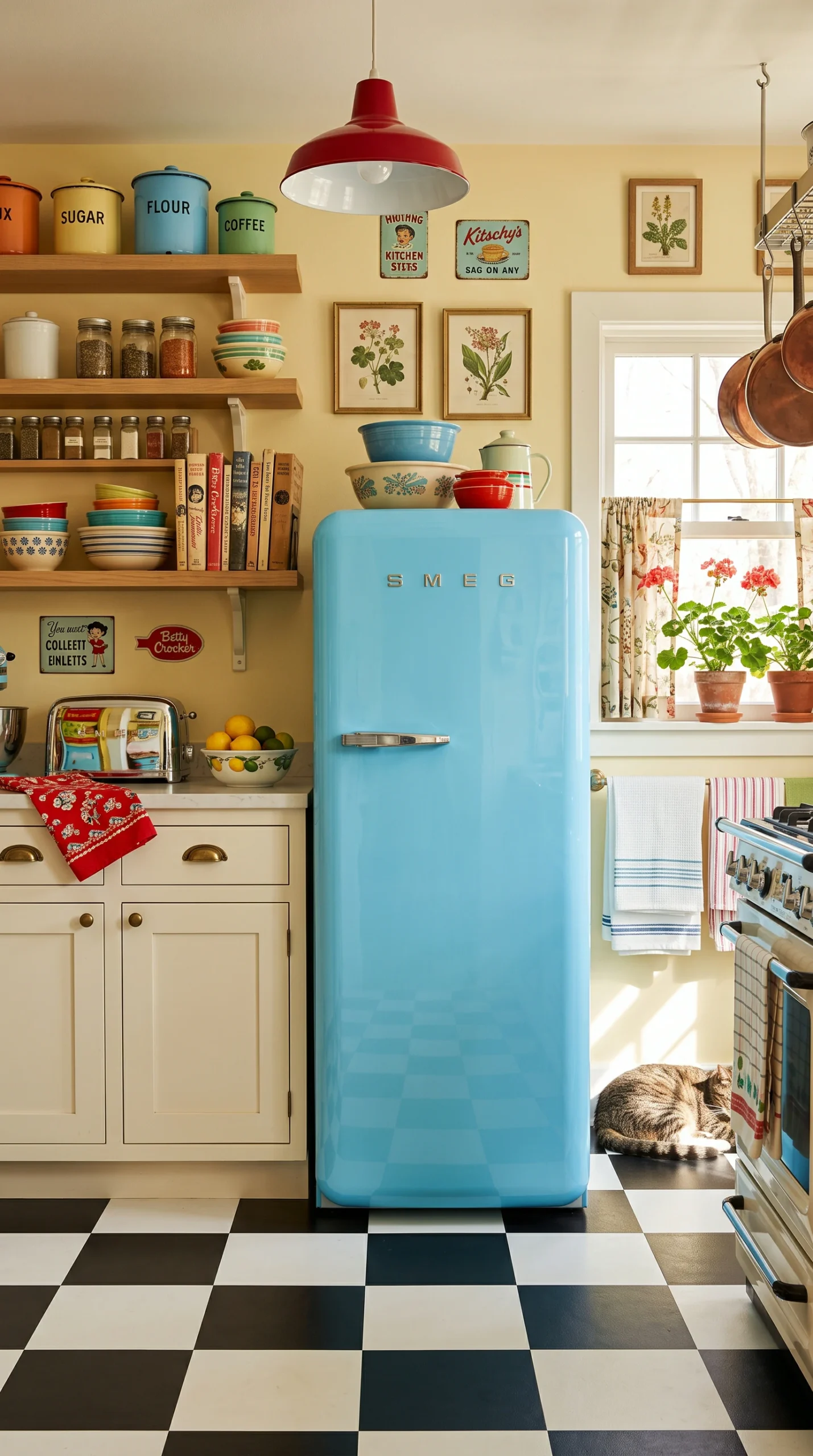
Modern retro reproduction appliances deliver contemporary energy efficiency wrapped in nostalgic styling:
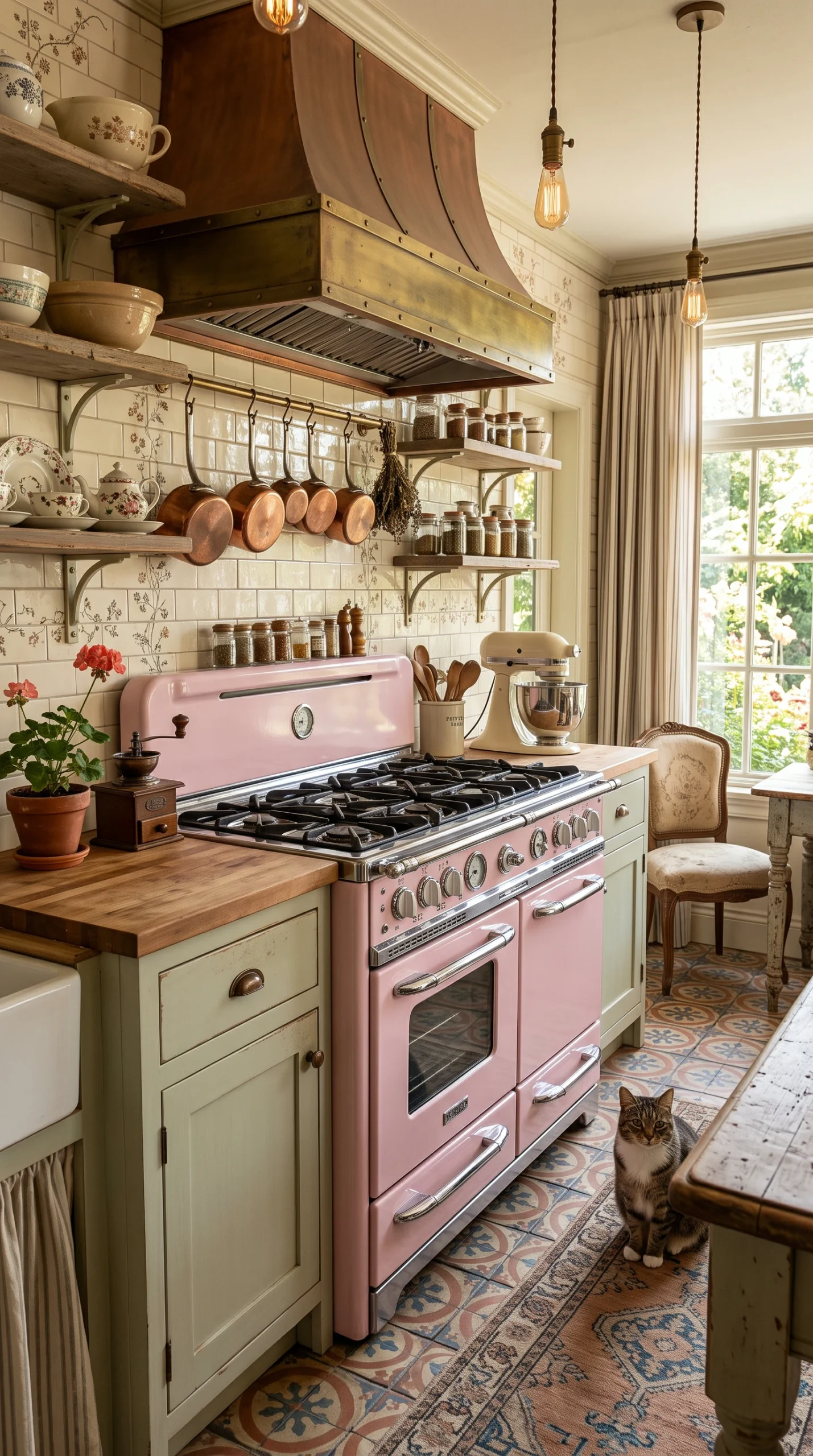
- Pastel Color Palette: Select appliances finished in authentic mid-century hues—such as mint green, robin’s egg blue, pastel flamingo pink, or warm buttercup yellow. Manufacturers like Smeg, Big Chill, and Elmira Stove Works provide curved, high-gloss stamped-metal shells with chrome pull handles that evoke 1950s automotive design.
- Analog Gas Cooking: Choose 30 or 36 inch ranges featuring heavy analog rotary knobs, cast-iron burner grates, and chrome bezel temperature gauges rather than touch-sensitive computer displays.
- Range Hood Concealment: High-volume cooking demands modern smoke capture, but commercial stainless steel hoods look out of place. Install a high-flow 400 to 600 CFM insert blower fully encased inside a custom timber hood shroud finished with scalloped edge trim or tongue-and-groove beadboard painted to match the kitchen’s accent color.
To master the delicate balance of integrating joyful hues across appliances and millwork, explore our detailed guide on whimsical kitchen color strategies, as well as our curation of colorful whimsical kitchens.
Historic Flooring: Checkerboard Linoleum and Hexagonal Penny Tiles
The floor plane establishes the foundational era of the entire kitchen. Wide-plank grey-stained hardwood or high-gloss marble tiles undermine vintage authenticity; period-accurate floors prioritize graphic geometry, durability, and natural materials.
Authentic Linoleum vs. Vinyl Checkerboards
The iconic black-and-white or cream-and-terracotta checkerboard floor is a timeless vintage staple:
- Natural Linoleum (Marmoleum): True historic linoleum is an all-natural composite made from boiled linseed oil, wood flour, pine rosin, and mineral limestone pressed onto a jute backing. Unlike synthetic vinyl, real linoleum is biodegradable, naturally antimicrobial, and develops a rich matte sheen over decades.
- Installation Geometry: Install 12×12 inch (30×30 cm) linoleum tiles laid on a 45-degree diagonal grid relative to the doorway threshold. Diagonal checkerboard patterns visually expand floor space, making narrow galley kitchens feel broader and more dynamic.
Unglazed Hexagonal Porcelain Penny Tiles
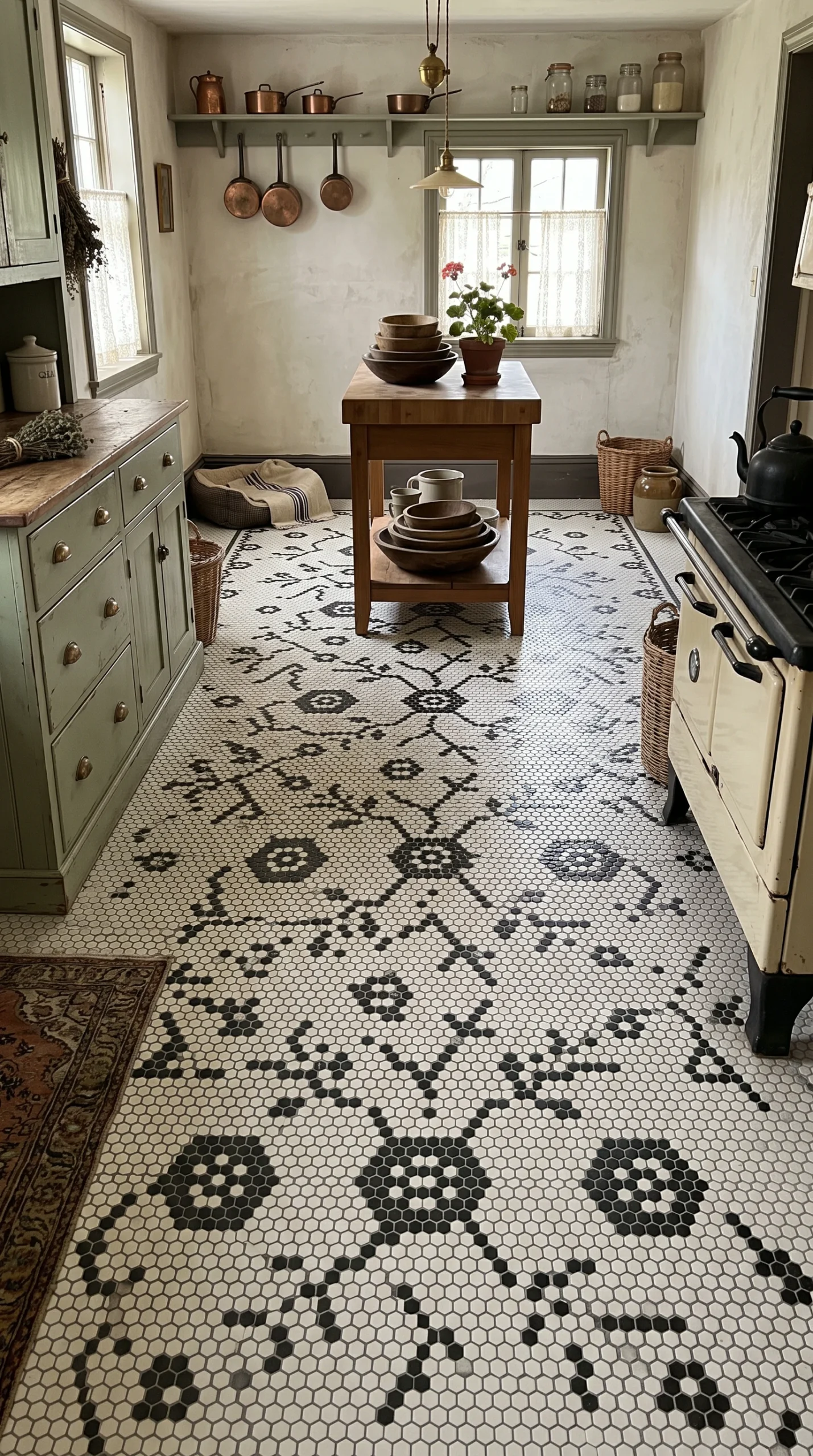
In 1920s cottage and Craftsman bungalows, porcelain mosaic floors provide classic durability:
- Tile Dimensions: Use 1-inch unglazed porcelain hexagonal tiles mounted on mesh backing sheets. Matte, unglazed porcelain offers natural slip resistance (DCOF rating exceeding 0.42) when wet.
- Custom Floral Rosettes: Lay contrasting black or hunter green hex tiles into a predominantly white floor field to form traditional six-petal floral rosettes. Pair with stain-resistant medium grey epoxy grout to replicate historic Portland cement joints while preventing food and grease discoloration.
If you are planning a nostalgic renovation in a compact footprint, explore our tailored recommendations in small whimsical kitchens, as well as our deep dive into rustic cottagecore kitchen design.
Displaying Utilitarian Art: Vintage Enamelware, Ironstone, and Textiles
In a vintage whimsical kitchen, everyday tools are not locked away inside dark cupboards; they are arranged as functional, colorful artwork across open shelves and plate racks.
Curating Authentic Vintage Enamelware
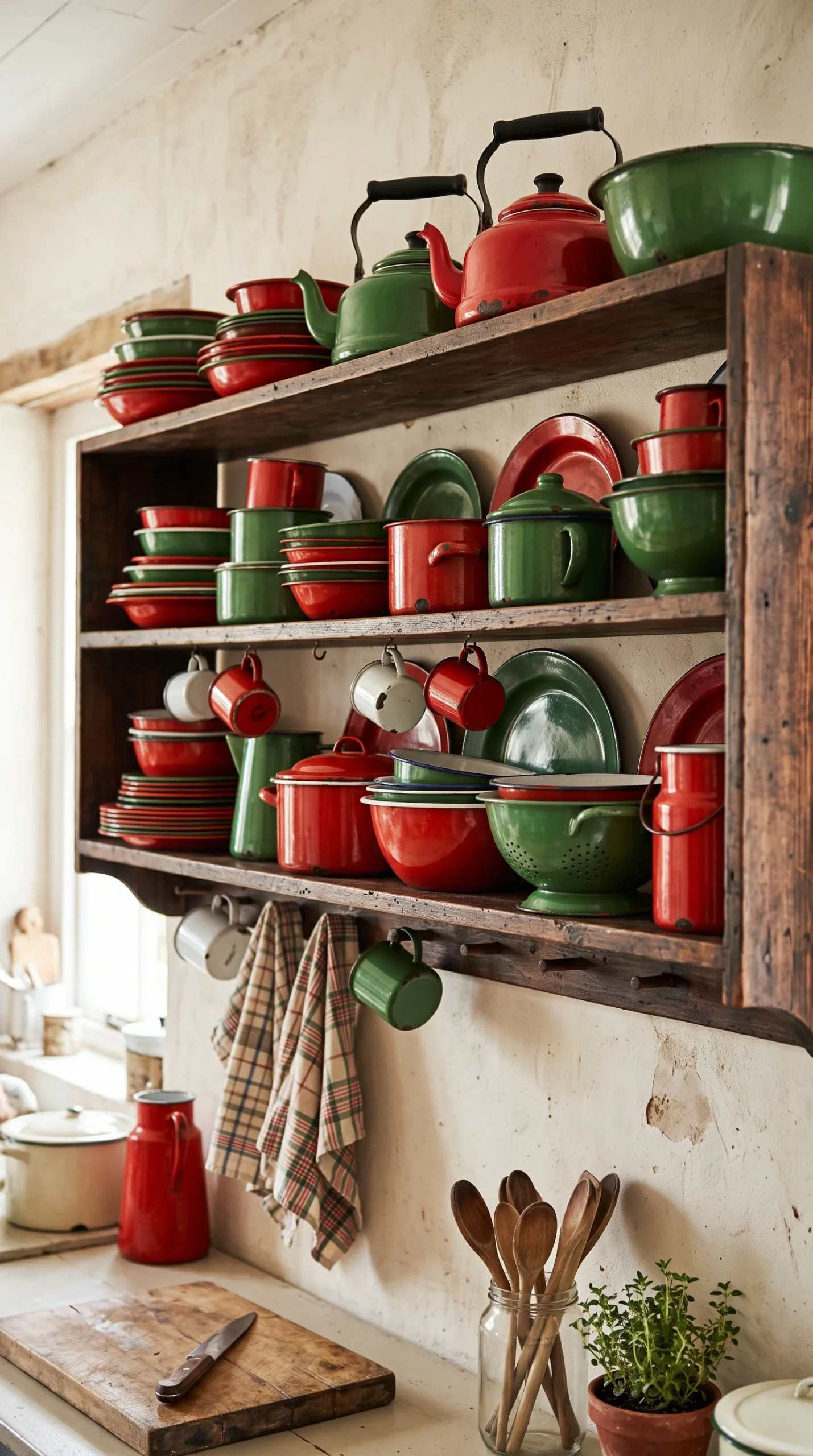
Vibrant enameled steel cookware provides durable pops of primary and pastel color:
- Display Groupings: Collect vintage French or American enamelware pieces—such as goose-neck kettles, slotted skimmers, tiered lunch carriers, and bread bins in cherry red, French blue, or jadeite green. Group enamelware on open 8 to 10 inch solid pine shelves supported by decorative cast-iron brackets.
- Food Safety & Rust Protocols: Check all vintage enamelware carefully. If the interior porcelain is chipped, rusted, or flaking, the metal substrate will leach into acidic foods. Reserve heavily chipped antique pots strictly for dry food storage (such as whole garlic heads or shallots), flower arrangements, or decorative shelf display, utilizing modern reproduction enamelware for active cooking.
Cafe Curtains and Table Textiles
Soft furnishings soften hard timber and stone surfaces, absorbing kitchen echoes while introducing delicate pattern:
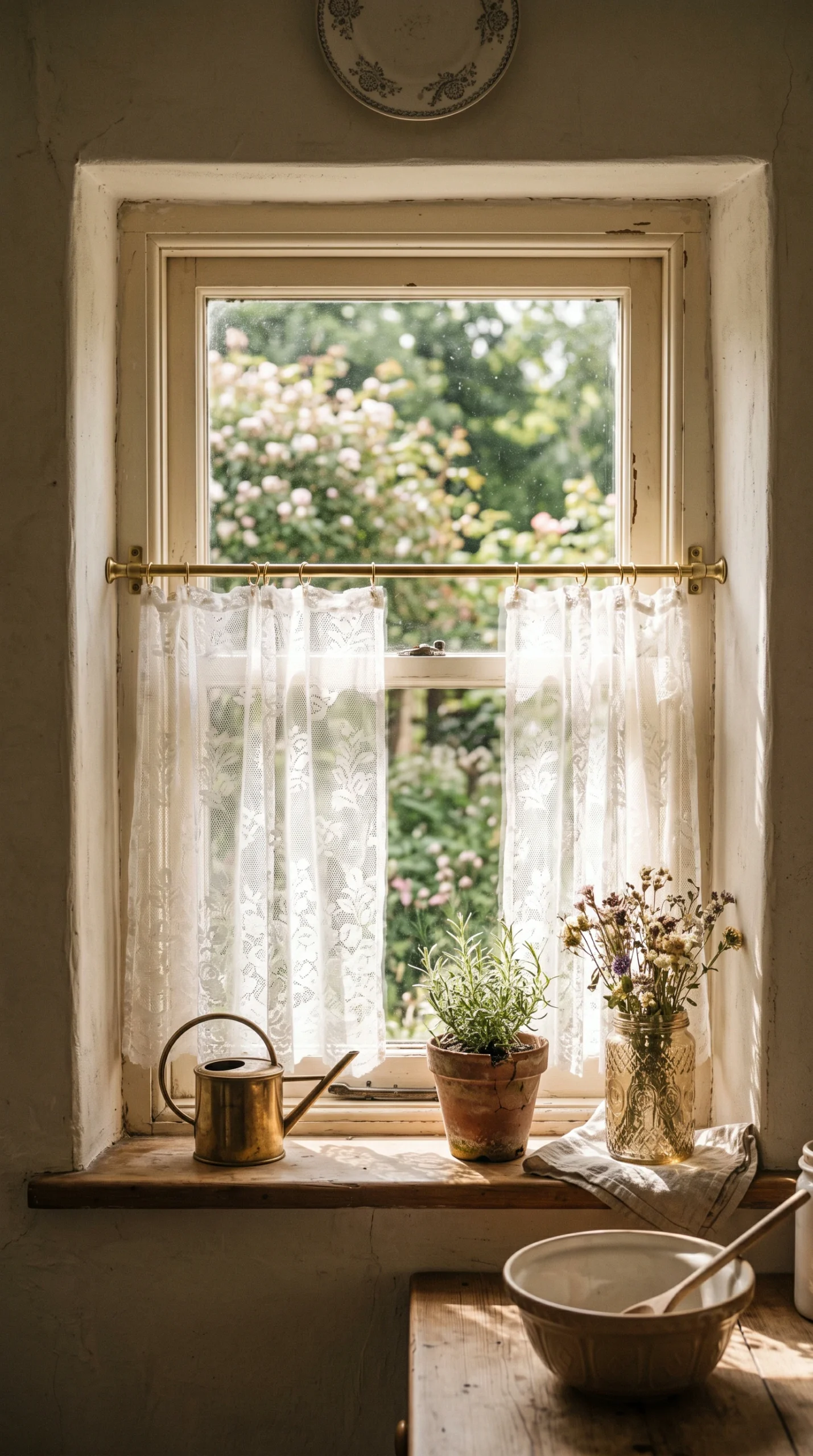
- Lace Cafe Curtains: Hang sheer lace or dotted swiss cafe curtains halfway up double-hung windows using 3/8-inch or 1/2-inch solid brass rods mounted 18 to 24 inches above the sill. This configuration preserves complete privacy from neighbors while allowing unobstructed daylight to flood prep surfaces from the upper sash.
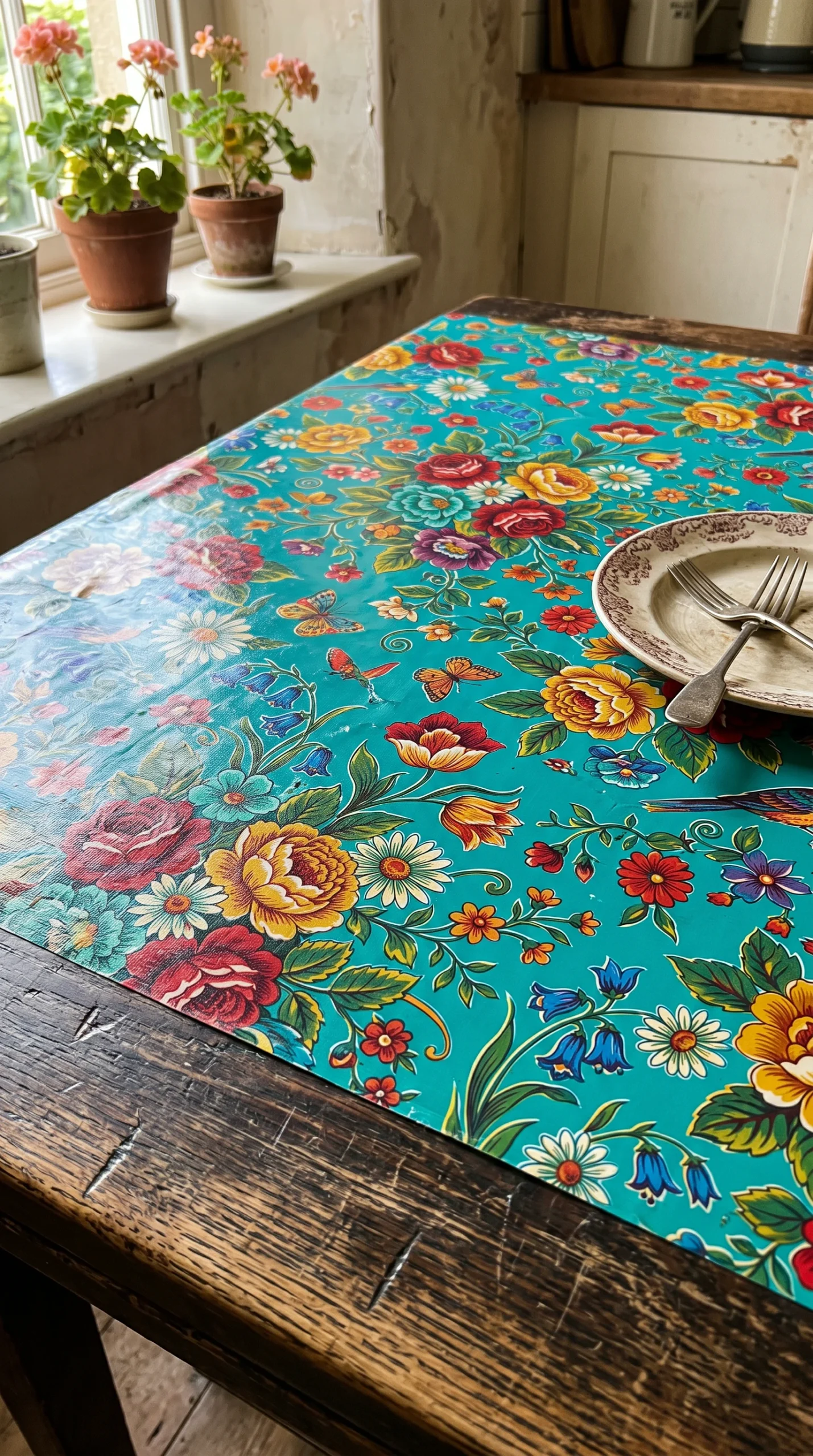
- Floral Oilcloth Tablecloths: Protect scarred wooden prep tables with authentic floral oilcloth. Spilled vinegar, berry juices, and flour wipe clean effortlessly with a damp sponge, providing an indestructible, brightly patterned dining surface for casual family breakfasts.
For more inspiration on styling open displays and wall ledges, see our companion guides on whimsical kitchen shelf decor and whimsical kitchen decor accents.
Lighting the Vintage Space: Schoolhouse Milk-Glass and Tole Pendants
Harsh commercial downlights and cool LED strip channels destroy the soft, romantic atmosphere of a vintage kitchen. Period-appropriate lighting relies on diffused, low-glare fixtures that cast gentle ambient light across the room.
Schoolhouse Globes and Pendant Geometry
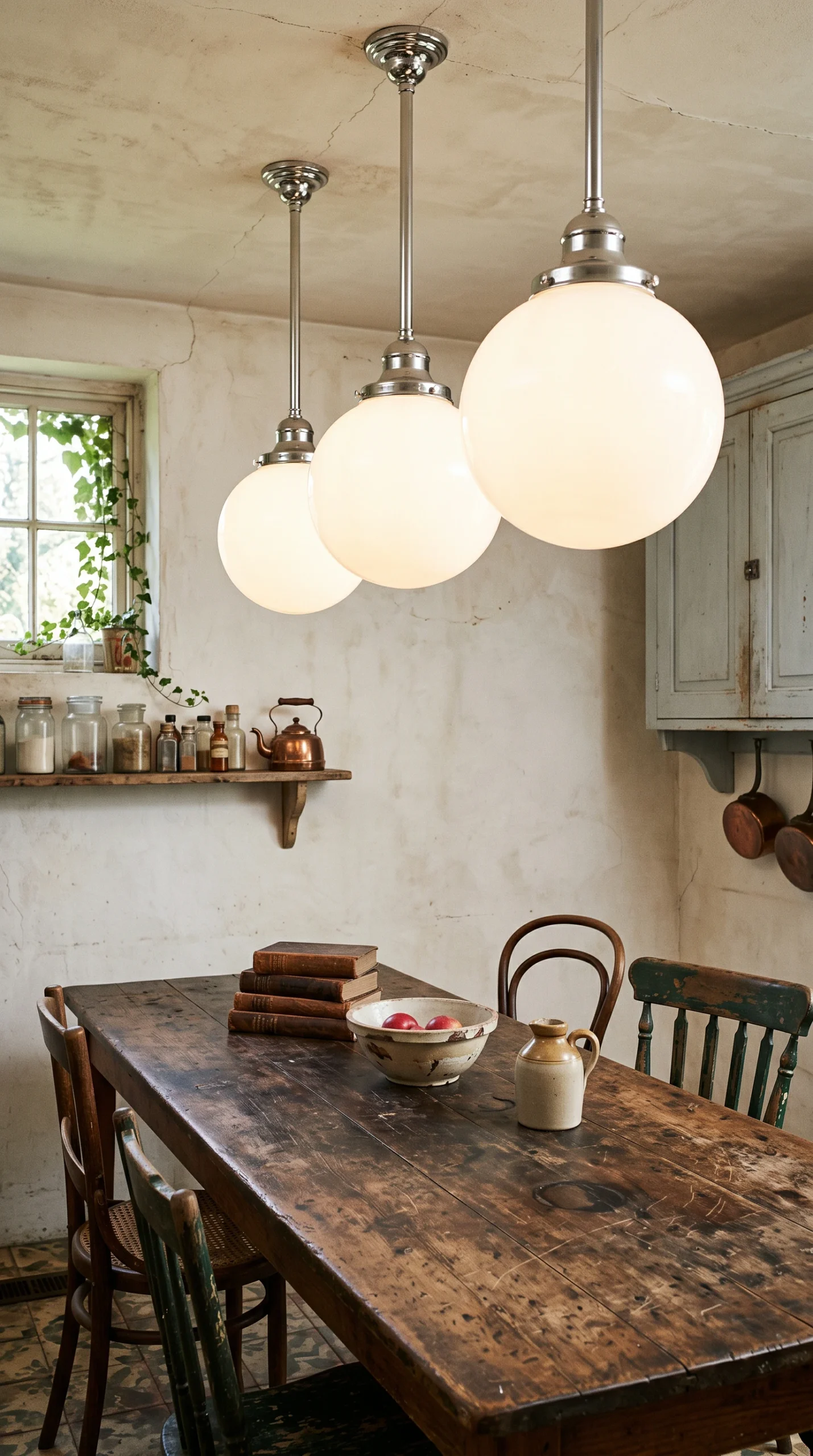
Classic milk-glass schoolhouse fixtures represent the gold standard of early-twentieth-century lighting:
- Glass Specifications: Select authentic blown opaline or white milk-glass schoolhouse globes measuring 12 to 14 inches (30 to 36 cm) in diameter, suspended from antique brass or polished nickel drop rods. The opaque glass eliminates bare-bulb glare, casting a velvety, flattering ambient illumination.
- Hanging Clearances: When suspending schoolhouse pendants above an open work table, set the bottom of the globe 30 to 36 inches (76 to 91 cm) above the tabletop. When installing as central room illumination, maintain a minimum 84-inch (213 cm) head clearance from finished floor to the bottom of the fixture.
- Color Temperature: Fit all sockets with warm white 2700K dimmable LED filament bulbs (CRI 90+). The warm color temperature mimics the gentle amber radiance of original incandescent filaments, making pastel cabinetry and brass hardware glow warmly.
Honest Drawbacks, Maintenance Realities, and Sourcing Challenges
While a vintage whimsical kitchen offers unmatched character, living with authentic historical materials involves specific maintenance challenges that modern homeowners must anticipate.
Practical Challenges and Material Realities
Keep these structural and maintenance factors in mind during your planning:
- Enamel Chipping and Acid Etching: Antique porcelain-enameled cast-iron sinks are sensitive to aggressive cleaning agents. Acidic cleaners (bleach, vinegar, or toilet bowl cleaners) will permanently etch the glossy glaze, leaving the surface rough, dull, and prone to gray metal marks from aluminum pots. Clean exclusively with mild dish soap, baking soda pastes, and non-scratch nylon pads.
- Electrical Grounding and Antique Rewiring: Never plug original 1930s or 1940s electrical appliances or light fixtures directly into modern outlets without complete rewiring. Original cloth-wrapped wiring deteriorates over decades, creating short circuits and fire hazards. Always have antique light fixtures rewired by a certified lighting specialist with modern grounded cords.
- Grease Accumulation on Open Displays: Without heavy daily hood ventilation, open plate racks, fabric sink skirts, and decorative enamelware collections will accumulate a sticky film of airborne cooking grease and dust. Launder sink skirts monthly, and wash displayed ironstone dishware in warm soapy water quarterly to maintain fresh cleanliness.
- Unfitted Cabinet Levelling: Historic homes rarely feature level floors or square walls. When positioning heavy antique hutches on sloping floors, use hardwood leveling shims under the feet before securing wall anchors to ensure cabinet doors swing smoothly without binding.