Soft Brutalism Interior Design for Warm, Tactile Living

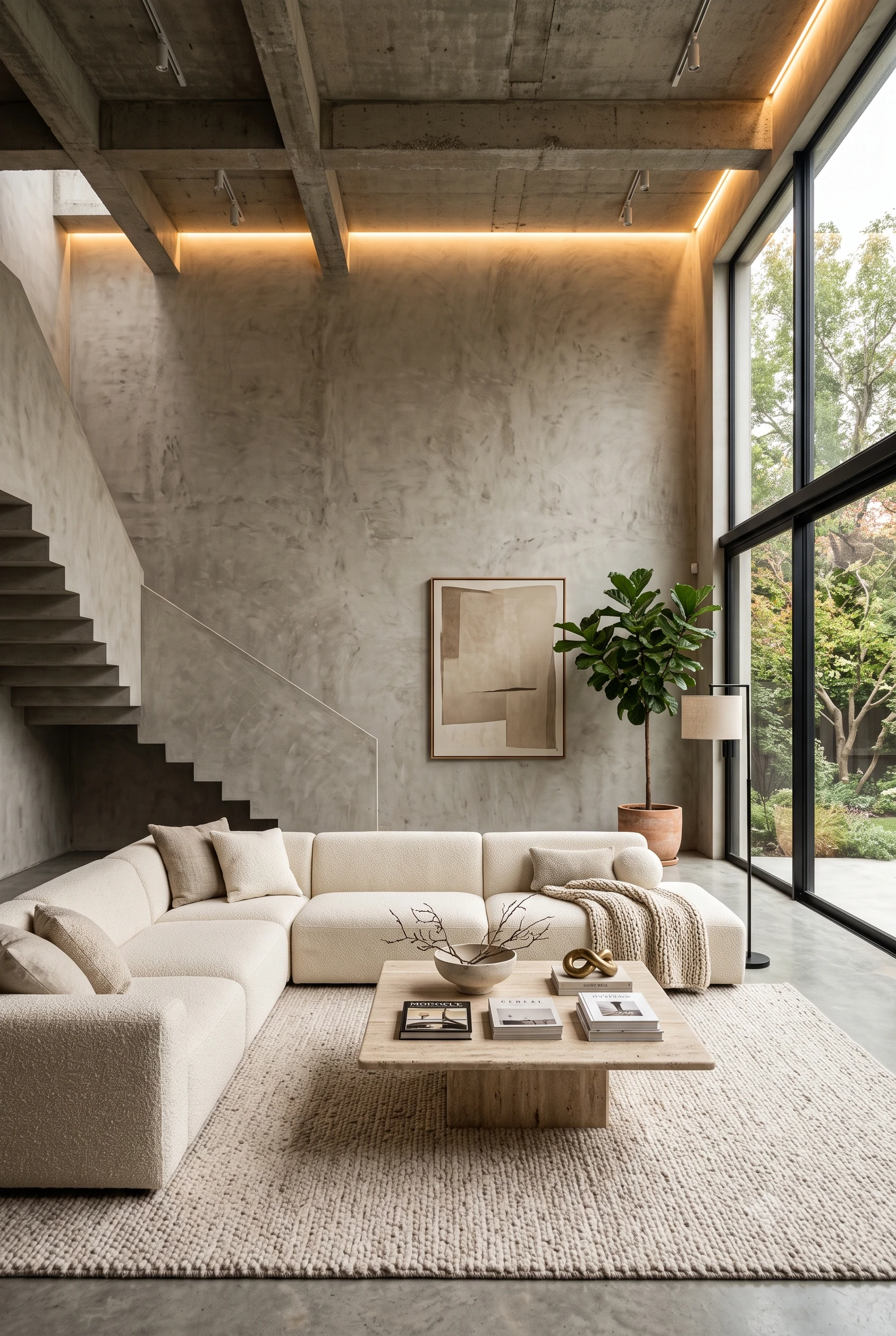
Soft brutalism transforms the cold monumentality of mid-century architecture into a warm, deeply comforting home. By pairing industrial concrete and microcement with tactile wool boucle, carved travertine, warm reclaimed oak, and golden 2400K to 2700K lighting, you can create a space that feels sculptural yet inviting.

Tactile Balance Ratio

Pair monumental concrete surfaces with roughly equal measures of warm reclaimed oak, looped wool boucle, and natural lime plaster.

Microcement Thickness

Apply continuous seamless microcement at 2 to 3 mm thickness, protected by an aliphatic matte polyurethane sealer to resist staining.

Walkway Clearances

Maintain 36 to 42 inches of open passage around cast concrete tables and stone islands to prevent bruised hips on unyielding corners.

Warm Illumination

Equip fixtures with 2400K to 2700K high-CRI LED sources to counteract the cold grey cast of cement and accentuate plaster texture.

Monolithic Architecture, Curved Seating, and Organic Textures

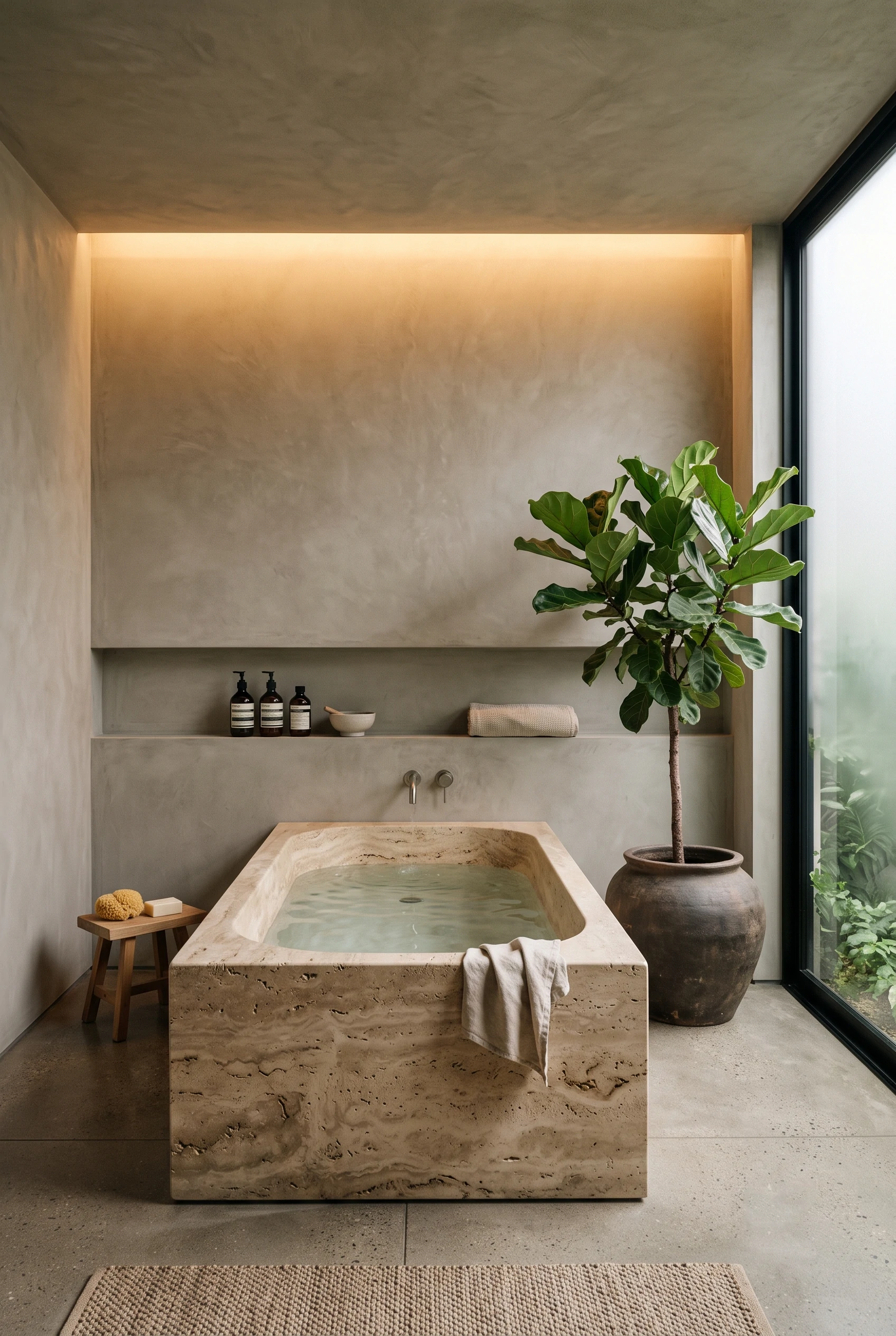
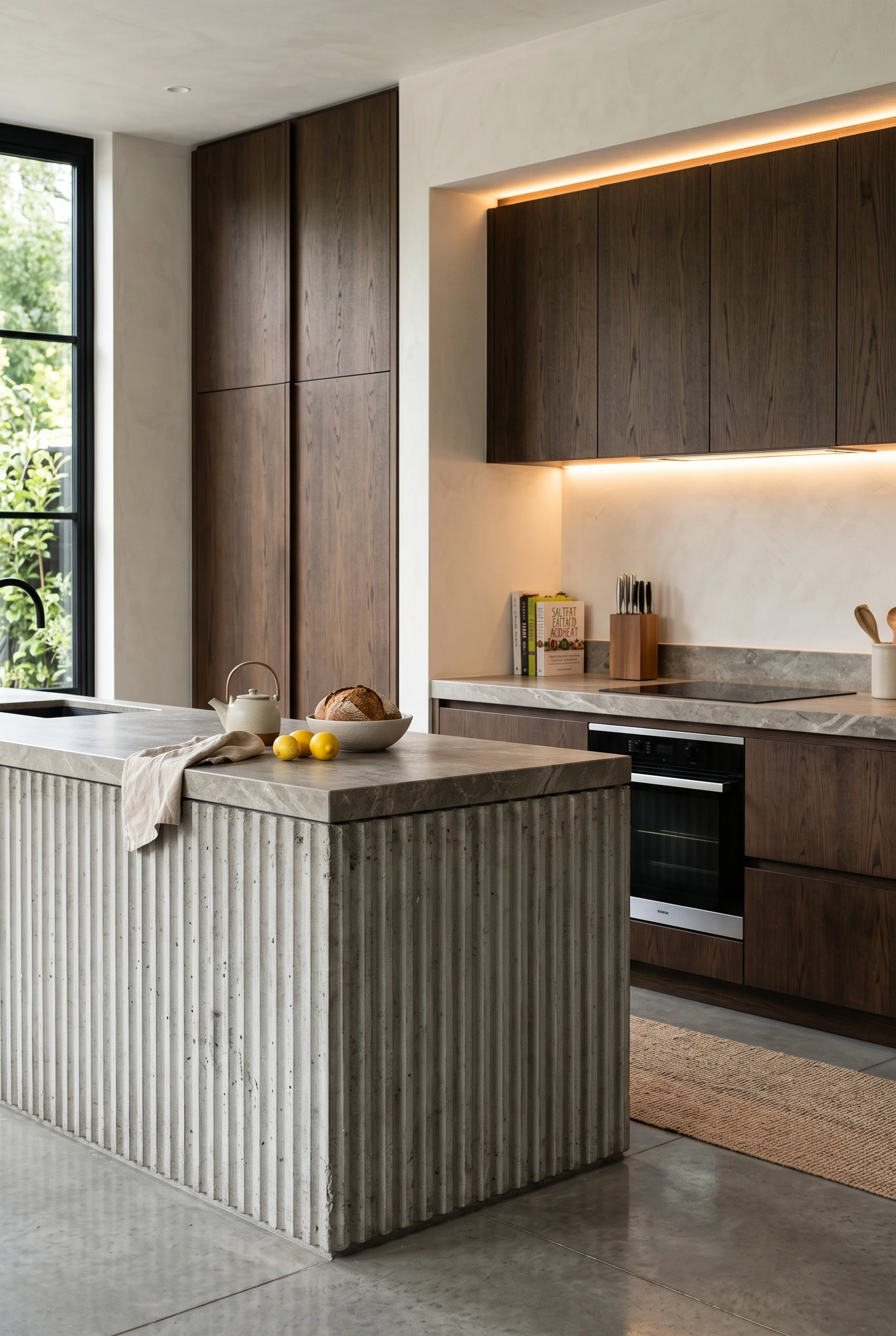
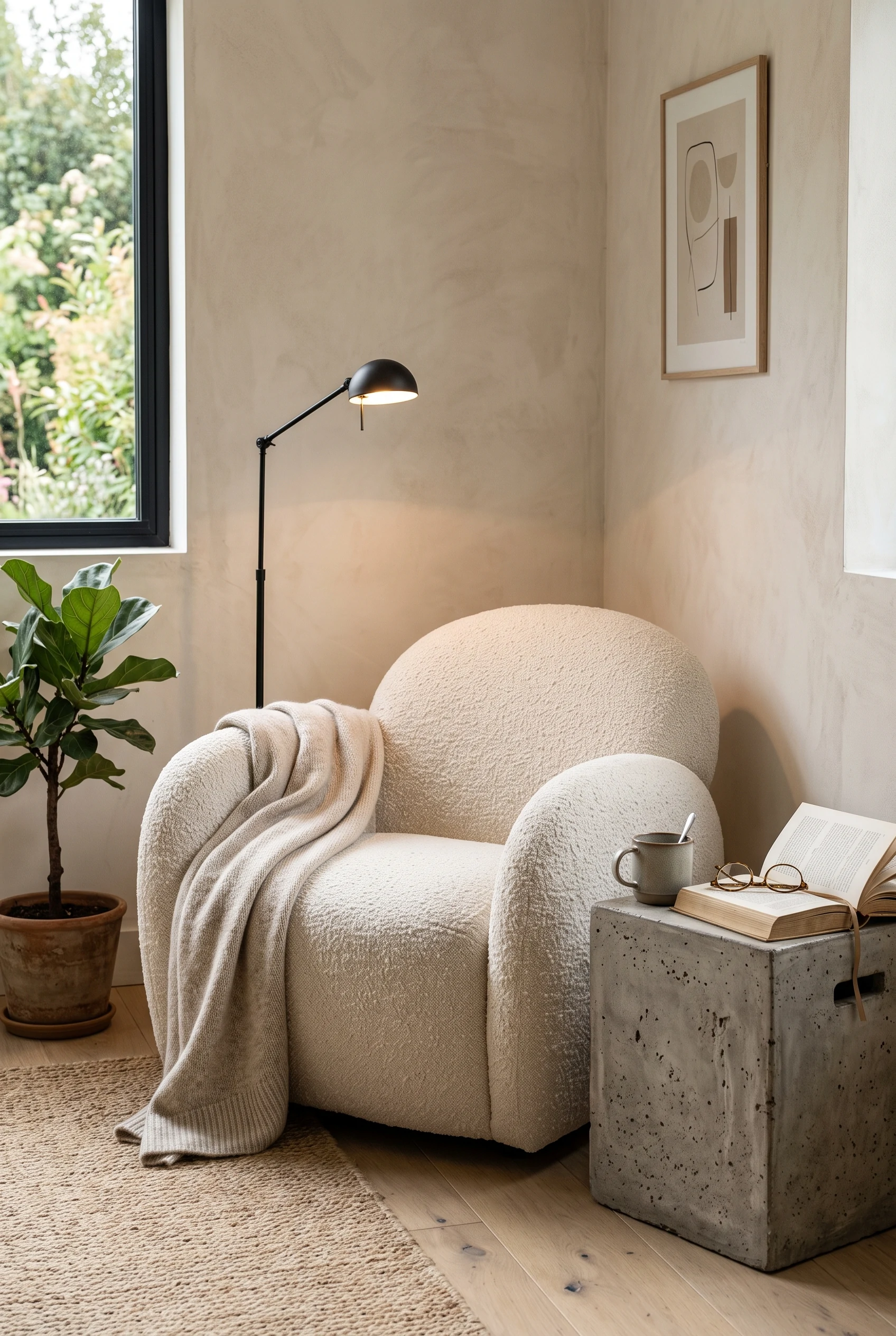
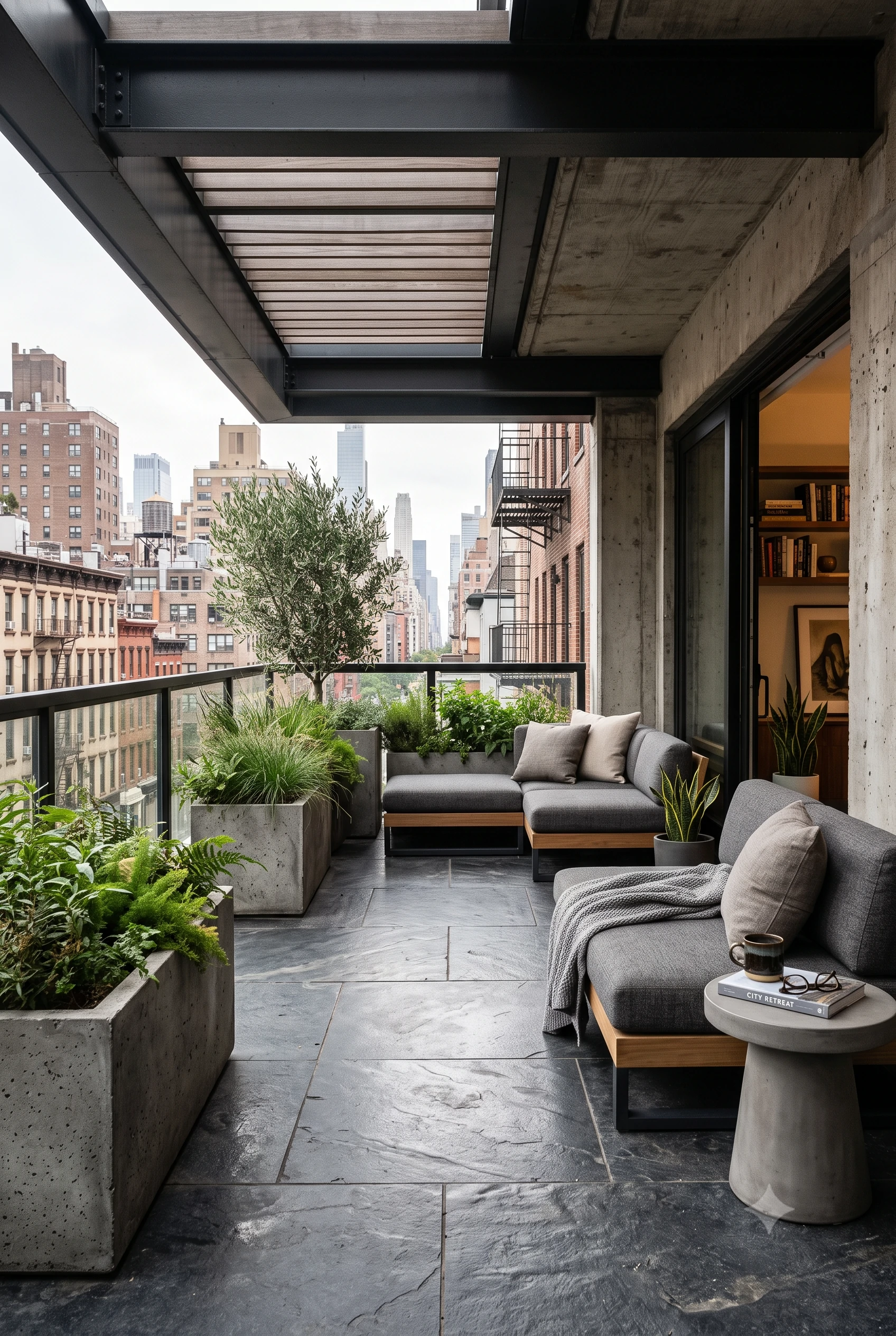
Explore soft brutalist spaces featuring microcement floors, exposed concrete columns, fluted kitchen islands, carved travertine bathtubs, and warm oak home offices.

Essential Planning Checks for Soft Brutalist Interiors

Review these critical material, acoustic, and spatial considerations before introducing concrete and sculptural stone into your home.

Calculate Structural Weight Loads

Verify floor capacity before installing solid cast concrete dining tables or stone tubs, which can exceed 400 to 600 pounds.

Seal Porous Masonry Surfaces

Protect raw concrete and microcement with two coats of penetrating aliphatic polyurethane sealer to prevent oil and water stains.

Soften Harsh Room Acoustics

Tame high-frequency flutter echo by combining textured lime-plaster walls with thick wool rugs and curved upholstered seating.

Maintain Generous Clearances

Allow 36 to 42 inches of clear walking space around masonry furniture to ensure effortless circulation around hard edges.

Layer 2400K to 2700K Lighting

Counterbalance cool grey cement undertones with low-level, warm diffused illumination and concealed LED wash lights.

Crafting a Soft Brutalist Interior: Balancing Raw Masonry with Tactile Warmth

Classical Brutalism emerged in mid-twentieth-century architecture as an uncompromising celebration of raw materials, bold geometric mass, and unadorned structural honesty. Coined from the French term béton brut (raw concrete), it favored monumental concrete facades, exposed ductwork, and severe rectilinear planes. While striking in civic buildings and cultural institutions, pure Brutalism often felt intimidating, cold, and acoustically harsh when transplanted directly into domestic living spaces.

Soft Brutalism emerged to resolve this tension. Rather than abandoning the monumental integrity and textural weight of raw masonry, it pairs industrial materials—such as cast concrete, microcement, and blackened steel—with organic warmth, curvilinear silhouettes, tactile textiles, and glowing ambient light. While our companion guide to soft Brutalism interior design ideas focuses on architectural geometry and spatial planning, this guide explores the tactile discipline: how to curate surface finishes, manage acoustics, calibrate lighting, and introduce human comfort into a monumental aesthetic.

The 50/50 Material Equation: Balancing Hard and Soft

The primary pitfall in Brutalist residential design is allowing hard, unyielding surfaces to dominate every plane. An authentic soft Brutalist home relies on a deliberate 50/50 balance between industrial mass and organic softness.

Industrial Anchors: Concrete, Microcement, and Steel

Heavy, unadorned materials provide the architectural backbone:

  • Exposed Structural Concrete: Leaving ceiling slabs, support columns, or board-formed feature walls unpainted celebrates the natural texture of wooden formwork, air pockets, and aggregate variations.
  • Seamless Microcement Surfaces: Applied at a thin layer of 2 to 3 mm (roughly 1/8 inch) over concrete slabs or reinforced subfloors, microcement creates continuous, grout-free flooring that visually expands rooms while offering subtle cloudy movement underfoot.
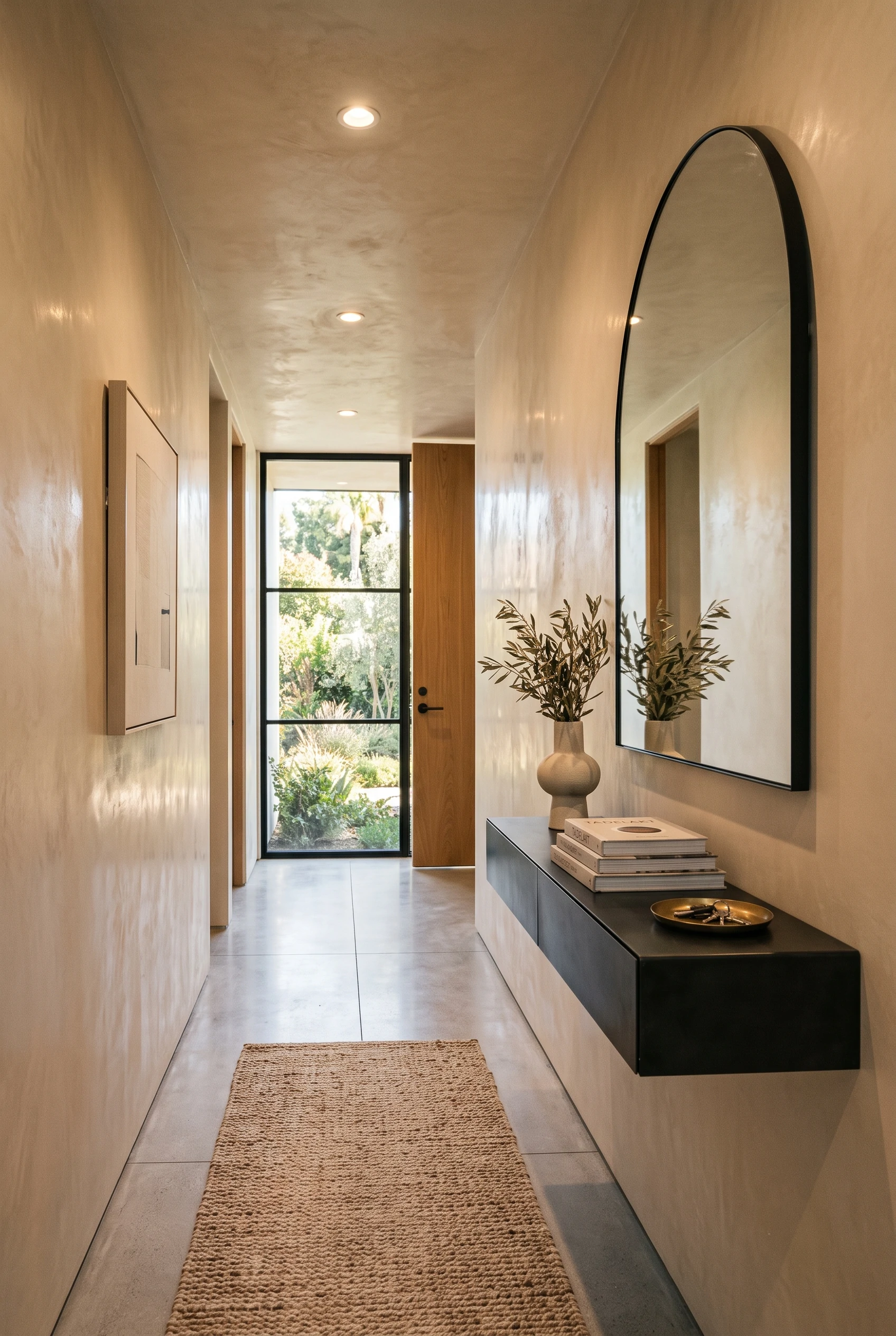
  • Blackened Steel Accents: Architectural metalwork—such as custom entrance consoles, steel-framed grid windows, or floating fireplace mantels—adds sharp, structural definition that anchors the space without looking ornate.

For ideas on incorporating these powerful materials across the entire home, review our overarching modern Brutalist interior design ideas.

Organic Counterpoints: Reclaimed Timber, Travertine, and Plaster

To keep raw masonry from feeling sterile, surround it with tactile materials that offer visual and thermal warmth:

  • Deep-Grained Hardwoods: Introduce thick slabs of reclaimed European oak, smoked walnut, or oiled teak. Wood brings natural warmth, acoustic absorption, and biological comfort to surfaces that interact directly with skin, such as dining tables, home office desks, and bathroom vanities.
  • Carved Natural Travertine: Featuring pitted surfaces, warm honey-beige undertones, and dramatic veining, honed travertine softens the cool grey cast of industrial concrete while maintaining an authentic, monolithic weight.
  • Lime Plaster and Tadelakt Walls: Applying breathable lime plaster or Moroccan Tadelakt on walls diffuses natural daylight, creating a soft, tactile skin that replaces sterile drywall with subtle organic texture.

To explore how these tones harmonize across interior rooms, consult our comprehensive guide to Brutalist color palette ideas.

Spatial Ergonomics and Sculptural Clearances

Because soft Brutalist furniture pieces are often sculptural and physically unyielding, planning generous room clearances is essential to prevent a home from feeling cramped or physically hazardous.

Walkway Clearances Around Masonry Furniture

Bumping into a padded sofa cushion is harmless, but catching an unyielding cast concrete table corner or stone plinth can cause serious bruising:

  • Primary Walkways: Maintain a generous walkway clearance of at least 36 to 42 inches (91 to 107 cm) around heavy cast concrete dining tables, kitchen islands, and monolithic stone coffee tables. This ensures effortless flow through the room without having to turn sideways.
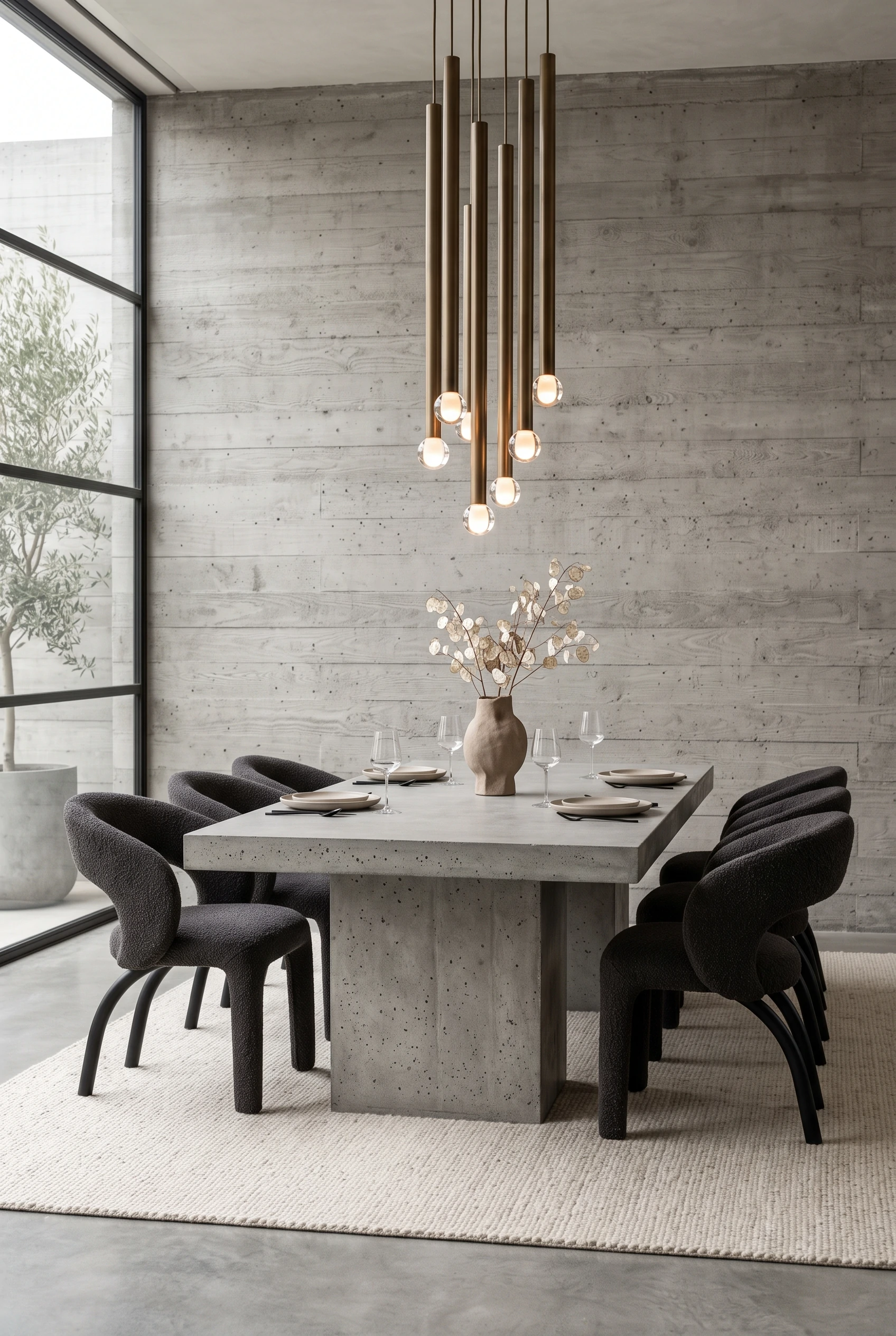
  • Dining Ergonomics: Standard dining tables sit 30 inches high. When selecting heavy cast concrete or thick stone dining surfaces, pair them with curved timber or leather-upholstered chairs that provide 10 to 12 inches (25 to 30 cm) of clear vertical thigh clearance between the seat and table underside.
  • Curvilinear Seating Silhouettes: Offset the harsh rectangular grid of concrete beams and grid windows by selecting low-profile sofas and lounge chairs with rounded, organic contours. Curved seating softens sightlines and guides foot traffic smoothly around sitting areas.

For more inspiration on selecting sculptural seating and architectural credenzas, explore our guide to Brutalist furniture ideas.

Taming Acoustics in Masonry Interiors

Acoustic comfort is one of the most neglected aspects of concrete interior design. Hard, non-porous surfaces—such as polished concrete floors, glass windows, and cement ceilings—reflect sound waves continuously, creating uncomfortable flutter echo and speech reverberation.

Acoustic Damping Strategies

Introducing sound-absorbing layers restores intimate conversational warmth:

  • Generous Area Rugs with Thick Padding: Lay down expansive natural fiber rugs that extend well beyond seating perimeters. Choose rugs with a pile height of 15 to 20 mm, or dense hand-knotted wool flat-weaves installed over a premium 1/4-inch dense felt rug pad to trap footstep noise and lower reverberation.
  • Tactile Boucle and Chunky Wool: Upholster reading chairs and accent benches in heavy wool-blend boucle. The looped, nubby yarns scatter sound waves instead of bouncing them, while providing an inviting, tactile contrast against cool concrete feature walls.
  • Ceiling Textures and Soft Drapery: Hang floor-to-ceiling unlined wool or heavy linen drapery along perimeter window tracks. When drawn, the deep fabric folds absorb street noise and soften the industrial framework of metal windows.

To see how acoustic layers transform family gathering areas, review our tips for Brutalist living room ideas.

Atmospheric Lighting: Counterbalancing Cool Concrete

Cold grey concrete illuminated by harsh, blue-tinted overhead downlights feels like an underground parking structure. Thoughtful lighting design brings concrete alive by highlighting its textural nuances with warm, low-glare radiance.

Calibrating Color Temperature and Grazing Fixtures

Lighting should carve out intimate zones of comfort:

  • 2400K to 2700K Ultra-Warm Spectrum: Equip all interior fixtures with warm white LED sources rated between 2400K and 2700K with a high Color Rendering Index (CRI 90+). The golden undertones counteract the cold blue-grey tint of concrete, making masonry feel warm and hospitable.
  • Surface Grazing Channels: Position concealed LED linear wash lights directly adjacent to board-formed concrete or textured plaster walls. Grazing light across the wall at a shallow angle casts microscopic shadows across every ridge and aggregate pocket, turning raw masonry into a living sculpture.
  • Brushed Bronze and Paper Accents: Punctuate rooms with warm metal fixtures—such as brushed bronze chandeliers, blackened brass sconces, or oversized paper lanterns—that add delicate craftsmanship to monumental volumes.

For curated ideas on selecting bold sculptural vessels and lighting accents, explore our guide to Brutalist decor ideas.

Room-by-Room Applications of Soft Brutalism

Adapting this aesthetic to individual living zones requires tailoring materials to each room’s functional requirements.

Kitchens and Dining Zones

In the culinary space, blend heavy fluted concrete island bases with seamless matte cabinetry, concealed appliances, and cast-concrete dining tables. Stainless steel or honed quartzite countertops provide resilient prep surfaces that handle acidic spills while echoing industrial efficiency. For practical kitchen layouts and material specifications, see our guide to Brutalist kitchen ideas.

Bathrooms and Wet Rooms

A soft Brutalist bathroom creates the immersive calm of a subterranean thermal spa. Carved travertine soaking tubs, microcement wall coatings, and matte black or gunmetal wall-mounted faucets turn the bath into a sanctuary of tactile relaxation. Discover how to build seamless curbless wet rooms in our dedicated guide to Brutalist bathroom ideas.

Bedrooms and Home Offices

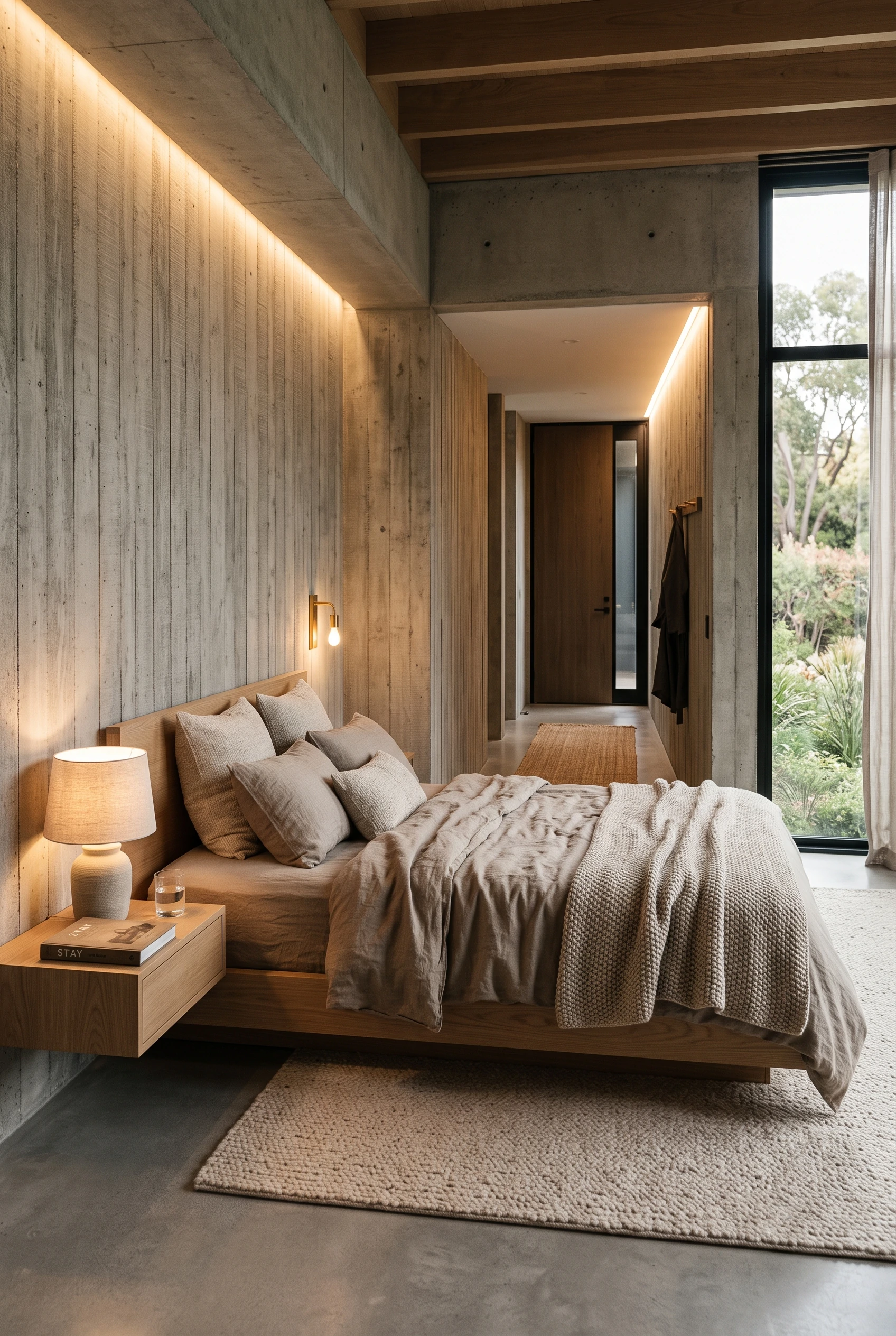
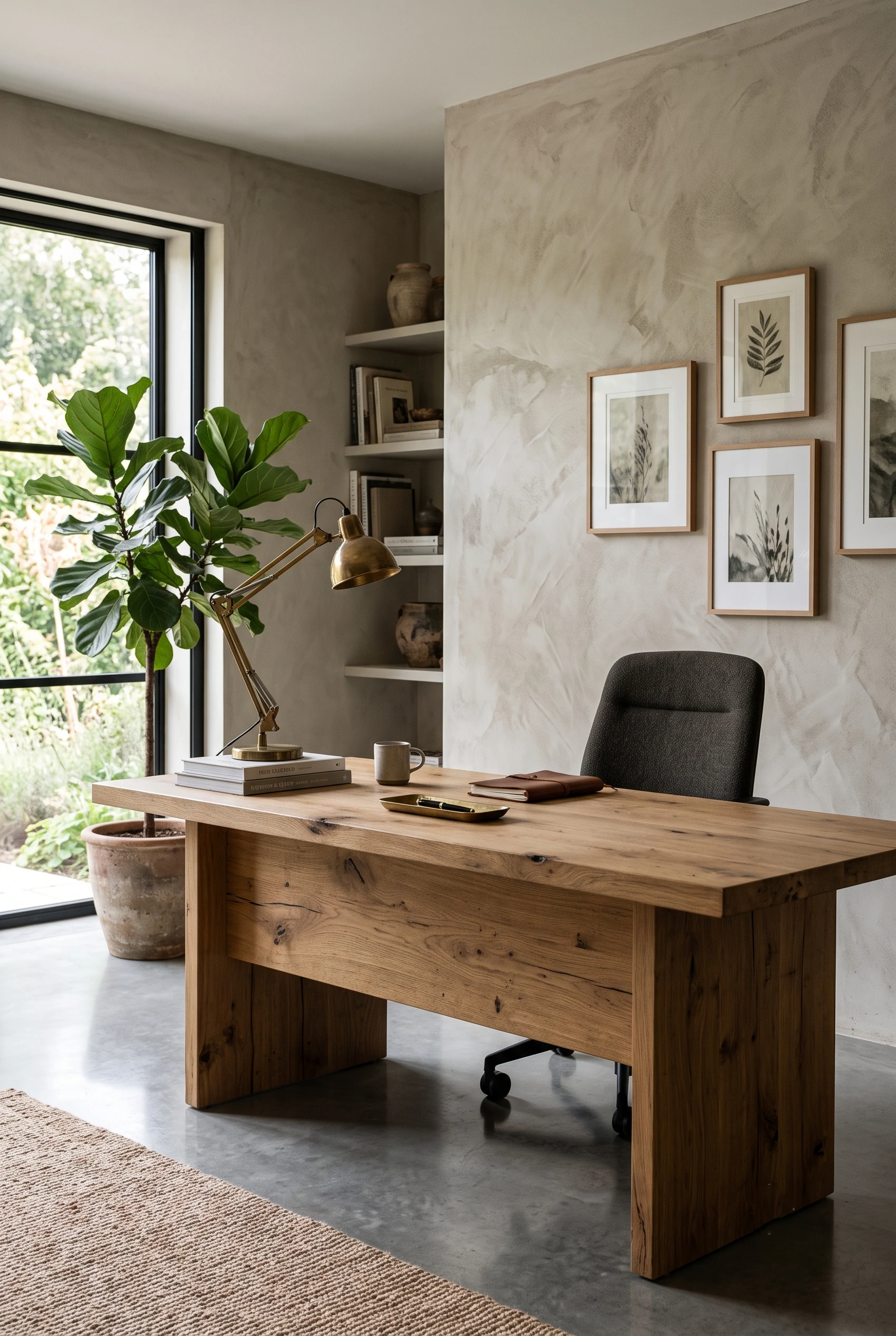
In resting and working spaces, comfort must take precedence. Pair a textured concrete accent wall with a low-profile platform bed dressed in heavy natural linen, and design a home office nook centered around a thick reclaimed oak desk and open timber shelves. Explore layout recommendations in our guide to Brutalist bedroom ideas, and learn how to scale these concepts for compact homes with our small Brutalist apartment ideas.

Real-World Drawbacks and Maintenance Realities

Living with raw concrete, microcement, and monumental stone surfaces involves authentic practical challenges that every homeowner must understand:

Microcement Hairline Cracking and Movement: Microcement is a rigid mineral coating applied only 2 to 3 mm thick. If the underlying subfloor flexes, settles, or expands with seasonal temperature swings, microcement can develop fine hairline cracks. While some embrace these cracks as authentic industrial patina, repairing them invisibly is nearly impossible without recoating the entire continuous plane.

Porosity and Staining of Unsealed Masonry: Real concrete is porous and calcium-based. Spilled cooking oil, lemon juice, coffee, or red wine will absorb deeply into unsealed concrete within minutes, leaving permanent dark stains or dull acid-etched marks. Kitchen counters and dining tables must be treated with a high-performance, food-safe aliphatic polyurethane sealer and re-sealed periodically.

Extreme Weight of Cast Furniture: Solid cast concrete tables, fluted pedestals, and stone bathtubs carry immense weight, often weighing between 300 and 700 pounds. Before bringing heavy masonry pieces into an upper-floor apartment or timber-joist home, verify your subfloor load capacity with a structural engineer, and anticipate difficult delivery logistics.

Travertine Void Maintenance: Unfilled natural travertine features porous hollow pockets. In bathrooms and dining tables, these voids collect dust, soapsuds, and crumbs if not cleaned regularly with a soft brush attachment and pH-neutral stone cleaner. Avoid acidic bathroom descalers, which dissolve calcium stone immediately.

By balancing raw industrial mass with warm organic timbers, sound-damping textiles, and low-glare warm illumination, soft Brutalism transforms monumental architecture into an enduring, deeply comforting home.

Frequently Asked Questions About Soft Brutalism Design

Practical answers on microcement durability, weight limitations, warming up concrete rooms, and acoustic management.
Classical Brutalism emphasizes raw exposed concrete, rigid geometric severity, and monumental scales that can feel imposing indoors. Soft Brutalism preserves that structural honesty but introduces warm tactile organic elements—such as curved boucle upholstery, reclaimed oak, travertine, and warm 2400K to 2700K lighting—to make spaces deeply comfortable for everyday living.
Microcement is applied in thin continuous coats totaling 2 to 3 mm (roughly 1/8 inch) over concrete or rigid subfloors. While formulated with flexible polymers, hairline micro-cracks can still develop if the underlying substrate settles, flexes, or undergoes thermal expansion.
Concrete and microcement are naturally porous and absorb oils, citrus, and wine quickly. Protect worktops and dining tables with a two-part penetrating aliphatic polyurethane sealer in a matte finish, wipe spills immediately, and avoid abrasive chemical cleaners.
Maintain at least 36 to 42 inches (91 to 107 cm) of clear walkway clearance around cast concrete dining tables and stone islands. Unyielding masonry edges do not give way upon contact, making generous transit buffers essential for safety and comfort.
Hard masonry surfaces bounce sound waves, creating flutter echo. Counteract this by laying down dense wool or natural fiber rugs (15 to 20 mm pile) over 1/4-inch felt pads, hanging full-height linen or wool curtains, using boucle upholstery, and applying textured lime plaster.
Solid cast concrete tables can weigh between 300 and 600 pounds. While standard concrete-slab apartment floors can support this weight, older timber-framed homes require checking joist load capacities with a structural engineer before installation.
Use warm white LED fixtures between 2400K and 2700K with a high Color Rendering Index (CRI 90+). The warm golden spectrum neutralizes the cold blue-grey undertones of cement, giving concrete walls an inviting, luminous glow.
Deep-grained hardwoods with rich tactile character—such as reclaimed European oak, smoked walnut, charred shou sugi ban cedar, and natural teak—create the most striking and warm contrast against cool masonry surfaces.
Concrete has high thermal mass and draws body heat away from bare feet during cold months. Installing radiant in-floor heating beneath microcement is ideal; alternatively, layer thick wool area rugs and keep felt slippers accessible.
Clean travertine surfaces using pH-neutral stone soaps and soft microfibre cloths. Because travertine has porous voids, seal it annually with a penetrating impregnator, and never use acidic lime or vinegar cleaners, which dissolve calcium stone.