Walk-In Closet Shelving Ideas for Better Storage and Display

A well-engineered shelving system is the structural backbone of a high-performance walk-in closet, transforming static walls into an ergonomic storage and display showcase. By calibrating shelf depths—from 14-inch folded knitwear tiers to 30-degree angled footwear galleries and backlit handbag cubbies—and utilizing structural 3/4-inch hardwood joinery, homeowners eliminate shelf sag, prevent clothing clutter, and achieve enduring bespoke sophistication.

Curated Visual Gallery: High-Performance Architectural Closet Shelving

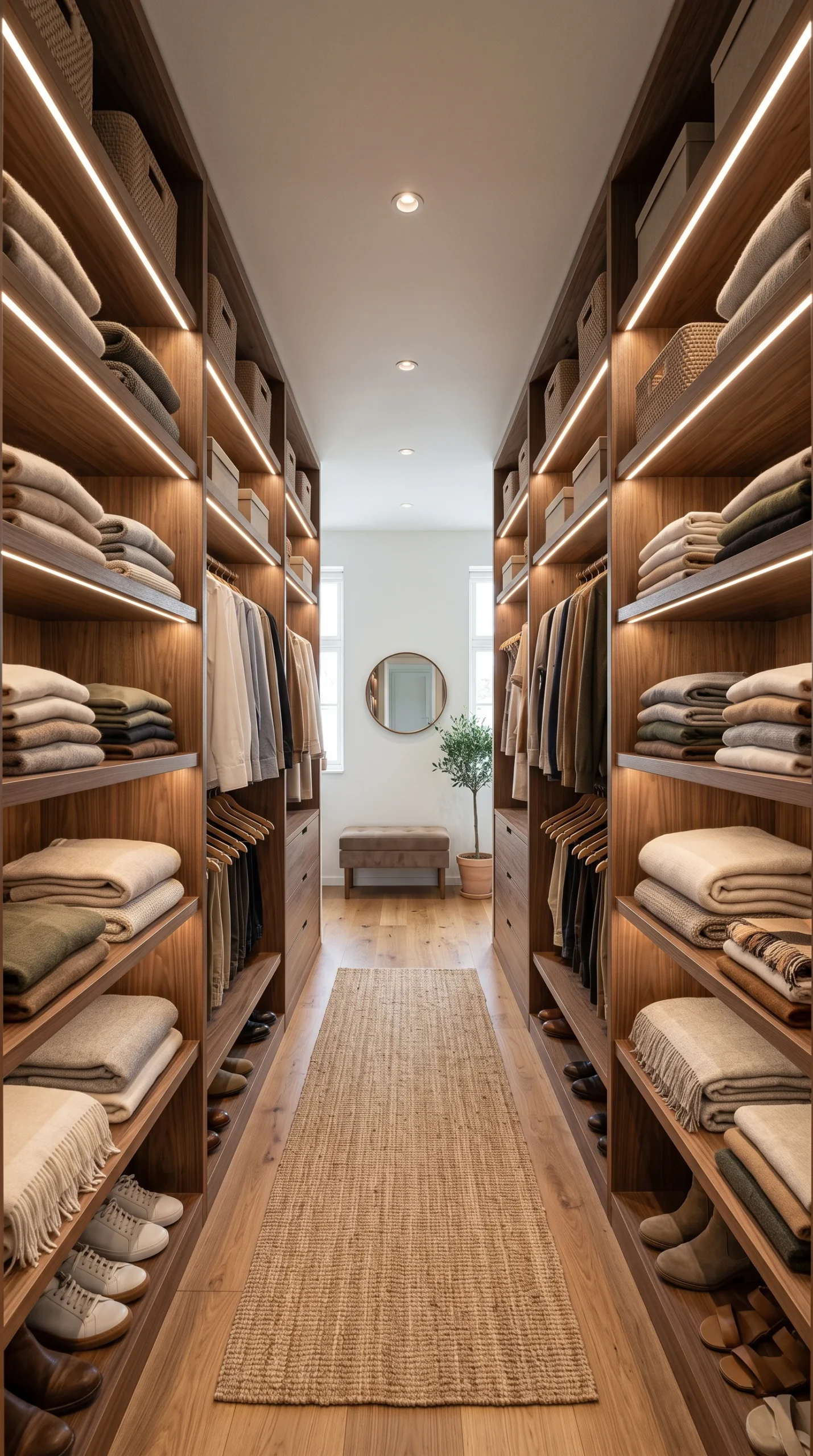
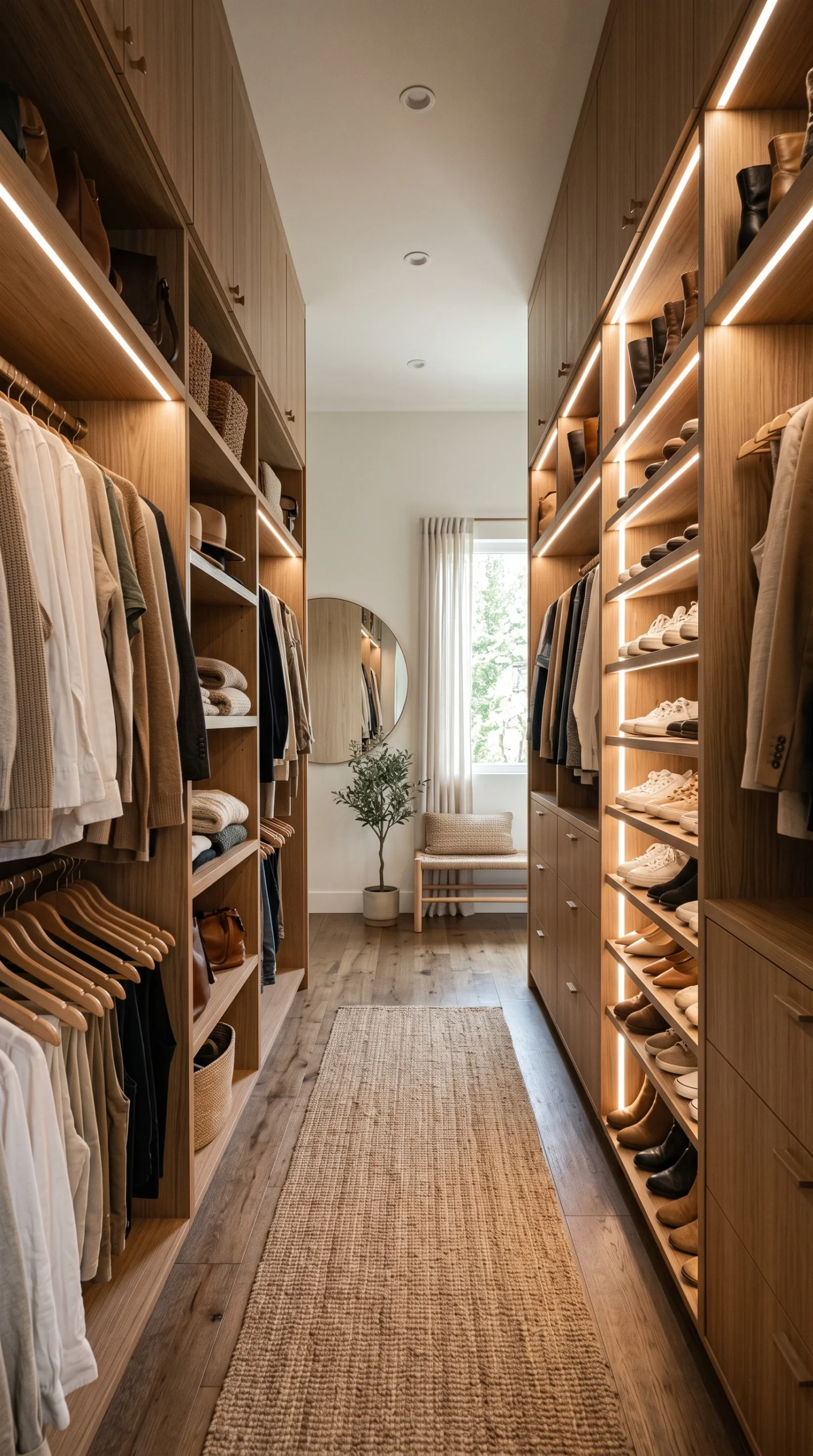
Explore ten masterfully orchestrated closet shelving installations, featuring floor-to-ceiling raw timber built-ins, integrated vertical LED channels, angled oak footwear galleries with matte iron heel catches, floating walnut ledges, and adjustable twin-track metal standards. Each design demonstrates the intersection of structural carpentry and fine garment curation.

Core Architectural Principles for Walk-In Closet Shelving

Six architectural guidelines detailing load capacities, folded clothing depths, angled shoe display engineering, and adjustable joinery systems.

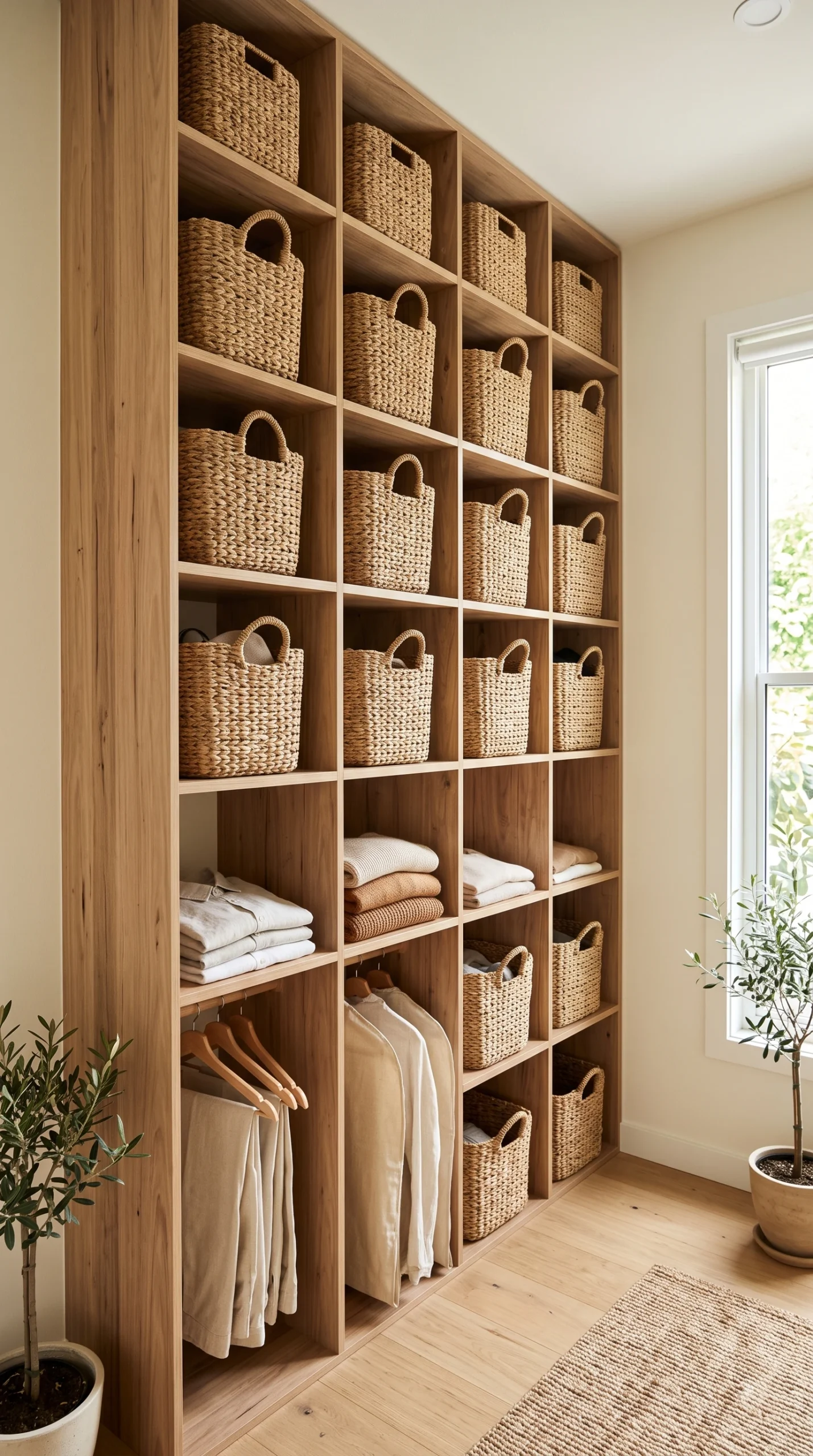
Floor-to-Ceiling Raw Timber Built-Ins with Integrated LEDs

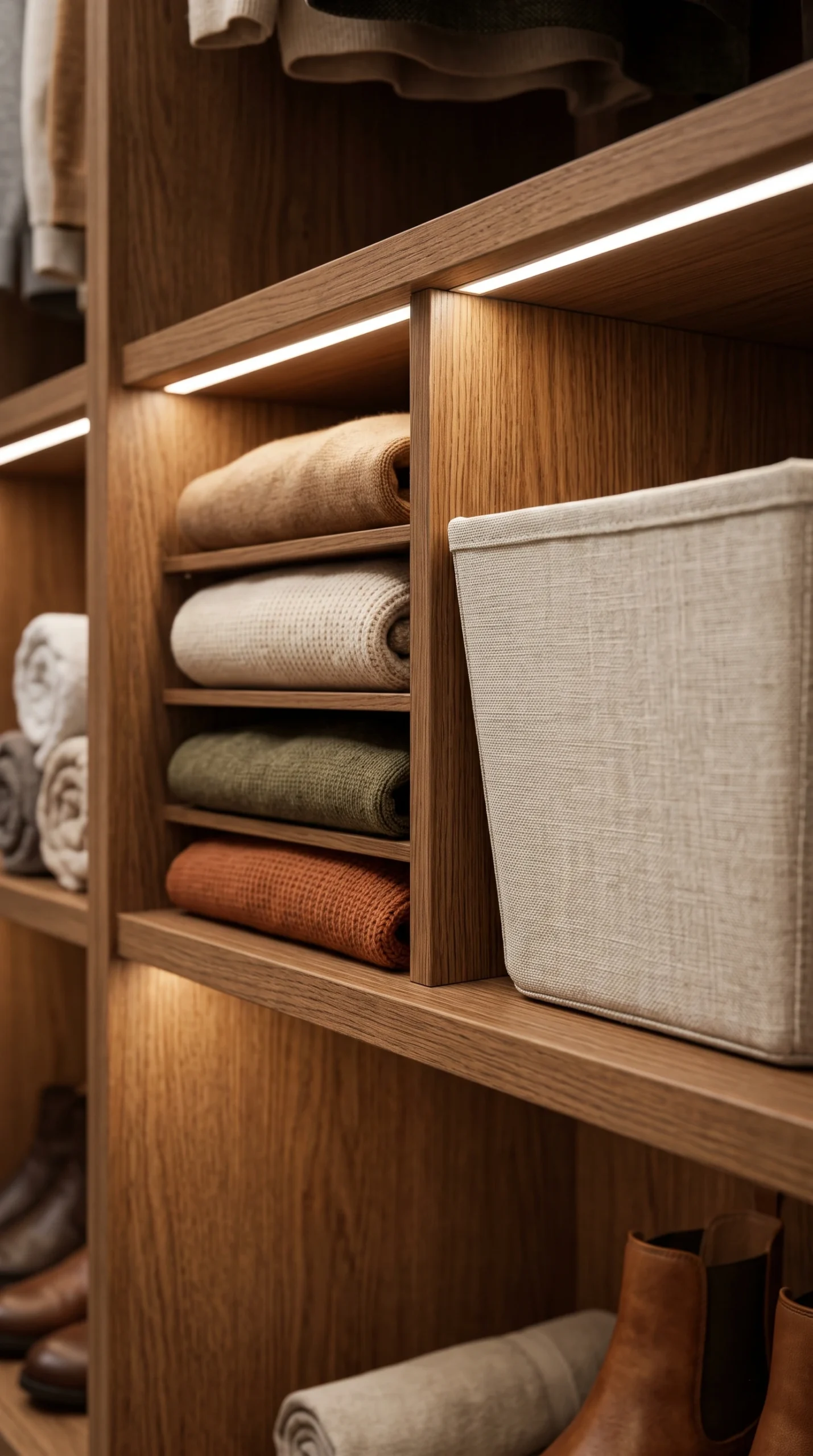
Maximize vertical wall space with floor-to-ceiling casework crafted from 3/4-inch natural white oak or muted olive painted timber. Route 45-degree aluminum extrusion channels with milky diffusers into vertical partition stiles, washing warm 2700K light inward across folded apparel. Capping casework with 3-inch crown molding ties the cabinetry into room architecture, creating the permanent elegance of custom millwork.

Solid Wood Vertical Dividers for Knitwear Preservation

Prevent towering piles of folded cashmere sweaters and heavy denim from toppling over by installing solid 1/2-inch timber dividers. Space dividers 10 to 12 inches apart across 14-inch deep shelves to create dedicated, organized slots for 4 to 5 garments each. This structured compartmentalization eliminates clothing avalanches, protects delicate fibers, and preserves a clean, boutique look.

Angled Weathered Oak Shoe Shelving with Iron Catches

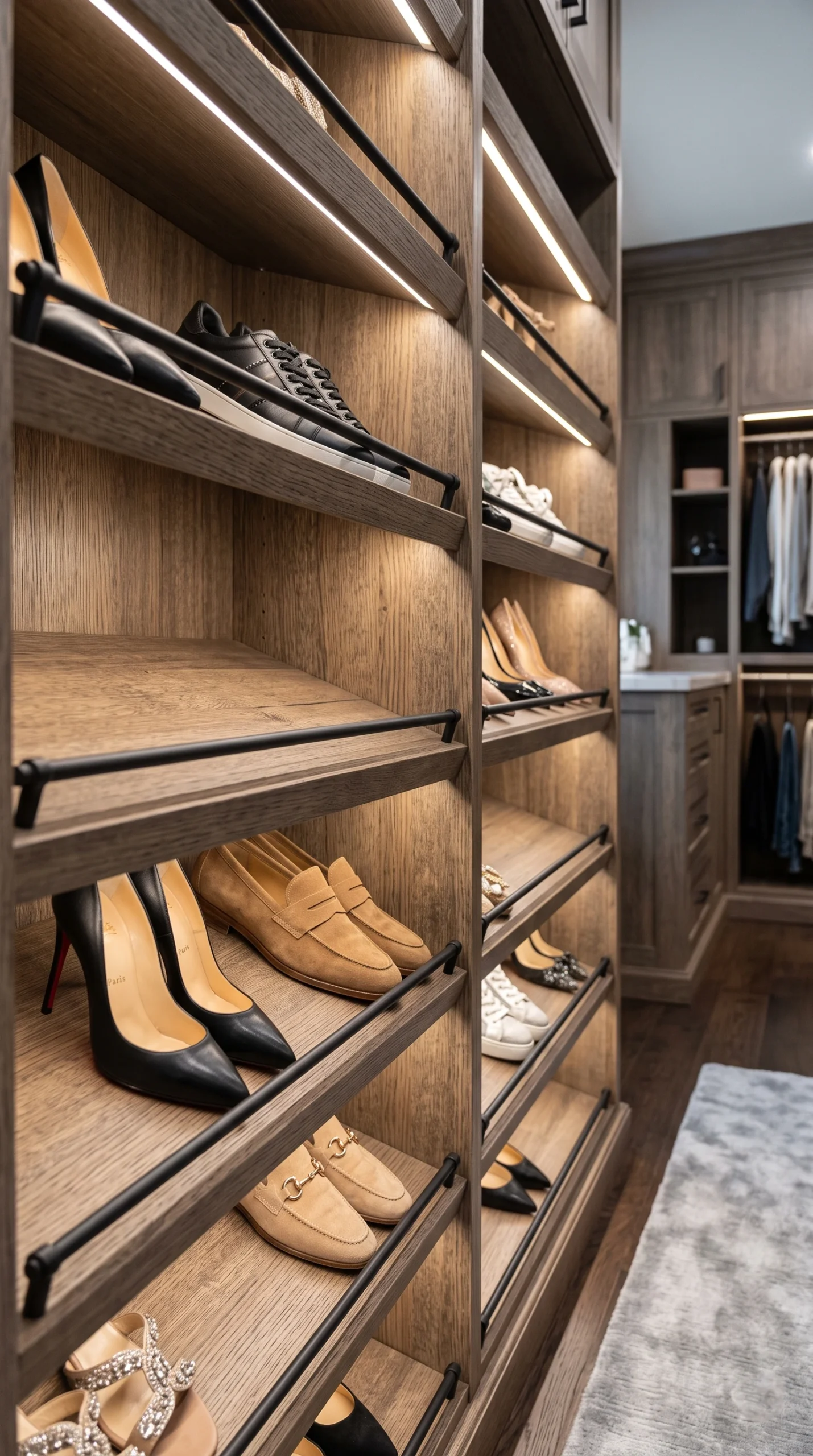
Transform footwear storage into an artful gallery display by angling weathered oak shelves at a 35-degree pitch. Fit the bottom shelf lip with a 1/2-inch matte black iron stop rail to hold stiletto heels and designer sneakers firmly in place. Angling the shelves provides immediate visual access to shoe silhouettes while utilizing up to 30% less vertical wall height than flat shelving.

Floating Walnut Shelves with Heavy-Duty Blind Steel Arms

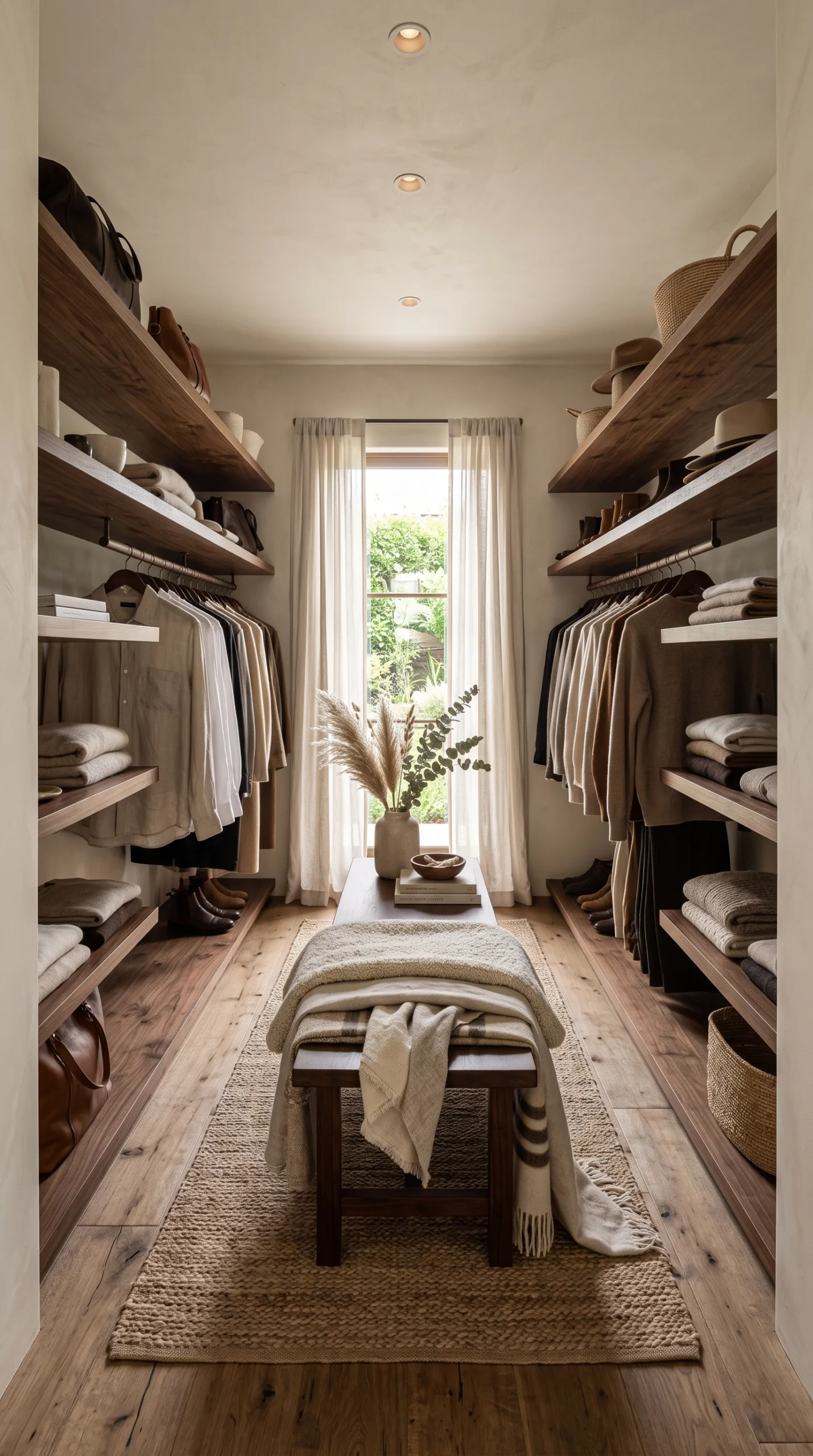
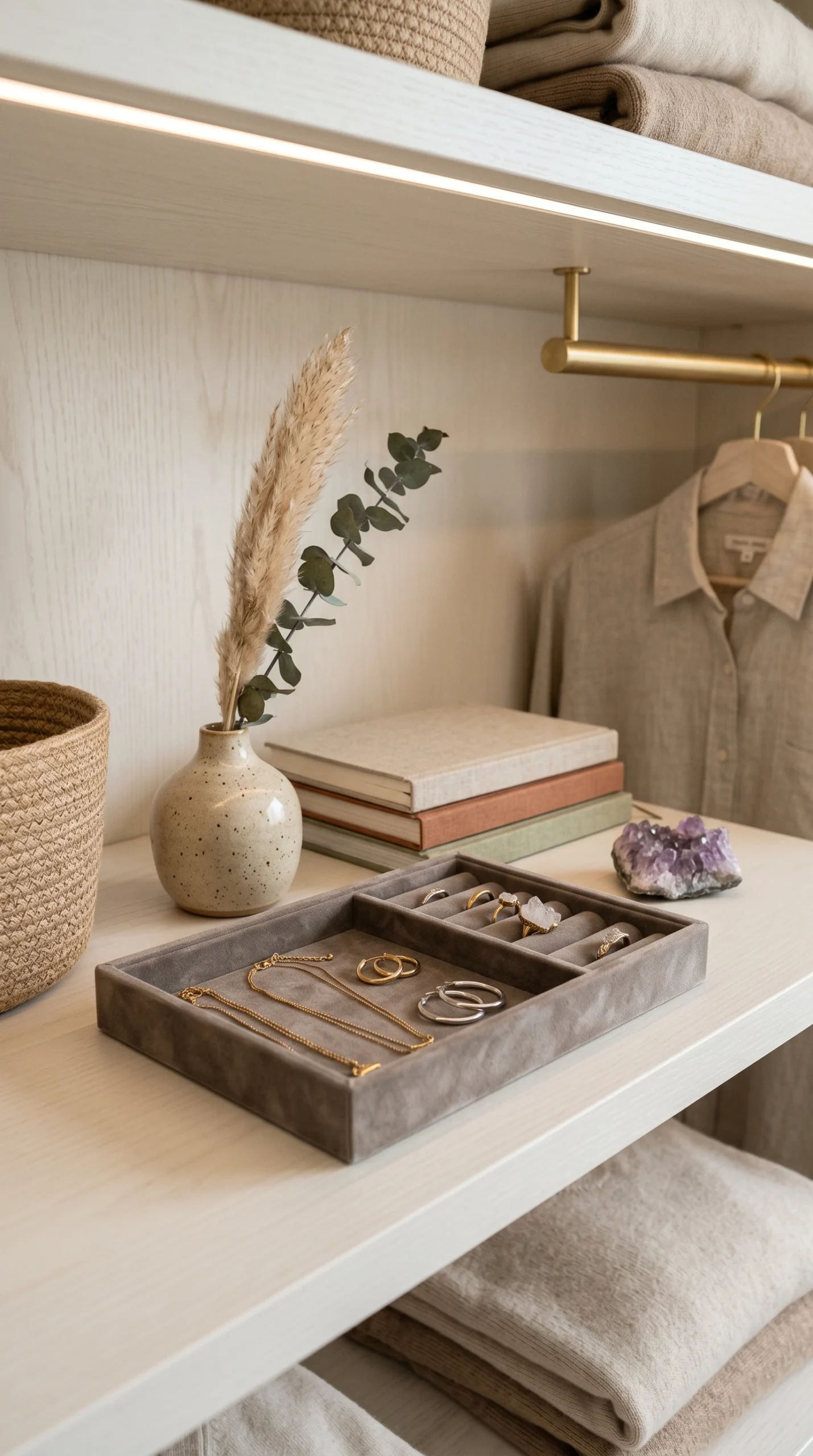
Introduce architectural lightness to walk-in closets with 2-inch thick solid American walnut floating shelves. Anchor the timber using heavy-duty blind steel rods welded to a backplate and screwed directly into wall framing with 3-inch lag bolts. The cantilevered design creates an airy, uncluttered aesthetic perfect for staging perfume trays, velvet jewelry boxes, and folded shirts.

Backlit Handbag Cubbies and Terracotta Accent Backdrops

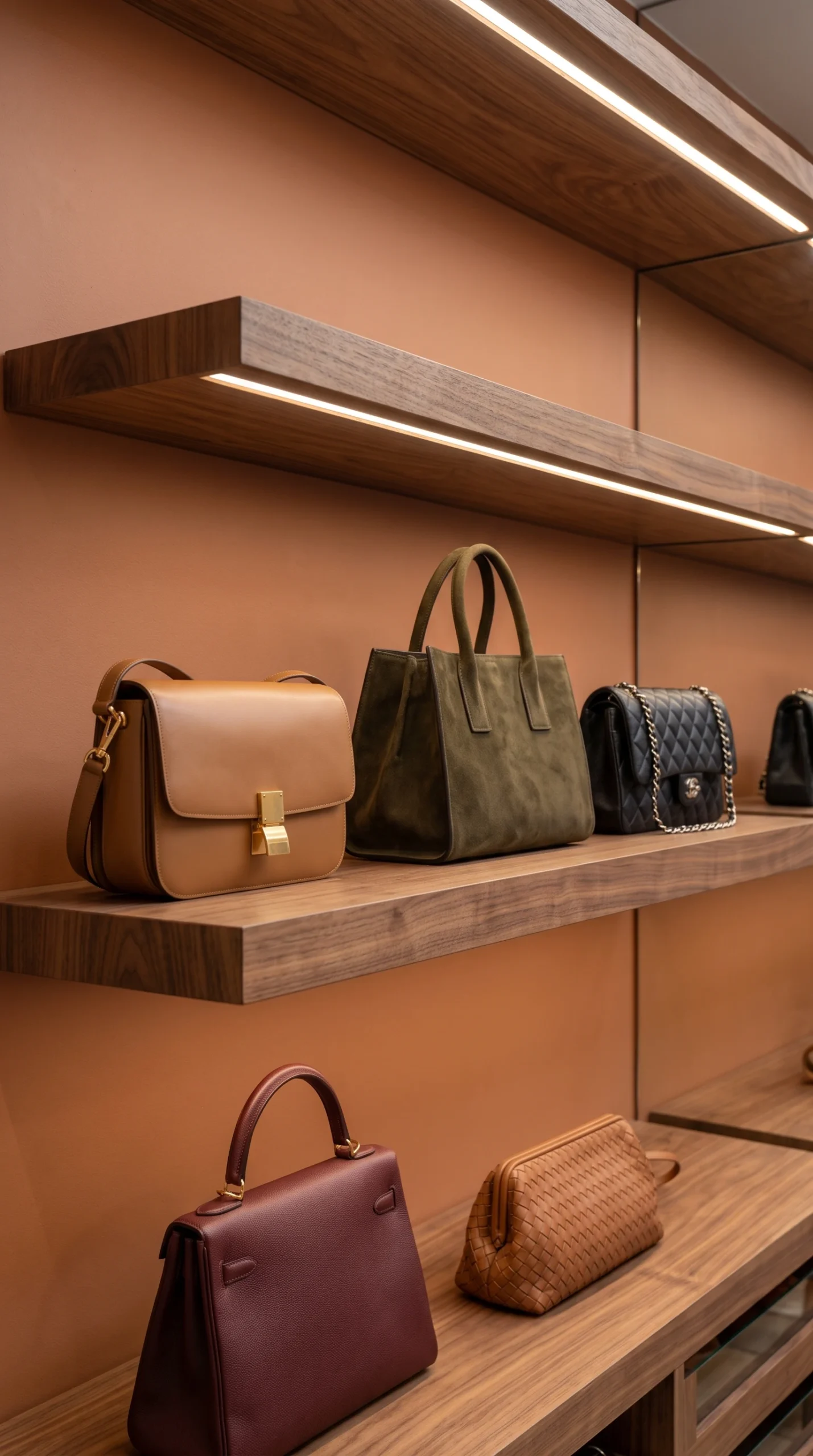
Create dedicated display niches for luxury leather handbags, measuring 12 inches wide by 14 inches high for structured totes. Line the back wall of cubbies with warm terracotta paint or linen-textured grasscloth, accented with concealed warm LED strip lights. Storing bags upright on smooth, flat wooden shelves stuffed with acid-free tissue preserves handle structure and leather gussets indefinitely.

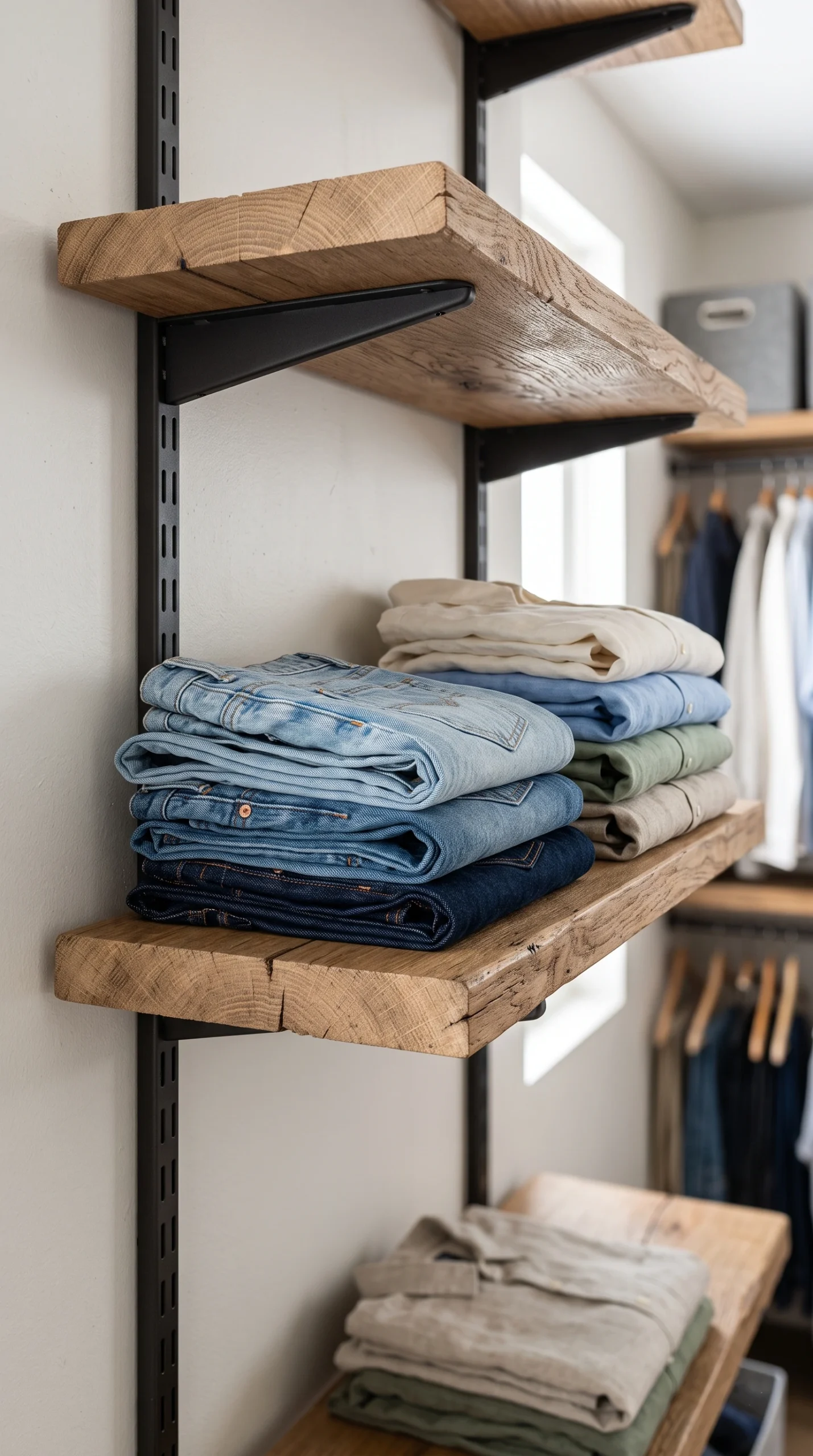
Adjustable Dual-Track Wall Standards with Stained Planks

Combine industrial-grade modular strength with the rich warmth of stained timber by installing dual-slotted steel wall-track standards. Mount heavy-duty matte iron standards directly into wall studs, pairing with custom-stained 3/4-inch pine or birch shelves. This versatile system supports up to 100 pounds per shelf and allows effortless height adjustments as wardrobe collections evolve through the seasons.

The Architectural Blueprint for Walk-In Closet Shelving and Storage Systems

In luxury wardrobe design, shelving is often misunderstood as a passive container for folded clothes. In reality, a high-performance shelving system is an active architectural framework that governs visual serenity, garment longevity, and daily efficiency. Poorly planned shelves—whether sagging particleboard, cavernous depths where clothes vanish, or rigid layouts that resist adaptation—generate constant disorganization. Achieving wardrobe excellence requires marrying structural engineering with ergonomic precision.

Before selecting materials or cutting timber, ensure your overall room circulation and clearance envelopes are established by consulting our guide on walk-in closet layout ideas. As explored throughout our complete archive of walk-in closet ideas, thoughtful joinery transforms everyday home storage into an art form.

Engineering Shelving Substrates and Sag Calculations

The single most common structural failure in residential closets is shelf deflection (sagging). When loaded with heavy wool overcoats, denim jeans, or leather boots, shelves experience substantial sustained dead loads:

  • Builder-Grade Melamine & Particleboard: Manufactured from compressed wood particles bonded with resin, 5/8-inch particleboard has very low modulus of elasticity. Under a modest 30-pound load, a 36-inch particleboard shelf will sag noticeably within 6 to 12 months, creating permanent disfigurement.
  • 3/4-Inch Hardwood Cabinet Plywood: The industry standard for bespoke cabinetry. Composed of 7 to 9 alternating cross-laminated veneers of birch, maple, or oak, 3/4-inch plywood easily supports 85 to 100 pounds across a 36-inch span with less than 1/32-inch deflection.
  • Solid Hardwood Planks (White Oak, Walnut, Ash): Exceptional strength and natural beauty. When edge-glued and kiln-dried, 3/4-inch solid hardwood boards support heavy loads and can be sanded and refinished over decades of use.
  • Front Lip Stiffeners: If a shelf span must exceed 36 inches (up to 48 inches), glue and nail a solid 1×2 hardwood face nosing along the underside of the front edge. This creates an L-beam structural profile that dramatically resists bending forces.

Calibrating Shelf Depths and Vertical Spacings

One size does not fit all in wardrobe storage. Different apparel categories require calibrated dimensions to maintain order:

  • Folded Knitwear & Denim (14 to 16 Inches Deep): Folded adult sweaters, hoodies, and jeans measure approximately 12 to 14 inches from front to back. Shelves should be 14 to 16 inches deep, spaced 10 to 12 inches vertically. Depths over 16 inches waste space and encourage double-stacking, where rear garments are forgotten and wrinkled.
  • Handbag & Clutch Cubbies (12×14 Inches): Structured leather totes require 12-inch-wide by 14-inch-high cubbies to stand upright without handle compression. Clutches and evening bags fit neatly into 8×8-inch compartmentalized cubbies.
  • Footwear Storage (Flat vs. Angled): Flat shoe shelves should measure 12 to 14 inches deep, accommodating 4 to 5 pairs of women’s shoes or 4 pairs of men’s shoes per 36-inch shelf. Angled shelves tilted at 30 to 45 degrees provide superior boutique visibility and require a continuous 1/2-inch front heel stop lip.
  • High Seasonal Storage (16 to 18 Inches Deep): The uppermost perimeter shelf, positioned above hanging rods (typically at 84 inches from the floor), should measure 16 to 18 inches deep to hold bulky luggage, hatboxes, and seasonal bedding in matching canvas bins.

Joinery Systems: Fixed vs. 32mm Adjustable Flexibility

Permanent dado joinery—where shelves slide into routed grooves in vertical partition panels—offers maximum rigidity and a seamless, furniture-grade appearance. However, fixed shelving locks you into a rigid configuration that cannot adapt as your wardrobe changes.

The superior architectural solution is the European 32mm system. Using precision line-boring jigs, drill parallel rows of 5mm pin holes spaced 32mm (approximately 1-1/4 inches) apart along the inside faces of vertical cabinet stiles. Insert solid brass or nickel 5mm shelf pins fitted with silicone anti-slip sleeves to hold shelves securely without rattling. This allows effortless seasonal height adjustments—such as expanding boot shelves in winter and condensing sandal tiers in summer.

Harmonizing Shelving with the Complete Closet Suite

Wardrobe shelving must harmonize with adjacent storage components and specialized features. For recommendations on integrating glass vitrines and handbag displays, consult our design guide on walk-in closet ideas for women.

When routing shelves for integrated LED tape extrusions, ensure your channel placement adheres to the optical guidelines in walk-in closet lighting ideas. If you are building modular casework on a DIY budget, discover cost-effective plywood cutting and trim techniques in DIY walk-in closet ideas.

Once your shelving infrastructure is installed, establish systematic inventory mapping using the categorization methods outlined in walk-in closet organization ideas.

Finishing Protocols and Fabric Protection

Raw wood grain contains natural tannins and rough wood fibers that can snag delicate silk linings or transfer color to pale cashmere. Never leave interior closet shelving unsealed.

Finish hardwood and plywood shelves with two coats of clear, low-VOC waterborne polyurethane or a hardwax-oil finish (such as Osmo Polyx-Oil). These finishes seal the wood pores, resist indigo dye rub-off from raw denim, and allow shelves to be wiped clean with a damp microfiber cloth. For luxury display shelves holding delicate suede shoes or fine leather bags, adhere peel-and-stick velvet or faux-suede liners to provide a soft, non-abrasive resting cushion.

Frequently Asked Questions About Walk-In Closet Shelving

Architectural answers regarding shelf thickness, folded sweater depths, angled shoe display angles, shelf pin systems, and weight limits for walk-in closet shelving.
Always use 3/4-inch (nominal 23/32-inch) cabinet-grade hardwood plywood or solid hardwood. Standard 5/8-inch particleboard or melamine inevitably sags under the weight of folded clothing on spans exceeding 28 to 30 inches. A 3/4-inch plywood shelf safely supports 85 to 100 pounds across a 36-inch span with zero visible deflection.
The ideal interior depth for folded apparel is 14 to 16 inches. Adult folded sweaters and denim pants measure roughly 11 to 13 inches deep, resting comfortably without overhanging. Avoid 20-inch or deeper shelves; excess depth creates an inaccessible rear zone where garments get pushed back, double-stacked, and forgotten.
Vertical spacing between folded clothing shelves should be 10 to 12 inches. Spacing greater than 12 inches encourages stacks of 6 or more sweaters, which inevitably topple over and create messy avalanches when pulling an item from the bottom. Stacks should be limited to 4 to 5 garments.
The optimal angle for boutique shoe shelving is between 30 and 45 degrees. A 30-degree tilt provides excellent visual presentation while keeping shoe heel height compact. Always install a 1/2-inch front lip or metal rail 1 inch from the front shelf edge to catch shoe heels and prevent footwear from sliding off.
Yes. While fixed dadoed shelves provide structural racking resistance, incorporating the 32mm system with line-bored pin holes on 1-1/4-inch centers gives you total freedom to adjust heights as seasons change. For maximum strength, fix the top shelf and middle shelf permanently, keeping all intermediate tiers fully adjustable on heavy-duty brass shelf pins.
For standard 3/4-inch plywood holding folded clothes, 36 inches is the maximum unsupported span. If you must span 42 to 48 inches, you must reinforce the front shelf lip with a 1×2 solid hardwood nosing cleat glued and nailed underneath, or install a vertical intermediate divider panel to split the span.
Raw wood must always be sealed. Apply two to three coats of water-based polyurethane, satin lacquer, or hardwax-oil to seal wood fibers and prevent tannin transfer to clothing. Sand lightly between coats with 320-grit sandpaper to produce a silky, glass-smooth finish that never snags delicate silk or cashmere.
For structured designer totes and shoulder bags, build cubbies 12 inches wide by 14 inches high and 14 inches deep. For smaller clutches, crossbody bags, and evening minaudieres, 8×8-inch or 10×10-inch cubbies provide proportional, gallery-like framing.
Yes, if installed using commercial blind steel shelf support hardware. These solid 1/2-inch or 3/4-inch steel rods are welded to a heavy steel mounting plate screwed directly into wall studs with 3-inch lag screws. When inserted into bored holes inside a 2-inch thick solid timber shelf, each bracket pair supports 75 to 100 pounds with zero sag.
Upper shelves positioned above 84 inches should be reserved for seasonal gear, luggage, and rarely accessed items. Store items in uniform, breathable canvas or linen storage cubes fitted with label tags and handles. This eliminates visual clutter at high elevations and makes retrieval safe and effortless using a compact folding wooden step stool.