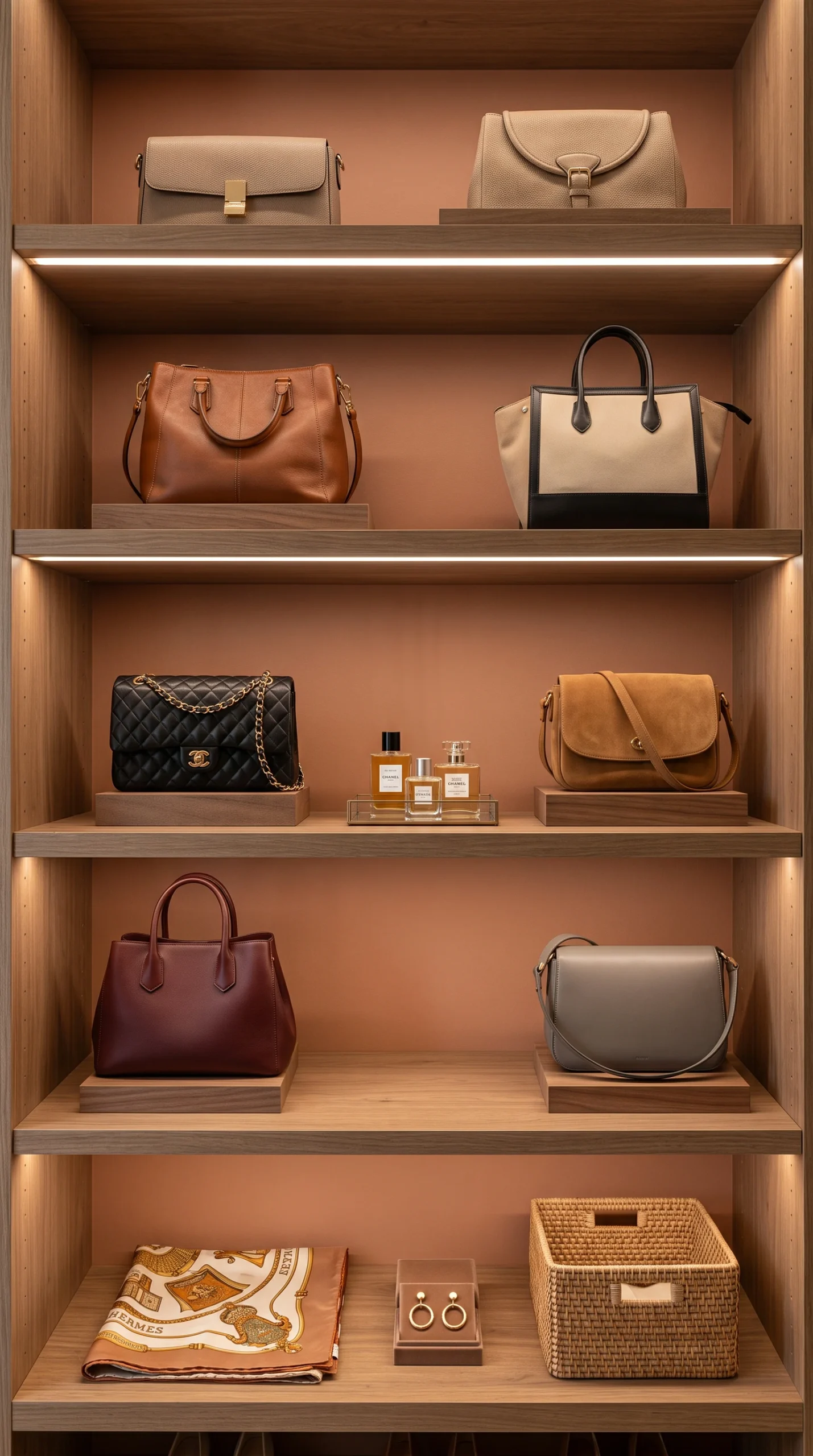
Transform cherished designer bags into fine art by arranging them in illuminated cubbies against warm terracotta or linen-wrapped backdrops. Mount 2700K linear LED tape inside aluminum extrusion profiles angled 45 degrees toward the handbag faces, avoiding hot spots and UV heat degradation. Stuff structured bags with acid-free tissue paper or fabric pillow inserts to preserve base gussets and handle symmetry indefinitely.
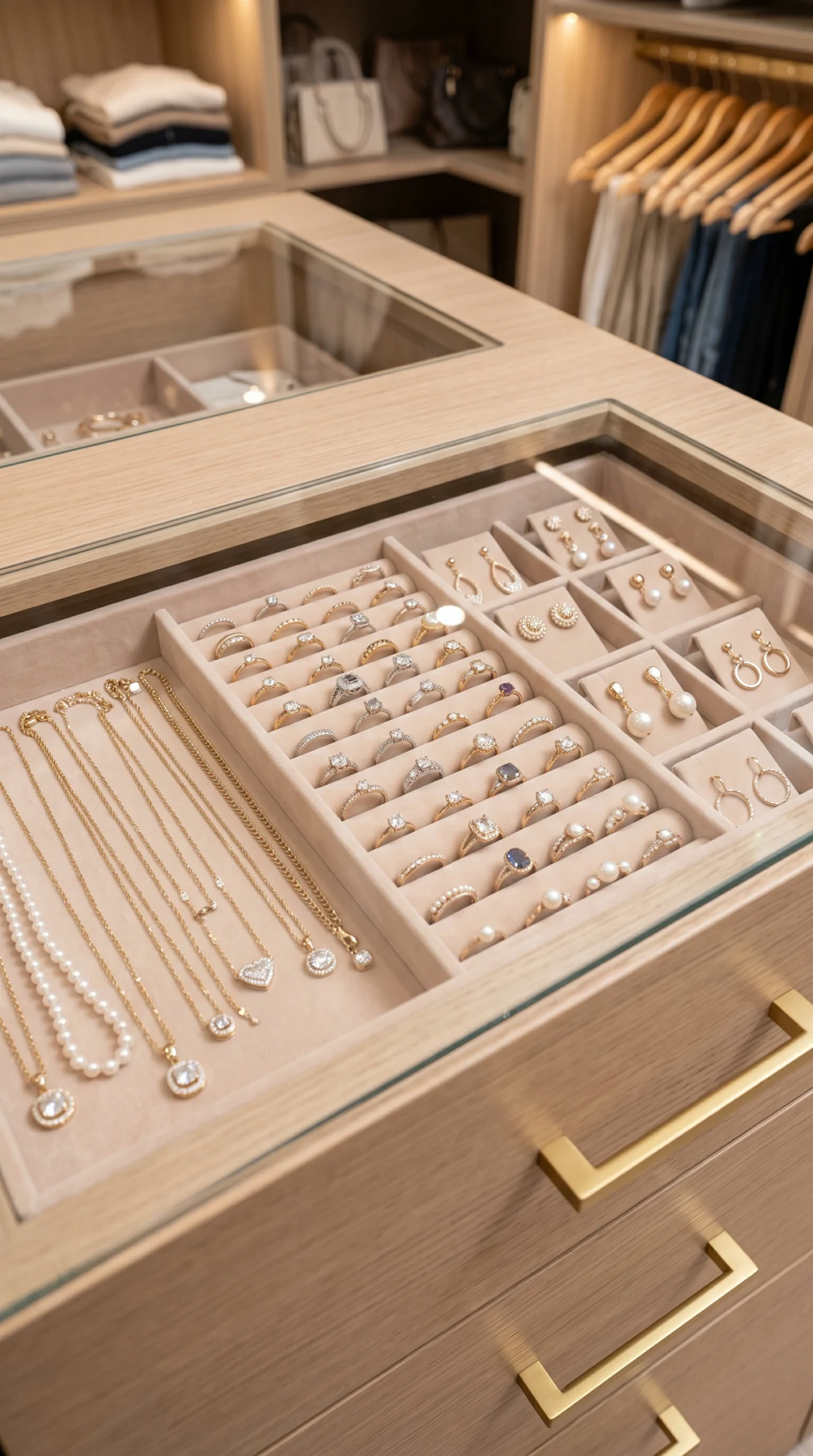
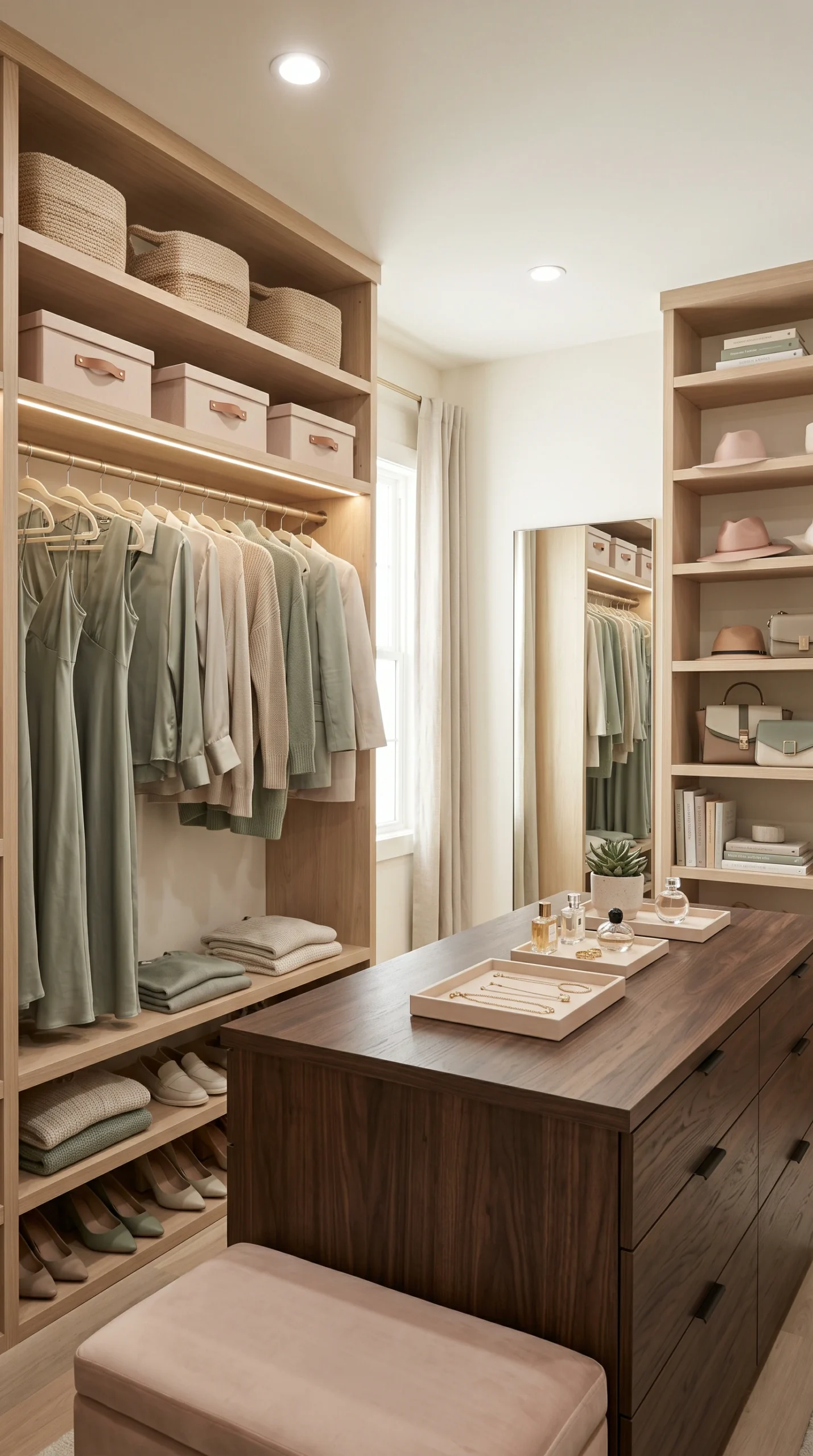
Anchor your dressing room with a central dark espresso or raw timber island topped with a 6mm ultra-clear low-iron tempered glass display pane. Beneath the glass, full-extension undermount slides reveal custom blush or champagne microsuede dividers tailored for statement necklaces, fine rings, designer sunglasses, and cuff bracelets. This keeps everyday jewelry immediately visible and completely dust-free.
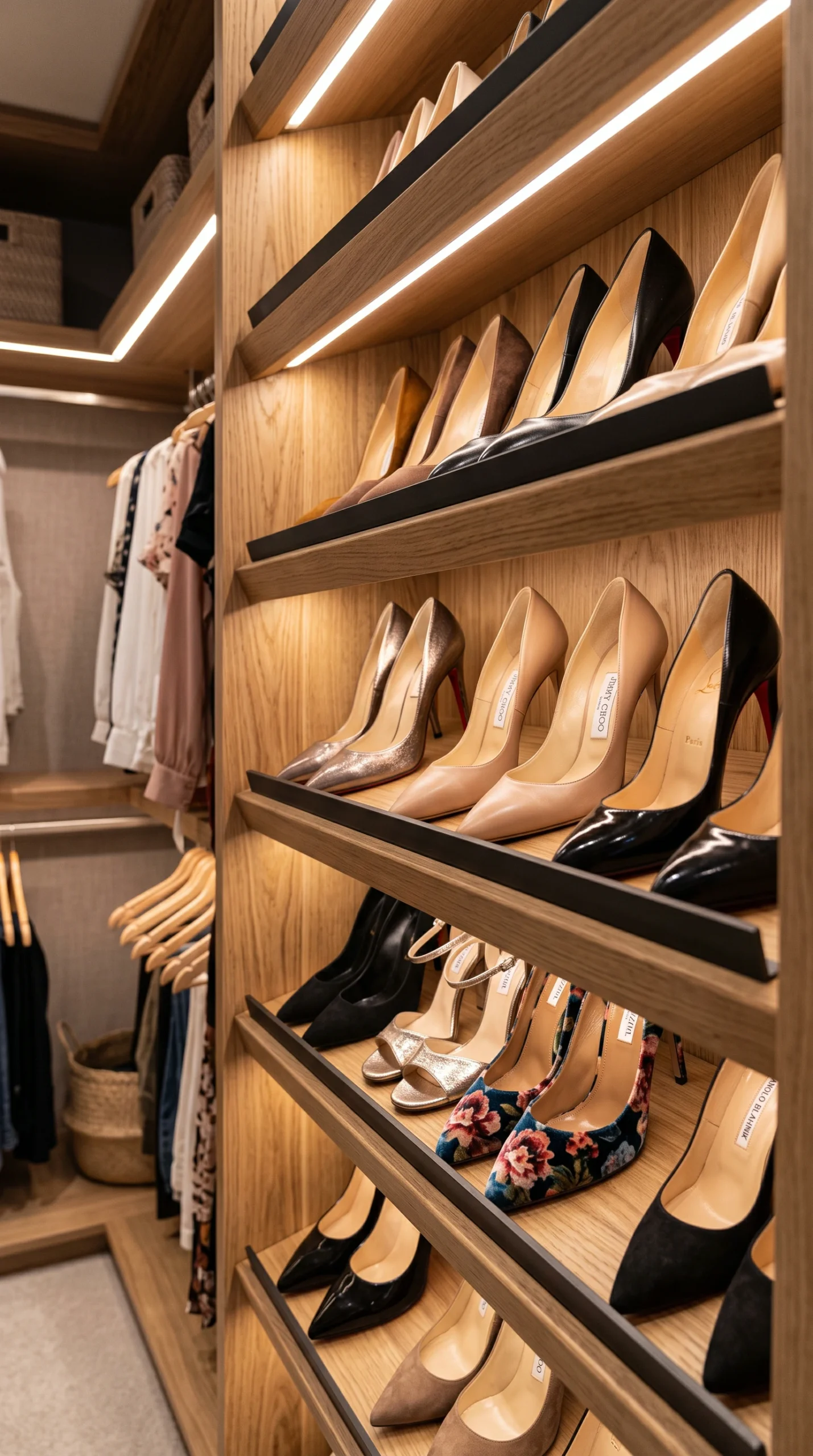
Display high heels and designer footwear on 35-degree angled timber shelves accented with sleek charcoal anodized aluminum heel-stop lips. Angling the shelves provides immediate visual access to shoe silhouettes while maximizing vertical wall density. Under-shelf diffused LED channels cast warm light across patent leather and suede uppers, creating a high-end luxury boutique atmosphere.
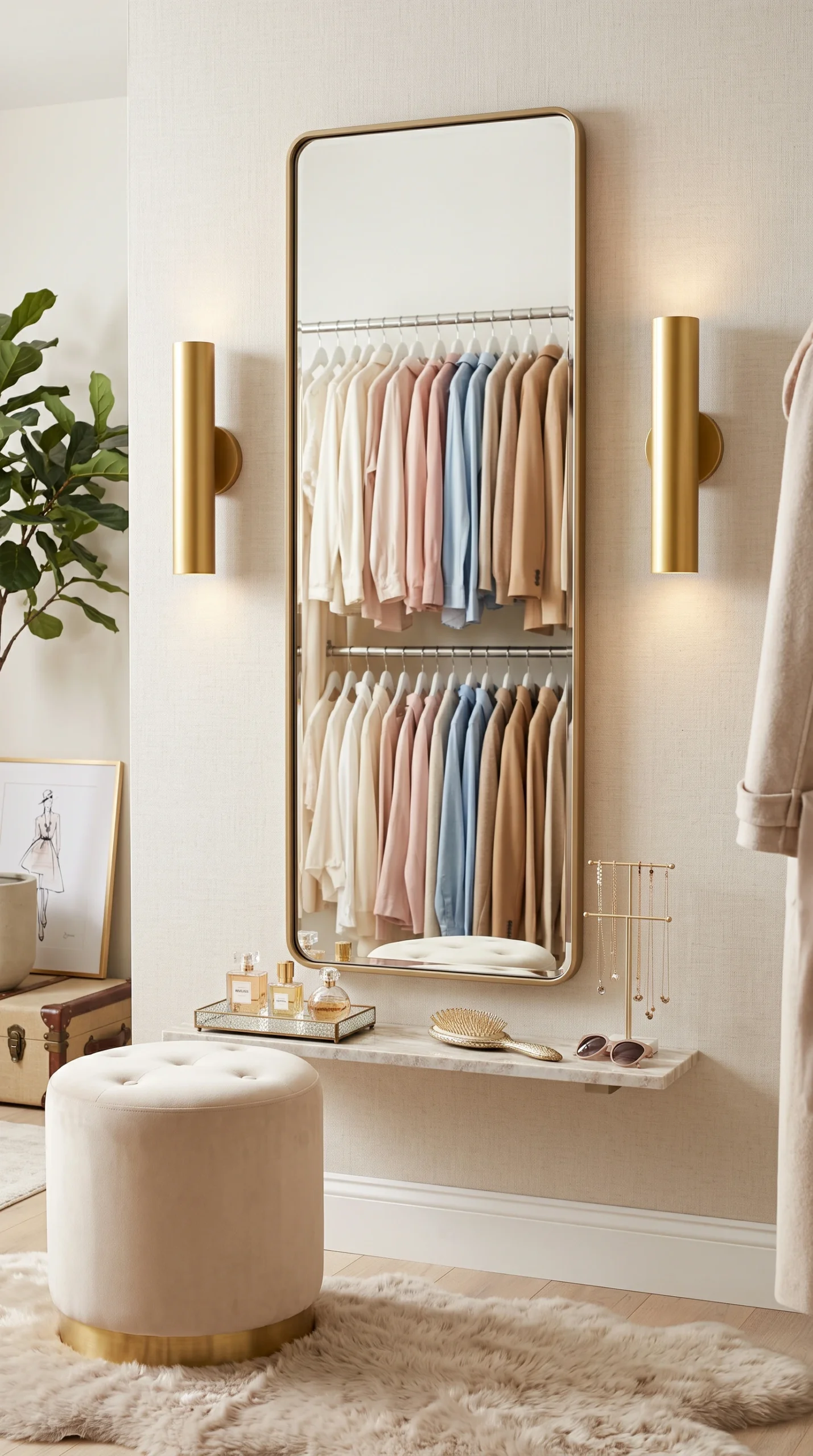
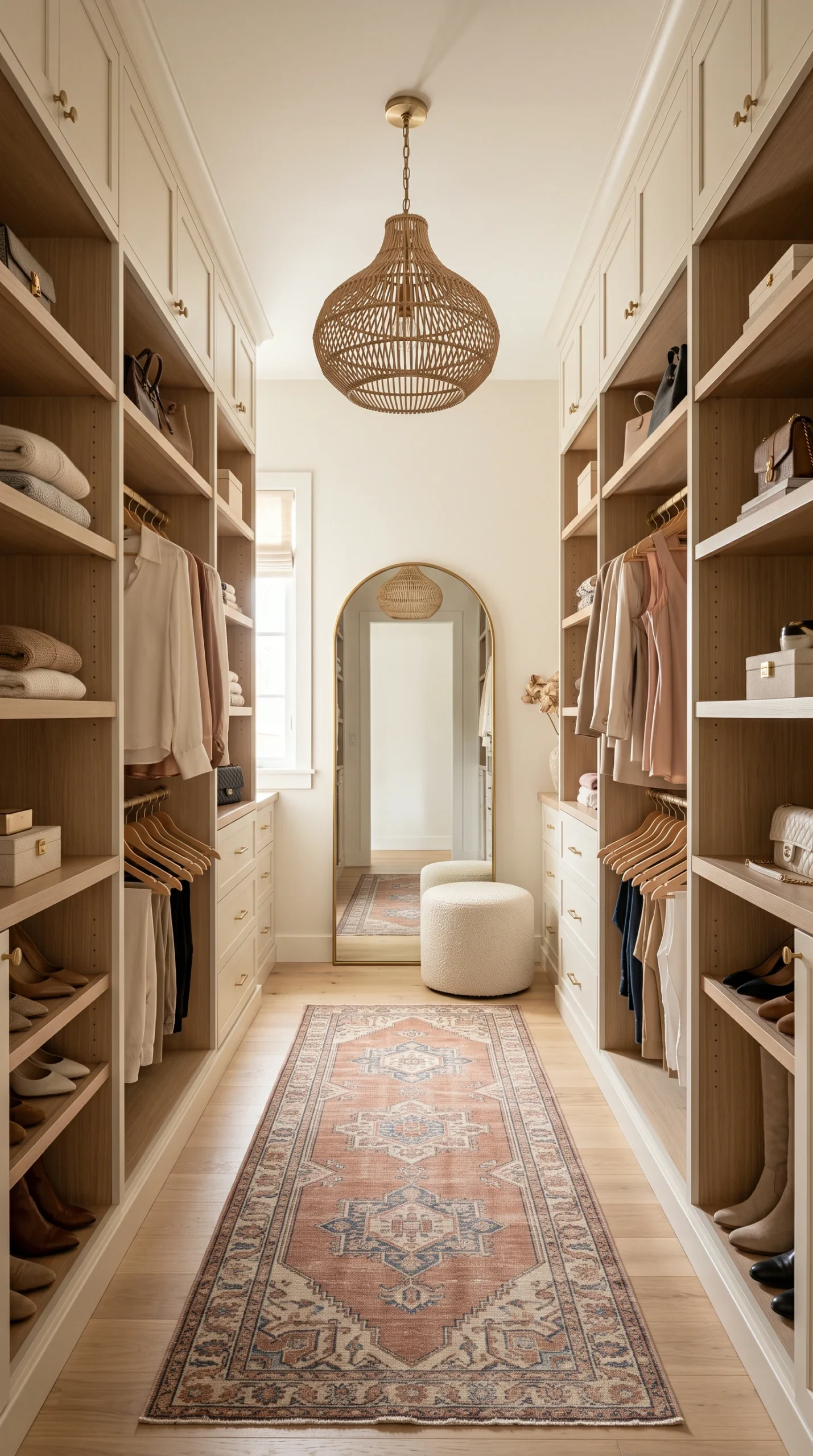
Create a dedicated outfit staging zone featuring an arched floor-standing or wall-hung bevel-edged mirror paired with a plush velvet seating ottoman. Flank the mirror with dual dimmable wall sconces fitted with CRI 95+ 2700K warm LED bulbs at eye level (60 to 64 inches above finished floor). This balanced cross-illumination eliminates harsh downward shadows, ensuring true-to-life color assessment before stepping out.
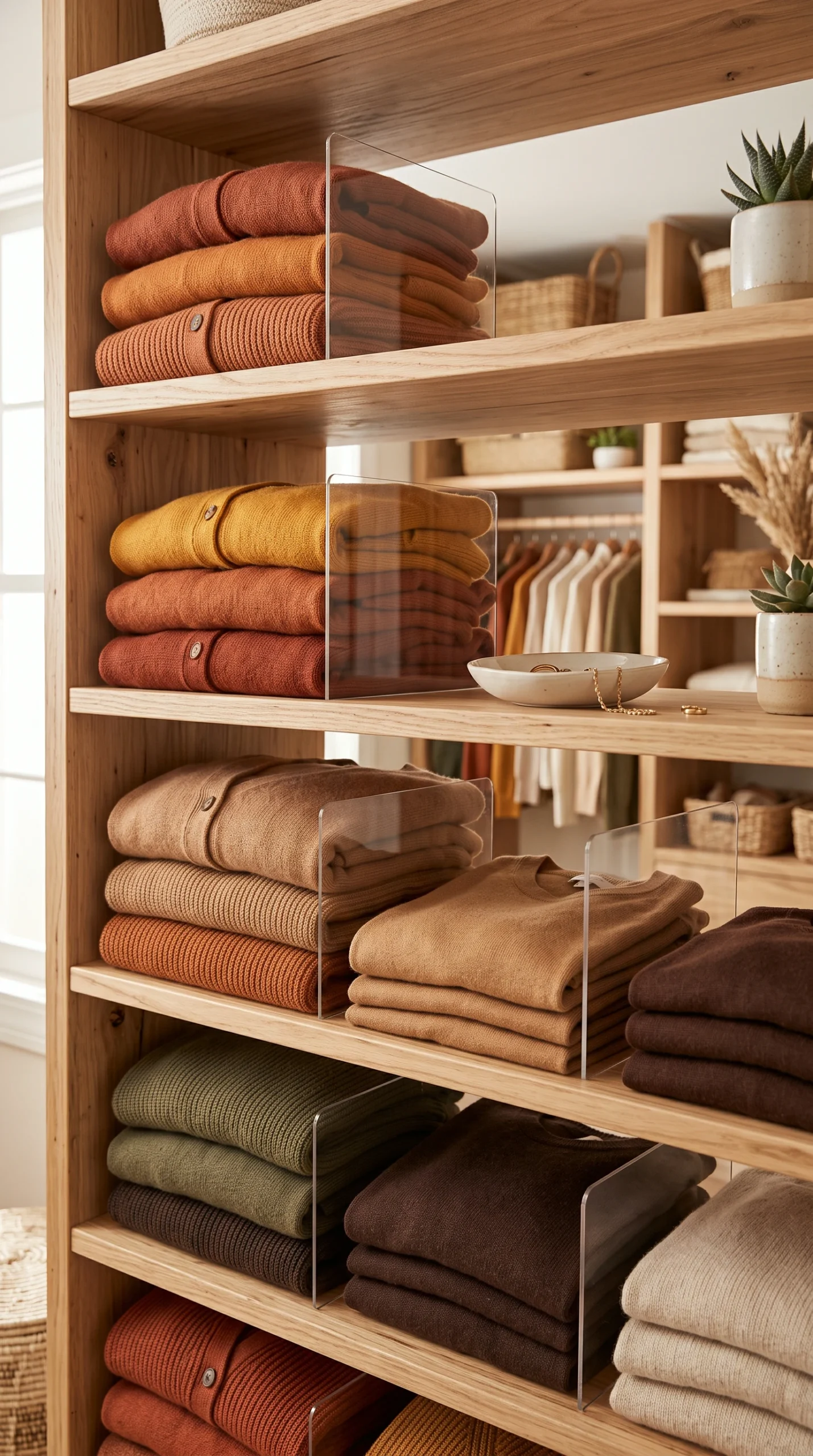
Protect delicate cashmere sweaters, chunky wool knits, and folded denim from collapsing into messy, unmanageable piles. Install 1/4-inch flame-polished clear acrylic vertical dividers spaced 10 to 12 inches apart across 3/4-inch natural white oak shelves. Limiting folded stacks to 4 or 5 garments prevents bottom crushing and allows quick removal without disheveling adjacent knitwear.
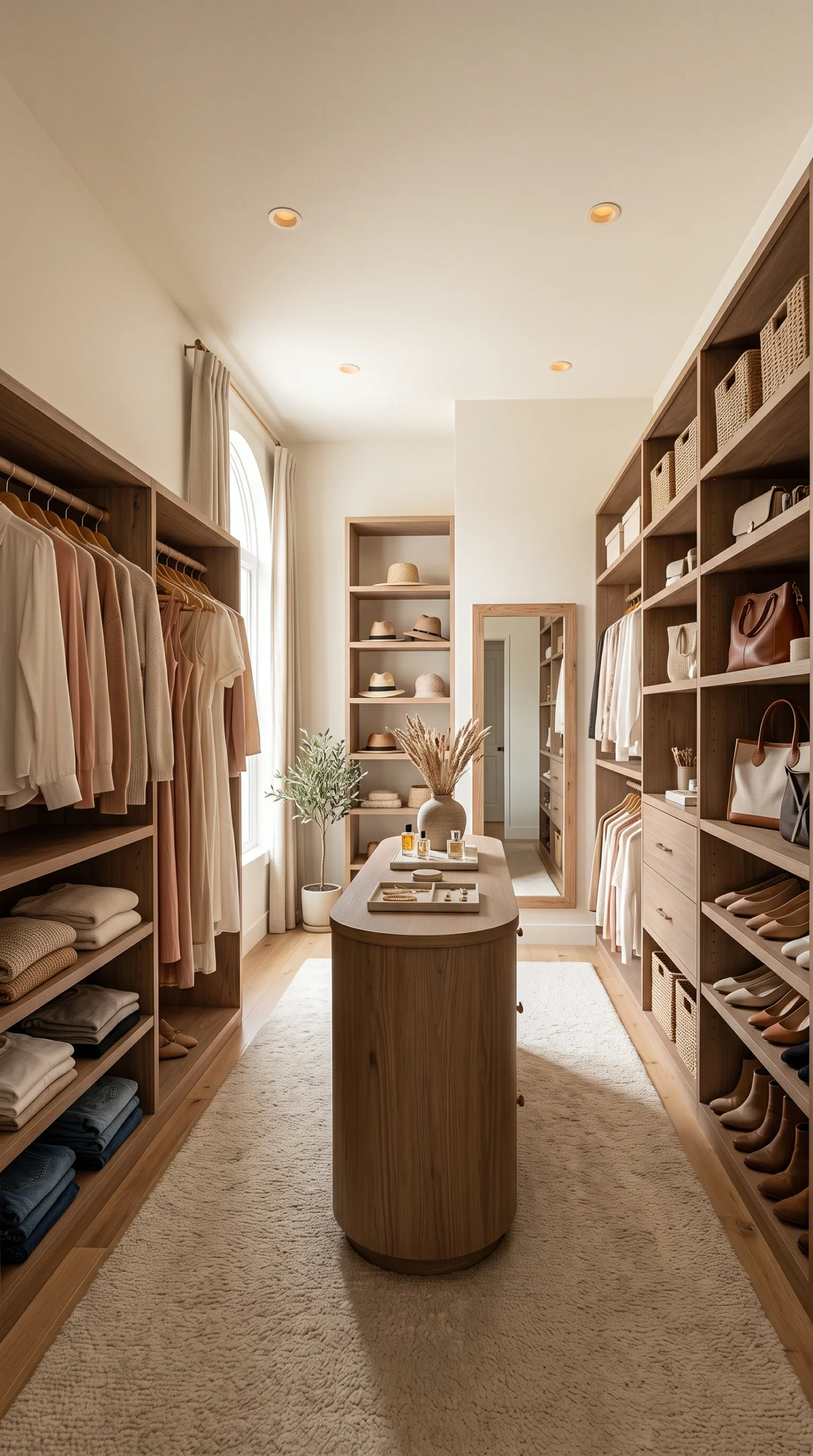
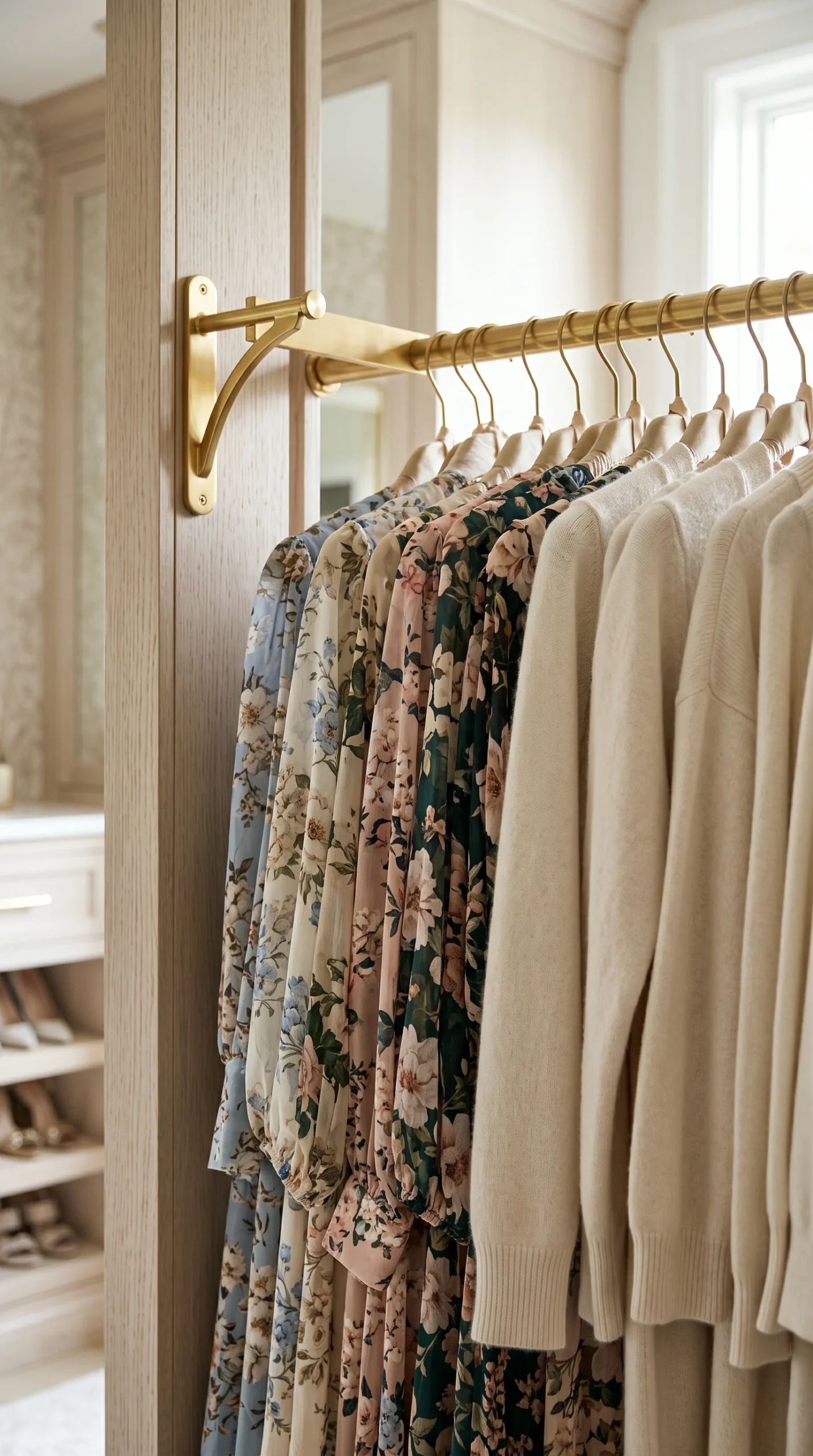
Unify disparate garment collections through disciplined material repetition: outfit every hanging section with matching natural blonde timber hangers. Pair warm wood casework with muted satin gold hanging rods, shelf edge trim, and knurled drawer pulls. This cohesive hardware vocabulary calms visual clutter and creates an elevated, editorial backdrop for seasonal fashion palettes.
For passionate fashion collectors, a walk-in closet is far more than practical storage; it is a personal boutique, an intimate dressing retreat, and an architectural vault for sartorial investments. Tailoring, delicate silks, structured leather goods, and fine knitwear each demand specific physical environments to prevent fabric degradation, misshapen silhouettes, and environmental damage. Crafting a high-performance fashion wardrobe requires marrying fine cabinetmaking with meticulous garment preservation protocols.
When embarking on a wardrobe transformation, integrating lifestyle needs with spatial planning ensures every couture piece has an intentional, ergonomic home. As highlighted in our foundational guide on walk-in closet ideas, successful dressing room design treats apparel not as items to hide behind closed doors, but as vibrant artistic elements that celebrate personal style and effortless daily living.
A standard single hanging rod is the enemy of a versatile wardrobe. Different garment lengths require calibrated vertical hanging sections to prevent hem dragging, wrinkling, and wasted cubic space:
A cardinal rule of wardrobe preservation: never hang fine wool, merino, or cashmere knitwear on coat hangers. The gravitational pull of the garment will stretch shoulder seams, creating unsightly fabric bumps and permanently distorting the neckline. Fine knitwear must always be stored flat.
Specify 3/4-inch furniture-grade hardwood shelves with an interior depth of 14 to 16 inches. To prevent tall stacks from tipping over, incorporate 1/4-inch flame-polished clear acrylic shelf dividers spaced 10 to 12 inches apart. Restrict sweater stacks to no more than 4 or 5 folded items. Heavy knits should rest on the bottom of the stack, with lightweight cashmere and silk knits placed on top to prevent compression marks. For seasonal off-rotation storage, place folded sweaters in breathable 100% cotton canvas storage zippered bags with natural red cedar blocks to ward off fabric moths.
Designer leather handbags represent significant financial investments that require deliberate display engineering. Storing luxury bags incorrectly—such as hanging them by shoulder straps from closet hooks—stretches handle leather, causes cracking along edge glazing, and permanently distorts leather gussets.
Handbags should always rest upright on solid shelving. Build custom display cubbies measuring 12 inches wide by 14 inches high for structured everyday totes, and 8×8-inch cubbies for mini bags and evening clutches. To prevent soft-sided leather from collapsing into creases over time, stuff bag interiors with acid-free tissue paper or custom velvet pillow inserts. To safeguard delicate leather finishes from abrasive wood grain, line cubby shelves with soft microsuede or smooth felt.
Shoe storage must balance rapid visual selection with spatial efficiency. Standard flat shelves maximize capacity, accommodating 4 to 5 pairs of women’s shoes per 36-inch shelf span. However, angled shelves angled at 30 to 45 degrees deliver an authentic boutique gallery experience, presenting the entire profile of pumps, sneakers, and sandals at eye level.
Angled shoe shelves require a continuous 1/2-inch brushed brass or powder-coated aluminum heel stop installed 1 inch from the front shelf lip to catch heels and prevent shoes from sliding off. Allocate 7 to 8 inches of vertical spacing between shoe tiers. For tall riding boots and over-the-knee boots, provide a dedicated 18- to 22-inch bottom shelf tier, inserting rigid boot shapers to keep tall leather shafts perfectly upright.
A true fashion wardrobe incorporates an intimate styling station where jewelry, fragrances, and garments come together. Positioning an arched full-length mirror flanked by warm 2700K vanity sconces provides accurate, shadow-free illumination essential for color coordinating fabrics and checking outfit proportions.
To integrate this boutique station seamlessly into your overall floor plan, coordinate your room layout with the architectural clearances detailed in walk-in closet layout ideas. For detailed specifications on weight-bearing shelf spans and structural cabinetry joinery, consult our comprehensive guide on walk-in closet shelving ideas.
Accurate fabric color perception depends entirely on electrical design; ensure your lighting layout incorporates CRI 95+ LED technology by reviewing walk-in closet lighting ideas. For inspiration on haute-couture glass vitrines and custom center islands, explore celebrity luxury walk-in closet ideas, and maintain pristine daily order using our systematic protocols in walk-in closet organization ideas.
The single fastest way to elevate an everyday closet into a luxury dressing room is unifying hanger hardware. Mismatched dry-cleaner wire hangers, plastic store hangers, and bulky tubular hangers create visual chaos and ruin garment shoulder lines.
Standardize on smooth natural wood hangers or slim velvet-flocked hangers in a uniform color (such as natural beech, blonde oak, or ivory velvet). Wooden hangers provide substantial shoulder support for structured wool coats and blazers, while velvet hangers prevent slippery silk blouses and wide-neck dresses from sliding off rods while saving up to 30% in linear hanging space. Pair this uniform hanger aesthetic with brushed brass or matte nickel hardware to create an enduring, serene dressing retreat that makes curating daily fashion an absolute joy.