Identify existing furniture and objects that fit your needs before deciding what to replace.
Combine a few complementary finishes rather than making every surface identical.
Check comfort, circulation, storage, and lighting before buying decorative items.
Leave useful open space where it improves movement and helps important furniture or artwork stand out.
Include meaningful objects, artwork, or textiles instead of relying solely on generic styling accessories.
Japandi interior design brings together simplicity, natural materials, thoughtful craftsmanship, and everyday comfort. Instead of relying on elaborate decoration or perfectly matching furniture, it focuses on how individual elements work together to create a balanced, welcoming home.
The style combines influences from Japanese and Scandinavian design. Japanese interiors offer inspiration through restrained forms, careful attention to materials, and thoughtful use of space. Scandinavian design contributes a strong emphasis on functionality, comfort, and practical furnishings. Together, these influences can create interiors that feel calm without becoming cold or impersonal.
Japandi is not a strict set of rules. You do not need to replace all your furniture, use only pale wood, or remove every decorative object. The most successful approach is to understand the principles, adapt them to your surroundings, and make choices that suit the way you live.
These Japandi interior design ideas explain how to bring that approach into different rooms, coordinate materials and colors, choose furniture, and create a cohesive home while retaining your personal style.
Japandi is a contemporary design approach rather than a single traditional style with a fixed historical rulebook. It brings together related ideas from Japanese and Scandinavian interiors, particularly simplicity, useful objects, natural materials, and considered use of space.
The result can range from light and airy rooms with pale timber to more grounded interiors featuring darker wood, textured plaster, charcoal accents, and sculptural furniture.
A few principles help guide the approach:
These principles are starting points, not requirements that every room must follow exactly. A household with children, pets, collections, or accessibility needs can adapt the style without losing its overall character.
Color is one way to connect rooms that have different functions. A restrained palette can provide continuity across an open-plan living area or help separate rooms feel related without making them identical.
Warm whites, oatmeal, beige, and soft greige can provide a neutral foundation. Natural wood introduces additional warmth, while muted green, clay, brown, and charcoal offer ways to add contrast.
The exact combination depends on the existing architecture and materials. A home with pale timber flooring may benefit from different accent colors than one with dark floors or warm-toned stone. The amount and direction of daylight also influence how colors appear throughout the day.
Instead of selecting paint colors in isolation, consider how walls, flooring, furniture, textiles, and larger decorative pieces will work together. Test paint samples in the actual room, and compare material samples under the lighting conditions where they will be used.
You do not need to use every shade associated with Japandi. A simple combination of a wall color, a wood finish, and one or two accent tones can be enough to create a coherent foundation.
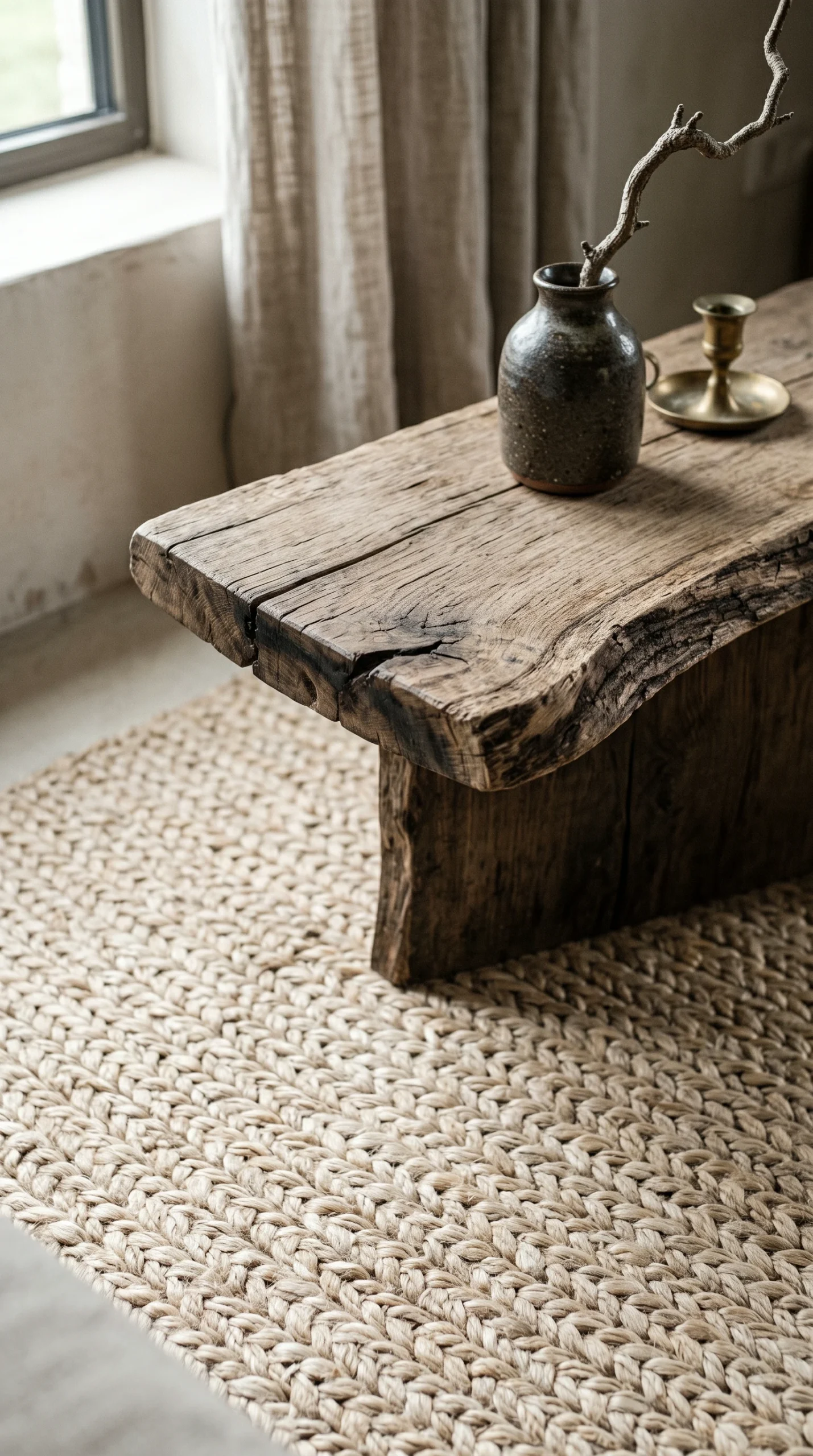
Materials contribute much of the character in a Japandi interior. Wood, linen, cotton, wool, stone, paper, and ceramic finishes can provide variation through their surfaces rather than relying on elaborate patterns.
Wood can introduce warmth through furniture, flooring, shelving, and cabinetry. Linen and other textured fabrics soften the appearance of hard surfaces, while ceramics and stone can provide a more substantial tactile contrast.
The goal is not to use natural materials everywhere regardless of suitability. Each material brings practical trade-offs that homeowners need to know before buying:
Understanding real material drawbacks helps prevent costly maintenance frustrations down the road:
– Unsealed or Lightly Oiled Oak: Pale European oak and ash have a gorgeous tactile grain, but raw or oil-finished wood catches water marks and dark tannin stains easily from damp glasses, condensation, or flower vases. Keeping slate or cork coasters nearby and applying a durable matte hardwax oil protects the wood without creating a plasticky shine.
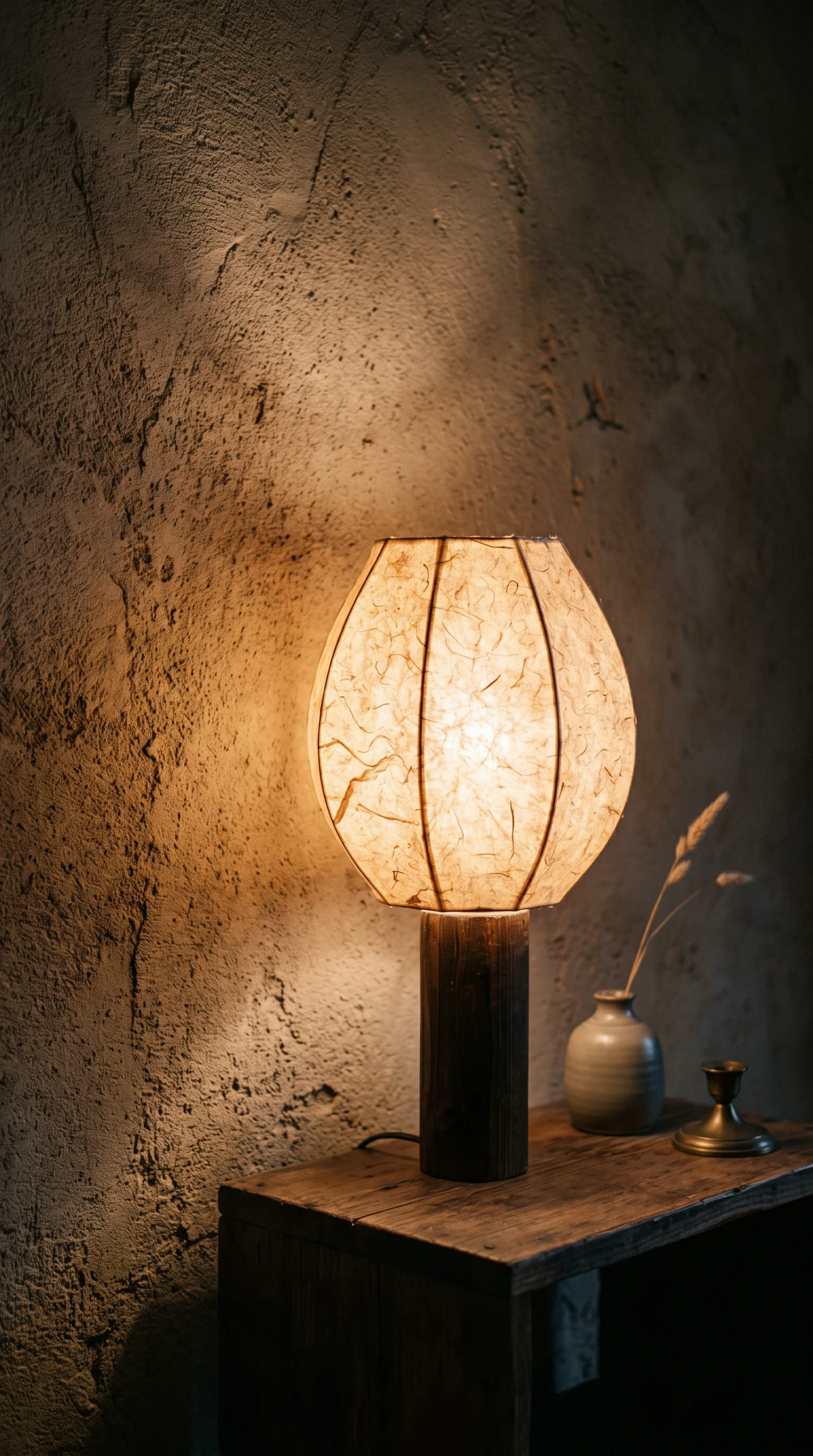
– Delicate Washi Paper Lamps: Japanese mulberry paper lanterns create beautifully diffused ambient light, but the thin fibers can tear or puncture easily around curious pets or during active family play. Position paper lamps safely in low-traffic room corners away from drafts.
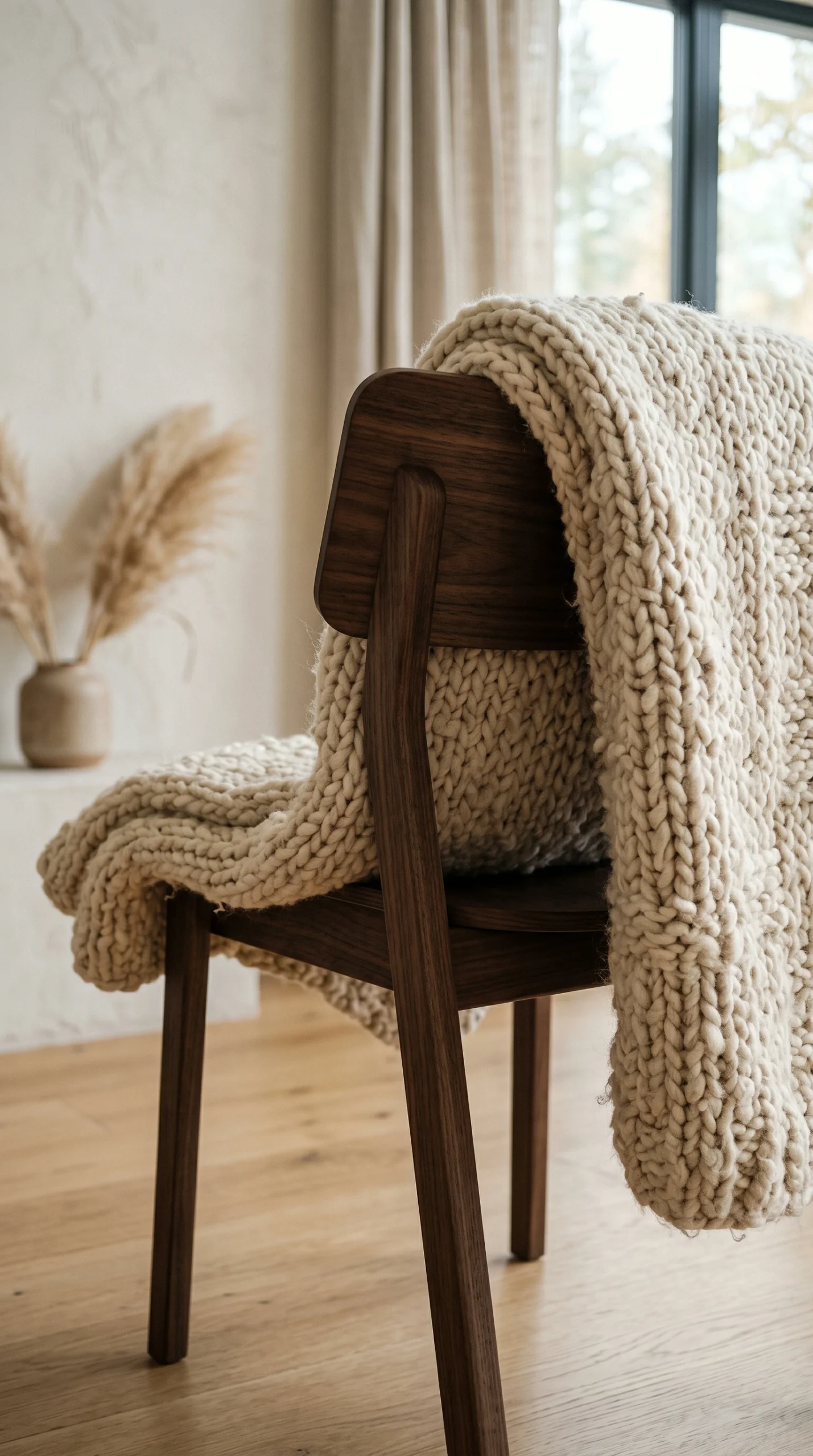
– Textured Boucle Fabrics: Looped wool-blend boucle adds cozy tactile depth to armchairs, but the open looped yarns snag easily on pet claws, cat scratching, or sharp jewelry. For homes with active pets, smooth slubby linen or tightly woven cotton-canvas blends offer far greater longevity.
For example, a textured fabric may feel comfortable on a sofa but be less practical in a location exposed to frequent spills. A natural wood finish can look attractive in a kitchen, but its suitability depends on the product, protective finish, location, and maintenance requirements. Bathroom materials need to be appropriate for moisture and regular cleaning.
For example, a textured fabric may feel comfortable on a sofa but be less practical in a location exposed to frequent spills. A natural wood finish can look attractive in a kitchen, but its suitability depends on the product, protective finish, location, and maintenance requirements. Bathroom materials need to be appropriate for moisture and regular cleaning.
You can also combine solid wood with veneer, quality engineered panels, metal, or other materials when they provide suitable performance. The important considerations are construction, durability, appearance, and how the item will be used.
Japandi furniture often features simple outlines, restrained detailing, and an emphasis on material and proportion. However, there is no requirement for every piece to be low, pale, or visually delicate.
Begin with the needs of the room. A sofa should provide comfortable seating, a dining table should accommodate the people who use it, and a cabinet should offer practical storage without obstructing movement.
Measure the available space before purchasing large furniture. Consider the full footprint, door swings, drawer clearance, delivery access, and the routes people need to move through the room.
Low-profile furniture can help establish a relaxed visual emphasis, but comfort should come first. A low chair or bed may not suit everyone, and a compact room does not automatically benefit from furniture that sits close to the floor.
Create balance by varying the visual weight of different pieces. A substantial dining table might pair well with simpler chairs, while a large sofa can be balanced with a smaller side table and uncluttered walls.
Rather than buying a matching furniture set, choose pieces that share compatible finishes, proportions, or colors. This allows the home to feel coordinated while retaining individual character.
For more detailed advice on selecting furniture, read our Japandi furniture ideas.
An interior can contain very few objects and still feel visually rich. Texture, shape, natural variation, and the relationship between different materials all help create interest without adding unnecessary clutter.
A smooth wooden table might be paired with a textured wool blanket, a ceramic vase, or a woven rug. A simple sofa can gain warmth through its fabric and the way cushions are arranged. A handcrafted object can add individuality to an otherwise restrained display.
The idea sometimes associated with wabi-sabi can provide inspiration for appreciating natural variation and the character of handmade objects. It should not be treated as a requirement to make a room look unfinished or deliberately rough. The aim is a thoughtful combination of materials and objects that feel appropriate together.
Choose accessories according to their contribution to the space. A favorite ceramic vessel or piece of artwork may be more meaningful than several small decorations bought only to fill an empty shelf.
Personal belongings can also be part of the design. Books, photographs, travel objects, and other meaningful items can sit comfortably within a Japandi interior when they are arranged in a way that respects both their significance and the available space.
For more focused guidance on accessories and finishing touches, explore our Japandi decor ideas.
Lighting affects how materials, furniture, and colors appear. A room that looks balanced in daylight may feel uncomfortable after dark if the only source of illumination is a harsh ceiling light.
Consider what each part of the room needs. General lighting supports movement and everyday activities, while task lighting helps with reading, cooking, working, or other focused tasks. Smaller lamps and indirect sources can add a softer atmosphere where appropriate.
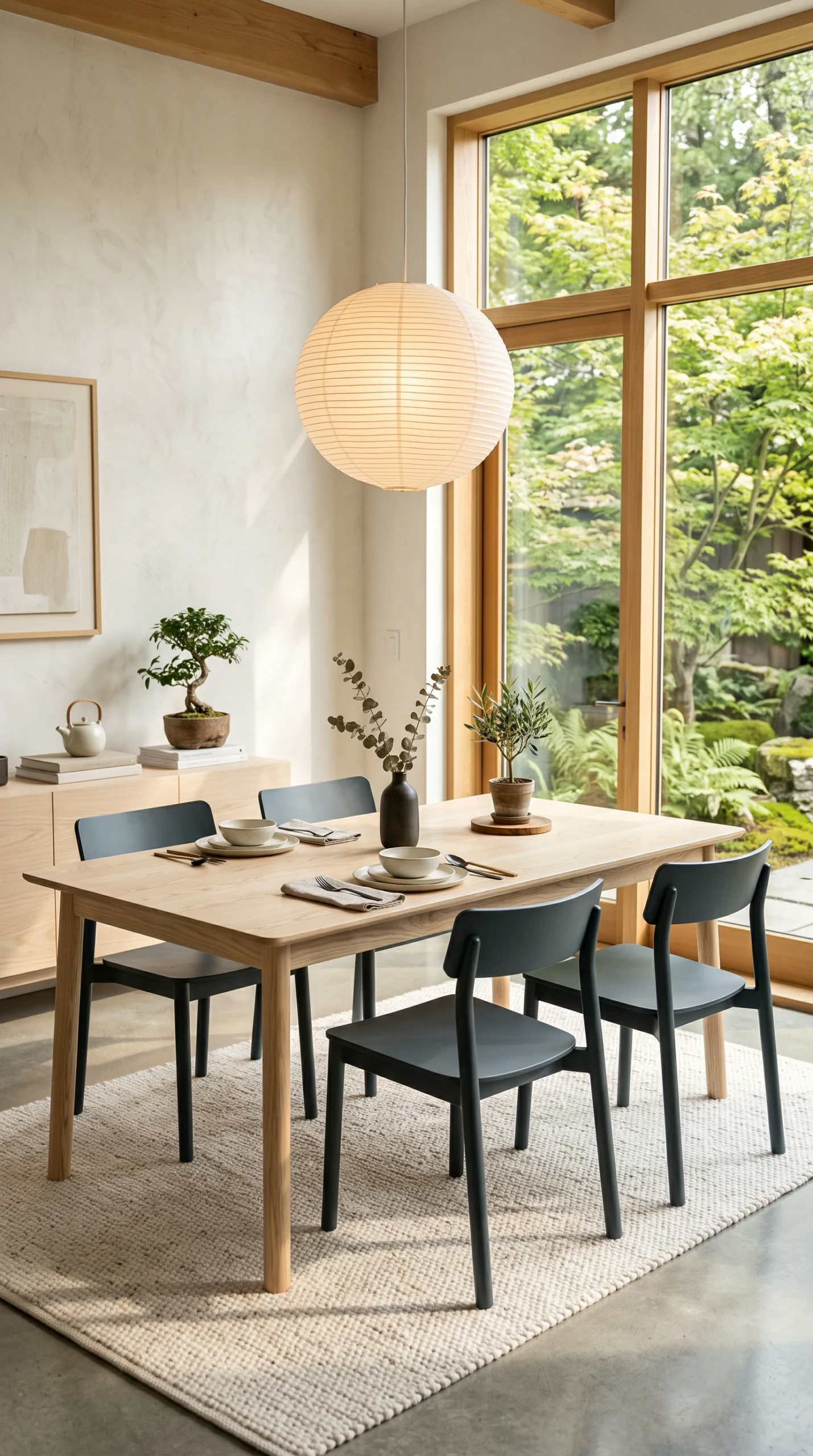
Diffused light from paper, fabric, or suitable glass shades can complement natural materials and reduce glare. A washi paper lamp is one possible design choice, but it is not essential to the style.
Choose fixtures according to the room, their compatibility with the electrical setup, and the amount and quality of light they provide. A decorative lamp should not leave important working areas poorly illuminated.
When planning a lighting scheme, pay attention to the different activities that take place in the space. The living room may need a combination of general light, reading light, and softer evening illumination. A kitchen also requires suitable task lighting for work surfaces.
Warm-white lighting is often chosen for its comfortable appearance, but the right setting depends on the room, fixture, and intended use. Good lighting balances atmosphere with visibility rather than sacrificing one for the other.
The same broad principles can work in different rooms, but each space has its own practical requirements. Furniture, lighting, storage, materials, and decoration should respond to the room’s purpose instead of following a single formula.
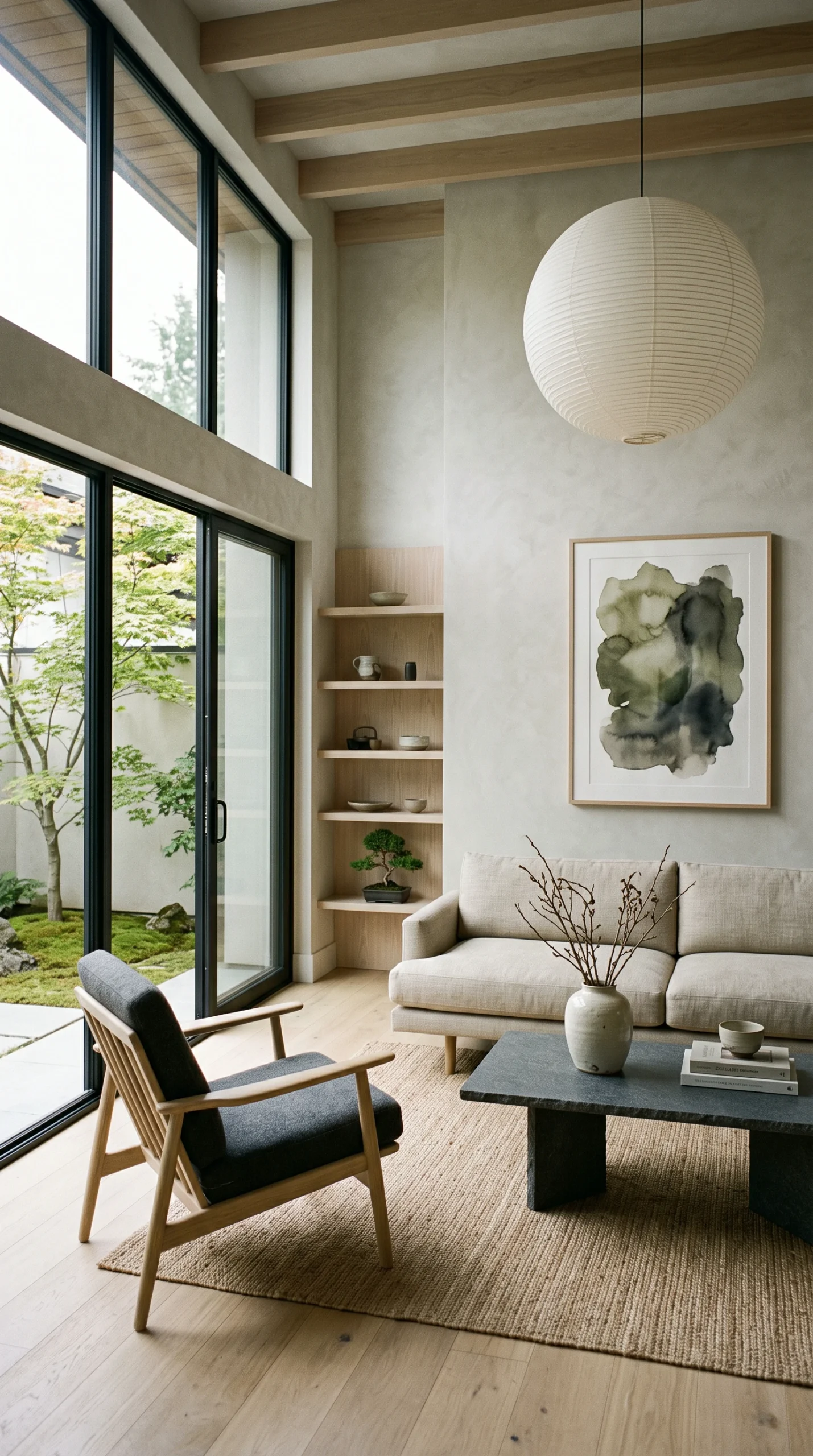
A Japandi living room can combine comfortable seating, natural wood, textured fabrics, and a small selection of decorative objects.
Start with the seating arrangement and main walking routes. Choose a sofa that suits the room’s dimensions, then add a coffee table or side table only where it is useful. A rug can help define the seating area, while layered lighting supports activities throughout the day.
Leave enough open space for movement and avoid filling every surface with accessories. The room should remain comfortable for everyday use, not merely resemble a staged photograph.
When designing your main gathering space, prioritize conversational seating arrangements, low-profile sofas with 16 to 18 inch seat heights, generous 8×10 foot area rugs, and clever television cord concealment. For complete guidance on clearances, coffee table proportions, and lighting layers, explore our dedicated guide to Japandi living room ideas.
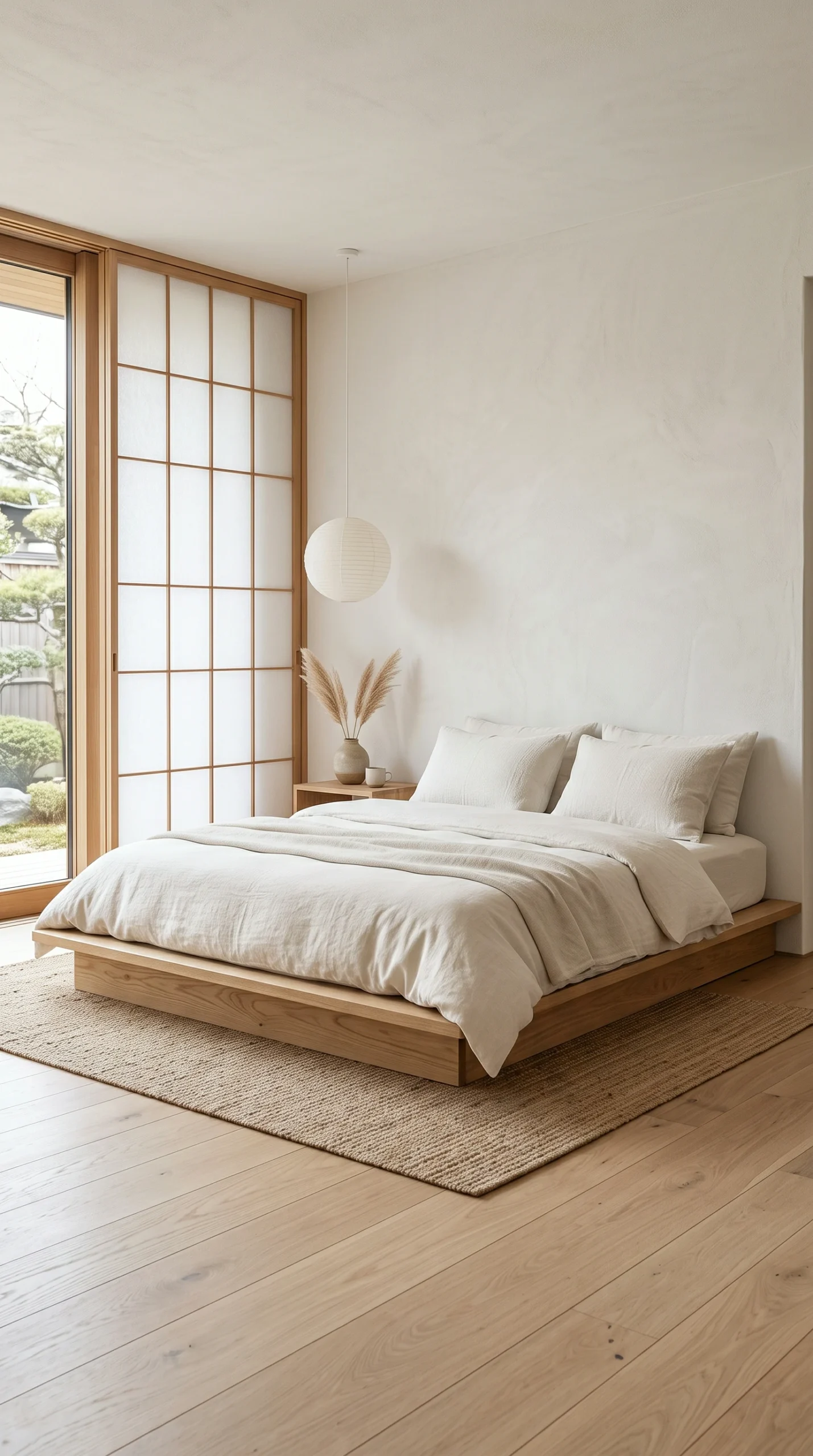
A Japandi bedroom should support rest while accommodating the practical needs of sleeping, dressing, and storage.
Consider the bed’s size and position first. Make sure there is sufficient room to move around it and access drawers or wardrobes. Natural bedding, coordinated timber finishes, and appropriately placed bedside lighting can create a cohesive atmosphere.
Neutral colors are one option, but they are not compulsory. Muted green, earthy brown, and other restrained accents can also work when they complement the existing materials and light.
Keep frequently used belongings accessible and make sure storage is genuinely convenient rather than choosing furniture based solely on its appearance.
A restful sleeping retreat requires ergonomic platform beds sitting 16 to 20 inches high, breathable slatted timber mattress bases spaced 2 to 3 inches apart, washed flax linen bedding, and warm 2400K to 2700K evening lighting. For detailed advice on bedroom clearances, wardrobe joinery, and circadian sleep design, explore our full guide to Japandi bedroom ideas.
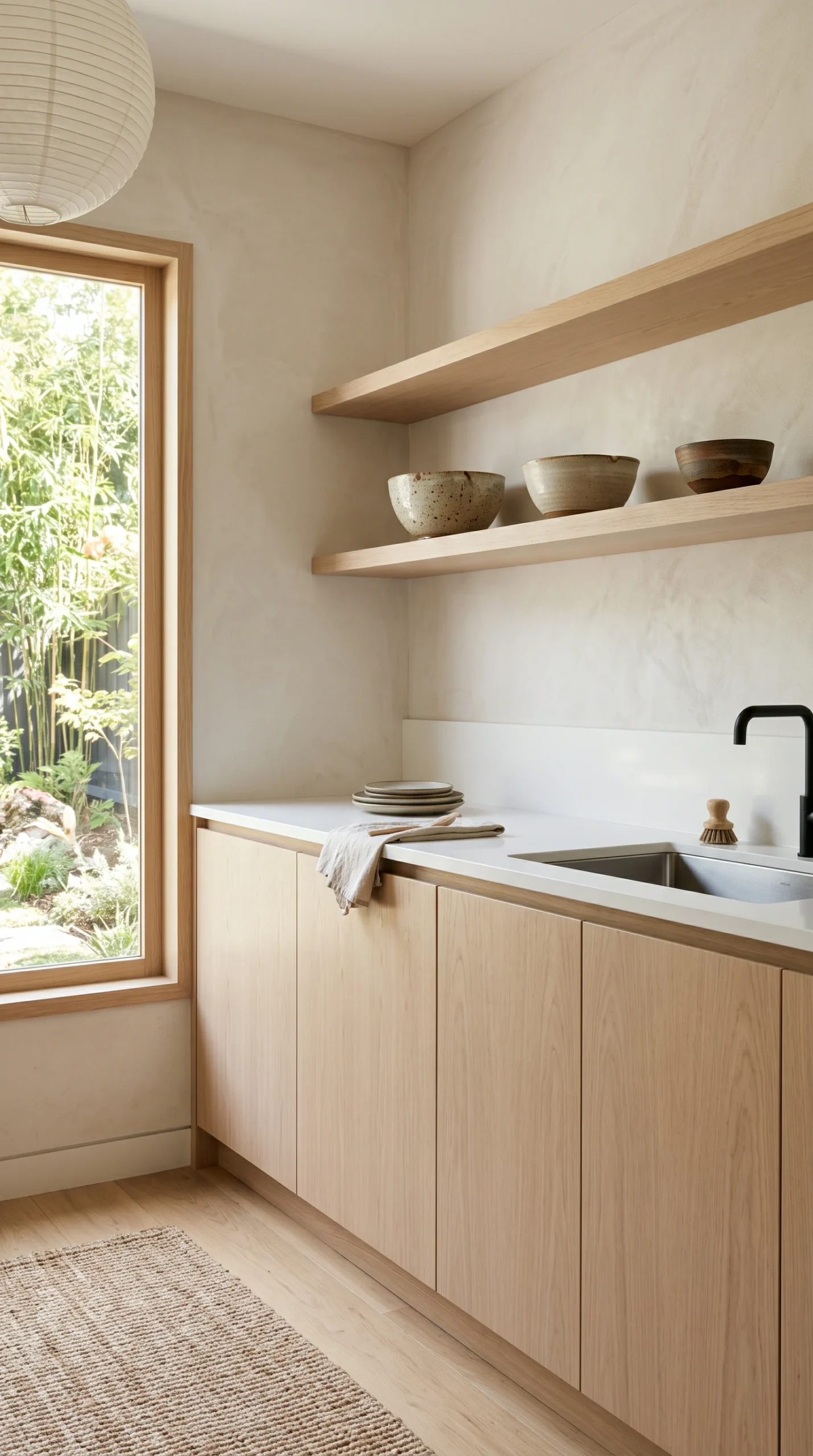
A Japandi kitchen can use simple cabinet fronts, natural wood finishes, restrained hardware, and durable work surfaces to create a cohesive appearance.
Practical function should guide the design. Cooking areas need suitable work surfaces, organized storage, task lighting, and materials that can handle the conditions in which they will be used.
Open shelves can display frequently used dishes or a few carefully chosen objects, but they also require regular cleaning. Closed cabinetry may be more convenient for items you would rather keep out of sight.
Wood tones, countertop colors, and cabinet finishes should work with the flooring and adjacent rooms. A restrained combination of materials can provide visual continuity without requiring every surface to match.
A culinary workshop requires disciplined ergonomics—including 42 to 48 inch working aisle clearances, durable quartzite or engineered worktops, integrated finger pulls, and powerful range ventilation. To learn how to balance sleek flat-panel cabinetry with open display shelving, review our complete guide to Japandi kitchen ideas.
A Japandi bathroom can combine simple forms, restrained colors, natural-looking finishes, practical storage, and comfortable lighting.
Start with materials appropriate for moisture, cleaning, and regular use. A wood-look finish may provide visual warmth without using untreated wood in a location where it would be unsuitable. Stone-look surfaces and understated ceramic finishes can offer other ways to introduce texture.
Good ventilation, slip-resistant flooring where appropriate, accessible storage, and adequate lighting matter as much as appearance. A spa-inspired atmosphere should not come at the expense of safe movement or practical maintenance.
Bathrooms must handle high moisture, steam, and daily hygiene while providing the restorative ambiance of a Japanese onsen. Learn how to plan continuous curbless wet rooms, floating wood vanities, matte black wall fixtures, and slatted hinoki accents in our guide to Japandi bathroom ideas.
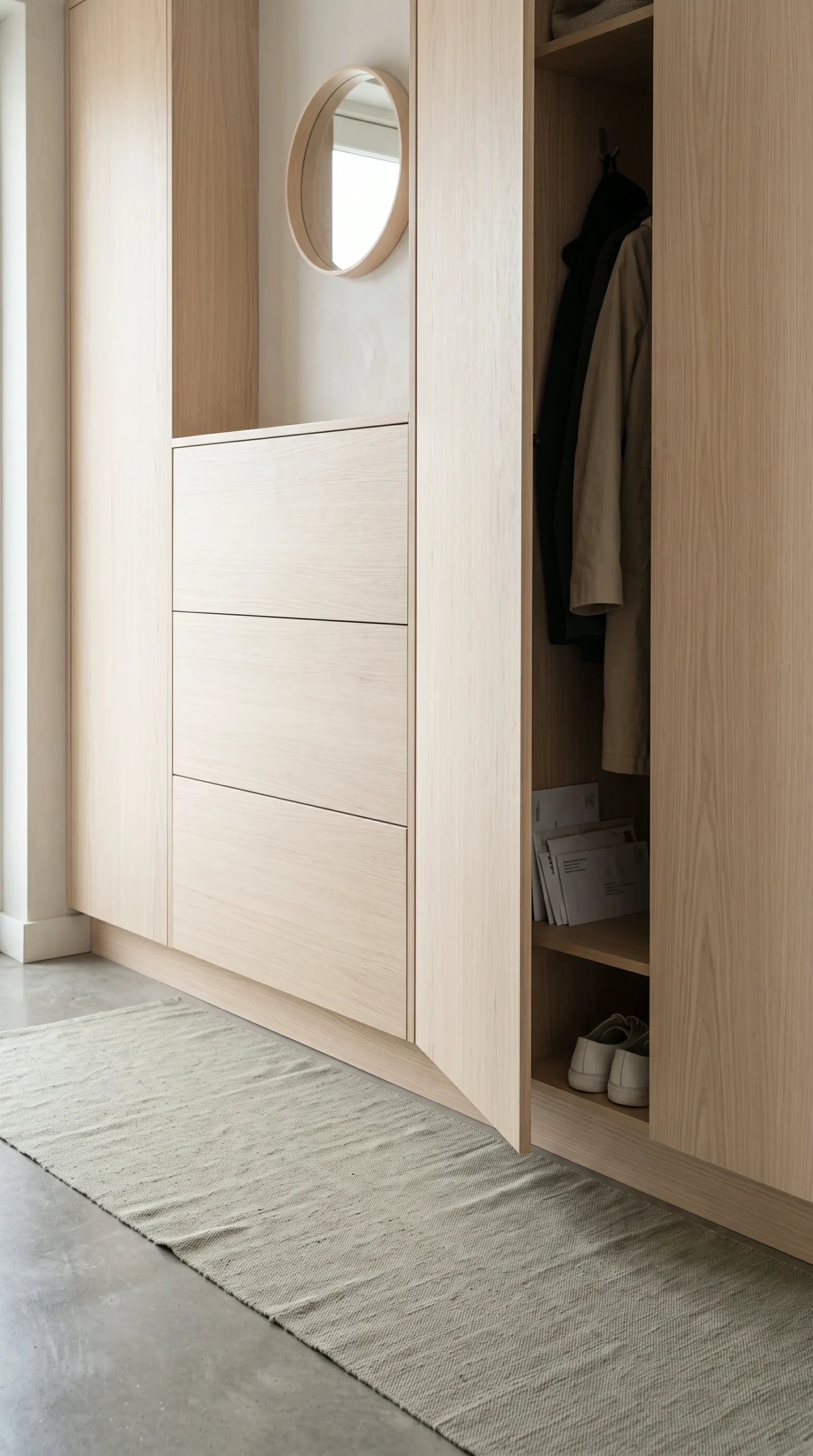
An entryway introduces the home’s design while handling everyday essentials such as shoes, coats, bags, and keys.
Choose storage that matches the space available and the belongings that need to remain accessible. A bench can be useful when there is room to sit comfortably, while a shallow cabinet or wall hooks may suit a narrower entrance.
Natural wood, restrained decoration, suitable lighting, and a clear walking route can make the space feel intentional without requiring many objects.
As the functional threshold of your home, an entryway must organize shoes, coats, bags, and keys without visual chaos. Discover practical walkway clearances, shallow console tables, and warm lighting in our guide to Japandi entryway ideas.
Japandi principles can be adapted to compact homes by focusing on furniture proportions, practical storage, and clear routes through the space.
Start by identifying the functions that each area needs to support. A studio may need to accommodate sleeping, dining, and relaxing within one room, while an open-plan apartment may require a subtle distinction between the entrance and living area.
Furniture placement, rugs, lighting, and consistent materials can help define separate activities without necessarily introducing large partitions. Multifunctional furniture can also be useful when it addresses a genuine need.
However, do not assume that every small room needs low furniture, concealed storage, or an entirely neutral palette. Comfort, accessibility, existing architecture, and personal routines should determine the choices.
For practical space planning, explore our small Japandi apartment ideas.
For a different perspective on coordinating finishes and styling across a compact home, see our Japandi small apartment design ideas.
Treating minimalism as an absolute rule. Removing useful furniture or personal belongings can make a home less comfortable. Keep the items that serve your needs and create room around them where it improves function.
Using the same materials everywhere. Repeating a few finishes can create cohesion, but excessive uniformity may make a room feel flat. Introduce contrast through texture, different wood tones, or a carefully chosen accent.
Choosing appearance over practicality. A low sofa, delicate surface, or decorative lamp may look appropriate but still be unsuitable for your household. Assess comfort, maintenance, durability, and usability before buying.
Assuming every room should be beige. Warm neutrals are common, but muted colors and darker accents can also work. The key is how the colors interact with the room’s light and existing materials.
Buying everything at once. Replacing all furniture and accessories is rarely necessary. Work with useful pieces you already own, identify genuine gaps, and make new purchases gradually.
Copying inspiration images too literally. Photographs may show different room dimensions, custom joinery, or lighting conditions. Adapt the visual ideas to your own architecture, budget, and routines.
Starting a Japandi transformation does not require gutting your entire home or spending a fortune all at once. Begin with one room rather than trying to redesign every corner simultaneously. Take time to assess how the space is used daily, which existing pieces function well, and what currently makes the room difficult to navigate or visually disconnected.
To help you prioritize your spending realistically, you can approach the transition across three practical budget tiers:
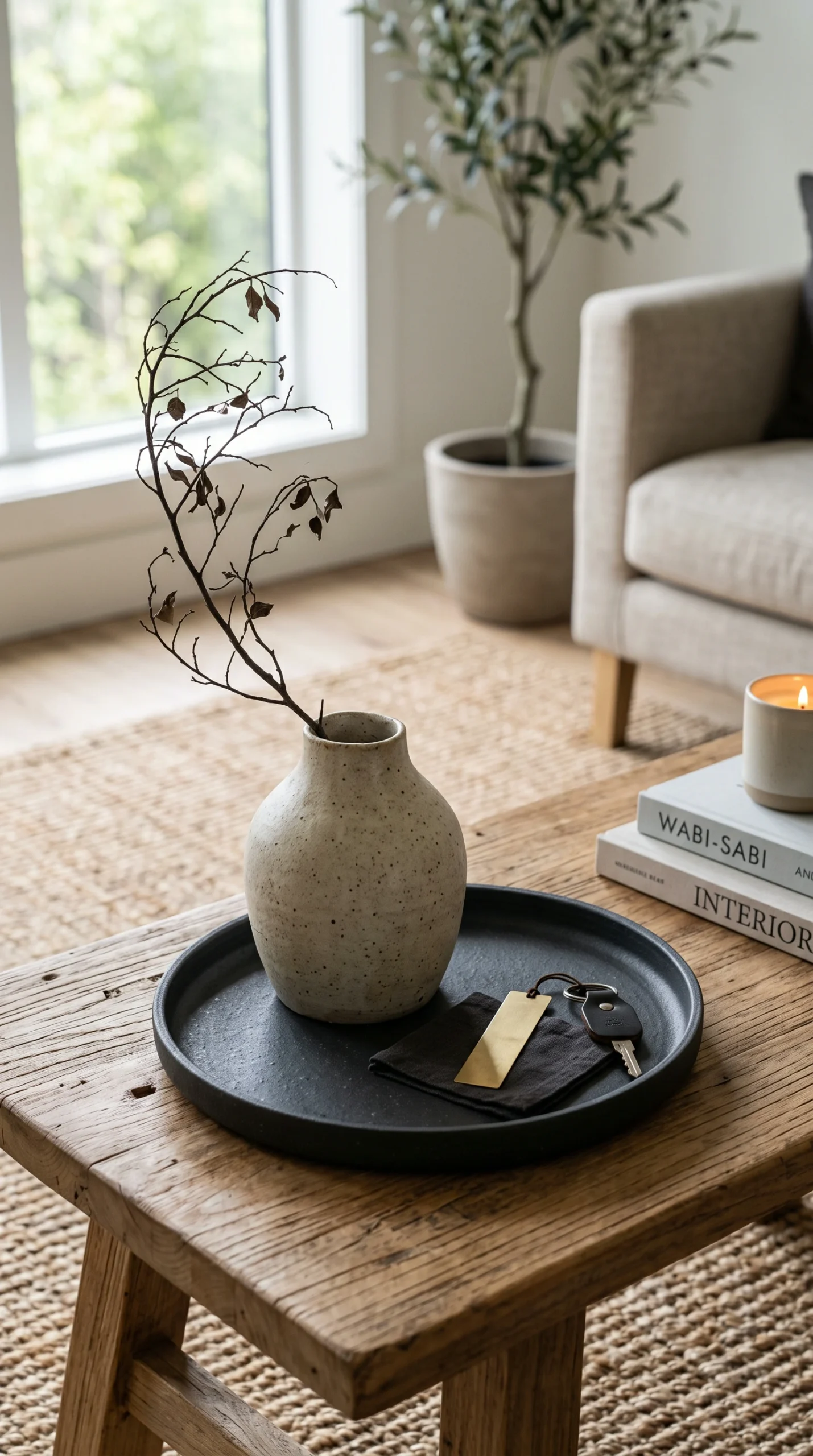
Low-Budget Options: You can create an immediate, noticeable change without major financial investment. Start by clearing surface clutter from tables and countertops to establish open breathing room. Swap tired synthetic cushion covers for washed linen or textured wool cases, and replace harsh, cool-white light bulbs with warm white LEDs (2700K). Introducing a simple unglazed ceramic vase with a single dried branch adds organic wabi-sabi character at virtually no cost.
Medium-Budget Investments: If you have funds to upgrade key furnishings, focus on high-touch pieces you use every day. Invest in one well-crafted solid oak or ash dining table with clean joinery, or replace an uncomfortable couch with a low-profile linen sofa. Upgrading cheap synthetic window blinds to floor-to-ceiling unlined washed linen drapery softens incoming daylight, diffuses room glare, and absorbs ambient noise.
High-Budget Architectural Renovations: For a comprehensive home makeover, invest in structural millwork and architectural surfaces that define the interior. Install custom floor-to-ceiling slatted wood wall panels backed with acoustic felt, build seamless handle-less storage cabinetry painted to match your walls, or upgrade kitchen and bathroom surfaces with honed natural quartzite or continuous matte stone slabs.
Introduce subtle textures, ceramics, and personal details only after your main functional layout is established. Assess the room in both morning daylight and evening lamplight to verify that walkways remain clear, seating is genuinely comfortable, and lighting feels warm and relaxing. Japandi design succeeds when simplicity, comfort, material honesty, and daily usability work together to create a home that feels grounded, personal, and deeply restorative to live in.