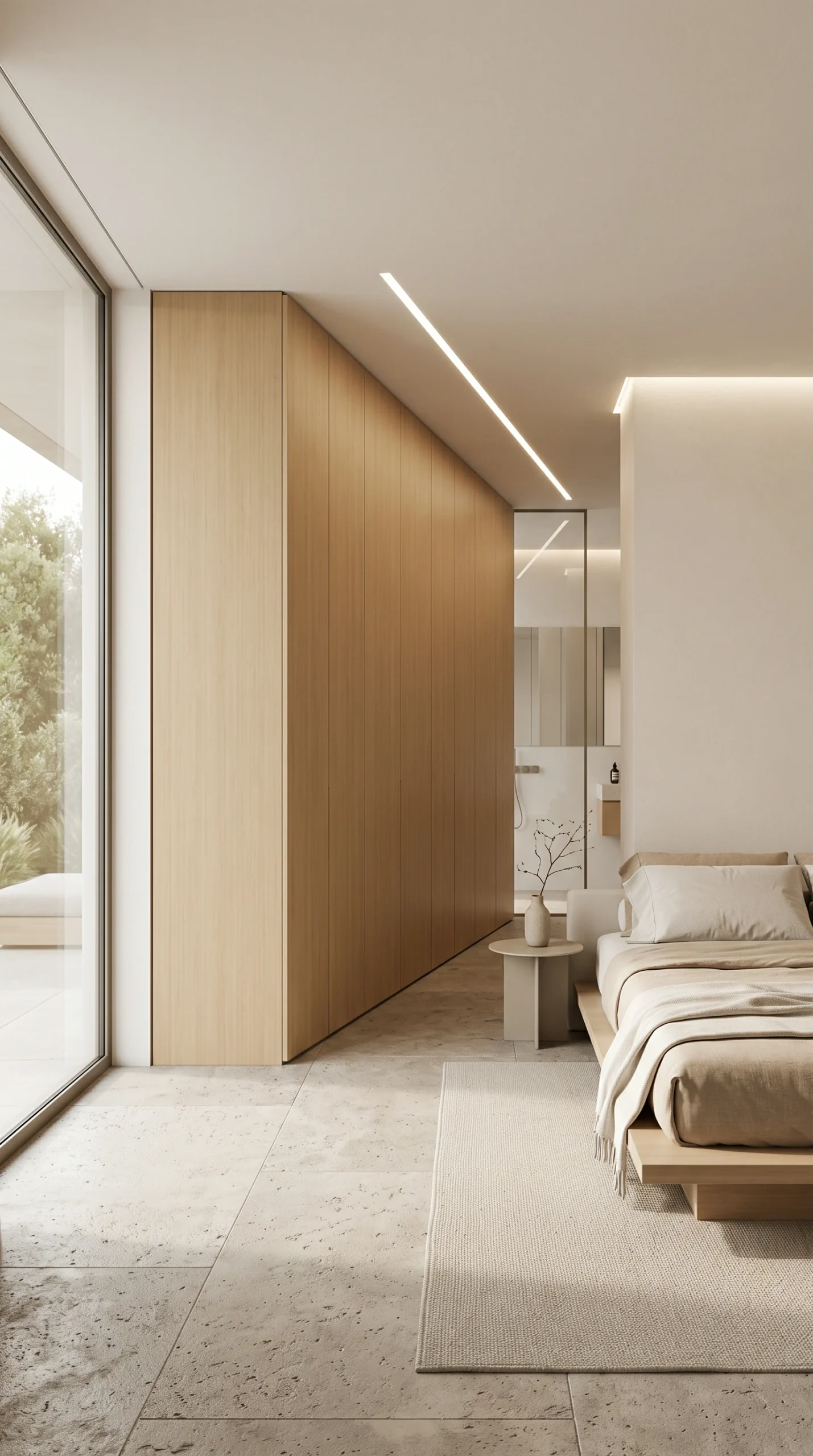
A bedroom should serve as a restorative sensory haven designed to support deep rest and cognitive recovery. In many modern homes, bedrooms become holding grounds for stray laundry, digital devices, and mismatched furniture that produce subtle visual agitation right when the brain needs to transition into sleep.
A Japandi bedroom resolves this sensory friction. By uniting Scandinavian warmth, tactile textiles, and functional ergonomics with Japanese spatial economy, natural joinery, and the intentional calm of negative space (ma), you can design a sleeping environment that feels grounded, uncluttered, and genuinely peaceful.
Bed Architecture, Mattress Ventilation, and Clearances
The bed is the architectural anchor of the sleeping quarters. Choosing the right frame and positioning it properly dictates both sleep quality and daily comfort.
Low-Profile Platform Frames and Slat Spacing
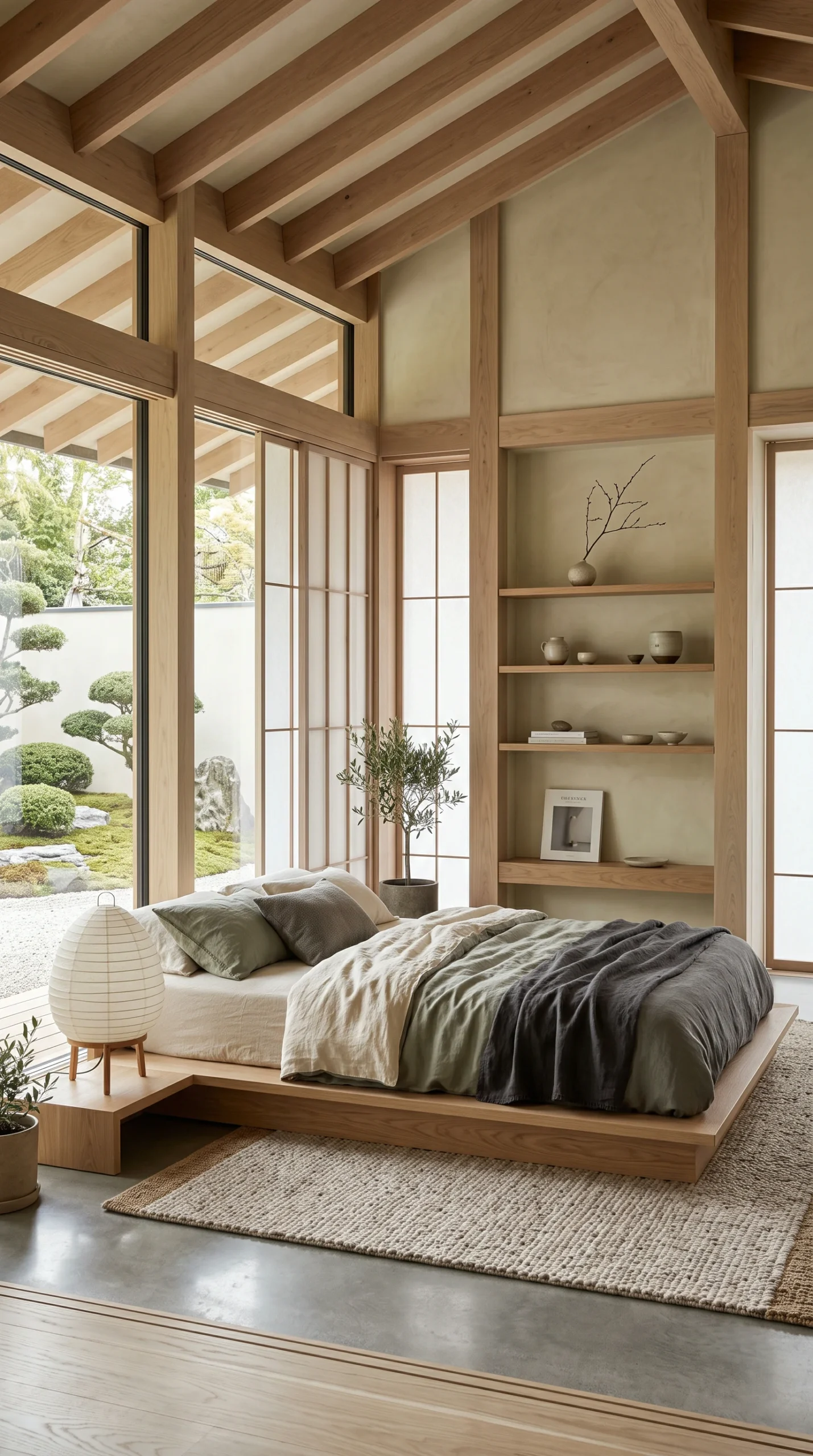
Japanese interior traditions favor sleeping close to the floor to foster a sense of grounding and connection to the earth:
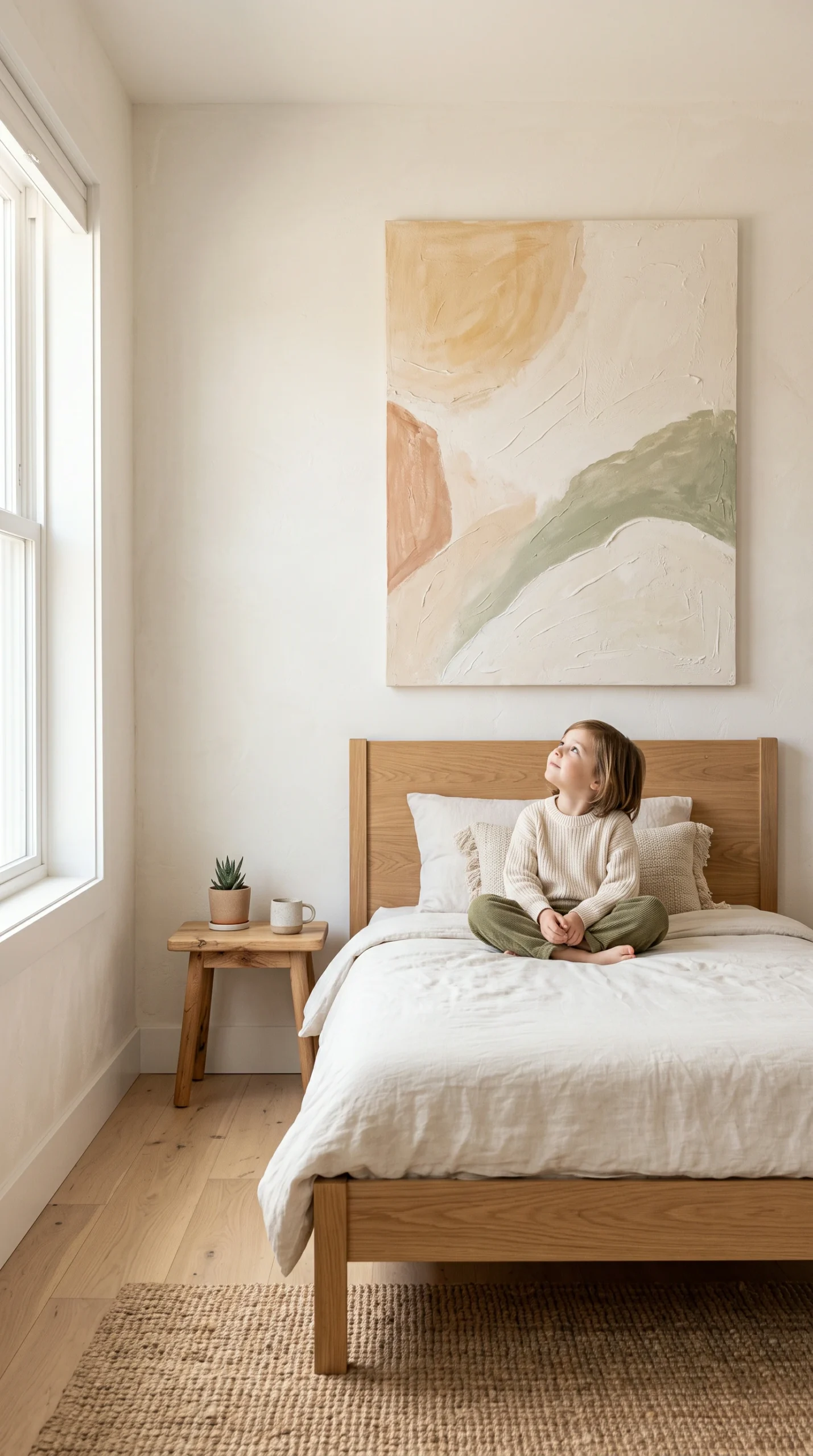
- Ergonomic Platform Height: While authentic Japanese tatami futons lie directly on the floor, modern Japandi platform beds balance floor-level aesthetics with physical ergonomics. Aim for an overall bed height—measuring from the floor to the top of the mattress—between 16 and 20 inches (41 to 51 cm). This height preserves a low, grounded profile while allowing you to sit down and stand up without excessive knee strain.
- Critical Mattress Slat Spacing: Never place a standard hybrid or pocket-coil mattress on an unventilated solid plywood deck. Humans release up to a pint of moisture through perspiration each night; on a solid board, that moisture becomes trapped beneath the mattress, leading to mold and fiber degradation. Specify a supportive timber base with solid wood slats spaced 2 to 3 inches apart (5 to 7.5 cm) to guarantee continuous air circulation and heat dissipation.
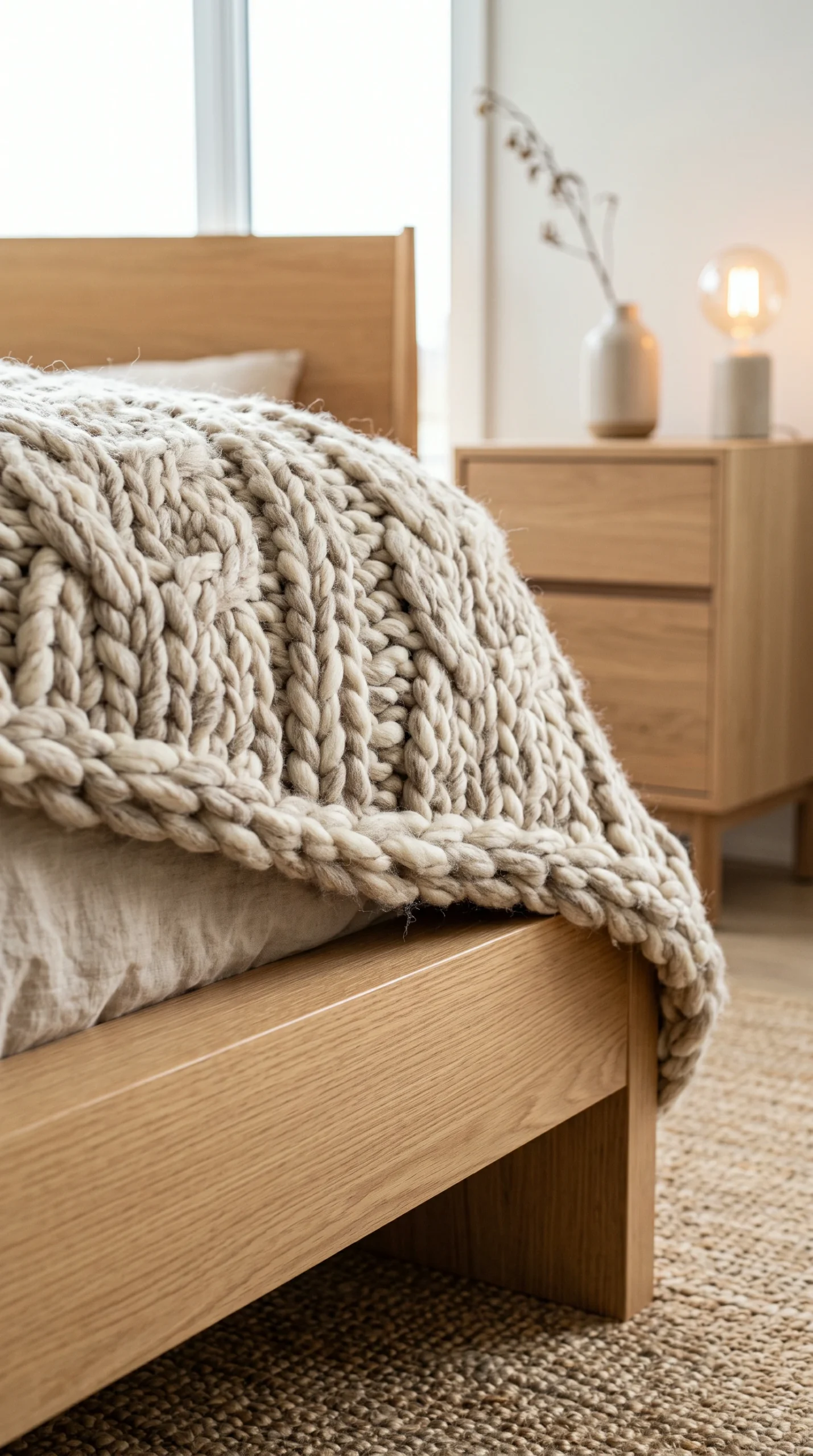
- Pale Oak and Ash Timber Construction: Build or select bed frames crafted from pale oak, solid ash, or smoked walnut using mortise-and-tenon joinery. Traditional mechanical wood joints move naturally with seasonal humidity changes without developing the irritating metal creaks common in mass-market bolt-together frames.
For advice on selecting complementary timber benches and dressers, explore our guide to Japandi furniture ideas.
Perimeter Clearances and Bedroom Circulation
Adequate clearance around the bed prevents cramped mornings and simplifies making the bed:
- Primary Bed Walkways: Maintain at least 30 to 36 inches (76 to 91 cm) of open floor space along both sides and the foot of the bed. This clearance allows comfortable movement and ensures you can walk around without bumping into walls or furniture.
- Wardrobe Door Clearances: If built-in wardrobes sit opposite or adjacent to the bed, ensure at least 30 to 36 inches of clearance between the bed frame and wardrobe doors so hinged doors can swing fully open without obstruction.
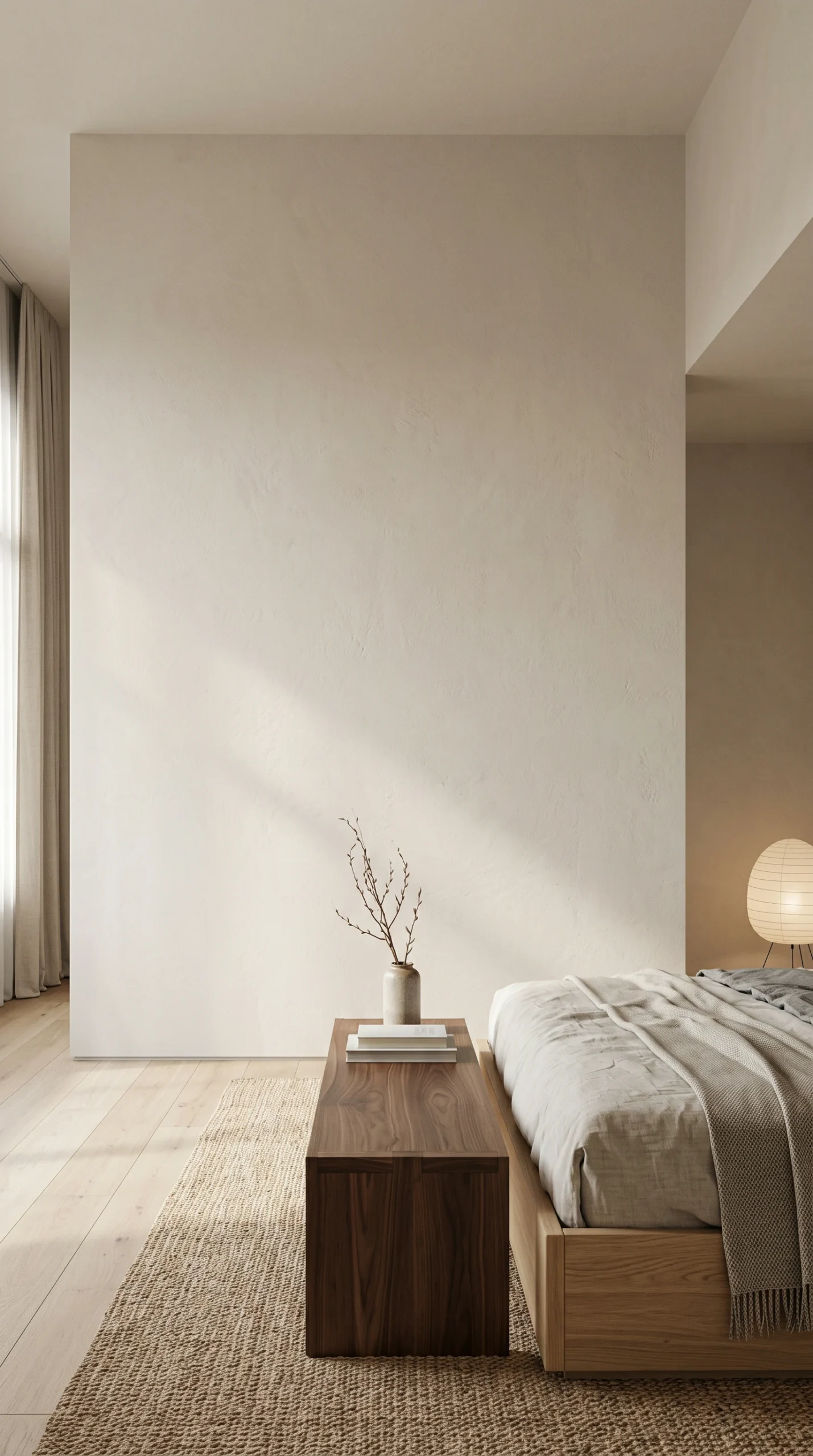
- Low Foot-of-Bed Benches: Placing a narrow smoked walnut or pale oak bench at the foot of the bed provides a practical surface for setting down morning throws or dressing, provided at least 30 inches of primary pathway remains between the bench and opposite walls.
Organic Bedding, Tactile Layers, and Temperature Regulation
The sensory experience of touching bed linens directly impacts nervous system relaxation. Japandi bedding avoids synthetic microfibers, glossy sateens, and rigid ornamental tucks in favor of natural, breathable organic fibers.
Pure Washed Flax Linen
Flax linen is the quintessential Japandi bedding textile:
- Fabric Weight: Look for medium-weight French or Belgian flax linen between 160 and 185 GSM (grams per square meter). This weight offers durable year-round longevity, breathability during warm summer months, and gentle thermal insulation in cooler weather.
- Natural Wabi-Sabi Texture: Flax linen features a softly rumpled, organic drape that celebrates natural imperfection. It eliminates the need for formal bed pressing, embodying the lived-in wabi-sabi aesthetic.
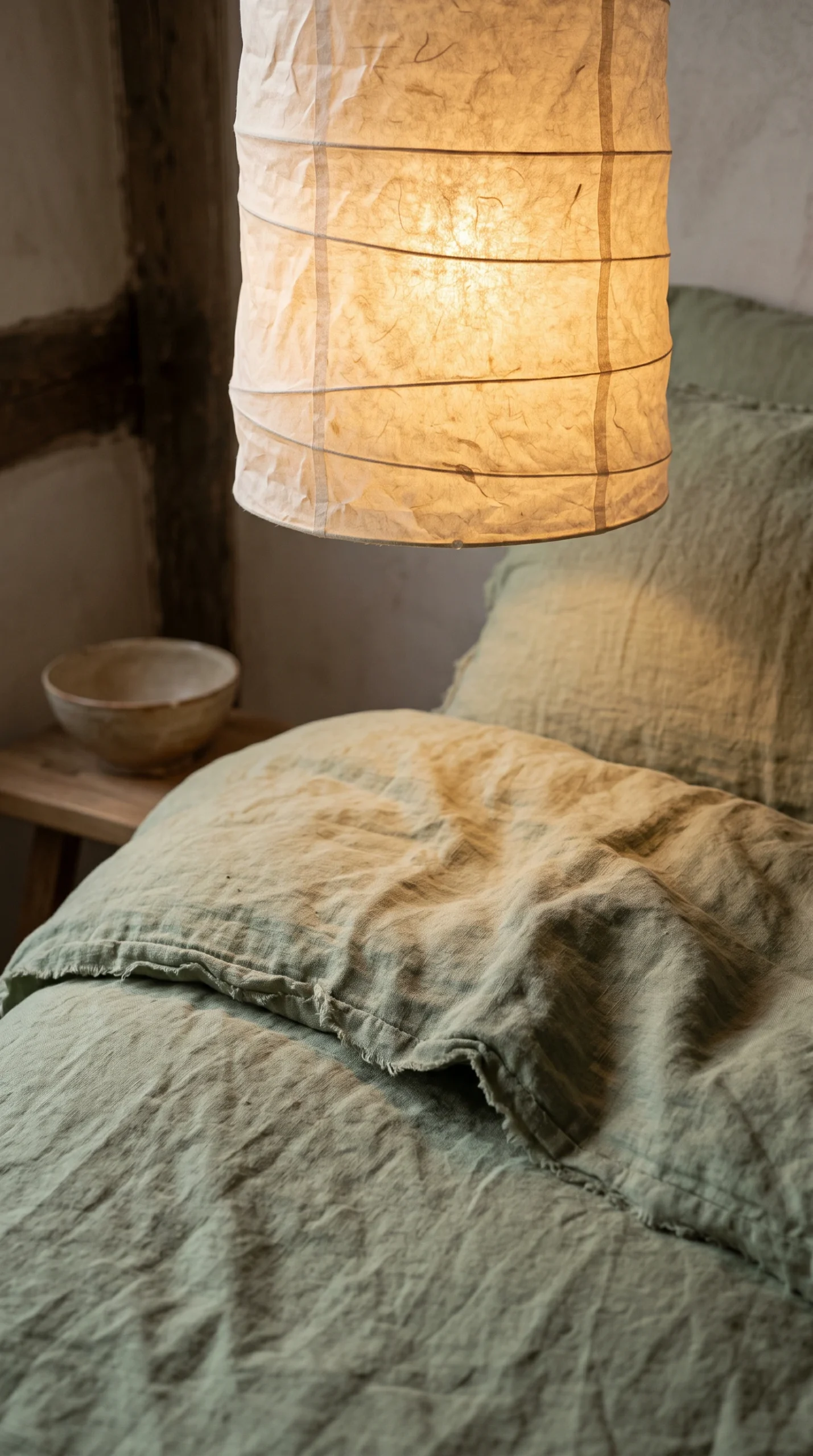
- Earthy Dye Tones: Pair crisp Warm Rice sheets with washed matcha green, muted oat, or soft sandstone duvet covers to ground the bed in natural botanical tones.
To see how these textile hues harmonize across walls and floors, check out our guide to Japandi color palette ideas.
Chunky Wool Accents and Acoustic Damping
Introduce warmth and acoustic softness by layering secondary natural fibers:
- Drape a thick, hand-knitted merino wool or raw fleece blanket across the lower third of the bed. The heavy weave provides tactile contrast against smooth linen and offers extra weight on chilly evenings.
- Incorporate dense jute or high-pile wool rugs beneath the bed, extending at least 24 to 30 inches past the frame perimeter. Soft rug fibers absorb ambient reverberation and footstep impacts, keeping the room acoustically muted.
Concealed Storage and Seamless Built-In Wardrobes
Visual clutter triggers subconscious alertness. Storing clothing, accessories, and spare bedding out of sight behind clean architectural surfaces is vital for bedroom serenity.
Floor-to-Ceiling Flush Wardrobes
Replace standalone bulky wardrobes with built-in cabinetry that melts into the room architecture:
- Natural Bamboo and Pale Oak Fronts: Select flat slab doors finished in light bamboo or rift-sawn oak veneer with vertical grain alignment. Alternatively, paint the doors the exact warm white or soft clay tone of your bedroom walls so the wardrobe reads as an architectural wall.
- Handle-Less Profiles: Integrate recessed J-pull grooves, continuous finger channels, or touch-latches to create an uninterrupted surface free of protruding metal handles.
- Internal Organization: Divide wardrobe interiors with dedicated shelving, hanging rails, and uniform woven fabric or bamboo baskets. Keeping daily garments neatly segmented prevents wardrobe overflow from spilling onto bedroom chairs.
For micro-apartments where space is at a premium, review our tailored storage layouts in small Japandi apartment ideas.
Lighting Design for Circadian Rest and Evening Relaxation
Lighting directly signals to the brain whether it is time for active productivity or deep relaxation. A Japandi bedroom eliminates harsh, glaring overhead recessed spotlights in favor of diffused, low-intensity warm illumination.
Warm Color Temperatures and Circadian Rhythms
Standard daylight bulbs (4000K to 5000K) emit high amounts of blue spectrum light that suppress evening melatonin production:
- 2400K to 2700K Warm Spectrum: Equip bedroom fixtures with ultra-warm 2400K to 2700K dimmable LED bulbs. This gentle, golden color temperature simulates candlelight, preparing the nervous system for sleep.
- Independent Switching: Wire ambient ceiling lighting, bedside reading sconces, and low-level accent lamps to individual switches and dimmer controls.
Traditional Washi Paper and Diffused Sconces
Paper and frosted glass are ideal materials for eliminating glare:
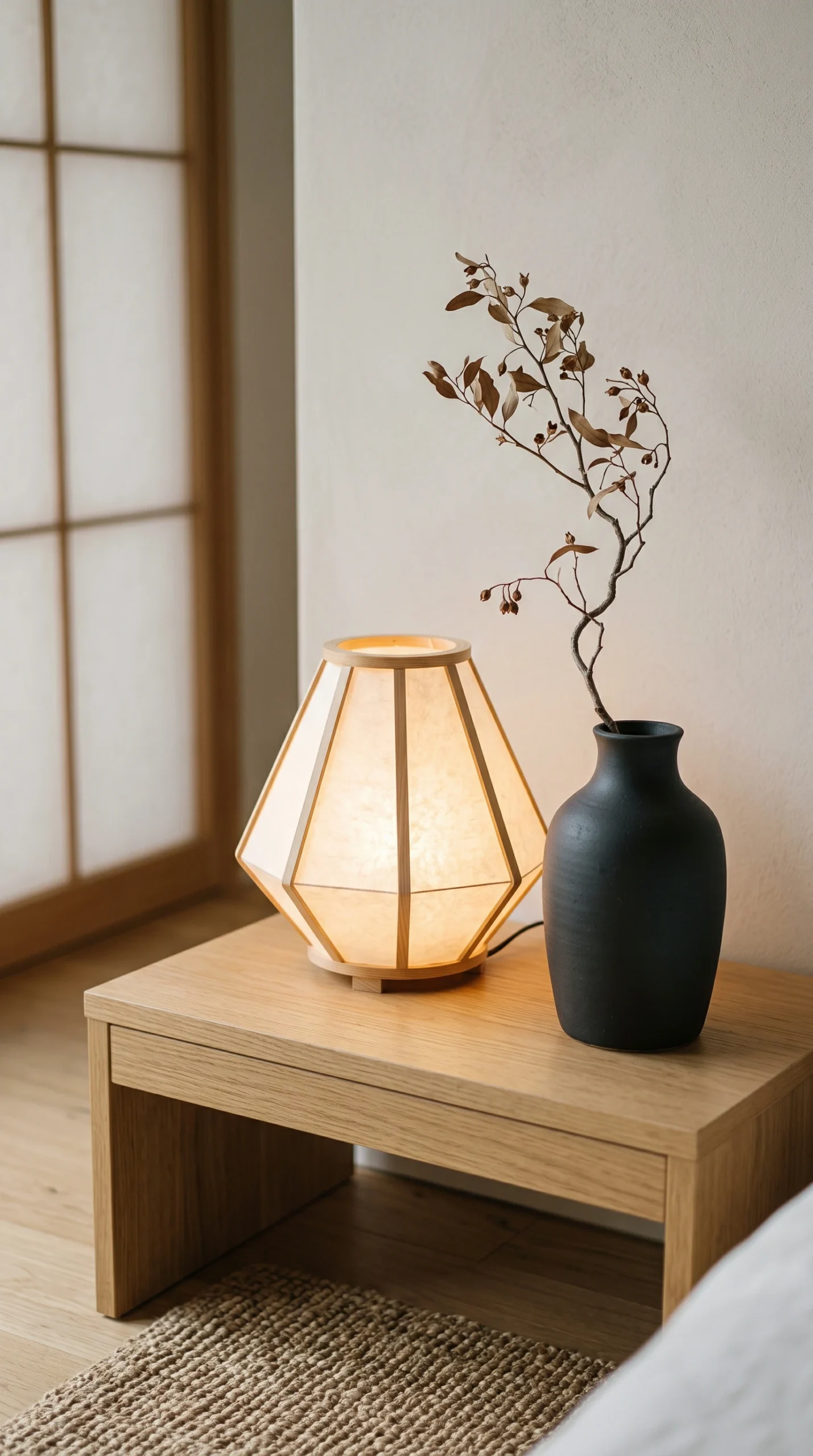
- Washi Paper Pendants: Suspend a traditional Japanese washi paper lantern—such as an Akari-style sphere—high over the foot of the bed or in a room corner. The mulberry paper fibers scatter light evenly, producing a soft, shadowless glow.
- Bedside Lighting: Instead of towering table lamps with bulky lampshades, choose compact wooden nightstands paired with small paper lantern lamps, or mount frosted glass wall sconces beside the headboard. Position nightstands within 2 inches of the mattress height (roughly 16 to 18 inches high) for effortless access from bed.
For more styling inspiration featuring paper lanterns, organic stoneware, and dried florals, explore our guide to Japandi decor ideas.
Window Treatments and Natural Light Control
Controlling morning daylight and evening privacy requires a layered approach to window dressing:
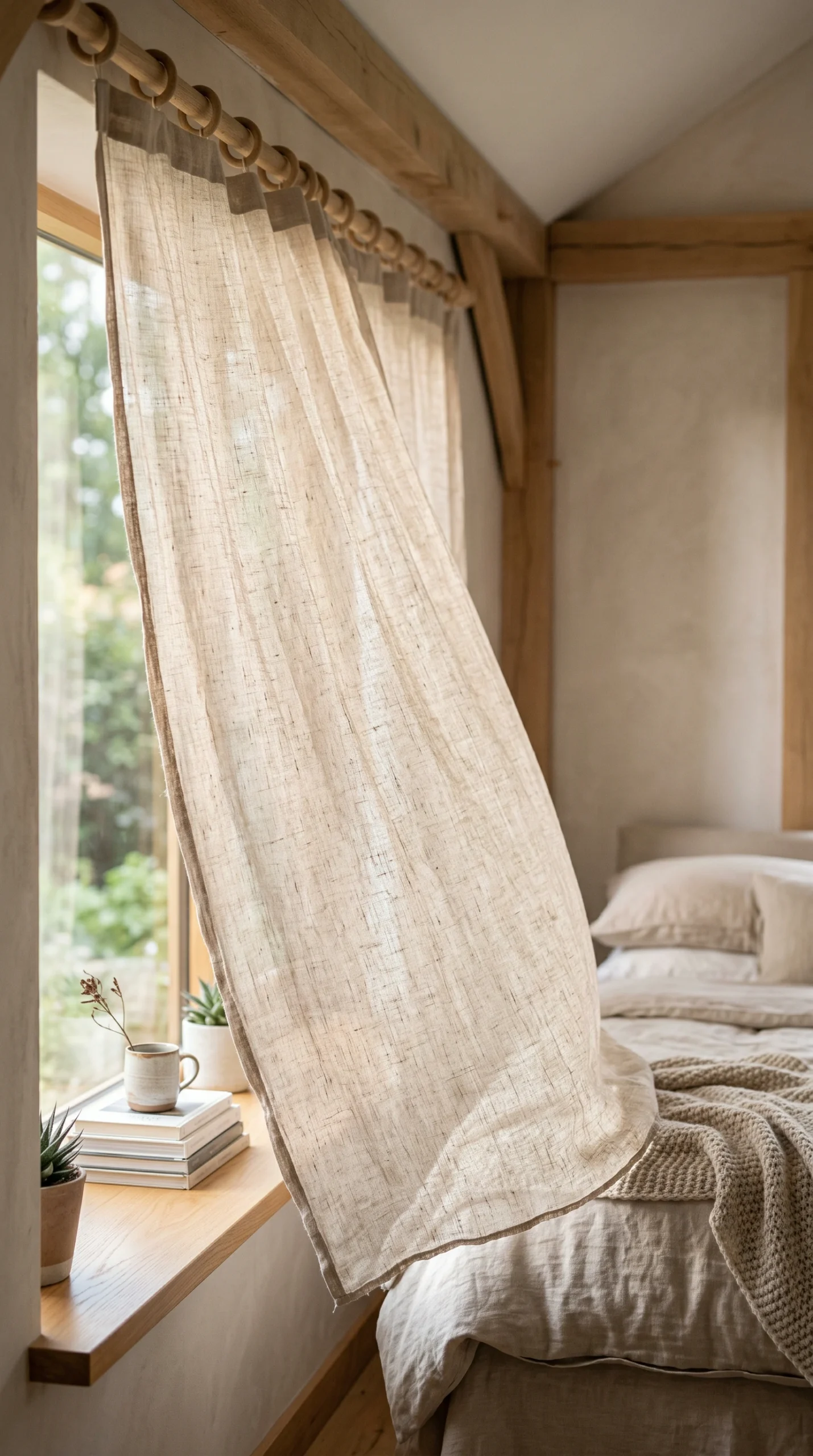
- Semi-Sheer Sandstone Linen: Hang floor-to-ceiling semi-sheer linen drapery along discreet ceiling tracks. During daytime hours, sheer curtains soften harsh sunbeams into gentle ambient light while providing privacy from neighbors.
- Concealed Blackout Rollers: Install an architectural blackout roller shade tucked cleanly inside the window frame reveal behind the sheer linen drapes. This combination delivers pitch-black darkness for deep nighttime sleep without cluttering the window frame with heavy, ornate valances.
To coordinate bedroom acoustics and textures with adjoining master bathrooms, see our guide to Japandi bathroom ideas, and keep your entryway transitions calm with our Japandi entryway ideas.
Practical Drawbacks and Maintenance Realities
Living with a minimalist bedroom involves practical trade-offs that every homeowner should understand:
Physical Adaptations for Low Platform Beds: Platform beds sitting 16 to 18 inches off the floor look remarkably serene, but they require greater hip and knee flexion when standing up. For individuals with joint stiffness or back issues, climbing out of a low bed can feel awkward. Furthermore, frames with wide perimeter wooden ledges look sculptural in photos, but you can bump your shins against them when getting out of bed in the dark.
Natural Linen Creasing and Lint: Authentic unironed linen naturally forms soft, irregular wrinkles. If you prefer crisp, razor-sharp hotel-style sheets, pure linen may look untidy to you. Additionally, pure flax linen sheds fine lint during its first four to six wash cycles, requiring frequent lint trap cleaning in your clothes dryer.
Fragility of Washi Paper Fixtures: Japanese washi paper lamps are handmade from delicate mulberry bark. Unlike glass or metal pendants, paper shades cannot be cleaned with water, spray cleaners, or damp sponges. Dusting must be done gently using a feather duster or compressed air can, and they should be placed safely away from open windows where sudden rain could damage the paper.
By balancing thoughtful bed ergonomics, slatted mattress ventilation, warm circadian lighting layers, and breathable natural textiles, your Japandi bedroom will offer lasting everyday comfort and deeply restful sleep.