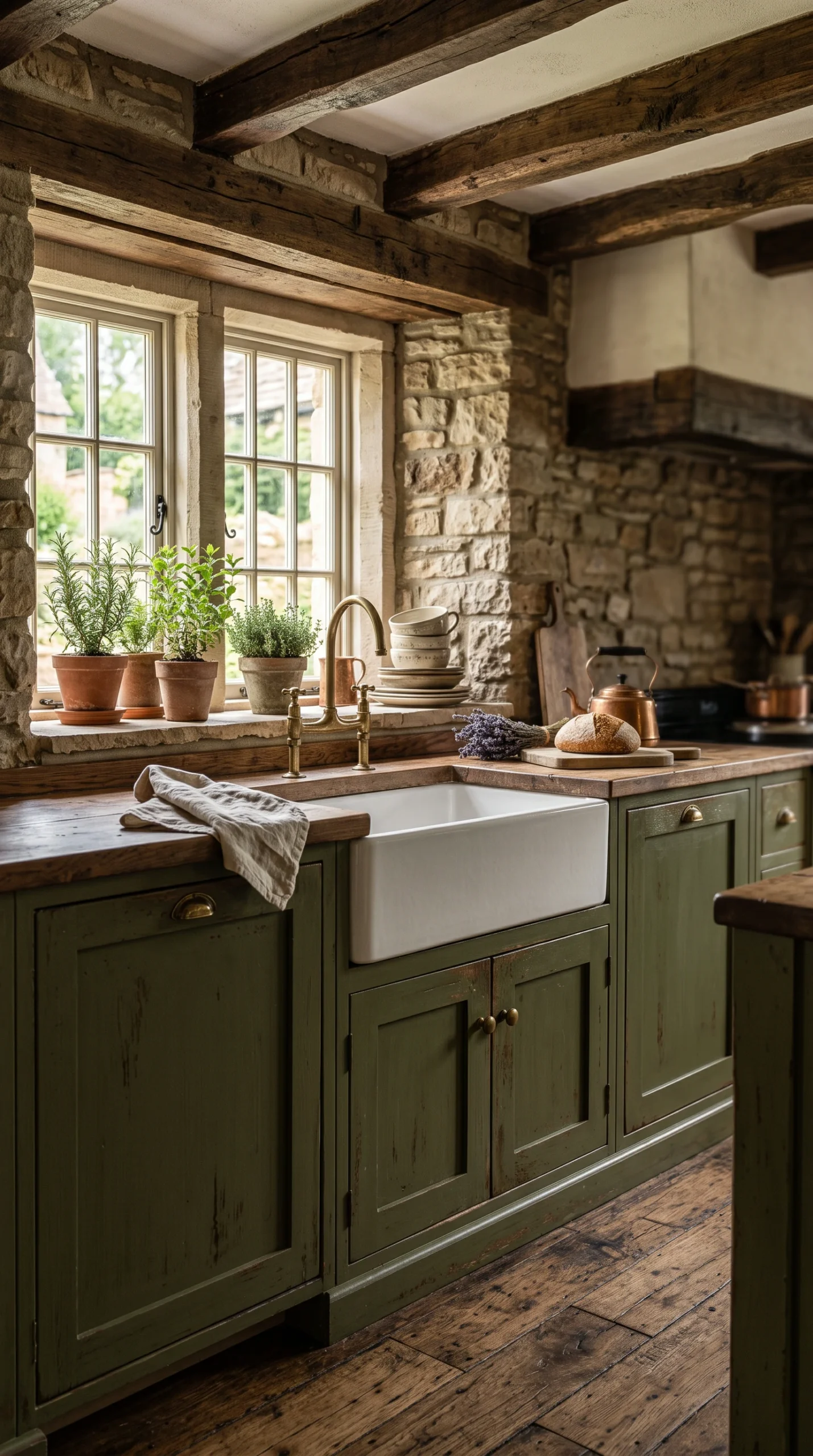
Avoid bright, synthetic-looking emeralds or mints. Authentic farmhouse design relies on colors found in nature. Opt for muddy, yellow-based olive greens, soft, dusty sages, or historic, muted moss greens.
The white fireclay or cast-iron apron-front (farmhouse) sink is the undisputed centerpiece of this aesthetic. Its chunky, historic presence contrasts beautifully with the green cabinetry.
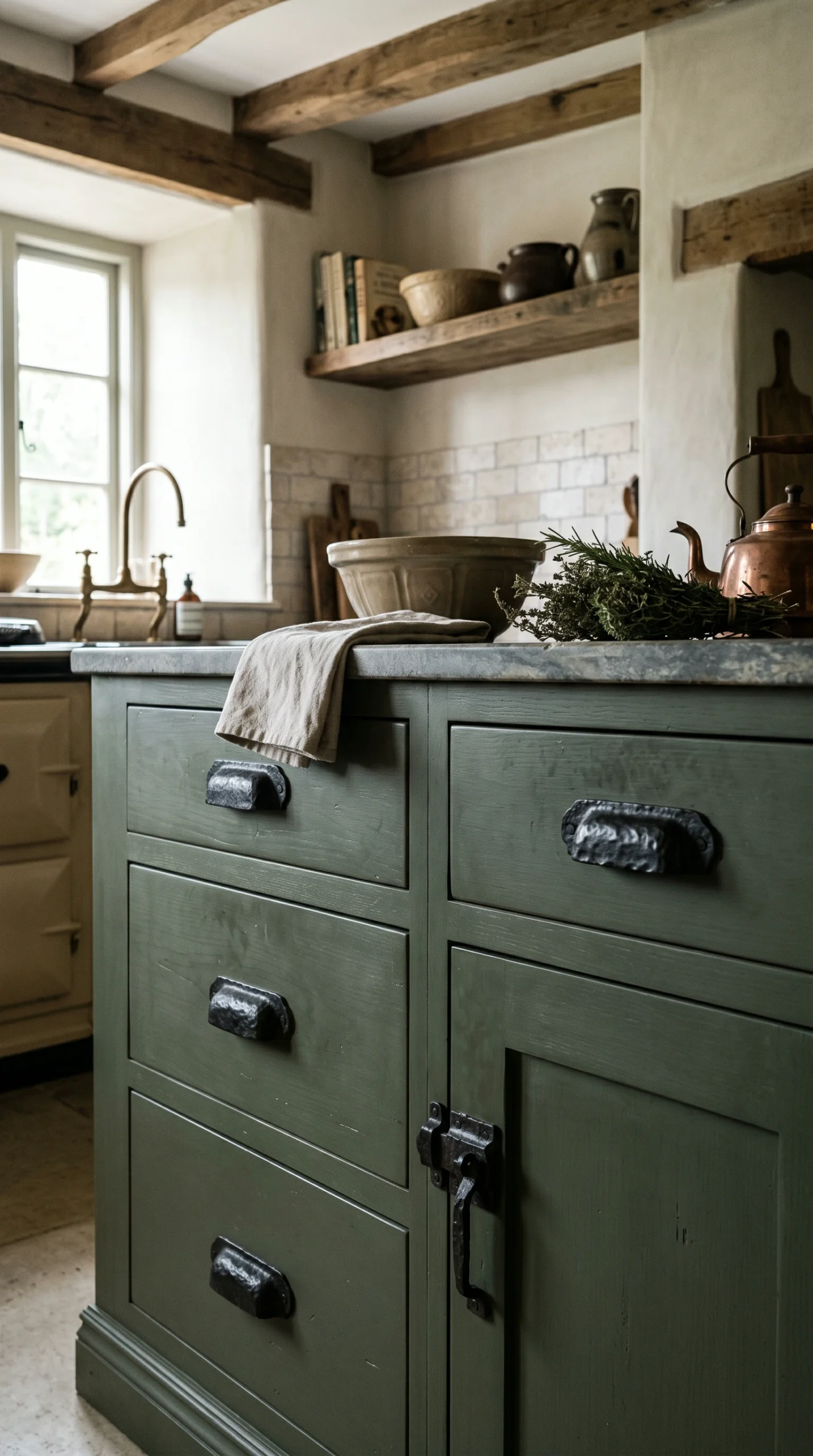
Hardware dictates the style. Avoid sleek, modern bar pulls. Instead, use traditional 'cup pulls' (half-moon shape) on the drawers and simple round knobs on the doors in dark wrought iron or antique brass.
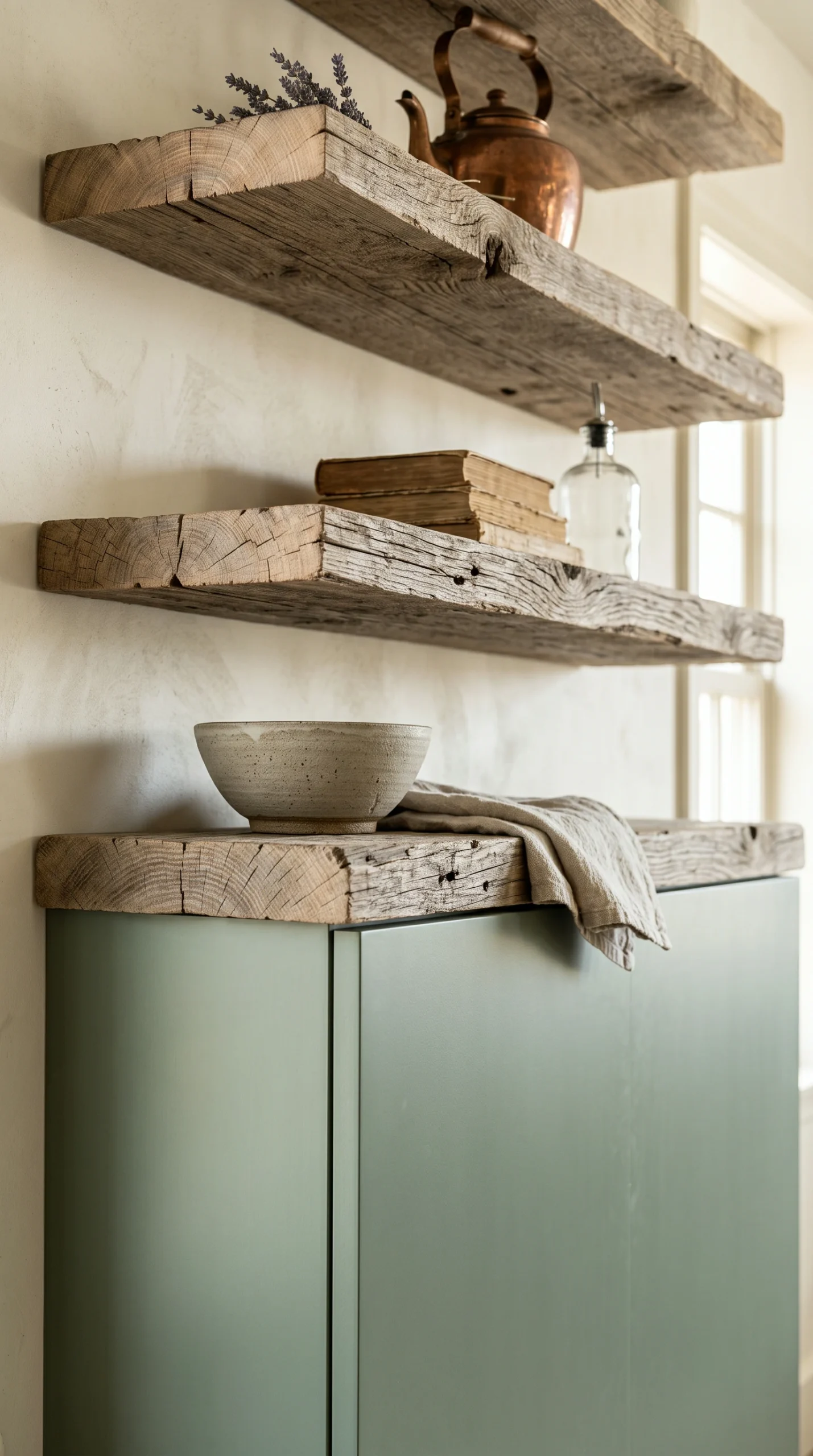
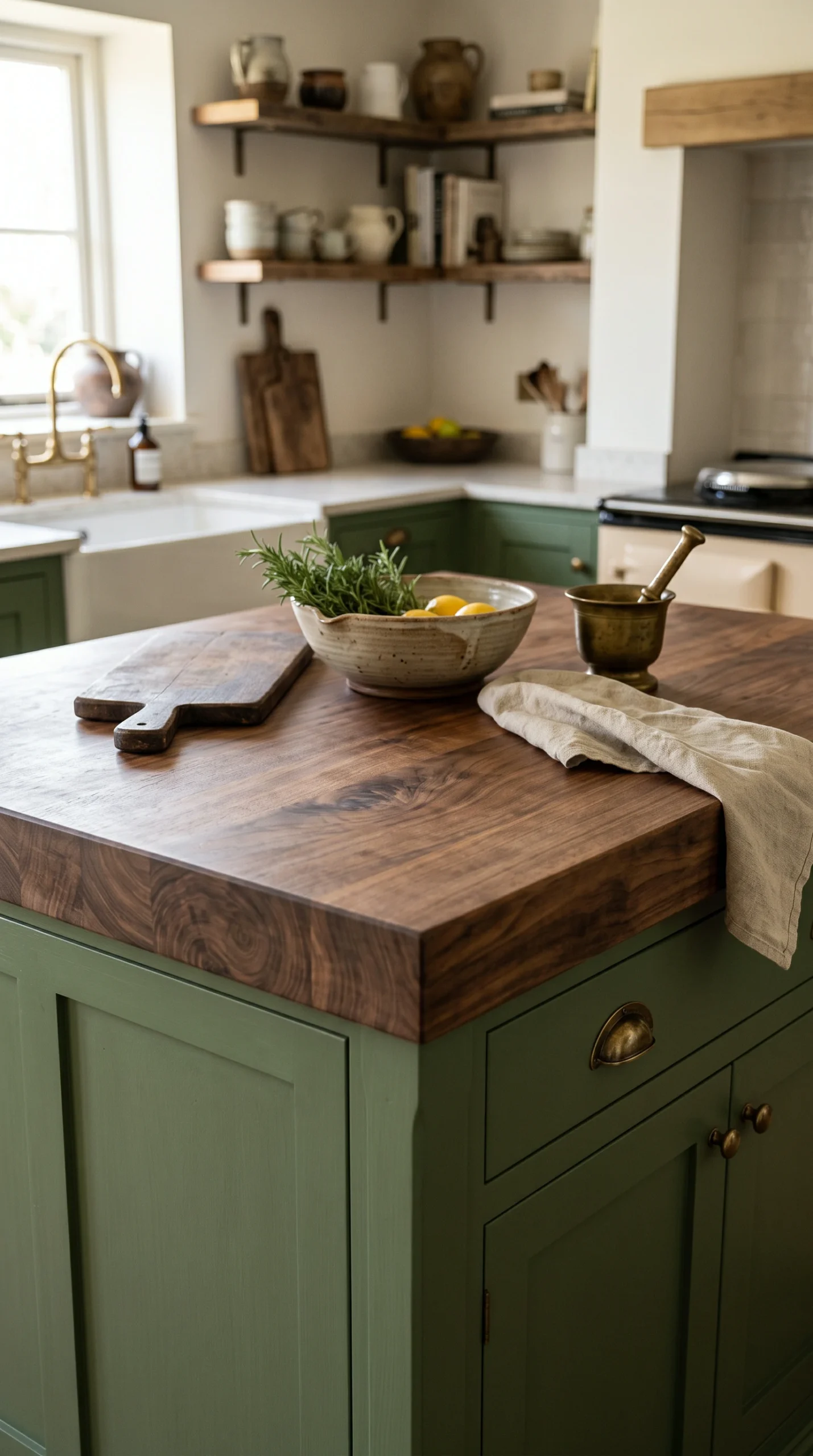
Add massive doses of rustic texture. Use thick, rough-sawn reclaimed wood for open floating shelves, a butcher block island top, or exposed structural ceiling beams.
Bring texture to the walls. Installing vertical white beadboard or horizontal shiplap as a backsplash or on the walls provides a classic, architectural country detail that pairs perfectly with green paint.
Farmhouse kitchens are working kitchens. Don't hide everything away. Display a collection of copper pots on a hanging rack, stack heavy ironstone plates on open shelves, and leave a rustic cutting board on the counter.
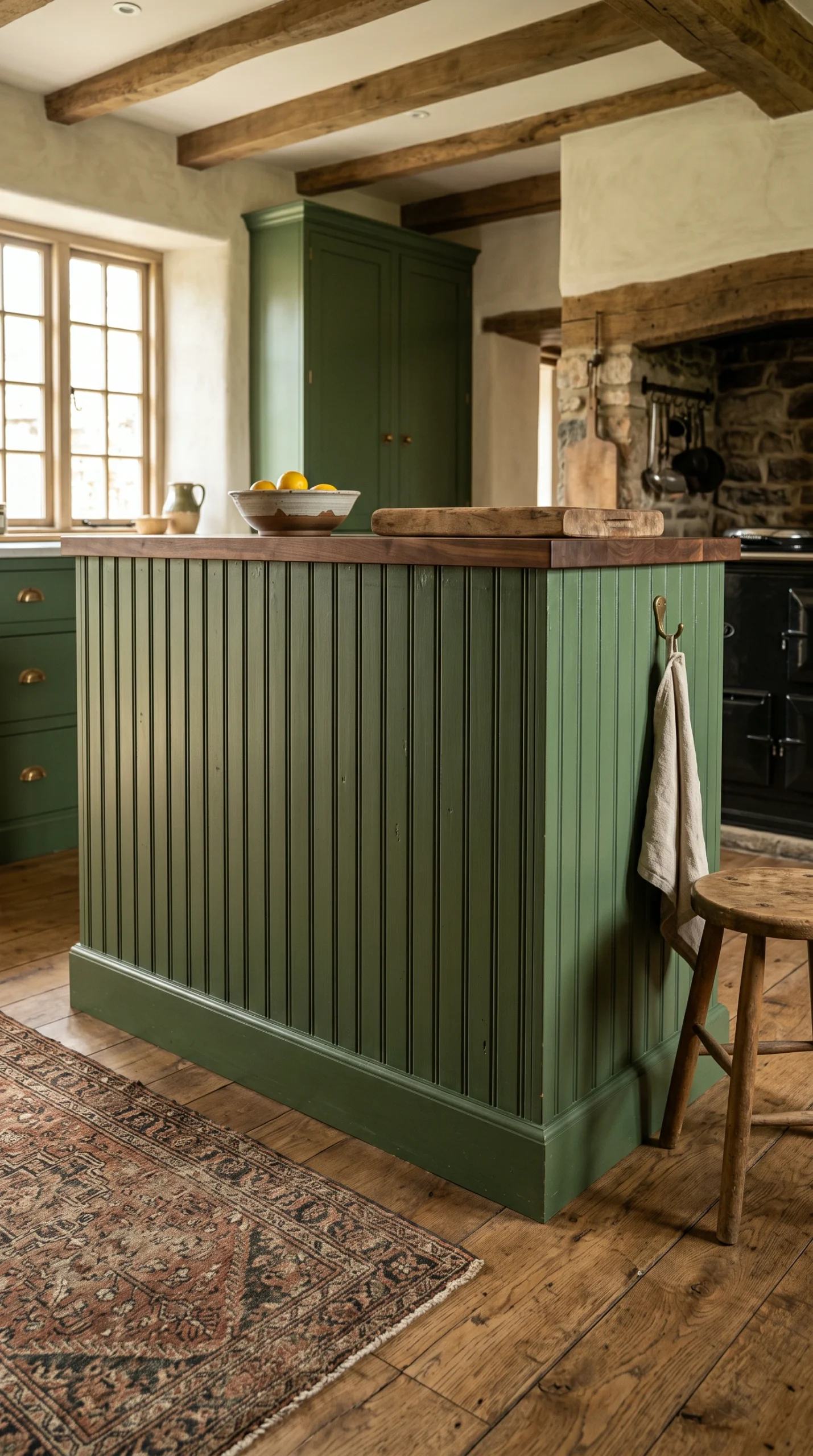
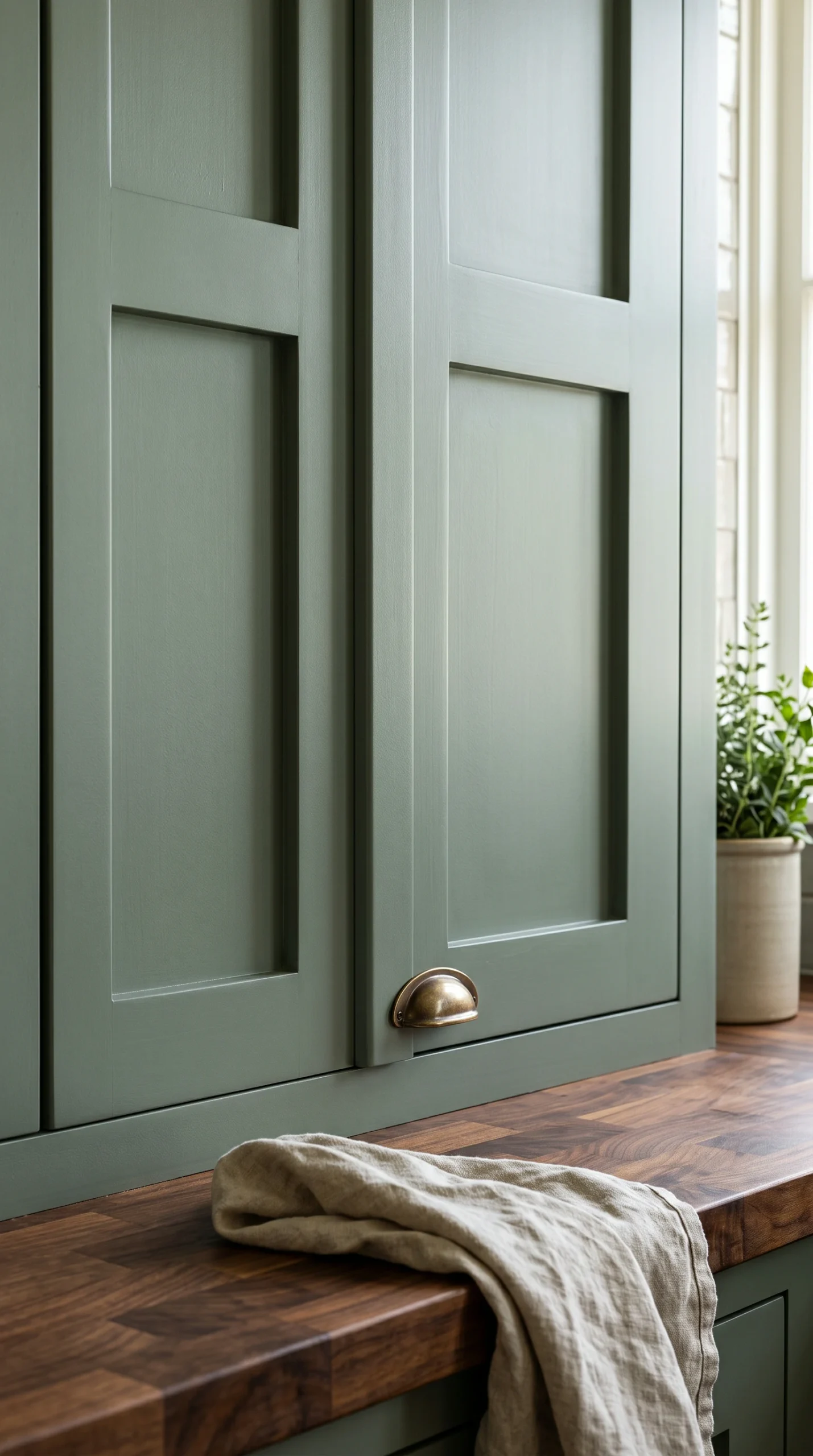
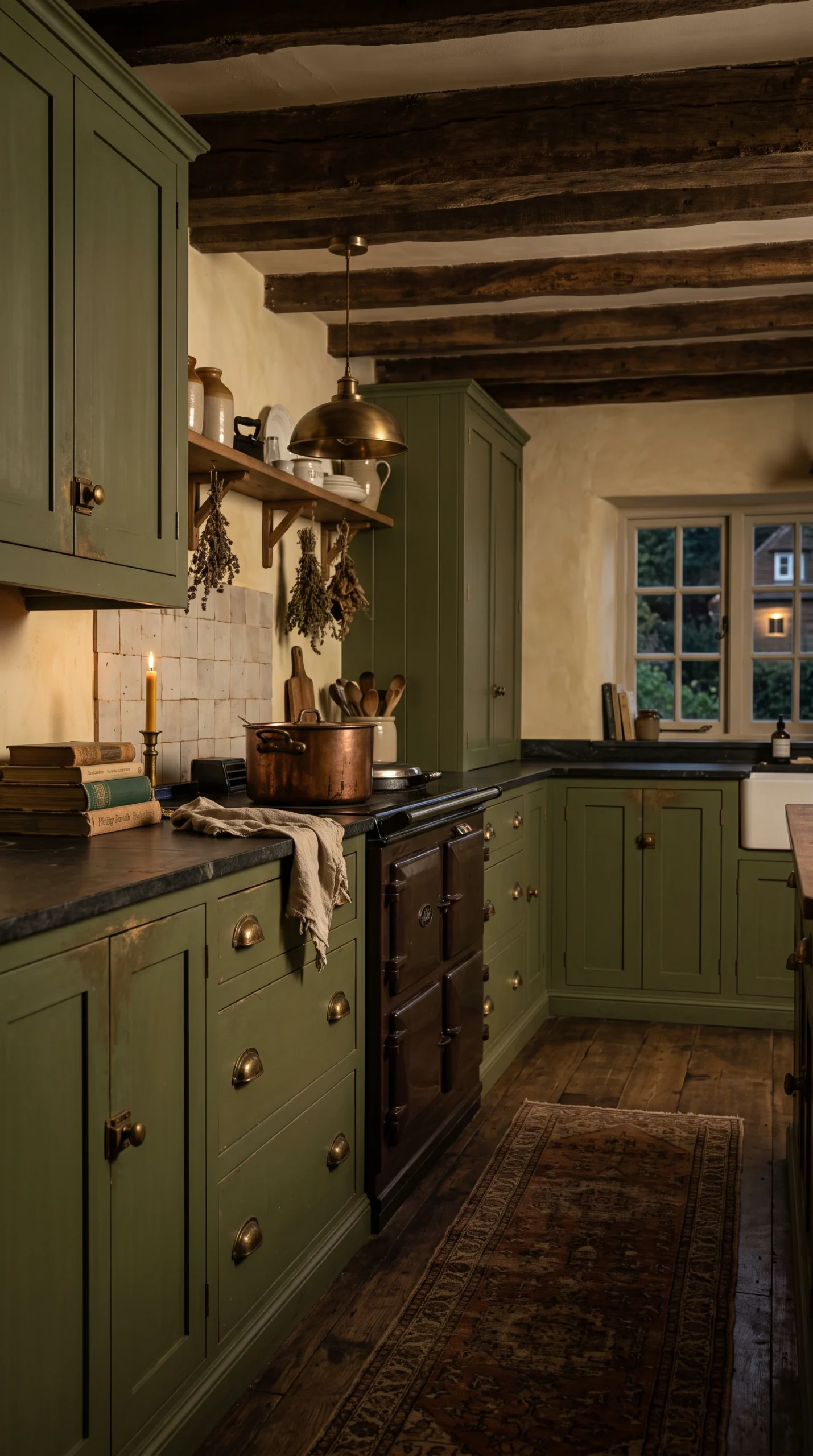
The absolute foundation of successful farmhouse green kitchen cabinets ideas lies in selecting the correct shade of paint. Bright, saturated, or jewel-toned greens (like emerald or vibrant lime) look too modern and synthetic for this aesthetic. Authentic farmhouse design demands colors that feel historically accurate and heavily influenced by the natural landscape outside the window. Interior designers favor ‘muddy’ or muted greens. A warm, yellow-based olive green, a very soft, dusty gray-sage, or a classic, historic moss green are perfect choices. These earthy tones look as though they could have been mixed from natural pigments a century ago, providing an immediate sense of grounded, unpretentious history to the cabinetry.
No single element defines this style more effectively than the sink. When executing farmhouse green kitchen cabinets ideas, incorporating a classic apron-front (or farmhouse) sink is nearly mandatory. These sinks, typically made of heavy white fireclay or enameled cast iron, feature a deep, exposed front basin that breaks up the continuous line of the lower cabinets. The stark, chunky white porcelain of the sink provides a breathtaking, highly textured contrast against the muted, earthy green of the surrounding base cabinets. This combination is visually iconic, instantly communicating a sense of hardworking, nostalgic country charm and providing an incredibly durable, functional workspace.
Cabinet hardware is the jewelry of the kitchen, and it must support the rustic narrative. Sleek, polished chrome bar pulls will instantly ruin a farmhouse vibe. Traditional farmhouse green kitchen cabinets ideas rely heavily on classic, historically appropriate hardware shapes. The ‘cup pull’ (a solid, half-moon shaped pull) used exclusively on drawers, paired with simple, round mushroom knobs on the doors, is the definitive farmhouse combination. For finishes, dark, matte wrought iron or oil-rubbed bronze provides a beautiful, grounded contrast. Alternatively, unlacquered brass, which tarnishes and ages naturally, adds a layer of authentic, rustic elegance that pairs perfectly with earthy green paint.
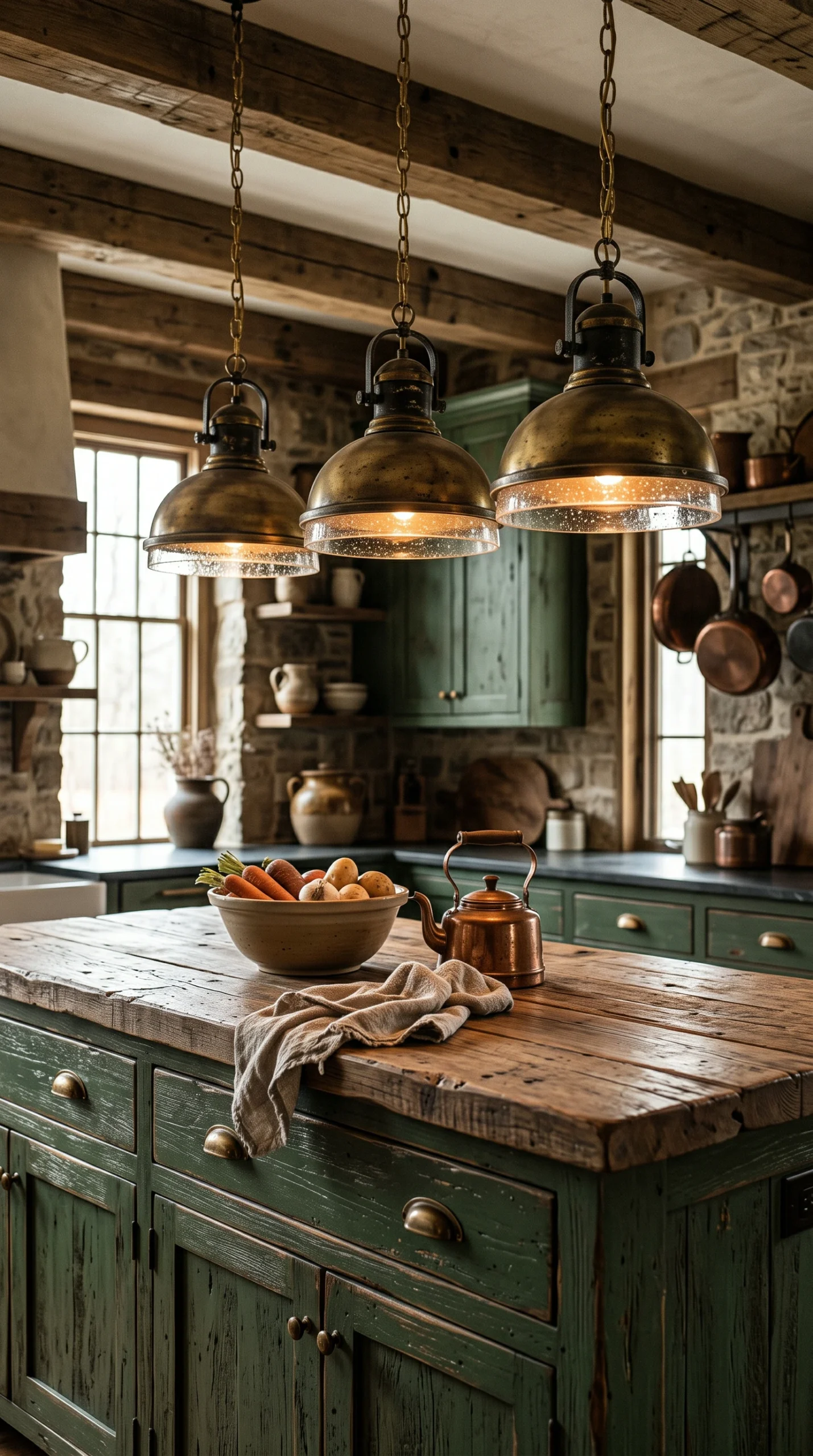
Farmhouse style thrives on texture and the beauty of imperfection. Smooth, perfectly painted green cabinets require the rough friction of aged materials to feel authentic. Incorporating substantial wood elements is a core strategy in farmhouse green kitchen cabinets ideas. Using thick, rough-sawn reclaimed barnwood to create robust floating shelves, or utilizing it as a chunky butcher-block top for the kitchen island, introduces essential, tactile warmth. If the architecture allows, exposing or installing heavy, rustic wooden ceiling beams draws the eye upward, beautifully framing the green cabinetry and solidifying the historic, gathered-over-time atmosphere of the room.
Wall treatments play a significant role in establishing a country aesthetic. Smooth, painted drywall can sometimes feel too modern. To add subtle, historic architectural interest, farmhouse green kitchen cabinets ideas frequently incorporate paneled wood wall treatments. Installing classic vertical white beadboard or horizontal shiplap is a highly effective design choice. Using crisp white beadboard as a backsplash behind the green cabinets, or wrapping the kitchen island or an empty wall in shiplap, introduces a layer of traditional, cottage-like texture. This crisp white paneling contrasts beautifully with the earthy green, keeping the kitchen feeling bright, clean, and unmistakably rustic.
Modern kitchens strive to hide every appliance and utensil; farmhouse kitchens celebrate them. A core tenet of farmhouse green kitchen cabinets ideas is the open display of beautiful, functional items. This ‘working kitchen’ aesthetic makes the space feel incredibly cozy and lived-in. Utilizing open wood shelves to display stacks of heavy white ironstone plates, vintage mixing bowls, or clear glass jars of baking ingredients adds immense character. Hanging a sturdy iron rack above the green island to display a collection of warm, gleaming copper pots provides both practical storage and a stunning, authentic visual focal point that completes the rustic, welcoming design.