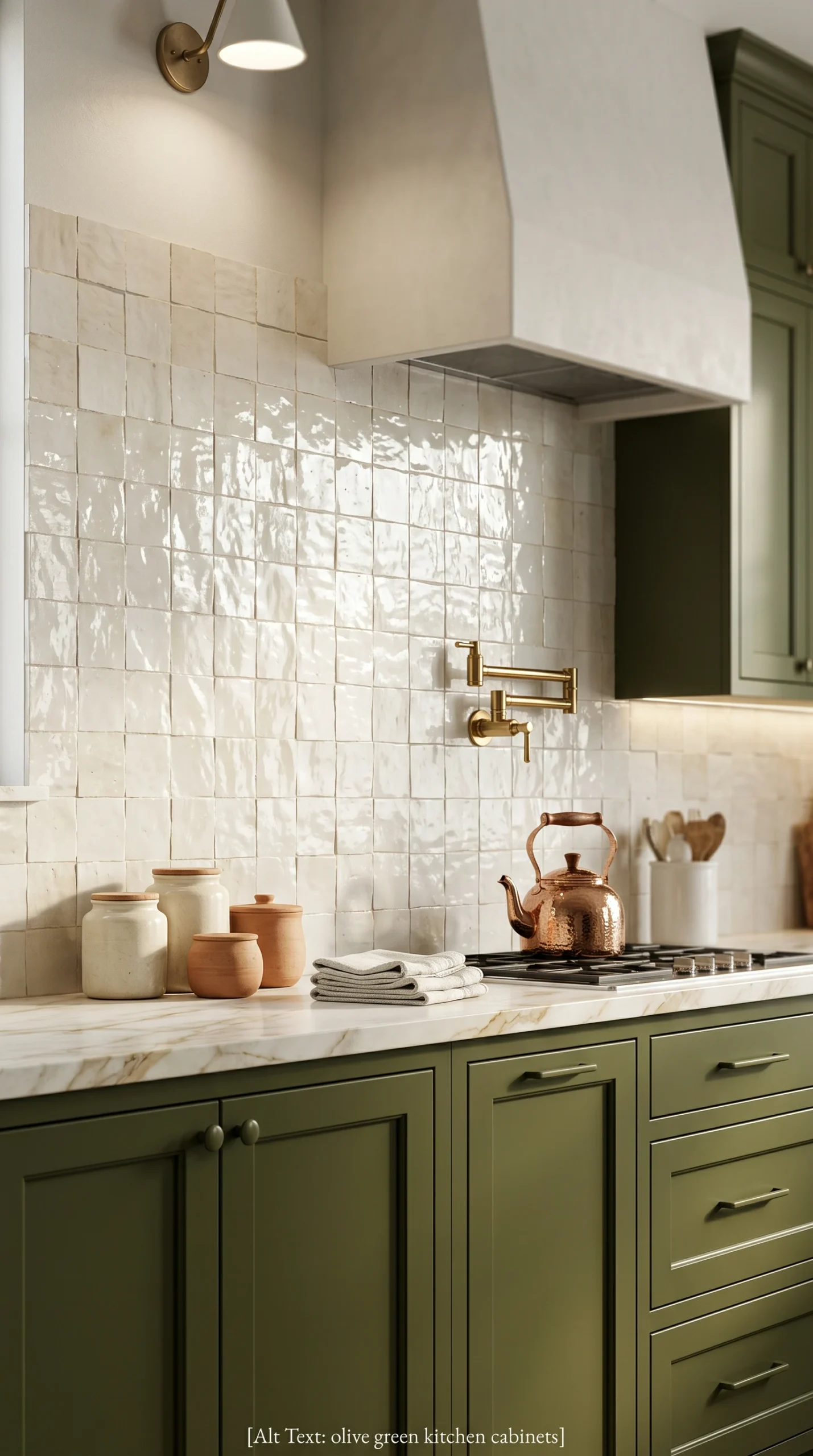
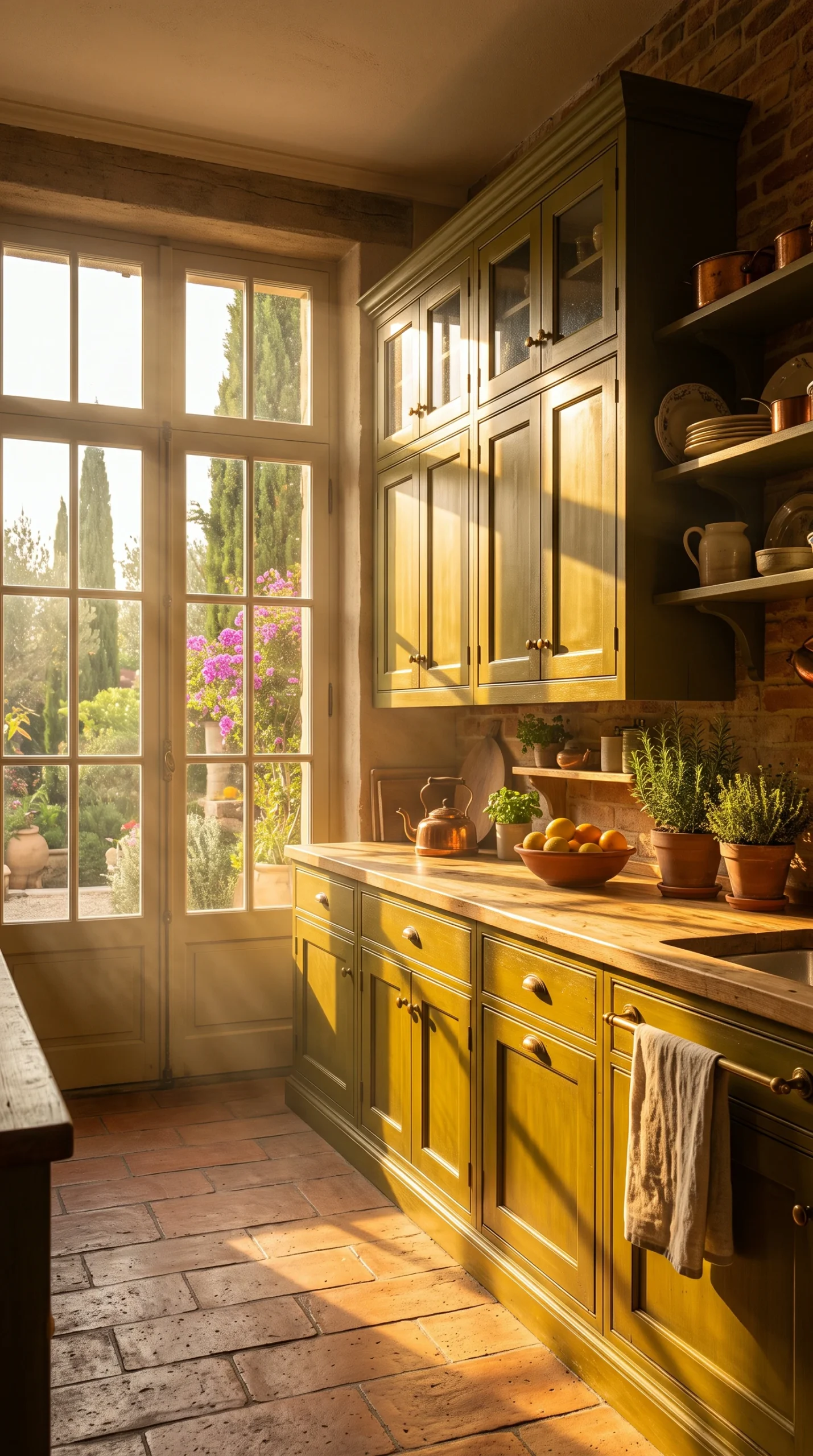
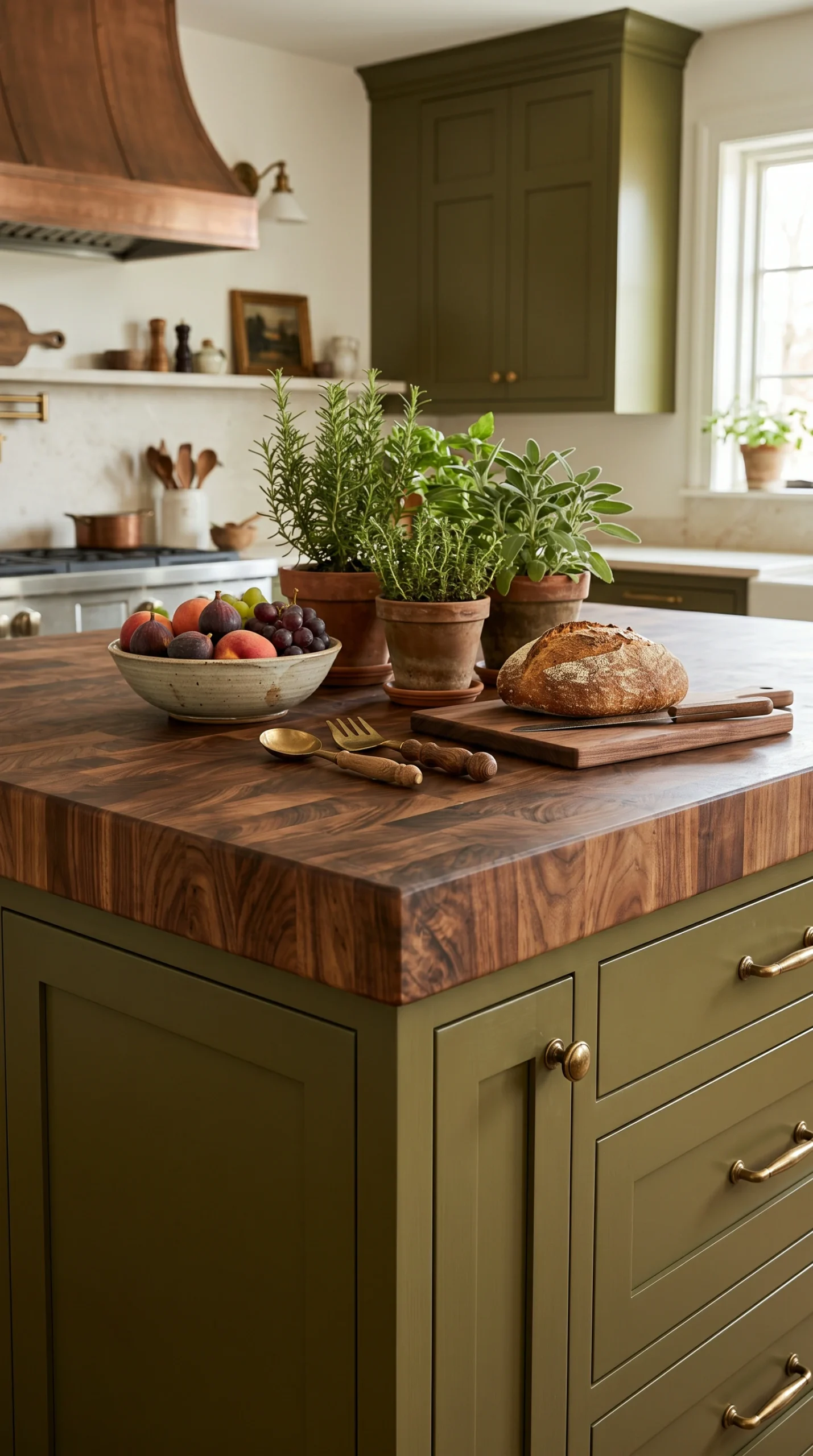
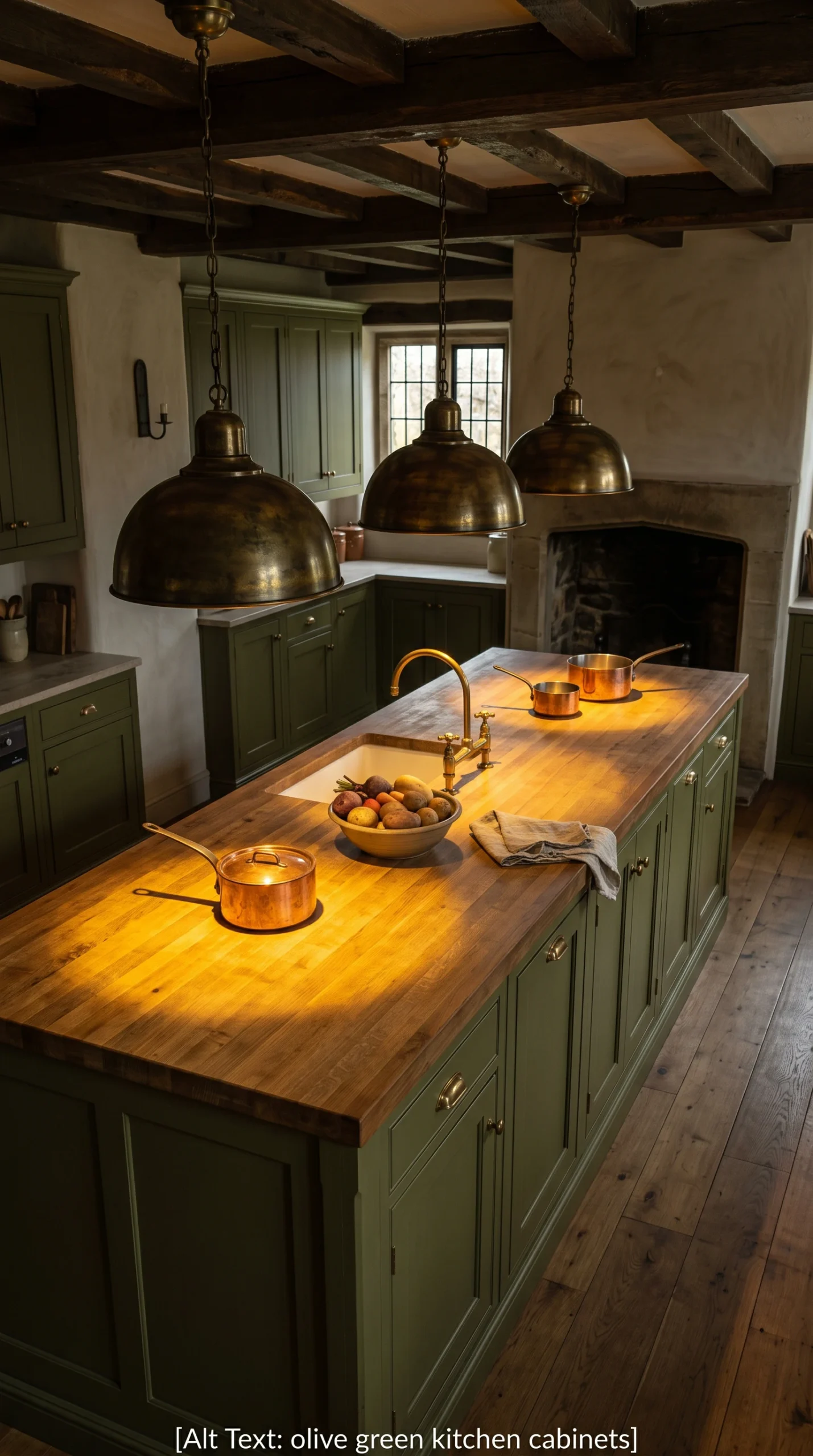
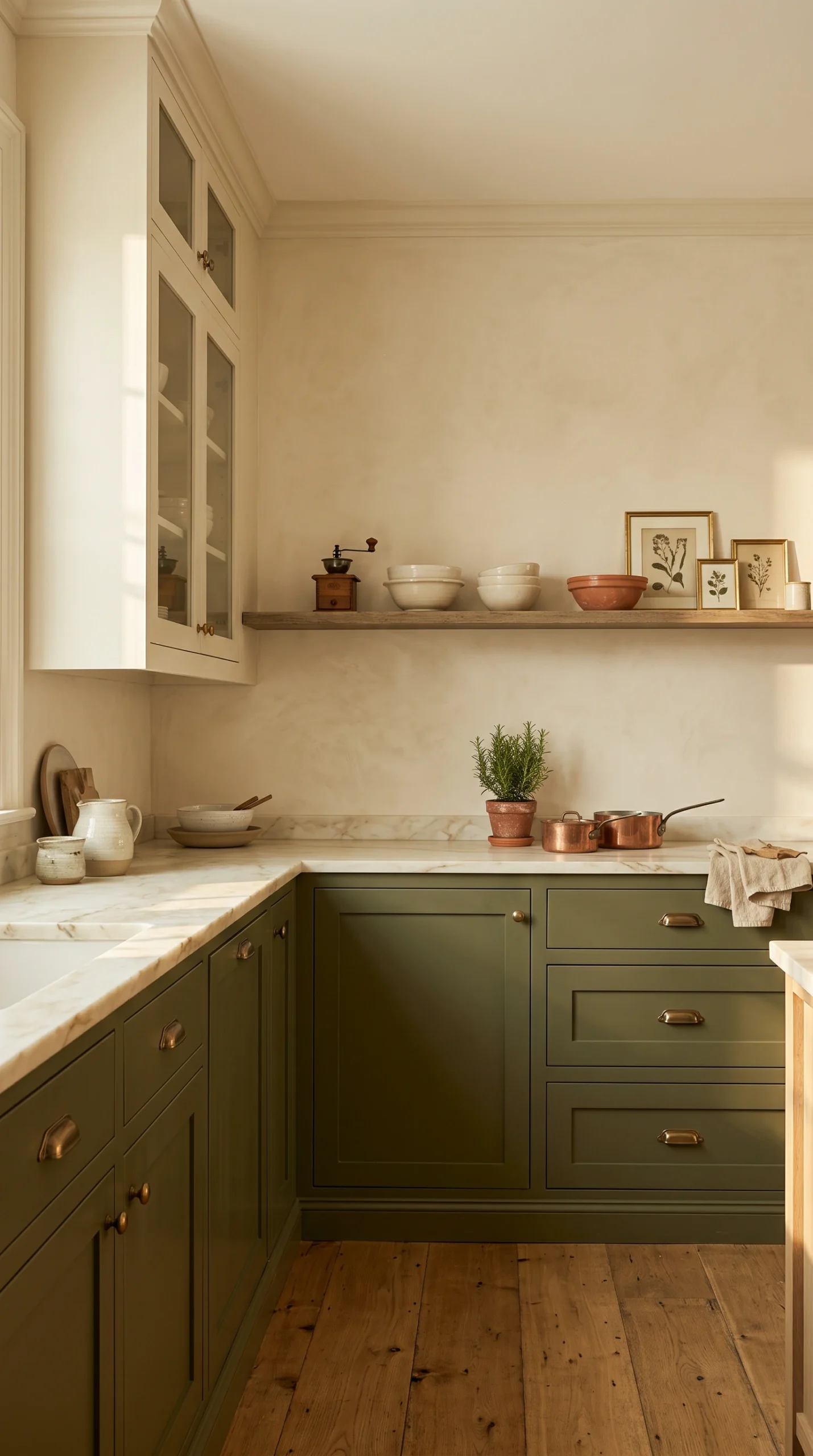
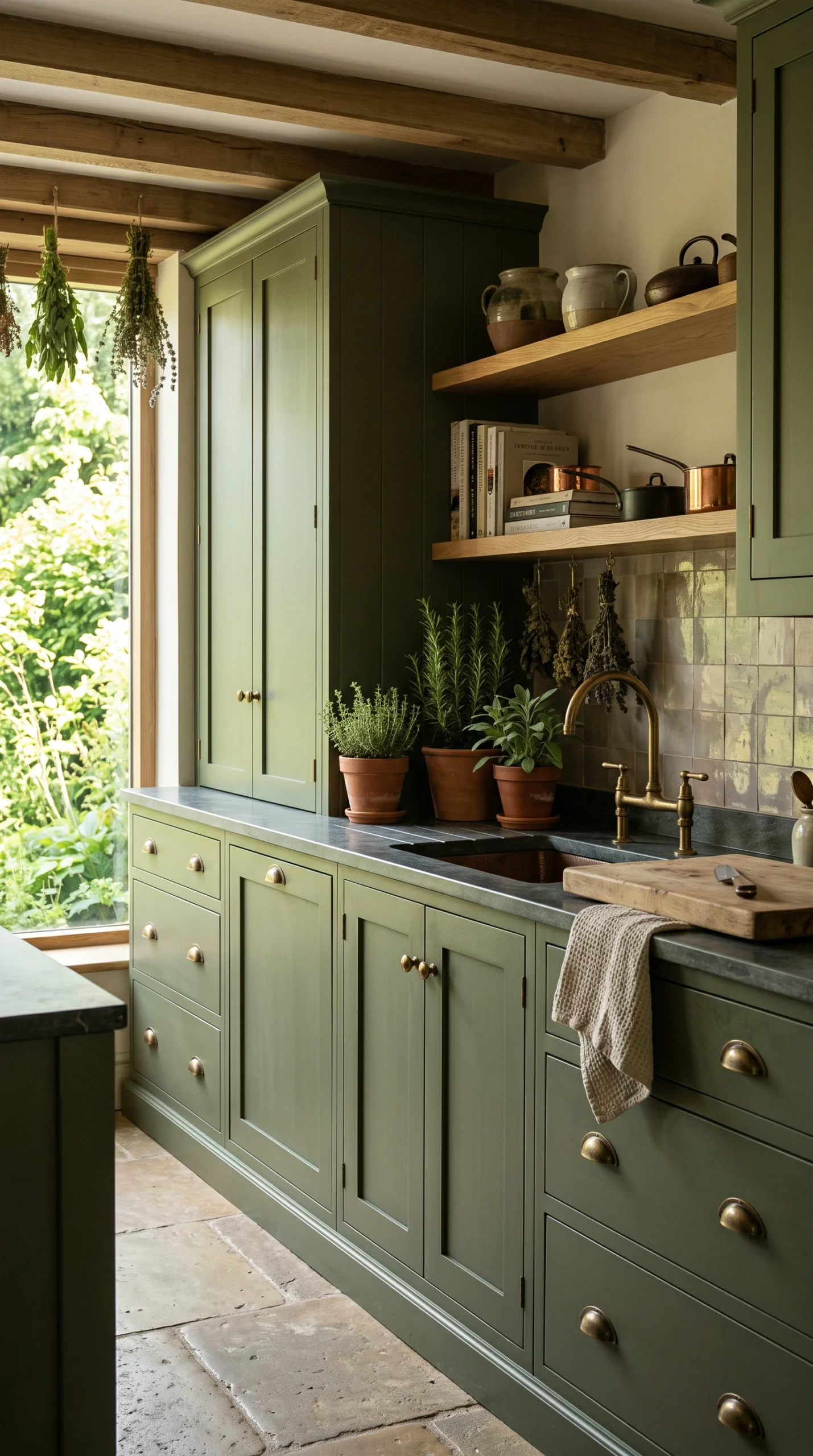
Olive green has strong yellow/brown undertones. Lean into this warmth by pairing it with creamy off-whites (rather than stark, blue-toned whites) for the walls and counters to keep the room feeling cozy.
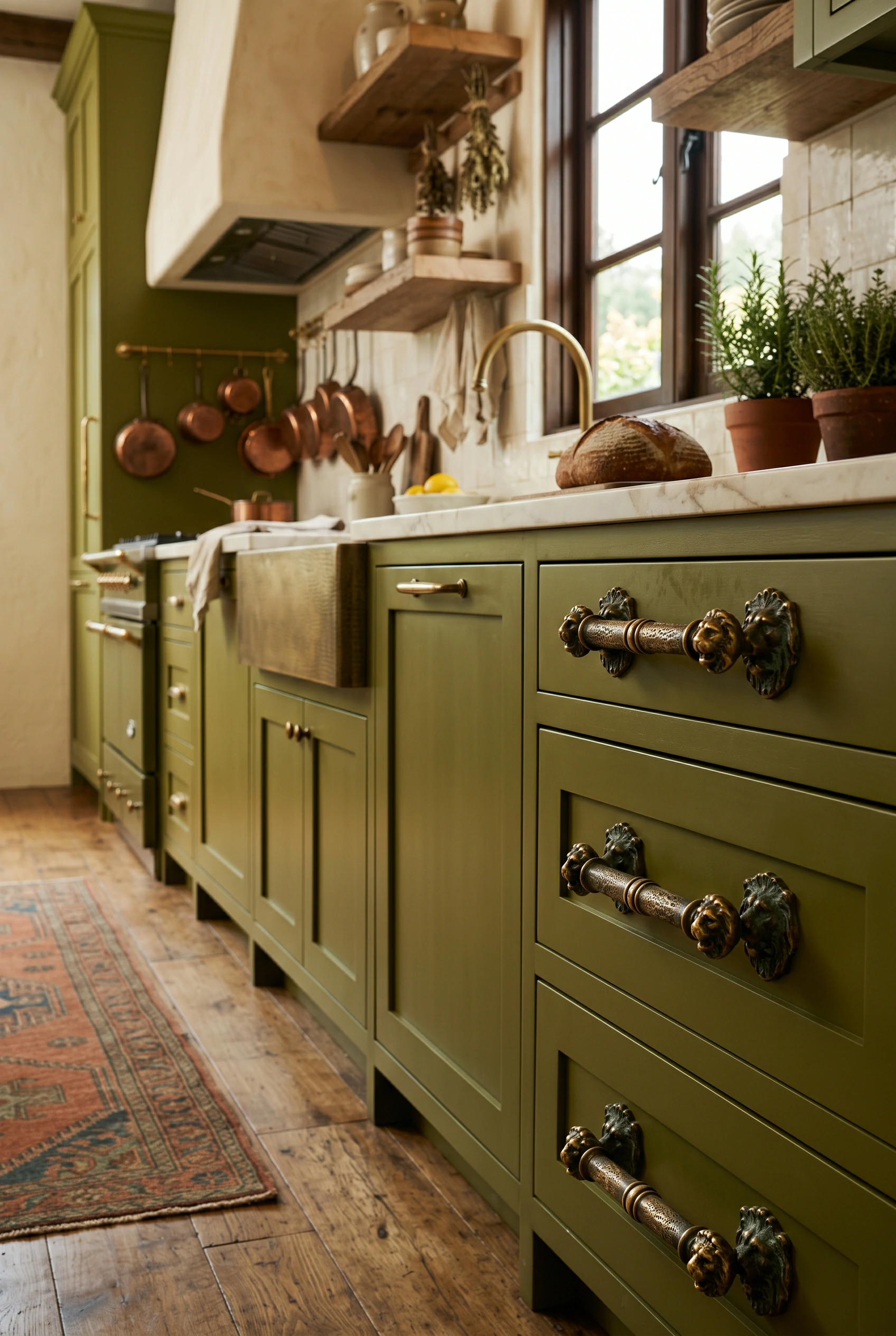
The absolute best hardware pairing for olive green is 'living' unlacquered brass. As the brass ages and tarnishes, it creates a beautiful, rustic patina that perfectly complements the earthy green.
Avoid highly polished, reflective, modern quartz. Instead, use honed (matte) natural stones like marble, soapstone, or limestone to maintain the organic, tactile feel of the space.
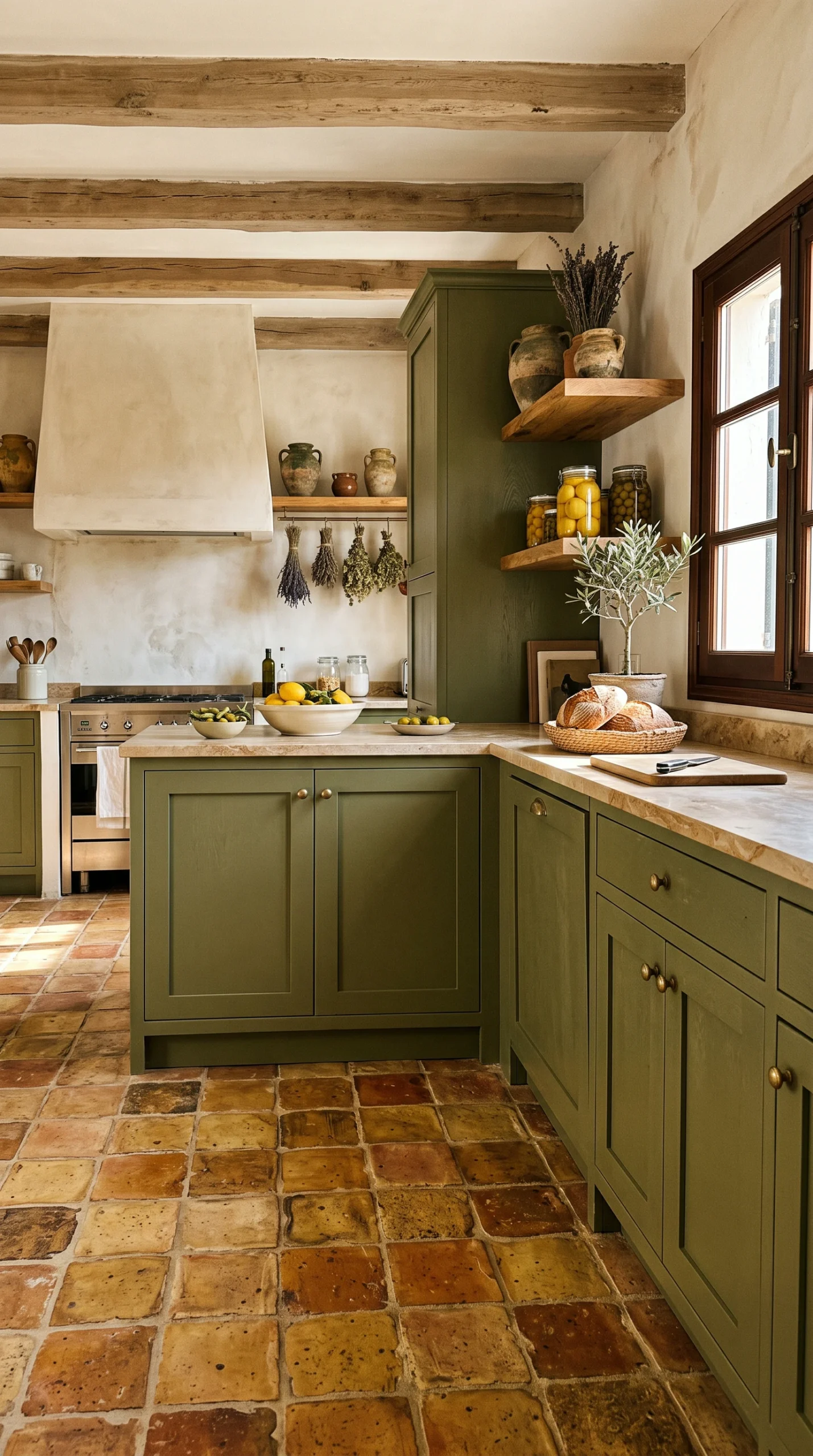
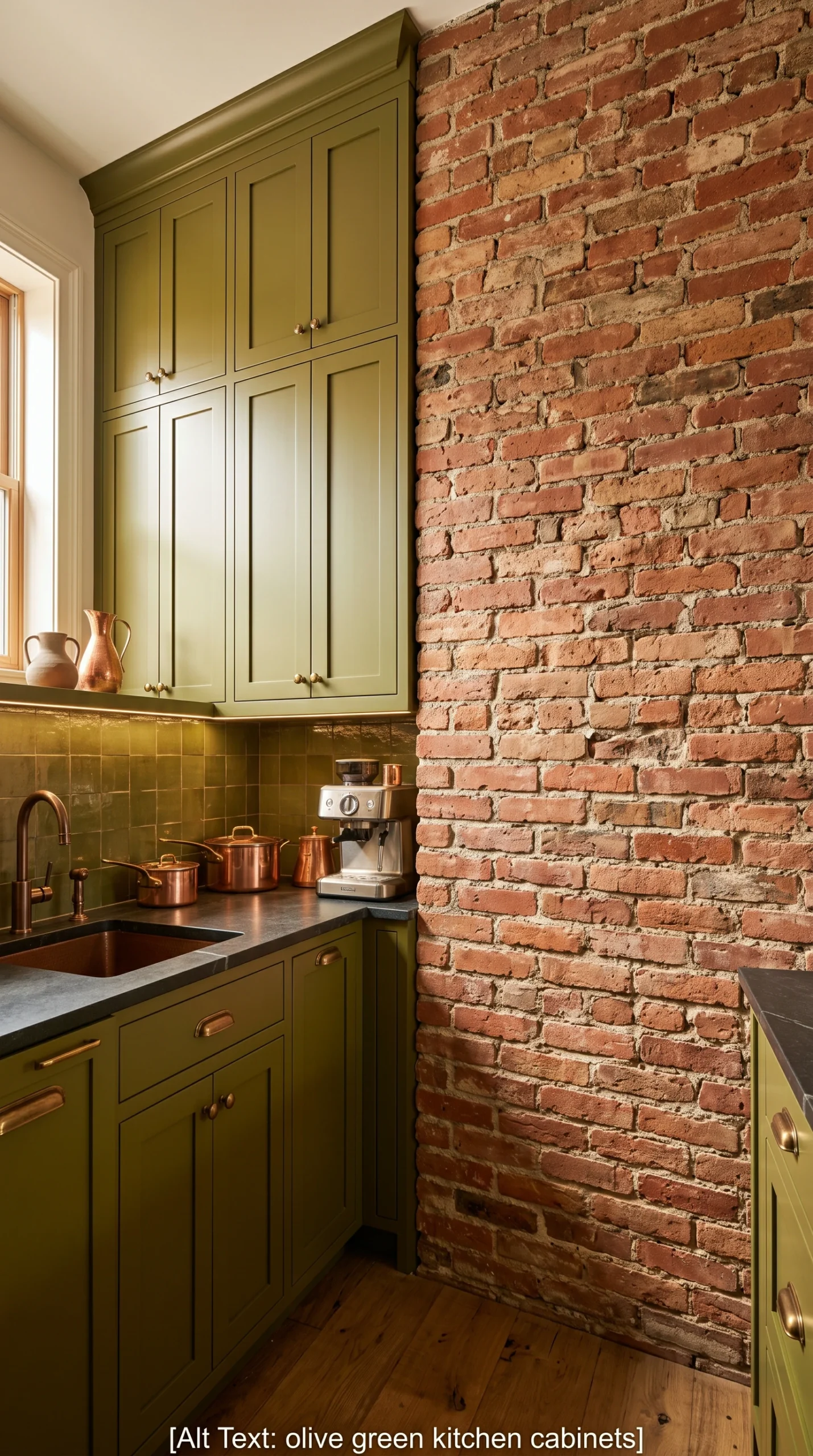
Olive green pairs beautifully with other natural textures. Consider a terracotta tile floor, a rustic brick backsplash, or woven rattan pendant lights to enhance the Mediterranean/earthy vibe.
Bring in wood tones to add necessary visual friction. A medium-toned oak floor or a reclaimed wood kitchen island prevents the olive cabinets from feeling like a flat block of color.
If you are using traditional cabinetry with molding, adding a subtle, dark glaze over the olive paint can highlight the architectural details and make the cabinets look like aged, antique furniture.
The distinguishing characteristic of olive green, and the reason it is so highly sought after in interior design, is its inherent warmth. Unlike sage green (which leans toward cool, silvery gray) or emerald green (which leans toward cool, vibrant blue), olive green is heavily grounded in yellow and brown. This makes olive green kitchen cabinets ideas exceptionally successful at creating environments that feel cozy, welcoming, and deeply rooted in nature. This earthy quality prevents the kitchen from ever feeling sterile or overly formal. Instead, an olive green kitchen often feels like a warm, rustic Mediterranean retreat or a comfortable, historic country home, regardless of its actual location.
Because of its warm yellow undertones, pairing olive green with the correct shade of white is crucial. Stark, cool, blue-toned whites can clash harshly with olive, making the green look dirty or overly yellow. Successful olive green kitchen cabinets ideas generally utilize creamy off-whites, warm ivories, or soft beiges for the wall color and trim. This same principle applies to countertops. Highly polished, stark white modern quartz can feel too clinical against the rustic olive. Interior designers prefer using natural stones with a ‘honed’ (matte) finish. A honed Carrara marble, a soft beige limestone, or a deeply veined soapstone provides a soft, tactile surface that perfectly complements the organic nature of the cabinetry.
When selecting hardware to accompany olive green kitchen cabinets ideas, one material stands above the rest: unlacquered brass. Unlike polished brass, which has a clear coat to keep it shiny forever, unlacquered brass is a ‘living finish.’ Over time, exposed to the oils from hands and the air in the kitchen, it develops a dull, beautiful, slightly darkened patina. This natural aging process creates a profoundly historic, rustic elegance that sings against the warm olive background. The combination of earthy green and aged, tarnished brass is a hallmark of high-end, bespoke kitchen design that aims to look collected and timeless rather than brand new.
To fully realize the potential of an organic aesthetic, olive green kitchen cabinets ideas should be supported by a variety of other earthy textures. Smooth, perfectly painted cabinets require visual friction to be interesting. Introducing a reclaimed wood ceiling beam, installing a warm, heavily textured terracotta tile floor, or using a subtly uneven, handmade Zellige tile for the backsplash adds incredible depth to the design. Woven elements, such as rattan counter stools or a large wicker pendant light over the island, introduce a relaxed, natural texture that enhances the warm, welcoming, and slightly bohemian or rustic feel of the olive green.
Wood is a natural companion to olive green, representing the classic pairing of leaves and branches. However, utilizing the correct wood tone is important for balance. Olive green kitchen cabinets ideas are highly versatile; they pair beautifully with light, natural white oak floors for a fresher, more modern organic look. Conversely, pairing olive cabinets with a dark, rich walnut or mahogany island creates a much moodier, historic, and library-like atmosphere. The key is to ensure the wood has some visible grain and texture, avoiding overly glossy, perfect wood finishes, to maintain the relaxed, natural aesthetic of the space.
The styling of an olive green kitchen should reinforce its connection to nature and comfort. Avoid overly sleek, modern, or brightly colored plastic accessories. Instead, olive green kitchen cabinets ideas thrive on functional, artisanal decor. Display a collection of warm, hand-thrown ceramic bowls, utilize heavy, end-grain wooden cutting boards, and keep fresh herbs (like rosemary or basil) in small terracotta pots on the windowsill. Using vintage, slightly worn rugs (like an overdyed Turkish runner) in warm hues of rust, mustard, or faded navy adds a final layer of soft, comfortable history that completes the welcoming, organic design narrative.