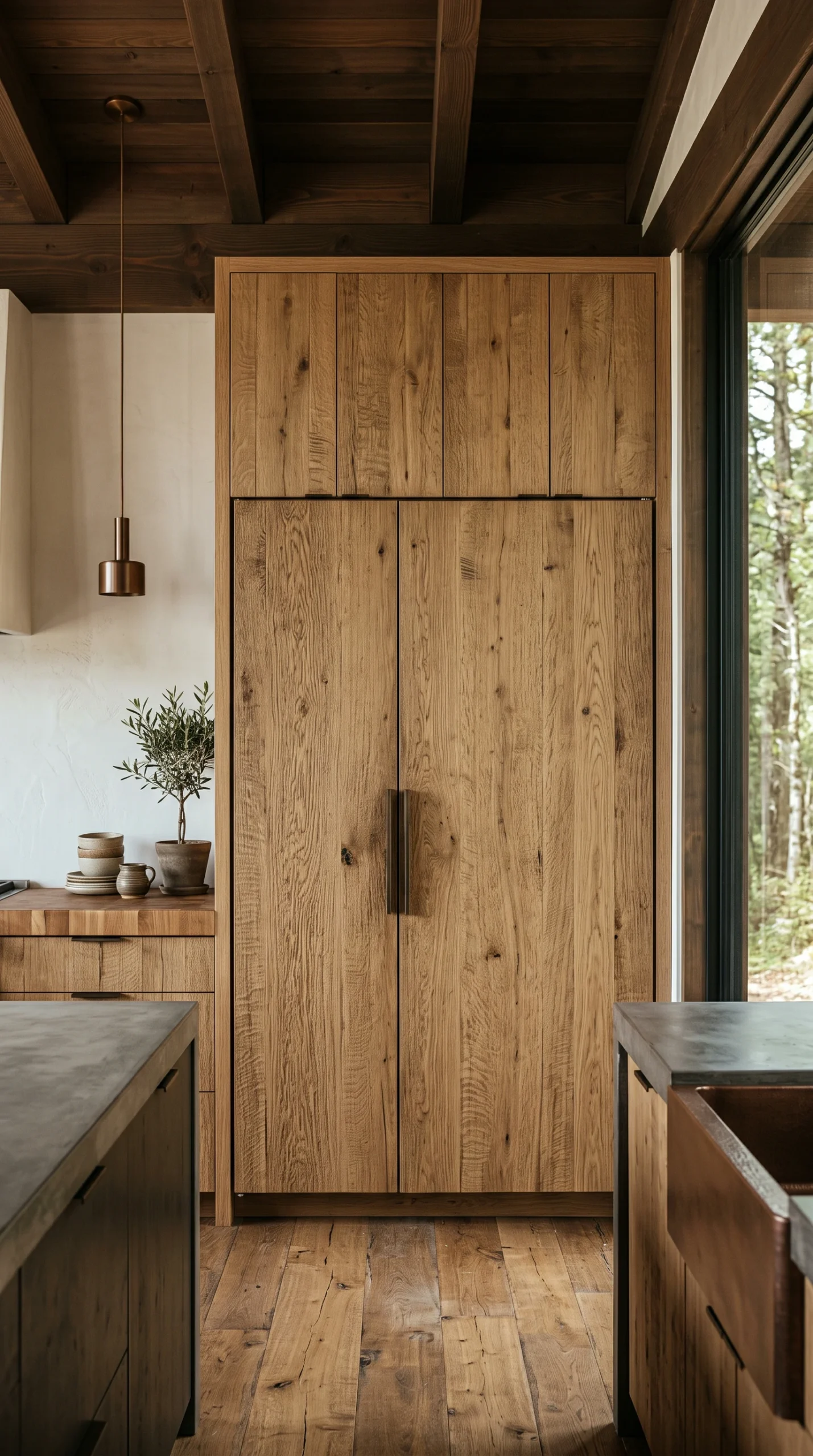
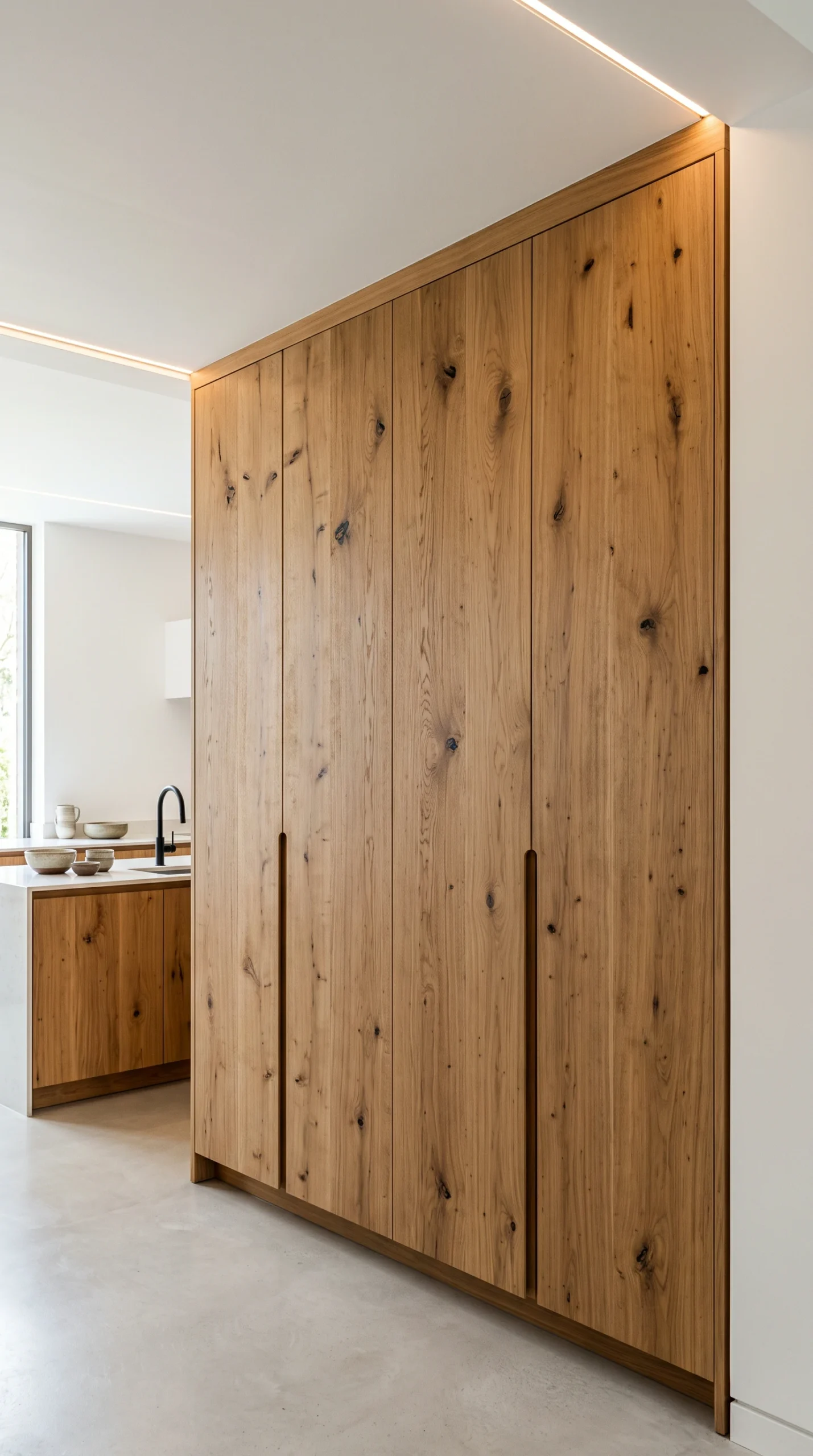
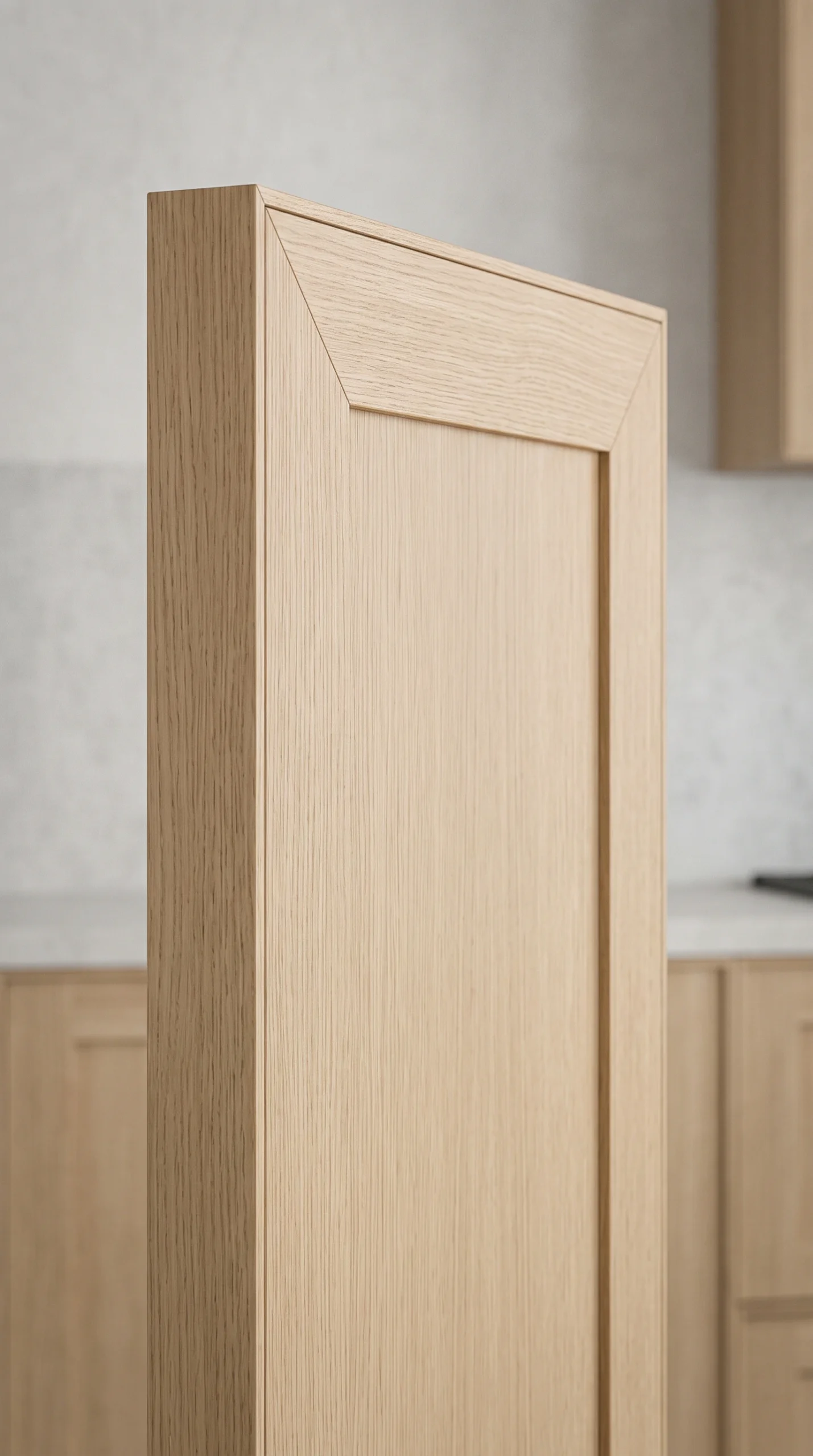
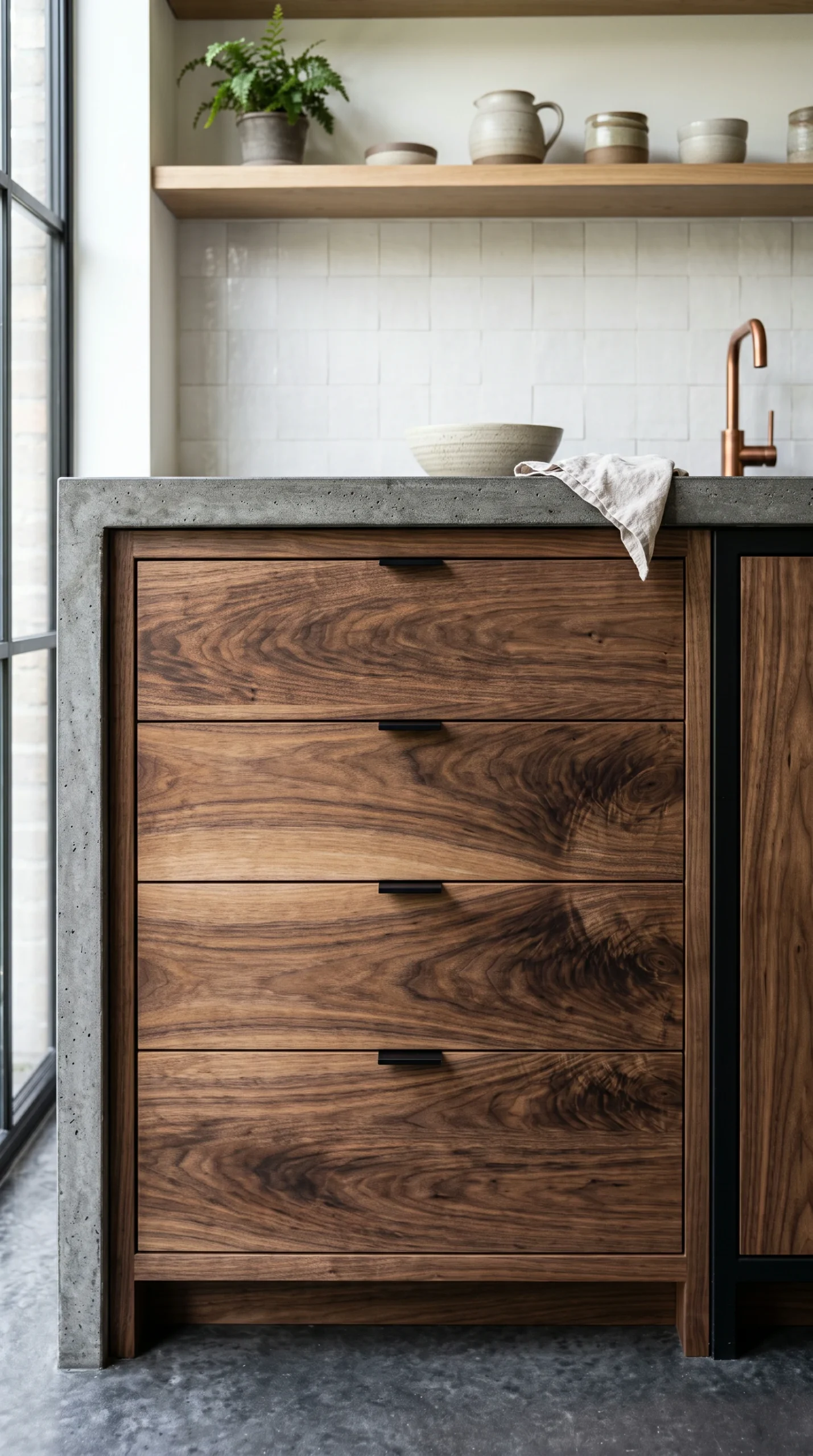
The physical shape of the door must be modern. Use completely flat slab doors to showcase the raw wood grain without traditional trim.
A smooth, sanded finish looks too modern. The cabinetmaker must aggressively wire-brush the wood to deeply raise the tactile grain.
Shiny polyurethane completely destroys rustic warmth. You must seal the wood with a dead-flat, ultra-matte clear coat or natural hardwax oil.
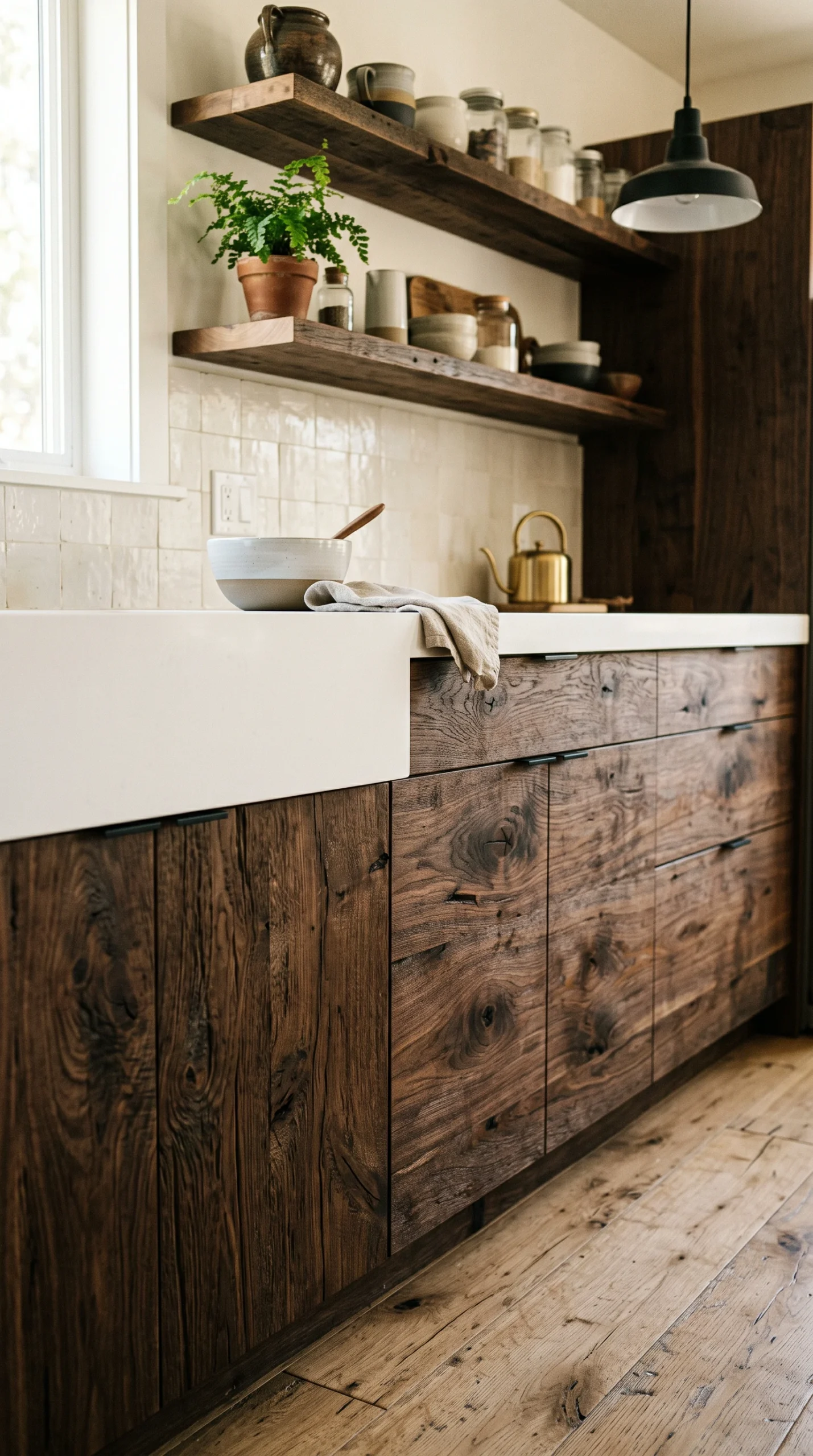
Do not make every cabinet wood. Paint the perimeter cabinets stark matte white or black, and reserve the heavy rustic wood exclusively for the island.
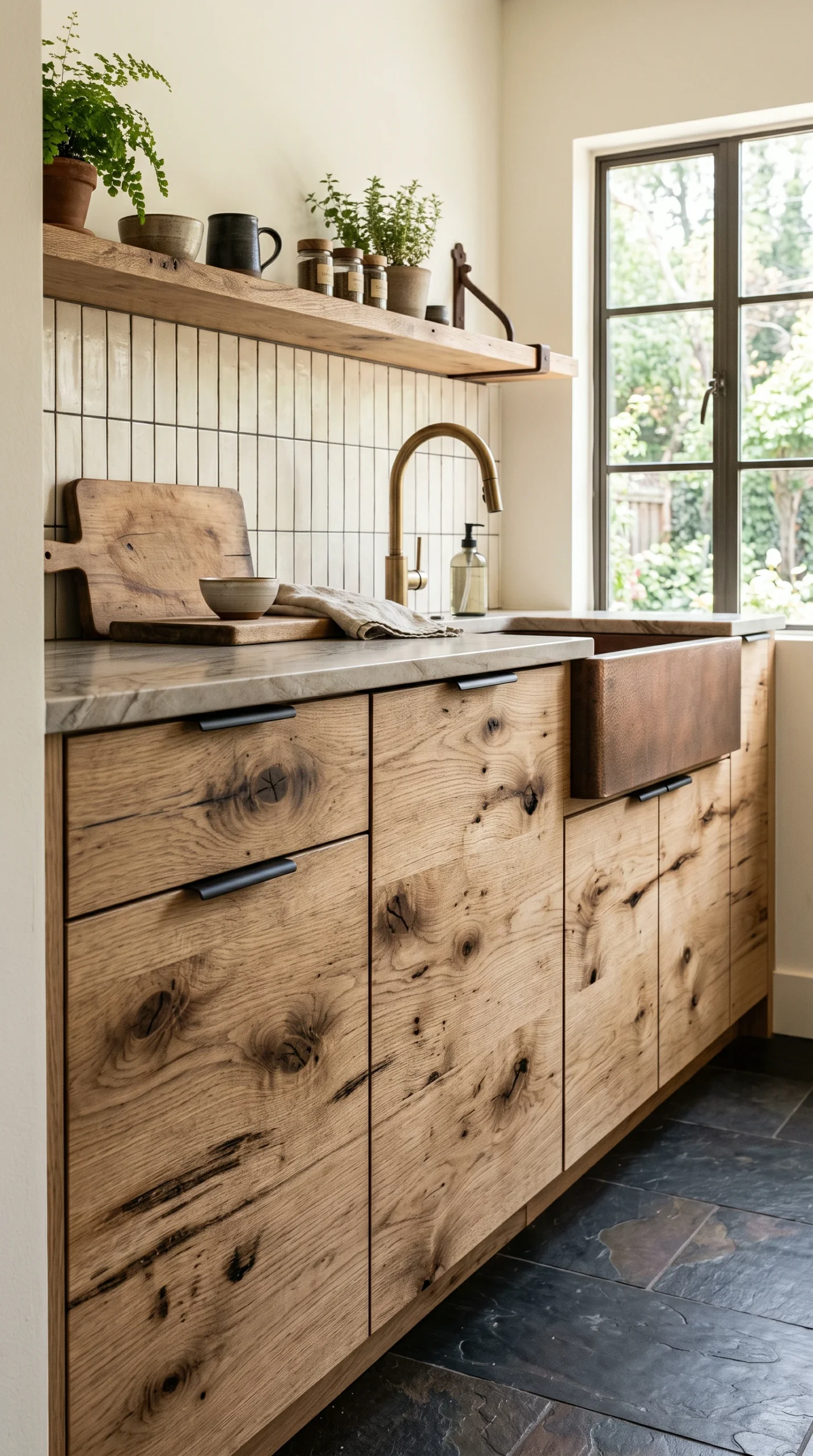
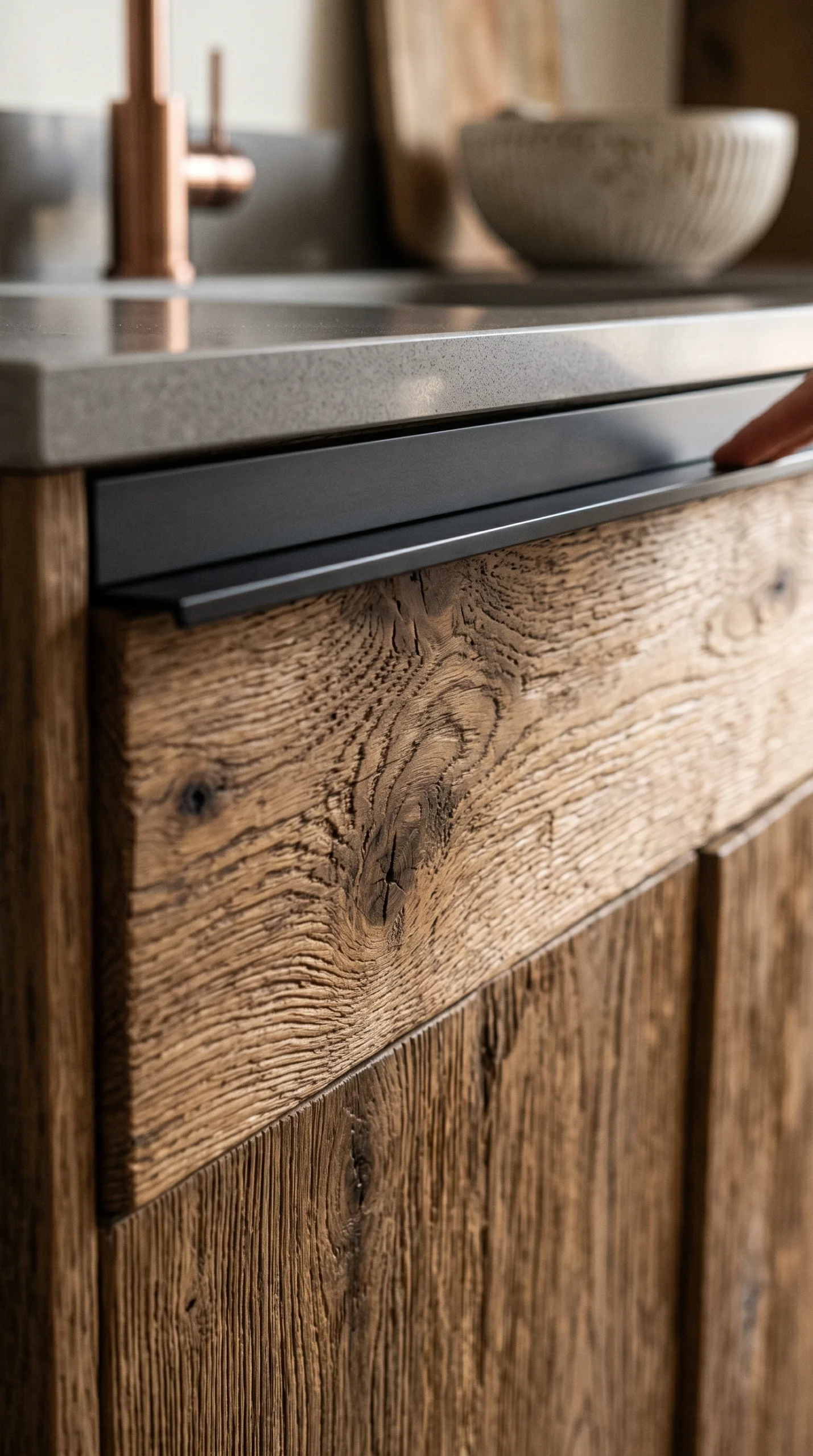
Do not use bulky, ornate wrought iron pulls. Use incredibly thin, razor-sharp matte black edge-pulls to provide modern contrast.
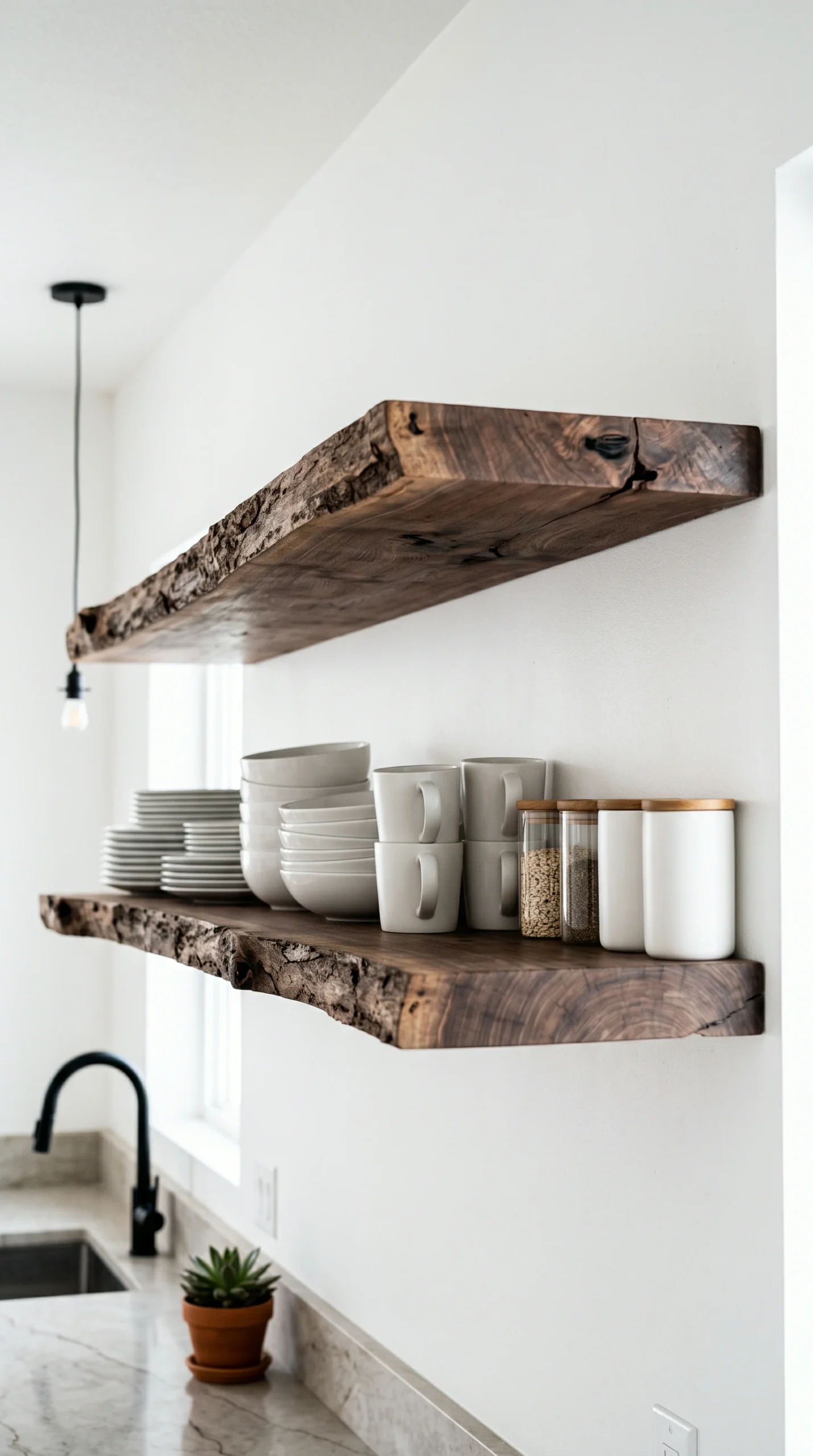
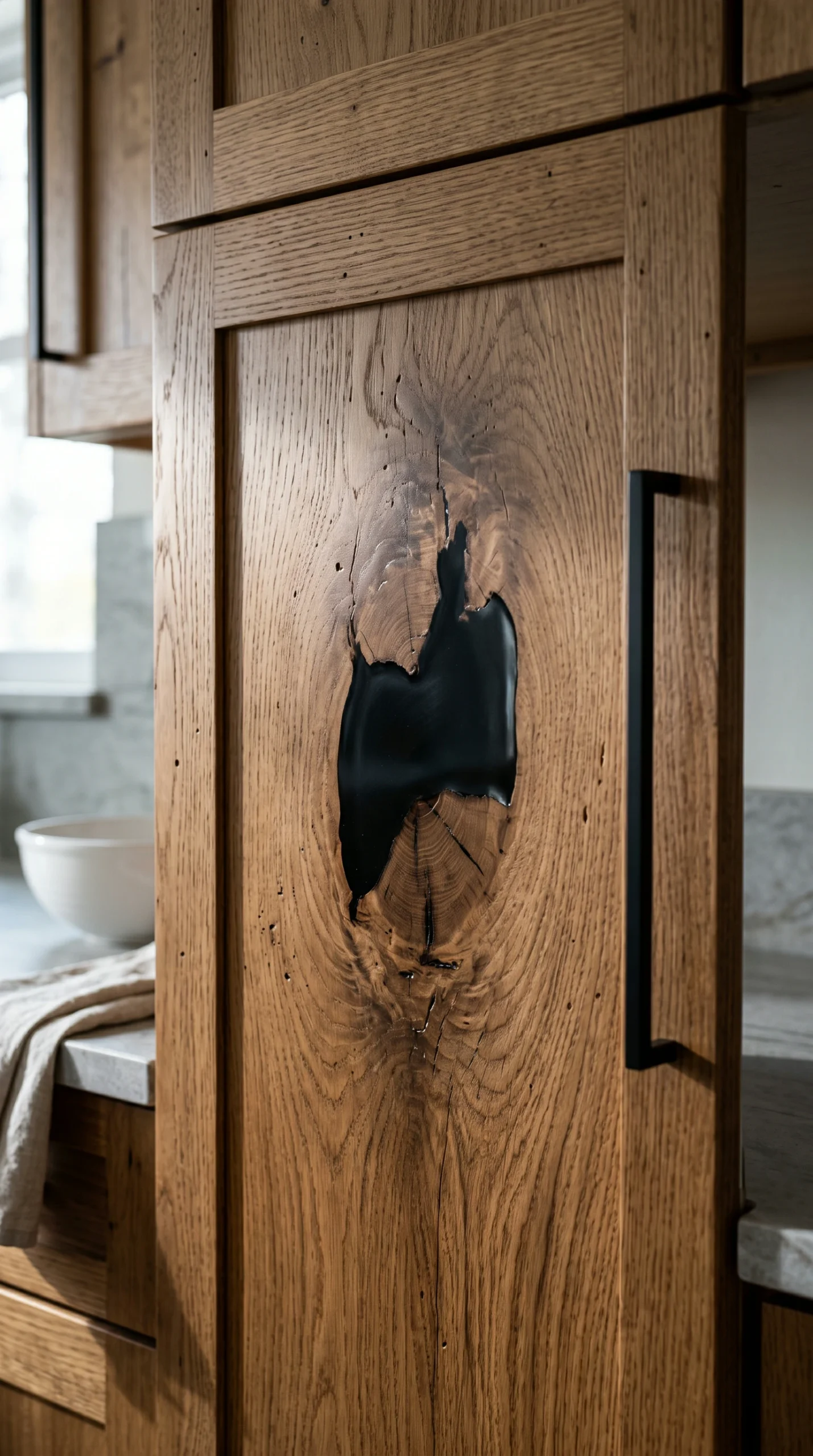
Do not demand 'clear' wood. You want 'character grade' wood, which includes visible knots, color variations, and natural imperfections.
When designing rustic modern kitchen cabinets, the fundamental geometry of the door dictates the entire style. Traditional rustic kitchens rely heavily on raised-panel doors, heavy crown molding, and decorative corbels. To modernize this, you must aggressively simplify the architecture. The absolute most sophisticated choice is a completely flat ‘slab’ door. Because there is no decorative trim (like a Shaker frame) to distract the eye, the flat door acts as a massive, blank canvas, forcing all the visual attention entirely onto the heavy, rustic texture and the beautiful, organic grain pattern of the wood itself. This marriage of severe modern geometry with raw, organic material is the definition of the hybrid aesthetic.
Not all woods can successfully bridge the gap between rustic and modern. Heavily red-toned cherry or yellow-toned pine will instantly make the kitchen look incredibly dated (like a 1990s cabin). For flawless rustic modern kitchen cabinets, you must rely on ‘cooler’ or neutral-toned woods. The undisputed champion of this aesthetic is European White Oak. It is naturally pale, incredibly durable, and features a beautiful, tight grain. Alternatively, if you want a darker, moodier kitchen, American Black Walnut is spectacular. The key is to order ‘character grade’ (or ‘rustic grade’) wood from your cabinetmaker, which deliberately includes the heavy knots, mineral streaks, and color variations that provide massive rustic charm.
If you take a beautiful piece of rustic walnut and sand it perfectly smooth, you have ruined it. The ‘rustic’ half of the equation relies entirely on tactile friction. When specifying rustic modern kitchen cabinets, you must demand heavy mechanical texturing. The most common and effective technique is ‘wire-brushing.’ The cabinetmaker runs a heavy steel wire brush over the raw wood before finishing it. This violently tears away the soft wood fibers and leaves the hard grain deeply raised and highly prominent. When the kitchen lighting hits the flat cabinet doors, this aggressive, 3D texture casts tiny shadows, making the sleek, modern doors look profoundly organic and historically weathered.
The finish (the clear protective coat) applied to your rustic modern kitchen cabinets will make or break the design. A thick, shiny, high-gloss polyurethane finish will make the wood look like cheap plastic, completely destroying the natural, raw aesthetic. You must insist on an ultra-matte, dead-flat finish. High-end custom cabinetmakers often use ‘hardwax oils’ (like Rubio Monocoat) instead of standard varnishes. These oils sink deeply into the wood fibers rather than sitting on top as a plastic film, providing incredible durability against water and stains while leaving the wood looking 100% raw, completely natural, and intensely matte.
The hardware you attach to your rustic modern kitchen cabinets is the final opportunity to push the design toward the modern extreme. Do not use heavy, chunky, hammered iron knobs; they lean too far into traditional farmhouse territory. Instead, use the hardware to introduce severe, razor-sharp modern geometry. The absolute best choice is a ‘finger-pull’ or ‘edge-pull’—a very thin, L-shaped piece of metal that screws into the top edge of the drawer and remains almost invisible from the front. Executed in a stark, matte black finish, these incredibly sleek, minimalist pulls provide intense modern contrast against the heavy, organic, wire-brushed wood of the cabinet face.
Finally, wrapping an entire large kitchen in heavily knotted, wire-brushed wood can sometimes feel visually overwhelming and heavy. To maintain an airy, contemporary feel, the best designers use rustic modern kitchen cabinets in a two-tone layout. They will install the heavy, textured white oak cabinets exclusively on the base cabinets and the kitchen island to ground the room. Then, they will paint all the upper cabinets (or better yet, the entire perimeter wall) in a stark, crisp, matte architectural white. This provides massive visual relief, allowing the rustic wood to act as a highly curated architectural feature rather than an oppressive, cabin-like enclosure.