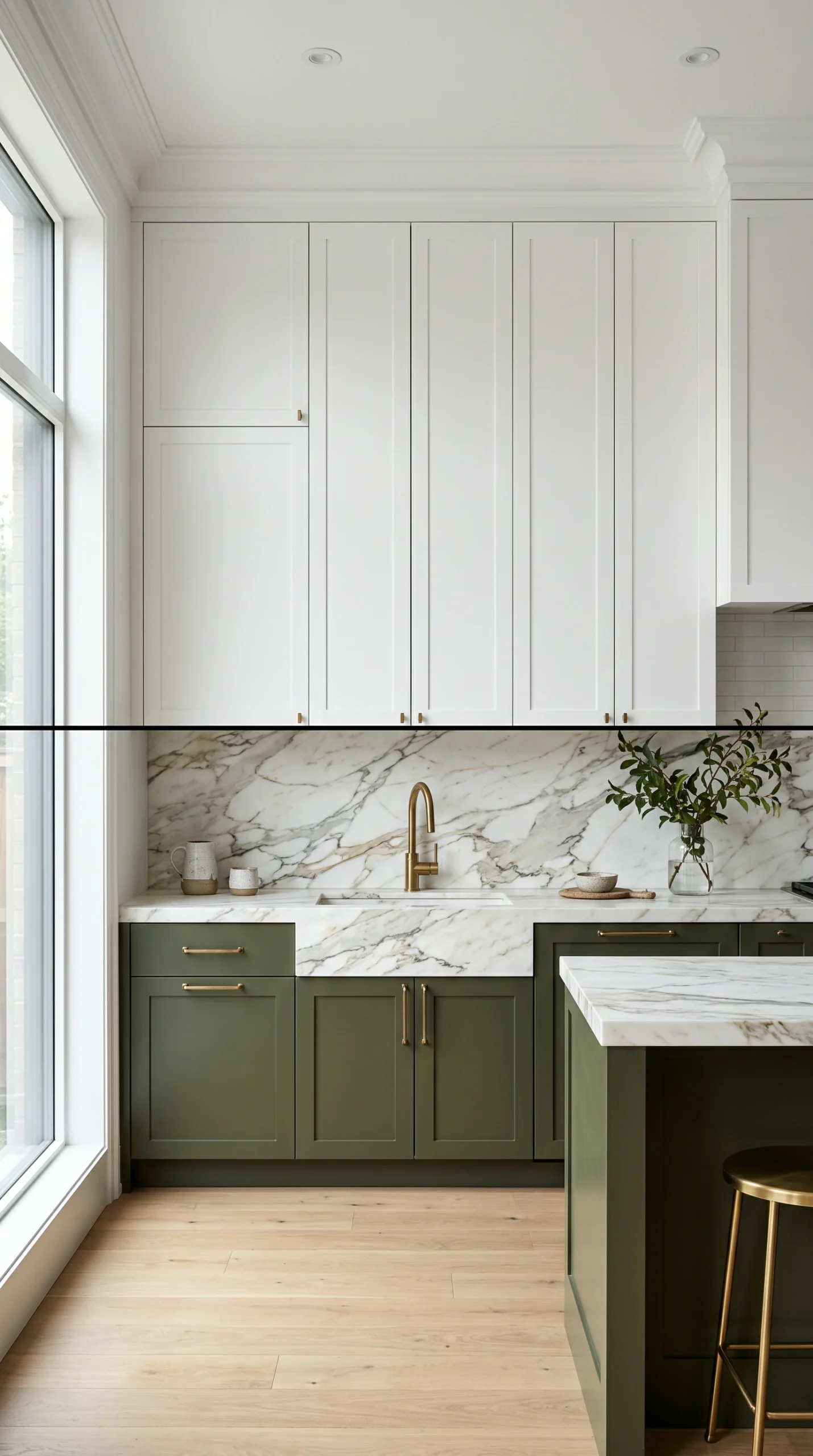
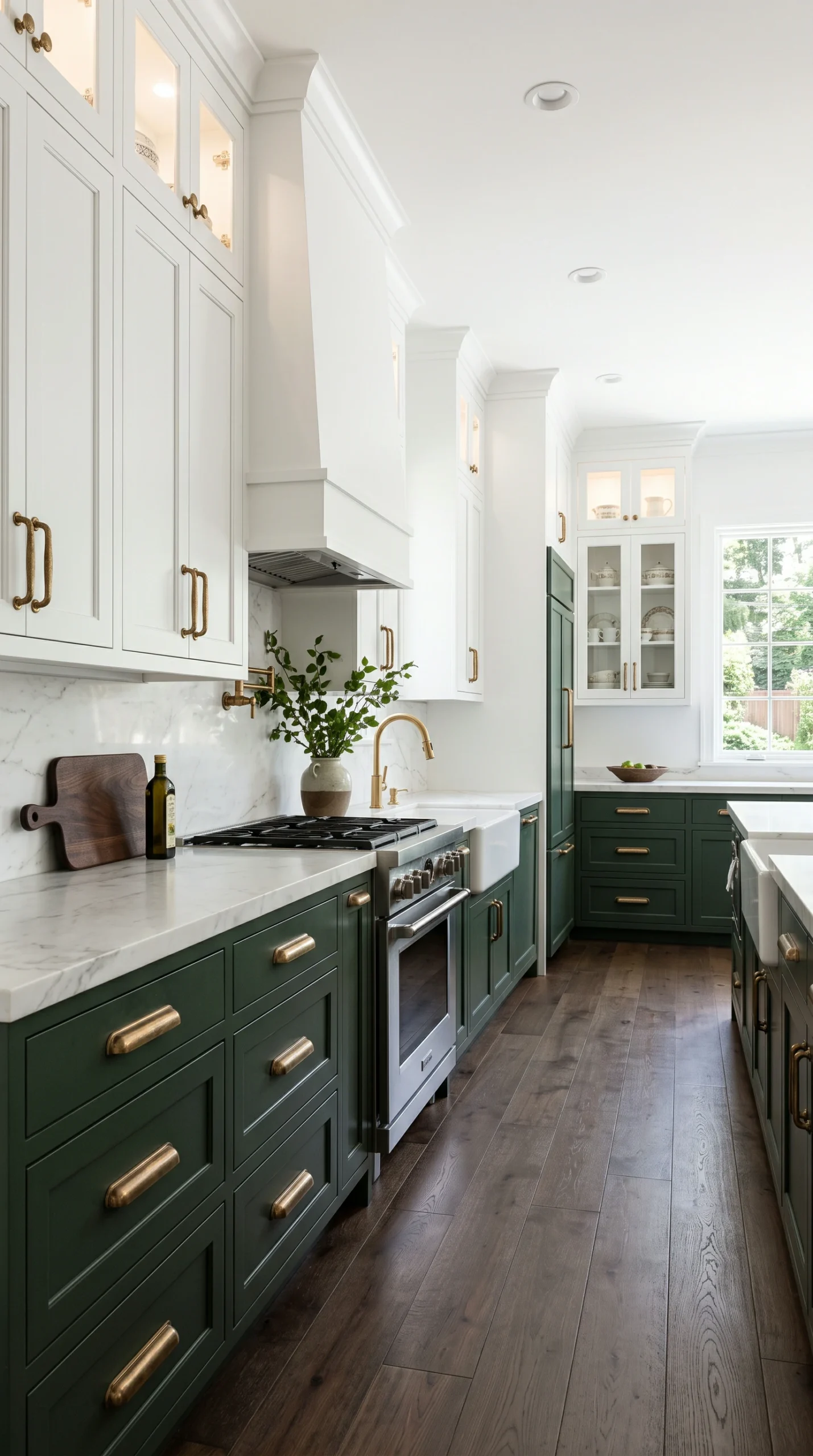
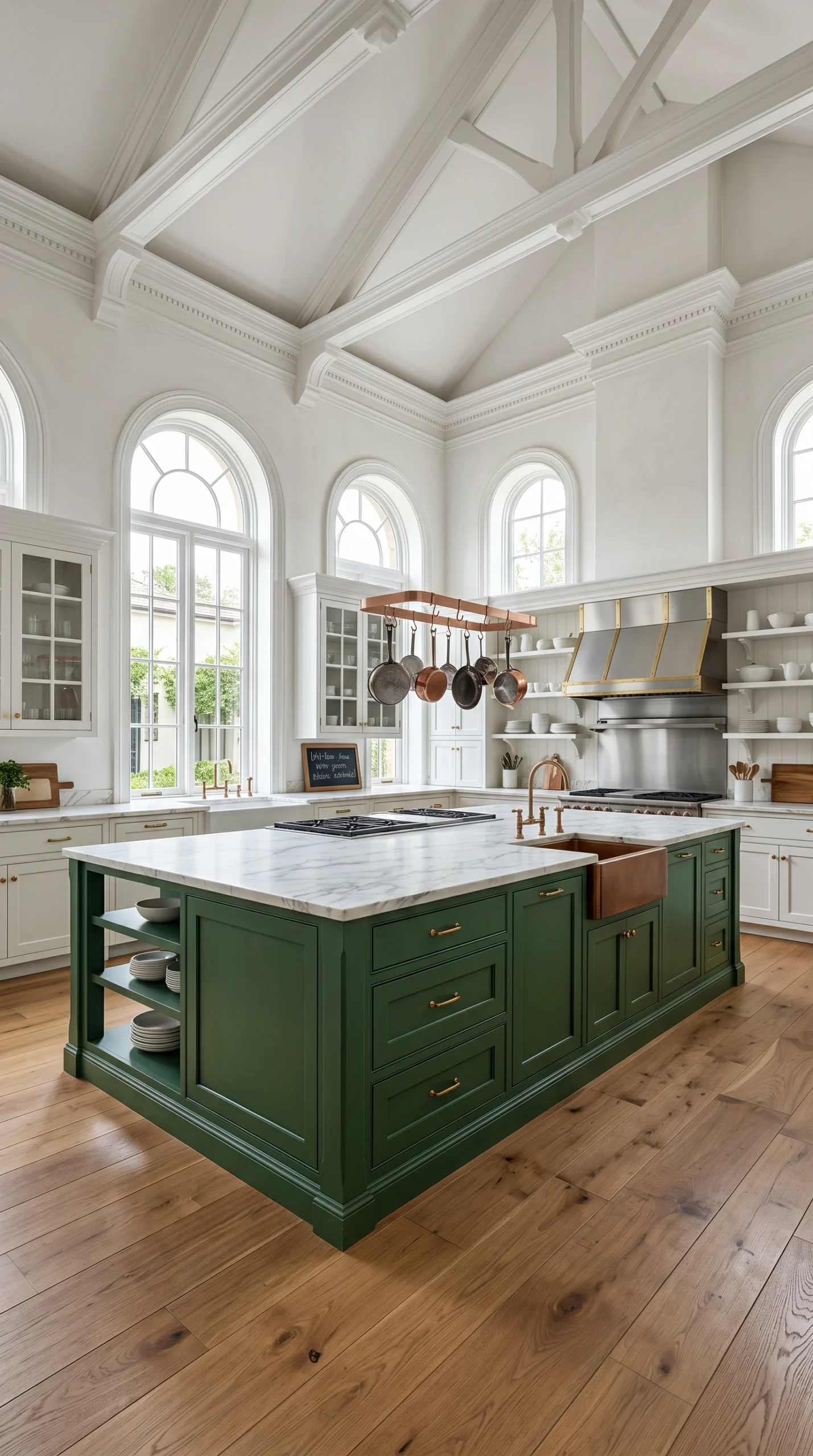
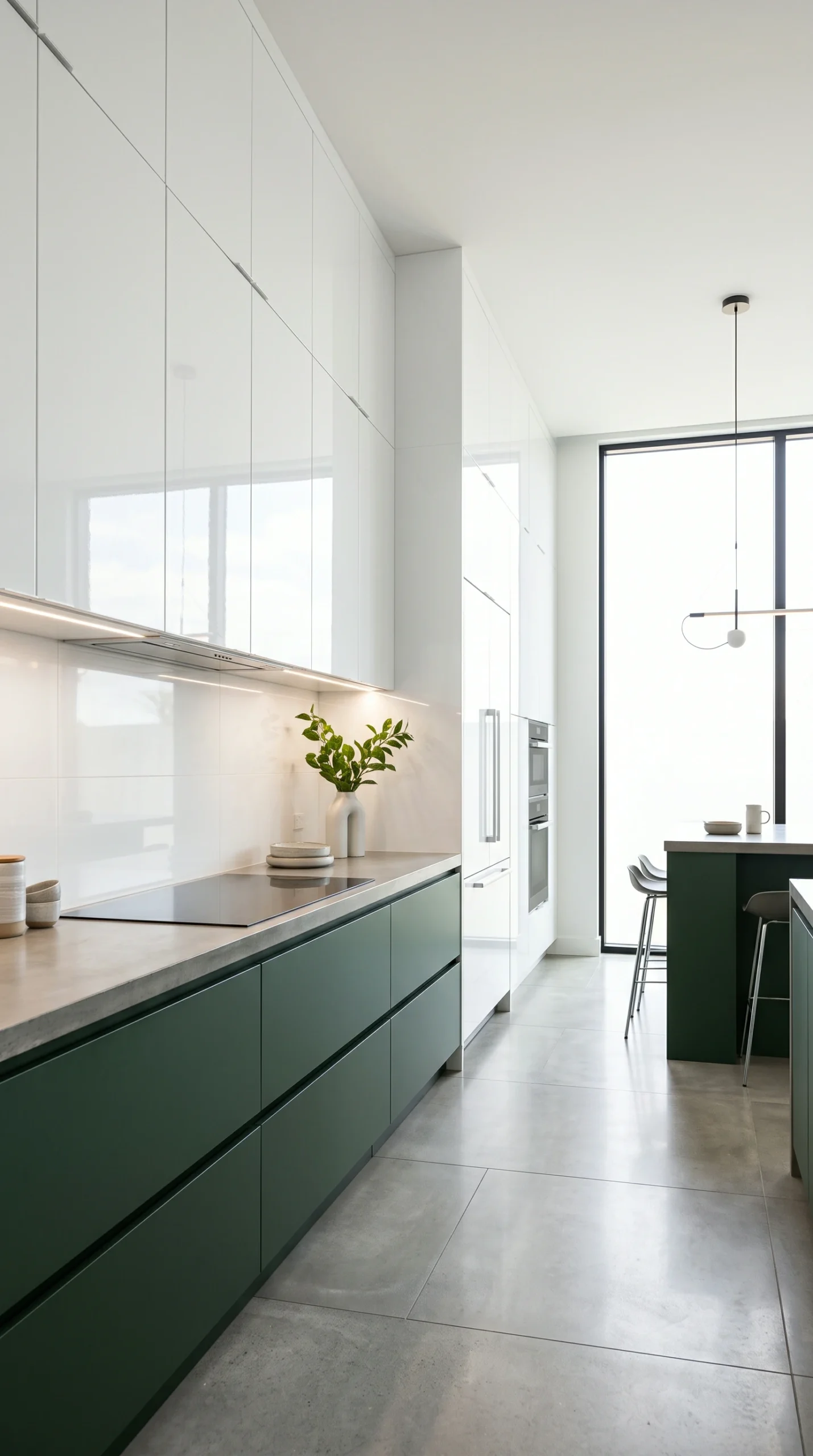
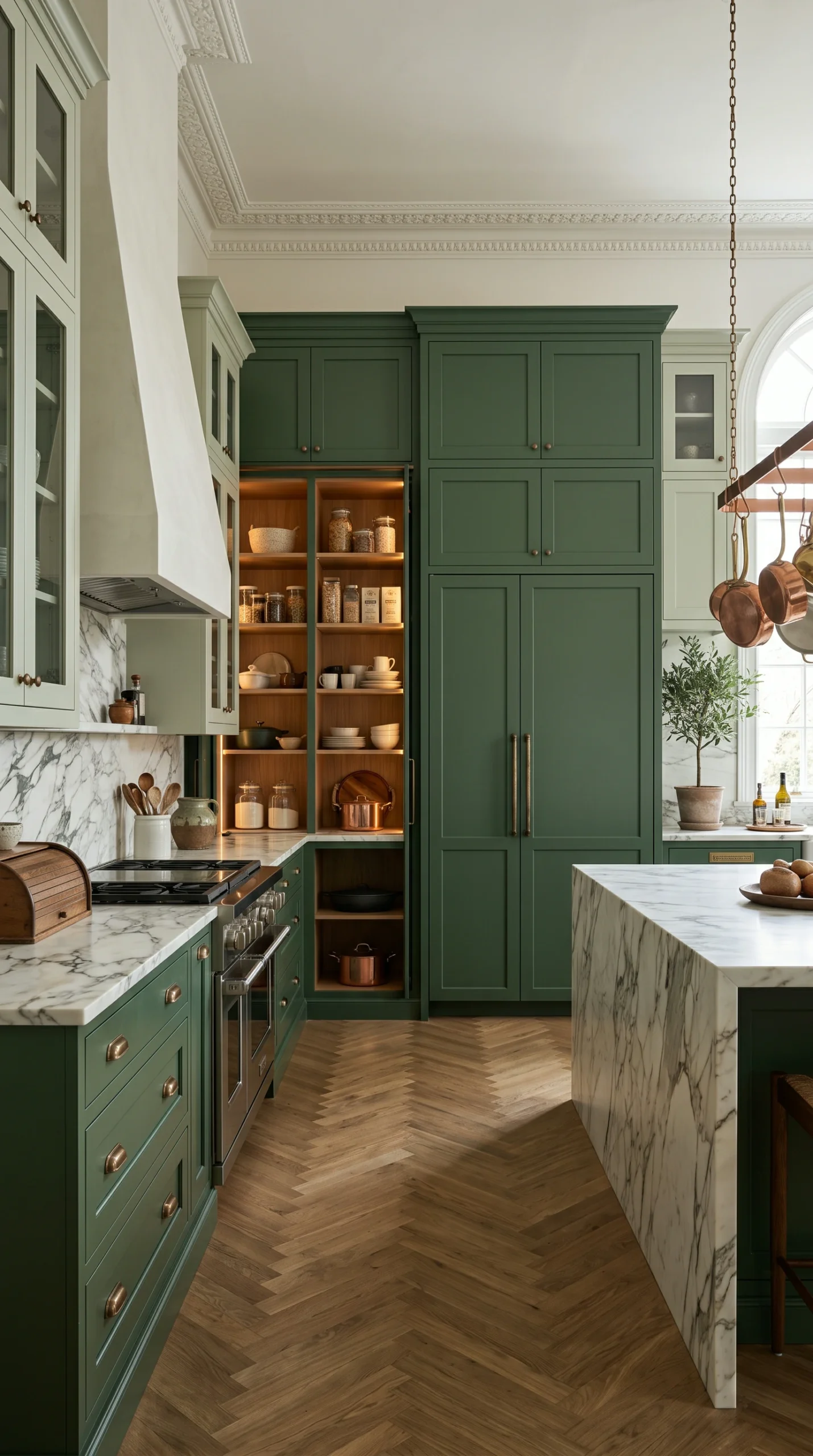
The golden rule of two-tone design is to place the heavier, darker color (the green) on the bottom cabinets and the lighter color (white) on the top. This mimics the natural world and keeps the room feeling grounded, not top-heavy.
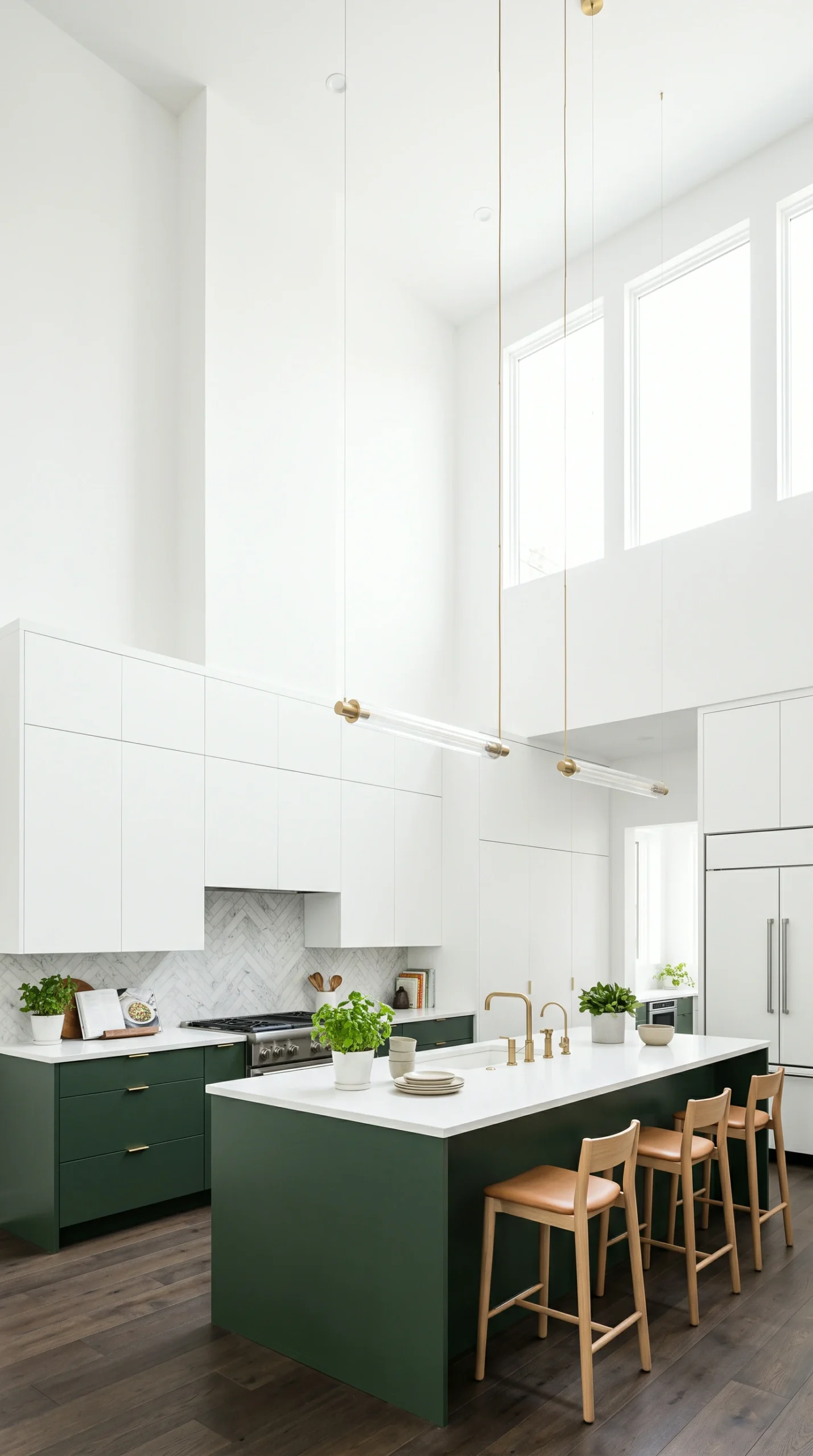
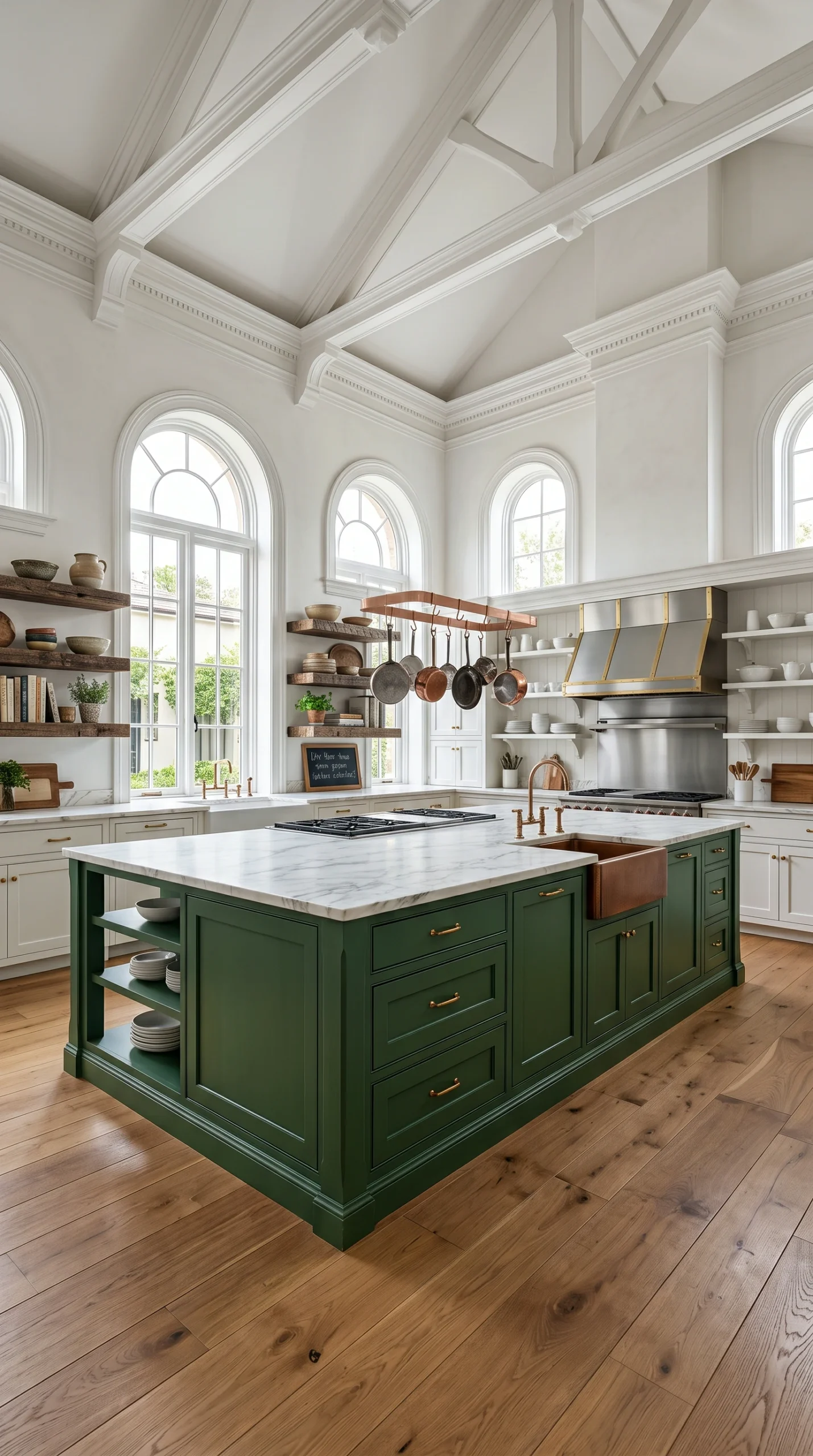
If you prefer all your perimeter cabinets to be white, painting only the central kitchen island green is a fantastic two-tone approach that turns the island into a vibrant, custom piece of furniture.
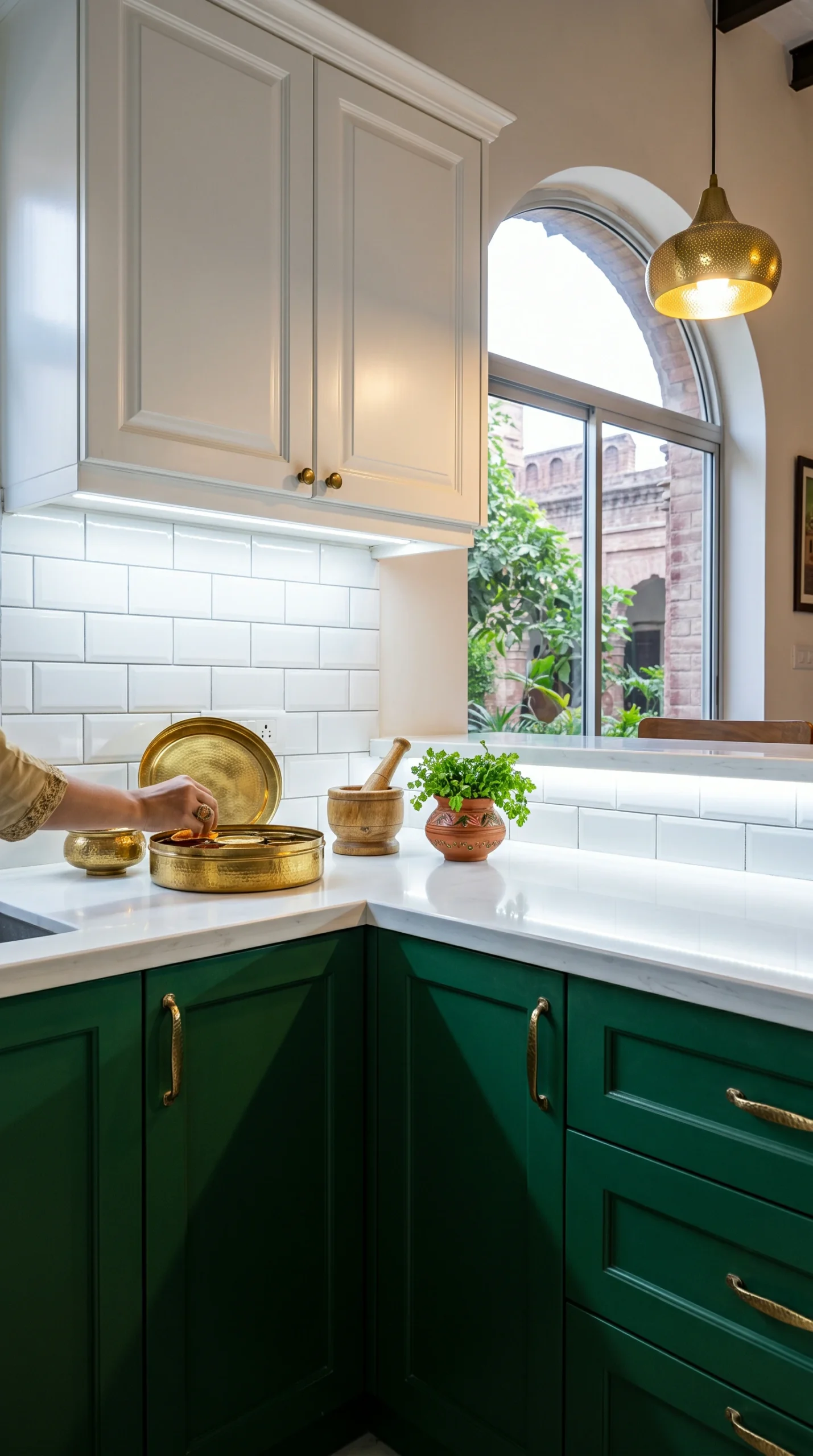
To ensure the green lowers and white uppers look like they belong in the same kitchen, use the exact same hardware (e.g., all brass pulls) on both the top and bottom cabinets to bridge the visual gap.
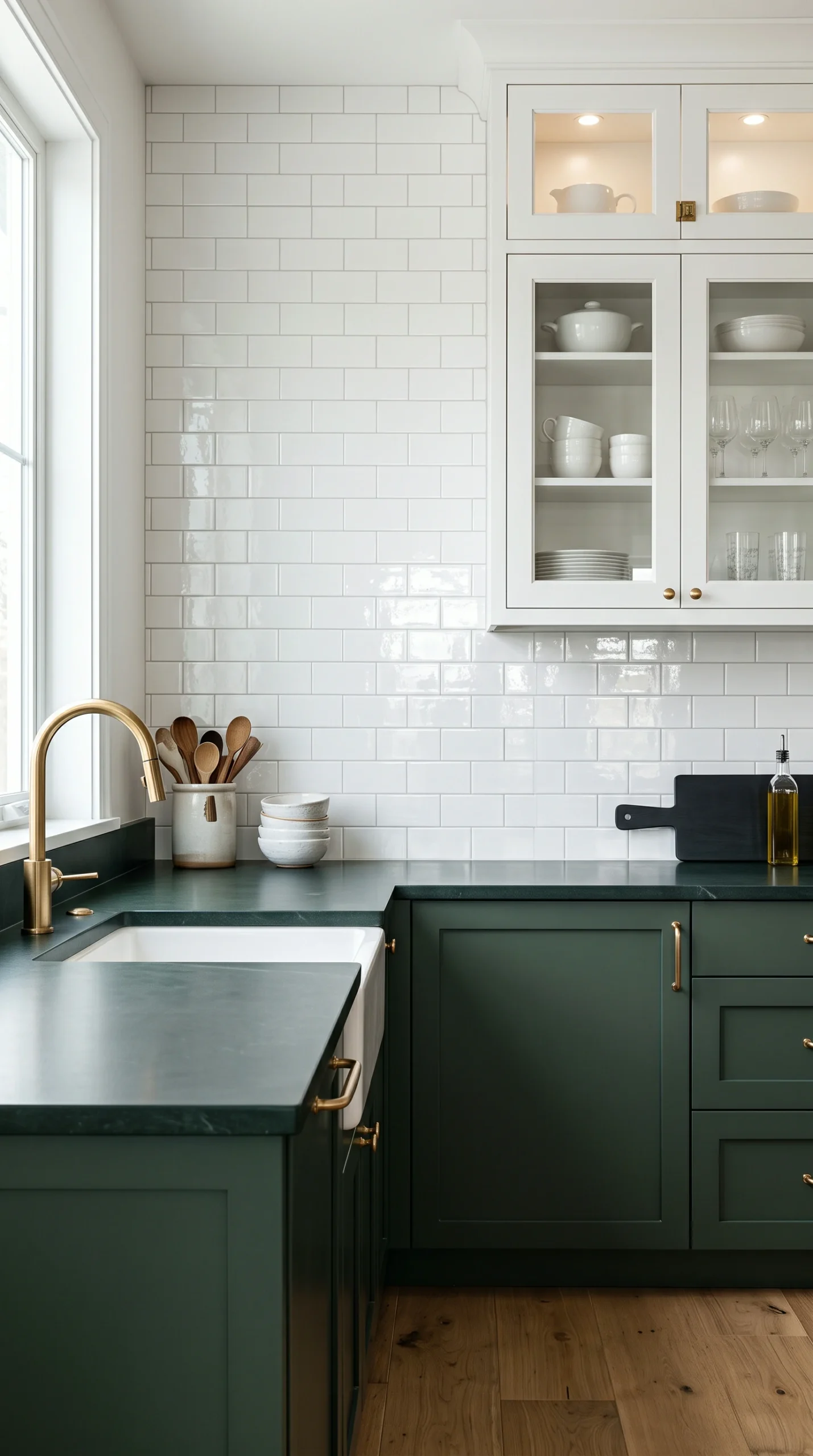
Use the backsplash to connect the two colors. A white backsplash matching the upper cabinets that runs all the way down to meet the green lower counters creates a seamless, clean transition.
A crisp white quartz or marble countertop is the perfect transition piece. It sits directly on top of the green base cabinets, providing immediate, sharp contrast before the white upper cabinets begin.
Because the upper half of the room will remain bright white, you can afford to use much darker, moodier shades of green on the bottom (like forest or hunter green) without fear of darkening the whole room.
The enduring popularity of two-tone green kitchen cabinets ideas is rooted in basic visual psychology. Darker colors carry more visual ‘weight.’ If you place dark colors on the ceiling or upper walls, a room can feel oppressive, top-heavy, and claustrophobic. By placing the rich, saturated green exclusively on the lower base cabinets, you visually ‘anchor’ or ground the kitchen to the floor. Conversely, painting the upper cabinets a brilliant white causes them to visually recede and blend into the ceiling, drawing the eye upward and creating an illusion of significantly more height and airy spaciousness. This allows you to enjoy the drama of a dark color without any of the spatial drawbacks.
A slightly different, but equally impactful execution of two-tone green kitchen cabinets ideas is the colored island approach. In this scenario, all of the perimeter cabinets (both upper and lower) hugging the walls are painted a crisp white or soft cream. The green paint is reserved exclusively for the central kitchen island. This strategy is brilliant because it transforms the island from mere storage into a spectacular, standalone piece of custom furniture. It acts as the undisputed focal point of the room. This approach is highly recommended for homeowners who are hesitant about committing to a lot of color, as the green is contained to a single, easily identifiable zone.
A common risk when designing a two-tone kitchen is that the upper and lower halves can look like two completely different rooms accidentally mashed together. To ensure cohesion in two-tone green kitchen cabinets ideas, designers employ unifying elements. The most effective unifier is hardware. Utilizing the exact same style and finish of hardwarefor example, identical polished brass bar pulls on both the white upper doors and the green lower drawersforces the brain to recognize the two distinct colors as part of a single, deliberate design scheme. The hardware acts as the visual ‘jewelry’ that ties the entire tuxedo outfit together.
The transition point where the two colors meet is critical. In classic two-tone green kitchen cabinets ideas (green lowers, white uppers), the countertop serves as the primary transition line. To maximize the crisp, tailored aesthetic, interior designers strongly advocate for high-contrast, light-colored countertops. A stark white quartz, a lightly veined Carrara marble, or a pale, subtle gray surface sitting directly on top of the dark green base cabinets creates a sharp, horizontal architectural line. This crisp boundary is essential for the ‘tuxedo’ look; a dark countertop on dark lower cabinets would blur the line and make the base of the kitchen feel excessively heavy.
One of the greatest advantages of the two-tone approach is color freedom. Because the upper half of the kitchen will remain bright and light-reflective, you are not restricted to pale, safe greens. Two-tone green kitchen cabinets ideas are the perfect opportunity to utilize incredibly deep, dramatic shades. A blackened forest green, a rich emerald, or a very dark, moody olive can be applied to the lower cabinets without any fear of making the kitchen feel like a cave. The stark contrast against the white uppers actually makes these deep greens appear richer and more luxurious than they would if applied to the entire room.
With two distinct cabinet colors already providing significant visual interest, the backsplash should generally be treated as a quiet, supportive element. In successful two-tone green kitchen cabinets ideas, the backsplash acts as a seamless extension of the upper cabinets. Carrying the bright white color from the upper cabinets down the wall using a classic white subway tile, or utilizing the same white stone as the countertop for a solid slab backsplash, creates a very clean, unified upper zone. Introducing a third, highly patterned or brightly colored tile into the backsplash often results in a cluttered, visually chaotic kitchen that detracts from the elegance of the two-tone design.