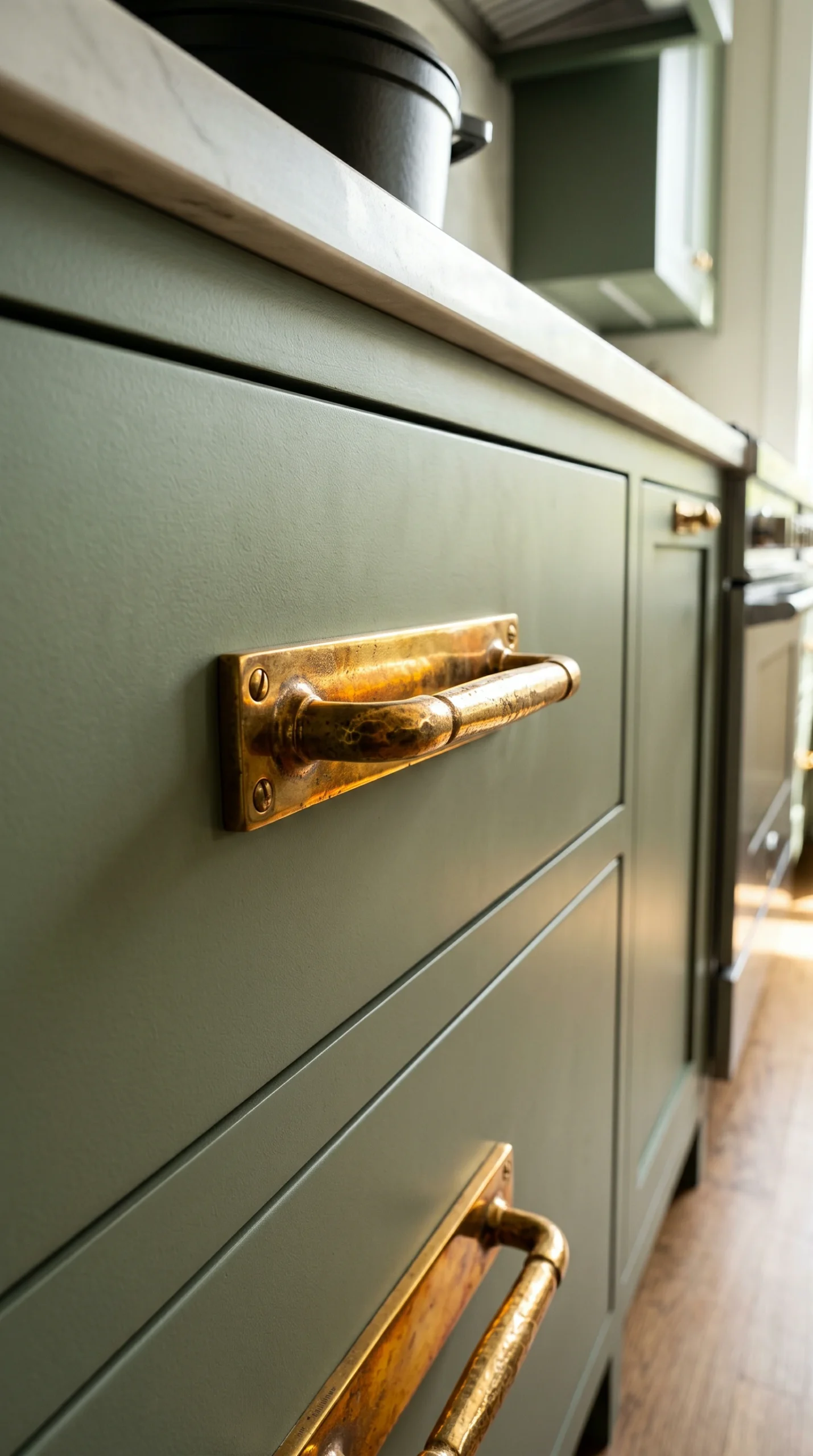
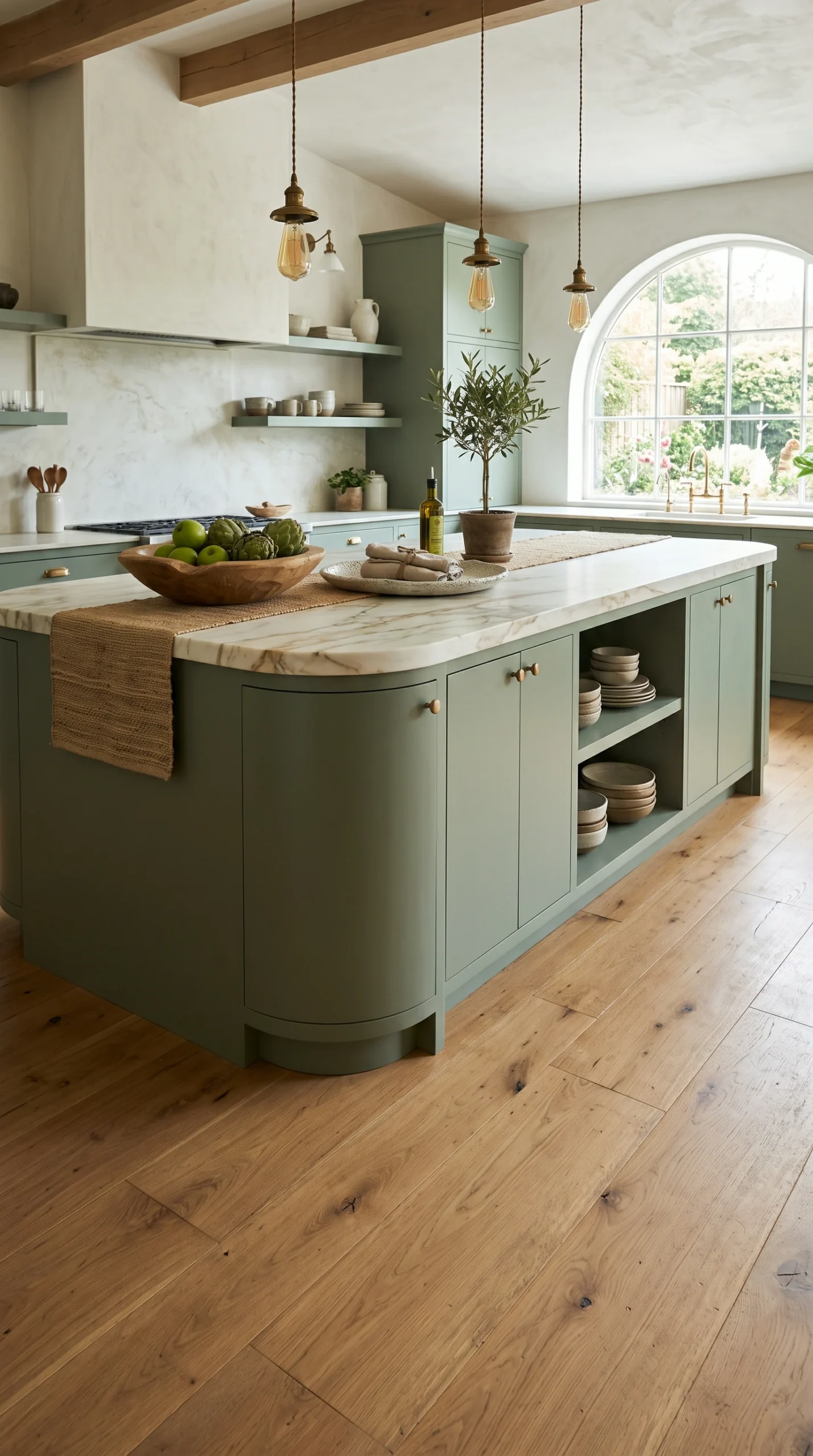
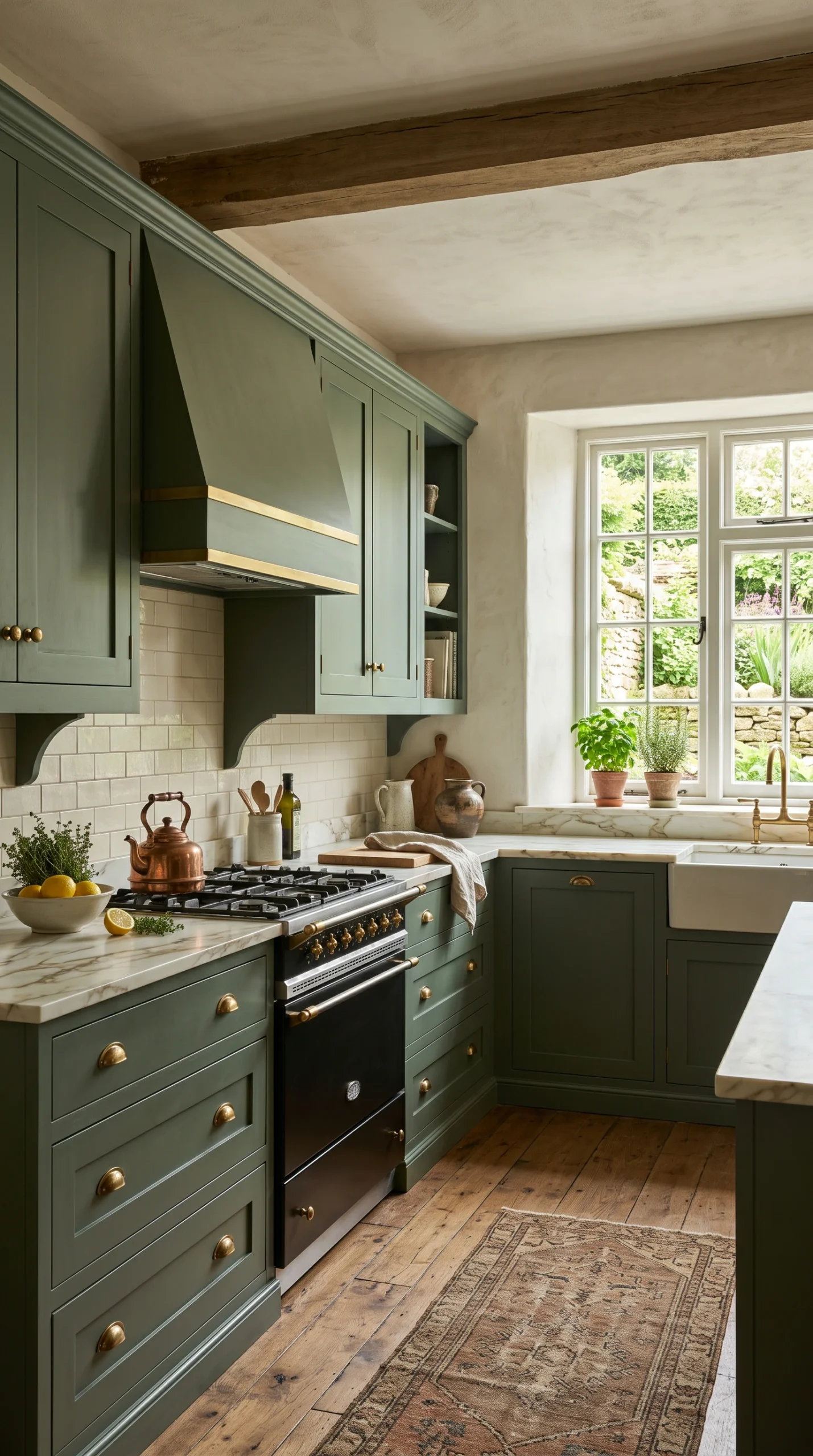
Sage green has cool, silvery undertones. To prevent the kitchen from feeling chilly, introduce warm metals like brushed brass, antique gold, or polished copper for the hardware and lighting fixtures.
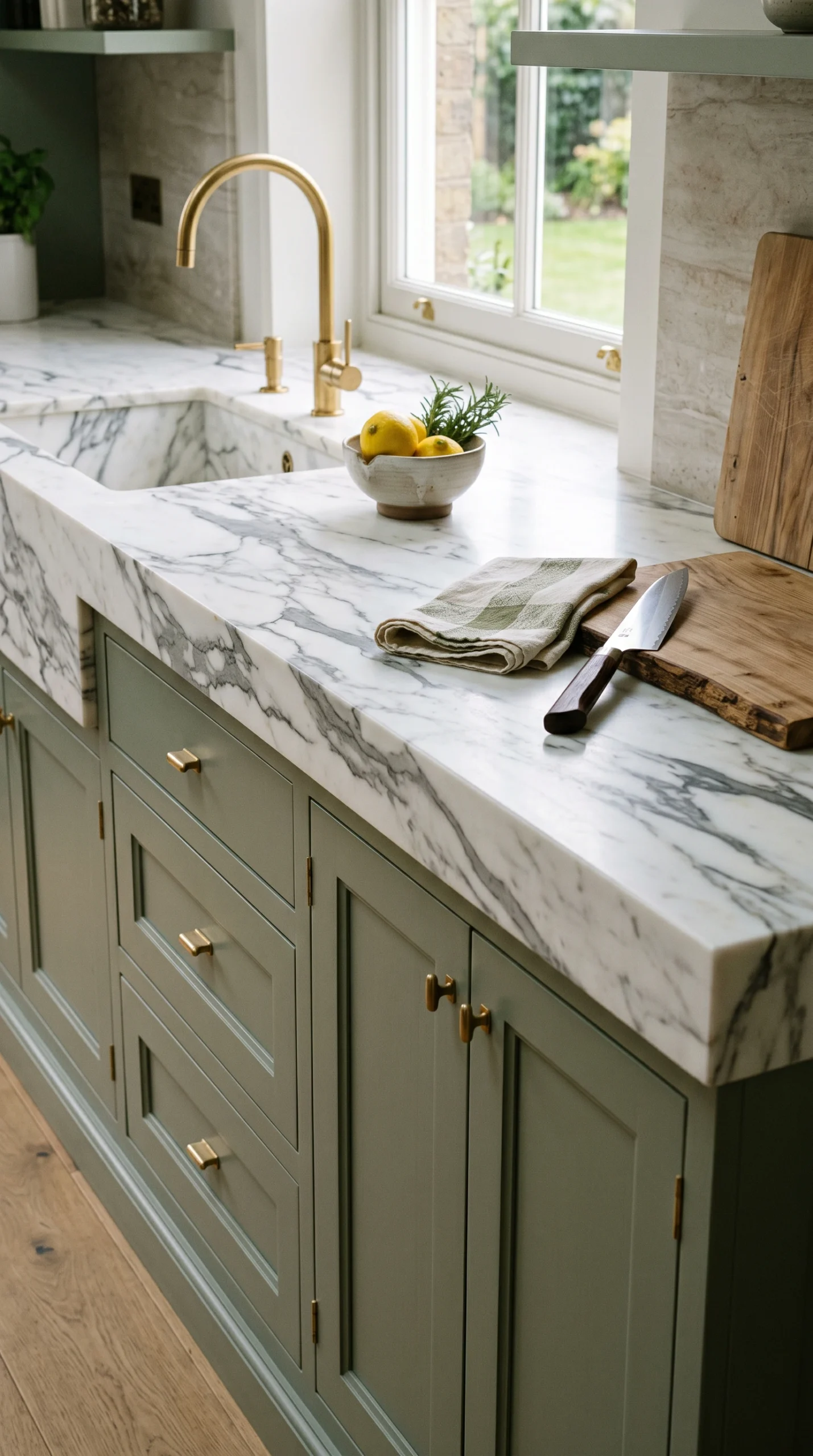
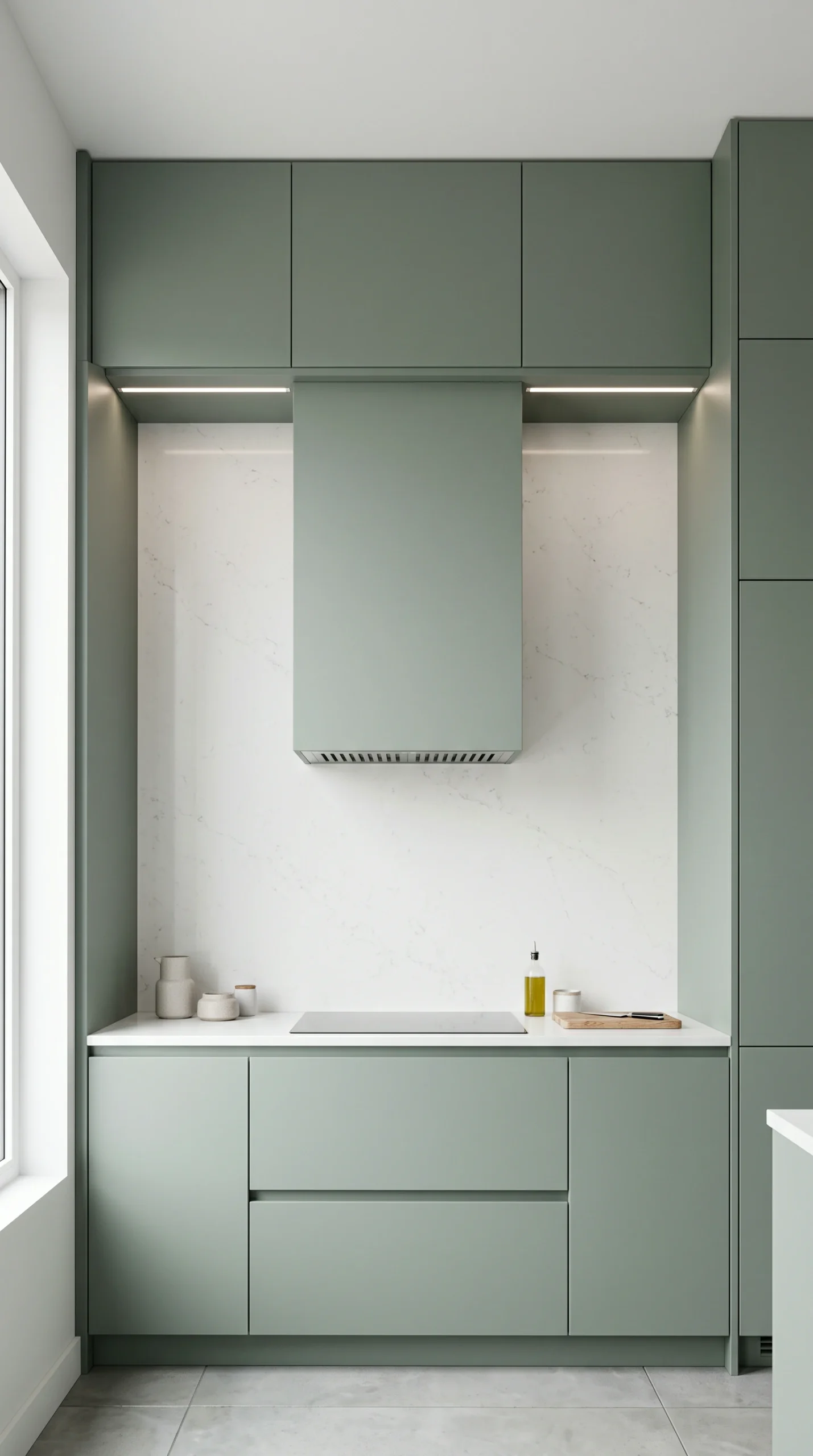
To keep the sage green looking fresh and luminous, pair it with bright, crisp white countertops, such as marble or white quartz. Dark counters can make the soft green look muddy.
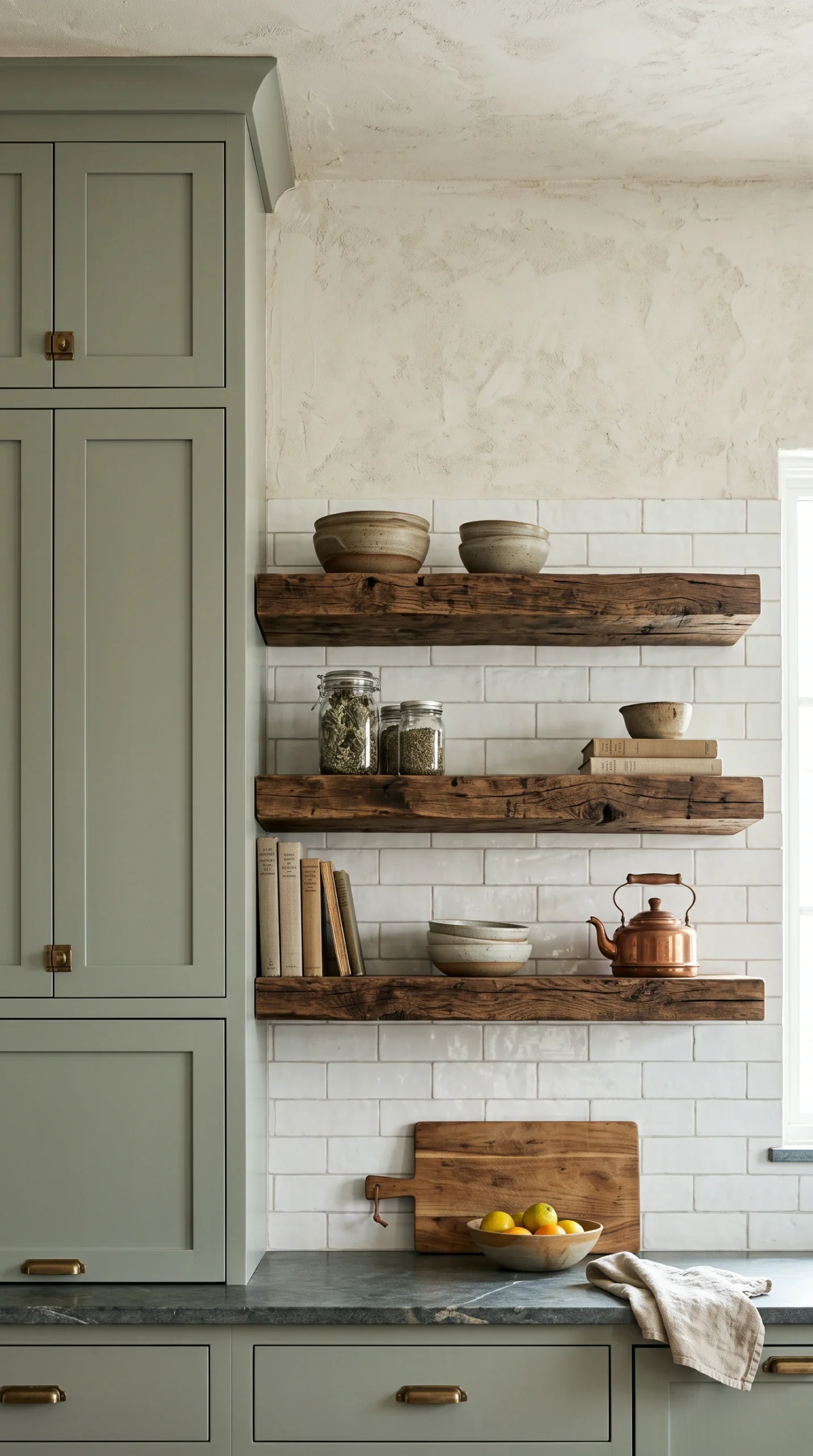
Introduce natural warmth by bringing in light-colored woods. White oak floors, a butcher block island top, or floating ash shelves complement the earthy feel of the sage beautifully.
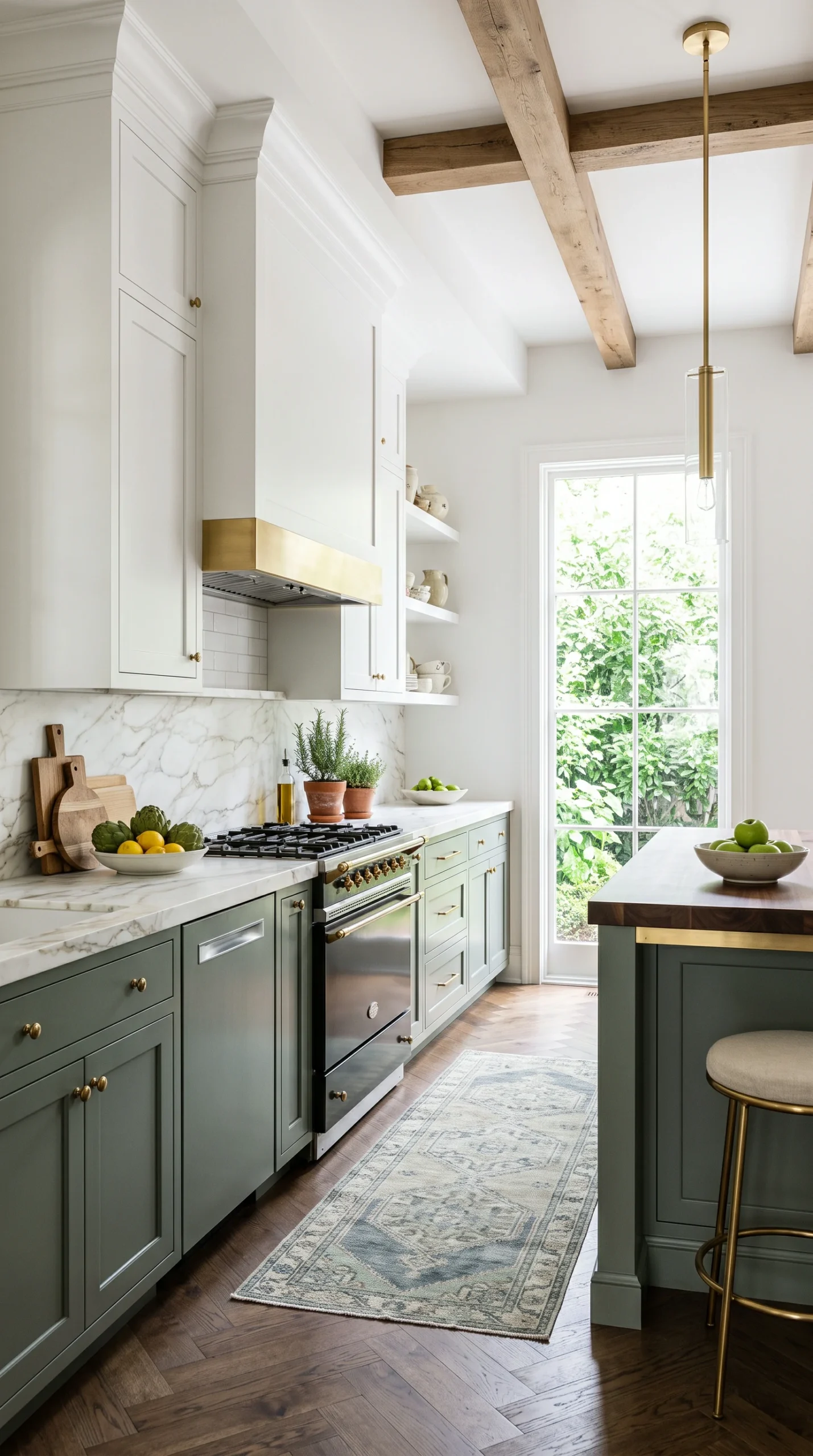
If painting all cabinets sage feels too committal, paint only the lower cabinets or the island sage green, keeping the upper cabinets a crisp white to maintain a bright, airy feel.
Sage green is highly reactive to light. You must paint large swatches in your actual kitchen to see how the color shifts from morning daylight to warm evening artificial light.
Let the cabinet color be the star. Choose a simple, classic backsplash, like white subway tile or a solid slab of white marble, to avoid competing with the subtle beauty of the green.
The massive surge in popularity of sage green kitchen cabinets ideas is not a fleeting trend, but rather a shift toward ‘colored neutrals.’ Homeowners are increasingly moving away from stark, sterile all-white kitchens, seeking warmth and personality, yet they remain hesitant to commit to highly saturated, bold colors. Sage green, with its heavy gray and silver undertones, provides the perfect middle ground. It is remarkably subtle, acting more like a tinted gray than a true green. This muted quality allows it to read as a sophisticated neutral, providing a calm, grounded, and deeply elegant foundation that will not feel dated in five or ten years, making it an excellent long-term investment for a kitchen remodel.
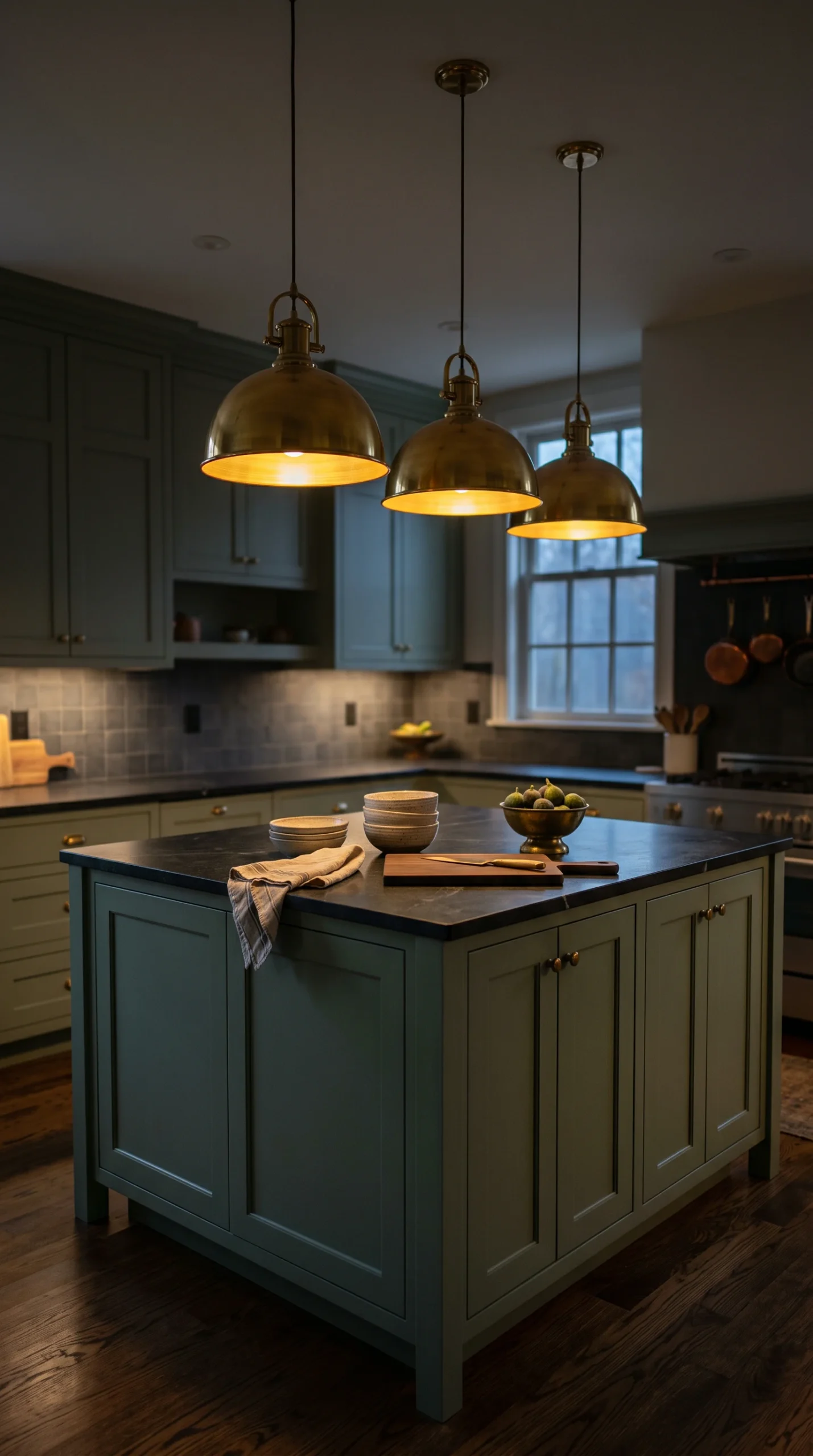
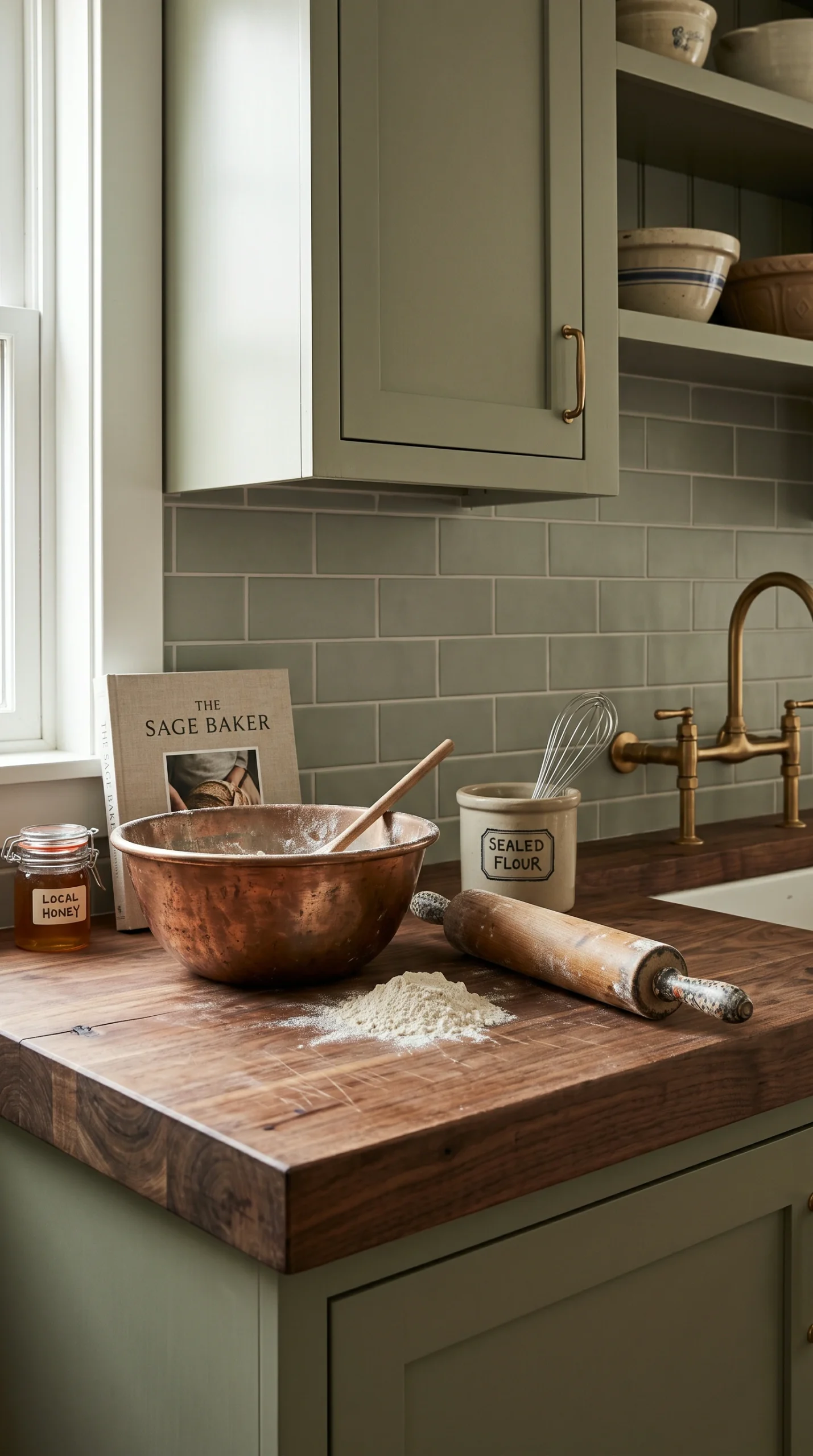
A critical design principle when executing sage green kitchen cabinets ideas is the intentional use of contrast to introduce warmth. Because sage green leans cool and silvery, pairing it exclusively with polished chrome or cool stainless steel can occasionally render the kitchen feeling a bit icy or sterile. Interior designers almost universally recommend pairing sage cabinetry with warm-toned metals. Unlacquered brass, brushed gold, and warm bronze are exceptional choices for drawer pulls, cabinet knobs, and pendant lighting. The rich, golden hues of these metals pop beautifully against the soft green background, creating a luxurious, historically grounded aesthetic that feels incredibly inviting and expensive.
To maximize the luminous, airy quality of sage green, the choice of countertops is vital. Successful sage green kitchen cabinets ideas generally rely on pairing the soft color with crisp, bright white surfaces. Installing countertops made of classic Carrara marble, heavily veined Calacatta quartz, or even simple, pure white Corian ensures the kitchen feels light and expansive. The stark white provides a clean, sharp contrast that prevents the muted green from appearing dull or ‘muddy.’ Conversely, pairing sage green with very dark granite or black soapstone can sometimes absorb too much light, leading to a heavier, more traditional, and slightly less fresh aesthetic.
Because sage green is inherently drawn from nature, it responds beautifully to the introduction of organic materials. Incorporating natural wood is a fundamental strategy in refining sage green kitchen cabinets ideas. However, the tone of the wood matters significantly. Heavy, dark woods like mahogany or dark-stained cherry can overpower the delicate green. Instead, designers favor light-to-medium woods. Pale white oak, warm ash, or natural maple are ideal. Introducing these woods through hardwood flooring, a butcher block top on the kitchen island, or open floating shelves adds essential textural warmth and reinforces the organic, earthy elegance of the overall design.
Perhaps the most challenging aspect of implementing sage green kitchen cabinets ideas is the color’s high reactivity to lighting conditions. A paint swatch that looks like a perfect, dusty sage in a bright hardware store can look entirely gray, blue, or even minty in a different environment. It is absolutely crucial to paint large sample boards and observe them in the actual kitchen over the course of several days. Notice how the color shifts from the cool, blue light of early morning to the warm, yellow glow of evening artificial lighting. Ensuring your kitchen has adequate natural light, supplemented by warm-white (3000K) LED lighting, will help the true, sophisticated sage tone shine through consistently.
To further enhance the light, open feel commonly associated with sage green, many designers suggest minimizing heavy upper cabinetry. Incorporating open shelving is a popular trend within sage green kitchen cabinets ideas. Replacing a section of solid upper cabinets with floating white oak shelves breaks up the expanse of green and provides a beautiful opportunity to display curated items. Stacking everyday white ceramic dishware, clear glass storage jars, and perhaps a small trailing plant on these shelves adds depth, personality, and a welcoming, lived-in feel, preventing the kitchen from looking too rigid or overly formal.