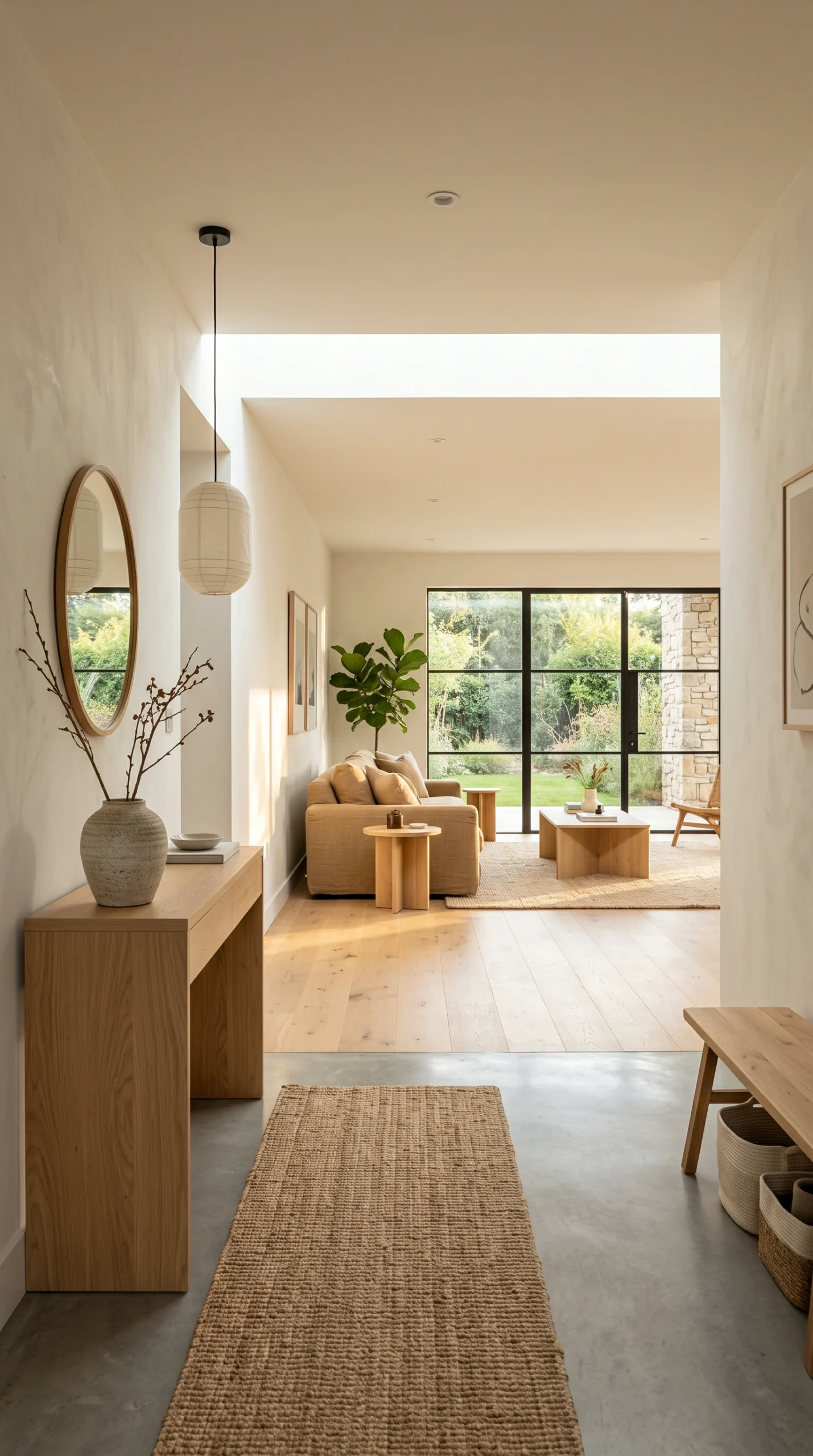
Ensure the entry door opens fully to 90 degrees without bumping into your runner edge, bench leg, or console corner.
Enclosing damp shoes inside airtight cabinets can cause mildew; slatted wood or cane webbing allows air to circulate naturally.
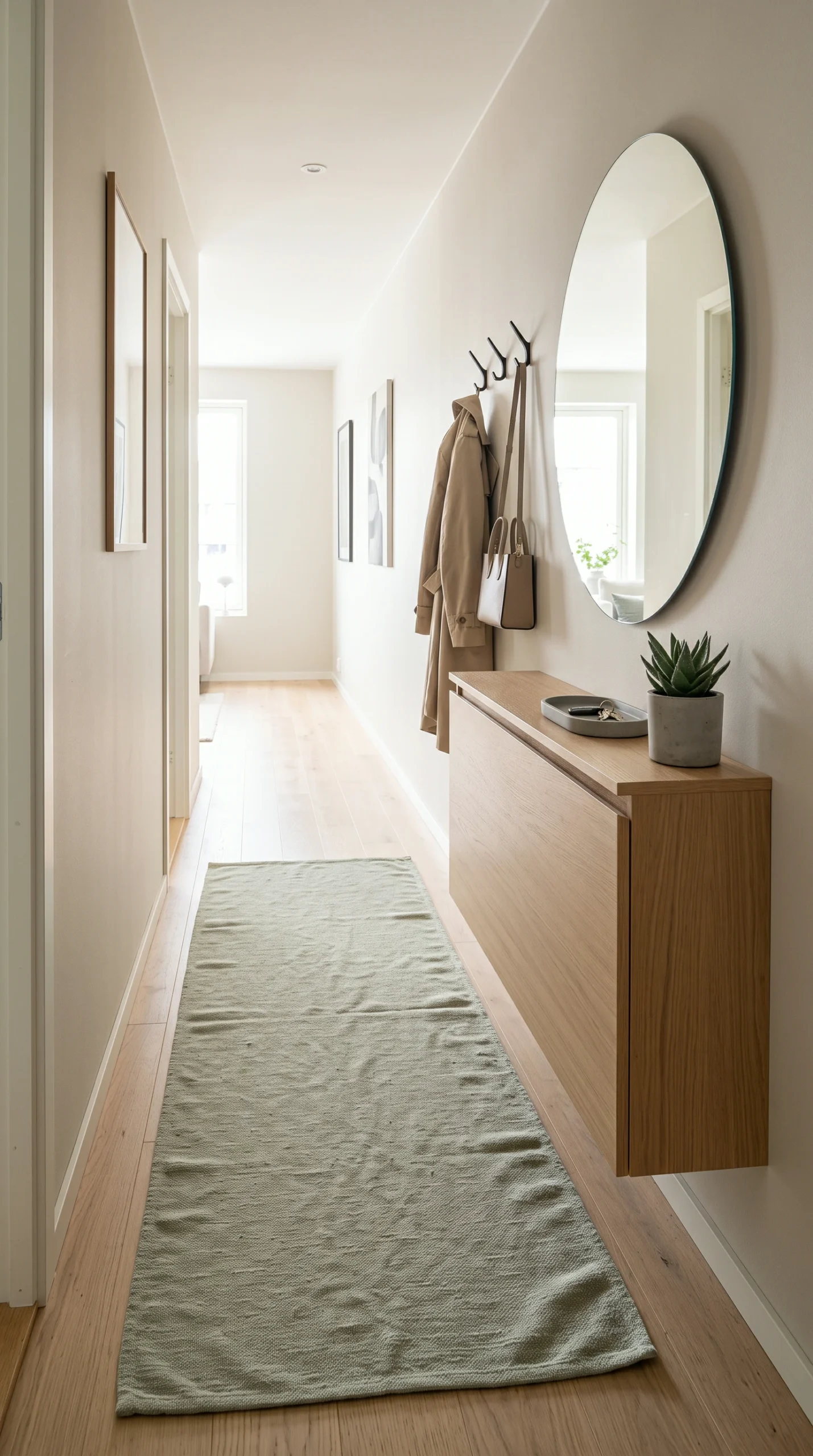
In corridors under 42 inches wide, a wall-hung floating shelf set at 30 to 32 inches high keeps floor space open and easier to sweep.
Pale oak and ash can show water rings from wet umbrellas; apply a protective matte polyurethane or hardwax oil seal.
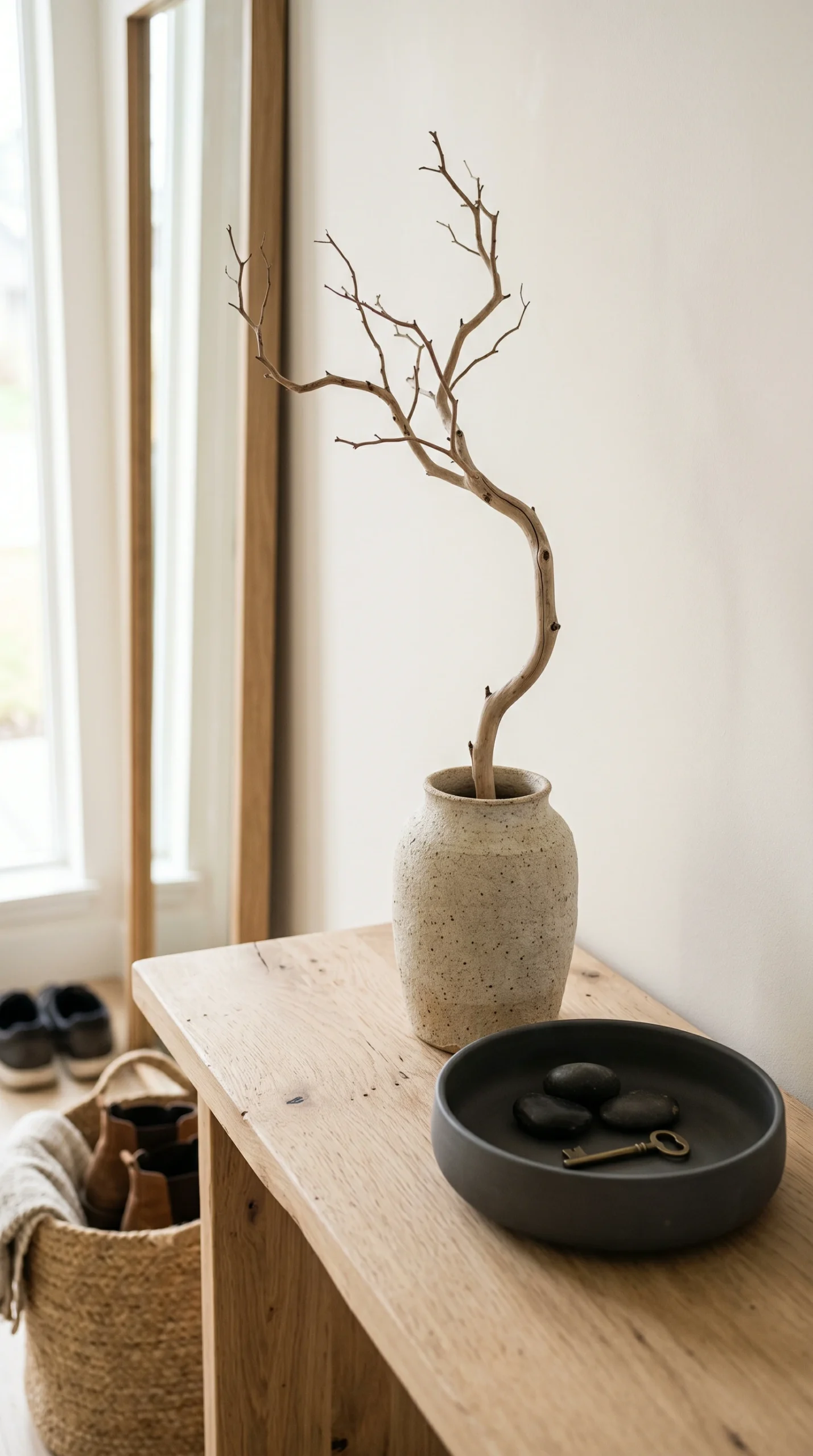
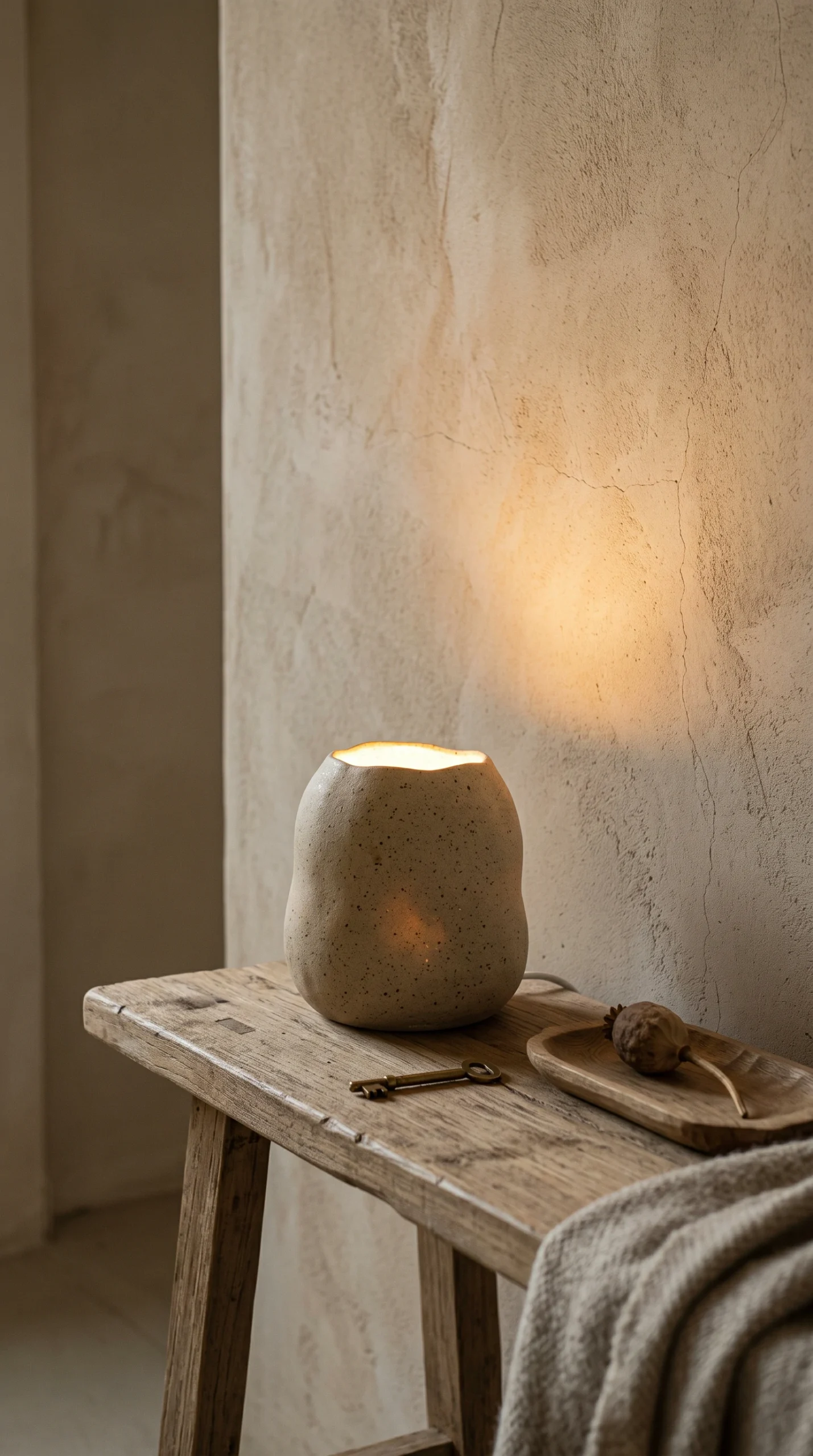
Use one durable stoneware or wood catch-all dish for keys and mail rather than letting loose papers spread across the table.
The entryway is the hardest-working transition zone in any house or apartment. It is where wet coats, muddy footwear, incoming mail, and keys land within seconds of opening the door. When decor blogs discuss Japandi entryways, they often show an empty bench with a single ceramic twig and nothing else. In reality, a home with working adults, children, or pets requires functional systems that make daily routines manageable without turning into visual clutter.
Adopting Japandi principles in an entrance hall is about adapting Japanese spatial restraint and Scandinavian practicality to your actual lifestyle. Rather than stripping away storage, the goal is to make storage intuitive, select finishes that handle wet weather gracefully, and create a calm transition between outdoor commotion and indoor rest.
Most entryway frustrations start with layout mistakes. Corridors are high-traffic thoroughfares, not lounges. Installing furniture that pinches physical movement will lead to bruised hips and daily irritation.
Before ordering furniture, measure the narrowest points of your hallway, accounting for baseboards and radiator covers:
In narrow city apartments, such as those featured in our guide to small Japandi apartment ideas, floor-mounted furniture can make a tight hallway feel claustrophobic. Mounting a shallow floating timber shelf at 30 to 32 inches from the floor keeps the floor area open, making the hallway easier to sweep while creating the visual impression of more space.
The clean look of a Japandi interior depends on intentional concealment. Shoes scattered across the floor or heavy winter parkas piled on a chair instantly dominate the eye.
Removing outdoor shoes at the door is standard practice in Scandinavian and Japanese households to keep living spaces clean. However, putting damp shoes inside a fully sealed cabinet can trap moisture, which leads to mildew and lingering odors.
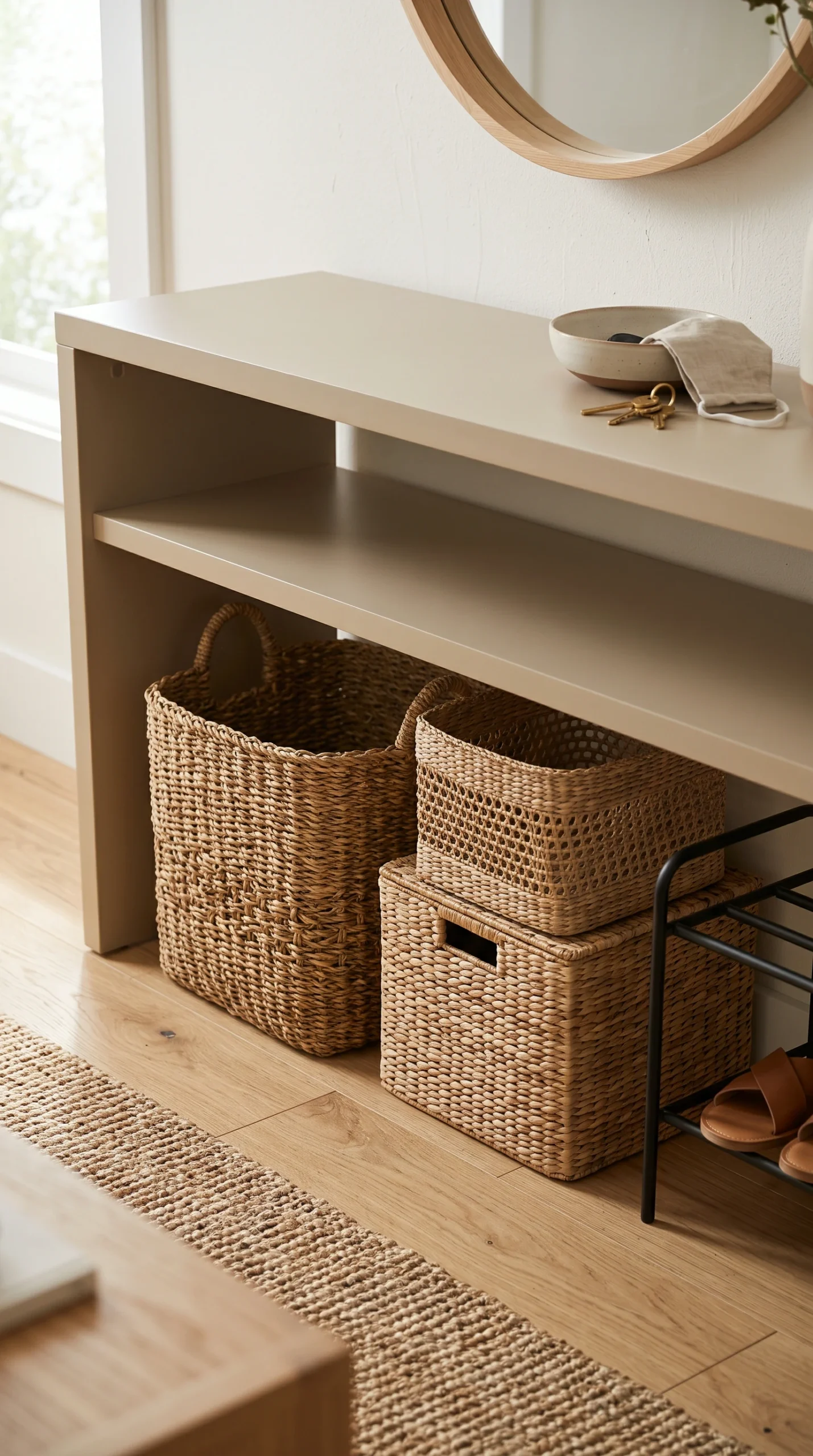
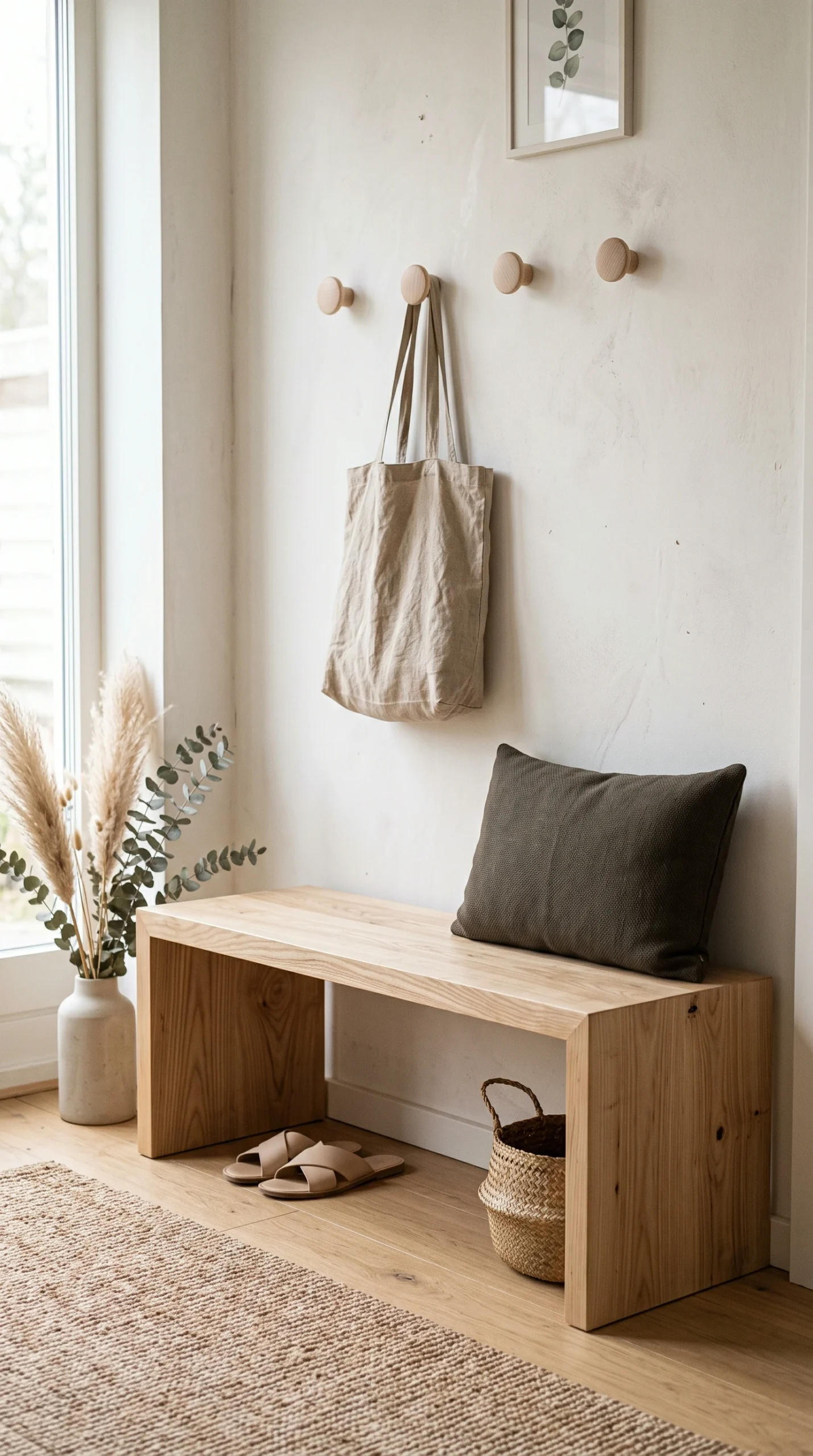
A more practical approach is choosing storage units with slatted timber doors, louvered panels, or breathable woven cane fronts. These designs allow continuous air circulation so damp soles dry out naturally, while keeping footwear neatly hidden from view. If you prefer an open bench for sitting down, placing sturdy baskets woven from seagrass or rattan underneath creates a tidy spot for everyday footwear and dog gear without visual chaos.
Freestanding coat trees often become top-heavy and tip over when loaded with heavy winter jackets. Wall-mounted wooden peg rails or individual turned-wood pegs take up zero floor space and distribute weight more reliably across wall studs.
Spacing pegs roughly 6 to 8 inches apart helps jackets hang flatter against the wall. A good height for adult outerwear is between 60 and 65 inches from the floor. Adding a secondary lower peg rail at 36 to 40 inches gives children their own reachable spot and provides an ideal place for hanging tote bags and dog leashes.
Because Japandi styling uses fewer decorative objects, the character of the room comes from natural materials like timber, stone, wool, and clay. For a wider look at combining these textures throughout the house, explore our comprehensive Japandi interior design ideas.
Blonde woods like white oak, ash, and beech reflect light effectively and give windowless hallways an open feel. When shopping for wooden entryway furniture, consider the trade-offs of different protective finishes:
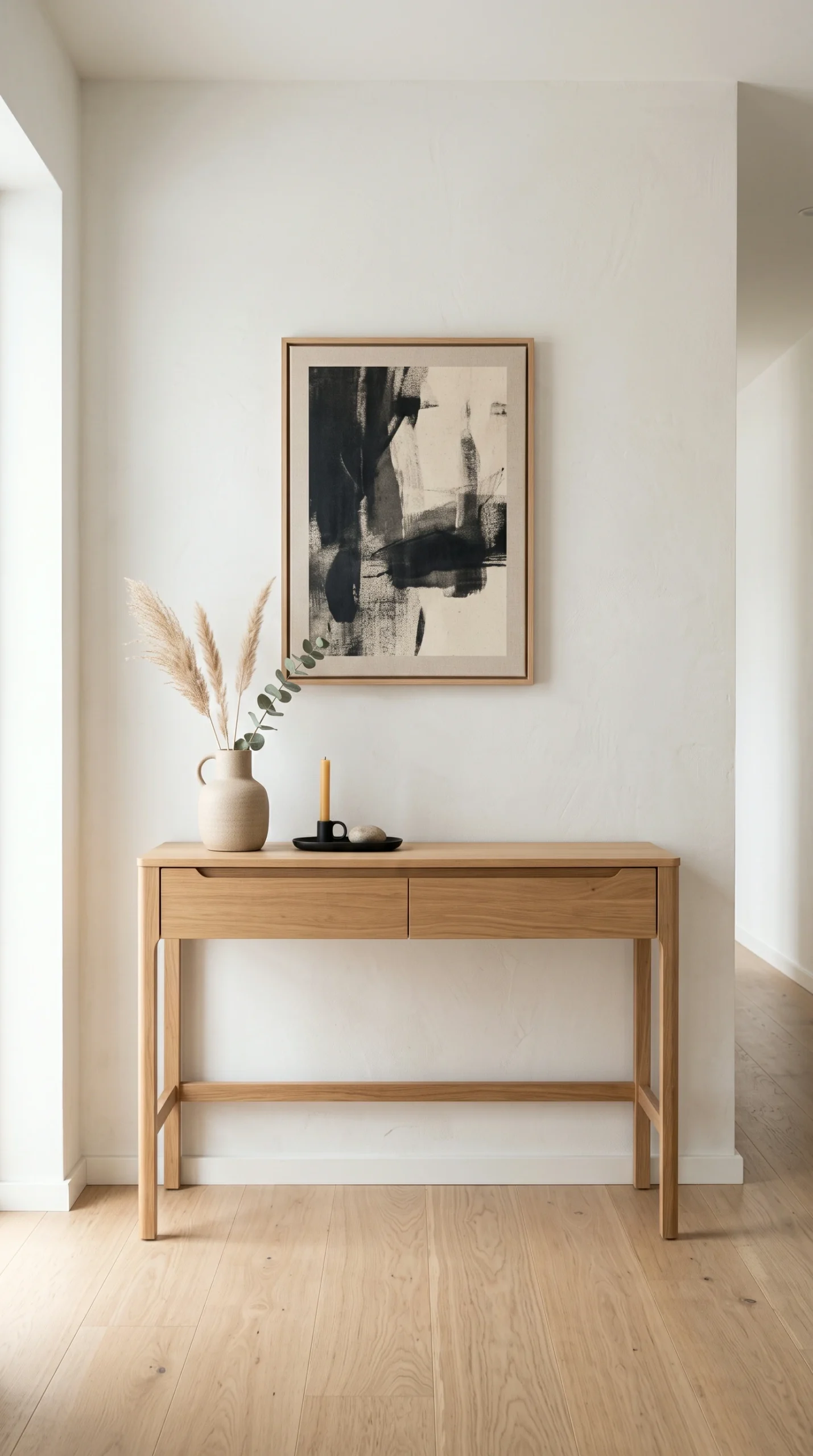
When pairing new benches or consoles with your existing flooring, check that the undertones do not clash. For example, pale ash with cool undertones can look slightly mismatched next to reddish-orange oak floors. For more detailed advice on selecting well-built timber pieces, see our guide to Japandi furniture ideas.
Hallway runners take constant punishment from outdoor grit, rain, and street salt. While a thick, high-pile wool rug looks cozy in catalog shoots, it traps fine dirt easily and is difficult to vacuum in a narrow corridor.
Flat-weave wool runners are generally a better choice because natural wool contains lanolin, giving it a natural resistance to light moisture and spills. Natural jute and sisal runners offer an appealing textured surface, but be aware of their drawbacks: coarse jute can feel rough on sensitive bare feet, and liquid spills on unsealed plant fibers can cause stubborn watermarks if not blotted dry immediately. Using a non-slip natural rubber underlay pad is essential on tile or timber floors to keep runners from shifting dangerously underfoot.
Most entryways lack exterior windows. Relying solely on a single recessed ceiling can light often produces unflattering downward shadows, accentuates scuffed baseboards, and gives the hall a cold, institutional feel.
Layering two softer light sources creates a far more welcoming atmosphere:
In a Japandi hallway, accessories work best when they serve a clear practical purpose or solve an architectural problem. You can explore more styling tips in our guide to Japandi decor ideas.
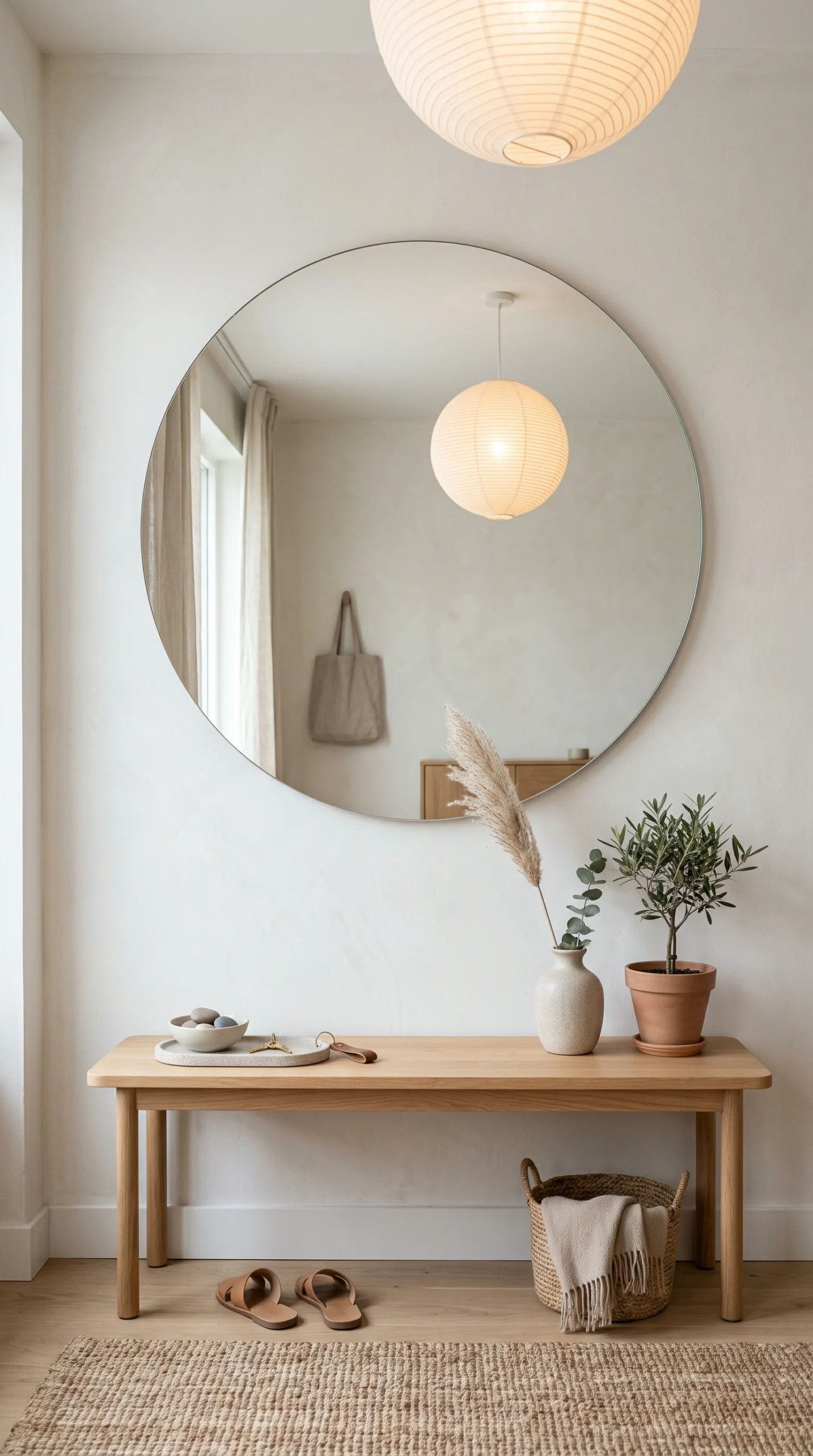
A wall mirror serves two practical roles: checking your appearance before heading out and reflecting ambient light down the length of the hall. A round or soft pebble-shaped mirror with a slim wood or dark metal frame helps soften the rigid vertical lines of hallway doors.
Hang the mirror so its center sits around 58 to 60 inches from the floor, which corresponds to average eye level. Whenever possible, position it where it catches light from an adjacent doorway or reflects an attractive piece of art rather than directly facing a crowded coat rack.
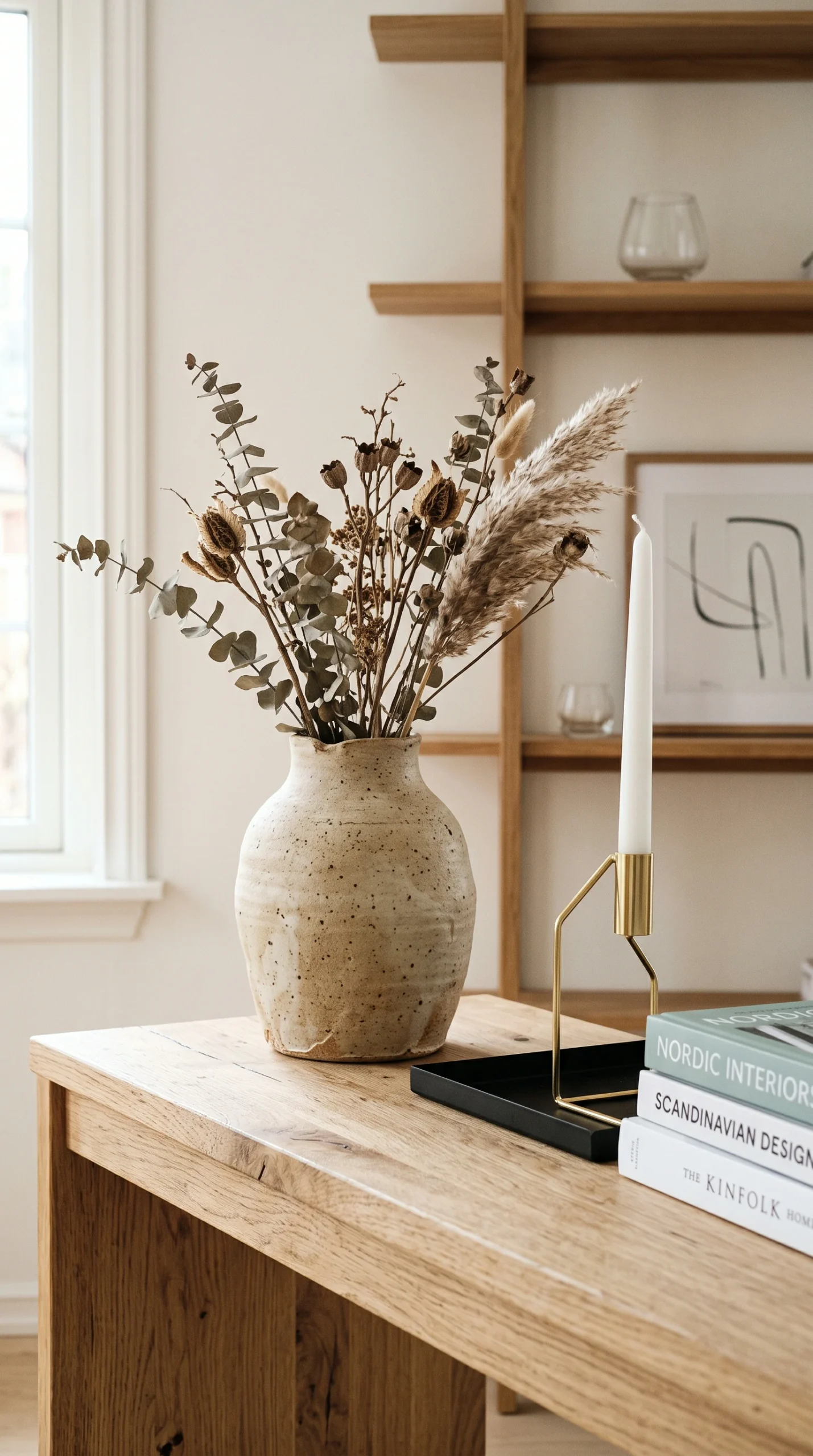
Limit console tabletop styling to two or three items:
By connecting these accents with a warm, restrained Japandi color palette, your hallway creates an inviting visual path that leads smoothly into your main Japandi living room.
Acoustic Echo: Long, tiled entryways can echo loudly every time someone opens the door or drops keys. Hanging a framed canvas with acoustic backing or laying a dense wool runner helps absorb reverberation and immediately quietens the space.
Exposed Electrical Breaker Boxes: Many apartment entryways have unsightly metal utility panels right next to the front door. Hanging a lightweight slatted wood panel or a frameless textile hanging over the box disguises the metal while maintaining quick access for emergencies.
Radiators in Narrow Halls: Cast-iron radiators often consume valuable wall depth. Instead of a deep console, fit a custom narrow wooden shelf bracketed directly above the radiator to create an organized landing station without obstructing heating airflow.
Mud and Snow Season: During wet winter months, a decorative runner can be quickly ruined by slush. Placing a low-profile rubber boot tray filled with smooth river stones right beside the door lets wet boots drain freely while preserving the wood and fabric surfaces around them.