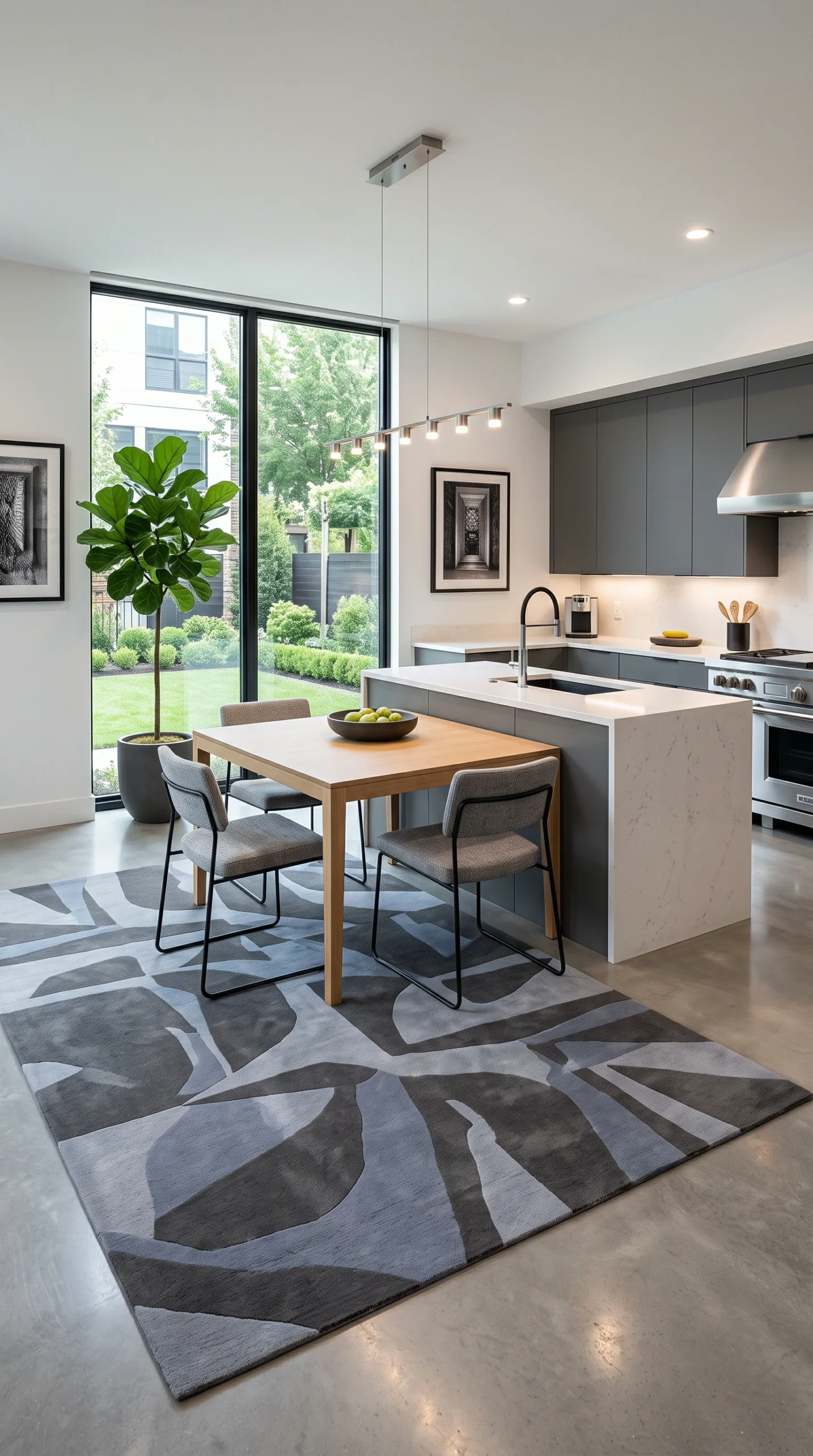
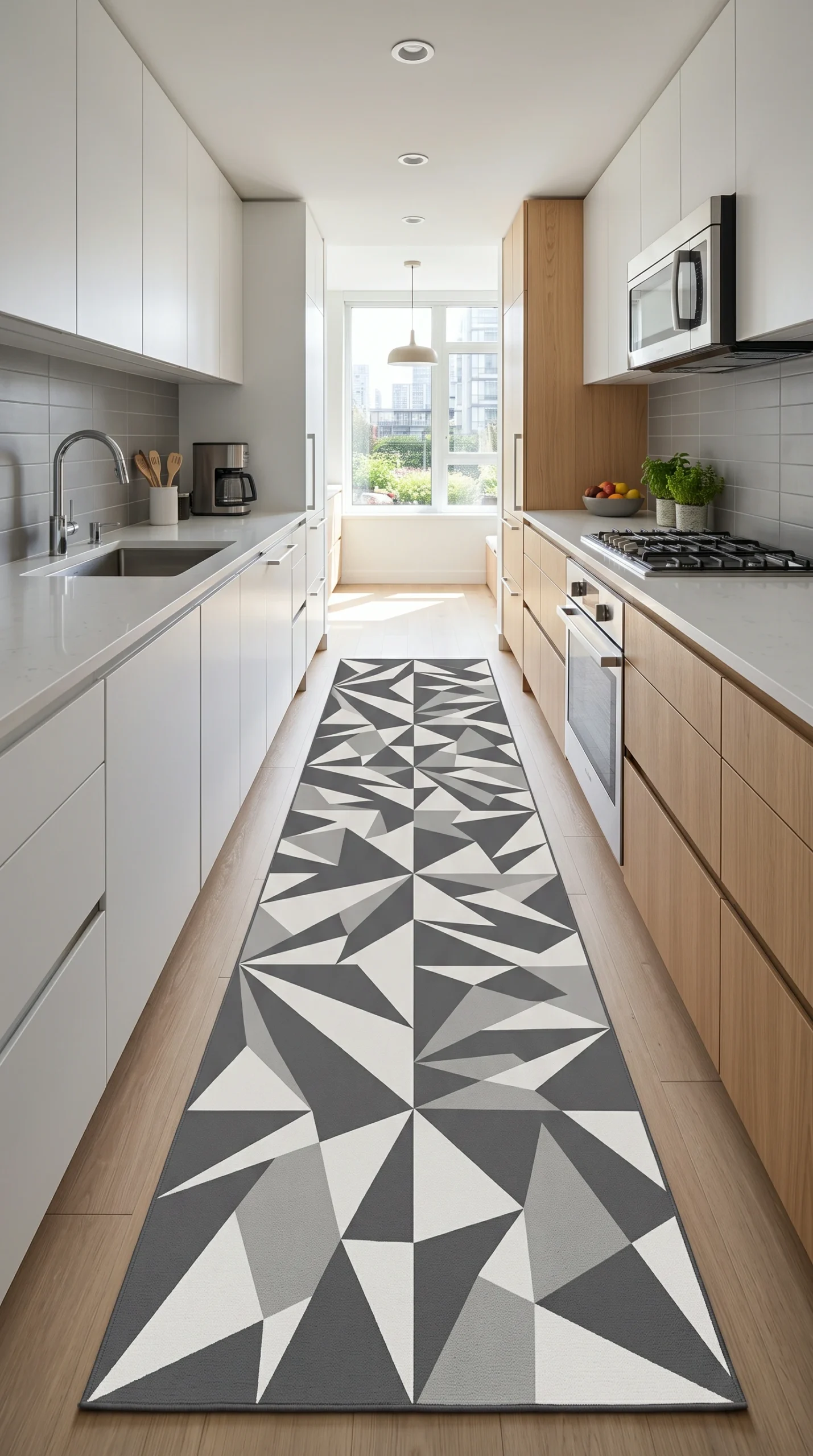
Modern design thrives on structured lines. Choose rugs with bold, oversized geometric patterns or simple, asymmetrical stripes to complement the clean angles of modern cabinetry.
To maintain a streamlined aesthetic, stick to ultra-thin, flat-weave rugs. High-pile or shag rugs disrupt the sleek lines of contemporary kitchen decor and feel out of place in a modern setting.
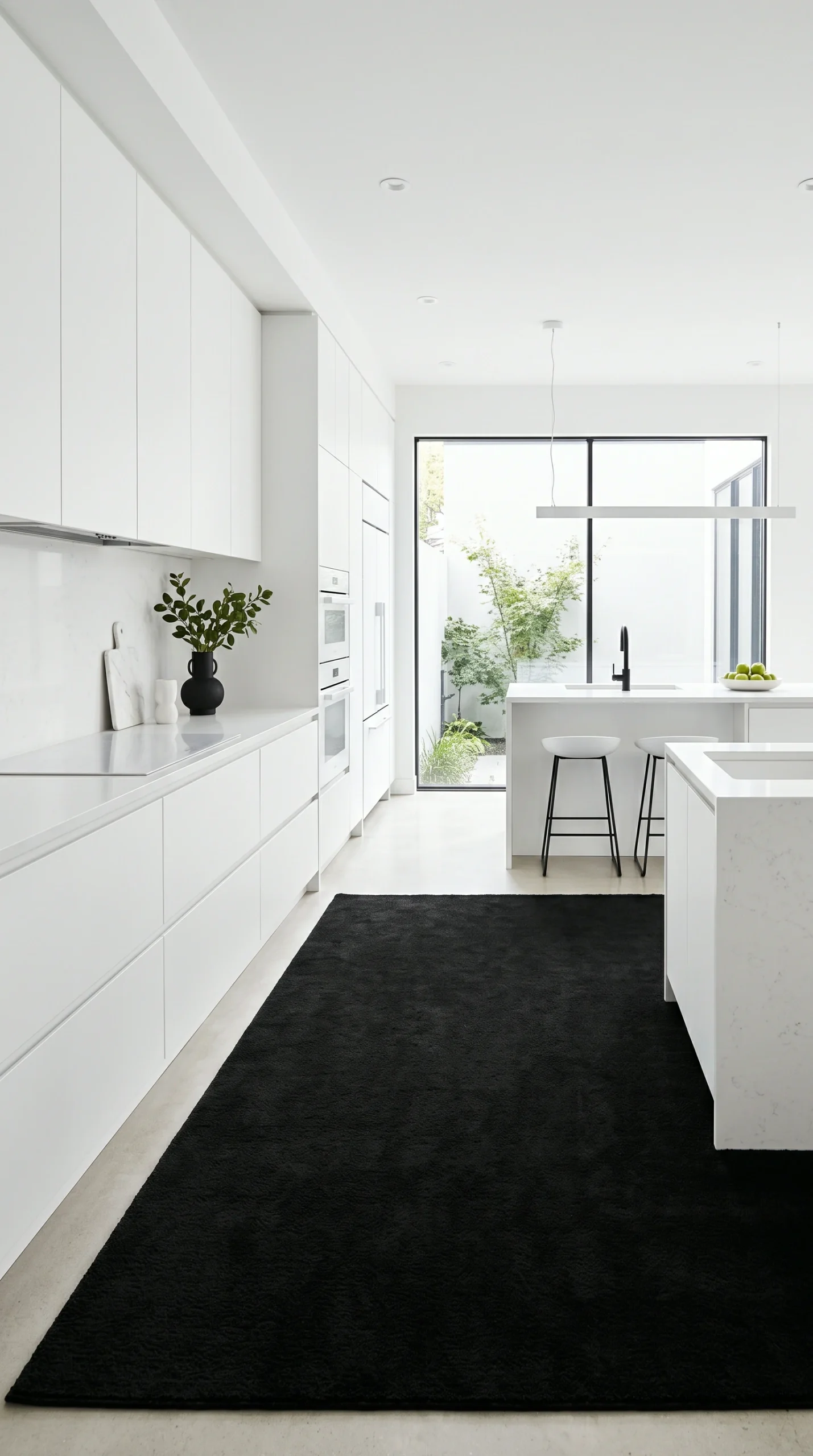
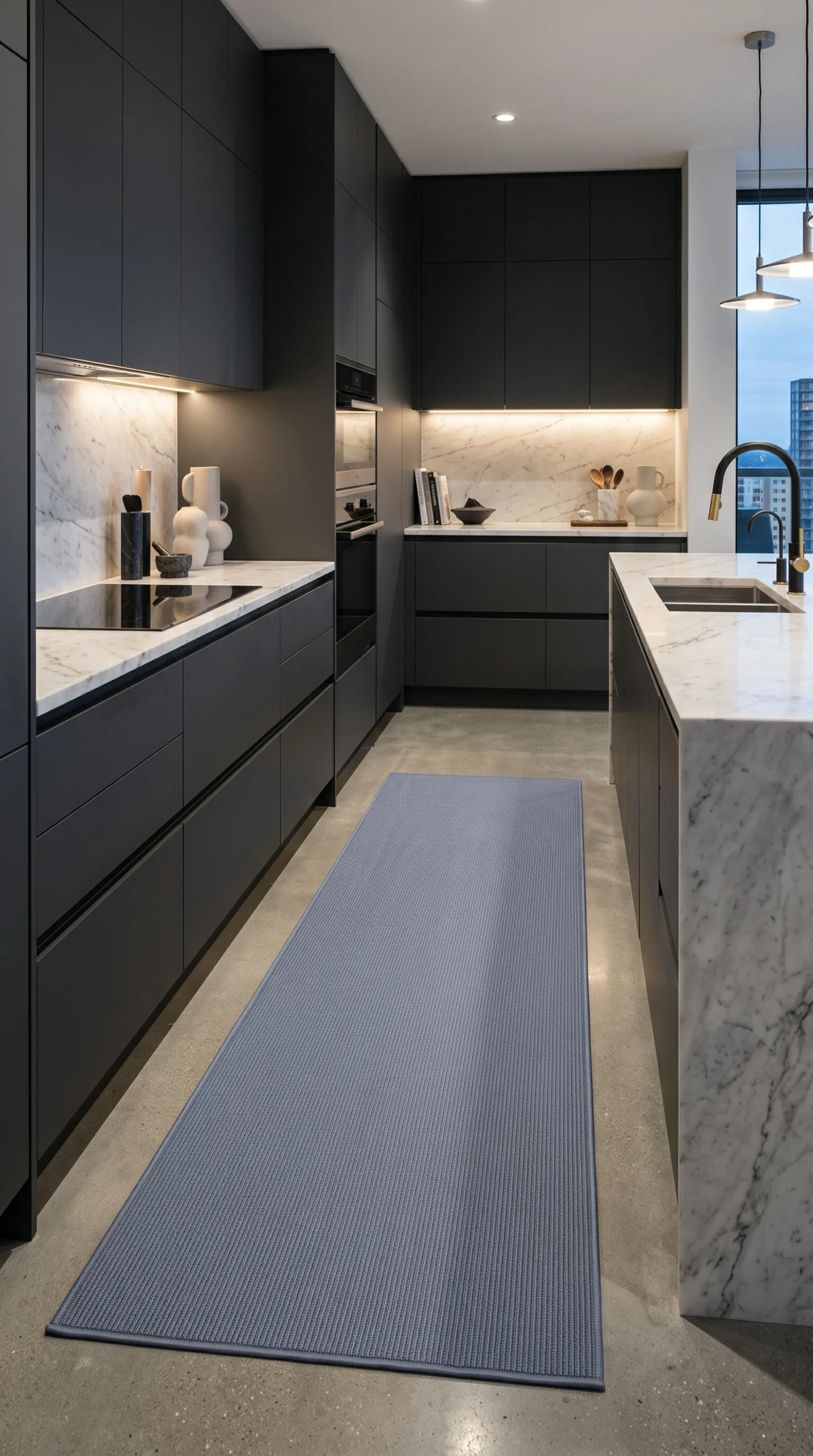
If your kitchen is predominantly white or light wood, a matte black or graphite rug creates a striking, high-end focal point that anchors the entire room.
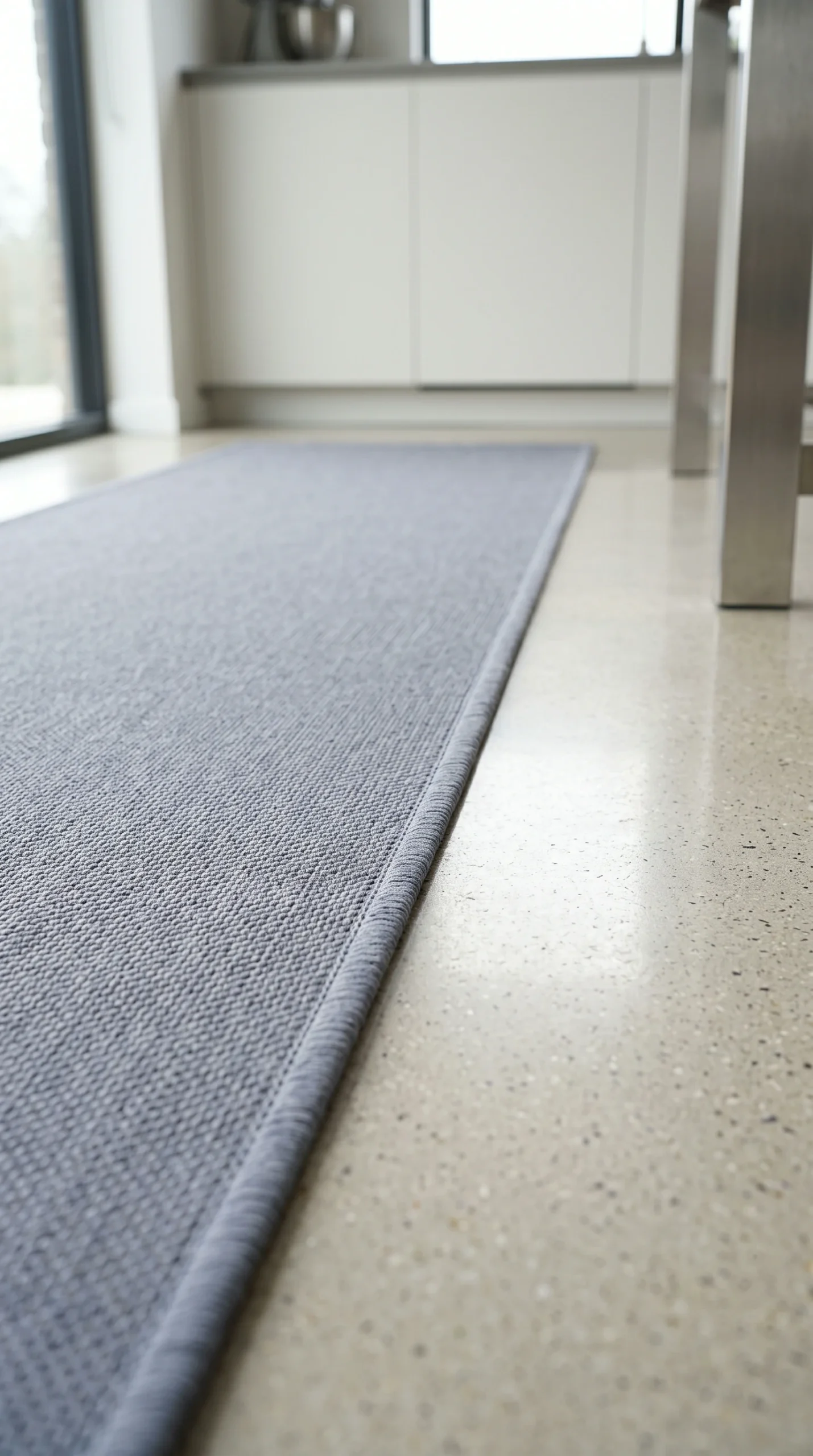
If you prefer minimalist kitchen rugs in solid colors, look for pieces that offer subtle, tonal texture—like a ribbed weave or a faint heathered effect—to add depth without adding a distracting pattern.
Designing a flawless modern kitchen is an exercise in extreme architectural restraint. In contemporary spaces, the absolute focus is usually placed on showcasing expensive, high-quality materials like expansive white quartz, heavy stainless steel, and polished concrete floors. While these hard surfaces look undeniably incredible, they offer absolutely zero acoustic absorption and can feel deeply harsh, echoing, and unforgiving underfoot. Without careful styling, the room risks feeling like a sterile laboratory. Modern kitchen rugs act as the ultimate design weapon, bridging the critical gap between stark architectural beauty and livable comfort. They provide the perfect, highly curated finishing touch to a bespoke designer space without ever compromising its minimalist integrity.
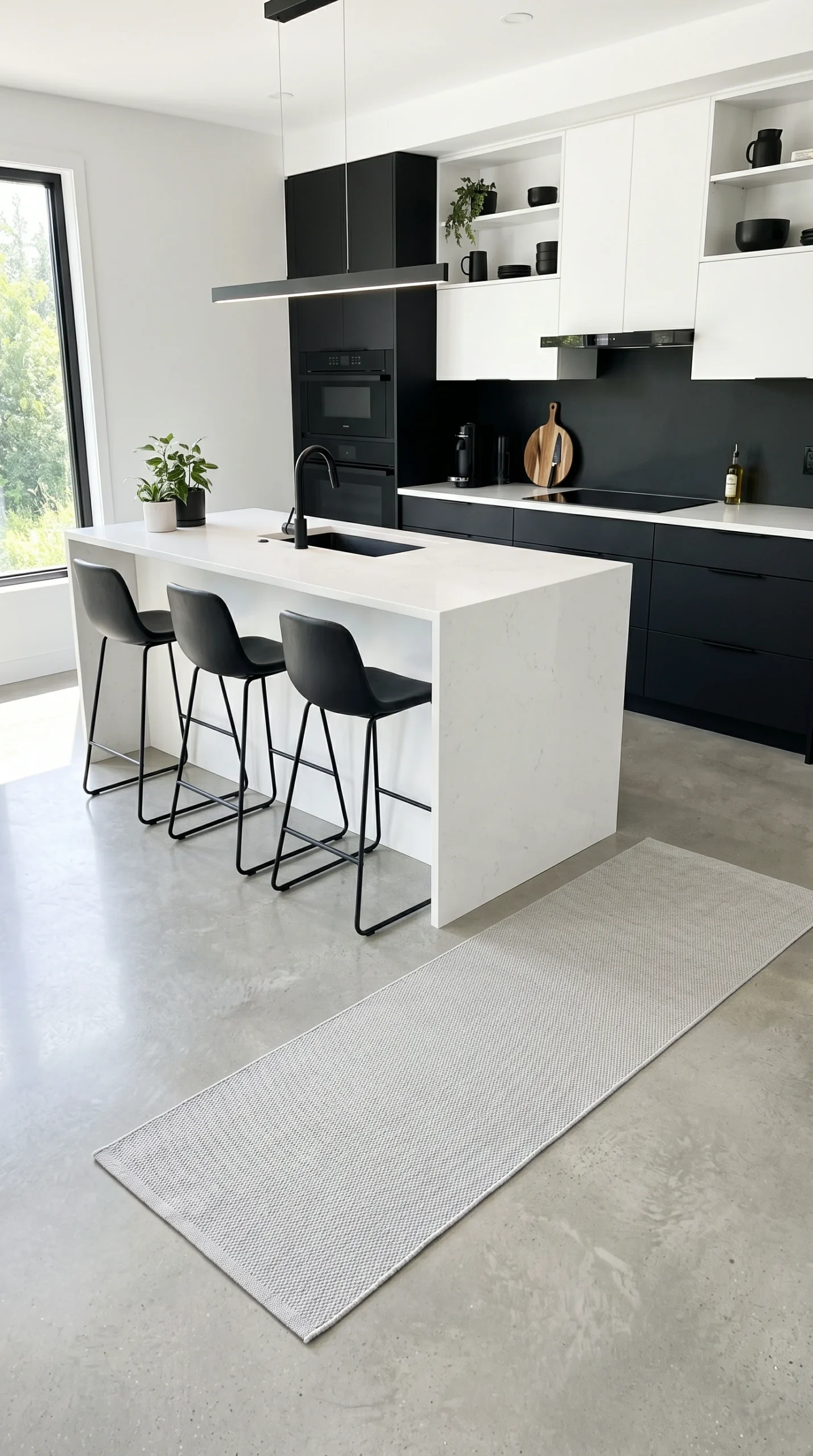
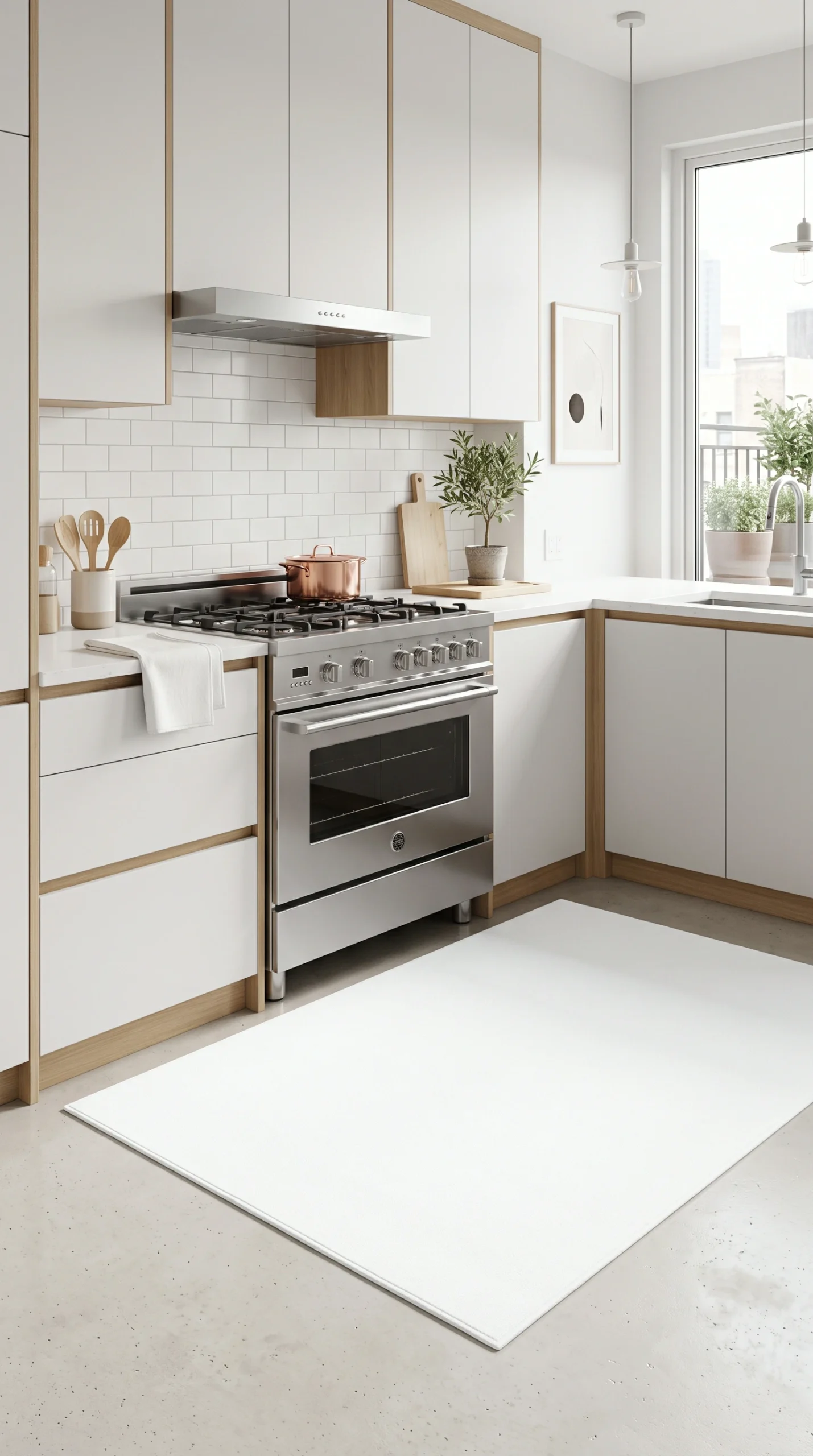
When selecting minimalist kitchen rugs, the goal is absolutely not to draw all the visual attention to the floor, but rather to silently complement and elevate the existing architecture. A highly curated, light ash or cool steel flat-weave rug can blend completely seamlessly into a light-colored polished concrete or white oak floor. This creates a brilliant, uninterrupted visual flow across the room. By matching the rug heavily to the floor tone, you provide essential, deeply comfortable cushioning in front of the sink or stove while ensuring the room still feels massively expansive, pristine, and aggressively modern.
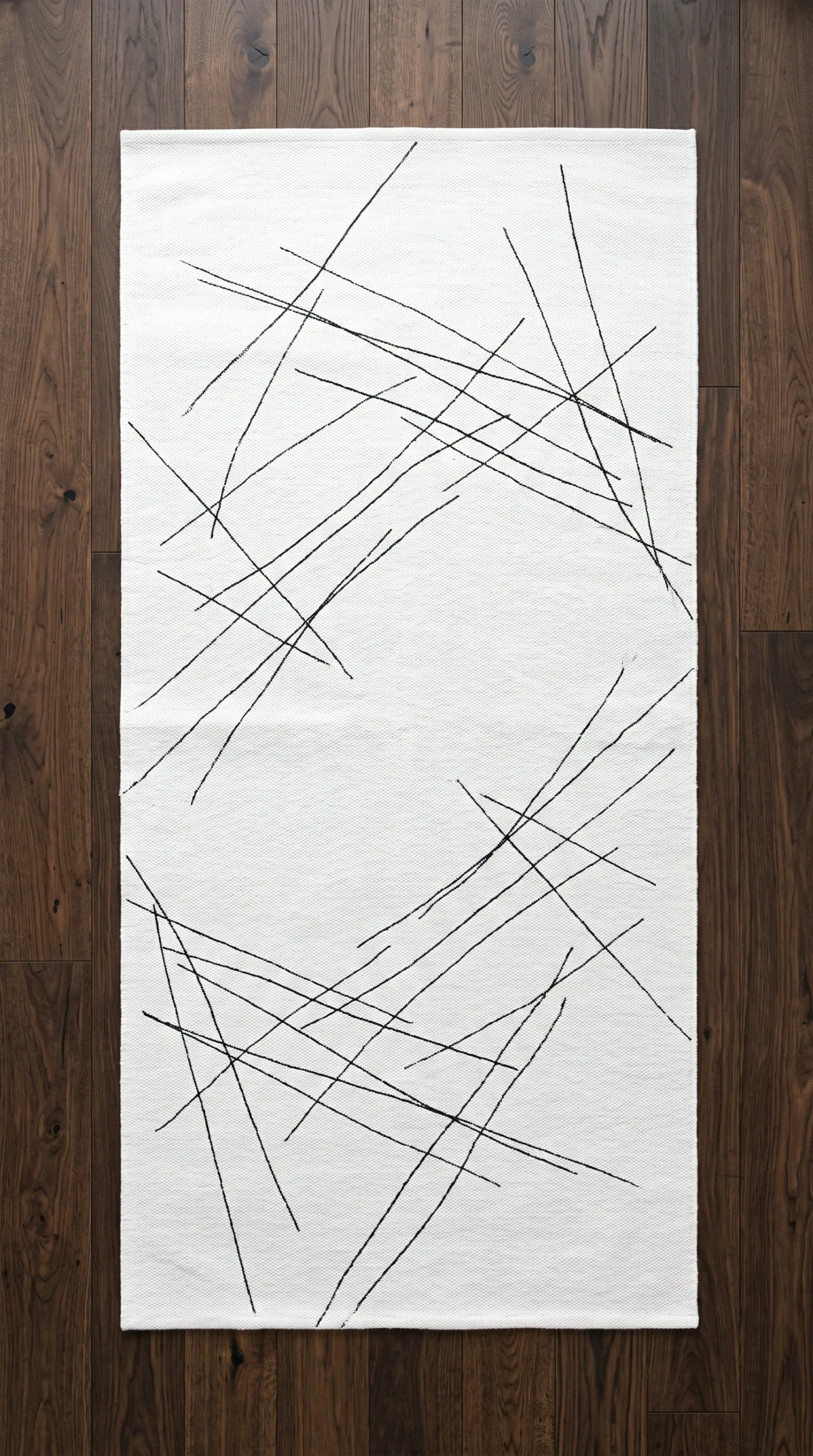
For ultra-modern kitchens that need a sudden injection of personality, modern kitchen rug ideas often lean heavily into bold, abstract, or precise geometric designs. A massive rug featuring stark white and heavy matte black asymmetrical lines acts as a literal piece of expensive modern art for your floor. This high-tension style works exceptionally well in kitchens that utilize seamless flat-panel, completely handleless cabinetry. Because the walls and cabinets are entirely devoid of hardware and visual clutter, a bold abstract rug provides the only complex visual element in the room, beautifully contrasting against the stark 90-degree architectural angles to create a breathtaking designer aesthetic.
In contemporary kitchen decor, the physical material of the rug is just as vital as the design itself. Throwing a deeply distressed, messy, or fluffy shag rug into a modern kitchen will instantly destroy the sleek aesthetic. Instead, you must look for incredibly tightly woven synthetic blends, highly durable flat-weave indoor/outdoor materials, or smooth bamboo silk blends. These specific materials offer the crisp, razor-sharp edges and ultra-flat profiles absolutely required for a tailored, designer kitchen. The rug must lay perfectly flush against the floor, looking like a deliberate piece of built-in architecture rather than a floppy, messy afterthought.
Modern interior design is utterly obsessed with monumental scale and flawless proportion. One of the most devastating mistakes you can make in a contemporary kitchen is placing a tiny, timid rug in front of a massive slab of quartz or a huge kitchen island. A small rug instantly looks cheap and completely shatters the clean, expensive lines of the room. To maintain a high-end modern aesthetic, your rug must be aggressively oversized. Whether you are using a long runner to perfectly frame the entire length of the island or a massive area rug to completely anchor an open-concept dining zone, the textile must effortlessly match the grand, expensive scale of the surrounding architecture to look truly bespoke.