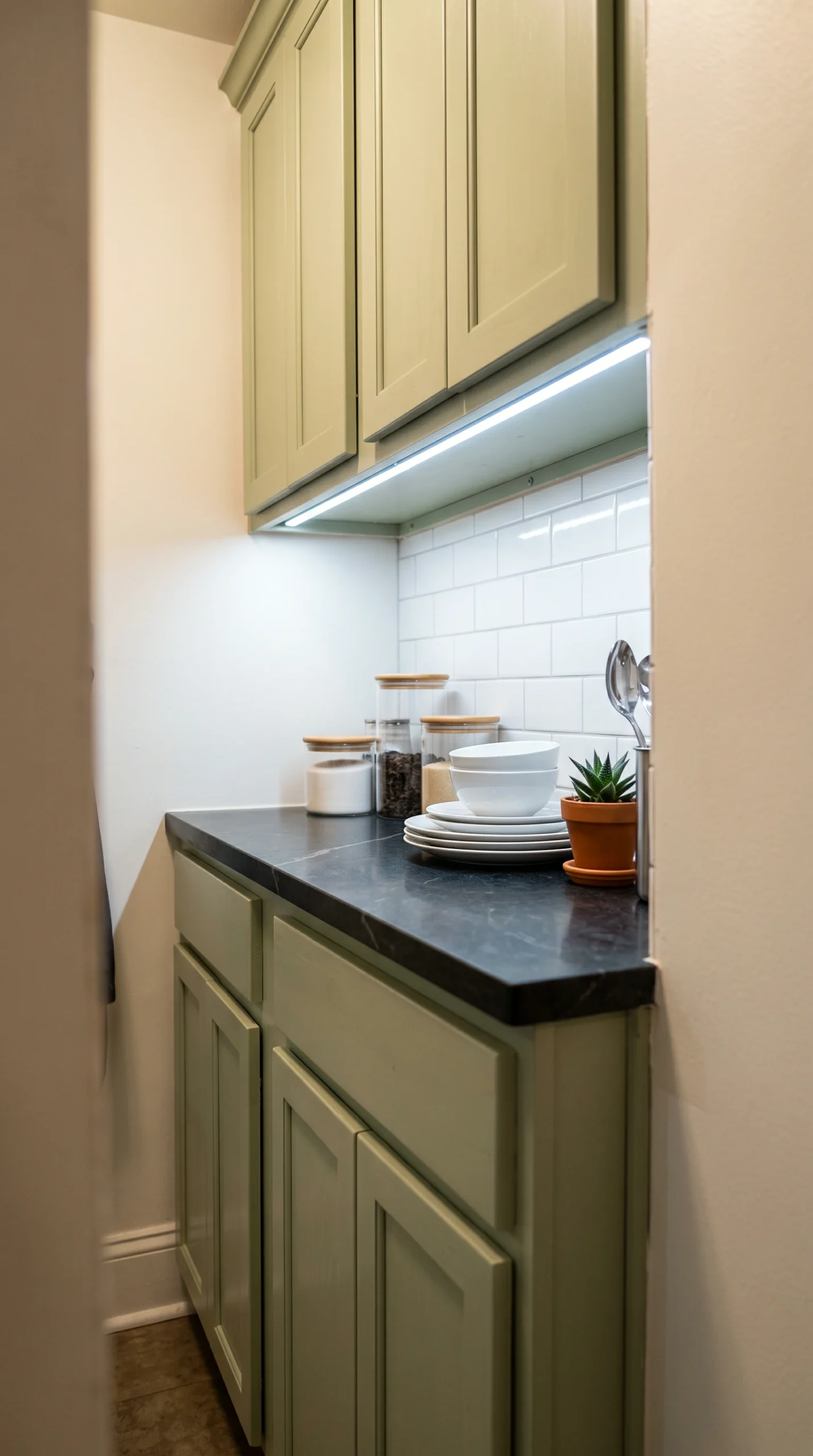
Light Reflectance Value (LRV) is crucial in small spaces. Choose colors with a high LRV (whites, pale creams, very soft grays/greens) to bounce maximum natural and artificial light around the room.
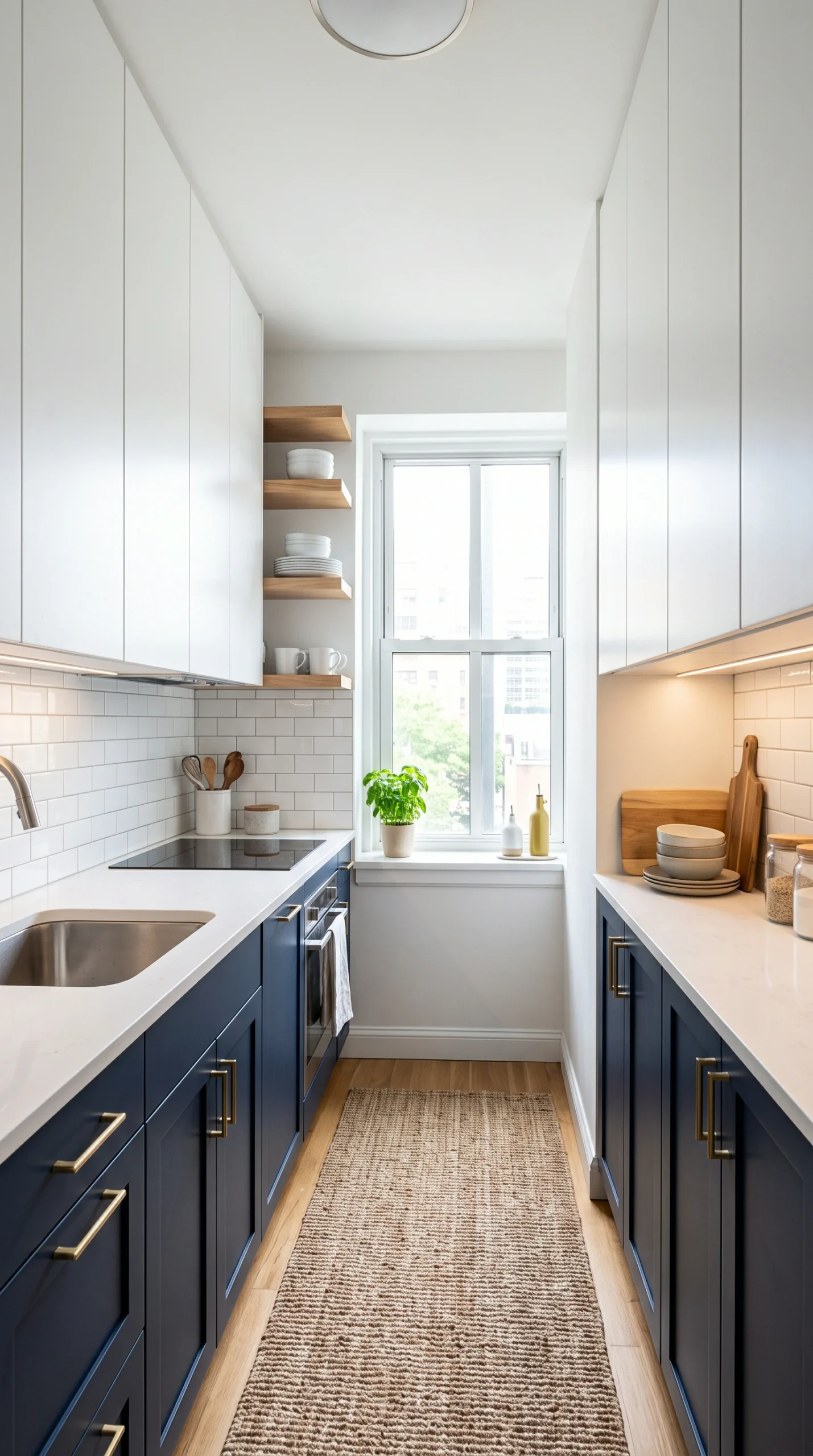
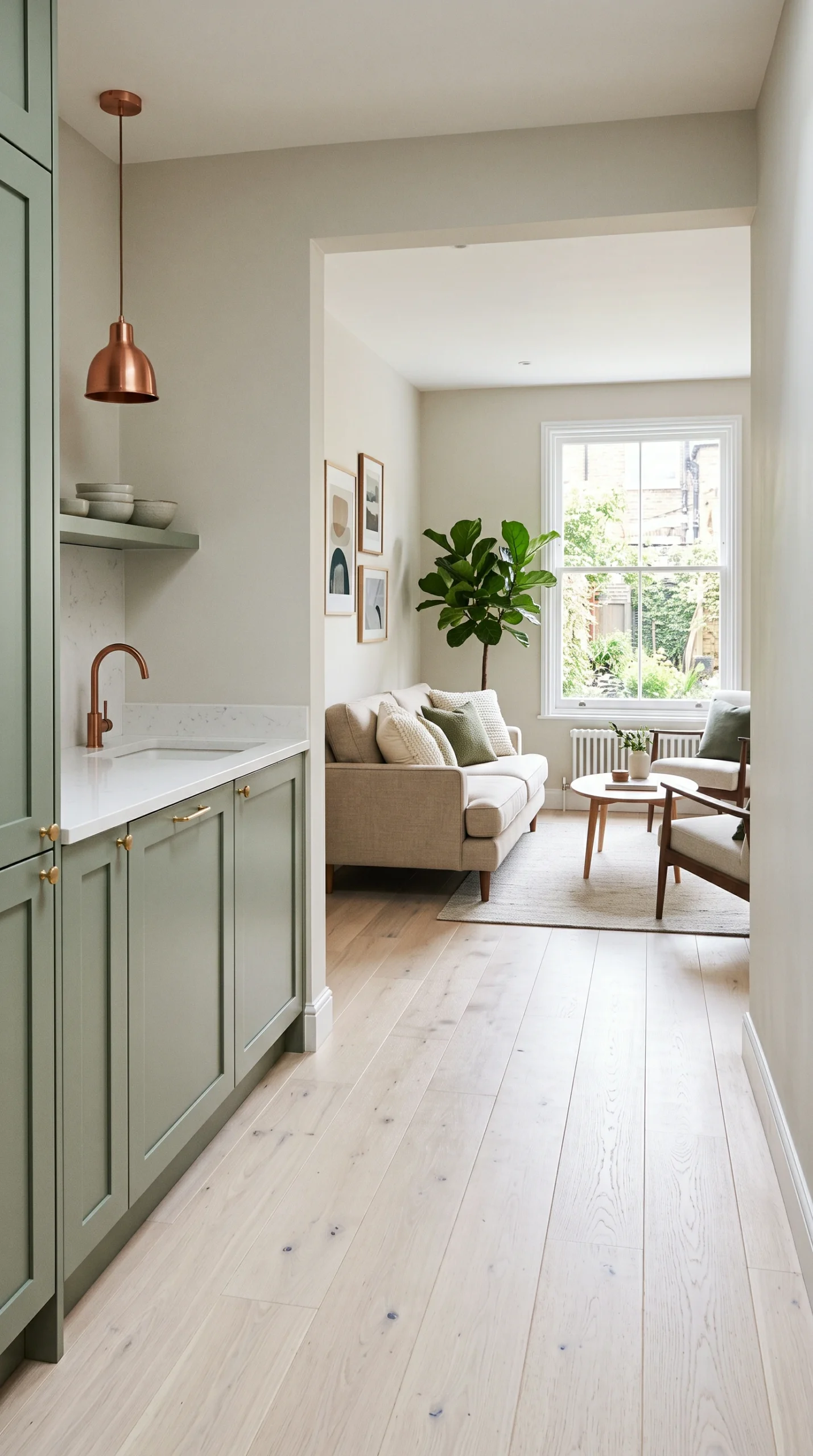
If you want dark color, only paint the lower base cabinets dark. Keep all upper cabinets, the backsplash, and the ceiling brilliant white. This grounds the room while keeping the upper half airy and expansive.
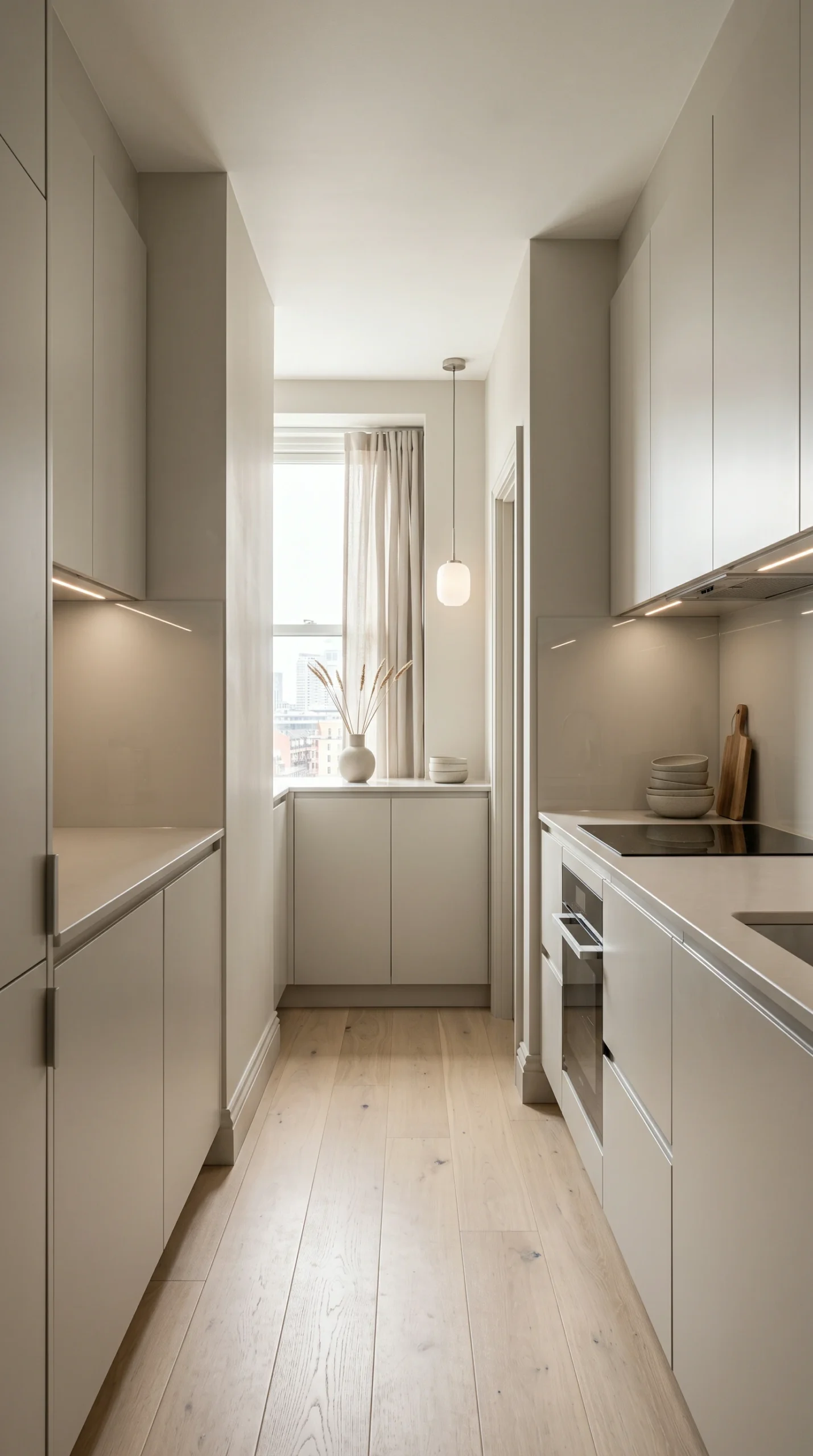
To blur boundaries, paint the cabinets, the walls, and the trim the exact same light color. When the eye cannot detect a sharp line between the cabinets and the wall, the room feels larger.
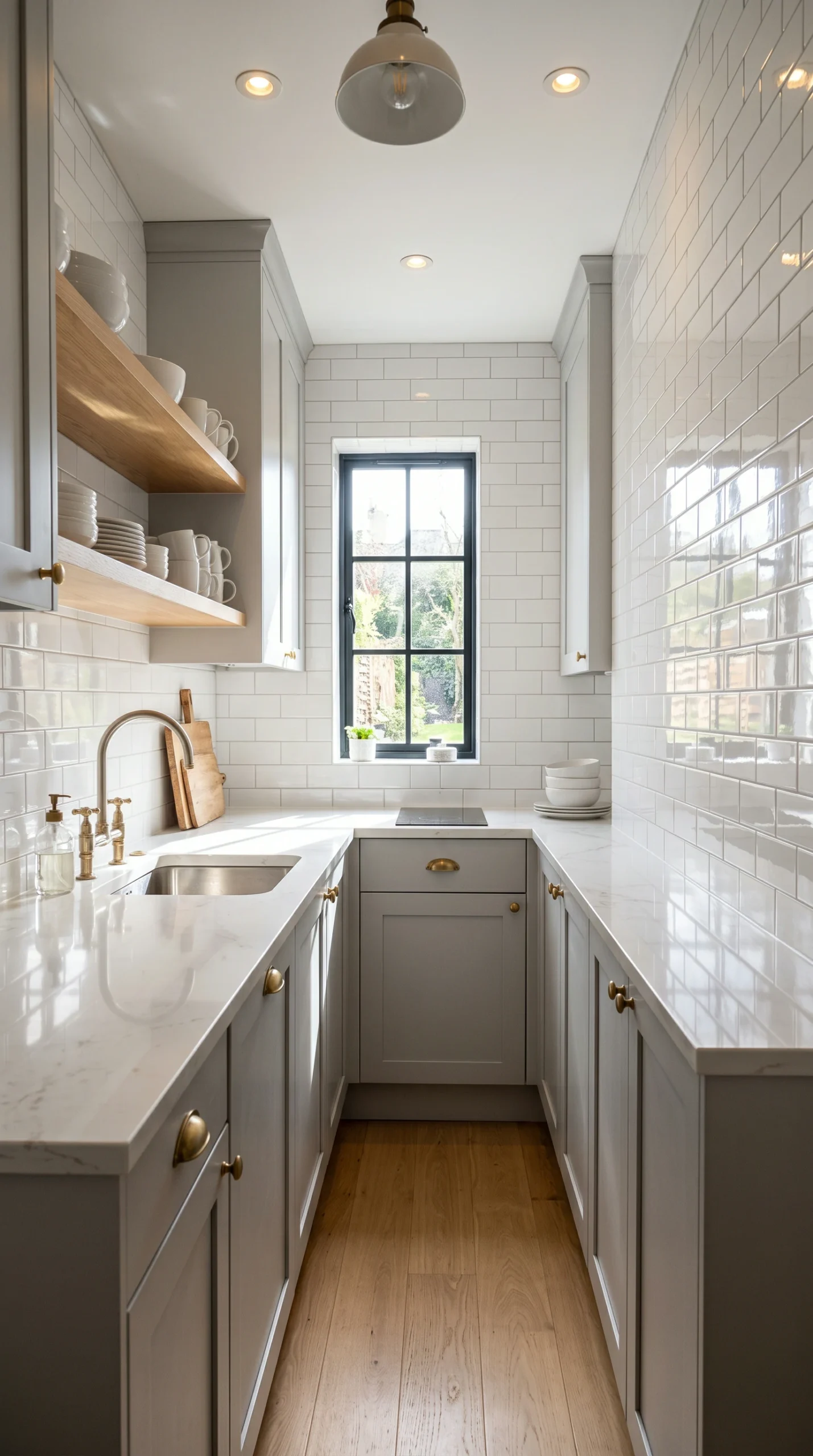
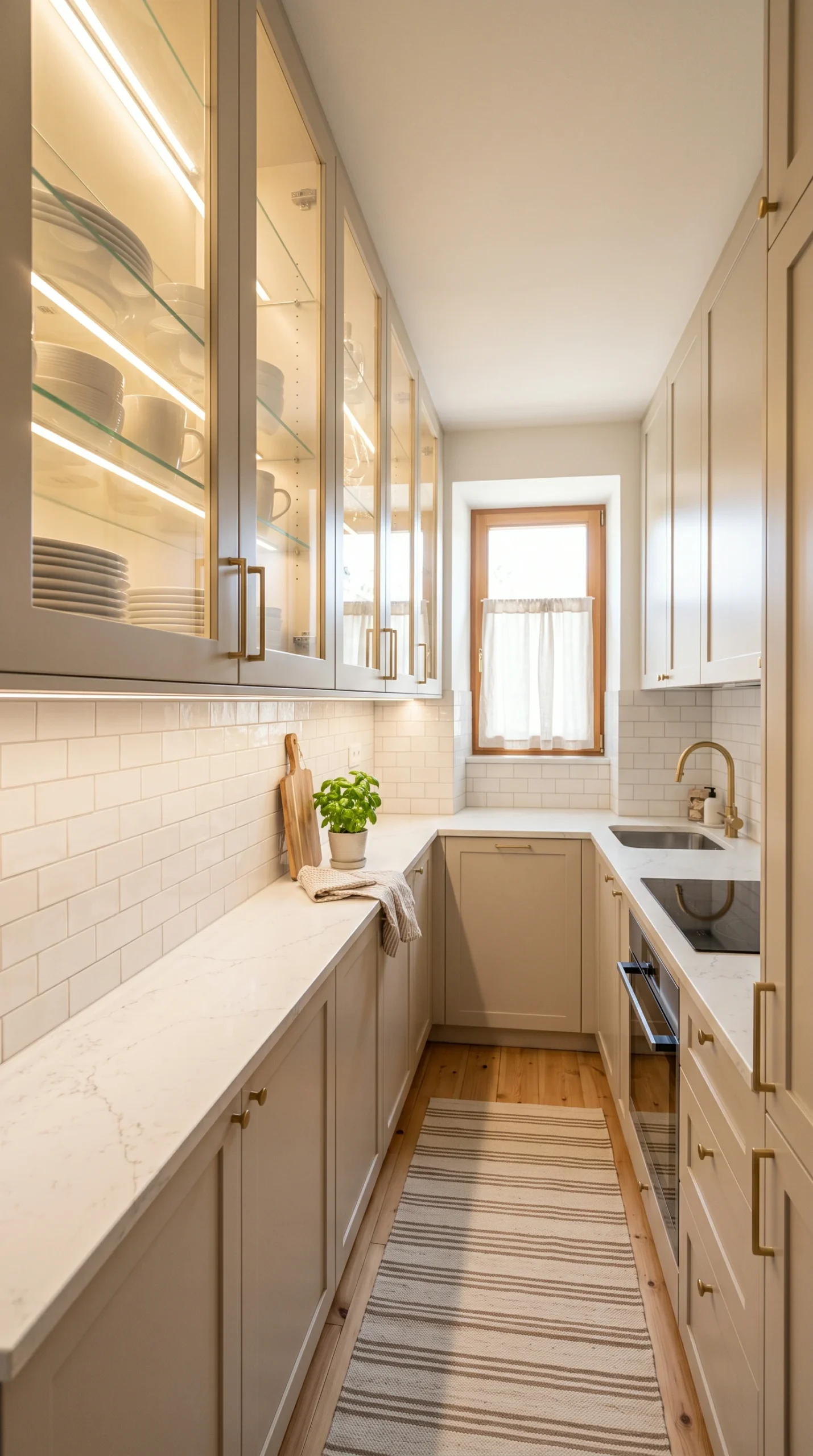
Matte finishes absorb light. In a tiny kitchen, use satin or high-gloss paint on the cabinets, and a glossy, reflective tile (like glass or glazed ceramic) for the backsplash to act like tiny mirrors.
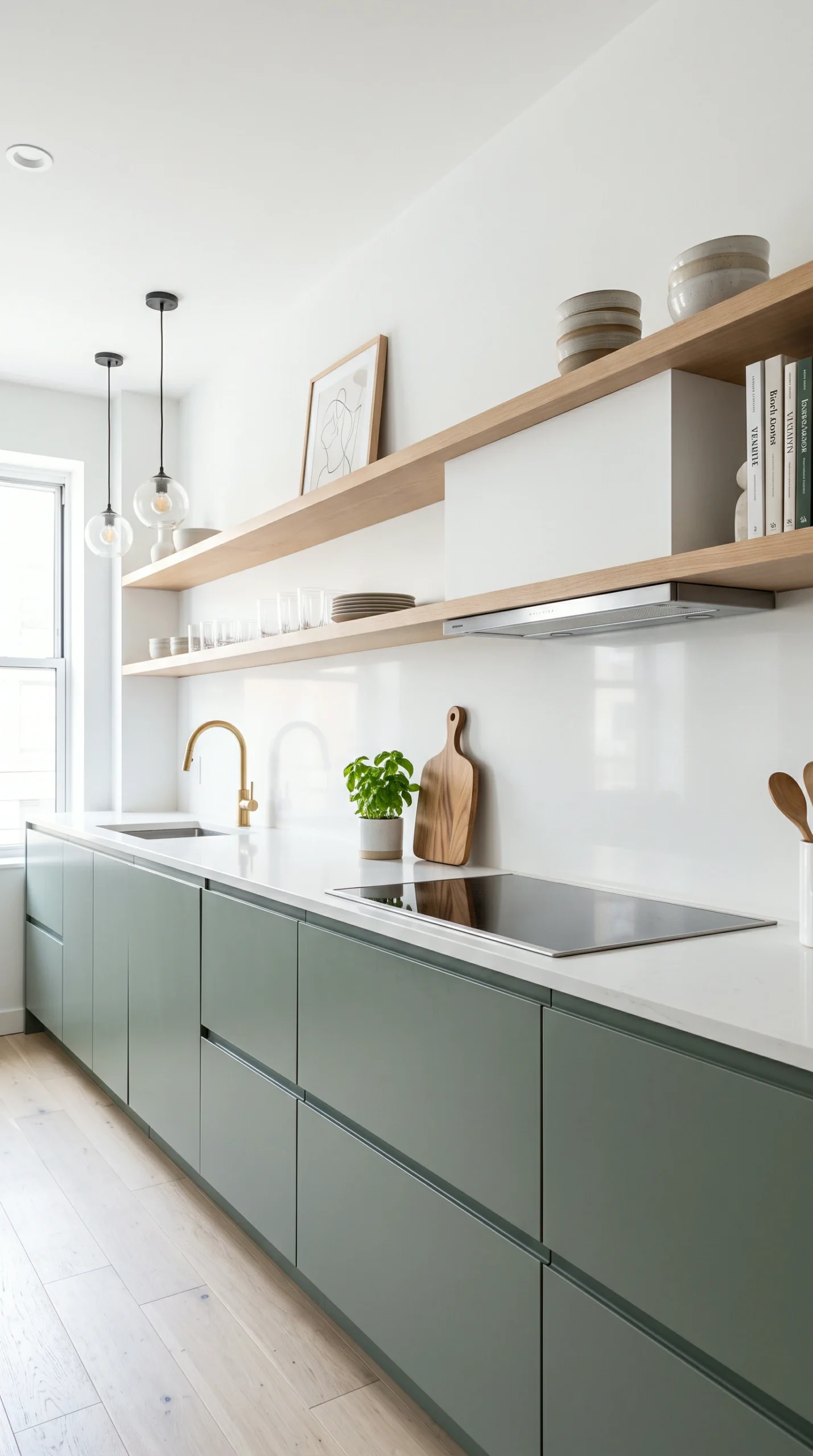
Bulky upper cabinets protrude into the room, making it feel smaller. If storage allows, replace a section of upper cabinets with open floating shelves to instantly push the walls back visually.
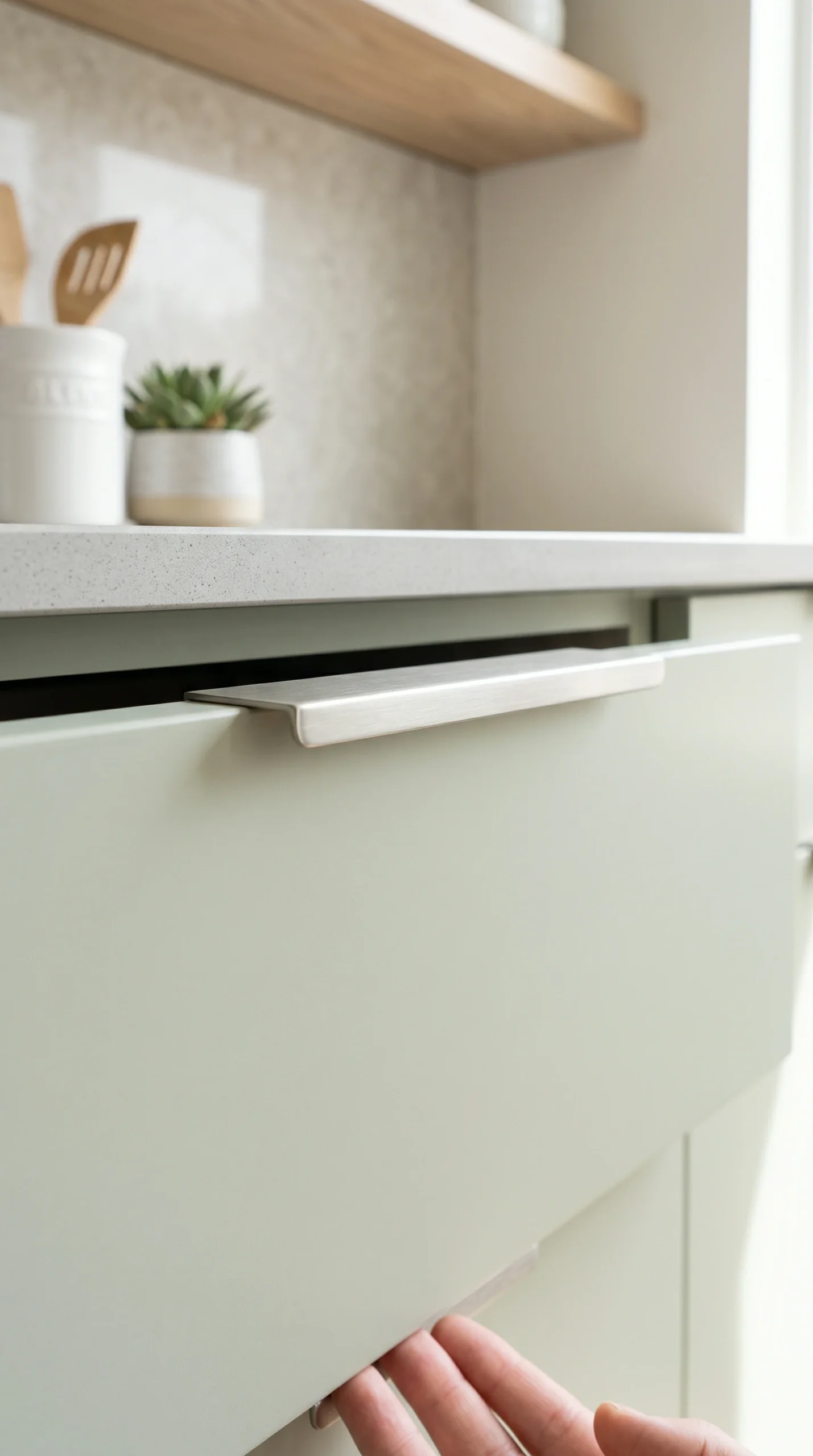
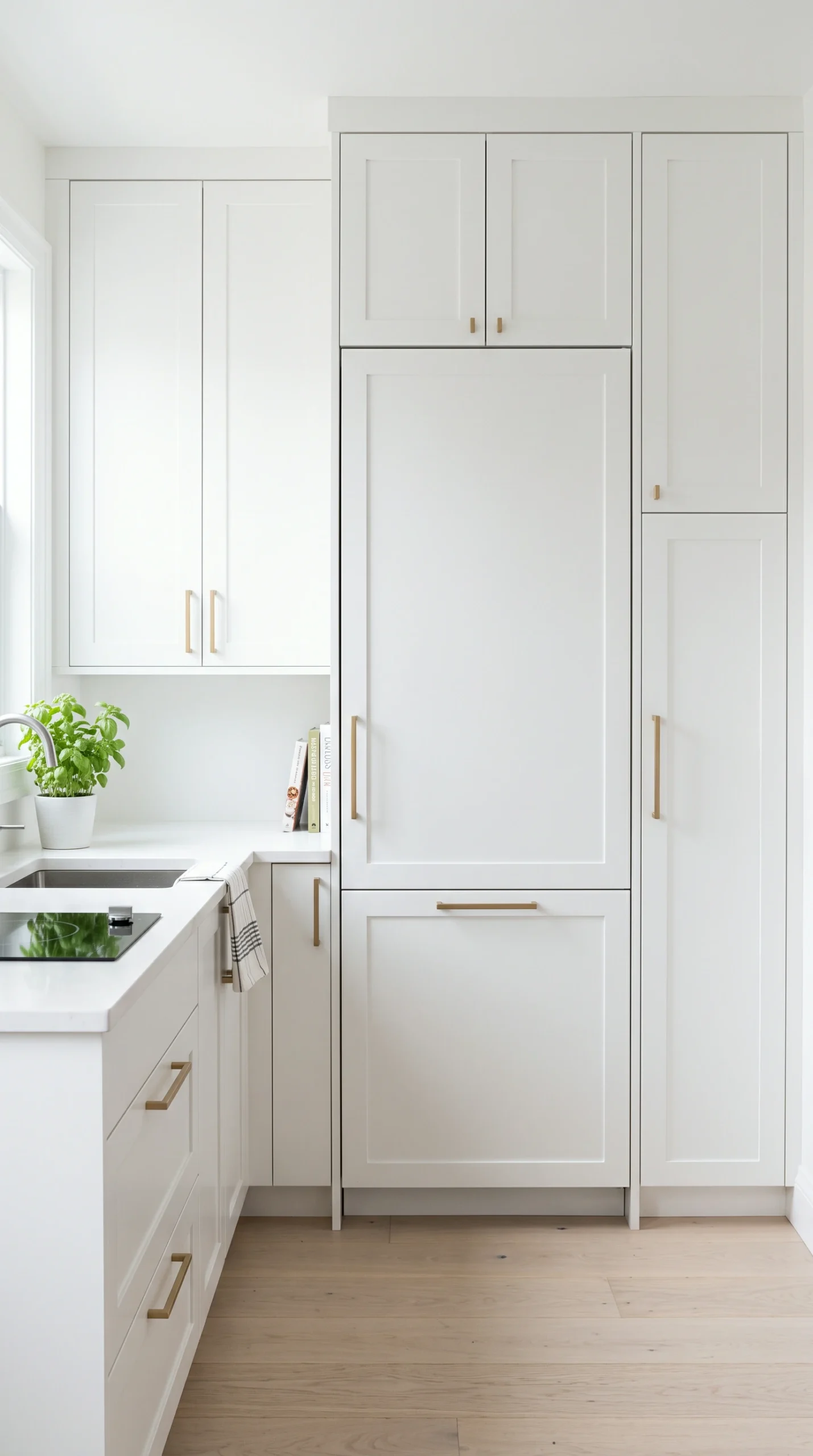
Large, ornate hardware clutters the visual field. Use sleek, minimalist edge pulls, simple small knobs, or handleless 'push-to-open' doors to keep the cabinetry lines incredibly clean and unbroken.
When evaluating kitchen cabinet color ideas for small kitchens, the most critical technical metric is the Light Reflectance Value (LRV). In a small room, every photon of light is precious. Dark colors absorb light, visually advancing the walls and shrinking the space. Colors with a high LRVprimarily crisp whites, soft creams, and very pale, dusty pastelsact as reflectors. When applied to cabinetry, these colors bounce natural light from the window and artificial light from the fixtures back into the room. This aggressive light reflection is the simplest, most effective optical illusion in interior design, instantly making a cramped galley kitchen feel significantly wider, more buoyant, and highly energized.
Many homeowners mistakenly believe that a small kitchen entirely precludes the use of rich, dark colors like navy or forest green. This is a myth. The solution lies in the strategic placement of the color. The ‘tuxedo’ or two-tone application is one of the most brilliant kitchen cabinet color ideas for small kitchens. By painting the lower base cabinets a dark, grounding color, you anchor the room and add sophisticated personality. Crucially, by painting the upper cabinets, the backsplash, and the ceiling a brilliant, continuous white, you eliminate any heavy visual weight at eye level. This draws the eye upward, maximizing the perceived height of the ceiling and keeping the overall atmosphere incredibly light and airy.
A highly sophisticated, modern technique for expanding a small space is known as ‘color drenching’ or a tonal approach. If you choose a color other than whiteperhaps a soft mushroom greige or a pale sage greenyou apply that exact same color (or a shade very close to it) to the cabinets, the walls, and the trim. In a small kitchen, high-contrast lines (like a dark cabinet against a white wall) visually chop up the space and emphasize the small dimensions. Color drenching eliminates these harsh boundaries. When the eye cannot easily detect where the cabinets end and the wall begins, the room feels cohesive, seamless, and remarkably larger than its actual footprint.
Because space is at a premium, every surface in a small kitchen must work hard. Combining light paint colors with highly reflective materials is a cornerstone of effective kitchen cabinet color ideas for small kitchens. While matte finishes are sophisticated, they absorb light. In a tiny kitchen, interior designers frequently opt for cabinet paint with a satin or even a high-gloss finish. Furthermore, pairing these cabinets with a highly polished quartz countertop, a glossy glass subway tile backsplash, and polished chrome or brass hardware creates a ‘mirror effect.’ These shiny surfaces bounce light aggressively around the tight space, counteracting any feelings of claustrophobia and adding necessary sparkle.
Standard upper cabinets are essentially large, solid boxes that protrude 12 to 15 inches into the room, encroaching on the limited airspace of a small kitchen. A dramatic way to manipulate the perception of space is to remove some of these visual roadblocks. Replacing a section of solid upper cabinets with floating wood shelves is a highly effective strategy. Exposing the wall behind the shelves instantly pushes the visual boundary of the room back by a foot. When styled minimally with light-colored, uniform dishware, open shelving makes a compact kitchen feel significantly deeper, wider, and more breathable, allowing the cabinet color below to anchor the space beautifully without feeling enclosed.
In a compact space, microscopic details have a macroscopic impact on how the room feels. Heavy, ornate, or overly complex cabinet hardware introduces visual ‘noise’ that can quickly make a small kitchen feel chaotic and cluttered. When implementing kitchen cabinet color ideas for small kitchens, discipline is required. The most successful designs utilize sleek, minimalist hardware. Simple, small brushed brass knobs, ultra-discreet edge-pulls that sit flush with the top of the drawers, or completely handleless push-to-open cabinets ensure the architectural lines of the room remain clean and unbroken. This minimalist approach prevents the eye from getting ‘snagged’ on details, enhancing the overall feeling of spaciousness.