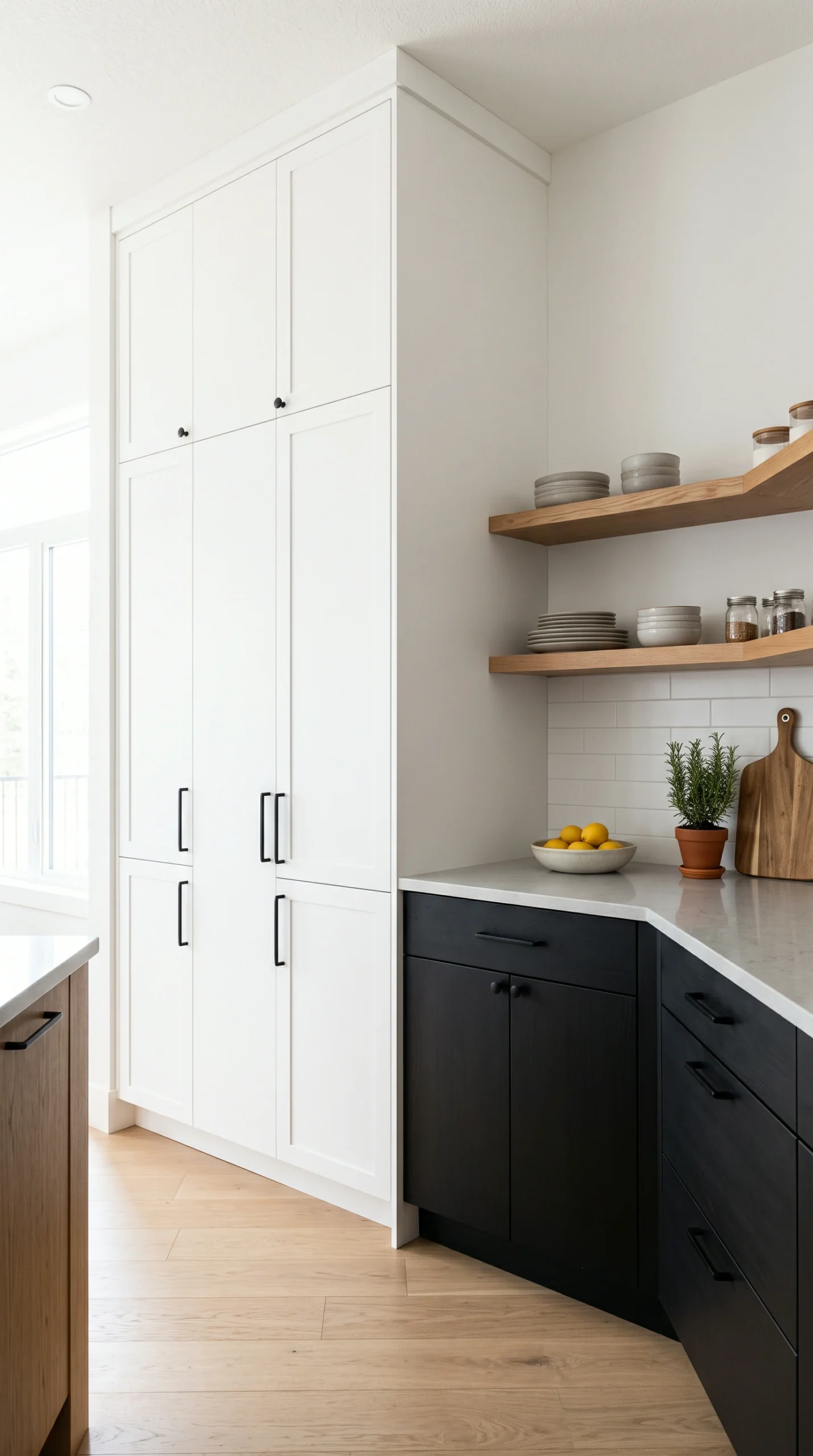
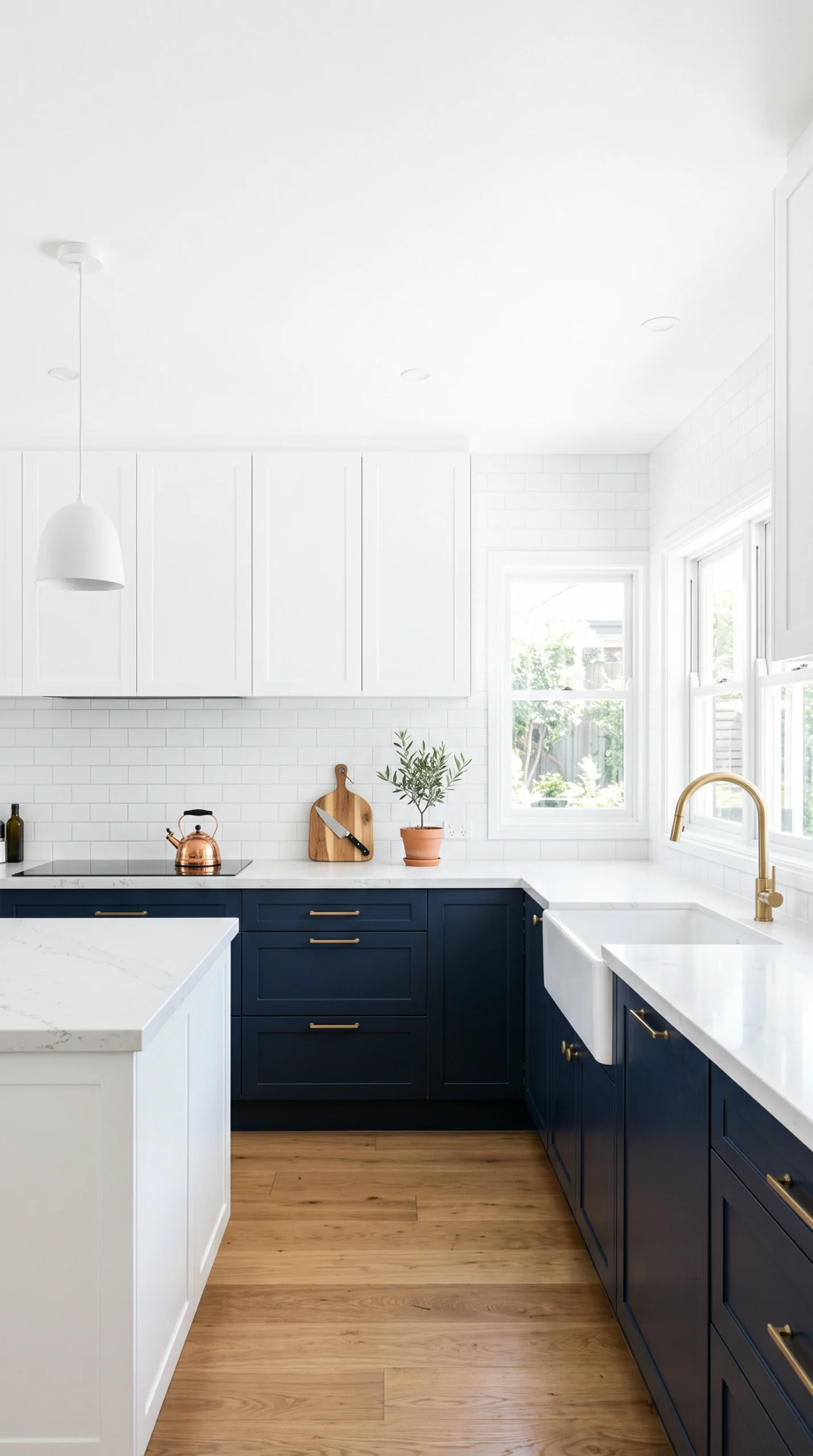
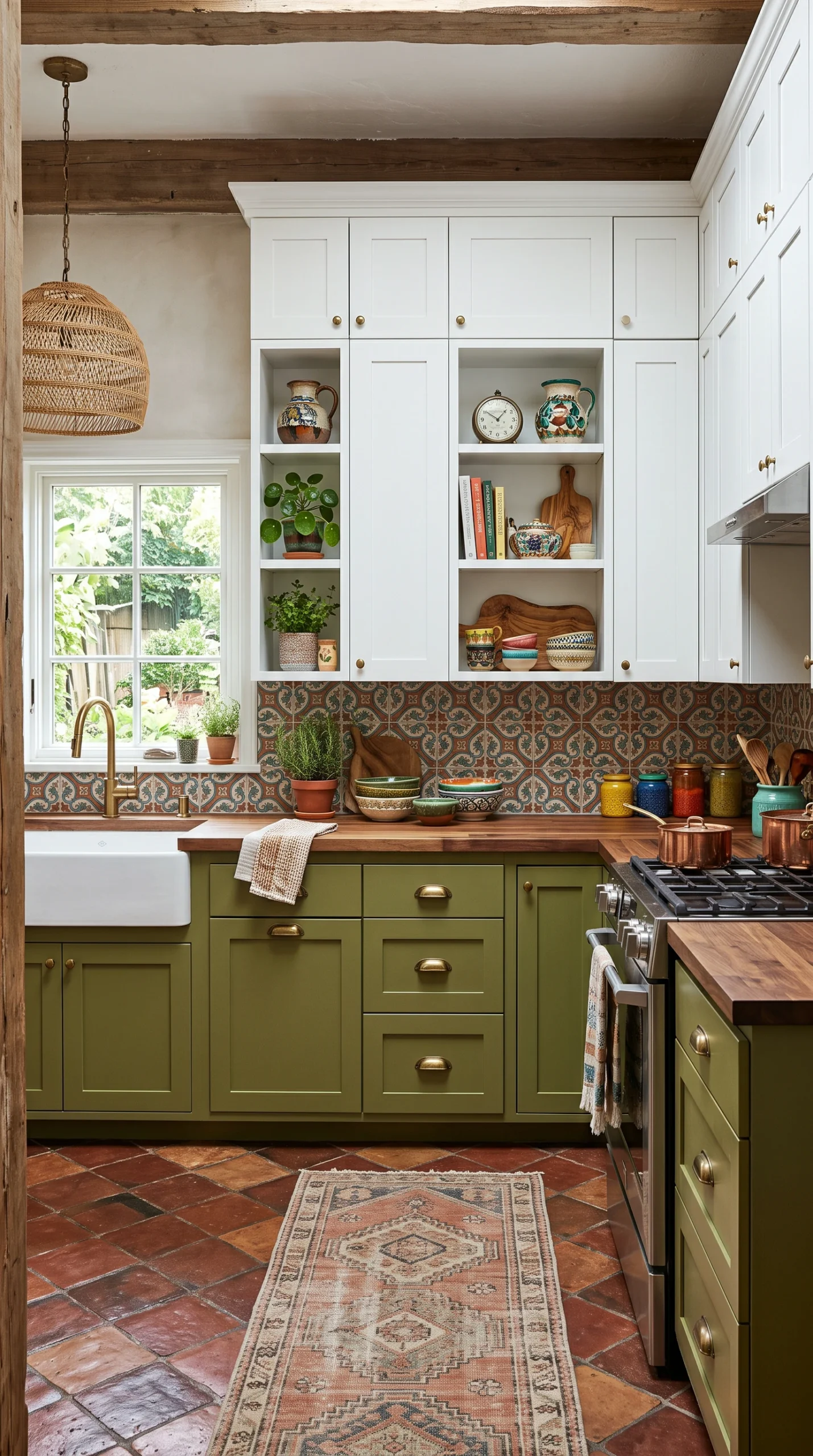
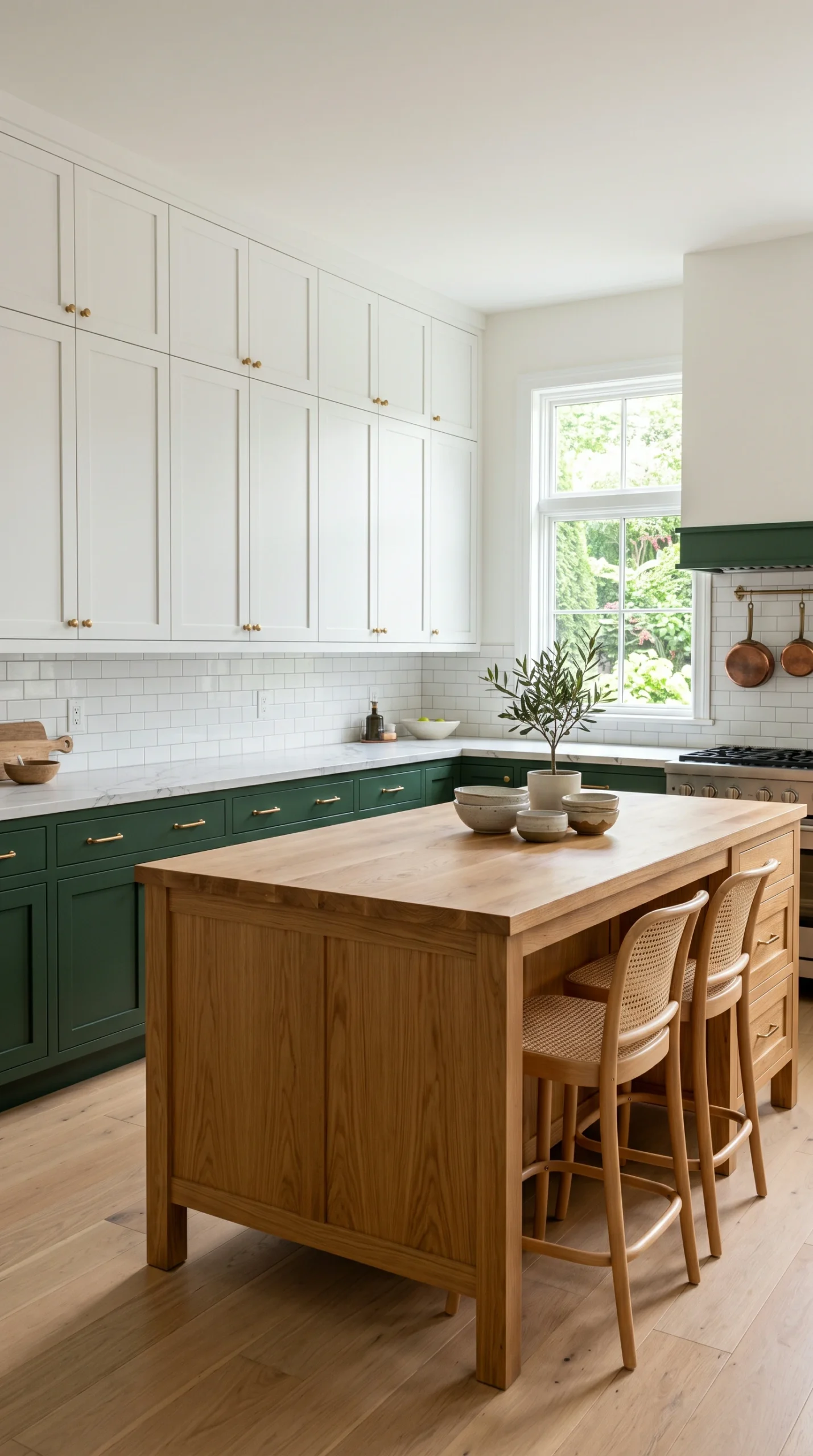
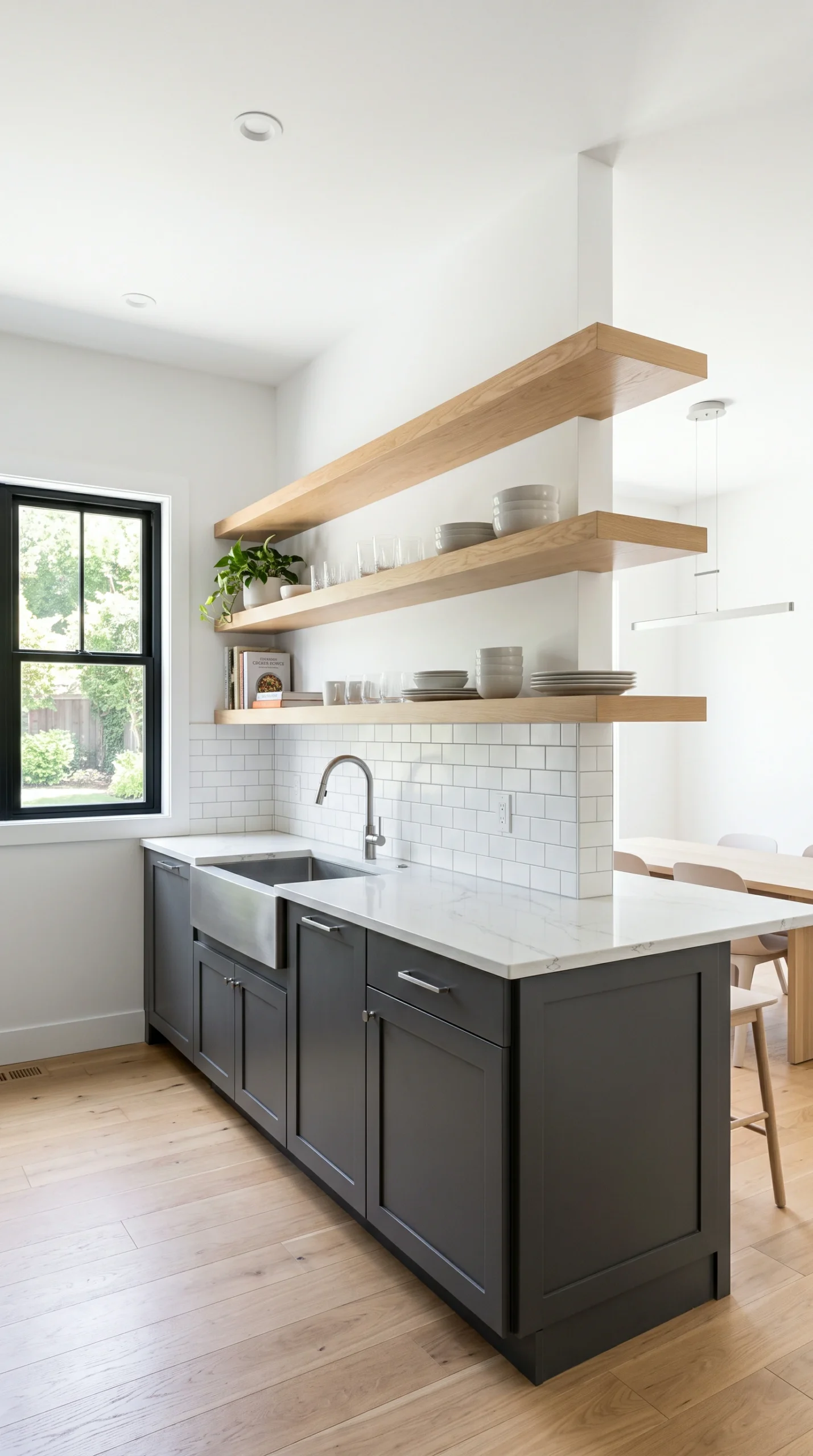
The most critical rule is placing the heavier, darker color on the bottom base cabinets and the lighter, brighter color on the top. This mimics gravity and nature, keeping the room grounded while the upper half feels light and airy.
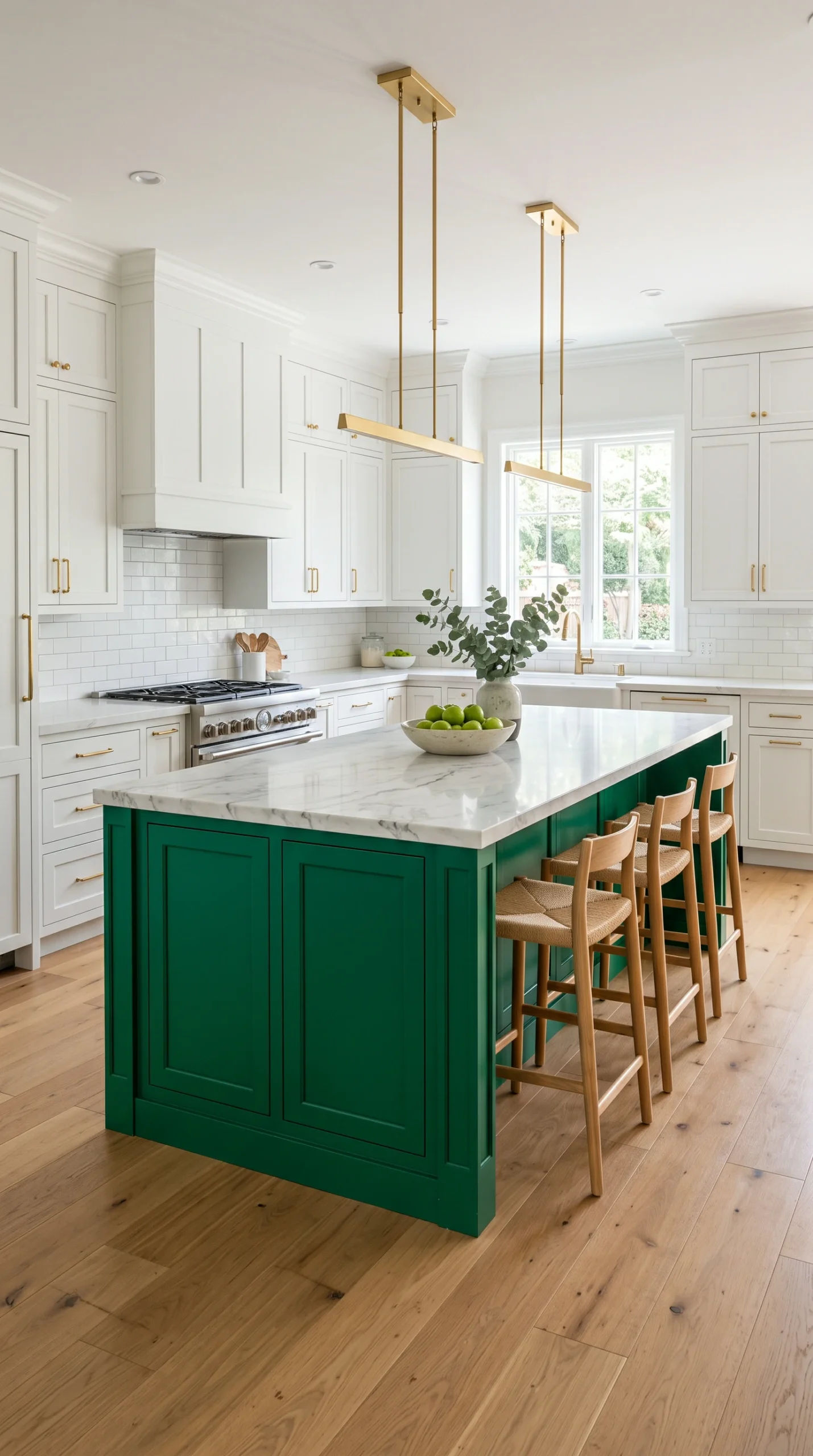
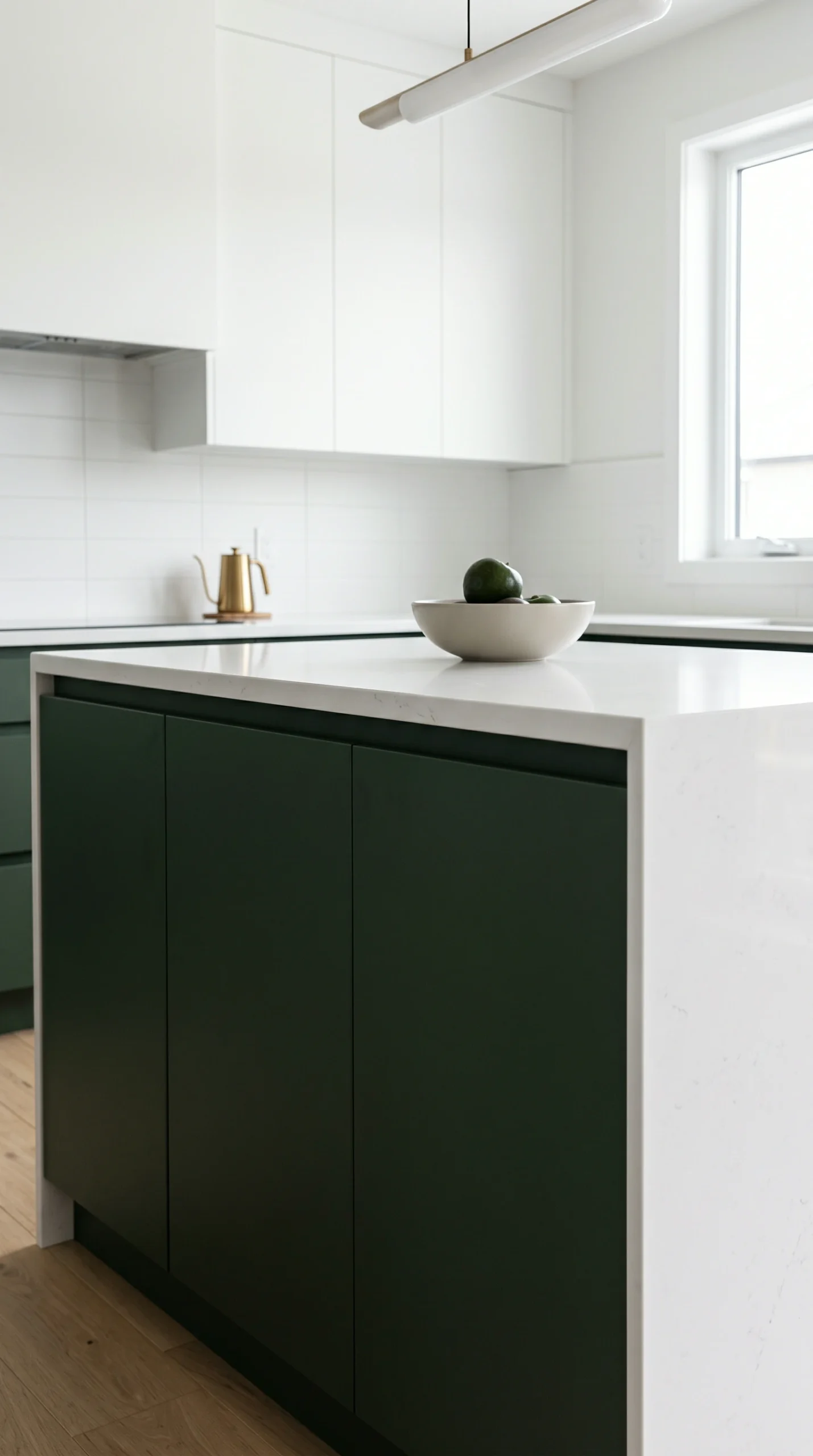
If you prefer uniform perimeter cabinets, painting only the central kitchen island a bold, contrasting color is a fantastic two-tone approach. It turns the island into a standalone piece of custom furniture.
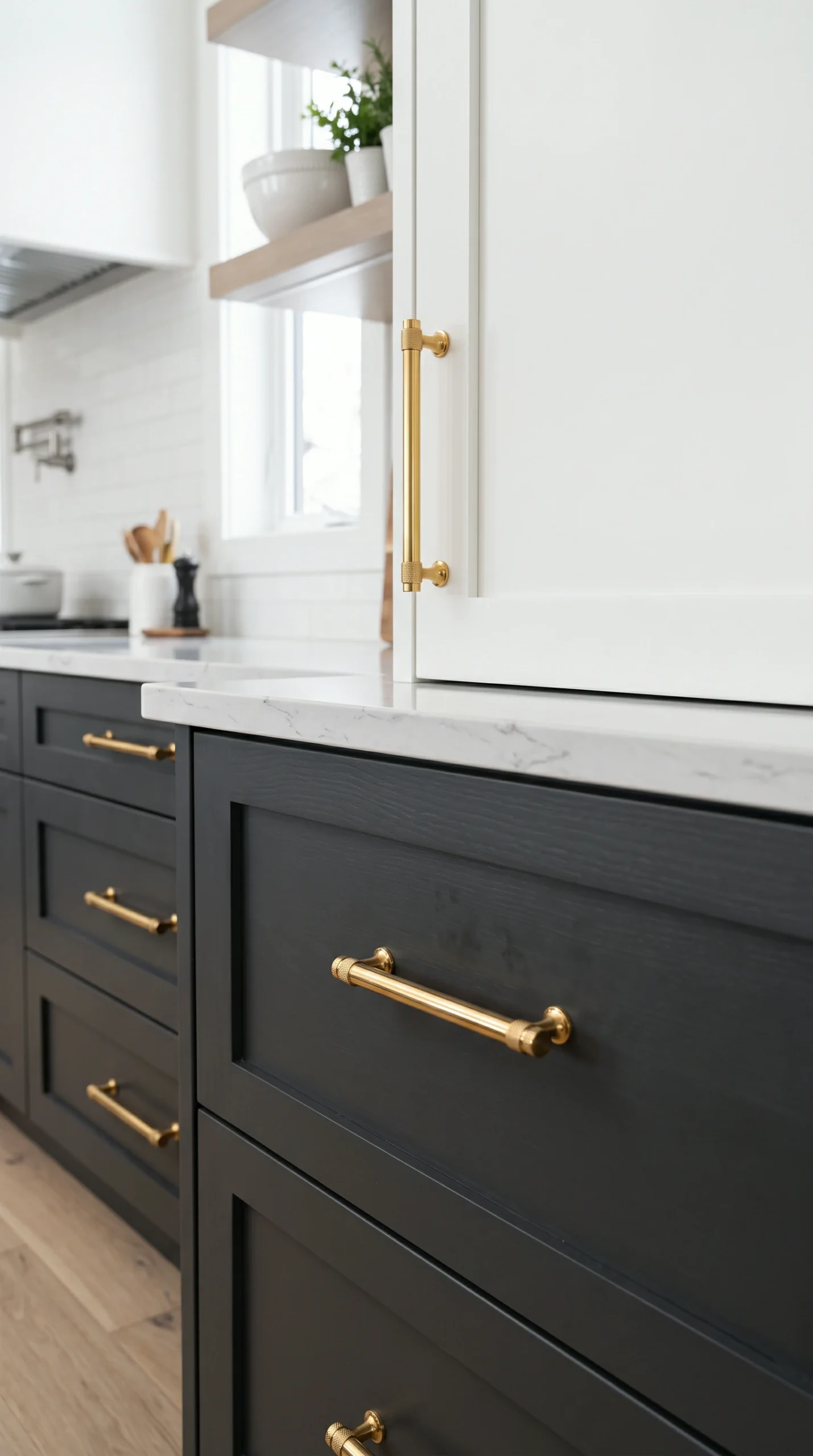
The biggest risk of a two-tone kitchen is that it looks disjointed. Use the exact same hardware (e.g., all brushed brass pulls) on both the upper and lower cabinets to visually tie the two disparate colors together seamlessly.
A crisp white or light-colored quartz or marble countertop is the perfect transition piece. It sits directly on top of the dark base cabinets, providing a sharp, clean line before the white upper cabinets begin.
With two distinct cabinet colors, the kitchen already has significant visual interest. Keep the backsplash very simple (like classic white subway tile or a solid slab) to avoid creating visual chaos.
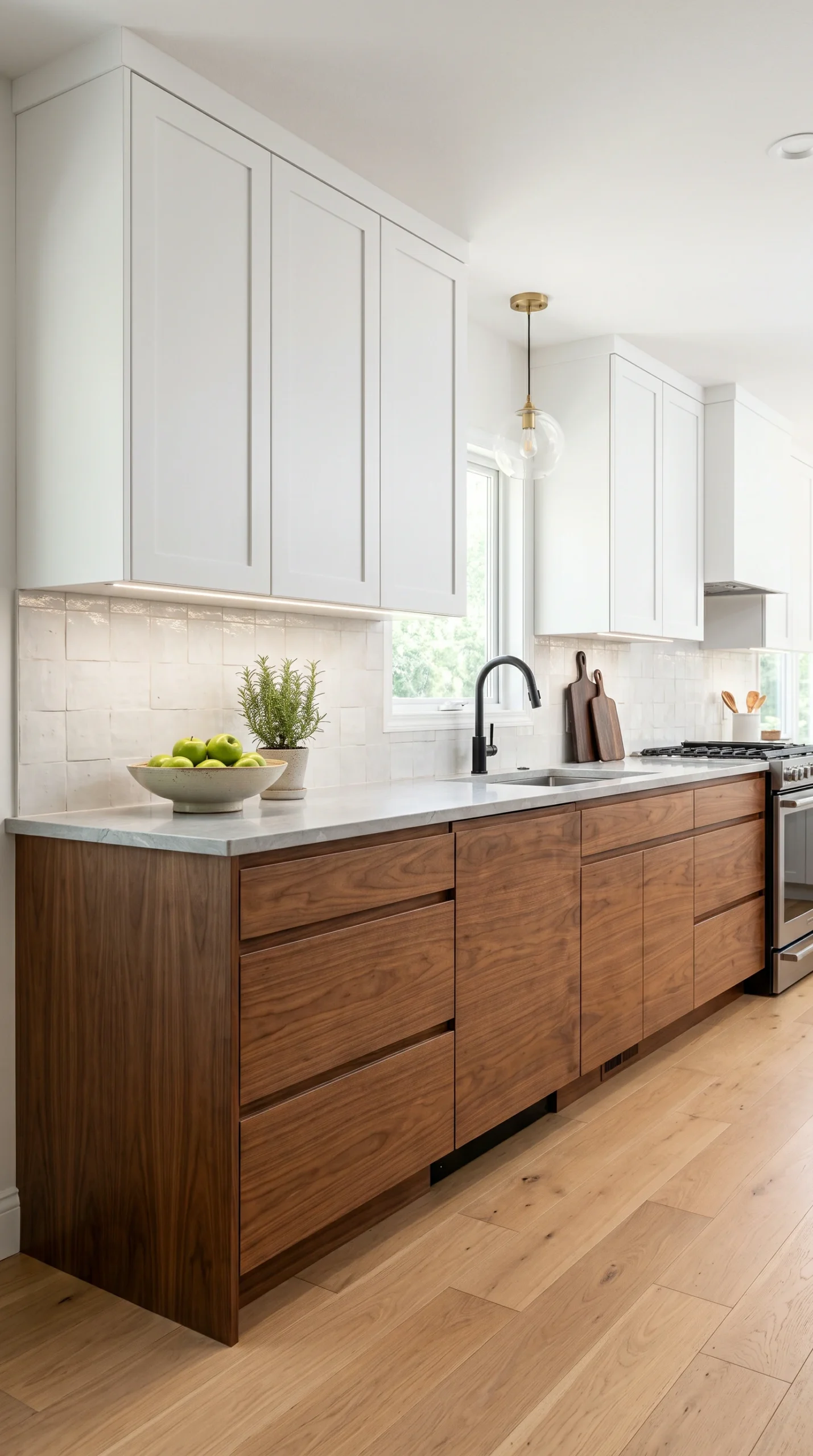
Two-tone doesn't have to mean two paints. Pairing crisp white painted upper cabinets with warm, natural walnut or white oak lower cabinets is an incredibly sophisticated, 'modern organic' application of the two-tone concept.
The widespread success of two-tone kitchen cabinet color ideas is rooted in how the human eye perceives visual weight. Dark, saturated colors are visually heavy; they advance toward the viewer and absorb light. If applied to upper cabinets, they can make the ceiling feel lower and the room feel slightly oppressive. Conversely, white and light neutrals are visually weightless; they recede and reflect light. By applying the dark color (like navy, forest green, or charcoal) exclusively to the lower base cabinets, you effectively anchor the kitchen to the floor. By painting the upper cabinets a bright white, they blend seamlessly into the ceiling, drawing the eye upward and creating a powerful illusion of significantly more height, volume, and airy spaciousness.
A highly popular and slightly safer execution of two-tone kitchen cabinet color ideas is the ‘colored island’ approach. In this scenario, all the perimeter cabinets hugging the walls (both upper and lower) are painted a uniform, crisp white or soft cream. The bold, contrasting color is reserved entirely for the central kitchen island. This strategy is brilliant for several reasons. It introduces a massive injection of personality and color into the room without risking darkening the overall space. Furthermore, it treats the island differently from the utilitarian perimeter cabinets, elevating it to the status of a spectacular, standalone piece of custom furniture that acts as the undisputed focal point of the kitchen.
The greatest danger when designing a two-tone kitchen is creating a space that looks fractured, as if parts from two different kitchens were accidentally installed together. To prevent this, interior designers rely on unifying elements to bridge the gap between the two colors. In two-tone kitchen cabinet color ideas, the cabinet hardware serves as the primary unifier. Utilizing the exact same style and finish of hardwarefor example, identical polished gold bar pulls on both the white upper doors and the navy lower drawersforces the brain to recognize the two distinct finishes as part of a single, deliberate, and highly cohesive design scheme.
The horizontal line where the two different colors meet is a critical architectural moment in the room. In a classic ‘tuxedo’ layout (dark lowers, white uppers), the countertop is the transition point. To maximize the crisp, tailored aesthetic, successful two-tone kitchen cabinet color ideas generally require high-contrast, light-colored countertops. A stark white quartz, a brilliant white marble, or even a very pale gray surface sitting directly on top of the dark base cabinets creates a sharp, distinct boundary. This clear delineation is essential; a dark, muddy countertop on dark lower cabinets would blur the transition line and make the bottom half of the kitchen feel excessively heavy and undefined.
A fundamental rule of interior design is balancing visual interest. Because a two-tone kitchen already features two distinct cabinet colors providing significant contrast and energy, the other elements in the room must play a supportive, quieter role. When exploring two-tone kitchen cabinet color ideas, the backsplash should generally be treated as a seamless extension of the upper cabinets. Running a simple, crisp white subway tile or a solid slab of white quartz down the wall to meet the countertop creates a clean, unified upper zone. Introducing a third, highly patterned, brightly colored, or busy mosaic tile into the backsplash often results in a cluttered, visually chaotic space that detracts from the elegance of the two-tone cabinetry.
While two-tone design typically refers to two different paint colors, substituting paint for a natural material is incredibly sophisticated. A highly contemporary execution of two-tone kitchen cabinet color ideas involves pairing painted cabinets with natural, stained wood. For a ‘modern organic’ aesthetic, designers frequently pair crisp, stark white painted upper cabinets with beautiful, natural flat-panel walnut or white oak lower cabinets. The painted white provides the necessary clean, architectural brightness, while the natural wood grain introduces essential organic warmth and tactile texture to the lower half of the room. This combination feels incredibly high-end, custom, and deeply grounded.