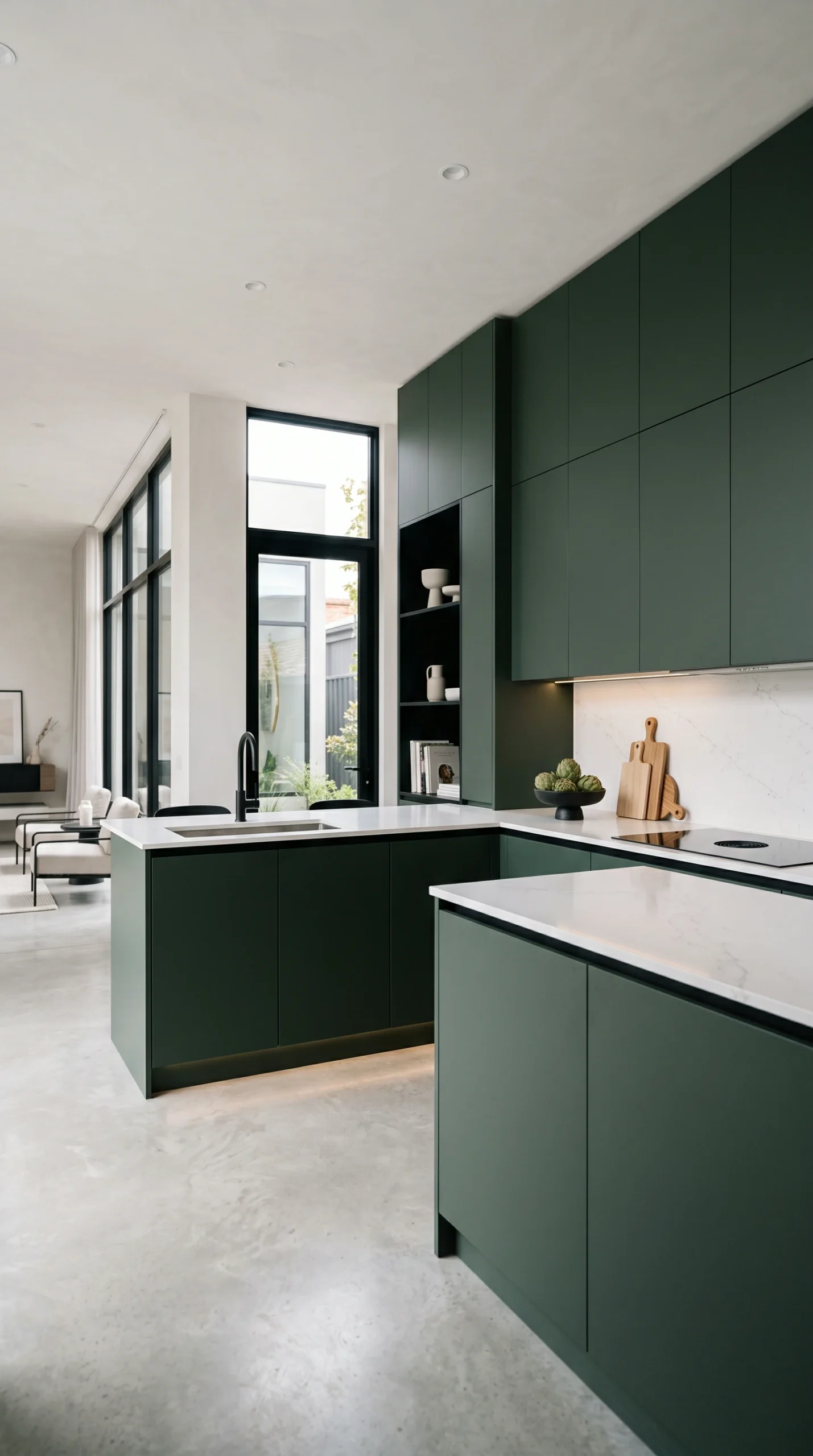
Green is highly variable. Sage has cool, silvery-gray undertones. Olive has warm, yellow-brown undertones. Forest can lean slightly blue. You must match the green's undertone to your other finishes (cool with cool, warm with warm).
For longevity, avoid bright, highly saturated 'crayon' greens or neon mints. The most sophisticated kitchens utilize 'muddy' or muted greens (like olive or dusty sage) that act as colored neutrals.
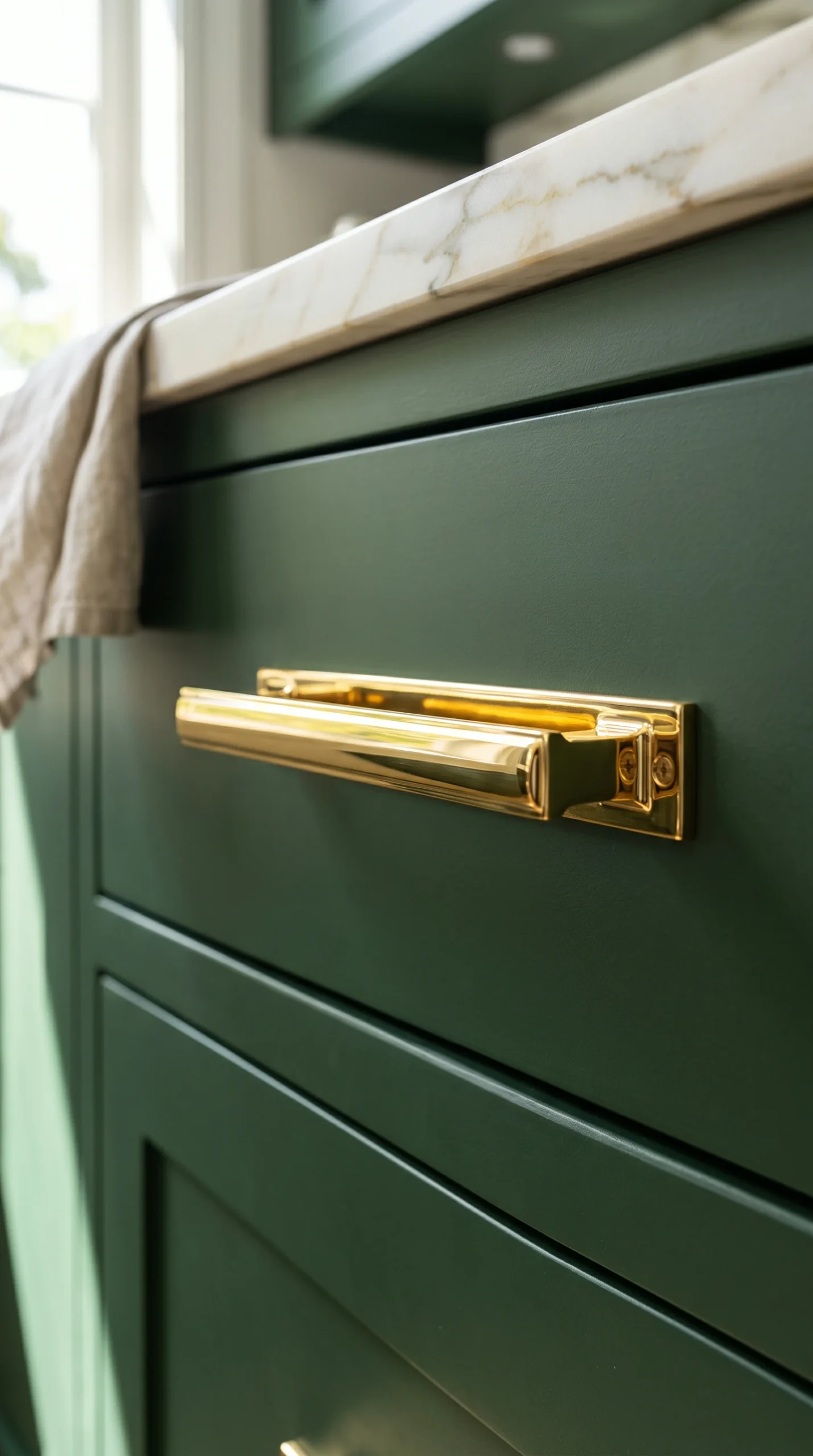
Because green is heavily associated with nature, it responds beautifully to warm, natural metals. Unlacquered brass, antique gold, and warm bronze provide essential, elegant contrast against the earthy paint.
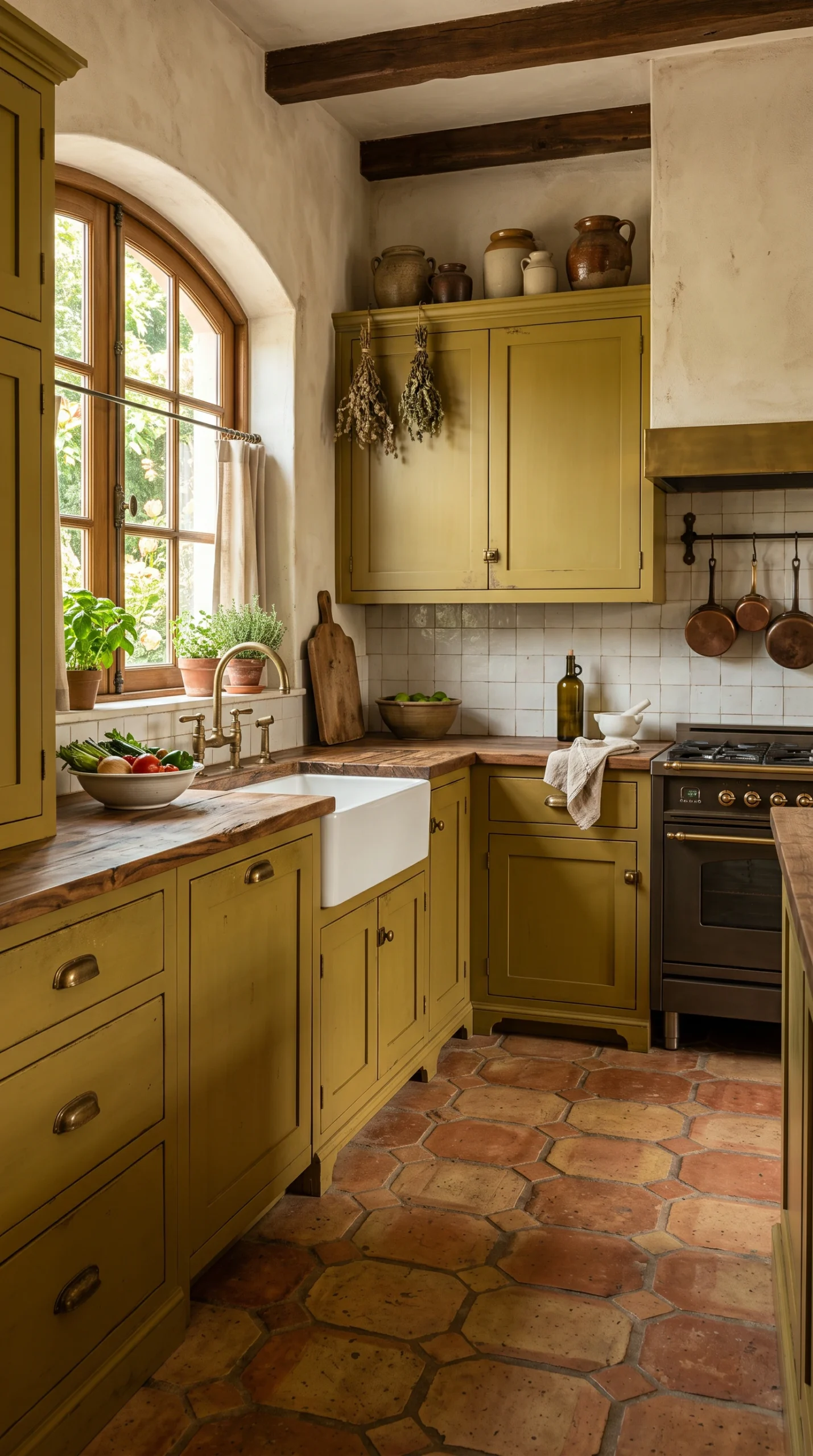
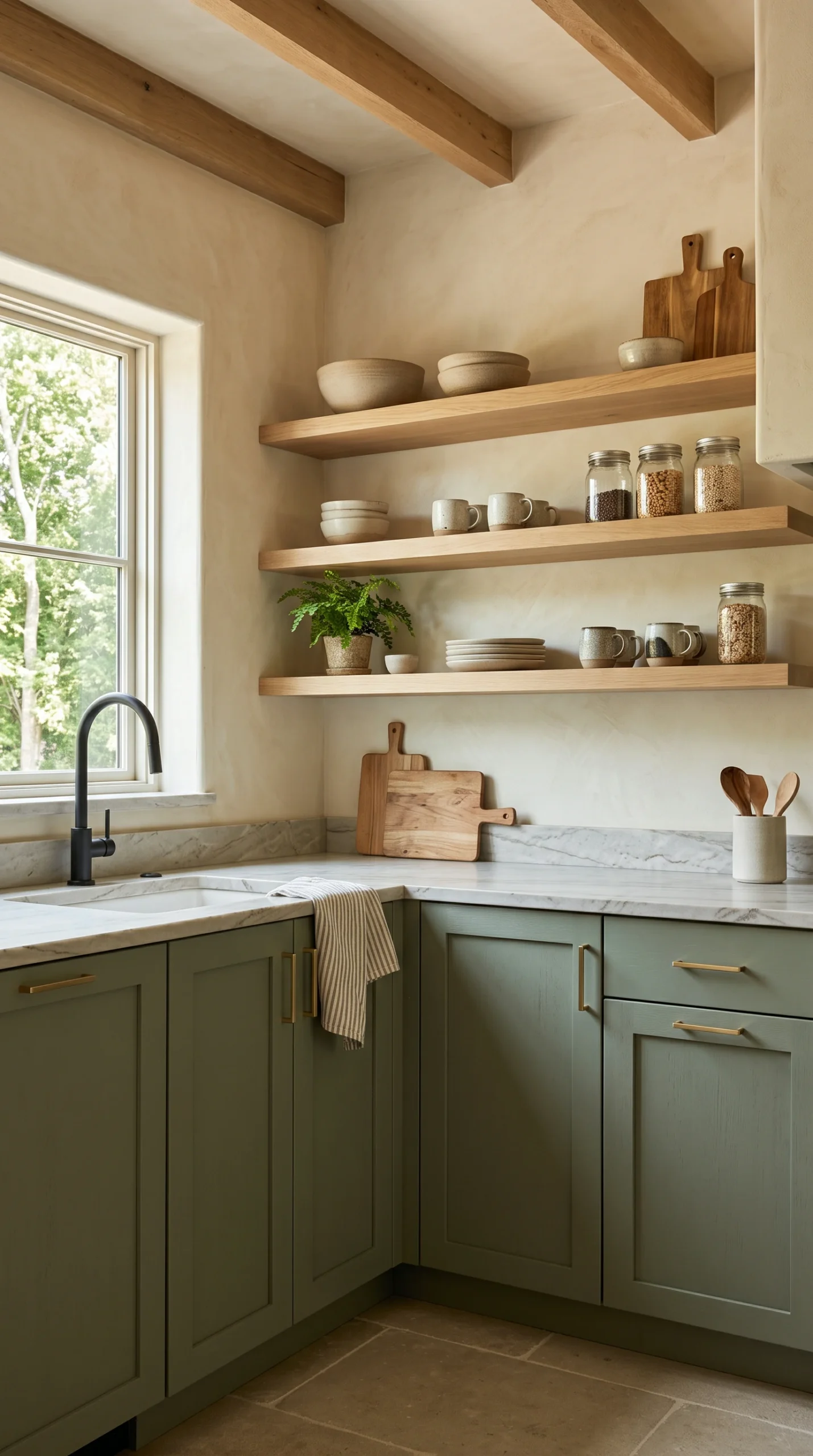
A solid block of painted green can look flat. Introduce visual friction and organic warmth by incorporating natural wood tones via floating shelves, a butcher block island, or wide-plank hardwood floors.
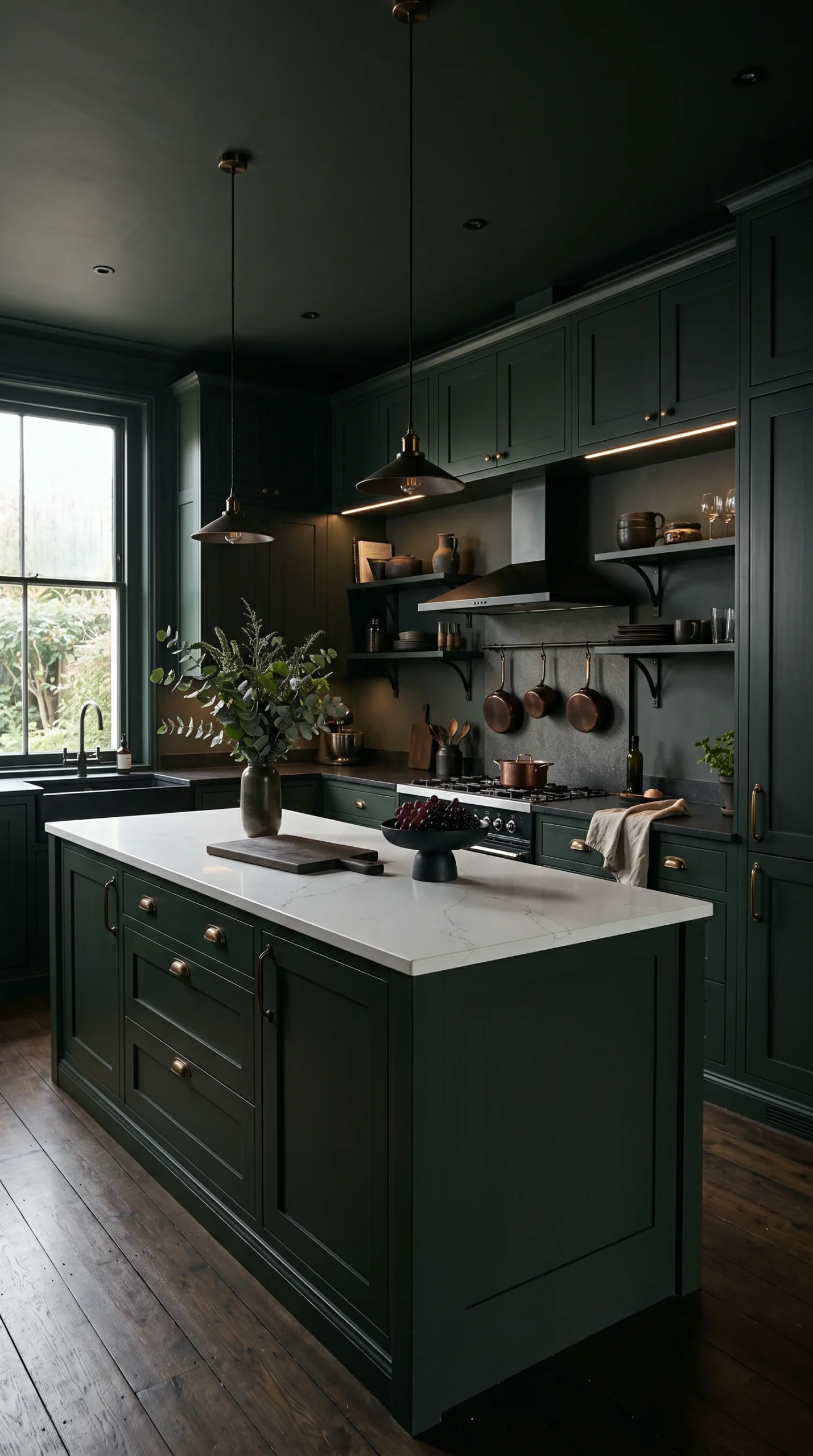
If you choose a deep, moody green (like hunter or forest), you must balance its heavy visual weight. Use crisp, brilliant white countertops or a white backsplash to keep the room from feeling cavernous.
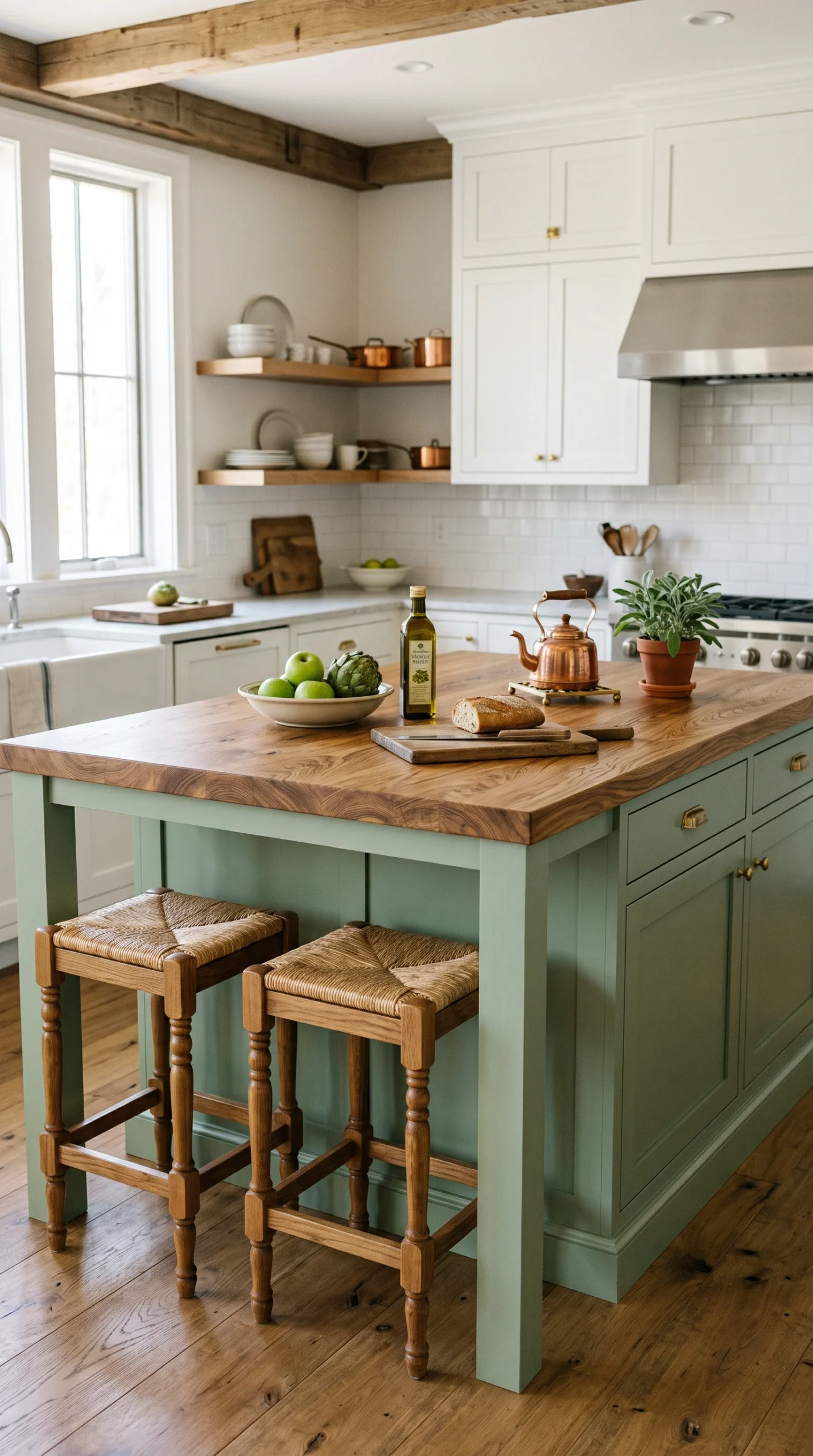
If a fully green kitchen feels overwhelming, paint only the lower cabinets or the island green, and keep the upper cabinets a bright, airy white to maintain a feeling of spaciousness.
The psychological impact of color in interior design is profound, and green is uniquely positioned to enhance a kitchen environment. Situated in the center of the color spectrum, green requires no adjustment by the eye, making it incredibly restful and calming. Green kitchen cabinet color ideas succeed because they directly emulate biophiliaour innate human attraction to nature. A kitchen painted in a soft sage or a deep forest green immediately evokes the tranquility of a garden or a quiet wood. This connection to the natural world makes the space feel grounded, comfortable, and remarkably welcoming, offering a sophisticated antidote to the high-stress, fast-paced nature of modern life that stark white kitchens sometimes fail to provide.
The term ‘green’ is vastly broad, and the specific shade selected completely dictates the room’s atmosphere. The two most popular green kitchen cabinet color ideas lie on opposite ends of the undertone spectrum. Sage green is heavily muted with gray and silver, rendering it a ‘cool’ green. It feels airy, fresh, and slightly formal, pairing beautifully with crisp whites and light white oak. Conversely, Olive green is heavily grounded in yellow and brown, making it a very ‘warm’ green. Olive feels historic, rustic, and Mediterranean, pairing spectacularly with creamy off-whites, terracotta, and rich, dark walnut. Understanding this fundamental difference in temperature is the most critical step in designing a cohesive green kitchen.
For those desiring a bolder architectural statement, dark green kitchen cabinet color ideas offer incredible luxury. Shades like blackened forest green or deep hunter green provide massive visual weight and drama, creating a space that feels enveloping and ‘library-like.’ However, these dark shades are demanding. They absorb light aggressively. To execute a dark green kitchen successfully, designers rely on extreme contrast. Pairing deeply saturated green cabinetry with stark, brilliantly white marble countertops and a bright white ceiling ensures the room remains dynamic and functional. Without this aggressive white balance, a dark green kitchen can quickly devolve into a gloomy, cavernous space.
In the execution of green kitchen cabinet color ideas, hardware is not an afterthought; it is a critical component of the color palette. Green and warm metallics are perhaps the most universally celebrated pairing in modern interior design. Cool metals like chrome or brushed nickel can get lost against the green or make the space feel chilly. Warm metalslike polished brass, brushed gold, or living, unlacquered brassact as brilliant ‘jewelry.’ The golden tones contrast sharply with the earthy green, catching the light and adding a layer of undeniable, high-end glamour. This specific combination instantly elevates the cabinetry, making it look bespoke, curated, and highly expensive.
While painted cabinetry is beautiful, a kitchen composed entirely of smooth, flat, painted surfaces can sometimes feel one-dimensional. To prevent a green kitchen from looking artificial, interior designers always introduce organic texture. Green kitchen cabinet color ideas are most successful when supported by natural wood accents. This represents the classic, foolproof pairing of leaves and branches. Incorporating thick, white oak floating shelves, a warm wooden butcher block prep zone on the island, or simply relying on the varied grain of hardwood floors provides essential visual friction and tactile warmth, reinforcing the kitchen’s connection to the natural world.
Committing to a color on every cabinet in the kitchen can be intimidating, especially in smaller homes. The ‘tuxedo’ or two-tone application is a brilliant utilization of green kitchen cabinet color ideas. By painting the lower base cabinets a rich, grounding green (like olive or forest) and painting the upper cabinets a bright, airy white, the kitchen achieves the best of both worlds. The room benefits from the personality and depth of the green, while the white upper sightlines maintain the illusion of high ceilings and expansive space. Alternatively, painting only the central island a vibrant green while keeping the perimeter neutral creates a stunning, risk-free focal point.