Brutalist Decor Ideas for Sculptural, Grounded Spaces

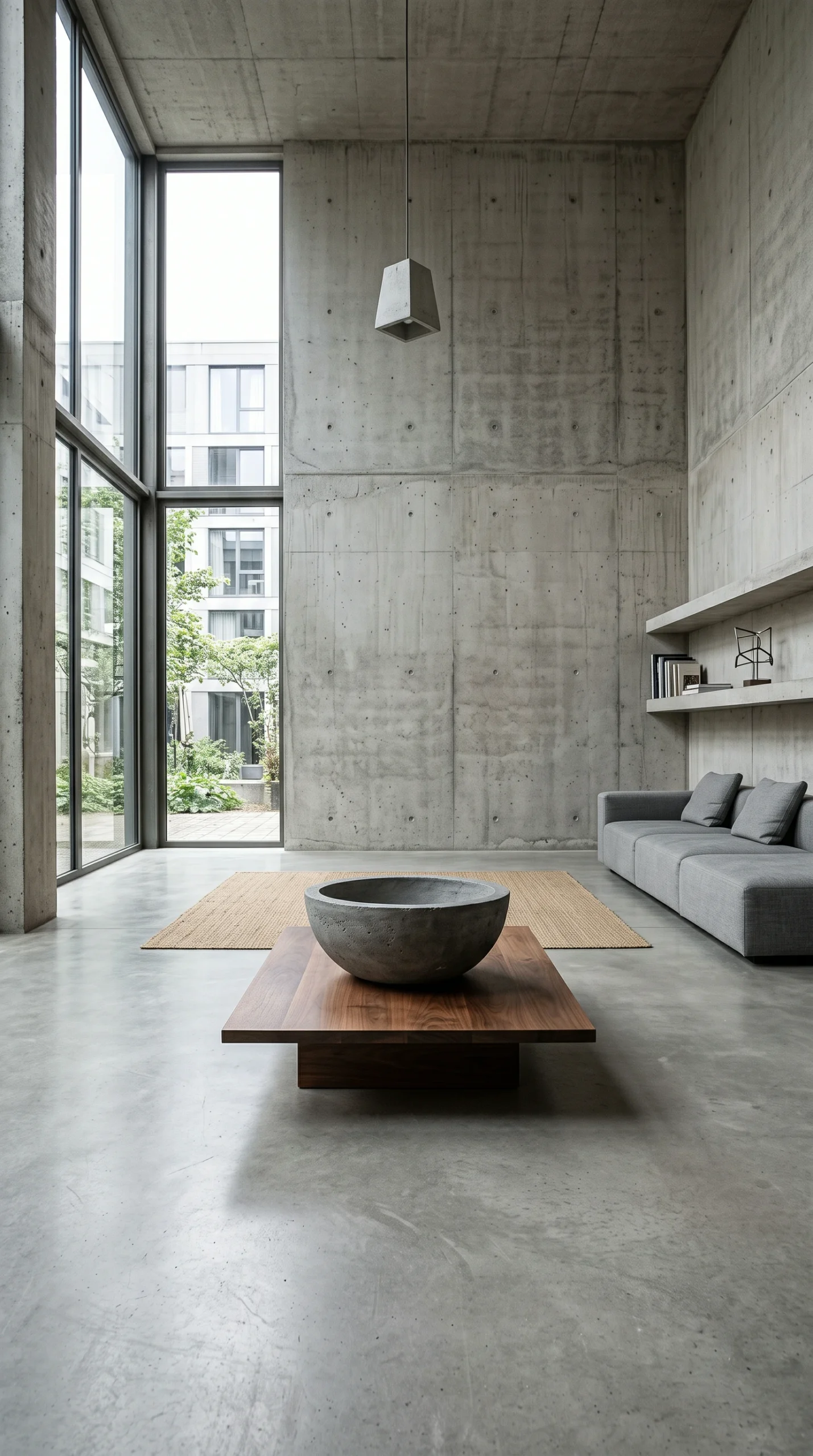
Brutalist decor rejects scattered knick-knacks in favor of monumental scale and raw material honesty. By curating heavy cast-concrete bowls, oxidized bronze vessels, textural plaster reliefs, and dramatic shadow sconces with 50% to 60% negative space, you create a bold, gallery-level home.

Negative Space Rule

Leave 50% to 60% of console, table, and shelf surfaces completely bare so singular sculptural objects command visual attention.

Oversized Scaling

Feature fewer, larger statement pieces—such as 16 to 20 inch raw concrete bowls or 36x48 inch plaster wall reliefs.

Surface Protection

Adhere 1 to 2 mm dense felt or cork pads beneath all rough stone and cast concrete decor to prevent gouging timber furniture.

Sculptural Shadows

Use 2400K to 2700K directional spotlights to project sharp geometric shadows from bronze and ceramic sculptures across concrete walls.

Rough Concrete Vessels, Rusted Bookends, and Shadow Sconces

Explore curated Brutalist styling featuring raw concrete bowls, geometric cement lamps, rusted iron bookends, and plaster reliefs.

Essential Styling Checks for Brutalist Decor

Review these scale, material, and surface protection considerations before styling a Brutalist interior.

Prioritize Negative Space

Preserve 50% to 60% open surface area on credenzas and dining tables to give monumental decor breathing room.

Apply Felt Buffer Pads

Attach 1 to 2 mm cork or felt pads under raw cast cement and pottery to protect expensive wood and stone tables.

Check Shelf Weight Loads

Ensure floating shelves are anchored into wall studs before displaying 15 to 35 pound iron bookends and concrete lamps.

Use Hidden Water Liners

Place glass or plastic liners inside unglazed ceramic and concrete vases to prevent moisture from weeping onto furniture.

Dust with Soft Brushes

Clean textured plaster reliefs and porous volcanic stone using vacuum brush attachments rather than lint-shedding cloths.

Curation and Mass: Styling with Brutalist Sculptural Decor

In standard interior styling, decorating often means collecting small knick-knacks, picture frames, and decorative candles until every shelf and tabletop is crowded. In a Brutalist interior, this approach fails completely. Delicate trinkets look fragile and out of place against massive board-formed concrete walls, exposed ceiling slabs, and heavy steel structures.

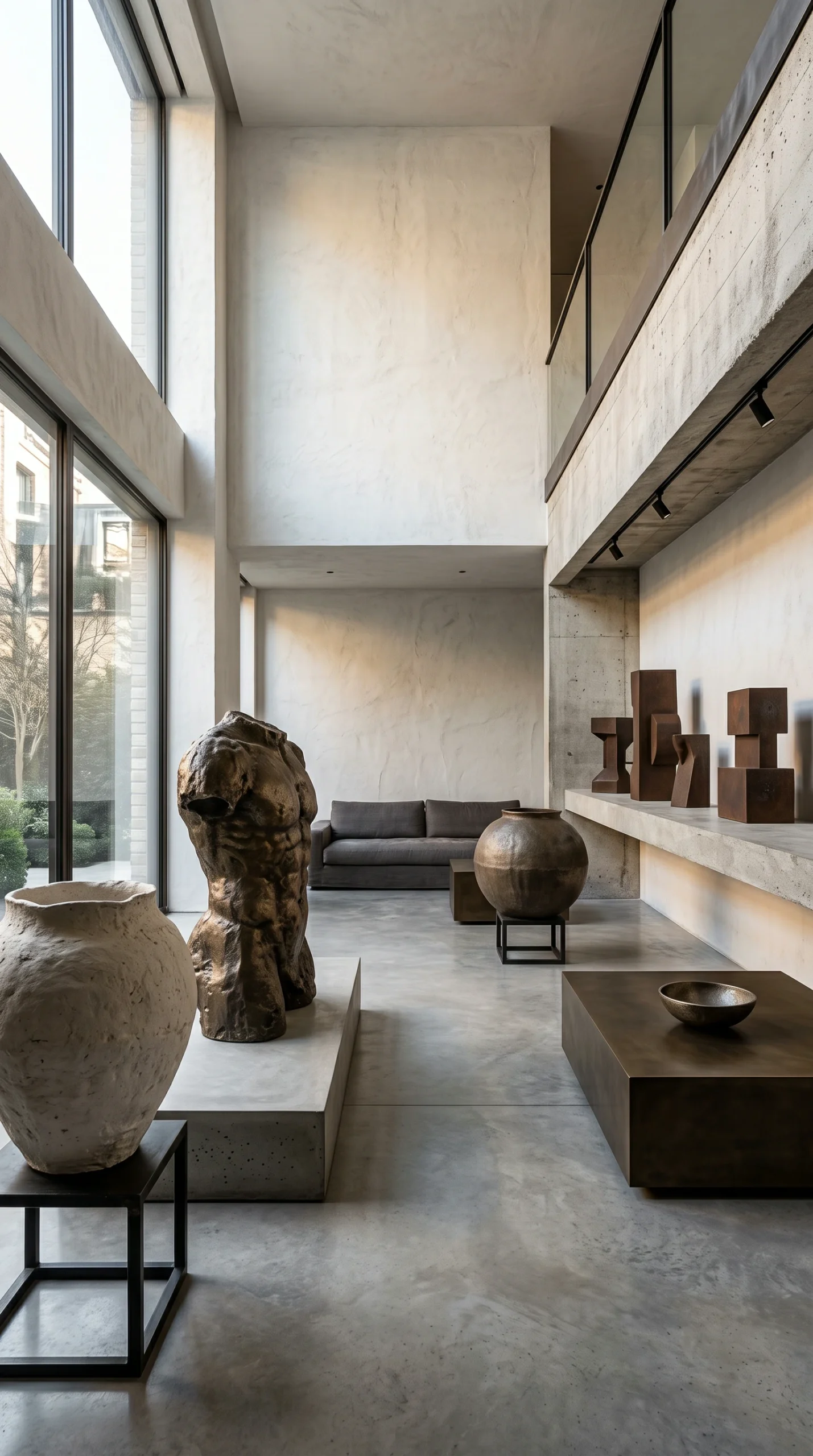
Brutalist decor operates like a contemporary sculpture gallery. Rather than accumulating clutter, it relies on oversized scale, raw geological textures, patinated metals, and deliberate negative space. By choosing fewer, more powerful statement pieces—such as rough cast-concrete bowls, heavy rusted iron bookends, unglazed volcanic pottery, and architectural plaster reliefs—you can create an interior that feels bold, grounded, and deeply curated.

The Principle of Scale and Negative Space

The defining rule of Brutalist styling is allowing open space to frame physical mass. Without open breathing room, sculptural decor loses its dramatic power.

The 50% to 60% Negative Space Rule

When styling credenzas, floating shelves, or large dining tables:

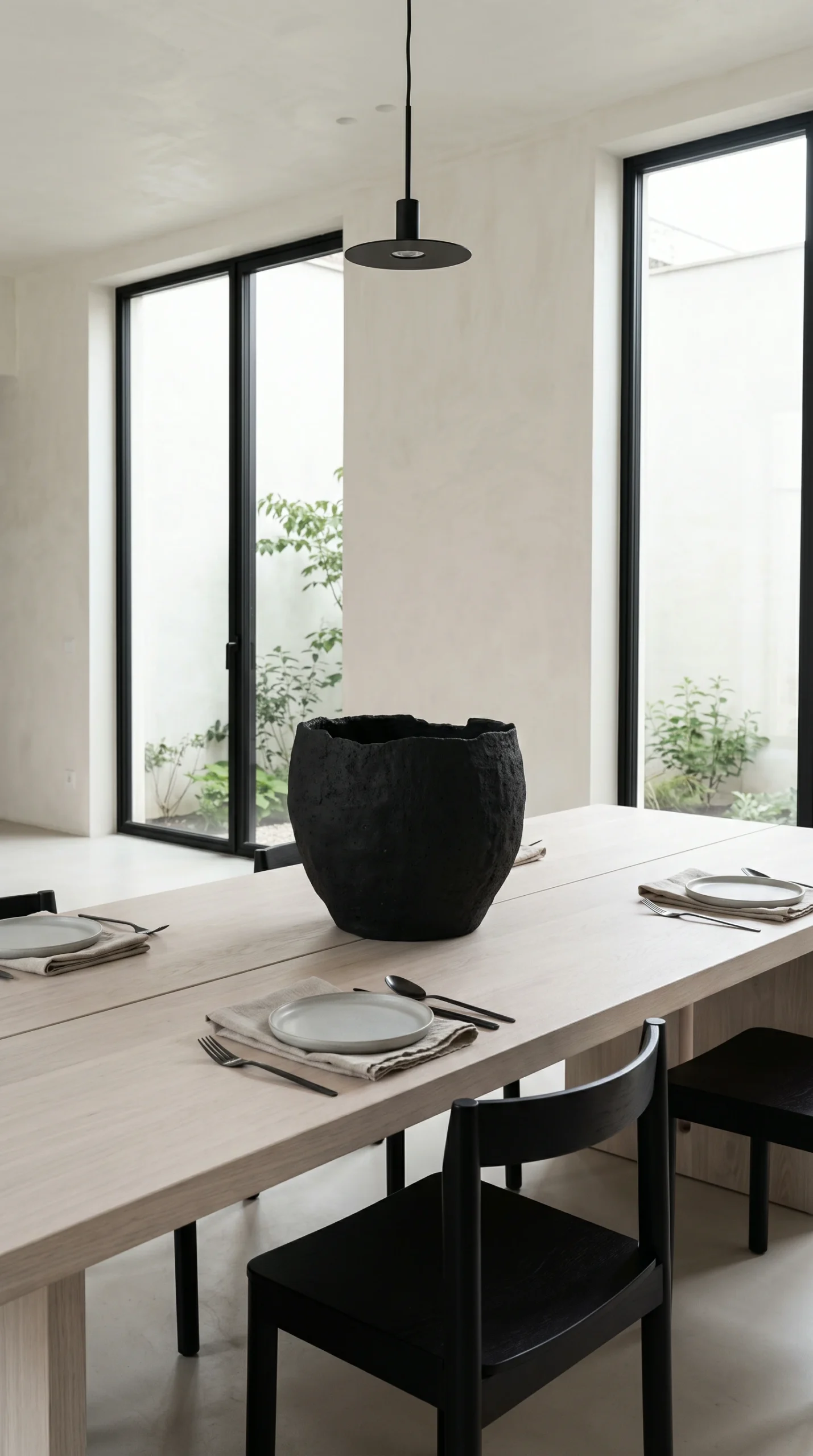
  • Preserve Open Space: Leave at least 50% to 60% of the surface area completely bare. A massive 16 to 20 inch (41 to 51 cm) rough concrete bowl or unglazed ceramic centerpiece commands far greater presence when it sits alone on a long timber dining table than when surrounded by smaller accessories.
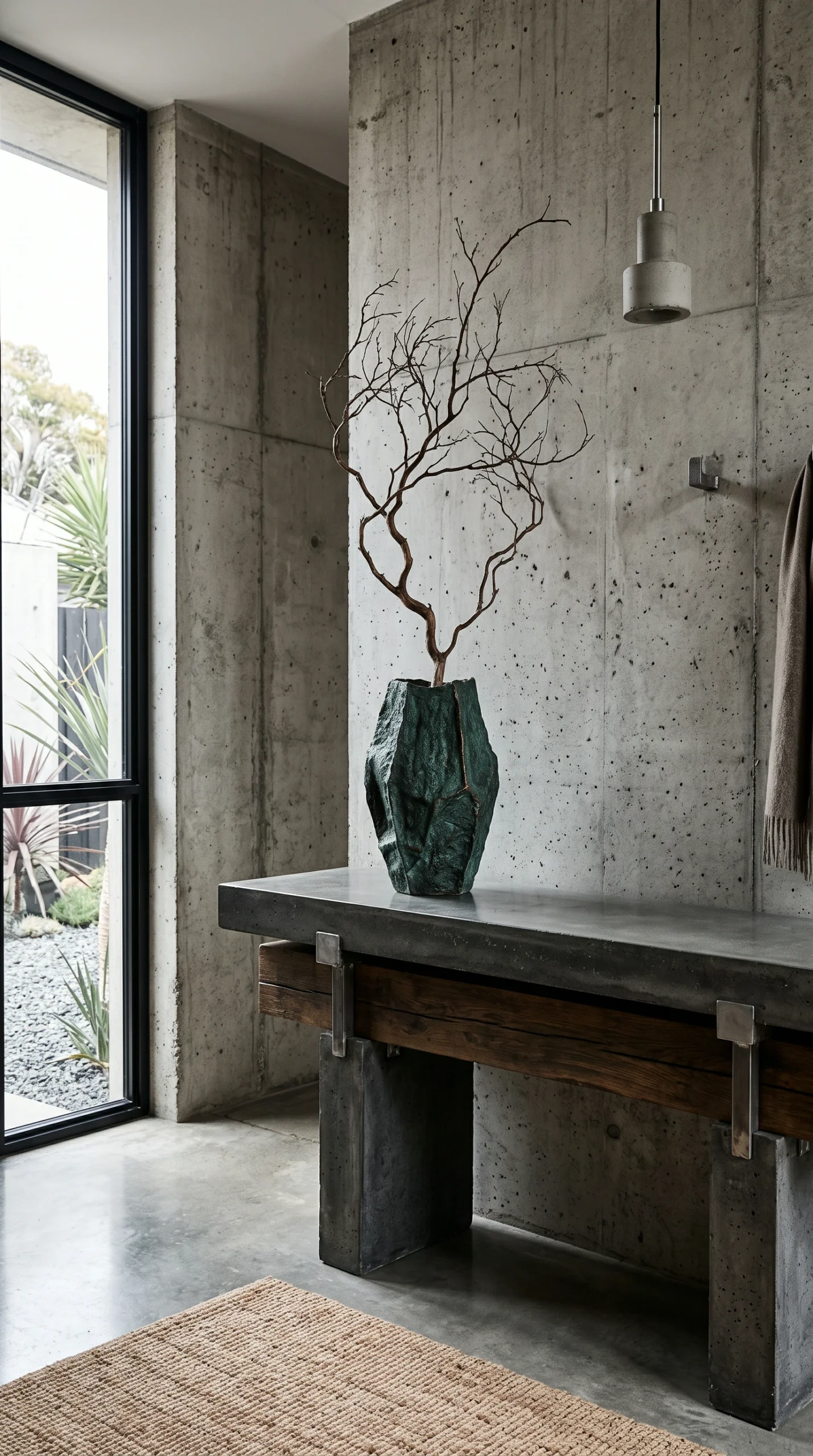
  • Monolithic Single Statements: On a living room coffee table or entryway console, place one substantial sculptural object—such as an oxidized bronze vase holding a single architectural branch—rather than an assortment of smaller decor items.
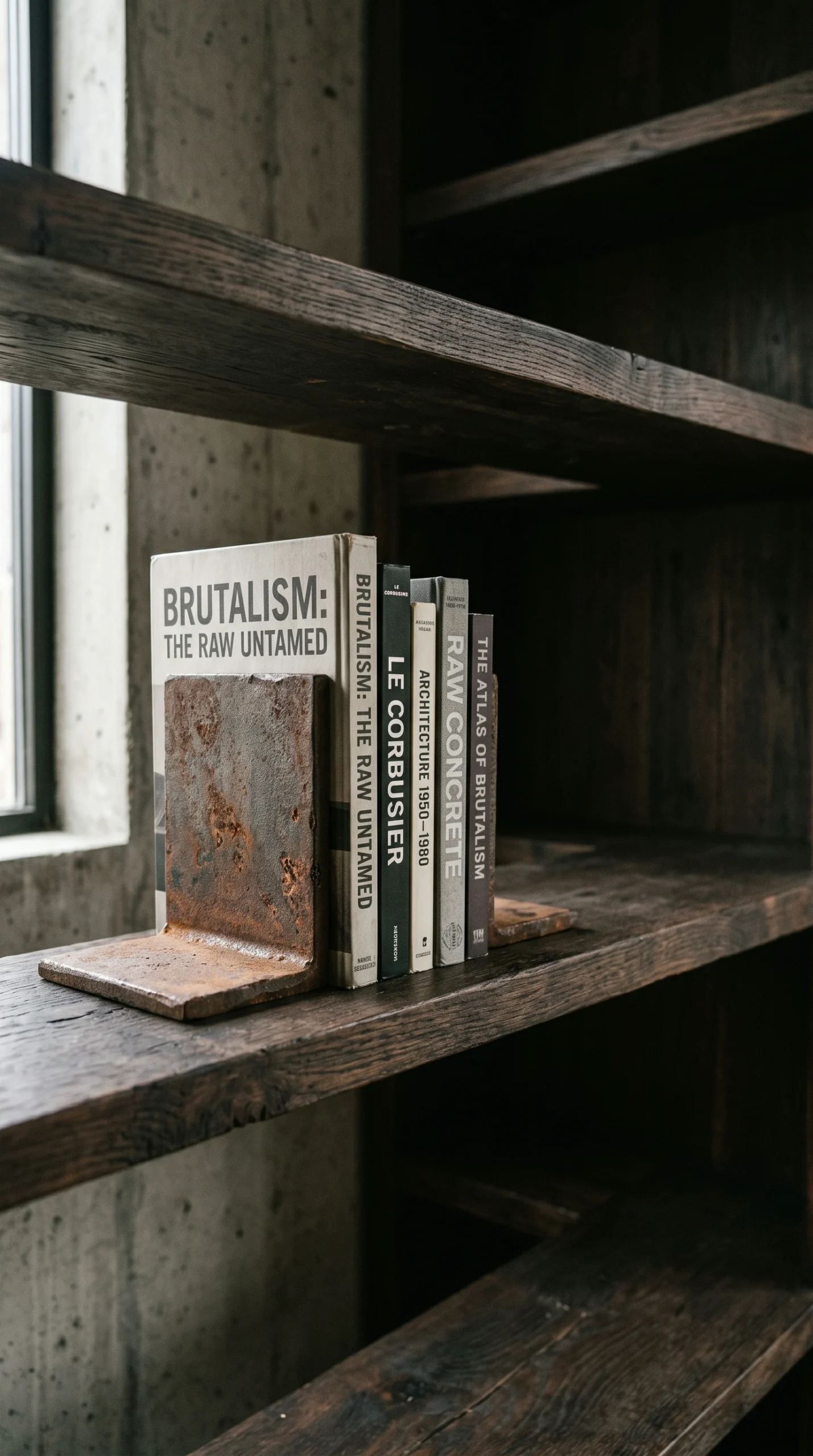
  • Curating Shelves: On open bookshelves, use heavy rusted iron or cast basalt bookends to hold a tight stack of architectural monographs, leaving the surrounding shelf space open to showcase the timber grain and back-wall concrete texture.

For more advice on pairing statement decor with proportioned dining and coffee tables, explore our guide to Brutalist furniture ideas.

Raw Ceramics, Heavy Metals, and Plaster Relief Art

Brutalist decor celebrates the unpolished honesty of ancient and industrial materials.

Unglazed Ceramics and Volcanic Stone

Porous, tactile surfaces soften rigid architectural lines:

  • Matte Black and Charcoal Pottery: Select large, hand-thrown ceramic vessels finished in coarse, unglazed stoneware, volcanic slip, or blackened clay. The pitted, tactile texture absorbs light smoothly, creating deep visual depth against pale plaster or microcement walls.
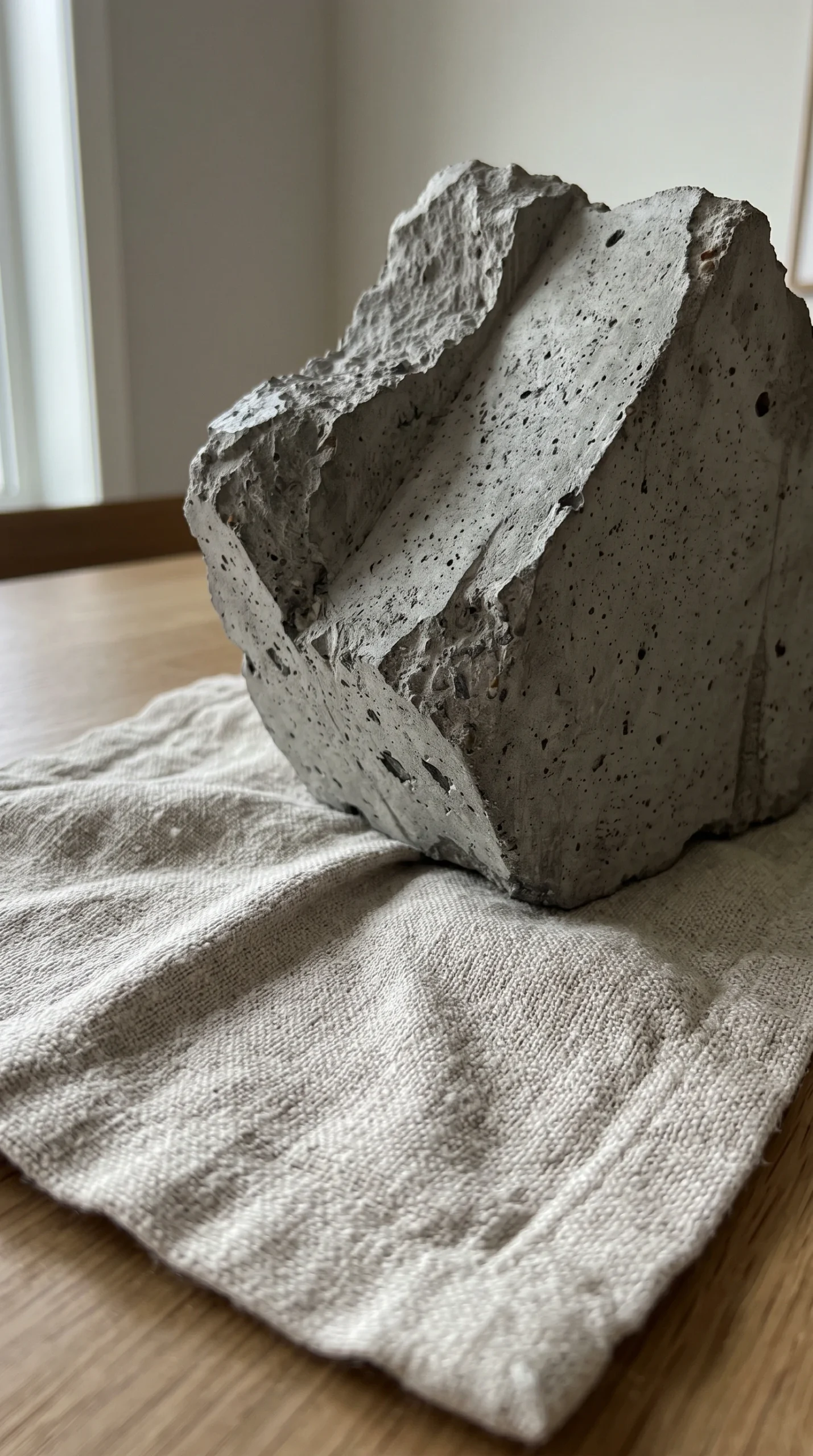
  • Raw Concrete Chunks and Plinths: Display rough, chipped chunks of aggregate concrete or carved volcanic basalt as standalone tabletop sculptures atop heavy natural linen runners.

Living Patinated Metals

Metals in a Brutalist interior should reflect the passage of time:

  • Oxidized Bronze and Rusted Iron: Choose sculptural vases, candle holders, and trays in patinated cast bronze or weathered core-ten steel. The reddish-brown rust and verdigris tones add rich organic color that warms up cool grey concrete.
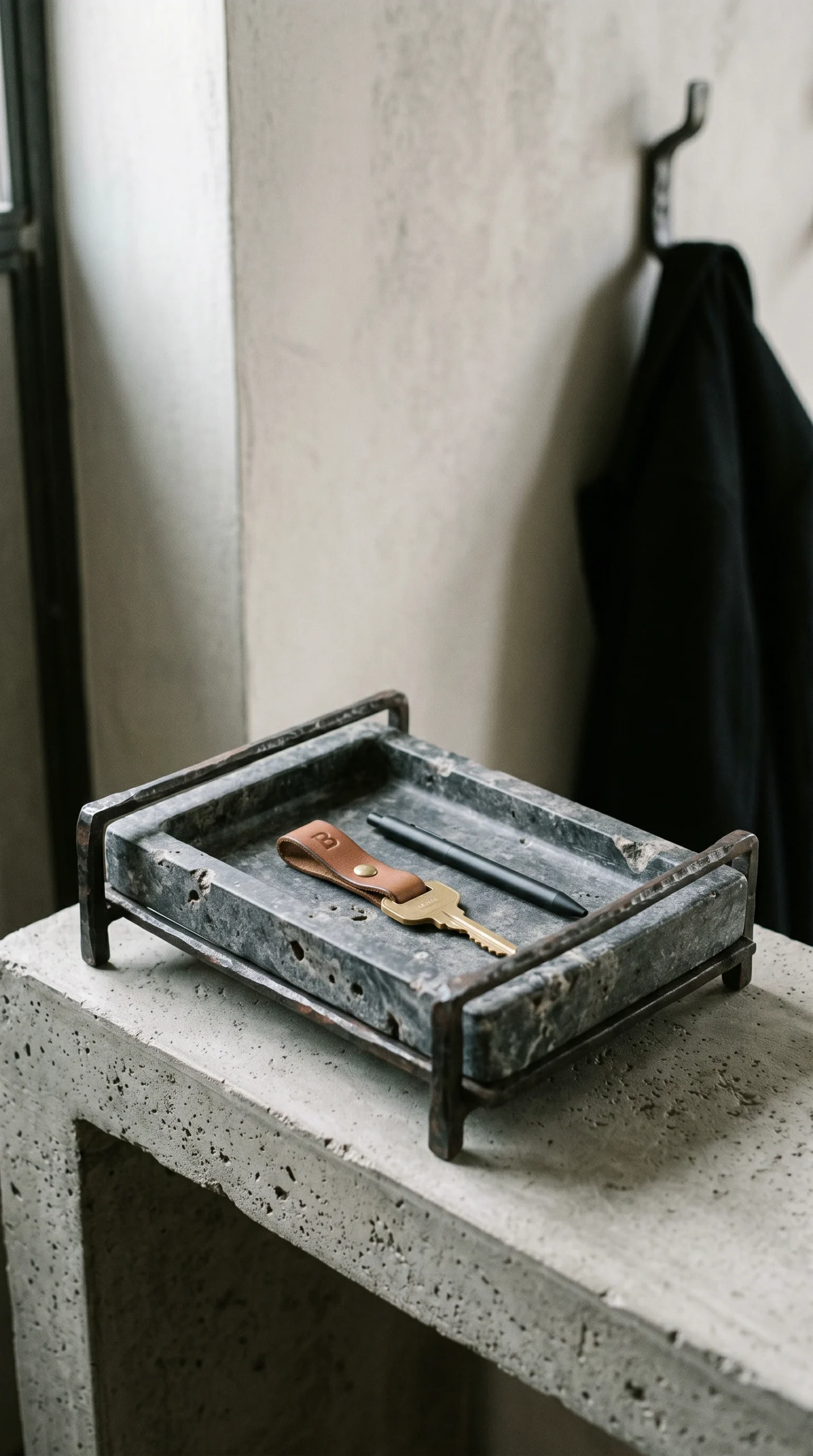
  • Aged Zinc and Dark Marble Trays: On entryway consoles, place a heavy dark marble or aged zinc catch-all tray (10 to 14 inches long) to hold everyday essentials like keys and leather notebooks without disrupting minimalist order.

To see how these metallic and stone tones integrate into overarching room schemes, review our guide to Brutalist color palette ideas.

Textural Plaster Relief Wall Art

Glossy glass-framed prints often reflect harsh glare and look flimsy against heavy masonry walls. Textural wall art provides an authentic architectural alternative:

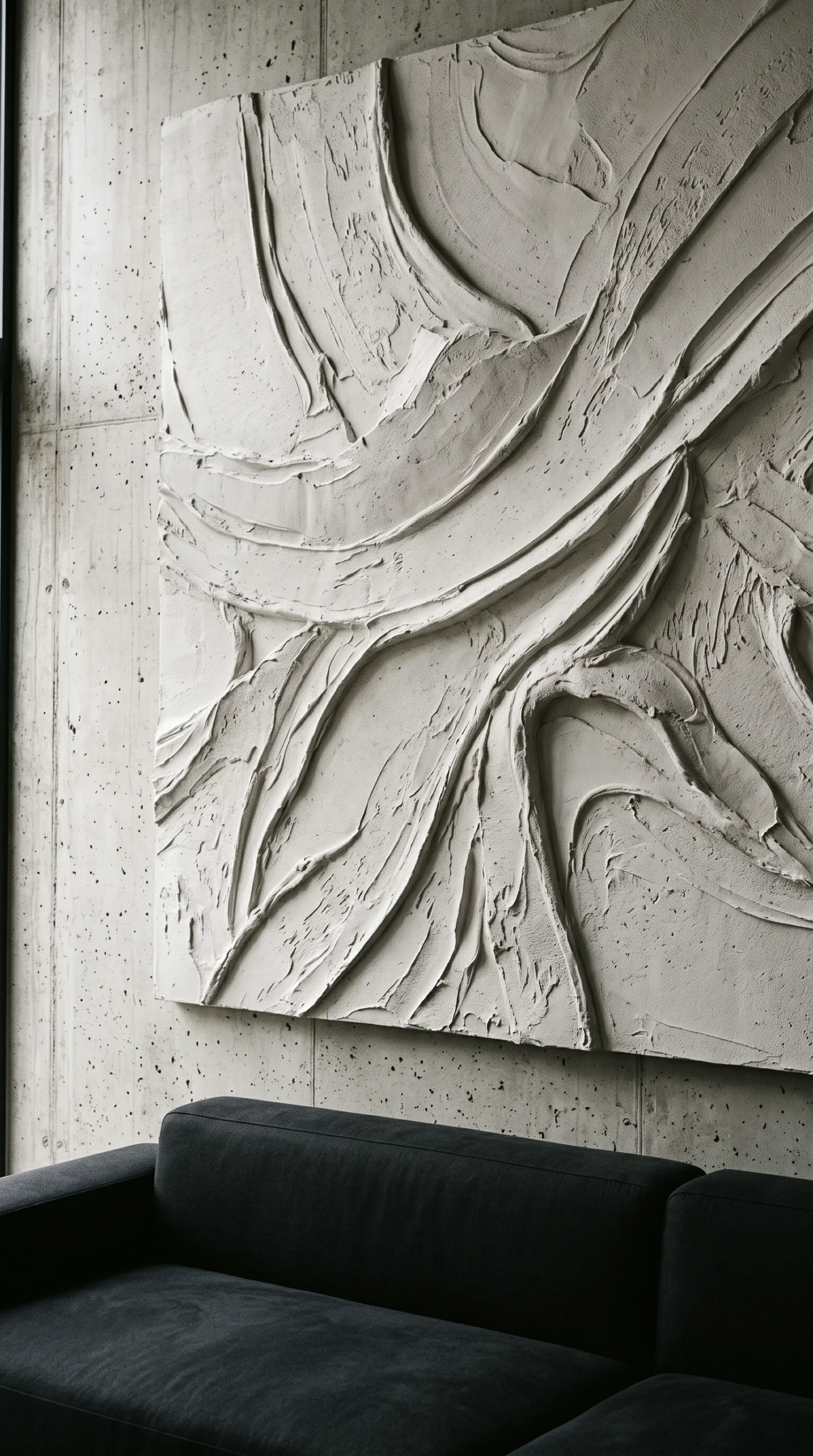
  • Oversized Plaster Panels: Hang or lean a large monochromatic plaster relief artwork (measuring 36×48 inches or larger) above a low sofa or platform bed. Thick, sweeping trowel marks catch directional light, adding tactile drama without introducing distracting colors.
  • Unframed Presentation: Keep plaster reliefs frameless or bordered in a raw blackened steel reveal to celebrate the raw boundary of the material.

To discover how plaster wall reliefs soften concrete bedrooms, review our guide to Brutalist bedroom ideas, and explore living room applications in Brutalist living room ideas.

Light and Shadow as Decorative Materials

In Brutalist design, light is not merely utilitarian; shadow itself is treated as a sculptural material.

Sharp Directional Shadows

Use directional fixtures to cast dynamic geometric forms across surfaces:

  • Blackened Steel Shadow Sconces: Install directional wall sconces with narrow 30 to 45 degree beam spreads above chunky wooden stools or ceramic plinths. The sharp light beam projects dramatic geometric shadows against concrete walls, turning the wall itself into temporary art.
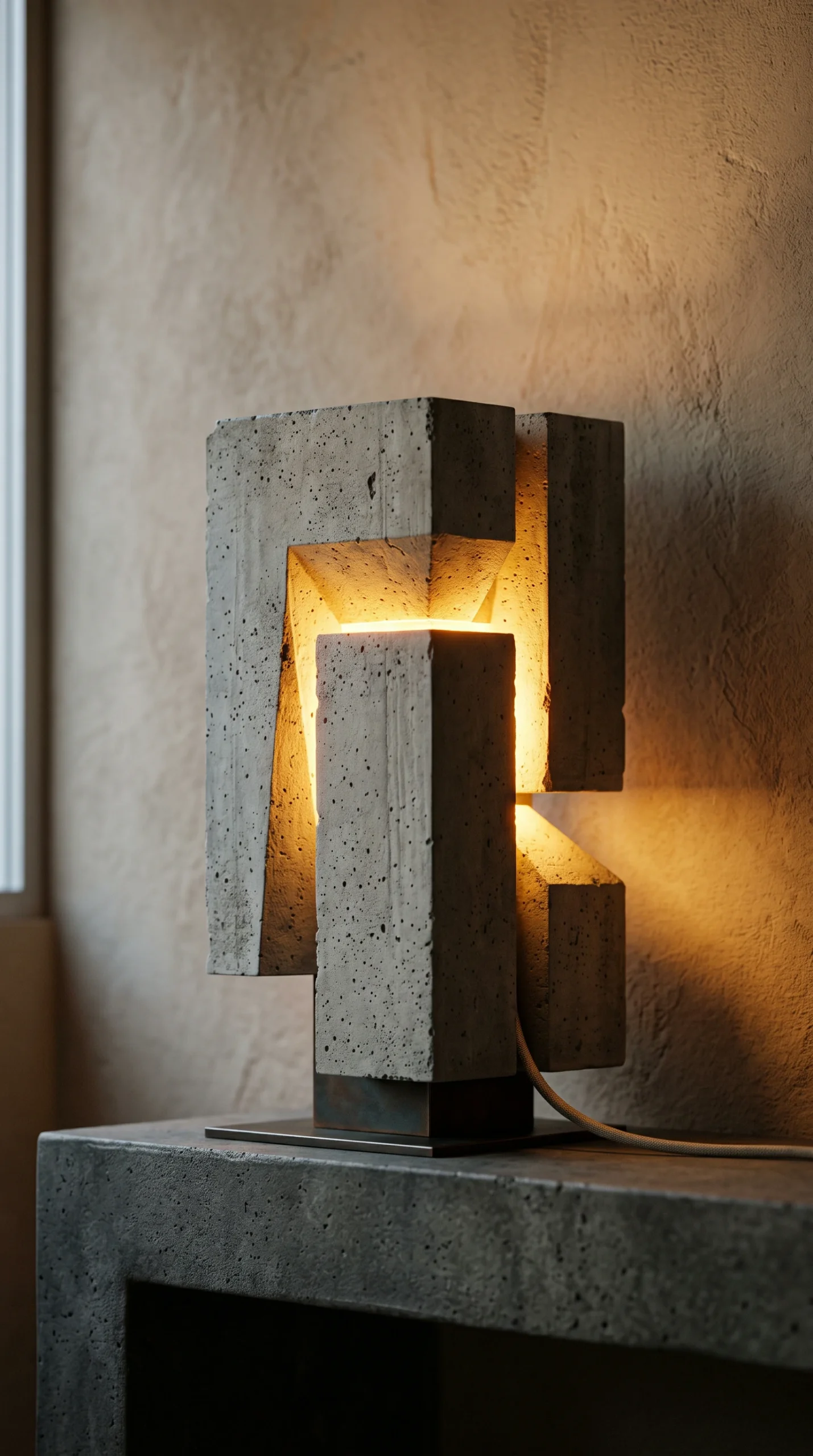
  • Blocky Cement Table Lamps: Place a geometric cast-cement table lamp with an opaque shade in an unadorned room corner. Light glowing upward and downward grazes textured plaster without blinding the eye.
  • 2400K to 2700K Warm Illumination: Always equip decorative lamps with warm white LED sources rated between 2400K and 2700K (CRI 90+) to ensure shadows feel warm and inviting rather than cold and stark.

For ideas on softening lighting and architectural curves, see our guide to soft Brutalism interior design ideas, and check out material layering in soft Brutalism interior design.

Real-World Drawbacks and Maintenance Realities

Living with heavy, unglazed sculptural decor involves distinct practical challenges:

Scratching Furniture Surfaces: The raw, unglazed bottoms of concrete bowls, cast stone sculptures, and terracotta pots are abrasive. Sliding a heavy concrete piece across a fine dark walnut console or marble countertop will leave deep scratches. Always apply 1 to 2 mm adhesive cork or felt pads beneath all rough masonry decor before placing them on furniture.

Weight Hazards on Floating Shelves: Solid cast-iron bookends, stone plinths, and cement lamps can weigh between 15 and 35 pounds. Verify that floating wall shelves are securely lagged into wall studs rather than drywall anchors before loading them with heavy stone objects.

Dusting Textured Plaster and Volcanic Stone: Pitted volcanic stone, rough board-formed chunks, and textured plaster reliefs trap airborne household dust in their pores. They cannot be wiped down with standard damp cloths, which leave lint trapped in the crevices. Cleaning requires a vacuum cleaner with a soft horsehair brush attachment or a can of compressed air.

Water Seepage from Unglazed Pottery: Unglazed terracotta, raw ceramic, and cast concrete vessels are naturally porous. Filling them directly with water for fresh floral arrangements will cause moisture to weep through the base onto wood surfaces, creating permanent dark water rings. Always insert a hidden glass or plastic liner inside unglazed vessels when holding water.

By prioritizing scale, embracing natural living metals, casting dramatic shadows, and protecting furniture surfaces with felt pads, Brutalist decor transforms an interior into a powerful, enduring sanctuary. To explore the foundational architectural framework of this style, review our pillar guide to modern Brutalist interior design ideas, and explore compact apartment styling in small Brutalist apartment ideas.

Frequently Asked Questions About Brutalist Decor

Practical answers on styling with raw concrete decor, protecting furniture surfaces, dusting plaster art, and shadow lighting.
Standard minimalism often uses sleek, polished accessories with smooth white or metallic finishes. Brutalist decor embraces heavy, unpolished geological mass and industrial textures—such as rough board-formed concrete bowls, heavy rusted iron bookends, oxidized bronze vases, and coarse plaster reliefs.
The raw, unglazed bases of cast concrete, volcanic stone, and terracotta act like coarse sandpaper. Always adhere 1 to 2 mm dense adhesive felt or cork pads beneath all masonry and ceramic decor before placing them on wood, marble, or glass surfaces.
Maintain at least 50% to 60% of any console, coffee table, or bookshelf surface completely open and empty. This deliberate breathing room allows large sculptural statement pieces to be appreciated as architectural objects rather than decorative clutter.
No. Unglazed ceramic and cast concrete are porous materials; water will seep through the bottom over several hours and create permanent moisture stains on furniture. Always insert a hidden glass tube or plastic container inside unglazed vases to hold water.
Textured plaster and rough stone surfaces trap airborne dust in their crevices. Never wipe them with wet sponges or cotton rags, which leave lint behind. Use a vacuum cleaner equipped with a soft horsehair brush attachment or a can of compressed air.
A single monumental centerpiece with a 16 to 20 inch (41 to 51 cm) diameter—such as a low rough cast-concrete bowl or a dark raw ceramic platter—creates an authentic architectural presence on a large timber or stone dining table.
Use warm white 2400K to 2700K directional spotlights with a narrow 30 to 45 degree beam spread. The warm golden light casts sharp geometric shadows from bronze and ceramic sculptures across concrete walls, turning light into a decorative element.
Solid cast iron and basalt bookends often weigh 15 to 25 pounds. They are only safe on heavy-duty floating shelves that are lag-bolted directly into structural wall studs. Avoid placing heavy stone bookends on shelves supported only by hollow drywall anchors.
Unfinished, living metals with natural weathering are best: oxidized bronze, rusted core-ten steel, aged zinc, and blackened brass. Their evolving patinas provide rich organic character that harmonizes with stone.
Framed glass prints reflect glare and often look paper-thin against massive concrete walls. Textured plaster relief art adds tactile dimensional depth and absorbs room sound while casting subtle shadows that celebrate the architecture.