Brutalist Furniture Ideas for Monolithic Architectural Living

Brutalist furniture treats interior furnishings as permanent architectural micro-structures. By pairing heavy live-edge timber slabs with cast concrete pillar legs, welded steel frames, and low-profile seating, you achieve profound sculptural gravity while preserving essential daily ergonomics.

Hybrid Table Slabs

Combine 2.5 to 3 inch thick live-edge oak tops with cast concrete pillar legs to balance monumental stability with biological forearm warmth.

Thigh Clearance (10-12")

Ensure 10 to 12 inches of vertical clearance between dining chair cushions and the underside of thick stone or concrete tabletops.

Walkway Buffers (36-42")

Maintain 36 to 42 inches of open passage around monolithic tables and plinths to prevent painful bumps on unyielding masonry corners.

Floor Protection Glides

Fit 3 to 5 mm high-density nylon or felt glides under heavy concrete and steel furniture bases to prevent point-load floor gouging.

Live-Edge Timber, Cast Concrete Tables, and Welded Steel

Explore monumental Brutalist furniture featuring concrete-legged dining tables, carved timber armchairs, bronze consoles, and stone plinths.

Essential Planning Checks for Brutalist Furniture

Review these critical ergonomic, weight, and surface protection considerations before investing in monolithic furniture.

Calculate Structural Weight

Verify subfloor capacity before installing solid cast concrete tables and stone benches weighing 300 to 600 pounds.

Check Chair Thigh Clearances

Ensure dining chairs provide 10 to 12 inches of vertical space beneath thick slabs so seated guests can cross their legs.

Install Heavy-Duty Glides

Attach 3 to 5 mm dense nylon glides under metal and concrete legs to protect microcement and timber floors from gouging.

Seal Masonry Worktops

Apply a penetrating food-safe aliphatic polyurethane sealer to concrete tables to prevent oil and wine from staining porous stone.

Map 36 to 42 Inch Clearances

Maintain generous transit corridors around heavy stone plinths and credenzas to ensure safe, comfortable movement.

Sculptural Permanence: Designing with Brutalist Architectural Furniture

Standard mass-market furniture is typically designed to be lightweight, portable, and easily flat-packed. While convenient, flimsy particleboard and delicate spindle legs look insignificant against the soaring ceilings, exposed concrete columns, and textured masonry of an industrial home. Brutalist furniture takes the opposite approach: it treats tables, seating, and credenzas as permanent architectural micro-structures sculpted from raw earth, dense hardwood, and unpolished metals.

Selecting and arranging Brutalist furniture requires balancing visual gravity with physical ergonomics. Because monolithic pieces are heavy and unyielding, understanding floor load distribution, proper knee clearances, and transit buffers ensures that your furniture delivers sculptural permanence without compromising daily comfort.

Monolithic Dining Tables and Seating Clearances

The dining table is often the most monumental furniture investment in a home, serving as a gathering spot, workspace, and architectural anchor.

Hybrid Wood and Concrete Construction

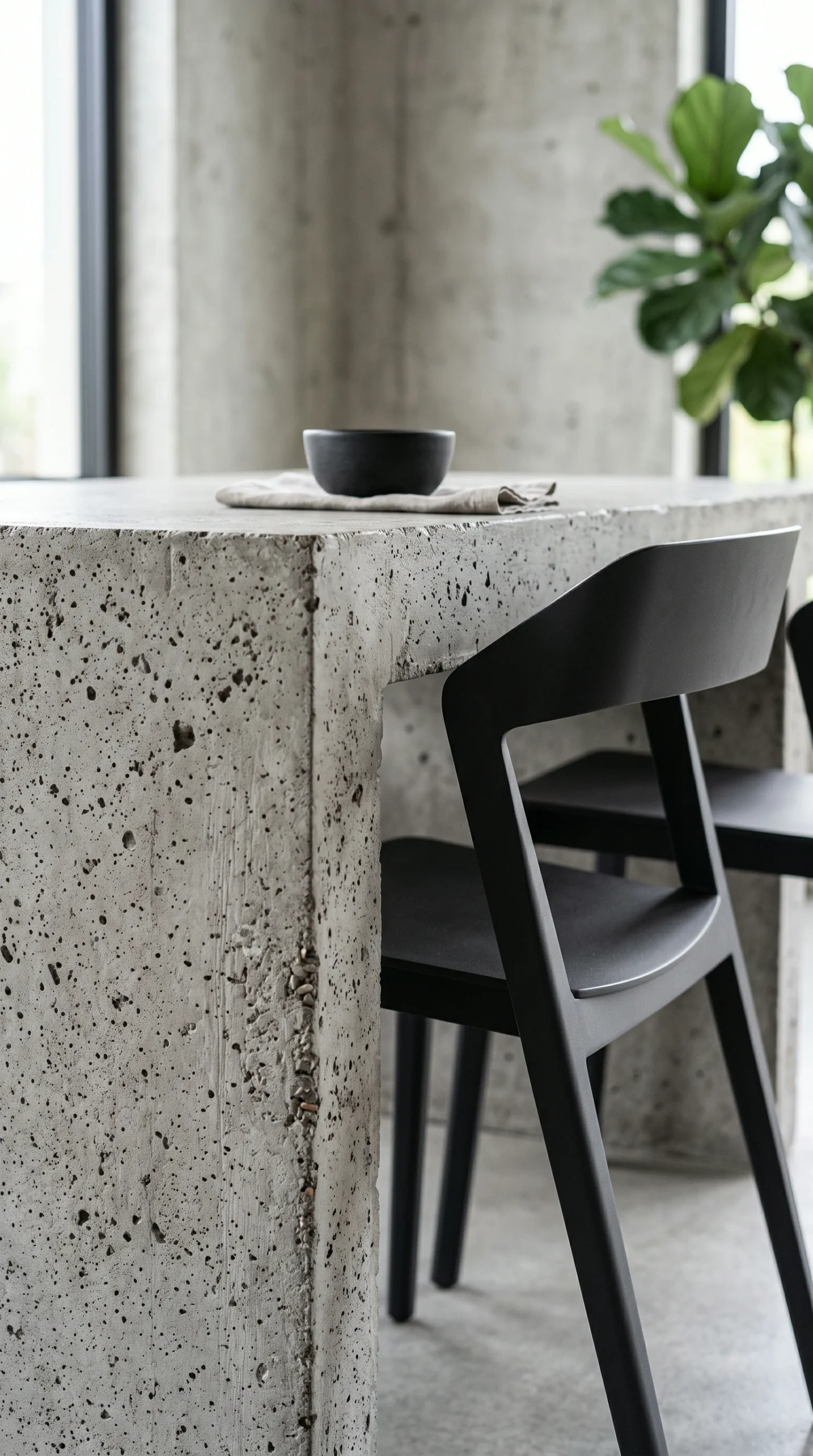
While an entirely solid cast-concrete dining table provides undeniable industrial drama, dining surfaces interact directly with human skin. An unyielding concrete tabletop can feel uncomfortably cold under bare forearms during long evening meals:

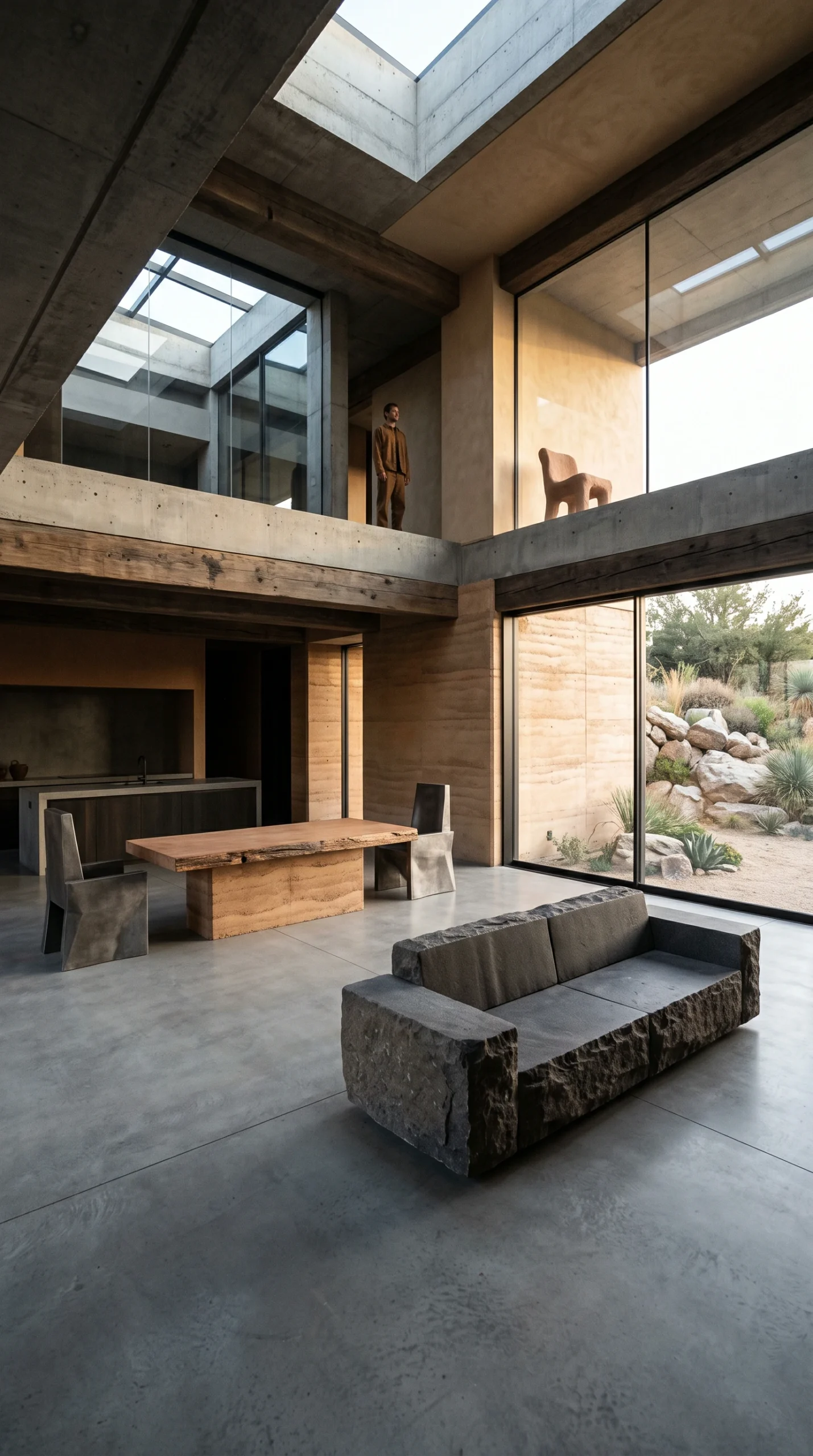
  • Live-Edge Slabs on Concrete Pillars: A practical approach pairs a 2.5 to 3 inch thick live-edge European oak or ash slab with heavy cast-concrete pillar legs. The solid timber surface provides biological warmth and tactile comfort where diners rest their arms, while the concrete pillars anchor the room with monumental stability.
  • Table Heights and Knee Clearances: A standard dining table sits at 30 inches (76 cm) high. Because thick live-edge slabs or cast concrete tops are thicker than standard 1-inch tabletops, carefully calculate chair heights to guarantee 10 to 12 inches (25 to 30 cm) of vertical thigh clearance between chair cushions and the table underside.
  • Perimeter Walkways: Maintain primary walkway clearances of at least 36 to 42 inches (91 to 107 cm) around the perimeter of heavy dining tables. Diners must be able to push chairs back comfortably without scuffing walls.

For more inspiration on scaling monolithic pieces in compact urban layouts, explore our guide to small Brutalist apartment ideas.

Sculptural Seating: Smoked Timber, Boucle, and Cold Steel

Brutalist seating explores the interplay between rigid structural framing and plush, cocooning upholstery.

Carved Timber and Welded Steel Frames

Chairs should look like functional sculptures from every angle:

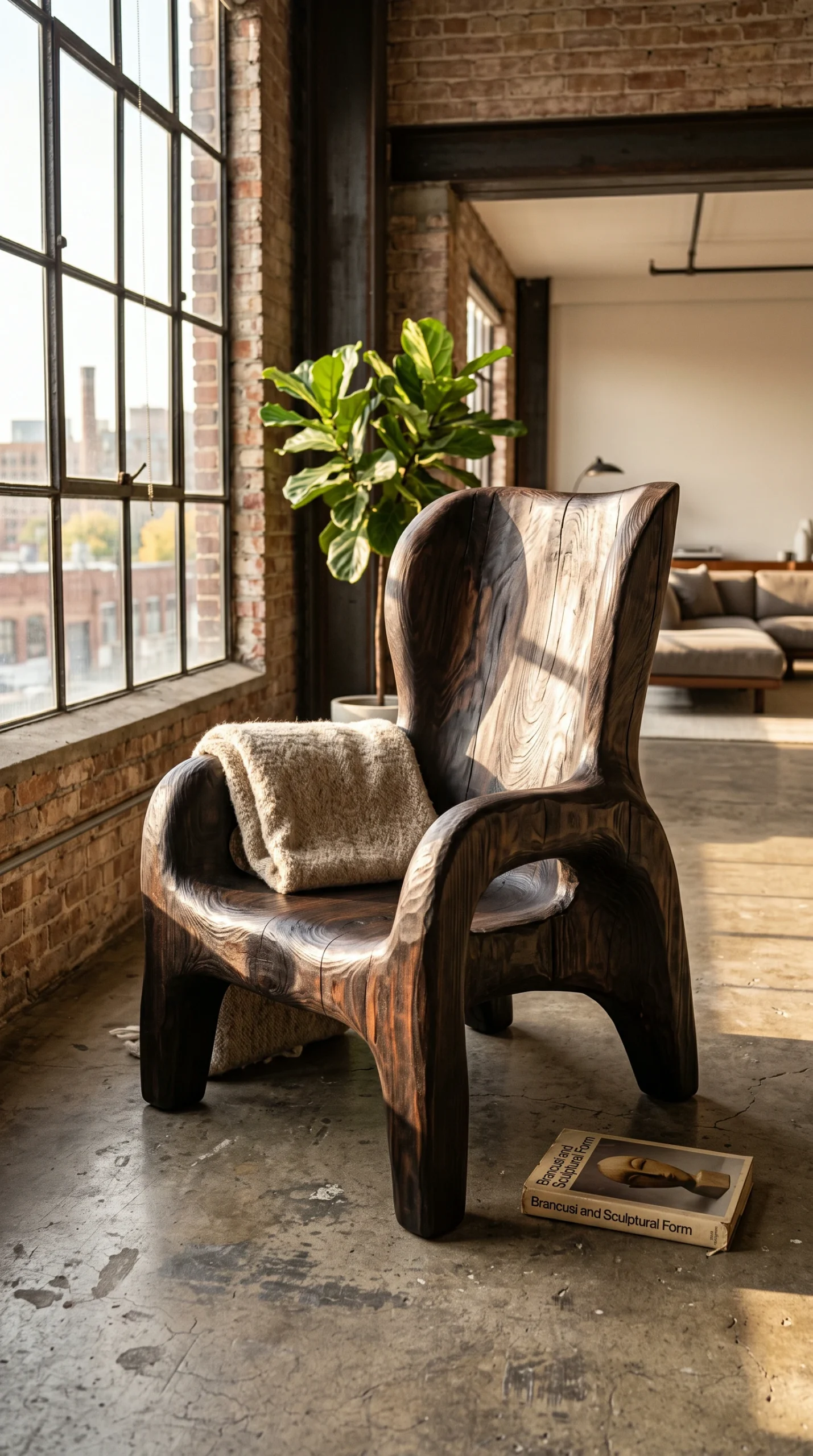
  • Carved Smoked Timber Armchairs: Statement lounge chairs carved from solid blocks of dark smoked ash or charred oak feature dramatic geometric profiles that command attention in sunlit lofts.
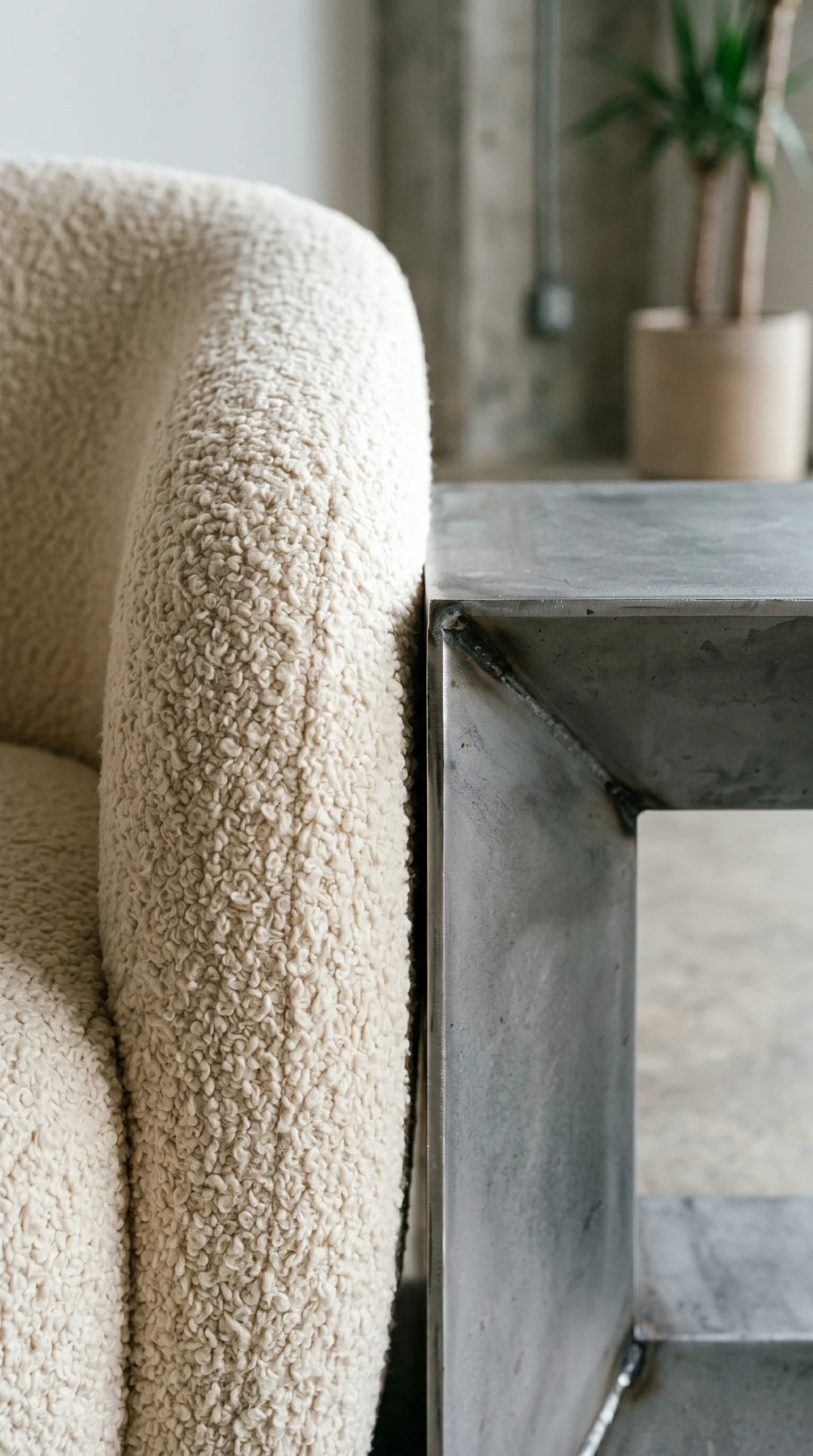
  • Welded Cold-Rolled Steel Side Tables: Pair soft seating with raw geometric side tables crafted from welded industrial steel plates. The exposed weld seams and mill scale celebrate honest fabrication techniques.
  • Low-Slung Armchair Ergonomics: Specify lounge seating with seat cushion heights between 16 and 18 inches (41 to 46 cm) from the floor. A low center of gravity keeps the visual horizon open and grounds the conversation area.

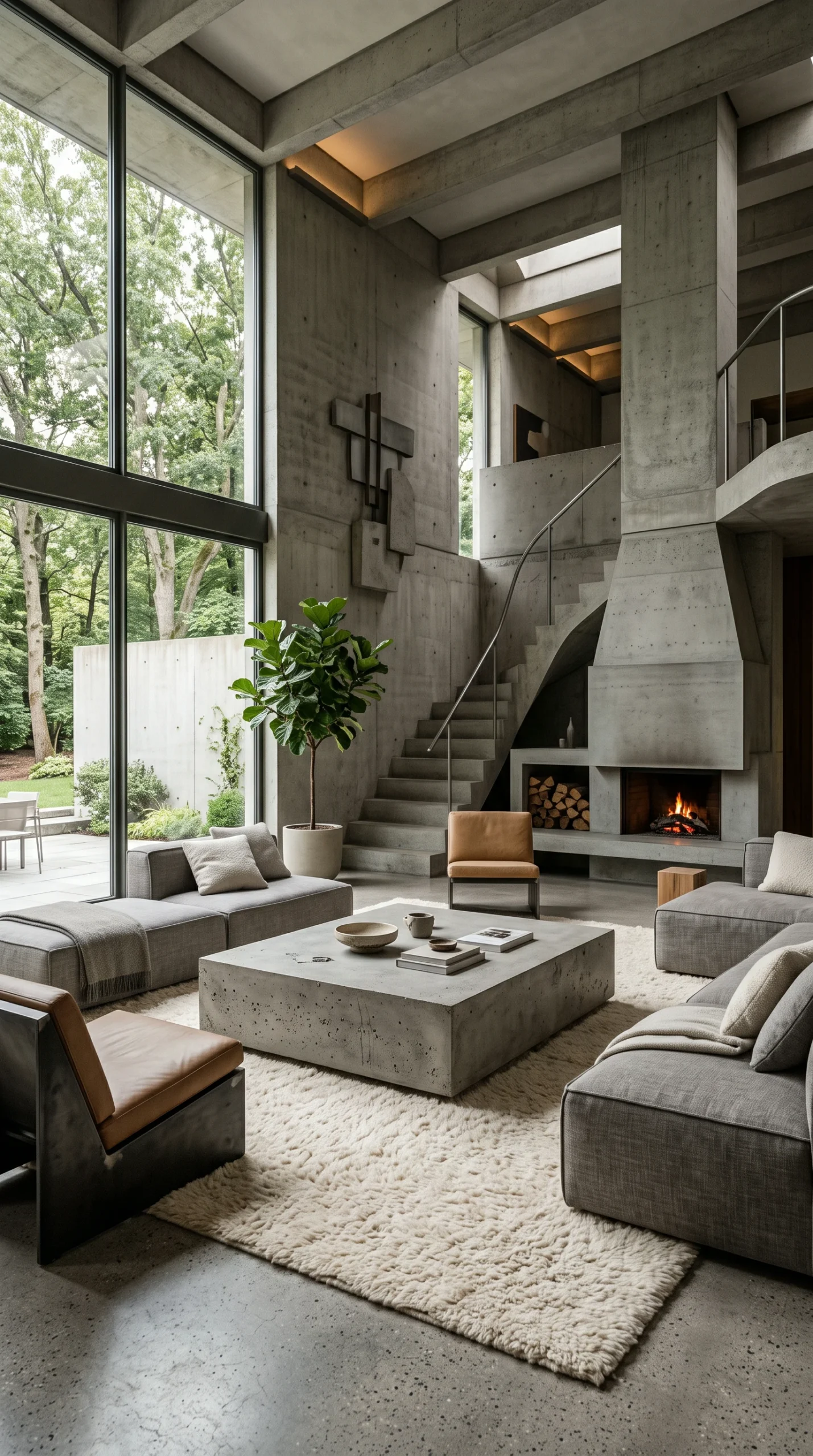
To see how sculptural seating anchors family gathering rooms, review our guide to Brutalist living room ideas.

Architectural Credenzas, Floating Shelves, and Consoles

Storage in a Brutalist interior should integrate cleanly with wall planes rather than cluttering floor paths.

Cantilevered Floating Consoles

Suspending heavy cabinetry off the floor preserves floor space:

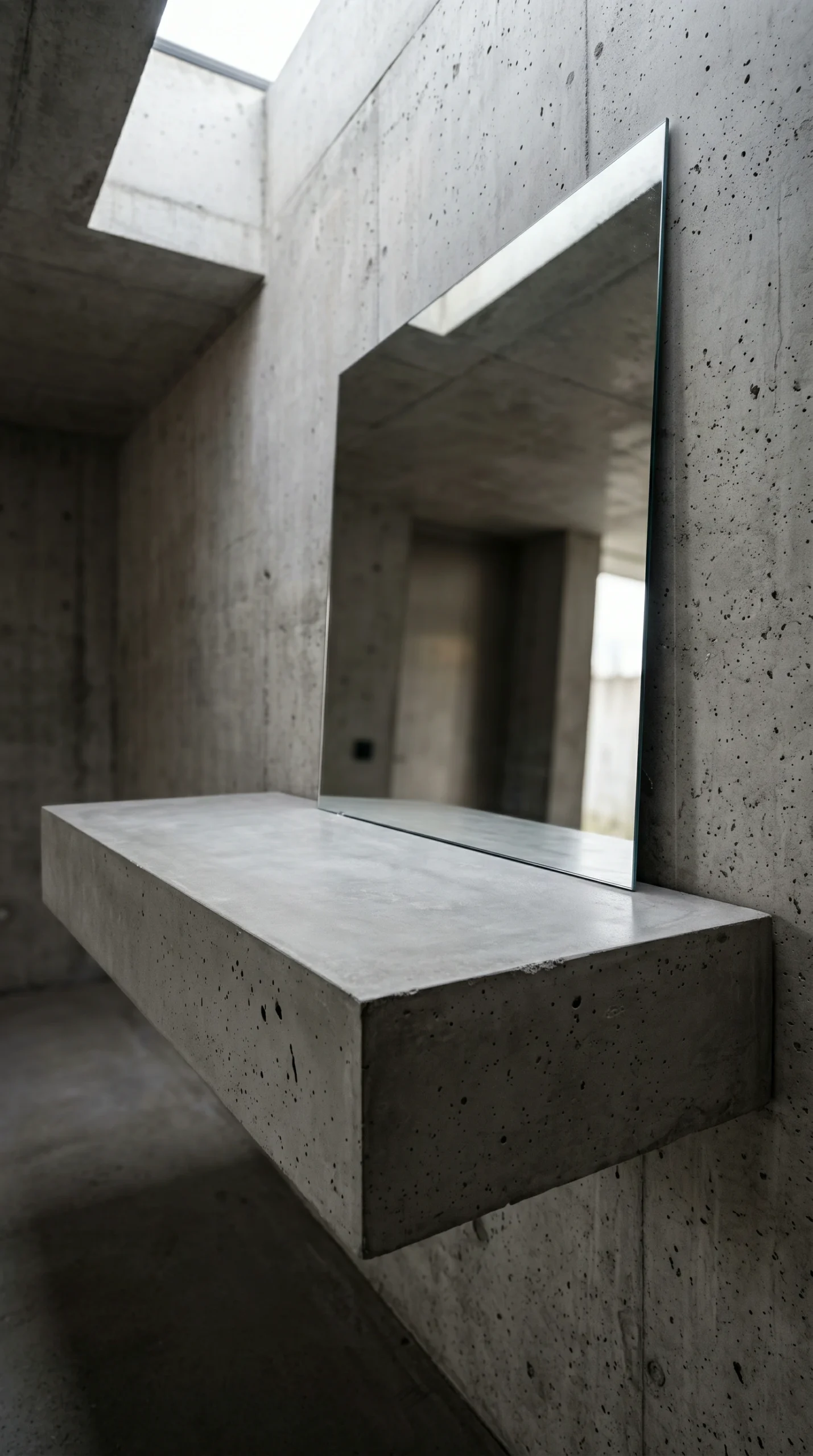
  • Floating Cast Cement Drop Zones: In entryways and living corridors, mount a floating cast cement or dark walnut console table 32 to 34 inches (81 to 86 cm) high with a depth of 12 to 16 inches. Anchoring the console into structural wall studs leaves floor planes visible, making narrow pathways feel wider.
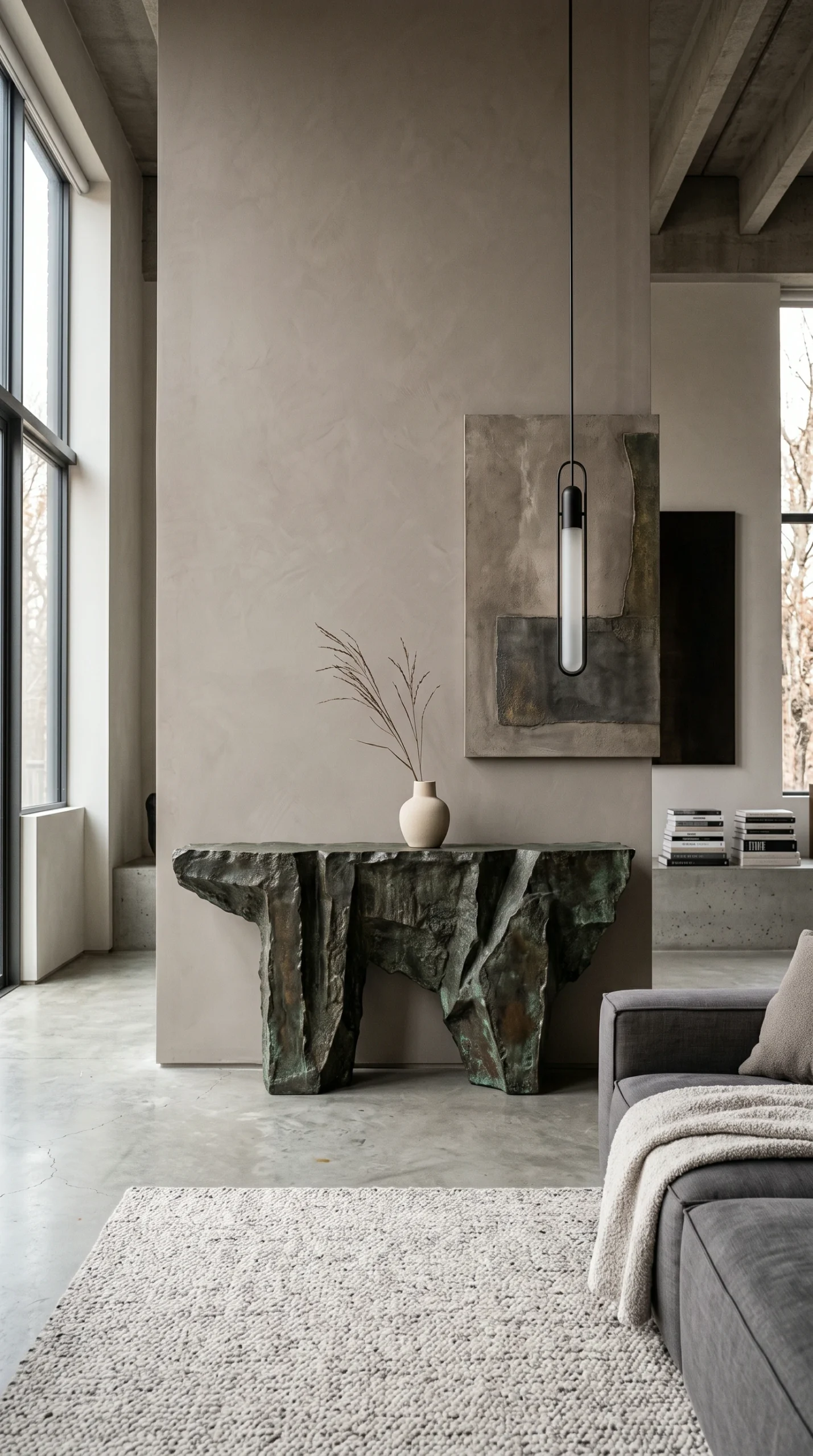
  • Jagged Oxidized Bronze Consoles: For dramatic foyer focal points, select a sculptural console table featuring a jagged, hand-welded oxidized bronze base paired with a smooth slate or limestone top.
  • Concealed Wire Chases: Route television cables and power cords through internal wire channels behind floating credenzas to preserve clean, unadorned surfaces.

To coordinate entryway furniture with room-by-room palettes, consult our comprehensive guide to Brutalist color palette ideas, and discover curated vessels in Brutalist decor ideas.

Low-Profile Monolithic Platform Beds

In the bedroom, Brutalist furniture translates into low, grounded sleeping platforms that promote deep cognitive rest:

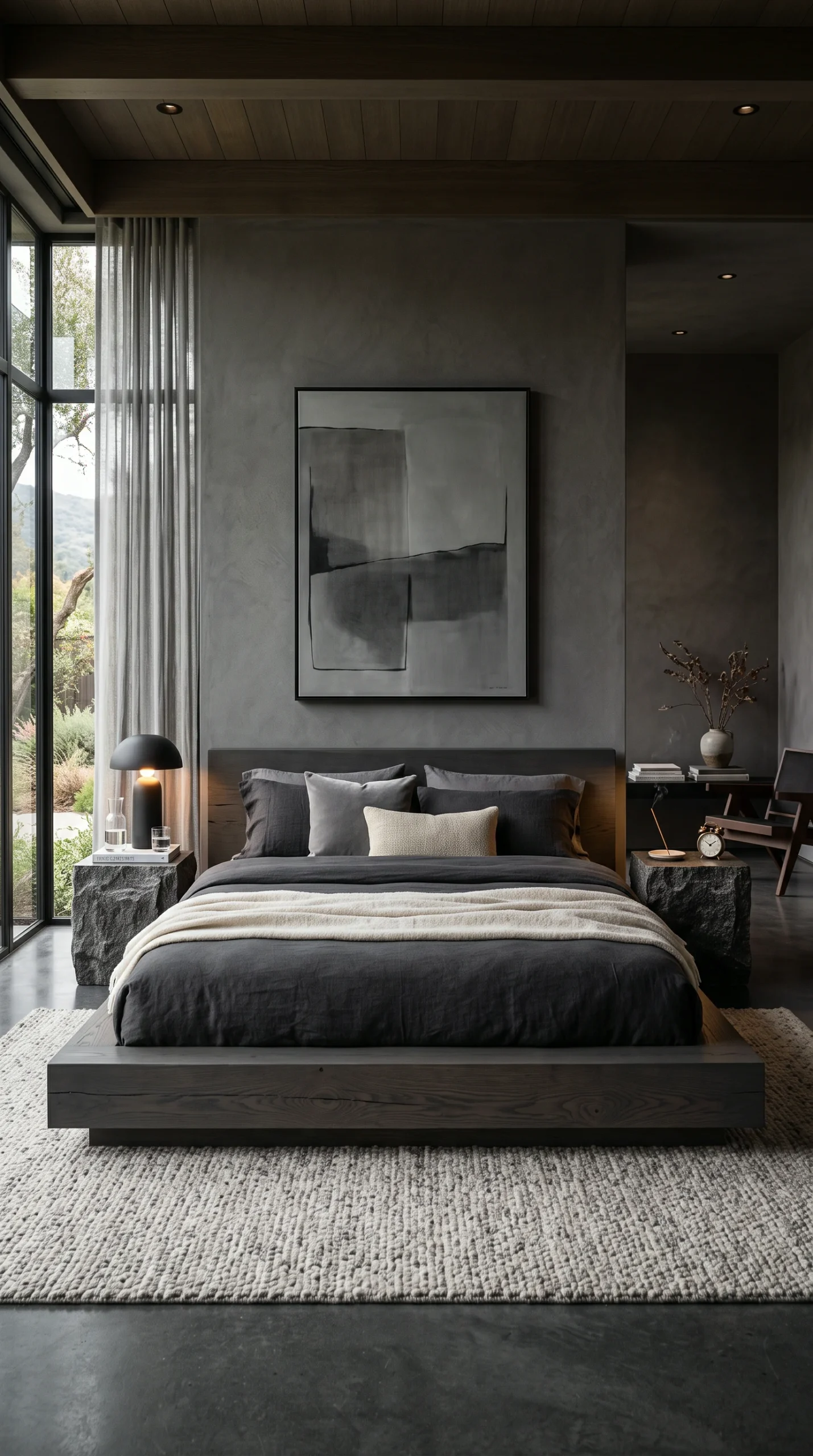
  • Choose a chunky, low-profile bed plinth crafted from dark charcoal wood or microcement sitting 16 to 20 inches high (including mattress).
  • Ensure the bed frame incorporates an internal ventilated timber slat base spaced 2 to 3 inches apart to allow mattress airflow and prevent condensation buildup over cold masonry floors.
  • Pair the platform bed with raw stone or cantilevered concrete nightstands anchored directly into the wall.

For detailed bedroom layout and acoustic advice, review our dedicated guide to Brutalist bedroom ideas, and see how to soften forms in our guide to soft Brutalism interior design ideas.

Real-World Drawbacks and Maintenance Realities

Investing in heavy Brutalist furniture requires practical planning for everyday living:

Extreme Weight and Moving Logistics: Solid cast-concrete tables, stone pillar bases, and thick timber block benches weigh between 250 and 600+ pounds. Moving these pieces into upper-floor apartments or maneuvering them through stairwells requires professional rigging and multiple movers. Once placed, they cannot be easily repositioned for vacuuming.

Floor Gouging Risks: The raw concrete and metal bottoms of heavy table pillars can easily scratch or crack microcement, hardwood, or tile floors under high point loads. Always install heavy-duty 3 to 5 mm high-density nylon or dense felt glides beneath all masonry and steel furniture bases during initial installation.

Inflexible Thigh Clearance: A thick 3-inch cast concrete or live-edge wooden dining slab reduces the vertical gap for your legs. If you pair a thick tabletop with high-armed chairs, the armrests may collide with the table apron, preventing chairs from tucking underneath.

Porous Surface Staining: Unsealed concrete and raw stone coffee tables absorb spilled red wine, coffee, and cooking oils within minutes. All masonry furniture must be treated with a food-safe penetrating aliphatic polyurethane sealer and wiped promptly after spills.

By balancing monolithic scale with ergonomic clearances, floor protection, and biological timber warmth, Brutalist furniture transforms a house into an enduring architectural sanctuary. To explore how to apply this aesthetic across your entire home, consult our pillar guide to modern Brutalist interior design ideas, and explore tactile styling in our guide to soft Brutalism interior design.

Frequently Asked Questions About Brutalist Furniture

Practical answers on concrete furniture weight, thigh clearances, floor protection, and living with monolithic tables.
Standard modern furniture emphasizes lightweight portability, slender legs, and polished veneers. Brutalist furniture embraces heavy monolithic mass, raw architectural materials—such as cast concrete, solid smoked oak, and welded raw steel—and sculptural forms that feel permanently rooted in the room.
Maintain 10 to 12 inches (25 to 30 cm) of vertical thigh clearance between the chair seat cushion and the table underside. Because concrete or live-edge slabs are 2.5 to 3 inches thick, pairing them with standard-height chairs without measuring can pinch legs.
Solid cast concrete tables can weigh between 300 and 600 pounds. While concrete-slab apartment buildings support this load easily, older timber-framed homes require checking joist spans with a structural engineer. Hybrid designs (wood tops on concrete legs) significantly reduce weight.
The raw bottoms of concrete and steel furniture bases can gouge floors under heavy point loads. Always adhere 3 to 5 mm high-density nylon or heavy industrial felt glides beneath all concrete pillars and metal legs before setting them in place.
Maintain primary walkway clearances of at least 36 to 42 inches (91 to 107 cm) around heavy dining tables, credenzas, and coffee tables. Because stone and steel corners are unyielding upon contact, generous buffers prevent painful bruises.
All-concrete tabletops feel cold and hard under bare forearms during long dinners. A hybrid design—pairing a warm live-edge oak slab with cast concrete pillar legs—delivers the monumental architectural look while providing biological warmth where diners touch the table.
Concrete is naturally porous and absorbs oils, wine, and coffee quickly. Treat the surface with a two-part penetrating aliphatic polyurethane sealer in a matte finish, wipe spills immediately, and use coasters under hot beverages.
Target a low seat cushion height of 16 to 18 inches (41 to 46 cm) from the floor. A low-profile stance grounds the seating arrangement and preserves open sightlines across tall concrete walls.
Heavy floating consoles (12 to 16 inches deep) must be lag-bolted directly into structural wall studs using custom steel mounting brackets. Never rely on hollow drywall anchors for cast cement or thick timber consoles.
Brutalist furniture is exceptionally heavy, making rearranging rooms or moving homes difficult without specialized movers. Additionally, unyielding corners can cause painful bumps, and porous stone requires periodic sealing to resist staining.