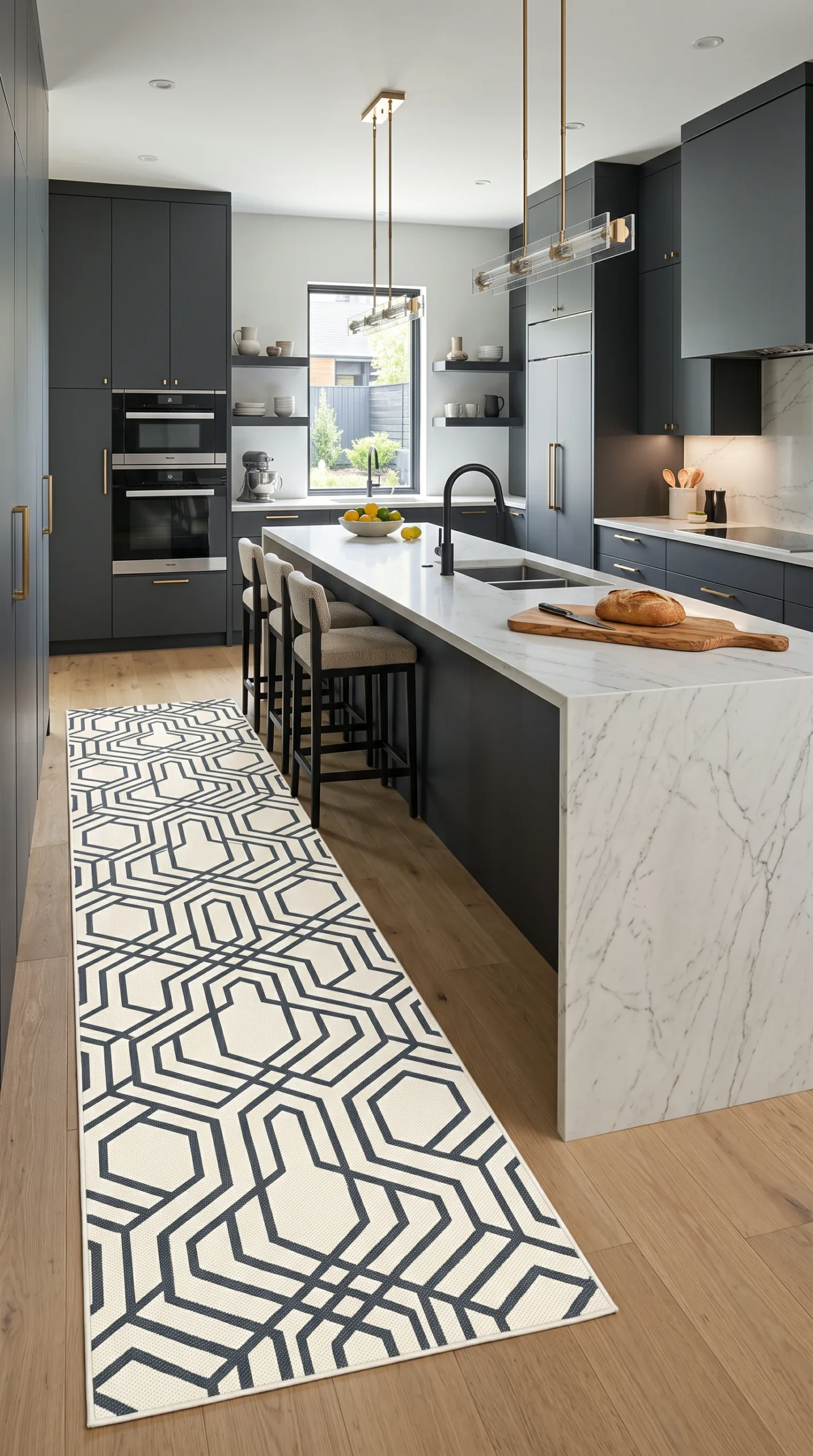
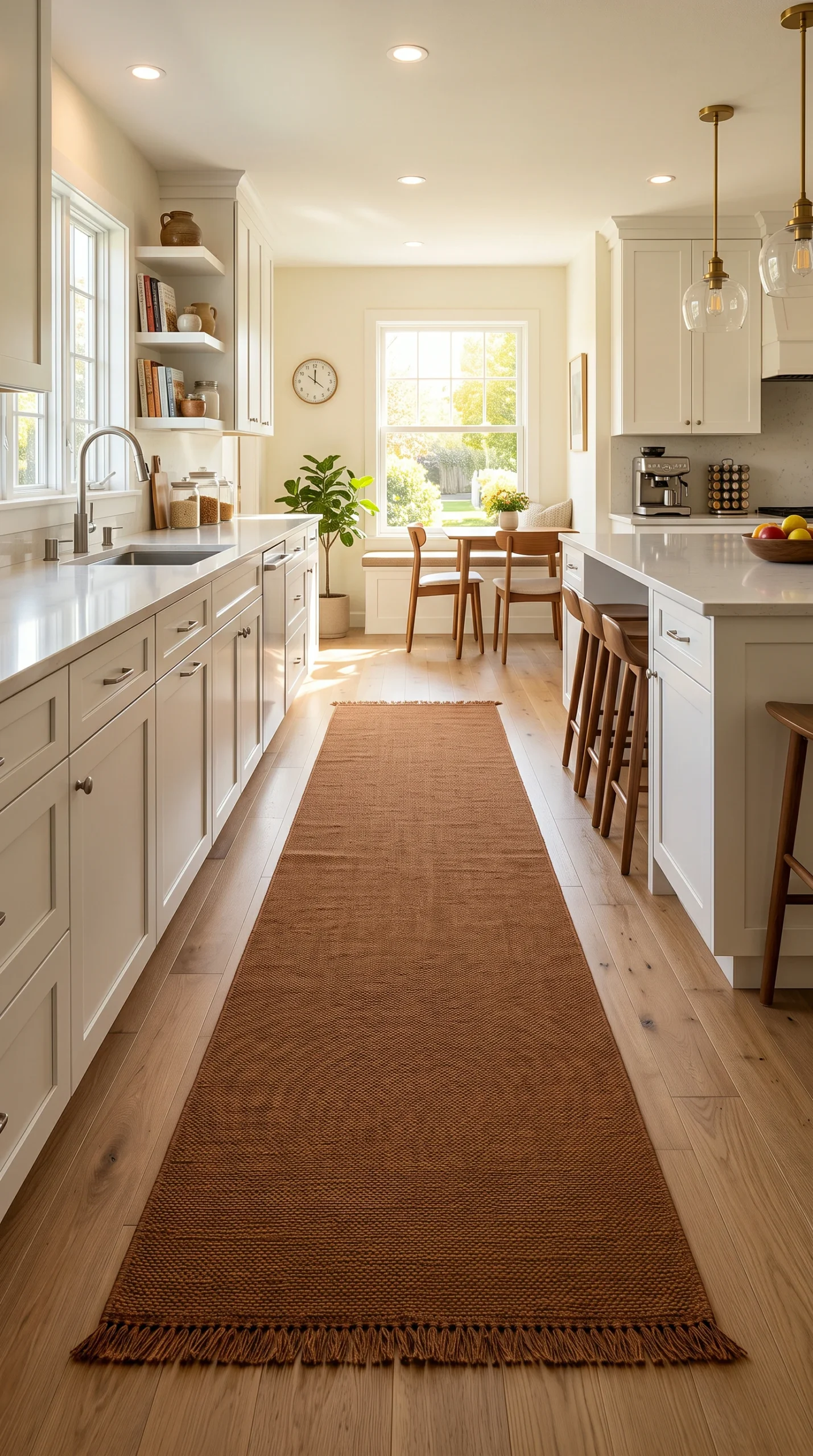
A kitchen island rug should ideally run the entire length of your island, leaving just a few inches of floor space on either end. This creates a balanced, custom-fitted look that perfectly defines the workspace.
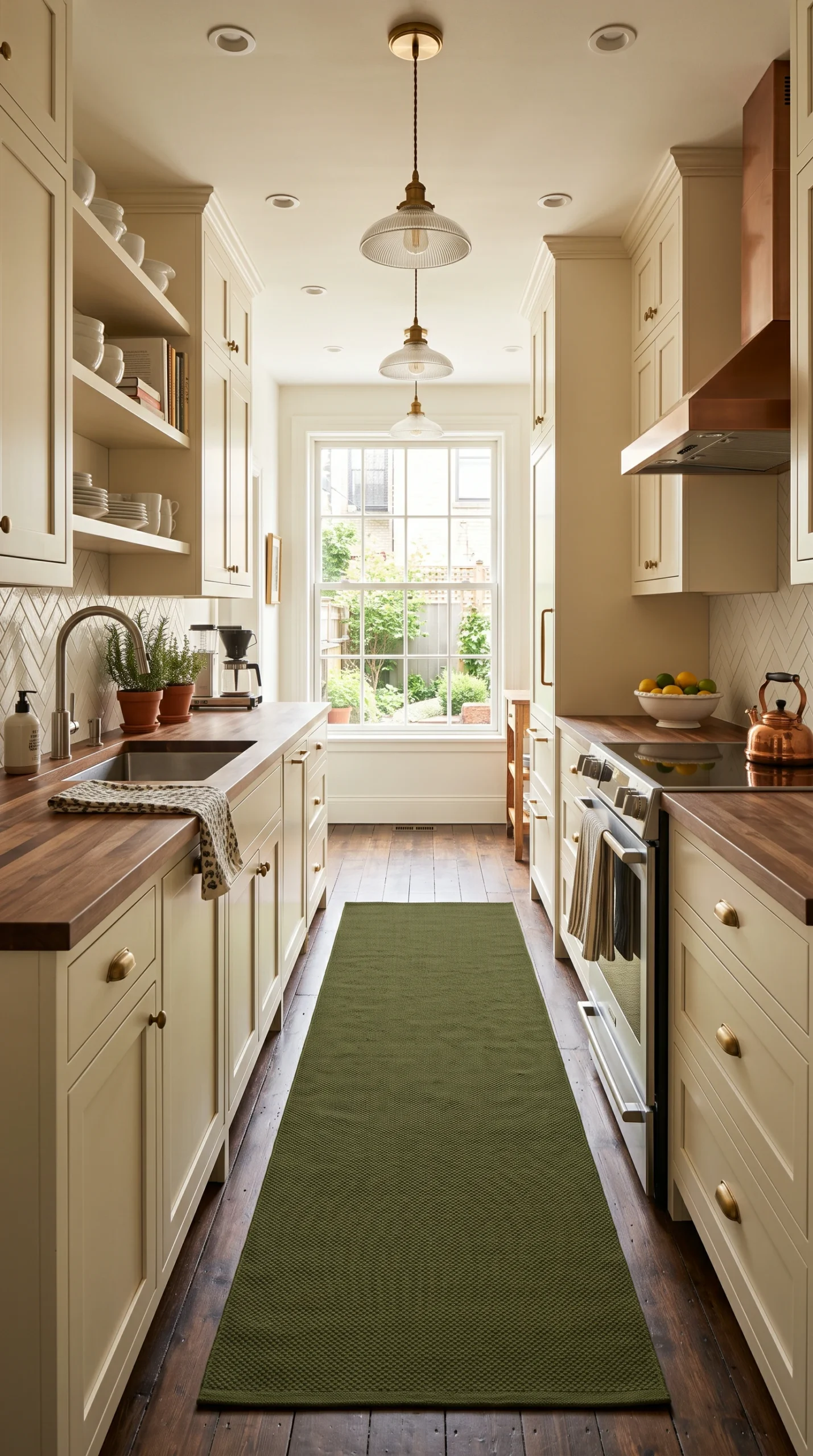
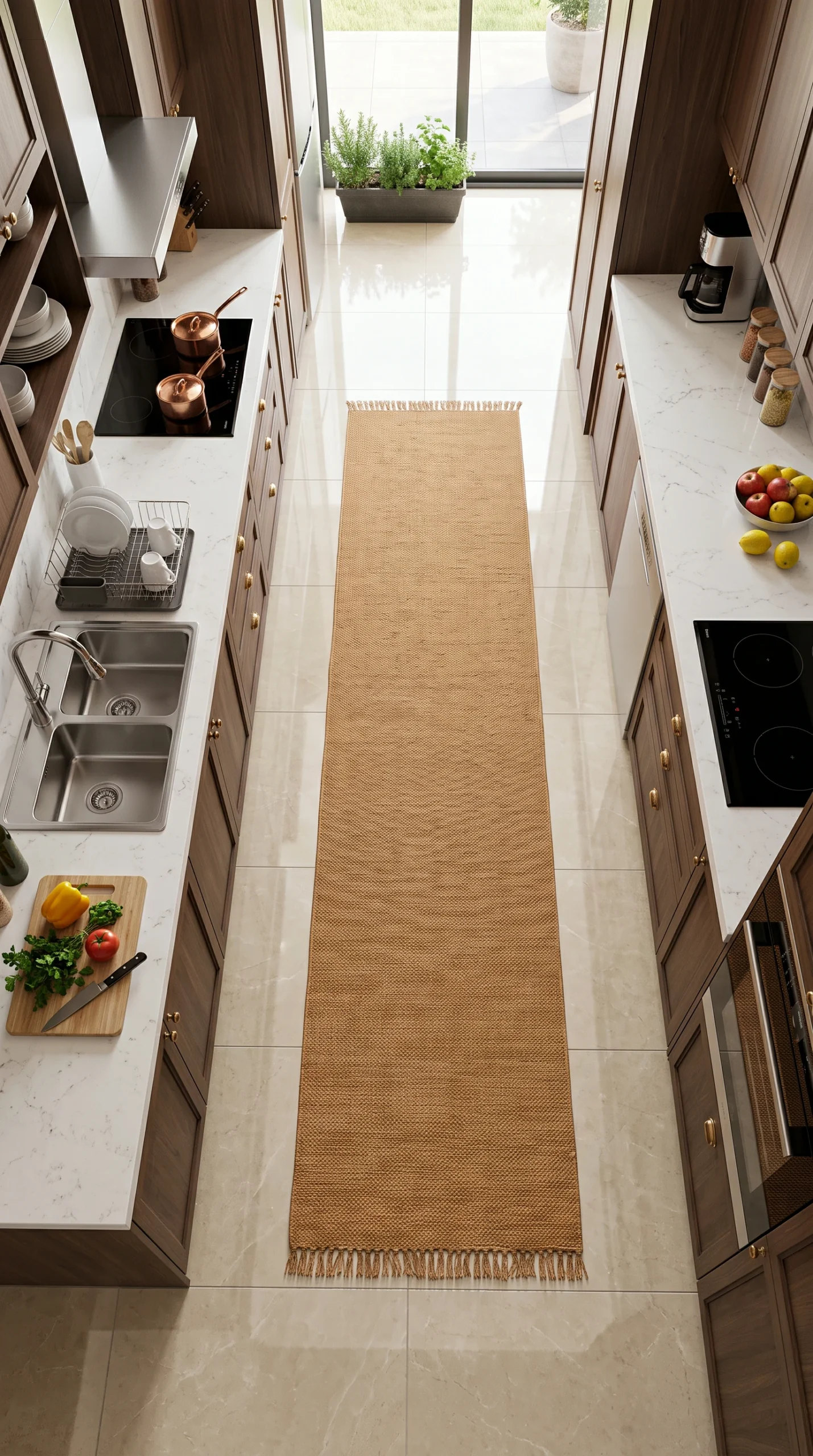
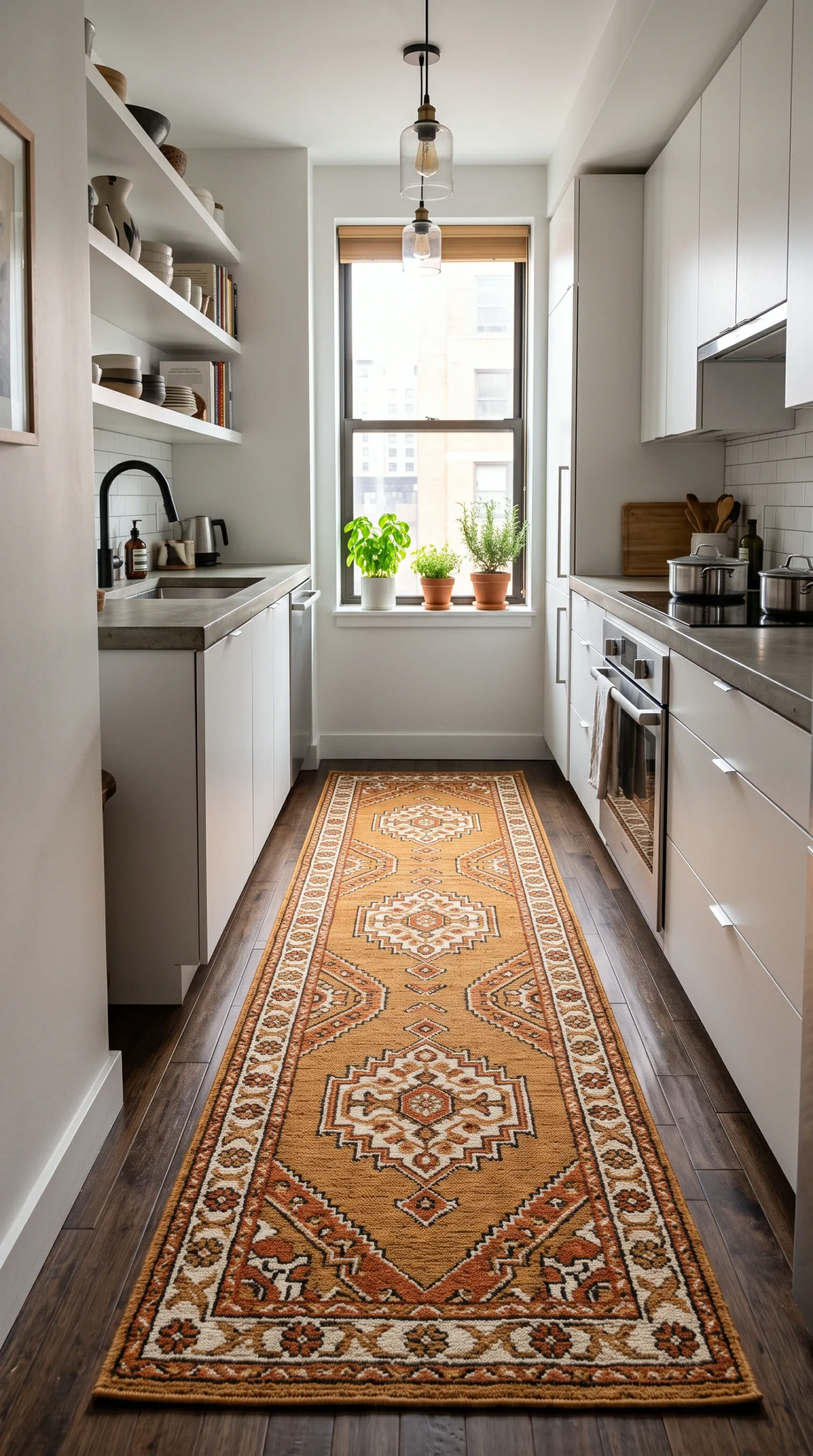
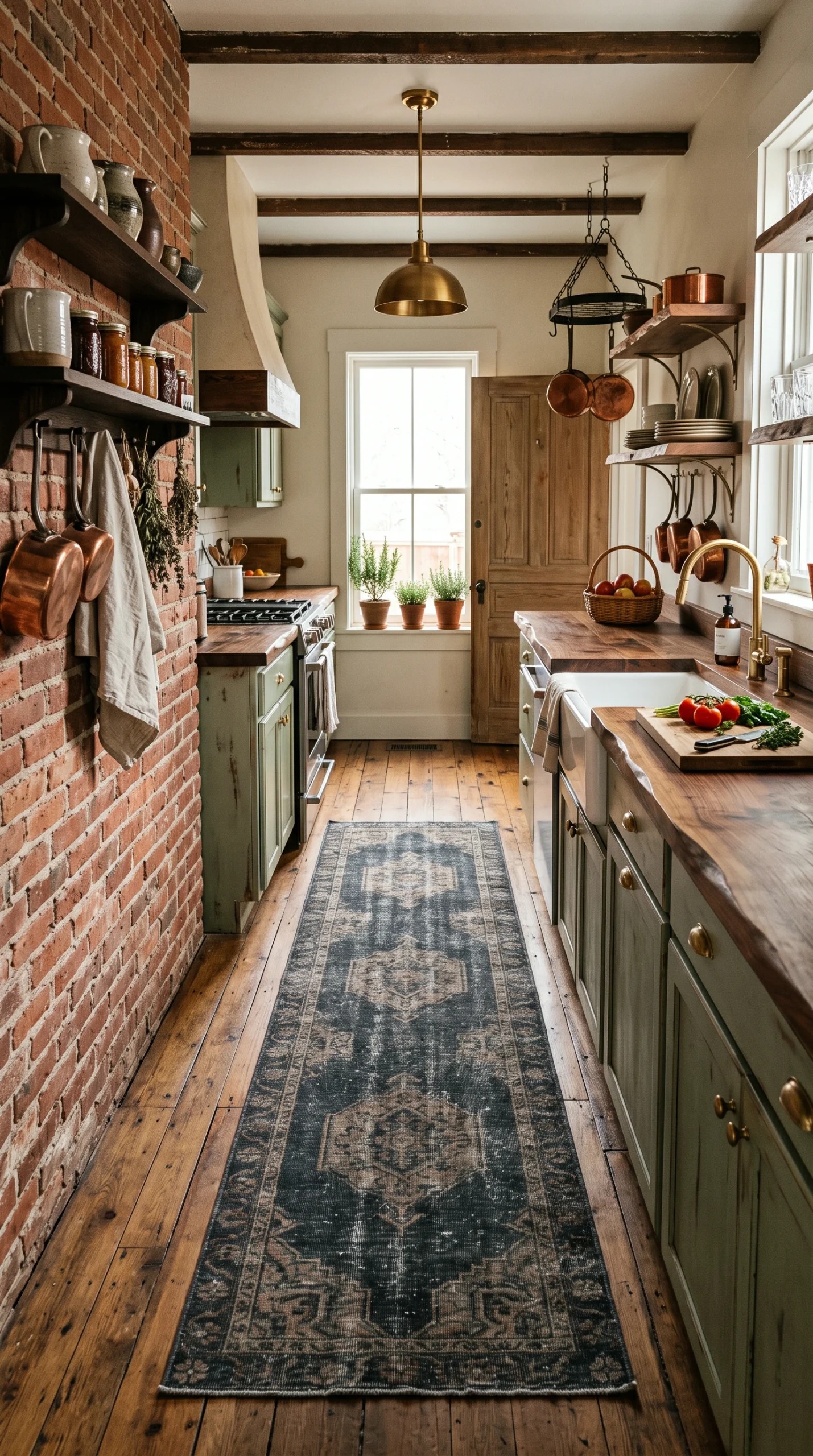
In a galley layout, a long kitchen runner is essential. It acts as a visual red carpet, drawing the eye down the corridor and making the notoriously narrow space feel intentionally designed and much grander.
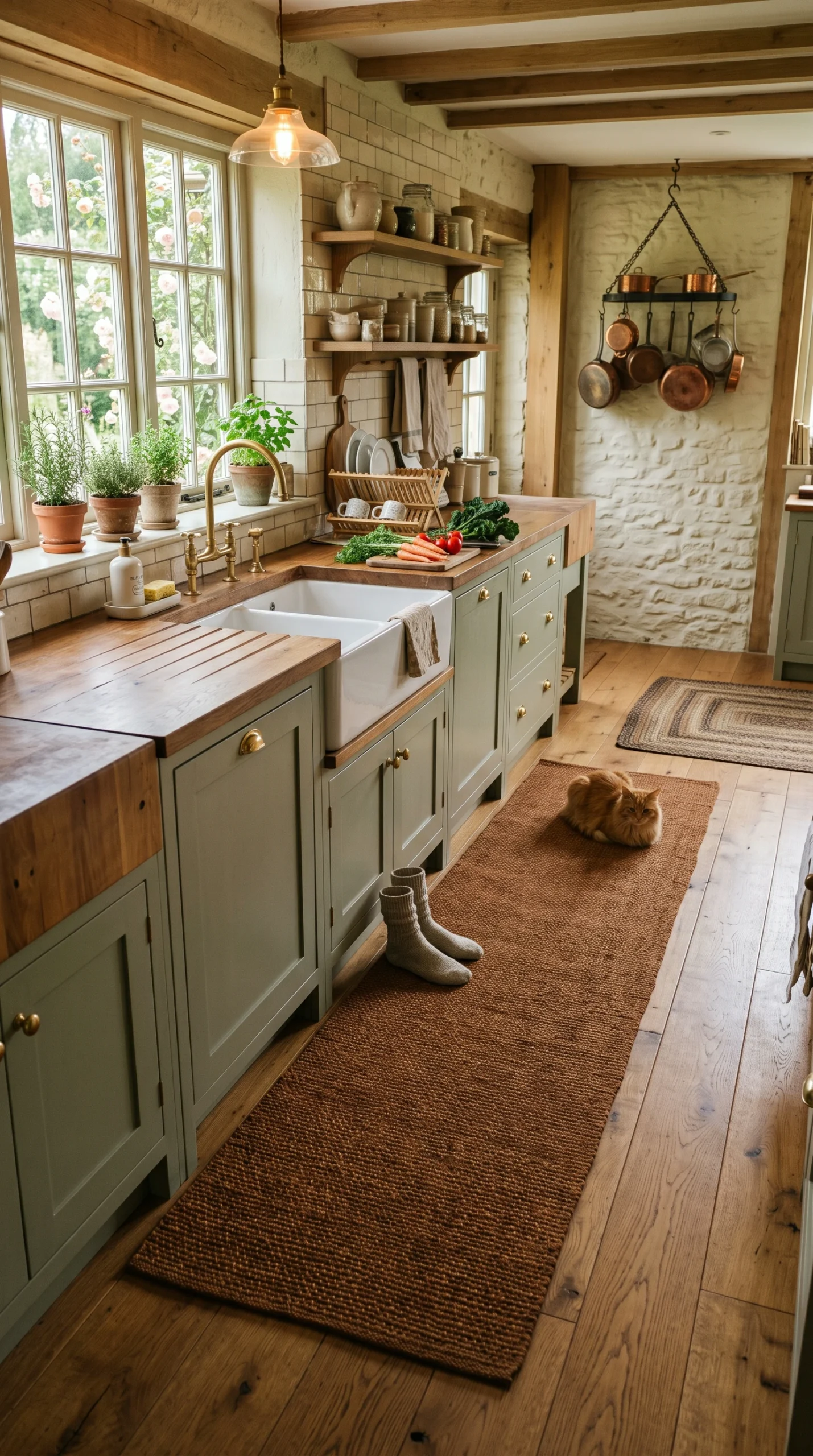
When placing a runner rug for kitchen walkways, ensure it is narrow enough to leave at least a two-to-three-inch border of hard flooring on both sides. This framing effect prevents the rug from looking like poorly fitted wall-to-wall carpeting.
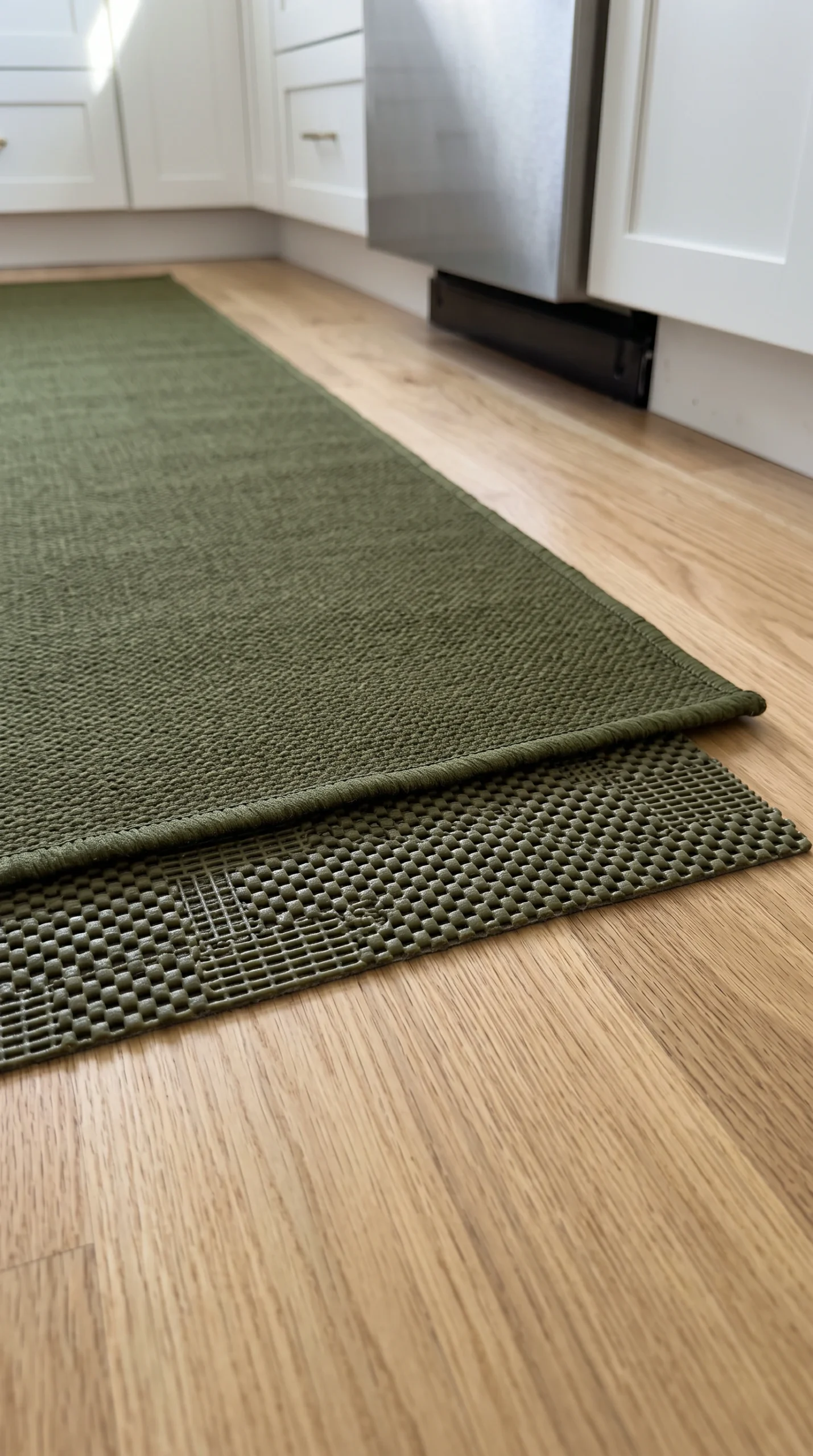
Runners are notoriously prone to slipping and bunching. Investing in a high-quality, full-length non-slip pad is non-negotiable for safety, especially when carrying hot pots or sharp knives.
Adding a kitchen runner is one of the most profoundly effective interior design secrets for instantly elevating a cold, sterile, builder-grade space. Kitchens are inherently harsh environments, utterly dominated by highly reflective stainless steel appliances, rigid 90-degree stone countertops, and unforgiving, echoing tile or hardwood floors. These long, slender textiles are the ultimate architectural weapon. They introduce a massive dose of organic warmth, intense color, and heavily textured pattern, transforming dead floor space into a stunning focal point that easily rivals the visual impact of high-end backsplashes or custom cabinetry.
The walkway between your primary counter and the center island is the most highly trafficked, and arguably the most impactful, location for a massive runner. Without a proper textile, large islands often look like they are awkwardly floating in an ocean of cold flooring. A massive kitchen island rug physically and visually grounds the heavy cabinetry, creating a deliberate, highly curated zone for cooking and gathering. When selecting a runner for this critical area, you must prioritize tactile friction and extreme durability. Choose a heavy, high-end material like a vintage wool blend that can naturally hide stains through intricate, distressed patterns, or a premium washable synthetic that flawlessly mimics natural fibers. For the most expensive look, the runner should stretch nearly the entire length of the island, leaving only three to four inches of hard flooring exposed at either end to perfectly frame the textile.
A galley kitchen runner is an absolutely brilliant architectural solution for notoriously long, narrow, and visually claustrophobic spaces. In a standard galley layout, the parallel walls and cabinets physically squeeze the room together. However, the continuous, unbroken line of a deeply saturated runner creates a powerful optical illusion. It leads the human eye straight through the kitchen, aggressively emphasizing depth rather than the narrow width. To absolutely maximize this expansive visual effect, opt for runners featuring subtle, repeating geometric patterns or classic, wildly intricate Persian motifs that run perfectly parallel to your base cabinets. This creates a highly dynamic tension against stark modern cabinetry and instantly makes the tight floor plan feel incredibly bespoke and intentional.
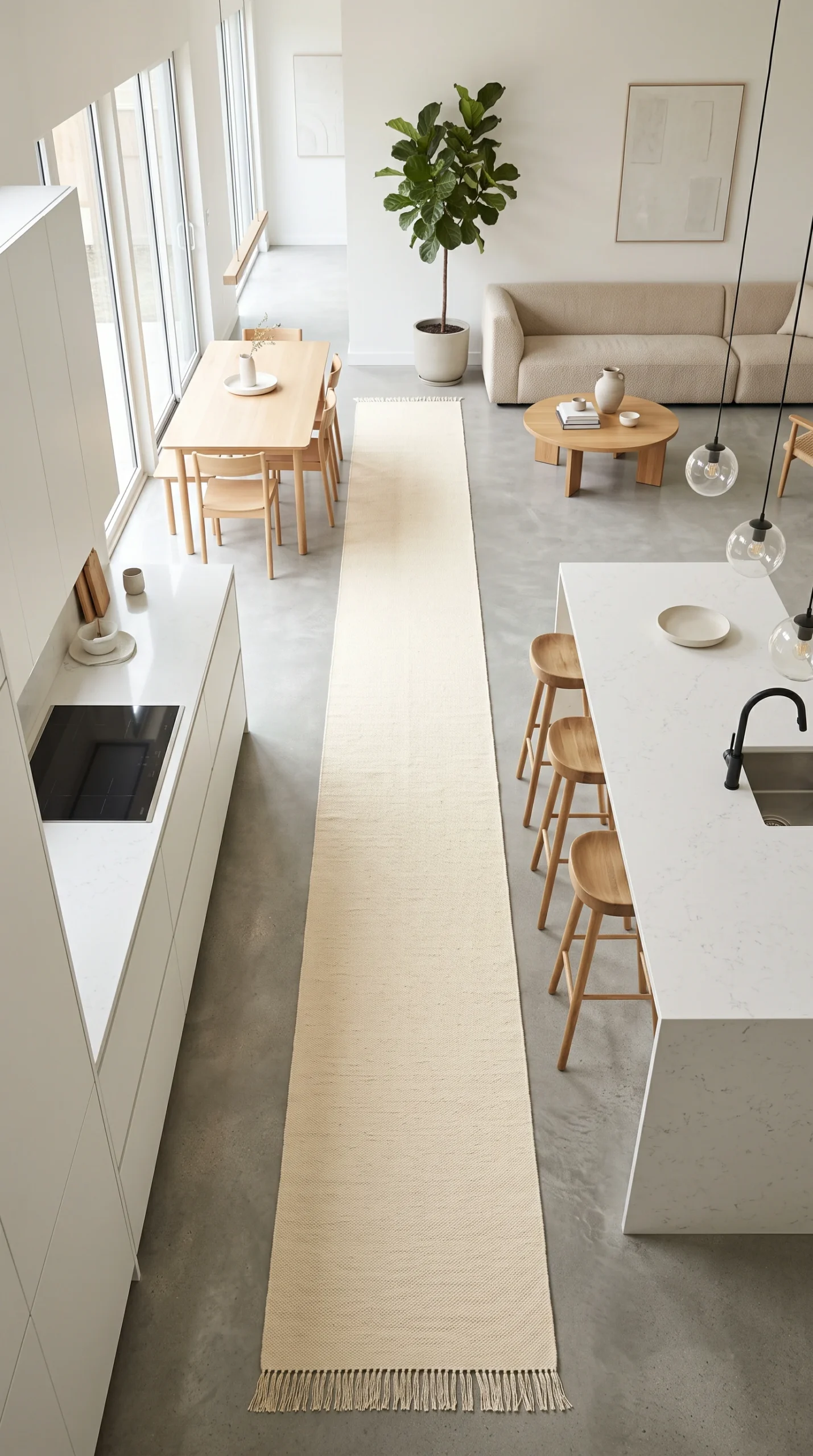
The absolute most common and devastating mistake in kitchen styling is placing a tiny, cheap foam mat timidly in front of the sink. This completely shatters the visual flow of the room and makes the space look heavily cluttered. Instead, a long kitchen runner should be beautifully utilized across the entire width of a double-sink setup, or spanning the heavy prep zone between the stove and the main counter. This placement not only offers vastly superior, extended ergonomic support for your feet during heavy cooking sessions, but it also creates a soft, continuous, and highly expensive-looking surface. Furthermore, allowing a heavy runner to bleed slightly out of the kitchen and into the adjoining dining room acts as a flawless architectural bridge, perfectly marrying the sterile culinary workspace with your cozy, relaxing living areas.
Executing the perfect kitchen runner aesthetic requires ruthless discipline regarding color contrast. If your kitchen is heavily dominated by stark white cabinetry and light marble countertops, placing a pale, neutral runner on the floor will completely wash out the room, rendering the space flat and lifeless. Instead, you must inject violent, beautiful contrast. Utilize deeply saturated, dark indigo or heavily distressed terracotta runners to fiercely ground the bright cabinetry. Conversely, if your kitchen features dark walnut or matte black base cabinets, an ultra-plush, bright cream or light vintage Oushak runner will violently bounce natural light upward, instantly expanding the visual footprint of the room. The kitchen runner is not merely a floor accessory; it is the fundamental base layer of a highly curated, luxury culinary sanctuary.