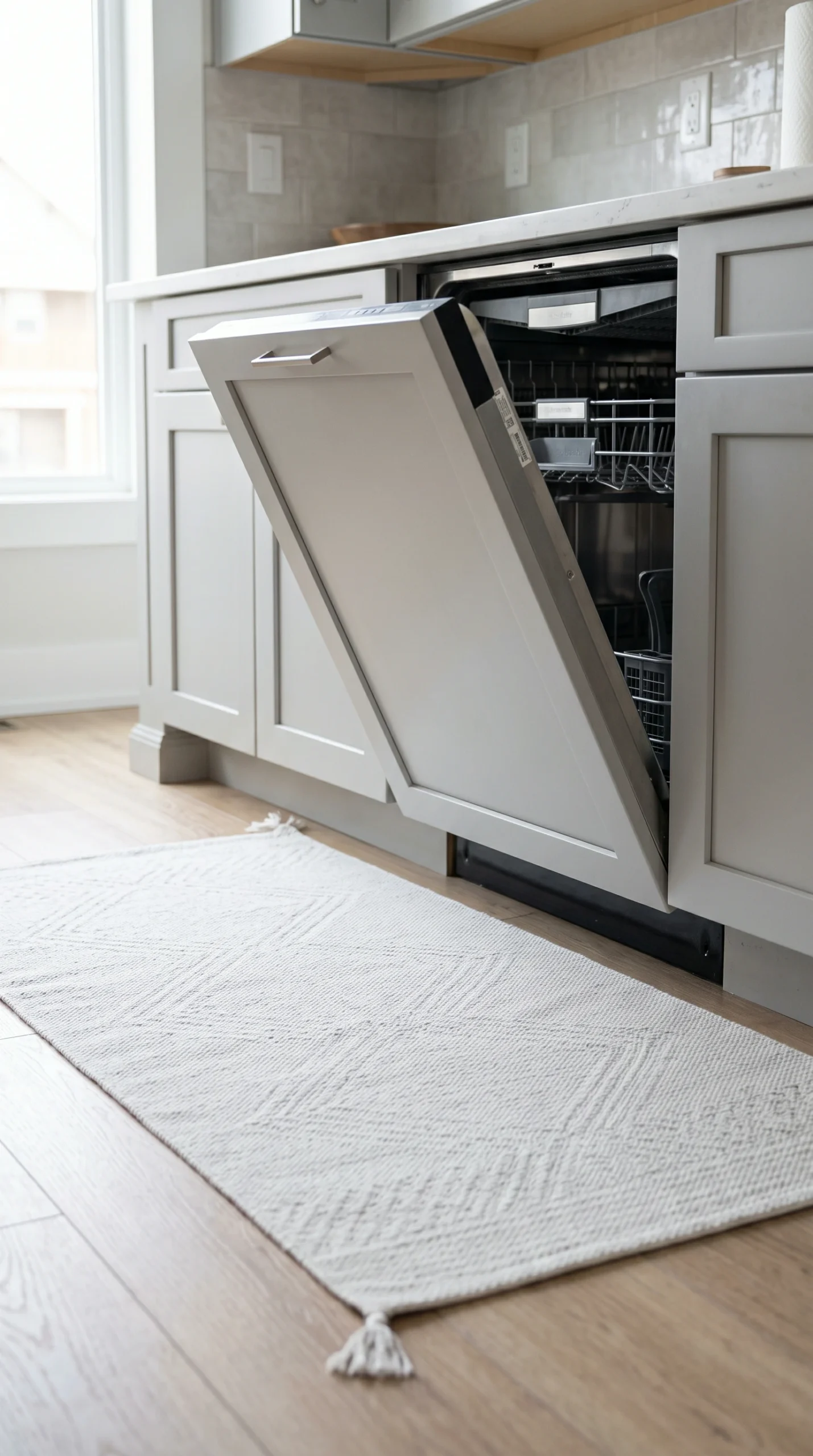
The most critical rule of kitchen rug placement is leaving a border of bare floor. Whether it's a runner or an area rug, always leave at least 2 to 4 inches of exposed flooring between the edge of the rug and the baseboards.
Position your rugs to align with the dominant architectural features of the room. A kitchen runner placement should perfectly parallel the kitchen island or the longest stretch of cabinetry for visual harmony.
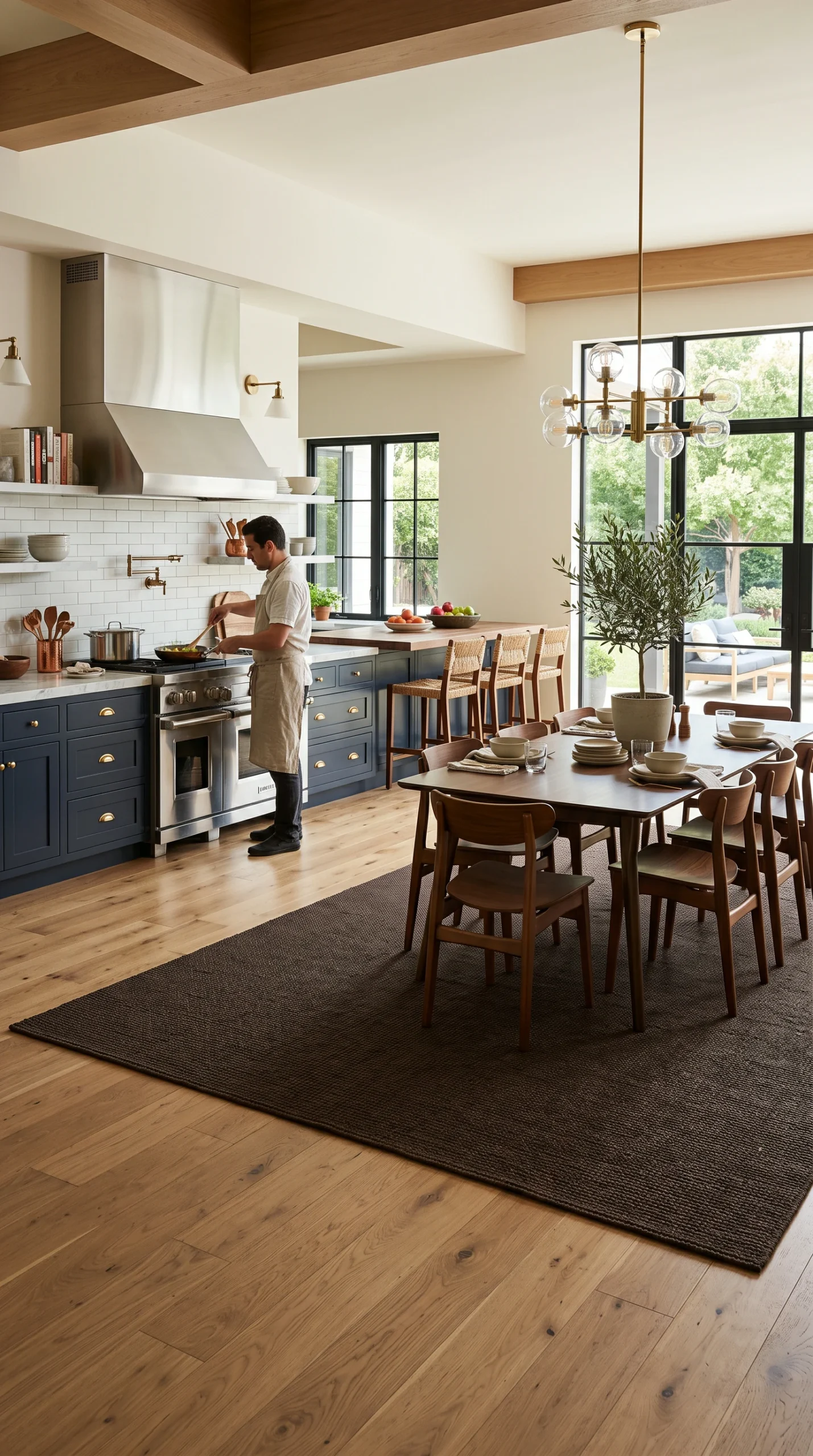
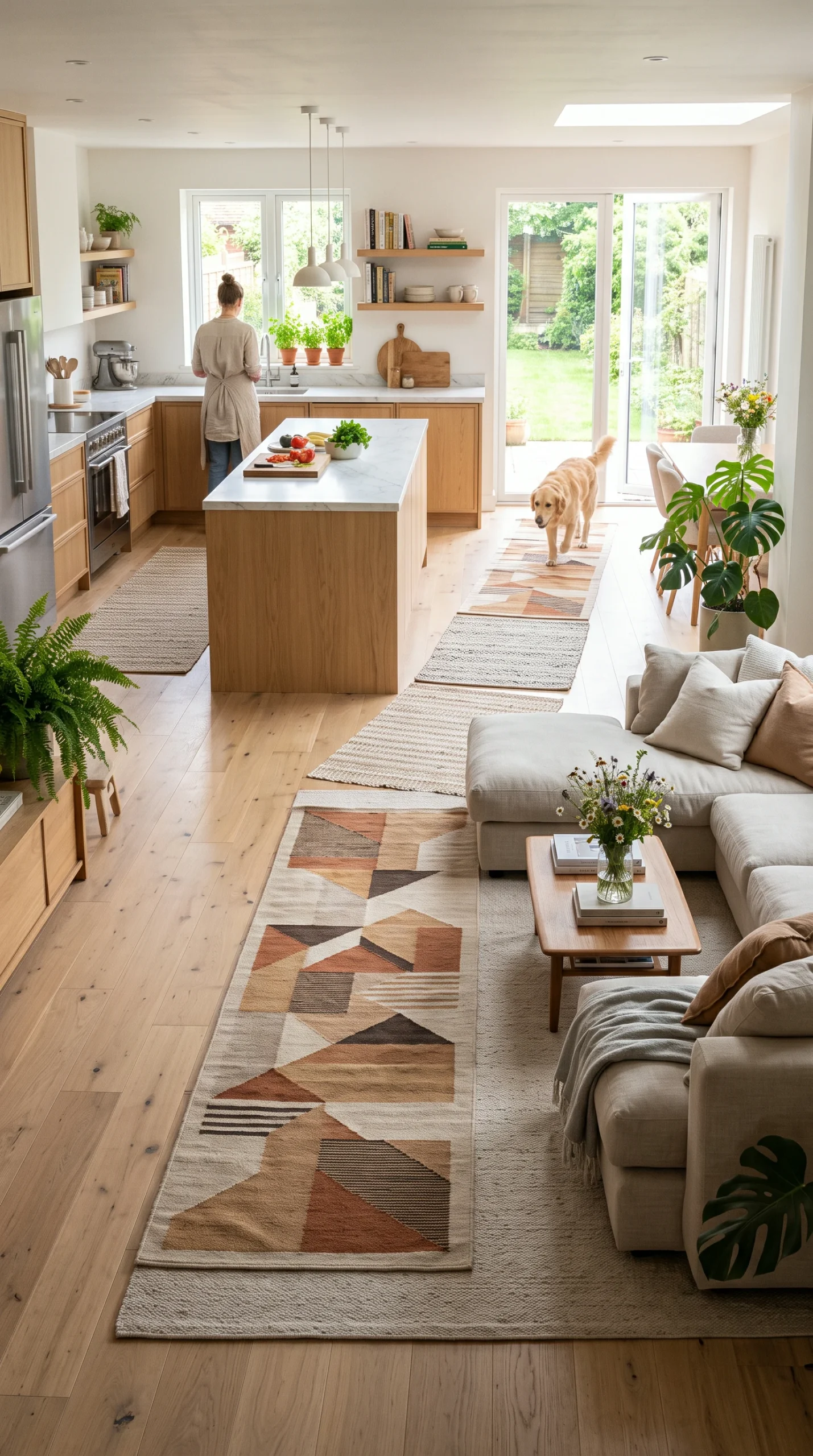
Use rugs to create distinct zones in open-plan designs. A large area rug under a breakfast table clearly defines the dining space, keeping it visually separate from the cooking zone.
Before finalizing where to put a rug in the kitchen, carefully check the swing clearance of all lower cabinet doors, dishwashers, and pantry doors to ensure the rug won't catch or bunch up.
Even the most wildly expensive, beautifully designed rug will look incredibly awkward and cheap if it is simply thrown haphazardly onto the floor. Proper kitchen rug placement is an exact architectural science; it is the absolute secret to making your kitchen look professionally curated rather than cluttered. By understanding exactly how to position textiles, you possess the design power to violently manipulate the visual scale of the room, flawlessly enhance the walking flow, and provide highly targeted ergonomic relief exactly where it is needed most.
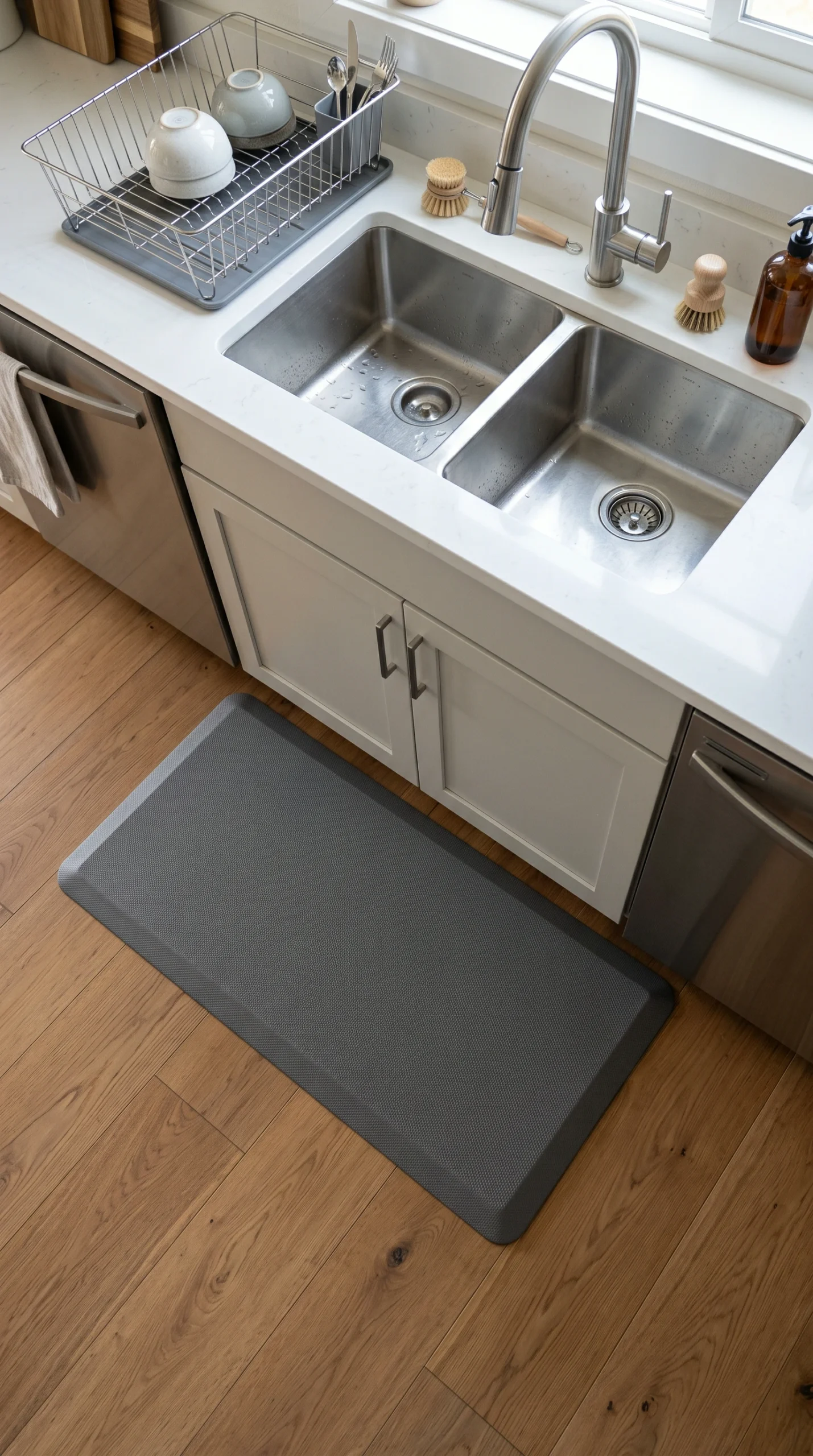
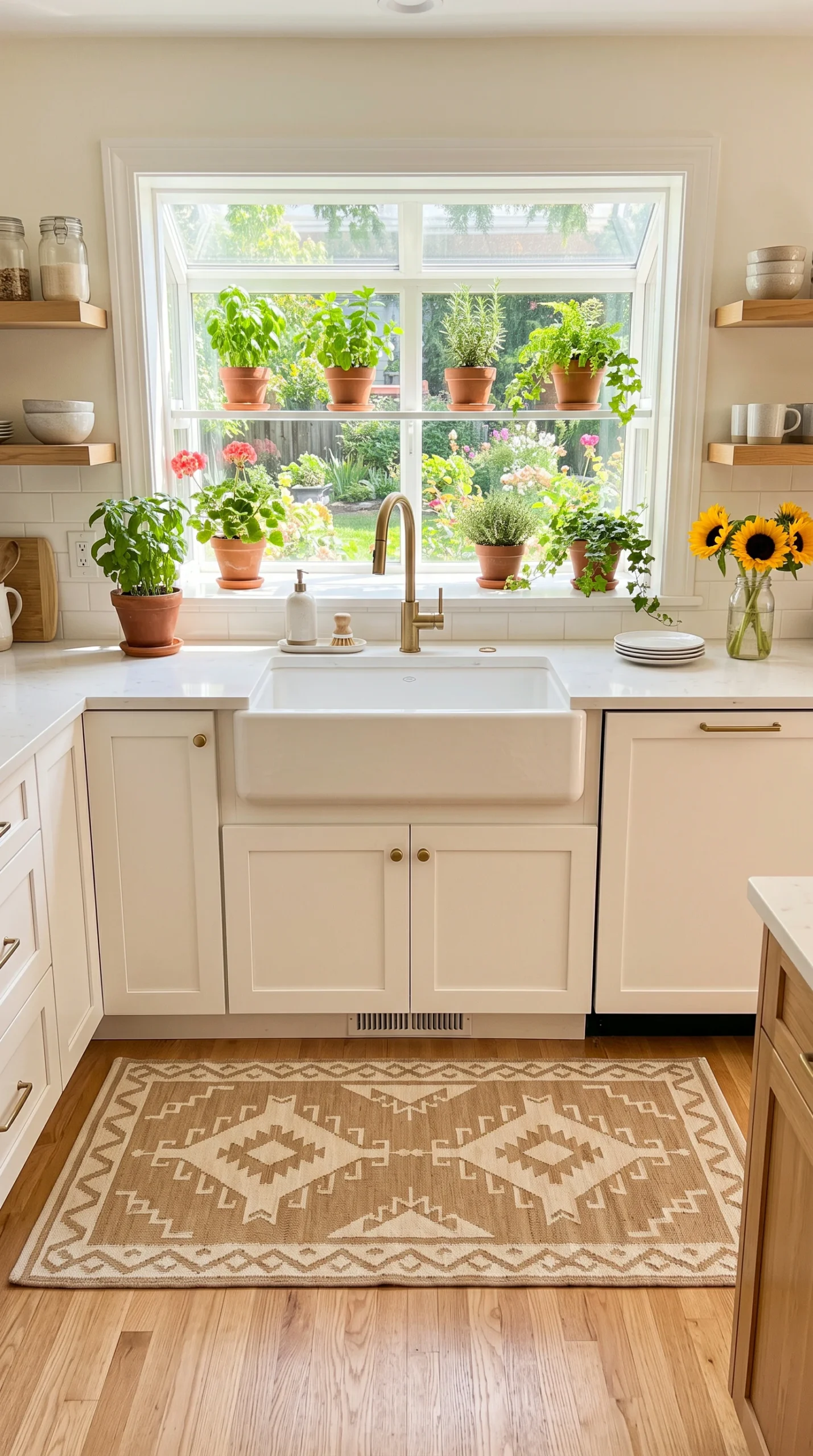
The most heavily utilized and practical location for a small accent rug is directly in front of the primary sink. This is the exact zone where homeowners spend the vast majority of their stationary time, gruelingly washing dishes and prepping food on unforgiving, echoing tile floors. However, placement here requires ruthless precision. A 2×3 or 3×5 rug must be absolutely, perfectly centered on the sink basin and the plumbing fixture—not the surrounding cabinetry. This flawless alignment provides a massive dose of visual symmetry while offering a soft, deeply cushioned landing pad that aggressively fights back and foot fatigue while catching inevitable water splashes.
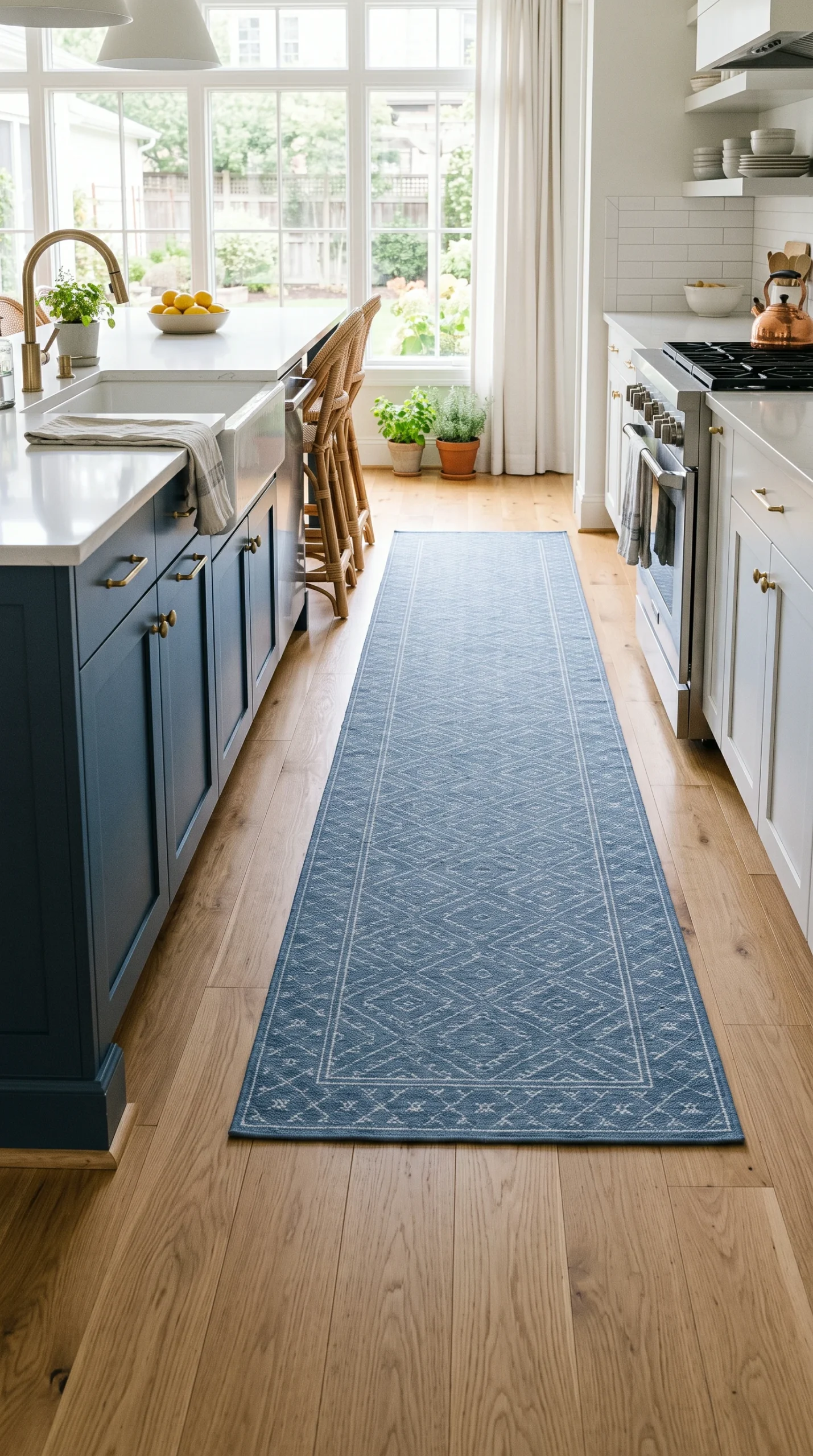
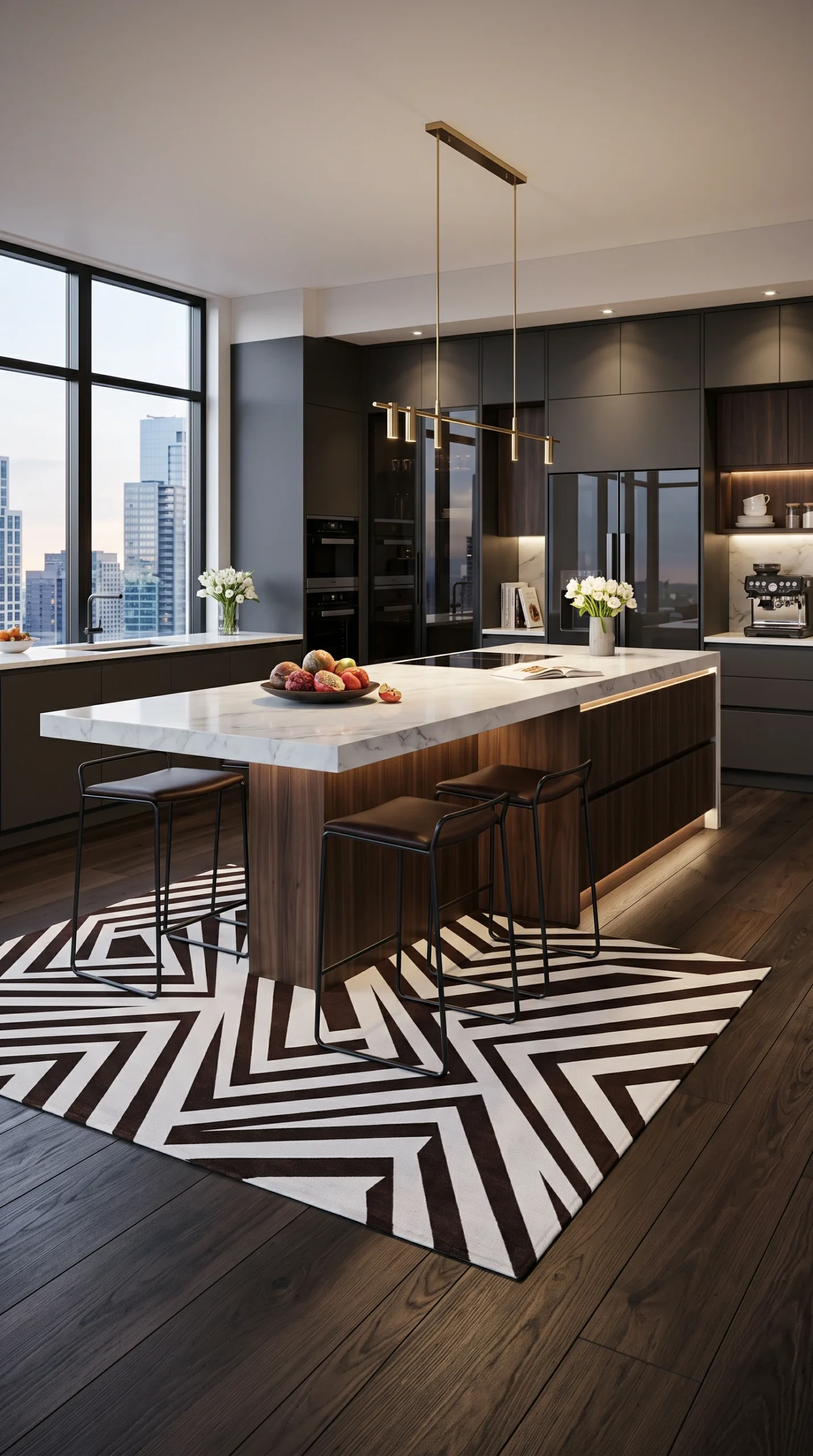
If you possess a large kitchen, placing a highly textured rug under the kitchen island (or running perfectly parallel alongside it) is a brilliantly aggressive design move. A long, heavy runner placed in the highly trafficked walkway between the main cooking counter and the island instantly and visually grounds the heavy cabinetry. Without it, massive stone islands can look like they are awkwardly floating in an empty void. To achieve a perfectly tailored, bespoke appearance, you must ensure the runner spans nearly the entire length of the island, stopping exactly three to four inches short of the architectural edges. This exact measurement frames the island beautifully without the rug awkwardly spilling out into the open walkways.
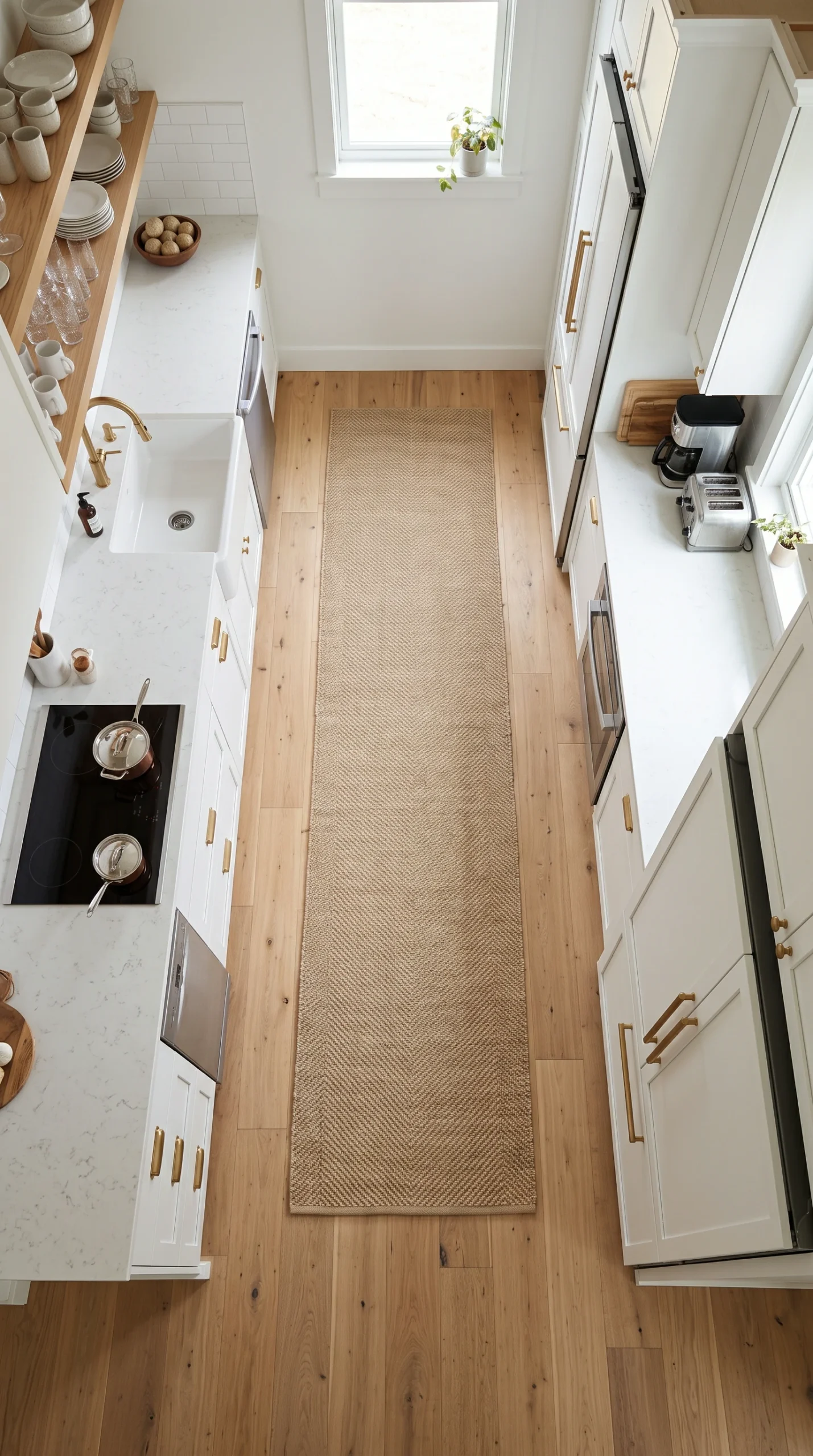
In a notoriously narrow, cramped galley kitchen, the absolute best rug layout is a single, massively long runner placed directly down the dead center of the walkway. This deliberate placement creates a powerful optical illusion. It establishes a bold leading line that violently draws the human eye straight through the space, making the narrow room feel significantly longer, grander, and vastly more expansive. You must adhere to one strict design rule in a galley layout: never, under any circumstances, use multiple small rugs. Breaking up the floor plan with tiny, disconnected mats creates immediate visual clutter and completely shatters the clean architectural flow of the room.
One of the most common and devastating mistakes in kitchen rug placement is pushing the textile entirely flush against the baseboards or the bottom of the base cabinets. This immediately makes the high-end rug look like a cheap, poorly installed piece of wall-to-wall carpeting. To maintain a strict designer aesthetic, you must employ the clearance rule. Always leave a minimum of three to six inches of bare, hard flooring (whether it is pristine white oak or polished concrete) visible between the edge of the rug and the cabinets. This empty space acts as a critical architectural frame, allowing the rug to breathe visually and ensuring it looks like a highly intentional, expensive design choice rather than an accidental tripping hazard.