Absolutely no cartoon chefs, bright red wine glasses, or steaming coffee cup graphics. They instantly ruin the sophisticated aesthetic.
Use moody, dark oil paintings (or high-quality prints) of fruit, bread, and game, reminiscent of 17th-century Dutch masters.
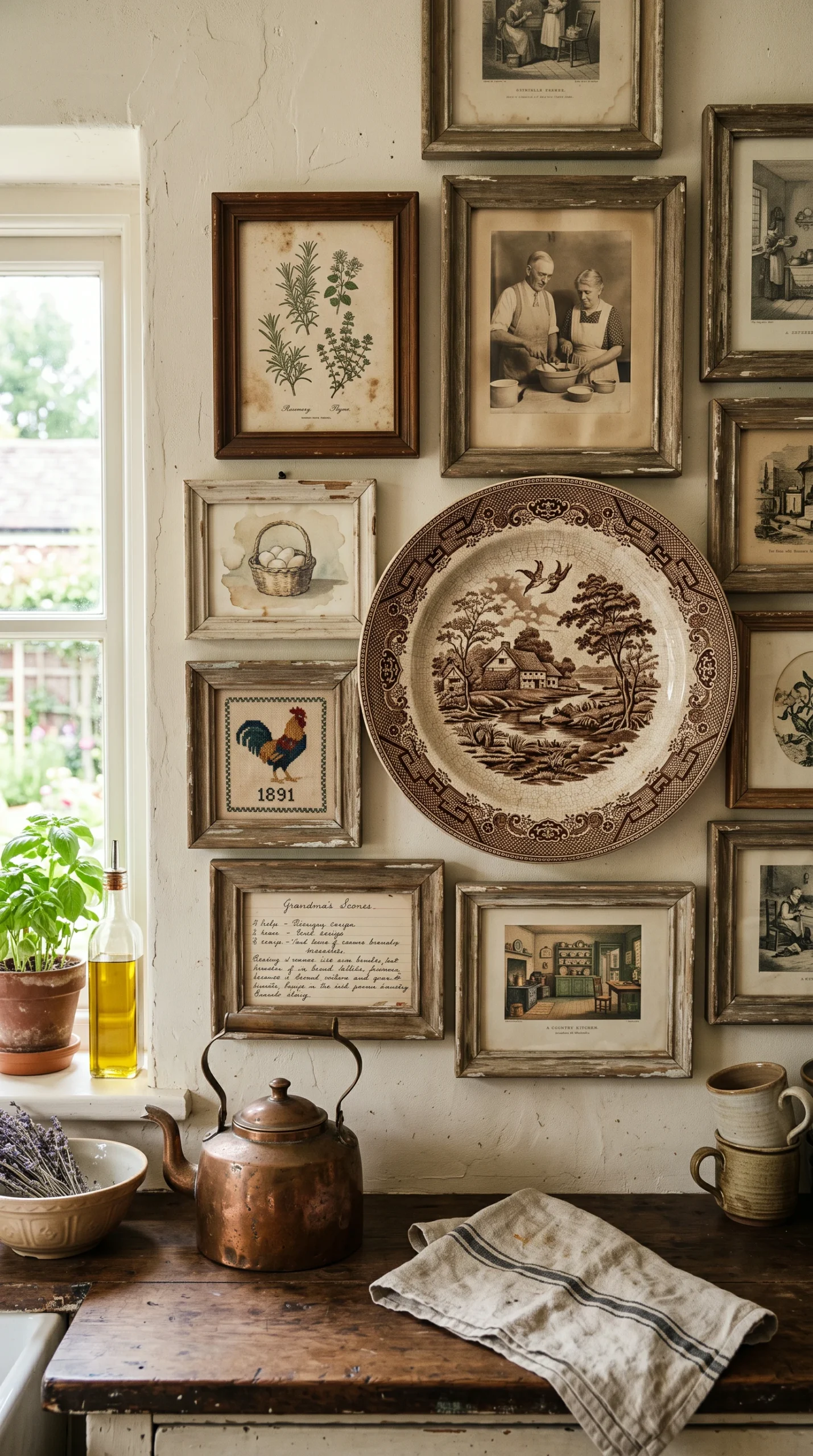
Highly detailed, black-and-white or sepia-toned vintage scientific sketches of herbs and vegetables look incredibly high-end.
Do not just hang paper. Mount a heavily oxidized antique coffee grinder, a brass corkscrew, or a copper measuring spoon directly to the wall.
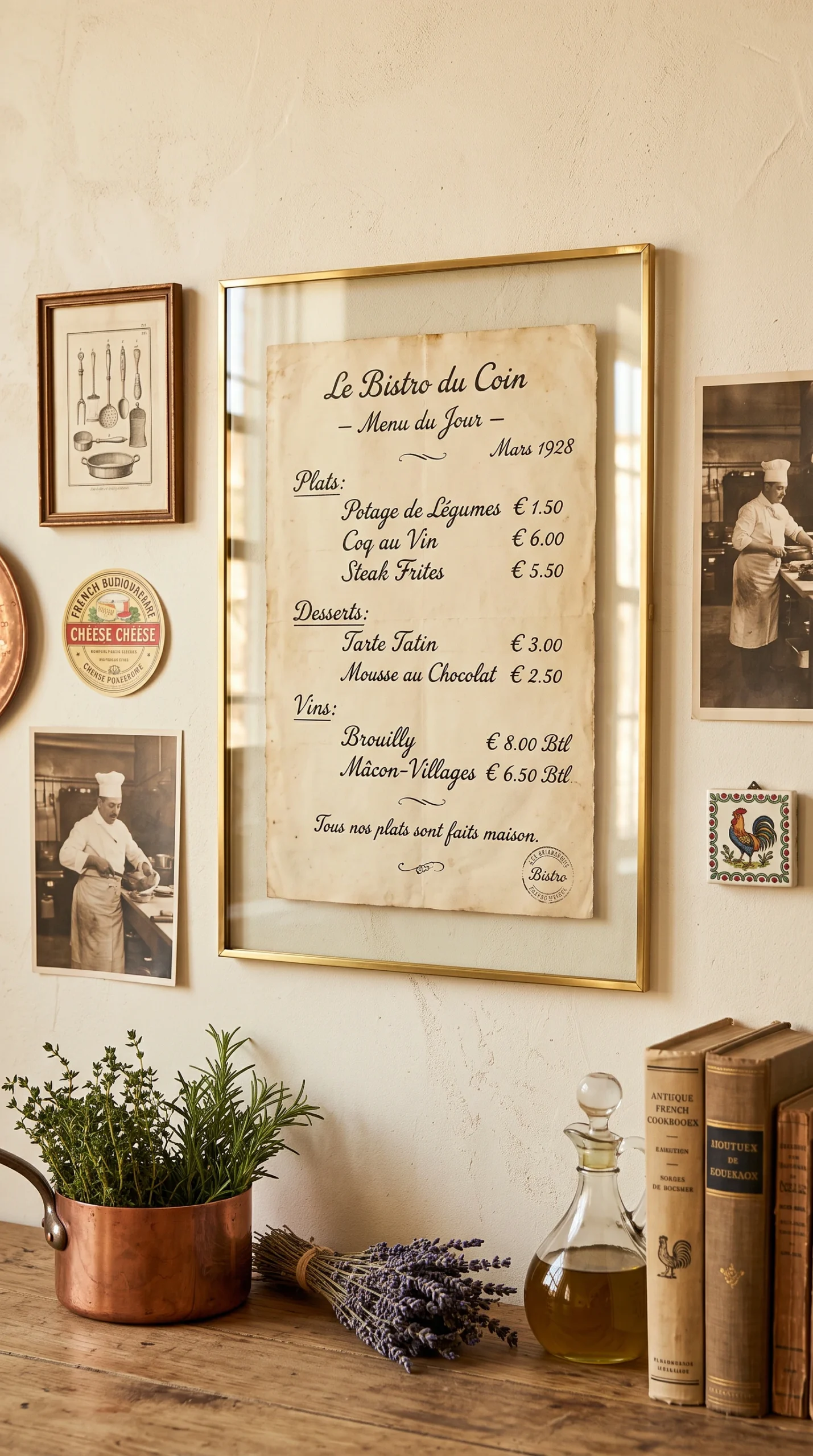
If you want words, use heavily faded, framed vintage French menus or antique grocery store ledgers, not modern wooden signs.
Elevate the culinary prints by housing them in heavy, tarnished brass or ornate, chipped antique gold frames.
A dedicated coffee station is the absolute perfect location to execute thematic kitchen gallery wall decor, but it must be done with extreme restraint. You must banish any wooden signs that say ‘But First, Coffee’ or ‘Cafe’. Instead, create a deeply historical homage to the brewing process. Hang a tightly grouped collection of sepia-toned vintage photographs showing early 20th-century coffee harvests. Frame a highly detailed, antique botanical illustration of the Coffea arabica plant. Most importantly, incorporate 3D elements: mount a small, heavy, heavily tarnished antique brass manual coffee grinder directly to the wall. This combination of historical art and physical antique machinery creates a breathtaking, sophisticated vignette that feels like an upscale, heritage European cafe.
When focusing on food themes for your kitchen gallery wall decor, raw ingredients are vastly more sophisticated than finished, plated meals. Plated food photography often looks like a cheap restaurant menu. Instead, you must aggressively source vintage botanical sketches. Look for highly detailed, scientific illustrations of rosemary sprigs, garlic bulbs, heirloom tomatoes, and artichokes. For maximum impact, frame a cohesive series of six or eight of these sketches in identical, thin matte black frames with massive, slightly yellowed parchment mats. Hung in a tight, perfectly symmetrical grid, these sketches provide a highly intellectual, profoundly elegant nod to culinary arts without ever looking cheesy.
If you want to inject deep, moody color and massive historical weight into your kitchen gallery wall decor, you must utilize classical still-life oil paintings. Seek out artwork that mimics the dramatic lighting (chiaroscuro) of the old Dutch masters. A dark, heavily shadowed painting of a half-peeled lemon, a loaf of crusty bread, and a silver goblet on a wooden table adds incredible sophistication. Do not use modern, bright, hyper-realistic fruit paintings. The art must look old and faded. Frame these moody pieces in incredibly heavy, ornate antique gold frames and anchor them in the center of your gallery wall to instantly establish a feeling of profound, old-world culinary wealth.
Typography can be a beautiful element of kitchen gallery wall decor, provided you strictly avoid modern, mass-produced fonts and generic quotes. To use text sophisticatedly, it must possess genuine history. Source authentic, heavily faded, handwritten French bistro menus from the 1920s, or pages torn from a deeply aged, 19th-century ledger book from a general store. Frame these delicate pieces of paper between two sheets of floating glass, allowing the raw, torn edges of the antique paper to show. The elegant, swirling vintage handwriting provides beautiful graphic texture and acts as a highly authentic, intellectual focal point.
To truly elevate a food-themed gallery wall, the absolute best kitchen gallery wall decor isn’t flat art at all; it is the culinary tools themselves, treated as sculpture. A blank wall near the stove can be completely transformed by hanging a highly curated collection of antique cooking implements. Do not hang basic, modern stainless steel spatulas. You must source heavy, beautifully crafted antiques. A large, deeply carved wooden butter mold, an incredibly heavy, tarnished silver serving platter, or a collection of beautifully aged, unlacquered brass measuring cups hung on a solid iron rail. These functional 3D items provide massive textural contrast and undeniable authenticity to the space.
When mixing classical paintings, botanical sketches, and 3D antiques for your kitchen gallery wall decor, the collection can quickly become chaotic. You must enforce strict visual cohesion through color and spacing. Keep the color palette of the artwork tightly controlled—focus heavily on sepia, dark greens, and muted earth tones. Avoid bright primary colors completely. Furthermore, you must maintain a very strict, tight spacing (2 to 3 inches) between all the elements. By tightly grouping these heavily aged, thematically linked items, you force the eye to view them as a single, massive, highly intentional art installation rather than a random scattering of kitchen knick-knacks.