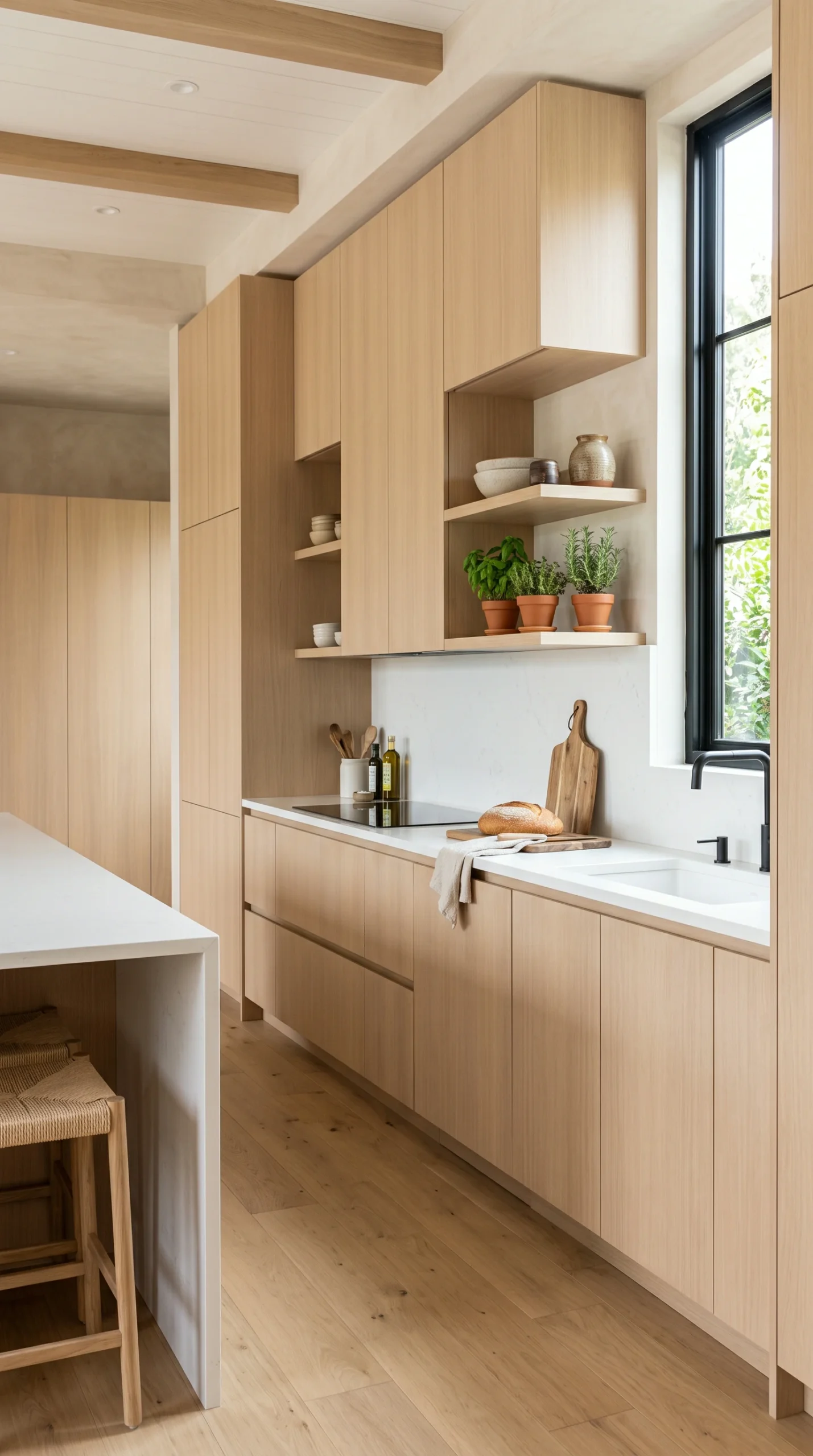
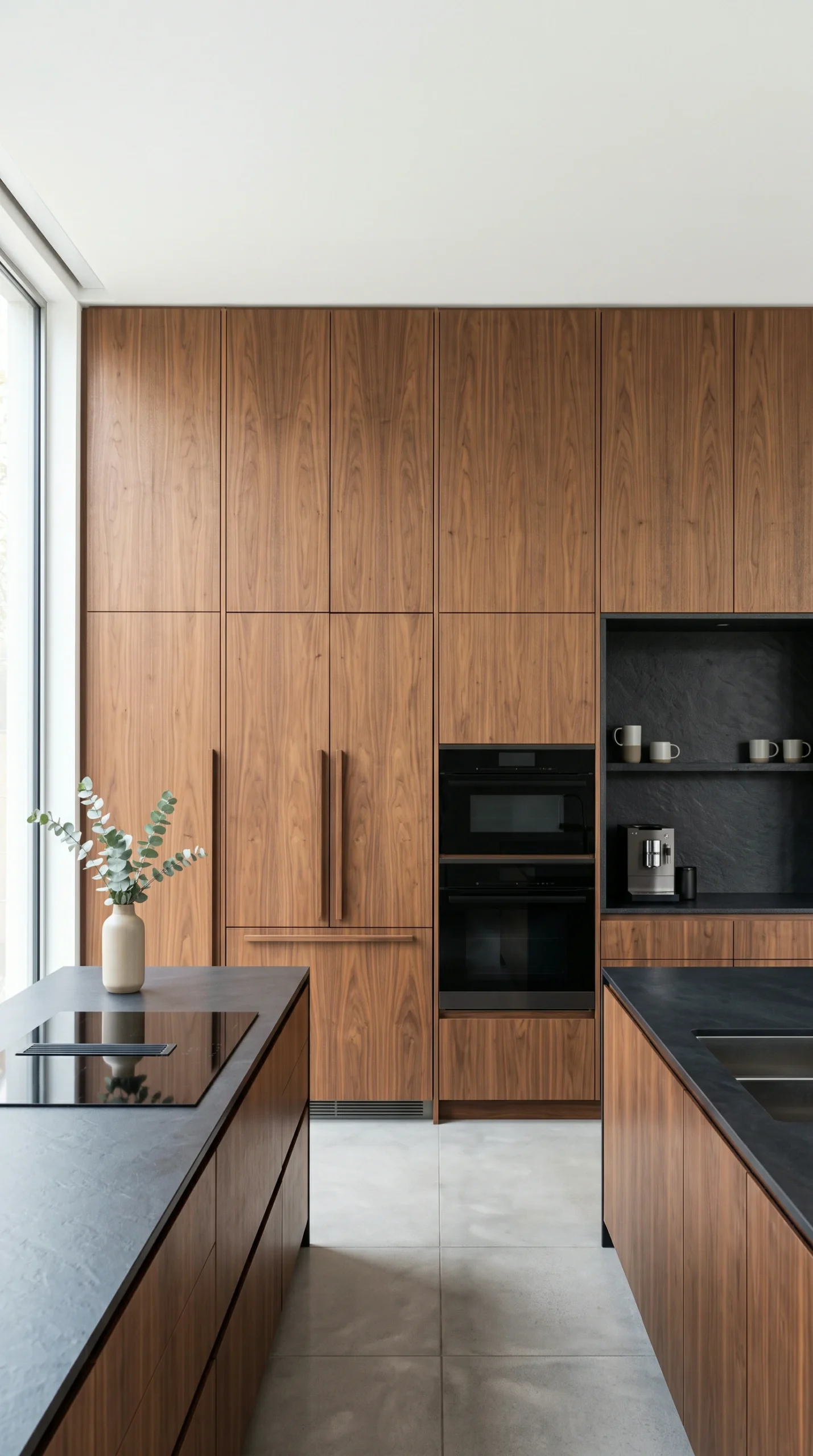
The fastest way to make wood cabinets look dated is a shiny, glossy polyurethane finish. Modern wood cabinetry demands a flat, matte, or subtle satin finish that looks and feels like raw, natural timber.
These are the two premier woods in modern design. White oak offers a light, airy, Scandinavian feel. Walnut provides deep, luxurious, historic richness. Avoid woods with heavy red or orange undertones (like cherry or honey oak).
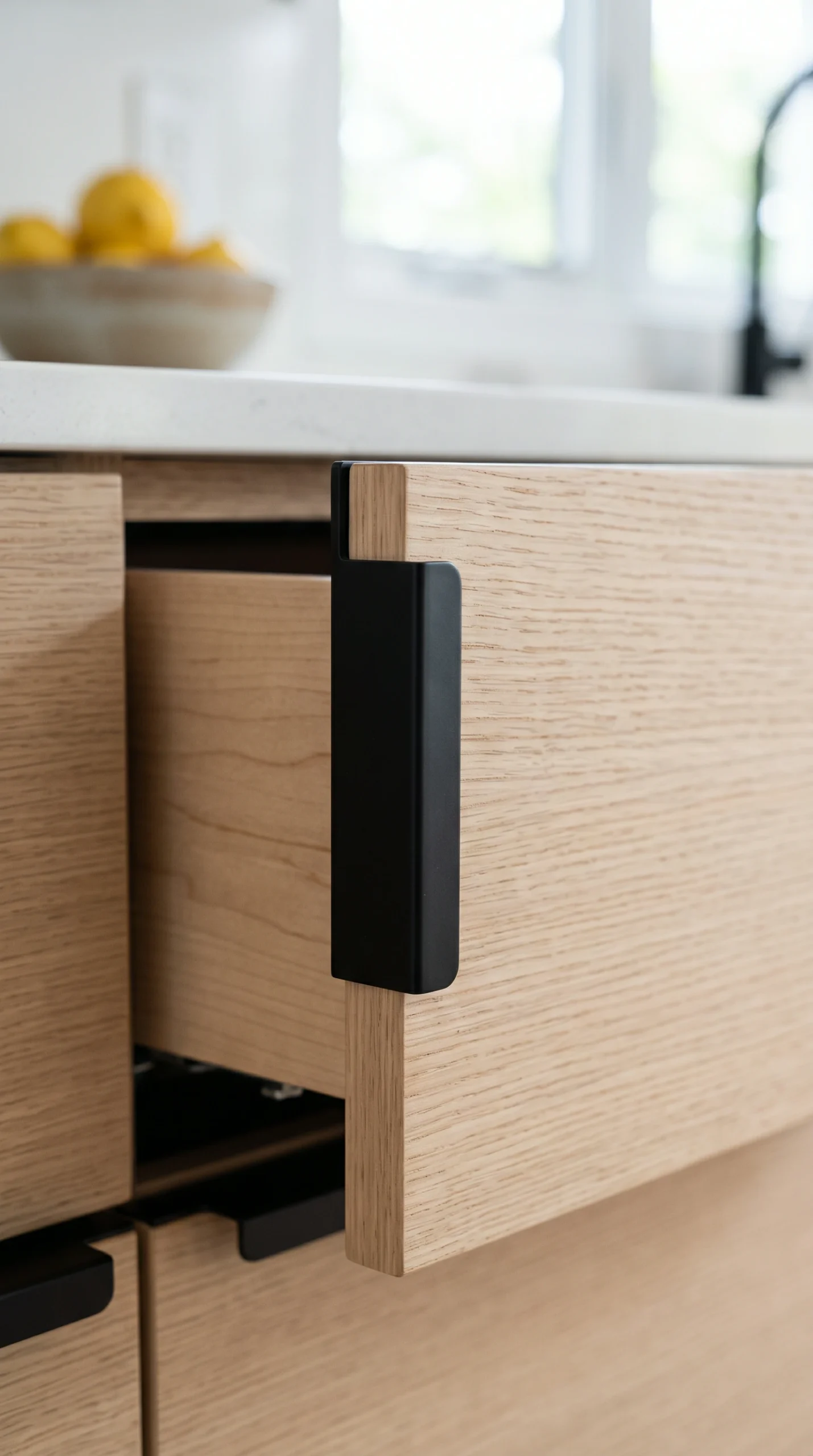
To keep the wood looking modern, the door style must be clean. A perfectly flat 'slab' door showcases the continuous wood grain beautifully. If you prefer traditional, use a very crisp, unadorned shaker door.
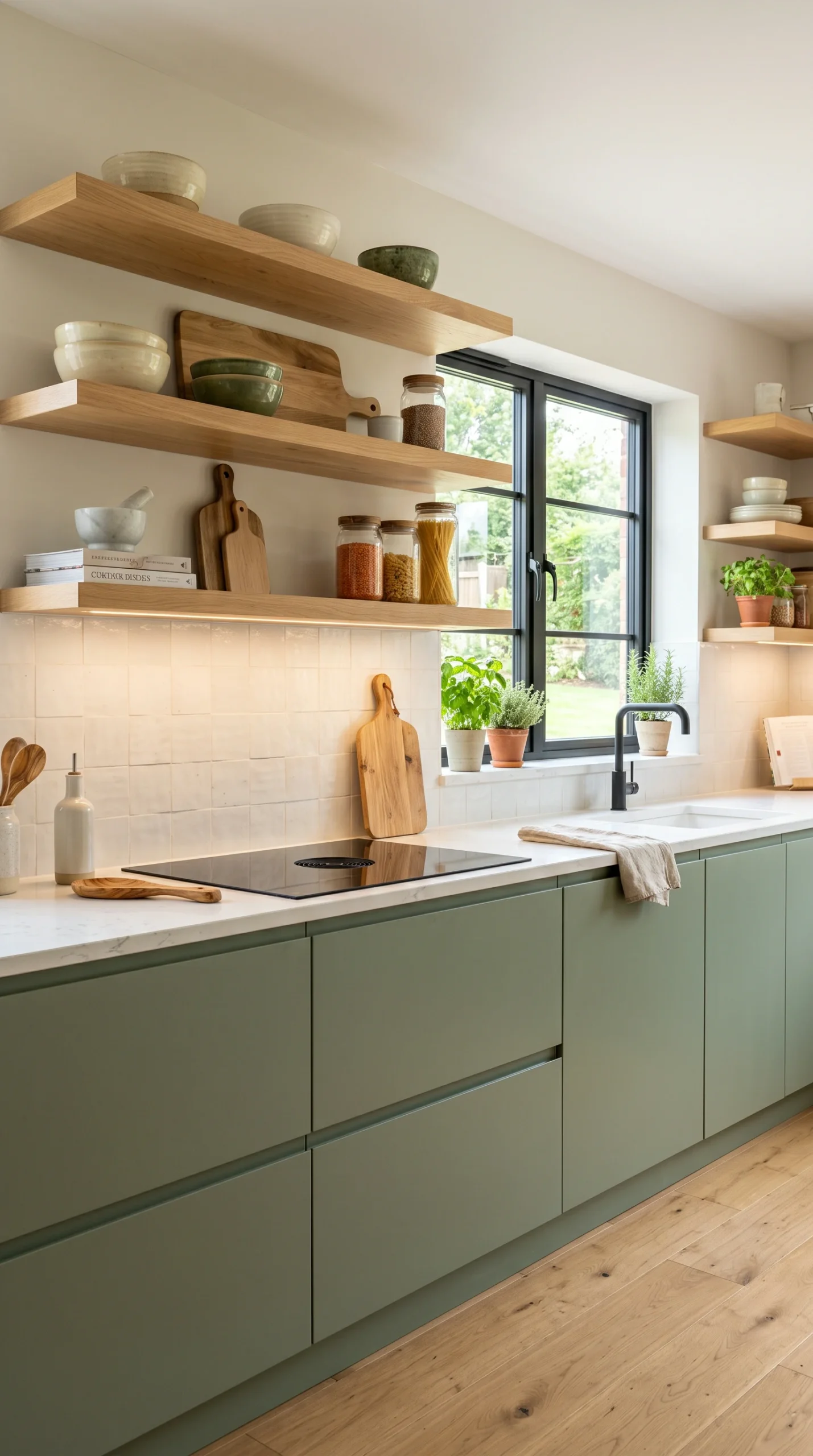
A kitchen composed entirely of wood cabinets can sometimes feel heavy or cabin-like. The most sophisticated approach is often mixing a wood island with painted (white or green) perimeter cabinets for visual balance.
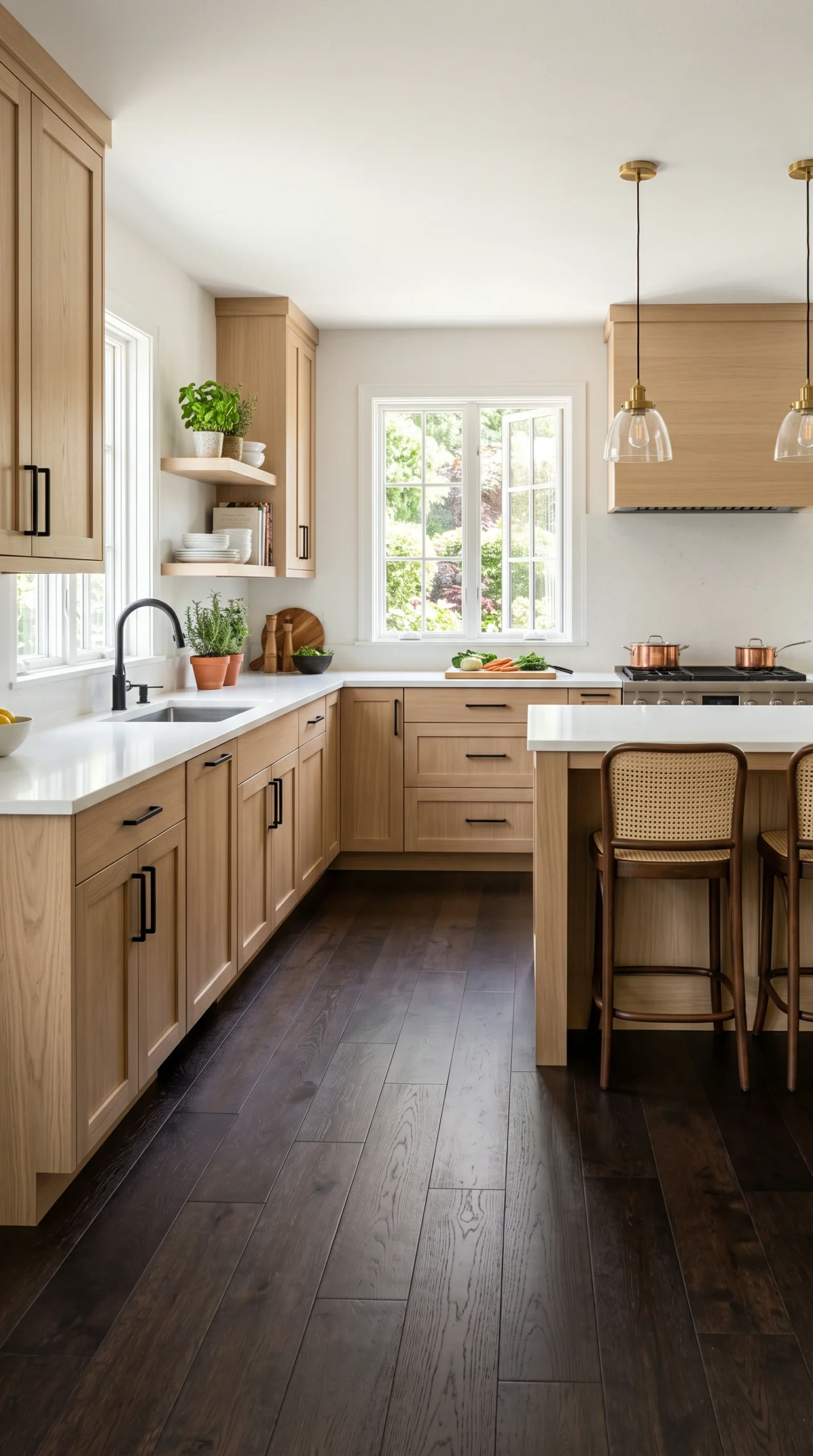
You must not match your wood cabinets exactly to your wood floor, or the kitchen will look like a wooden box. Ensure there is distinct contrast (e.g., light oak cabinets with a darker floor, or vice versa).
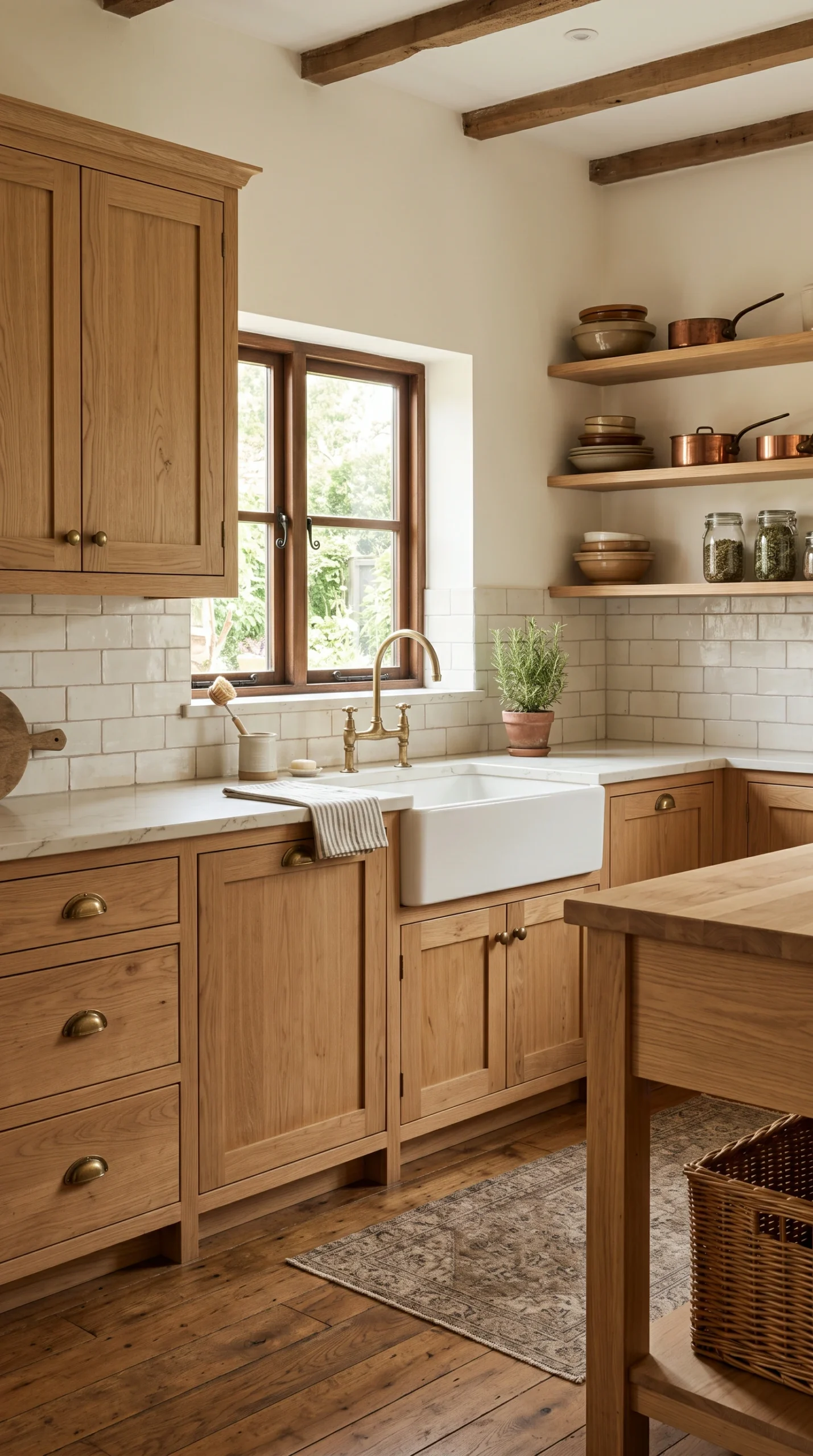
For a modern organic look, pair light wood cabinets with sharp, minimalist matte black hardware. For a warmer, more historic look, pair darker woods with unlacquered brass hardware.
The resurgence of wood kitchen cabinet color ideas is defined by a complete rejection of past finishes. The glossy, heavy, amber-toned varnishes of previous decades are entirely absent from high-end design. The modern aesthetic celebrates the raw, tactile nature of the timber. Interior designers prioritize finishes that are completely matte, often using clear, water-based sealants or natural hard-wax oils that protect the wood without altering its natural color or adding any shine. This allows the subtle variations in the grain, the knots, and the authentic texture of the material to become the primary decorative element, resulting in a kitchen that feels incredibly organic, grounded, and deeply connected to nature.
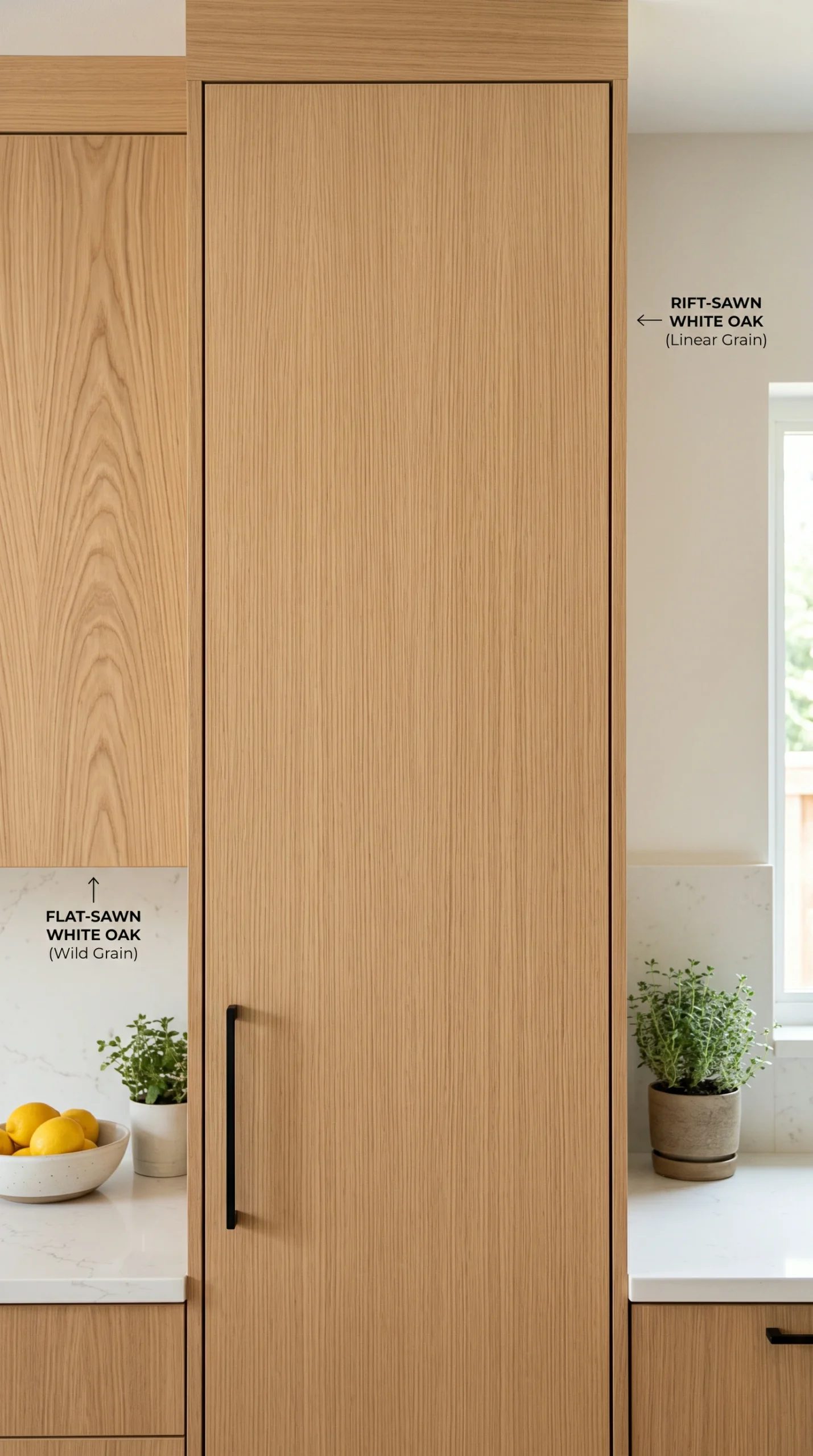
If there is one material that defines current wood kitchen cabinet color ideas, it is rift-sawn or quarter-sawn white oak. This specific cut of wood produces a very straight, clean grain pattern, avoiding the heavy, swirling arches associated with traditional ‘cathedral’ oak. White oak is naturally light, possessing subtle, cool, ashy-gray undertones rather than yellow or orange. When finished with a clear matte sealant, white oak cabinets create an atmosphere that is incredibly fresh, airy, and expansive. This wood is the cornerstone of the highly popular ‘Scandinavian modern’ and ‘modern organic’ styles, providing essential warmth without darkening the space or feeling heavy.
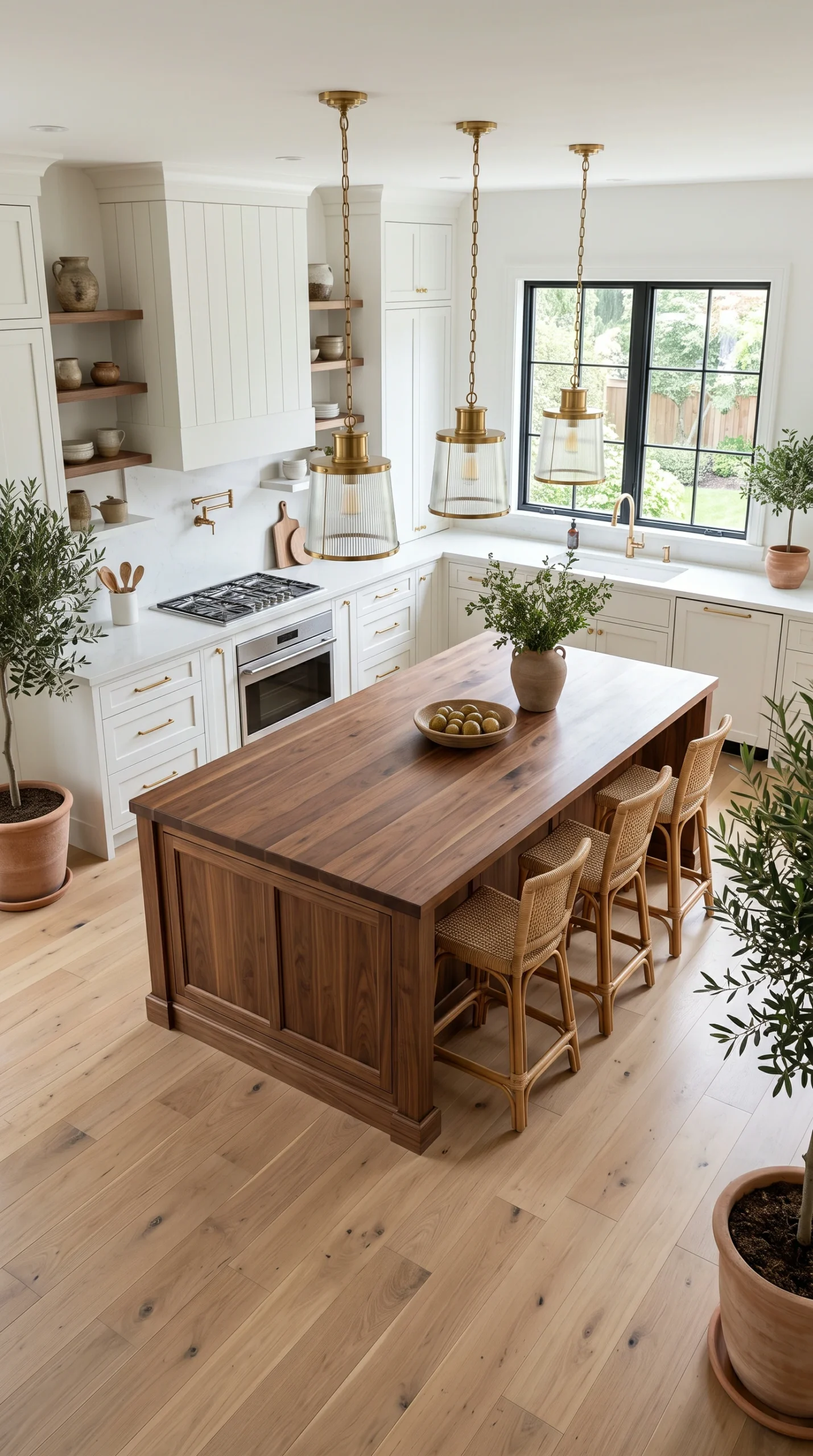
For homeowners seeking a more dramatic, moody, and historically rich aesthetic, walnut is the premier choice within wood kitchen cabinet color ideas. Walnut is inherently a dark, rich brown with striking, complex grain patterns that can range from chocolate to subtle purple-gray. Unlike dark, opaque painted cabinets, walnut provides immense architectural gravity and luxury while still offering the visual friction and warmth of a natural material. When applied to sleek, flat-panel doors, walnut creates a profoundly sophisticated, ‘Mad Men’-esque mid-century modern vibe. When applied to shaker doors, it evokes the timeless elegance of a historic, paneled library or a high-end bespoke furniture piece.
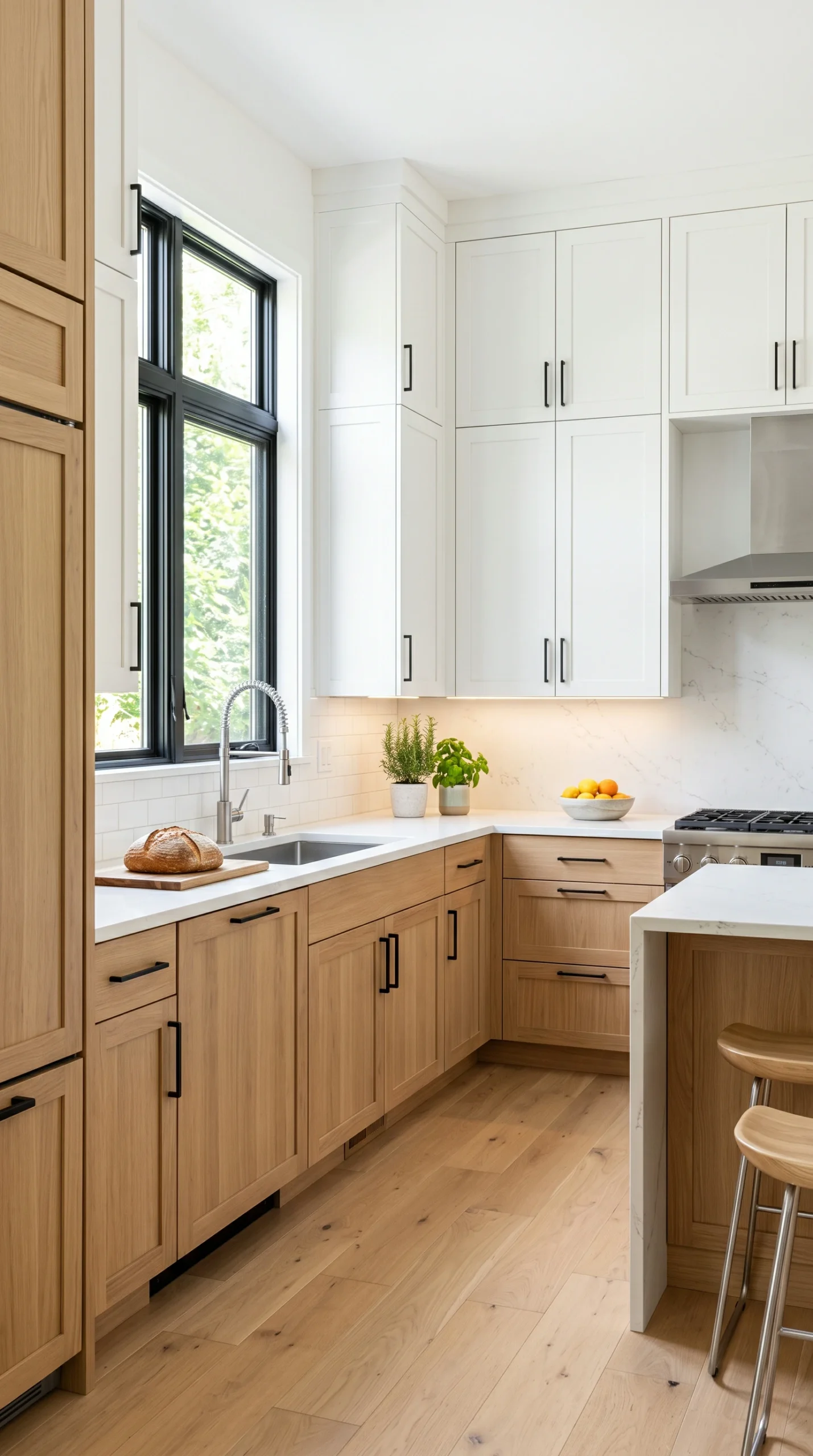
While a kitchen completely clad in natural wood is beautiful, it can sometimes feel slightly overwhelming or reminiscent of a rustic cabin if not carefully balanced. Therefore, the most sophisticated application of wood kitchen cabinet color ideas often involves the ‘two-tone’ approach. Mixing natural wood cabinets with painted cabinets provides perfect visual equilibrium. A highly popular execution is utilizing crisp, white painted upper cabinets (to keep the room feeling light and tall) paired perfectly with natural white oak or walnut lower base cabinets. Alternatively, anchoring a kitchen with a massive, natural wood island while keeping all perimeter cabinets painted a soft, muted green or white creates a breathtaking, custom-furniture aesthetic.
A significant technical challenge when implementing wood kitchen cabinet color ideas is managing the relationship with the flooring. If a kitchen features both wood cabinets and wood floors, they must not match exactly. Attempting to match them perfectly usually fails, and if successful, it results in a room that looks like a monotonous wooden box with no architectural definition. There must be intentional contrast. If you select light white oak cabinets, pair them with a noticeably darker, contrasting wood floor (or a completely different material like slate or concrete). This contrast ensures the cabinets stand out as distinct architectural elements rather than blurring into the floor.
Because natural wood provides so much visual texture and warmth, the surrounding materials must be selected to complement, not compete. For light woods like white oak, pairing the cabinets with sharp, minimalist matte black hardware and a crisp white quartz countertop creates a striking, modern, and highly graphic contrast. For darker, richer woods like walnut, pairing the cabinetry with warm, unlacquered brass pulls and a soft, honed, creamy marble (like Taj Mahal quartzite) enhances the historic, luxurious warmth of the timber. In all cases, the goal is to allow the organic beauty of the wood grain to remain the undisputed star of the design.