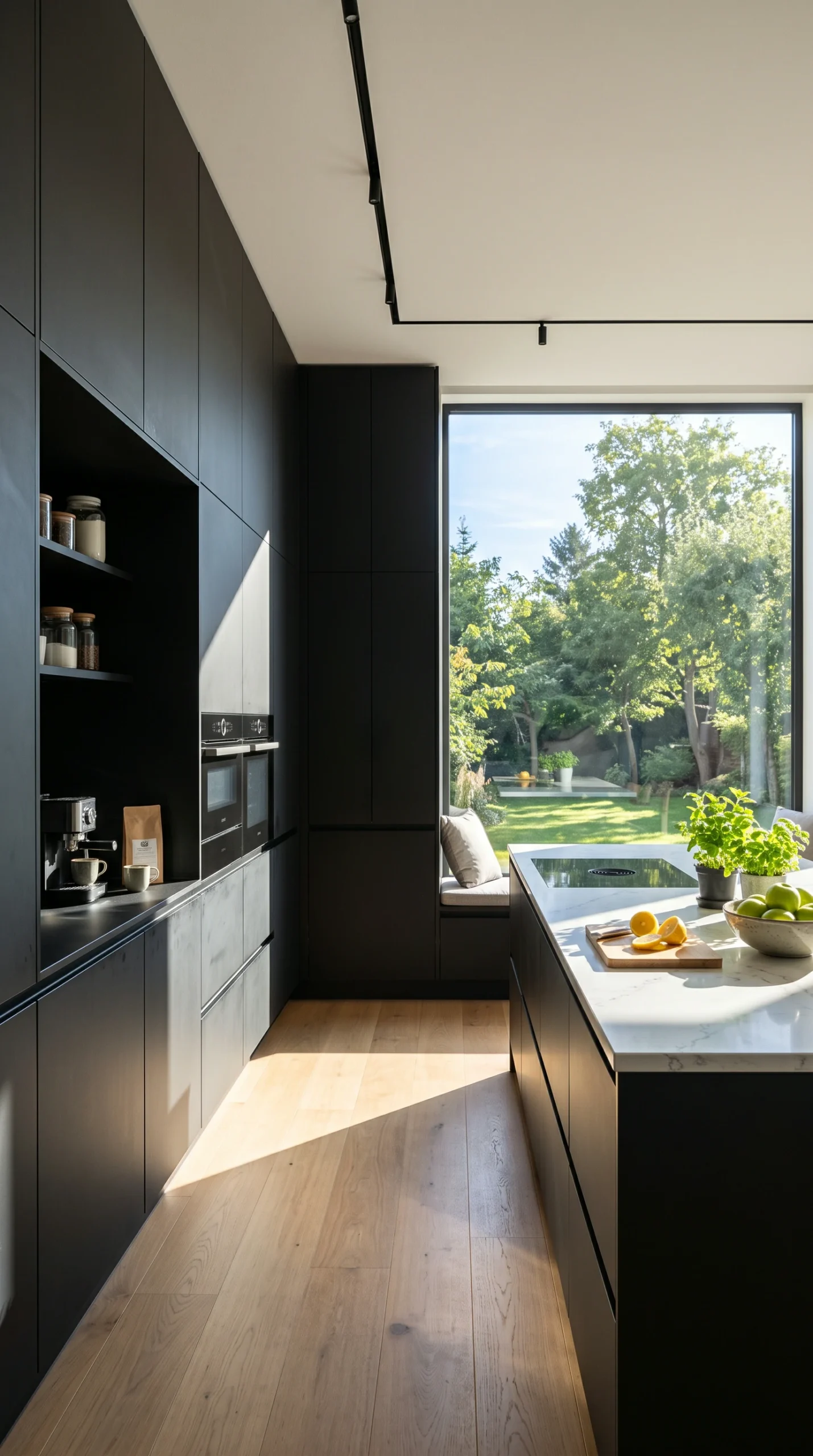
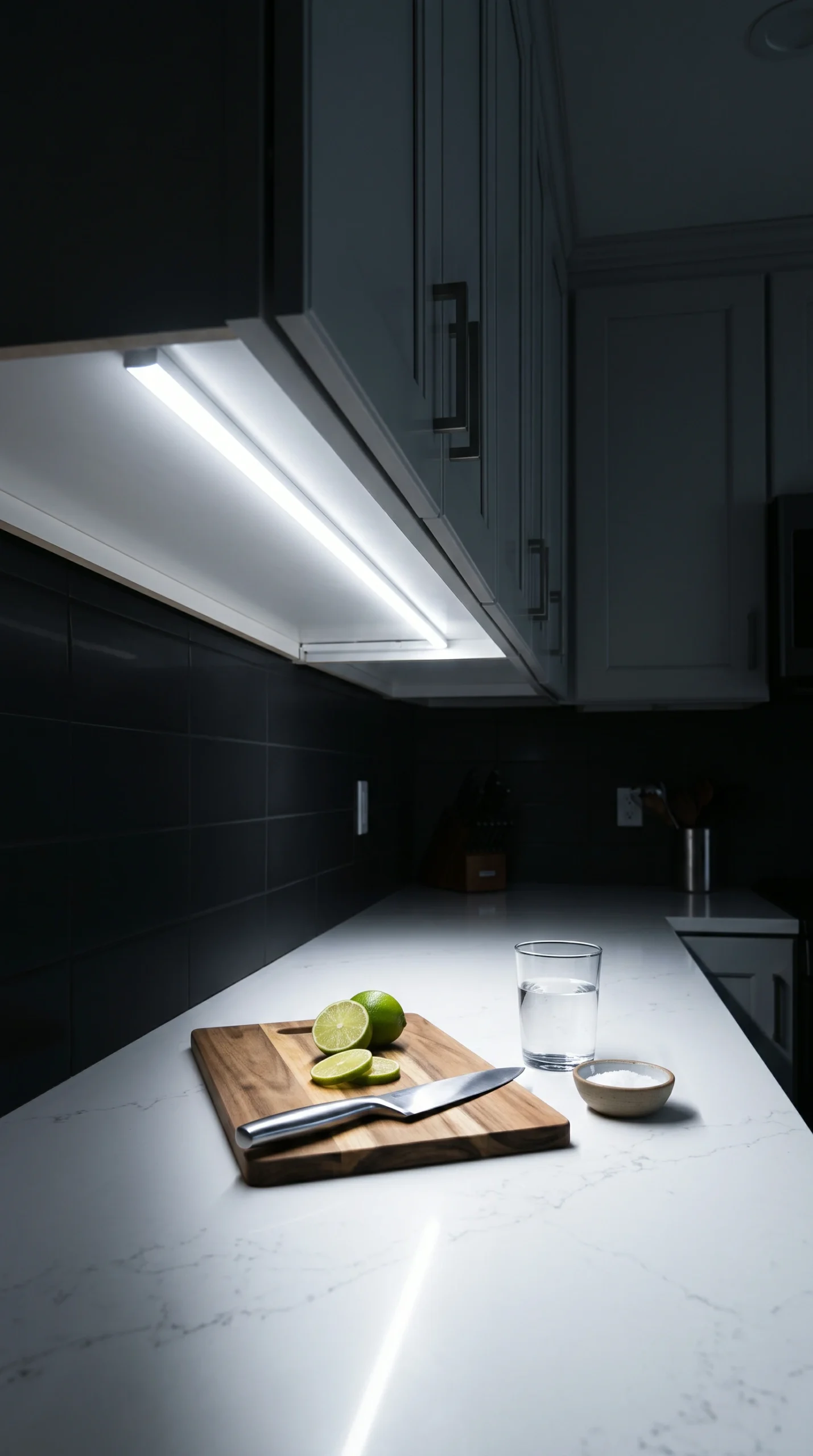
This is the golden rule. Dark colors absorb light aggressively. If your kitchen does not have large windows or abundant natural sunlight, dark cabinets will make the space feel incredibly small, heavy, and oppressive.
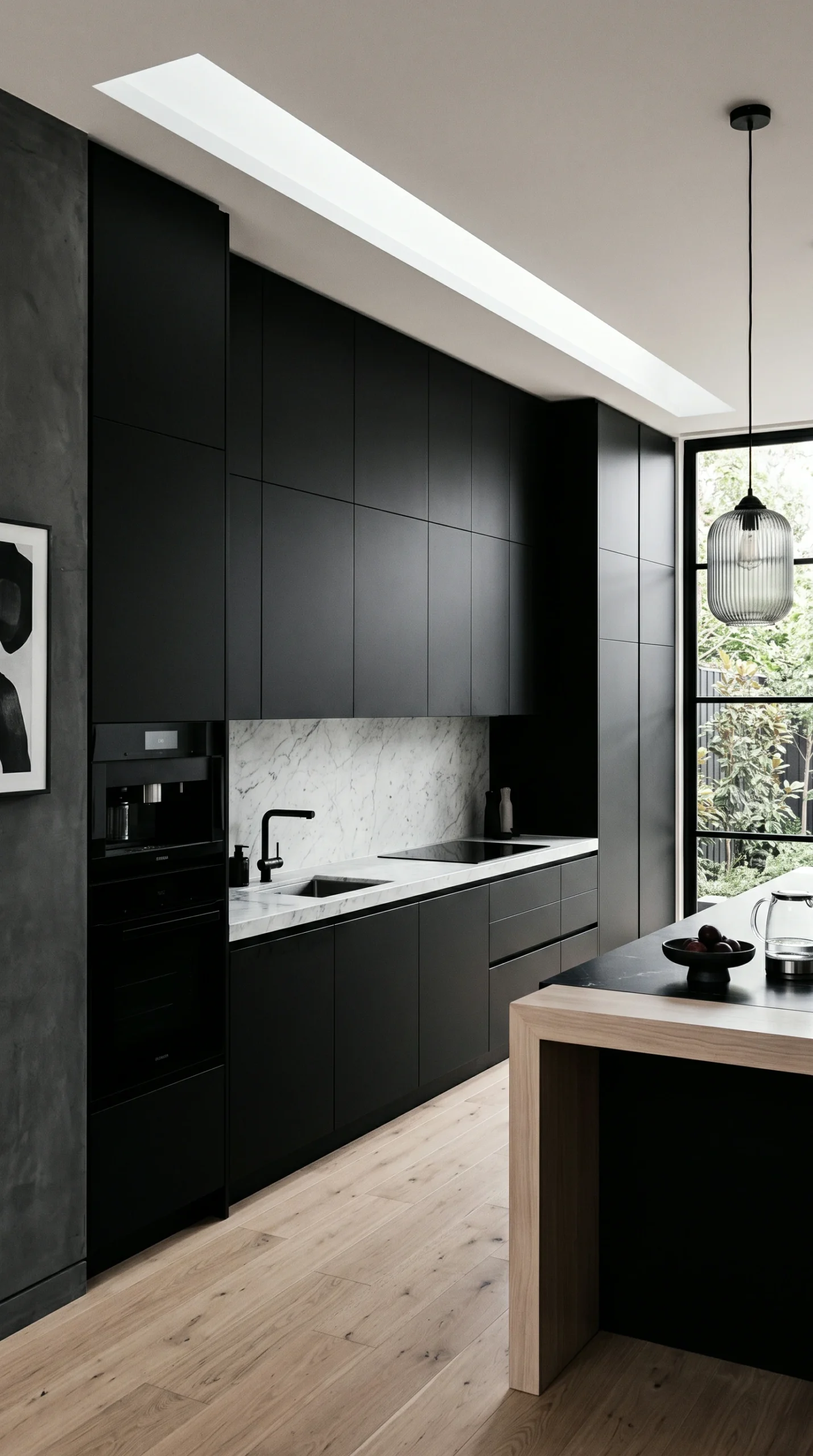
You must balance the darkness. Pair deep charcoal or navy cabinets with highly reflective, brilliant white countertops (like quartz or Calacatta marble) and a stark white ceiling to bounce light around the room.
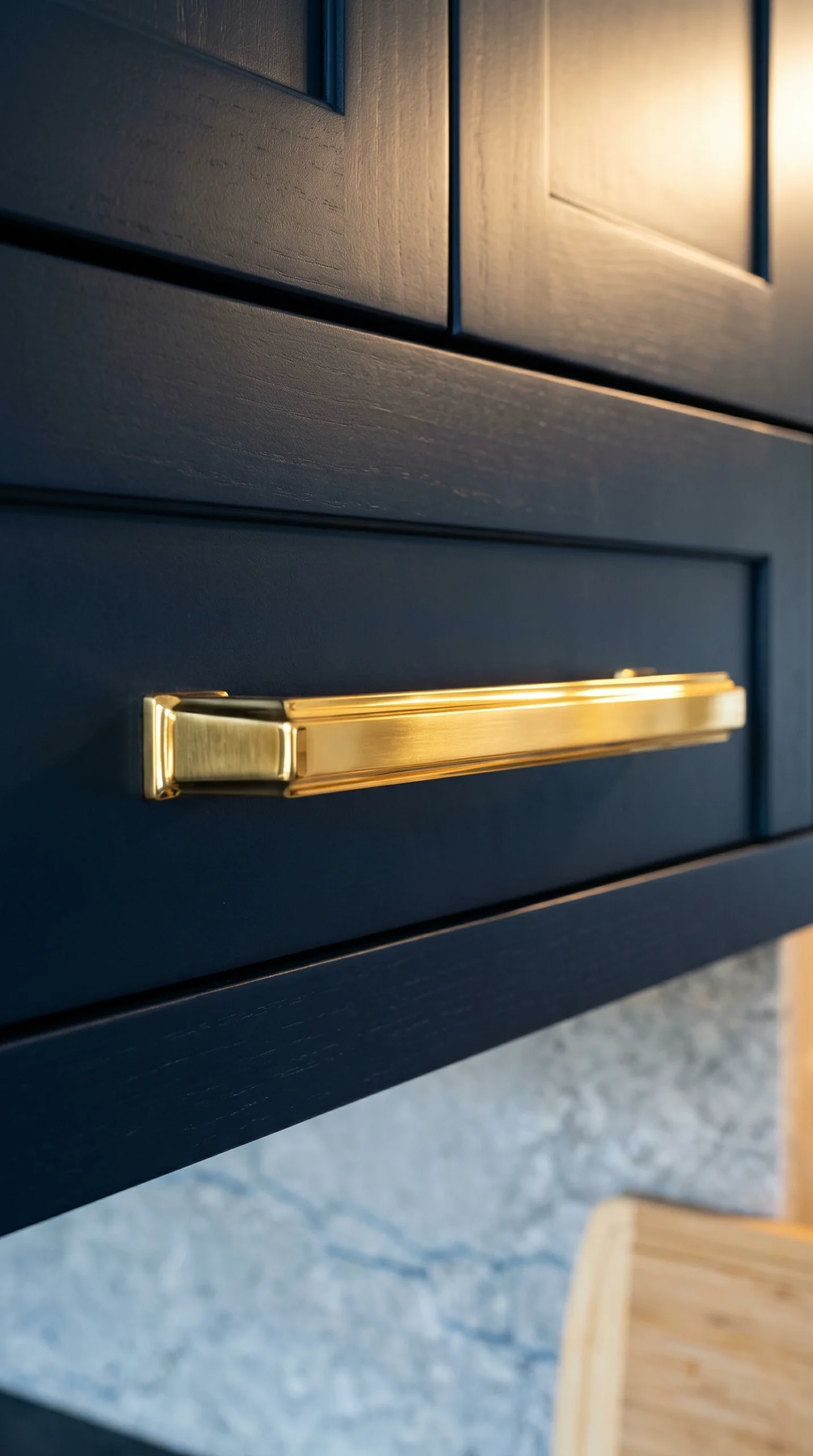
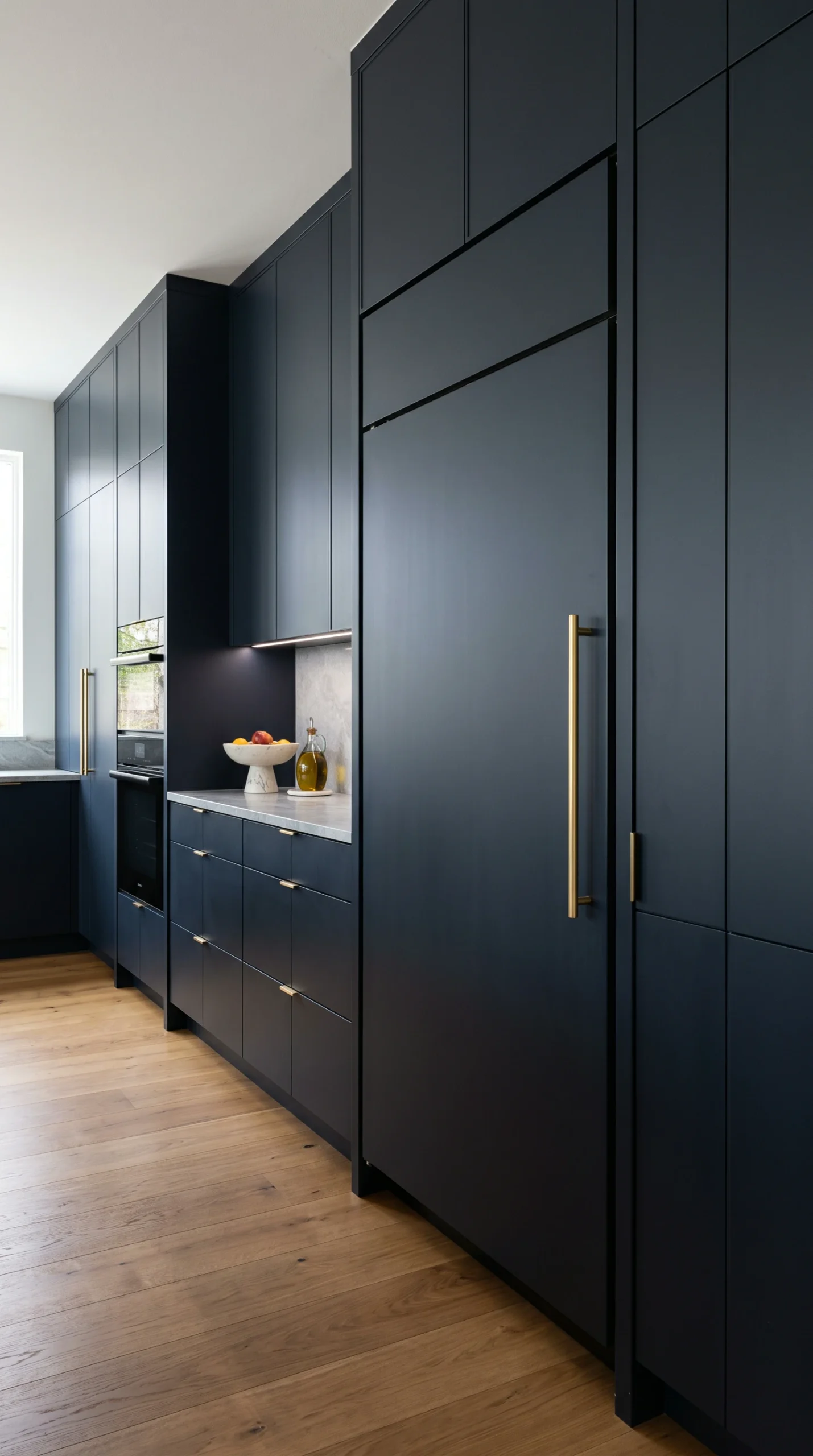
Dark, matte paint is the ultimate backdrop for brilliant metals. Use highly polished brass, bright gold, or shining chrome hardware. The dark background makes these reflective metals pop spectacularly.
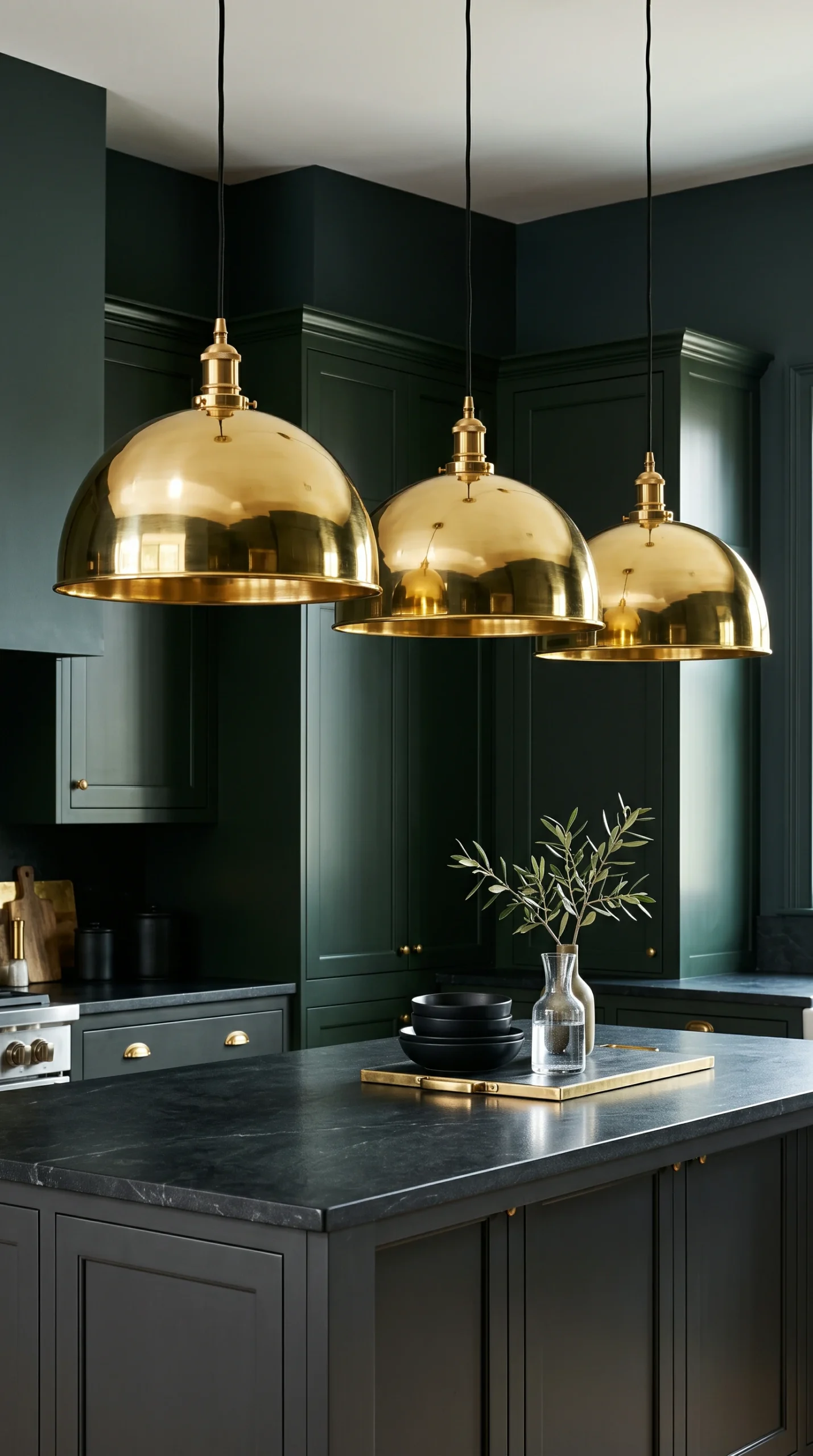
Even with windows, you need robust artificial light. Ensure you have exceptionally bright under-cabinet LED lighting for safe prep work, and use large, reflective statement pendants over the island.
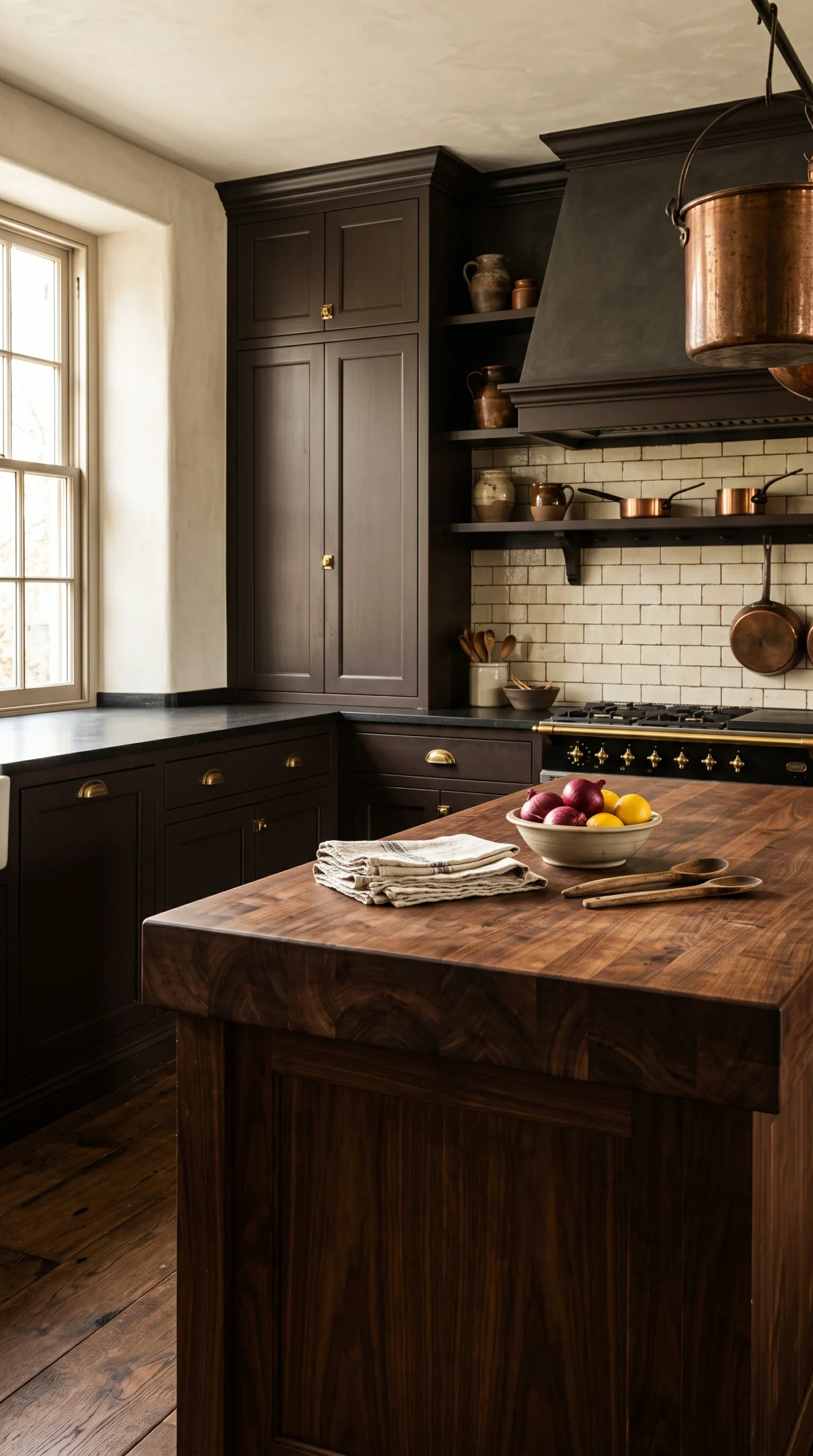
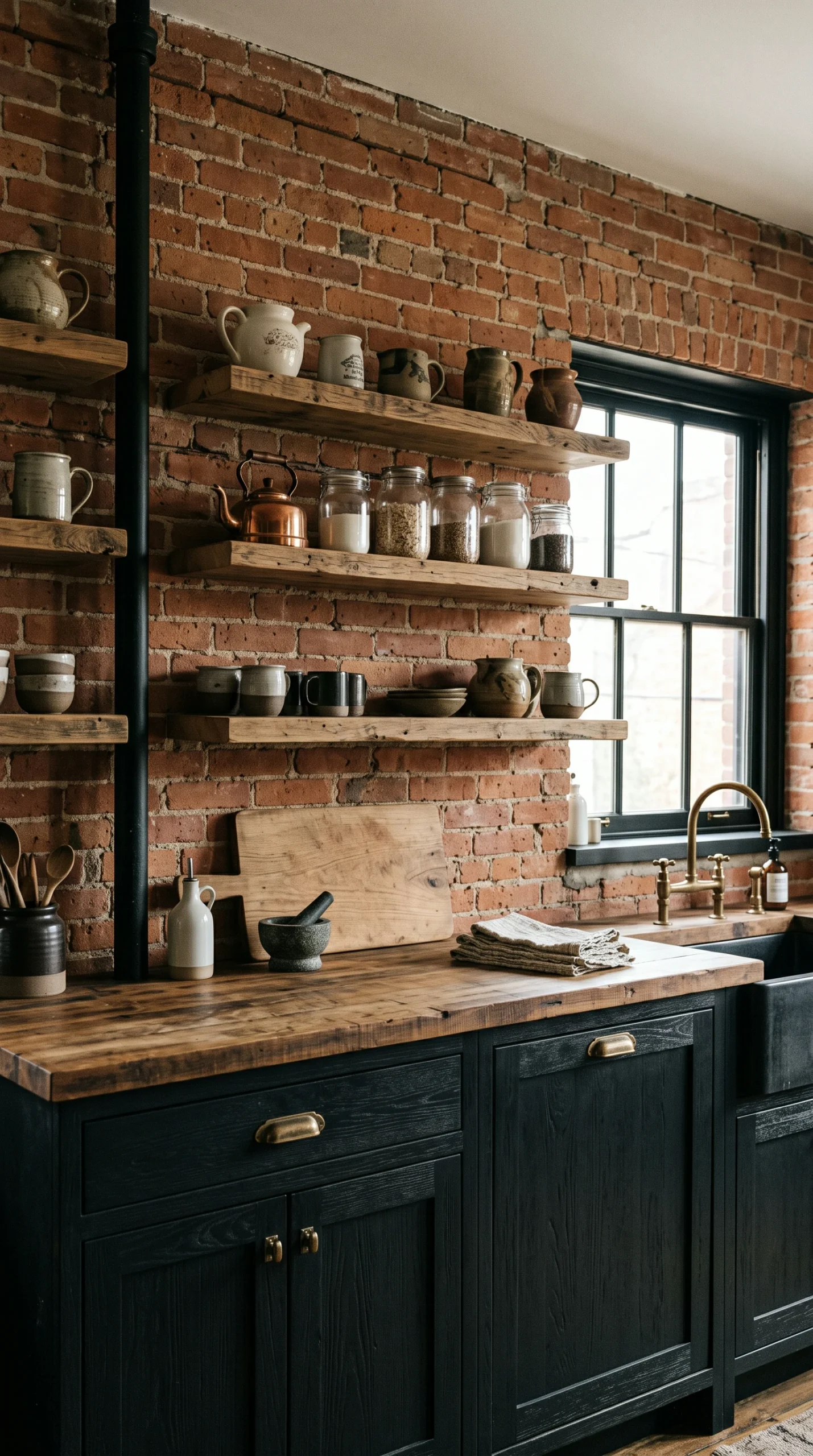
To enhance the 'library-like' luxury of a dark kitchen, incorporate medium-to-dark warm woods. A walnut butcher block or espresso-stained floors add essential organic texture and depth to the dark paint.
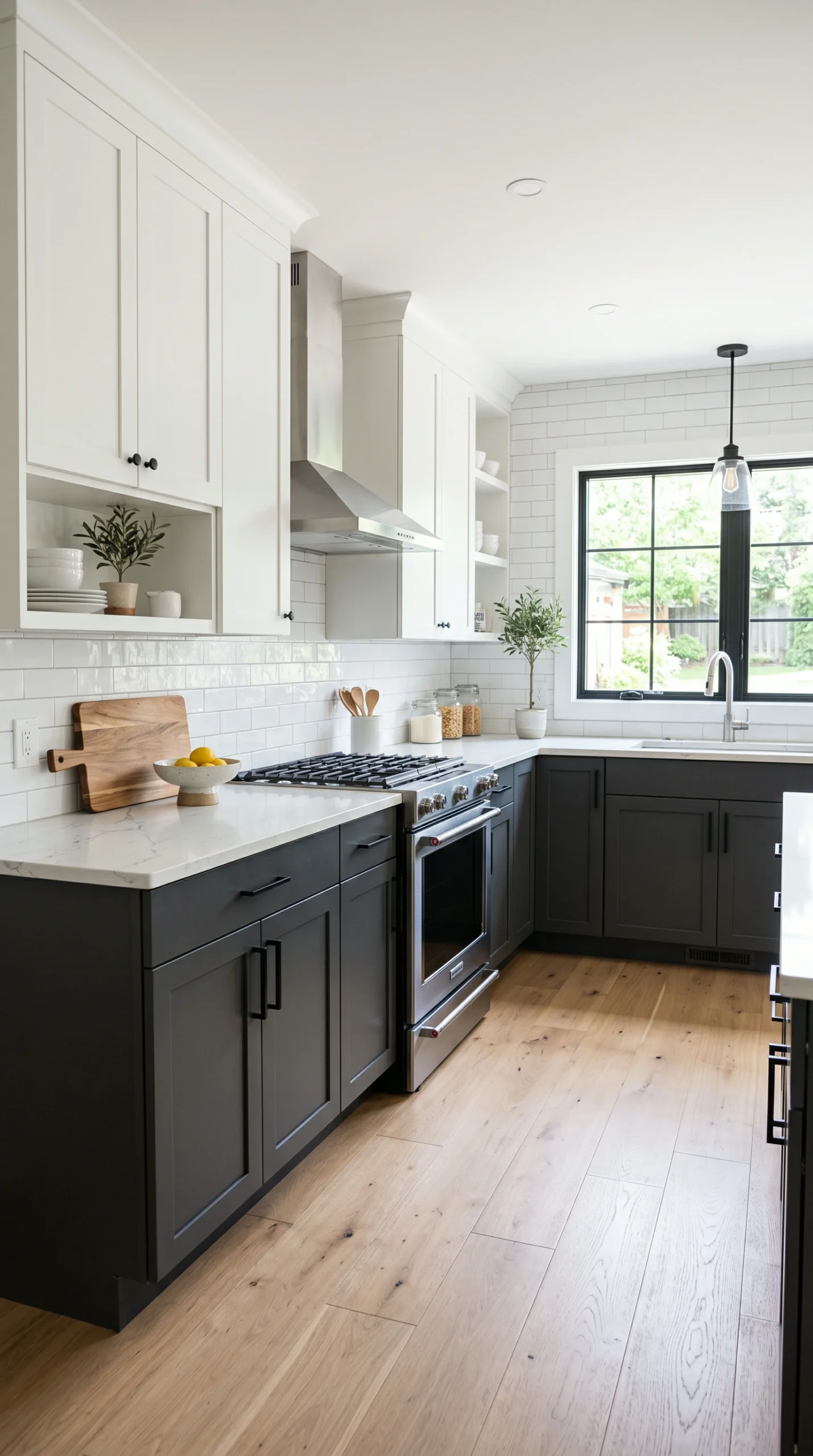
If painting the whole room dark feels too risky, paint only the lower cabinets a deep, dark color, and keep the upper cabinets crisp white. This grounds the room while maintaining an airy upper sightline.
Stepping away from the ubiquity of the all-white kitchen and embracing dark kitchen cabinet color ideas fundamentally alters the psychological atmosphere of a home. Light kitchens aim for an expansive, breezy, and energetic feel. Conversely, dark kitchens aim for intimacy, architectural gravity, and profound coziness. A kitchen painted in a deep, matte charcoal or a blackened navy blue draws the walls inward, creating an enveloping, protective feeling akin to a sophisticated, high-end cocktail lounge or a historic, paneled study. This approach is highly favored by interior designers seeking to create spaces that feel less like sterile utilitarian zones and more like richly appointed, deeply comfortable living areas.
The greatest technical risk when executing dark kitchen cabinet color ideas is that the room will become oppressively dark or feel like a cave. The antidote to this is extreme, aggressive contrast. It is nearly mandatory to pair deeply saturated, dark cabinetry with brilliant, light-reflecting surfaces. Installing a stark white quartz countertop or a natural white marble with dramatic gray veining provides essential visual relief. Extending this bright white stone up the wall as a solid slab backsplash creates a massive, luminous surface that sharply cuts through the darkness of the cabinetry, ensuring the kitchen feels dynamic, modern, and perfectly balanced rather than heavy and gloomy.
Dark, matte paint finishes provide the perfect, dramatic canvas for metallic accents. In the context of dark kitchen cabinet color ideas, hardware is not merely functional; it is a critical design feature. Cool, muted metals like brushed nickel can easily get lost against a charcoal or navy background. To truly elevate the luxury of the space, designers almost universally recommend highly reflective, warm metals. Brilliant polished brass, warm gold, or even bright, polished chrome pulls and knobs sparkle spectacularly against the dark matte paint. This high-contrast pairing of deep, moody color and gleaming metal instantly signals high-end, bespoke curation.
Because dark colors physically absorb a significant percentage of light, proper illumination is a non-negotiable technical requirement for dark kitchen cabinet color ideas. Relying solely on a few recessed ceiling cans is insufficient. To make a dark kitchen functional and beautiful, the artificial lighting plan must be robust. High-quality, bright LED under-cabinet lighting is absolutely essential to illuminate the dark countertops, ensuring food preparation is safe and easy. Furthermore, utilizing statement lighting with reflective qualities, such as large brass dome pendants or clear glass chandeliers over the island, helps bounce necessary light around the dark, enveloping room.
While high-contrast white stone provides necessary brightness, introducing natural wood tones provides essential warmth and texture, preventing a dark, graphic kitchen from feeling too harsh or sterile. Dark kitchen cabinet color ideas pair exceptionally well with rich, warm woods. Incorporating a medium-dark walnut, an aged oak, or even a deep mahogany introduces an organic, tactile element that complements the moody gravity of the dark paint. Utilizing these woods for wide-plank hardwood flooring, thick floating wall shelves, or a massive wooden island countertop adds a layer of handsome, historical richness that significantly elevates the entire design scheme.
If you deeply admire the sophisticated drama of dark colors but have a smaller kitchen or lack sufficient natural light, committing to dark paint on every cabinet might be unwise. A highly popular and effective adaptation of dark kitchen cabinet color ideas is the ‘tuxedo’ or two-tone approach. This involves painting only the lower base cabinets (and perhaps the central island) in the deep, moody charcoal or navy, while painting the upper cabinets a crisp, bright white. This strategy firmly grounds the kitchen with rich, dark color at the bottom, while keeping the upper sightlines bright, open, and airy, allowing you to enjoy the luxury of dark cabinets without sacrificing the perceived spaciousness of the room.