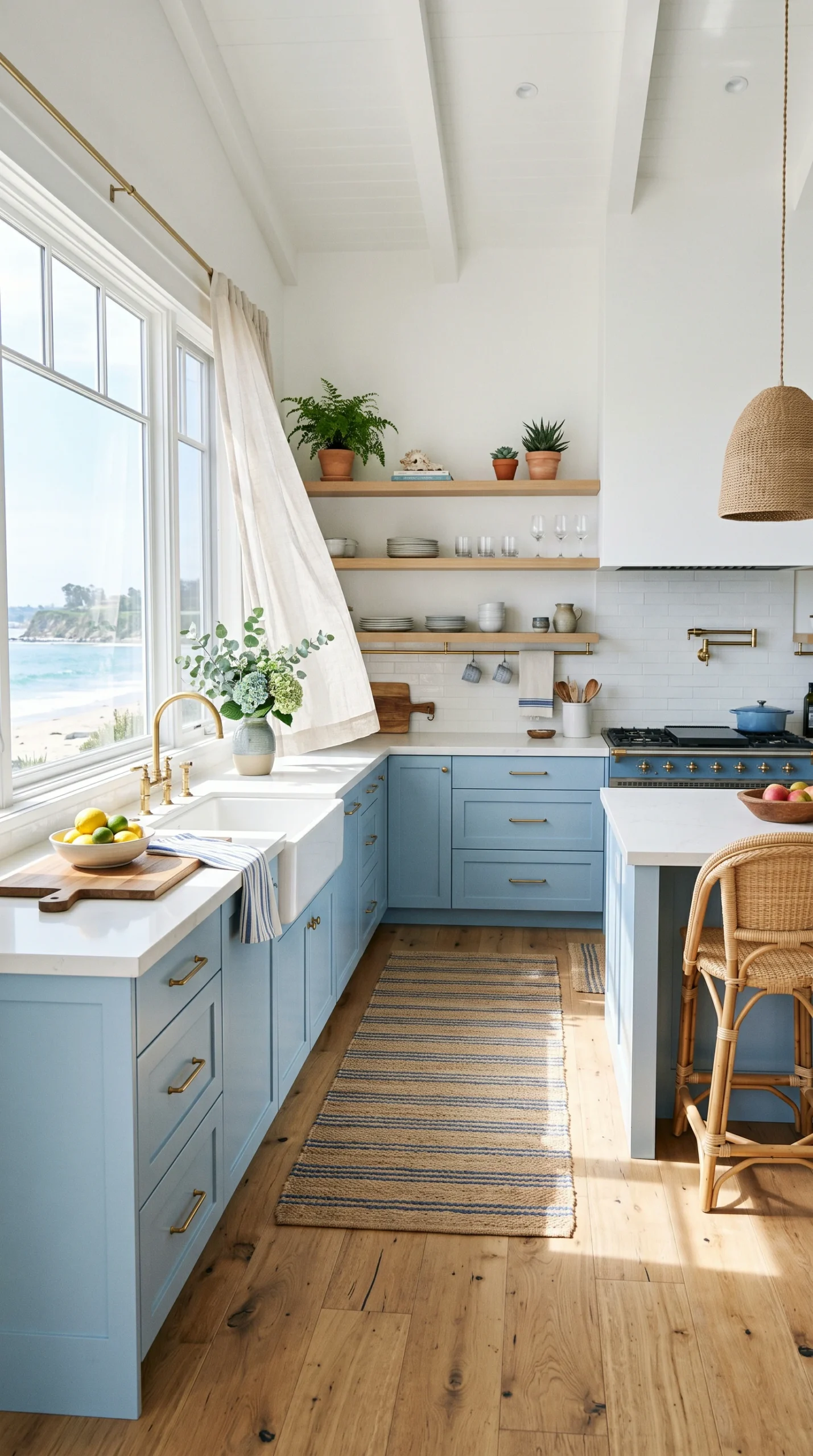
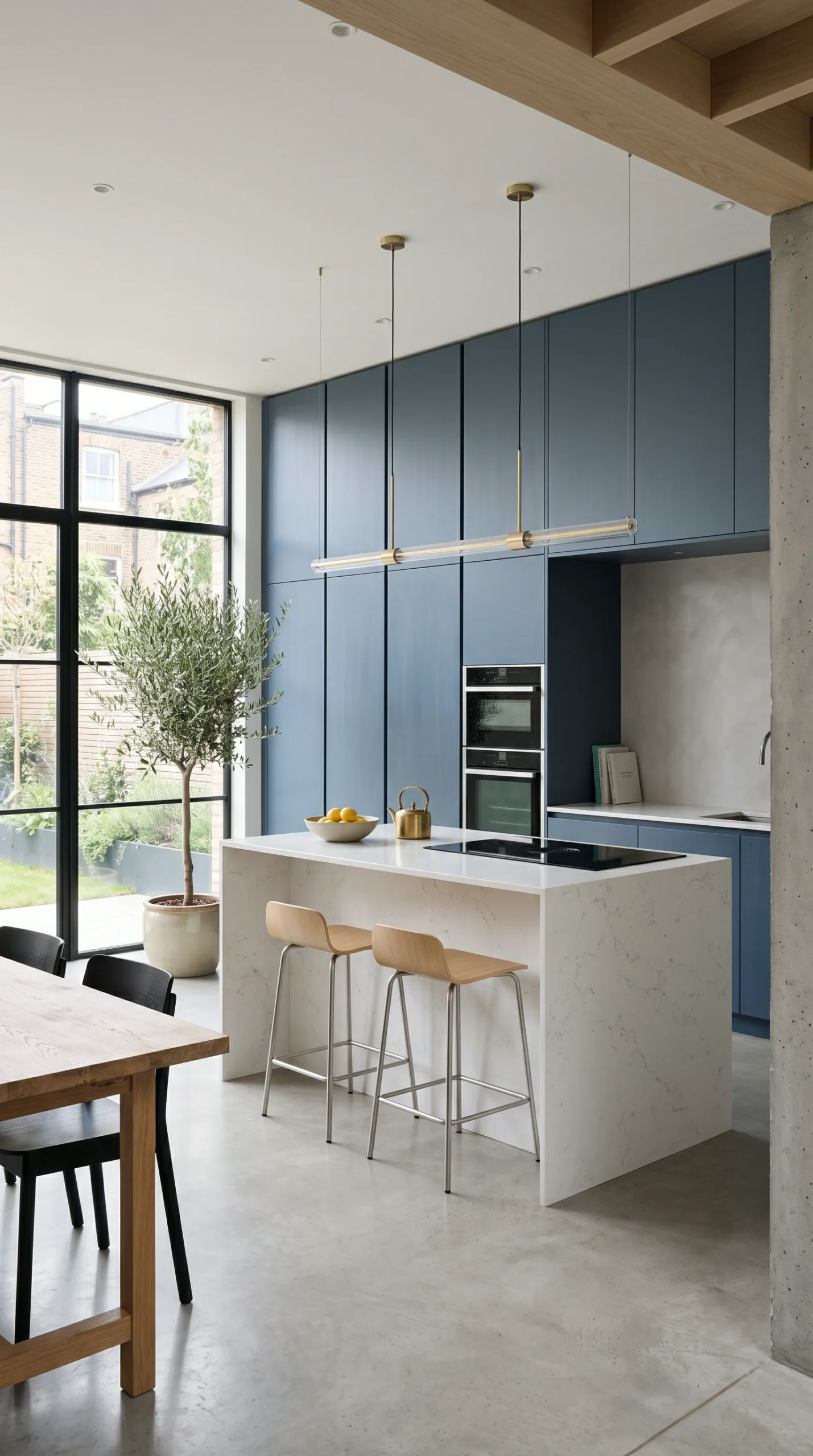
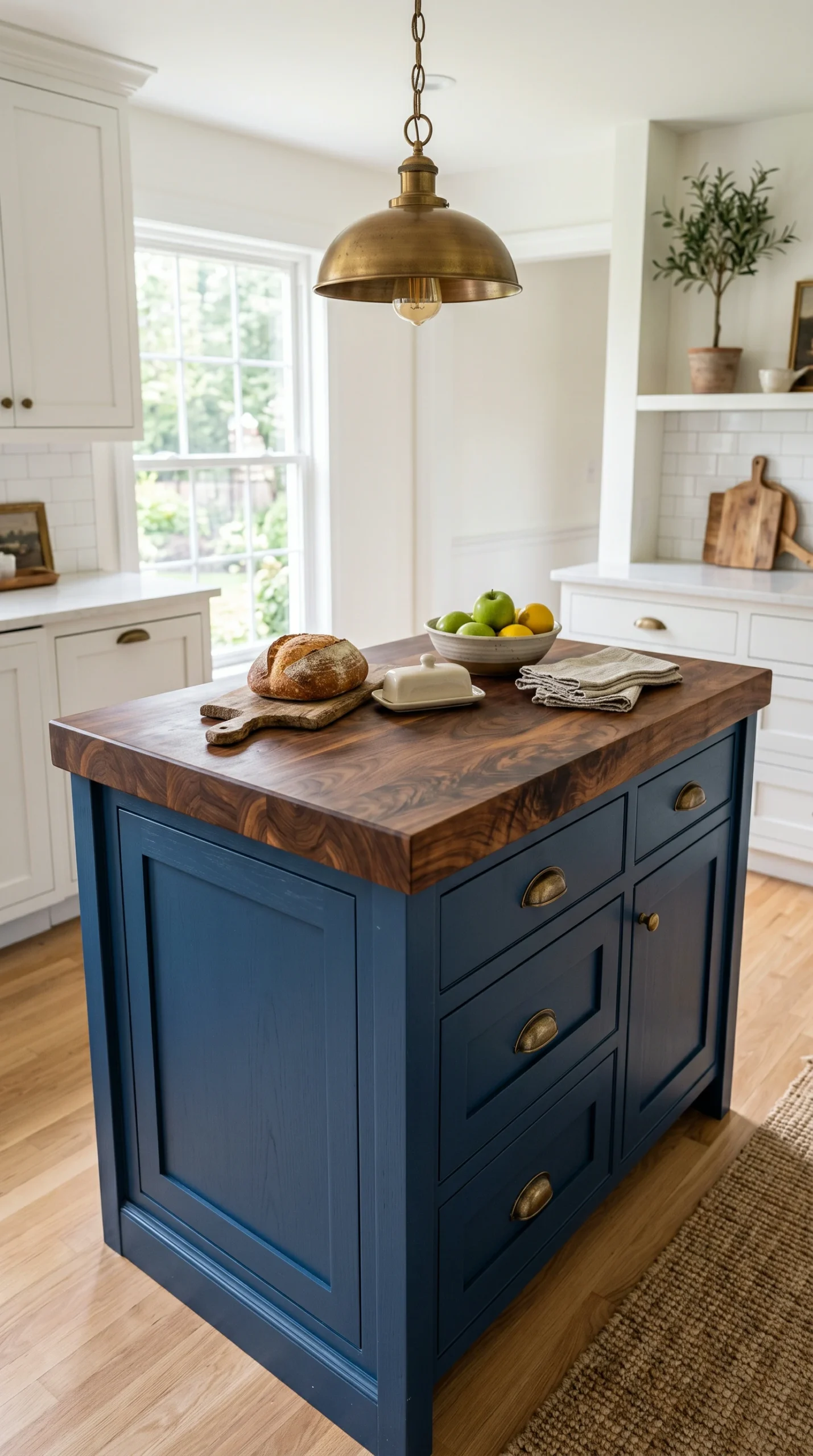
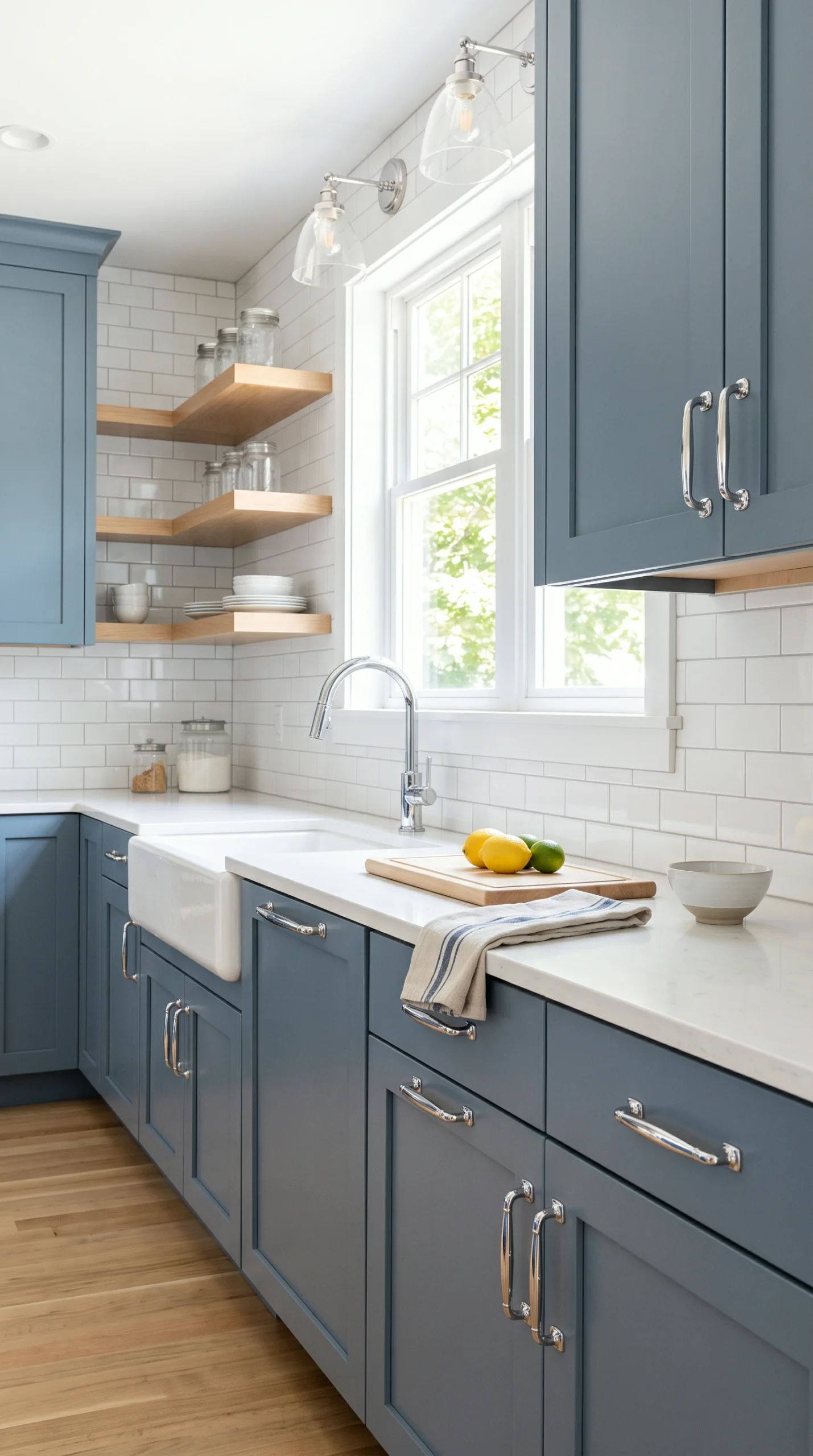
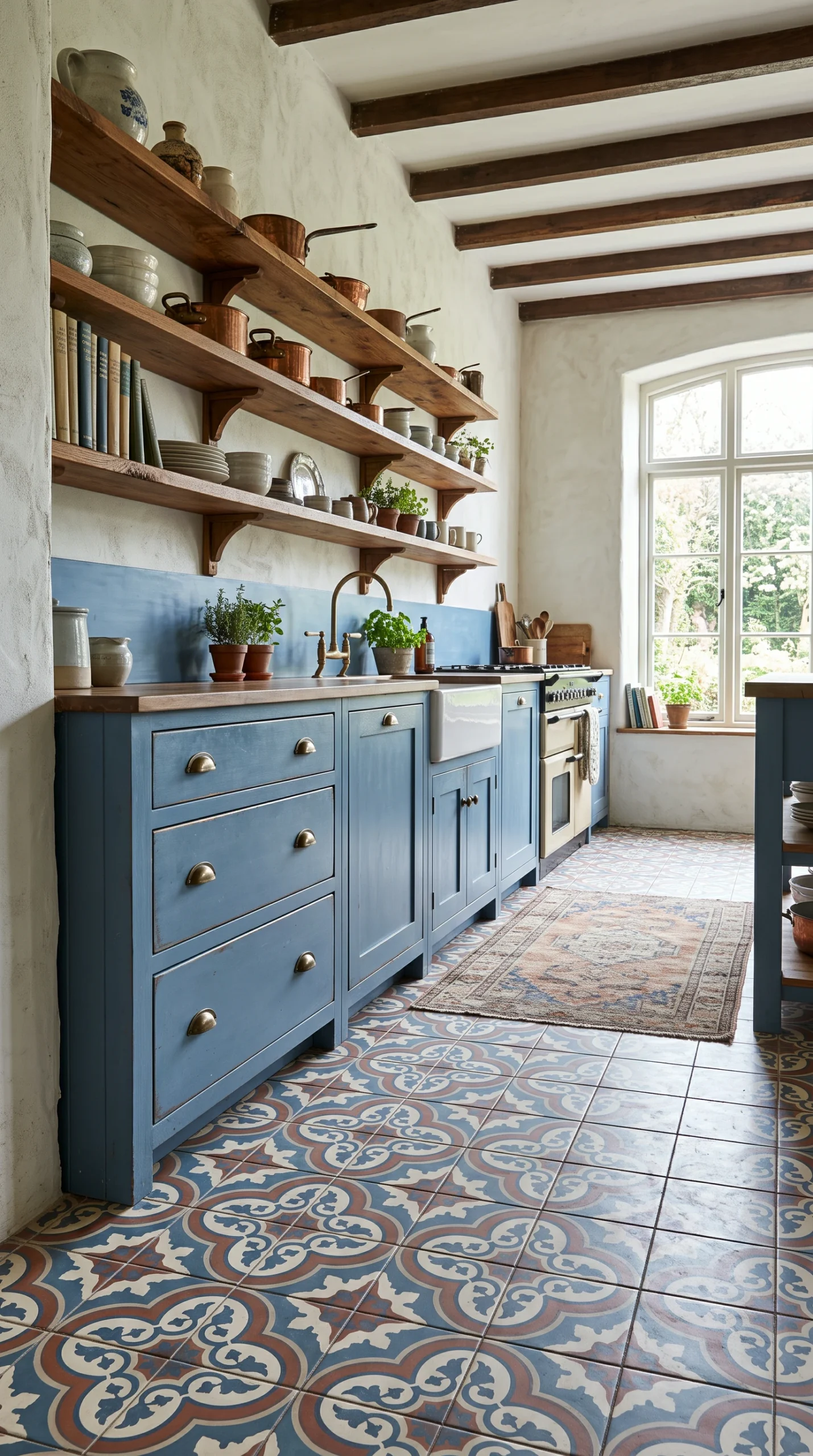
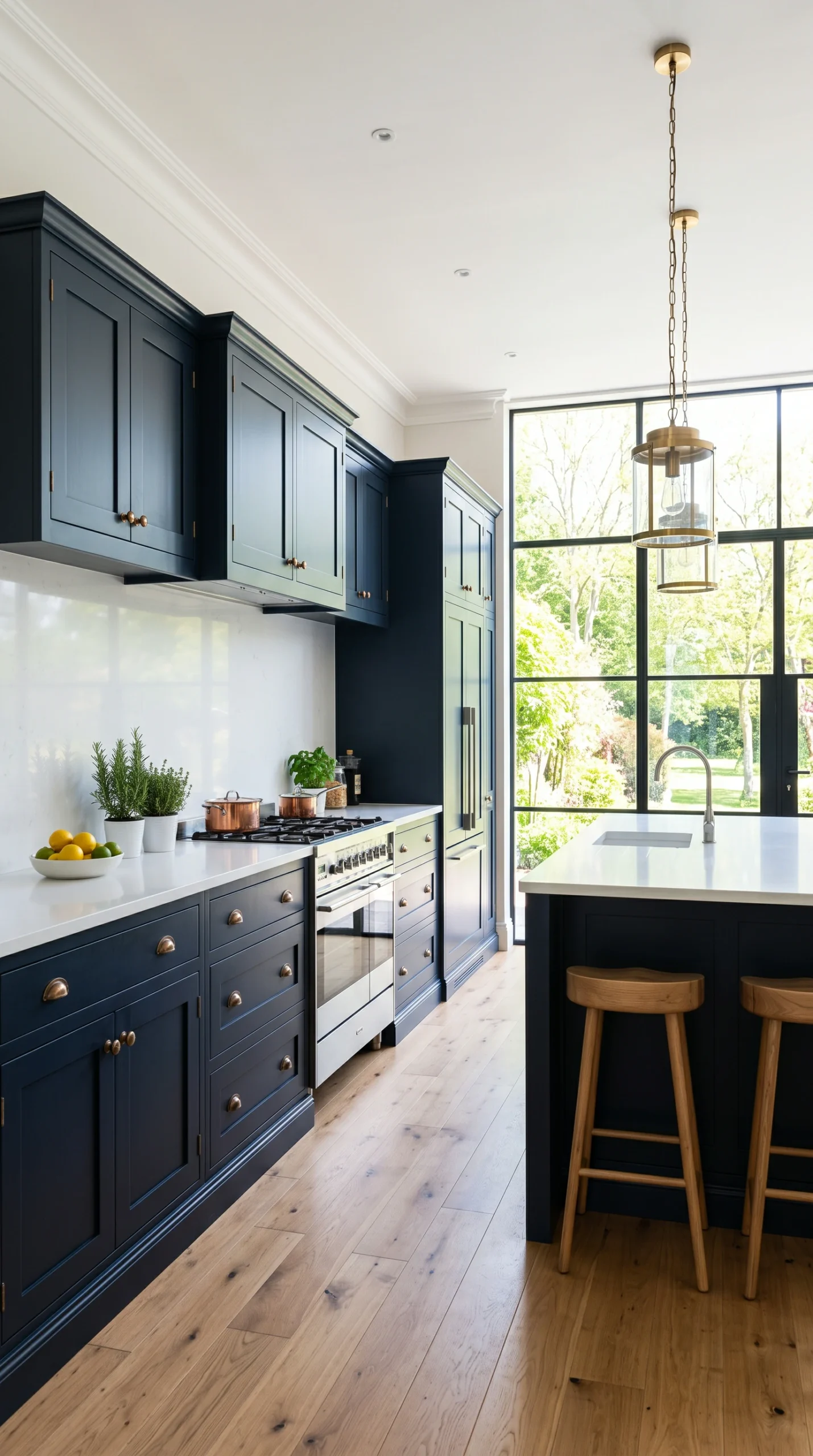
Light blues (powder, sky) feel breezy, coastal, and expansive. Medium 'dusty' blues (slate, denim) feel relaxed and historic. Deep blues (navy, midnight) feel formal, dramatic, and architectural.
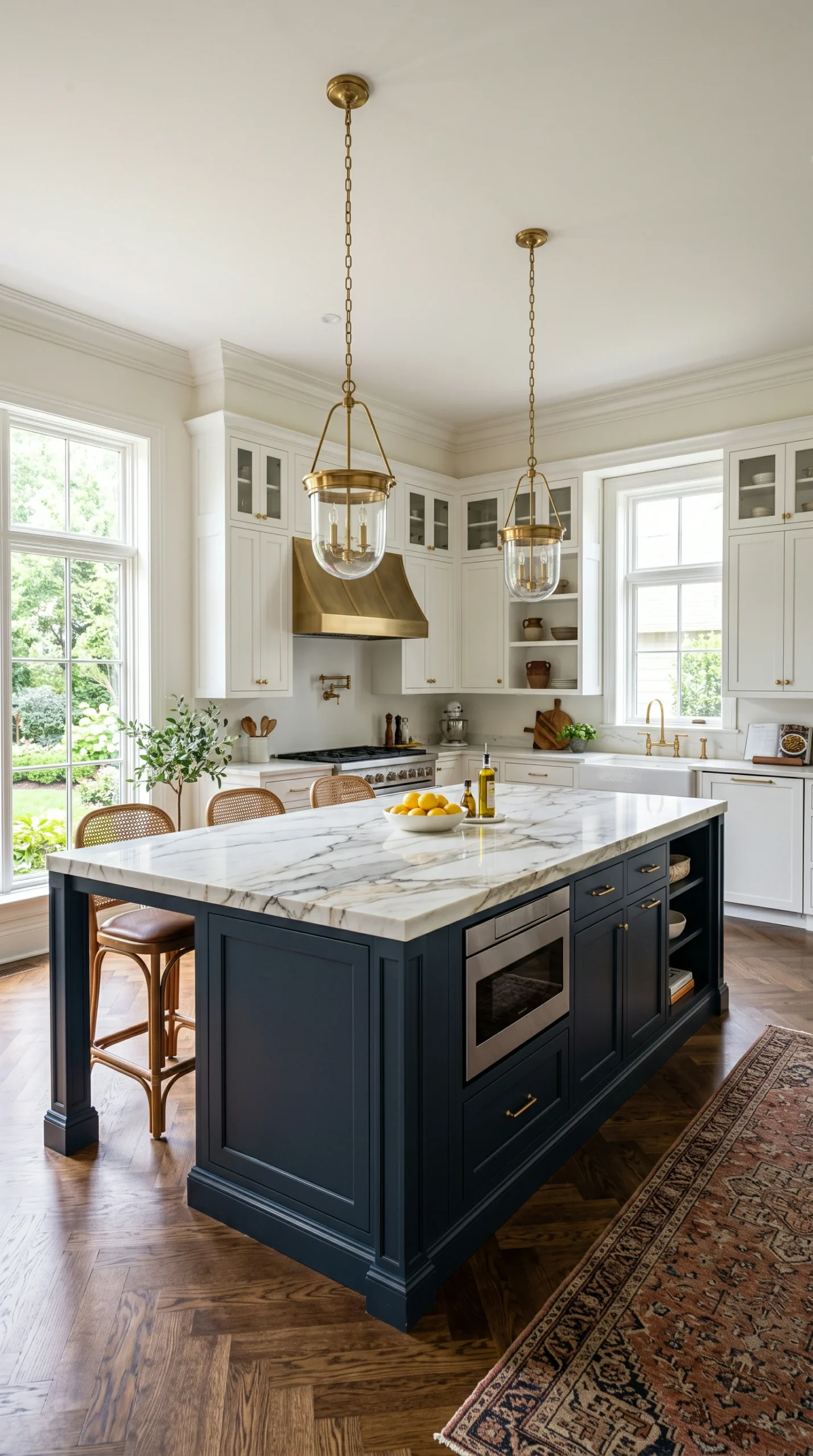
Deep navy blue is the ultimate 'colored neutral.' It is almost as versatile as black or gray, pairing seamlessly with any metal finish, wood tone, or countertop material.
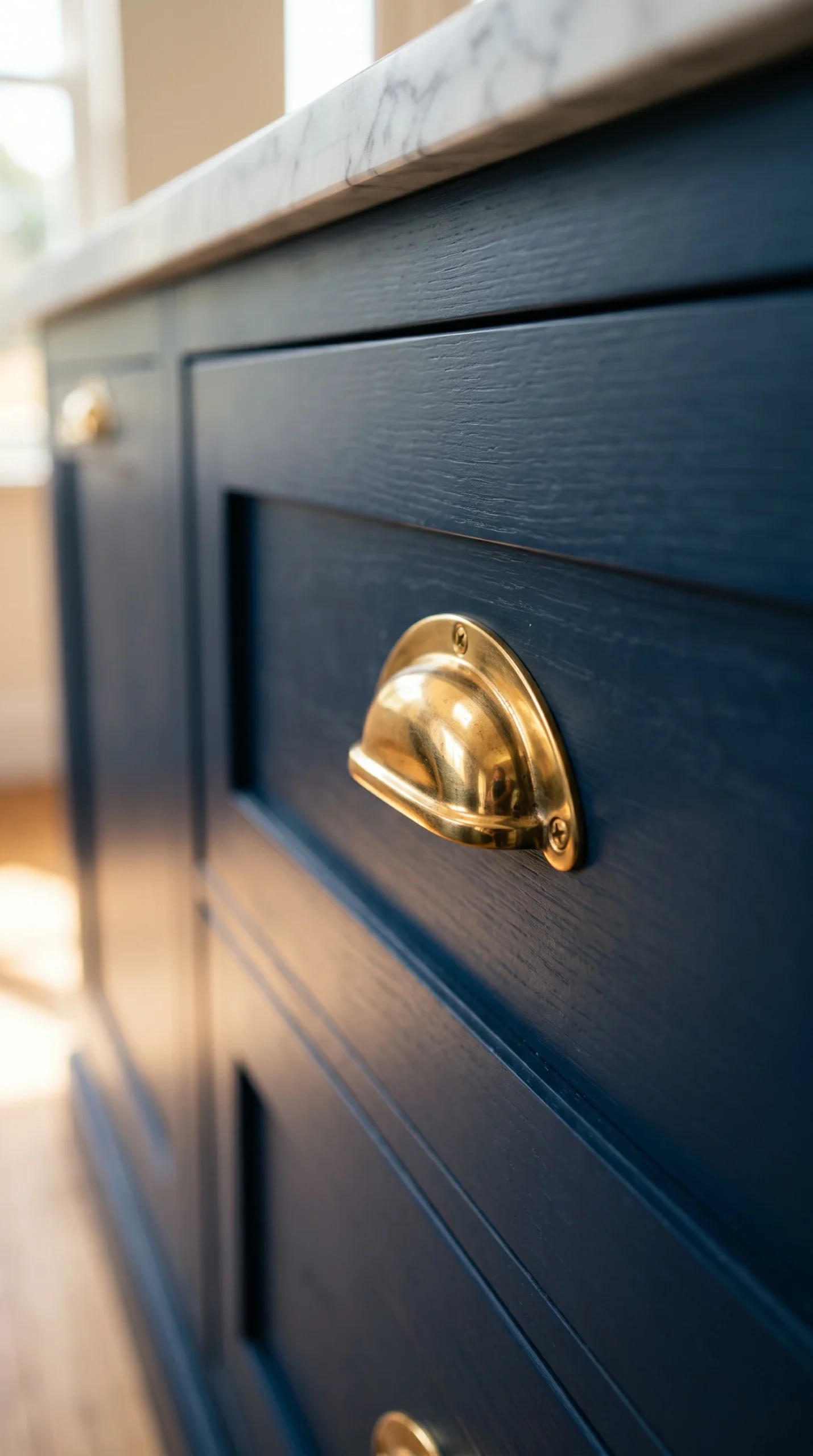
Blue is inherently a 'cool' color. To prevent the kitchen from feeling icy or sterile, you must introduce warmth. Polished brass, brushed gold, or warm bronze hardware is essential.
Blue requires sharp contrast to look its best. Pair blue cabinets with stark, brilliant white countertops (like quartz or marble) and a crisp white ceiling to keep the room feeling fresh and dynamic.
Like adding warmth with metals, adding organic texture with wood is crucial. A warm oak floor or a walnut butcher block island beautifully balances the coolness of the blue paint.
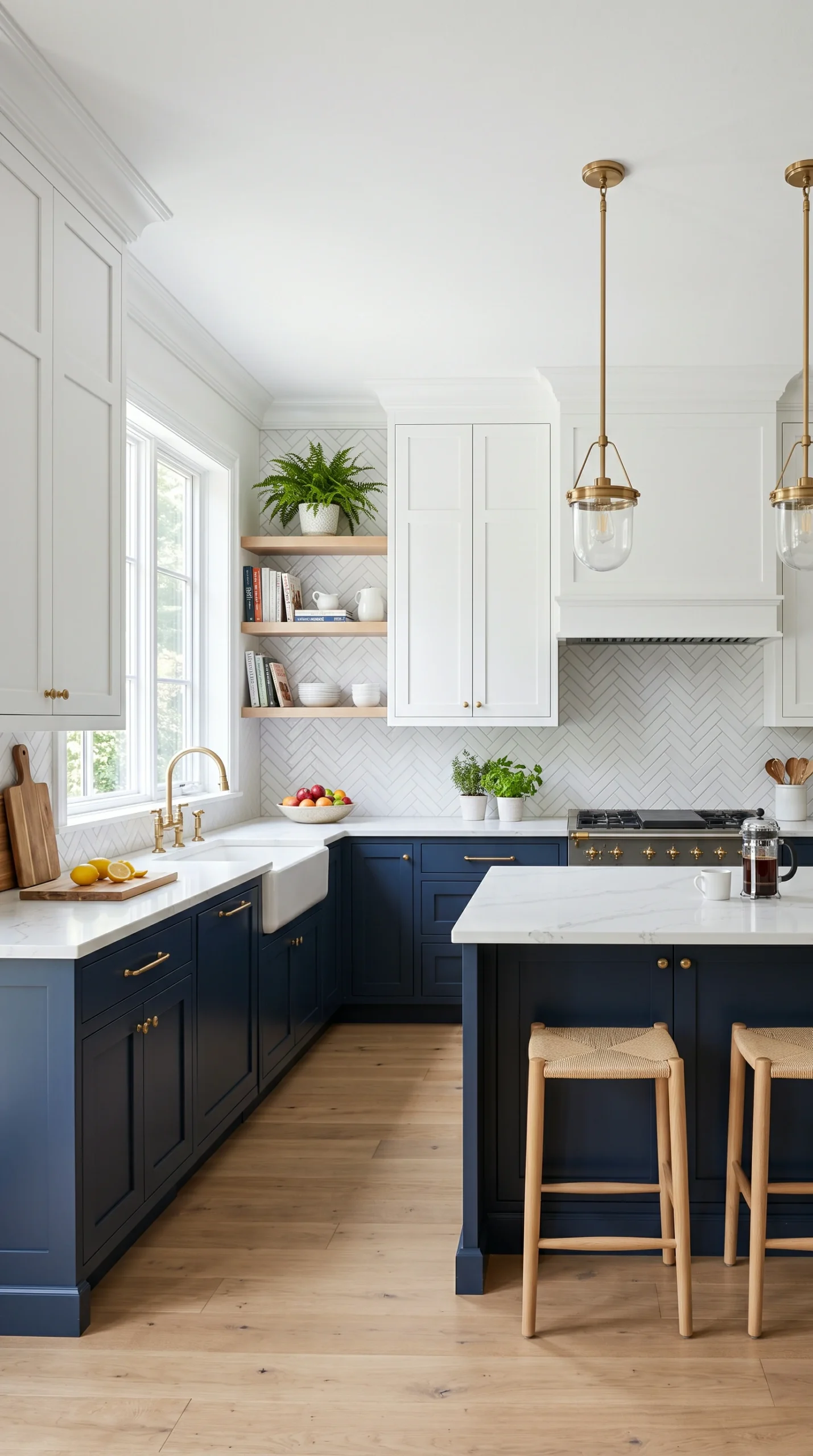
If painting the entire kitchen deep navy feels too dark or heavy, use the 'tuxedo' approach. Paint only the lower cabinets navy, keeping the uppers bright white to maintain a light, airy upper sightline.
When discussing blue kitchen cabinet color ideas, navy blue reigns supreme. Navy is widely considered the most foolproof and sophisticated ‘colored neutral’ in interior design. It possesses the architectural gravity and depth of charcoal gray or black, but with an added layer of classic, historic elegance. A navy kitchen feels incredibly grounded and formal, yet never stark. Its versatility is unmatched; it pairs just as beautifully with the sleek, cool tones of modern stainless steel appliances as it does with the warm, rustic patina of an unlacquered brass faucet. For homeowners hesitant to commit to bright colors, navy offers a safe, enduringly stylish way to introduce significant depth and personality into the kitchen.
While navy provides drama, lighter shades offer unparalleled serenity. Muted, ‘dusty’ blue kitchen cabinet color ideaslike soft slate, faded denim, or pale powder blueare highly sought after for their ability to create a profoundly calming environment. These colors reflect more light than navy, making them excellent choices for smaller kitchens or rooms lacking abundant natural sunlight. Often associated with coastal, cottage, or Gustavian design, these lighter blues evoke a sense of fresh air and open skies. To prevent these pale shades from feeling juvenile or ‘pastel,’ they should be heavily muted with gray undertones, ensuring the final aesthetic remains sophisticated and mature.
Regardless of the shade selected, blue requires aggressive contrast to truly shine. The most successful blue kitchen cabinet color ideas rely heavily on the inclusion of brilliant, stark white elements. A kitchen painted entirely in blue, without white relief, can quickly feel overwhelming and heavy. Pairing blue cabinets with a crisp white quartz countertop, a luminous white subway tile backsplash, and a flat white ceiling provides necessary visual breaks. This sharp, high-contrast pairing (reminiscent of classic blue-and-white porcelain or crisp nautical stripes) ensures the blue paint looks vibrant and intentional, rather than muddy or monotonous.
Blue is situated on the cool side of the color wheel. If left unbalanced, a blue kitchen can sometimes feel icy or sterile, especially in north-facing rooms with cool natural light. To counteract this, interior designers strategically inject warmth through hardware. In blue kitchen cabinet color ideas, the selection of metallic finishes is crucial. While polished chrome or nickel looks very clean against blue, warm metals like brushed gold, polished brass, or warm, oil-rubbed bronze are generally preferred. The golden tones provide a spectacular, fiery contrast against the cool blue backdrop, instantly warming up the space and adding a layer of high-end, bespoke glamour.
Just as warm metals provide necessary contrast, incorporating natural wood elements is essential for balancing a blue kitchen. Wood introduces tactile, organic warmth that prevents the smooth, cool, painted cabinetry from feeling artificial. Blue kitchen cabinet color ideas pair beautifully with almost any wood tone. Light, white oak floors enhance a breezy, coastal aesthetic when paired with light blue. Conversely, rich, dark walnut or mahogany accents (like a butcher block island top or floating shelves) enhance the moody, historic, and library-like atmosphere of a deep navy kitchen. This combination of painted blue and natural wood is classic, foolproof, and deeply elegant.
For those who love the richness of navy blue but fear it might darken their space, the ‘two-tone’ or ‘tuxedo’ application is the perfect solution. A highly popular execution of blue kitchen cabinet color ideas involves painting only the lower base cabinets a deep, grounding blue, while painting the upper cabinets a bright, expansive white. This strategy provides the dramatic, sophisticated anchor of the dark color at floor level, while maintaining a bright, luminous, and airy feeling at eye level and above. This ensures the kitchen feels both colorful and spacious, making it an ideal strategy for smaller homes or kitchens with limited natural light.