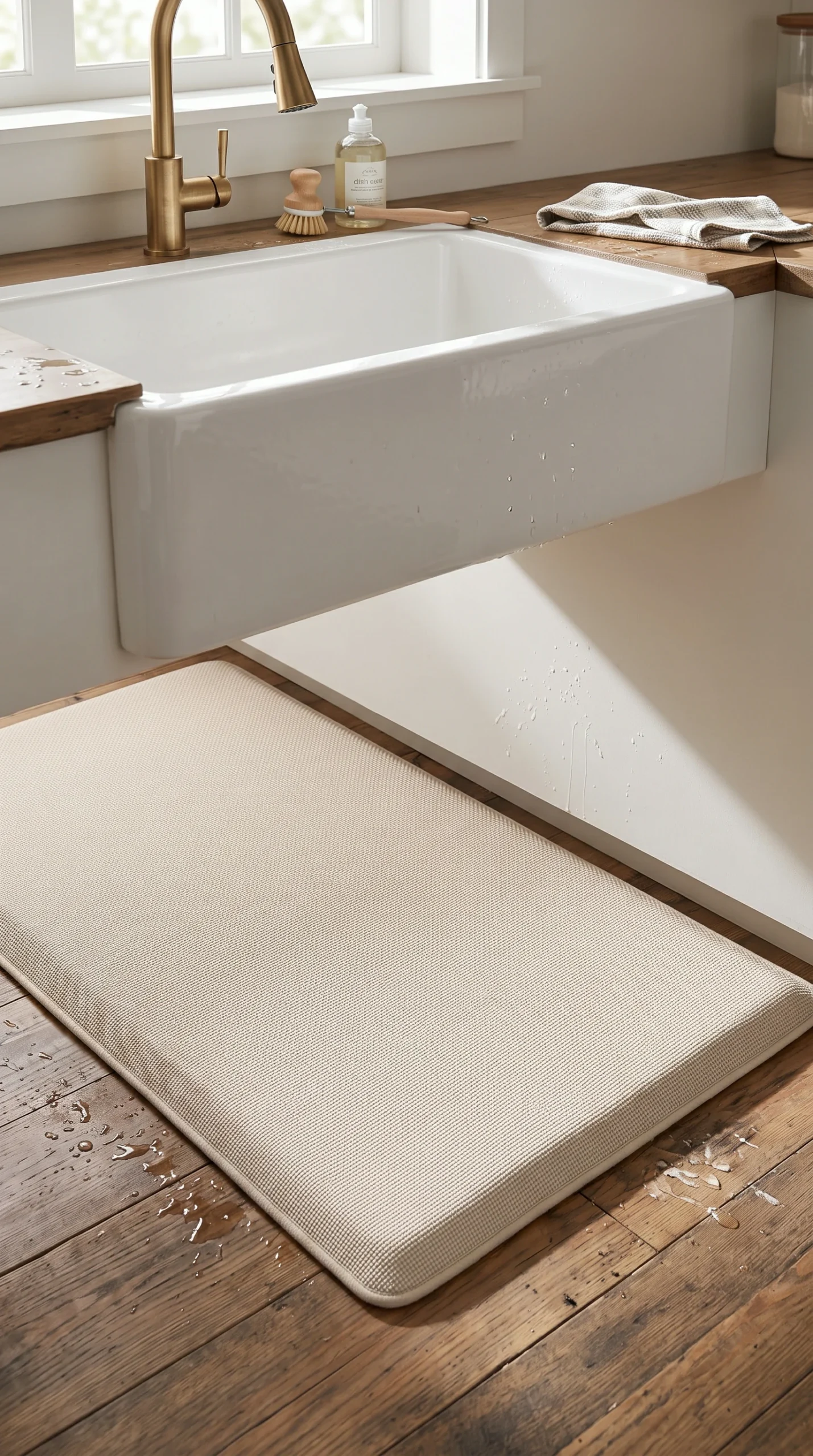
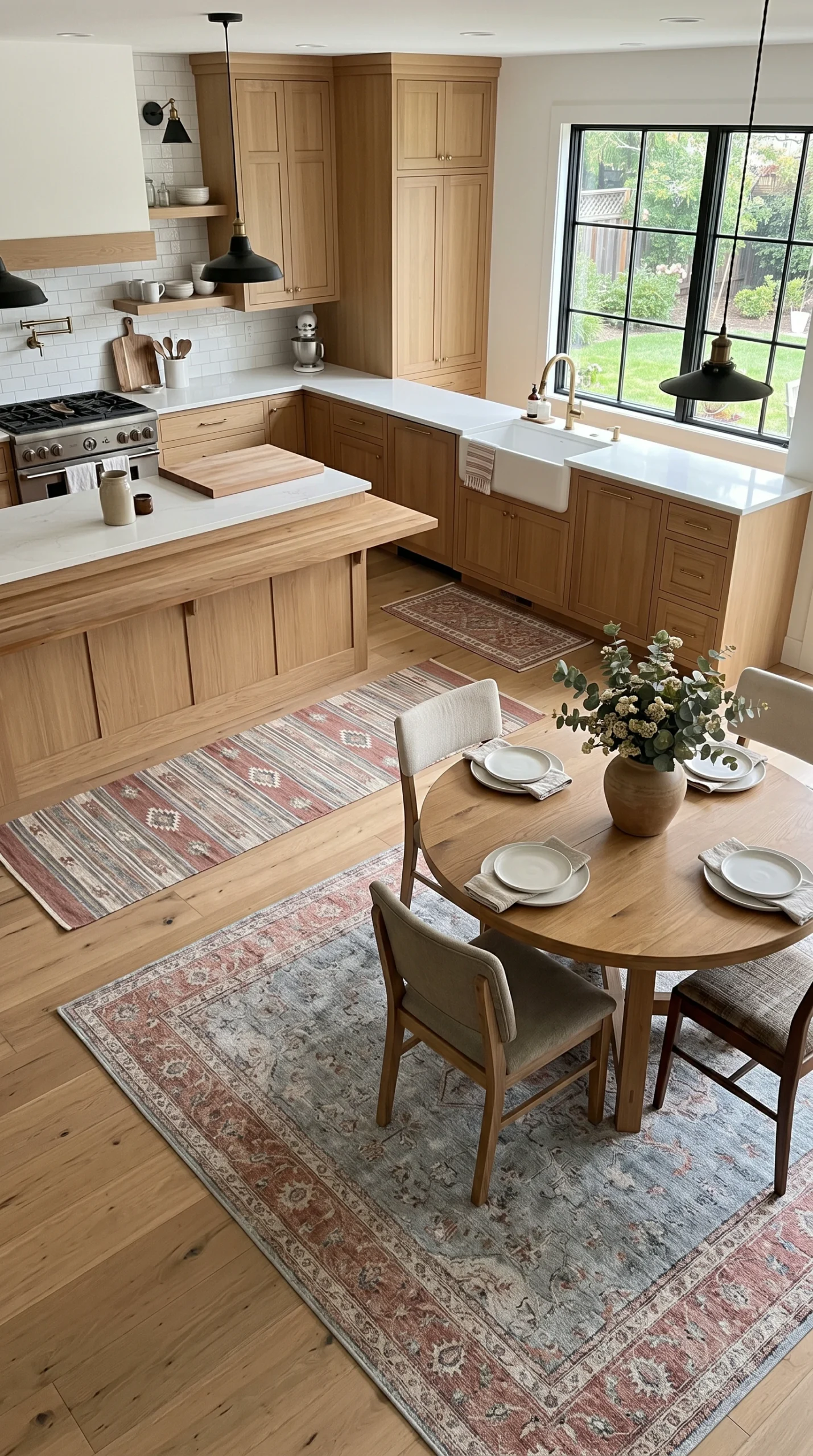
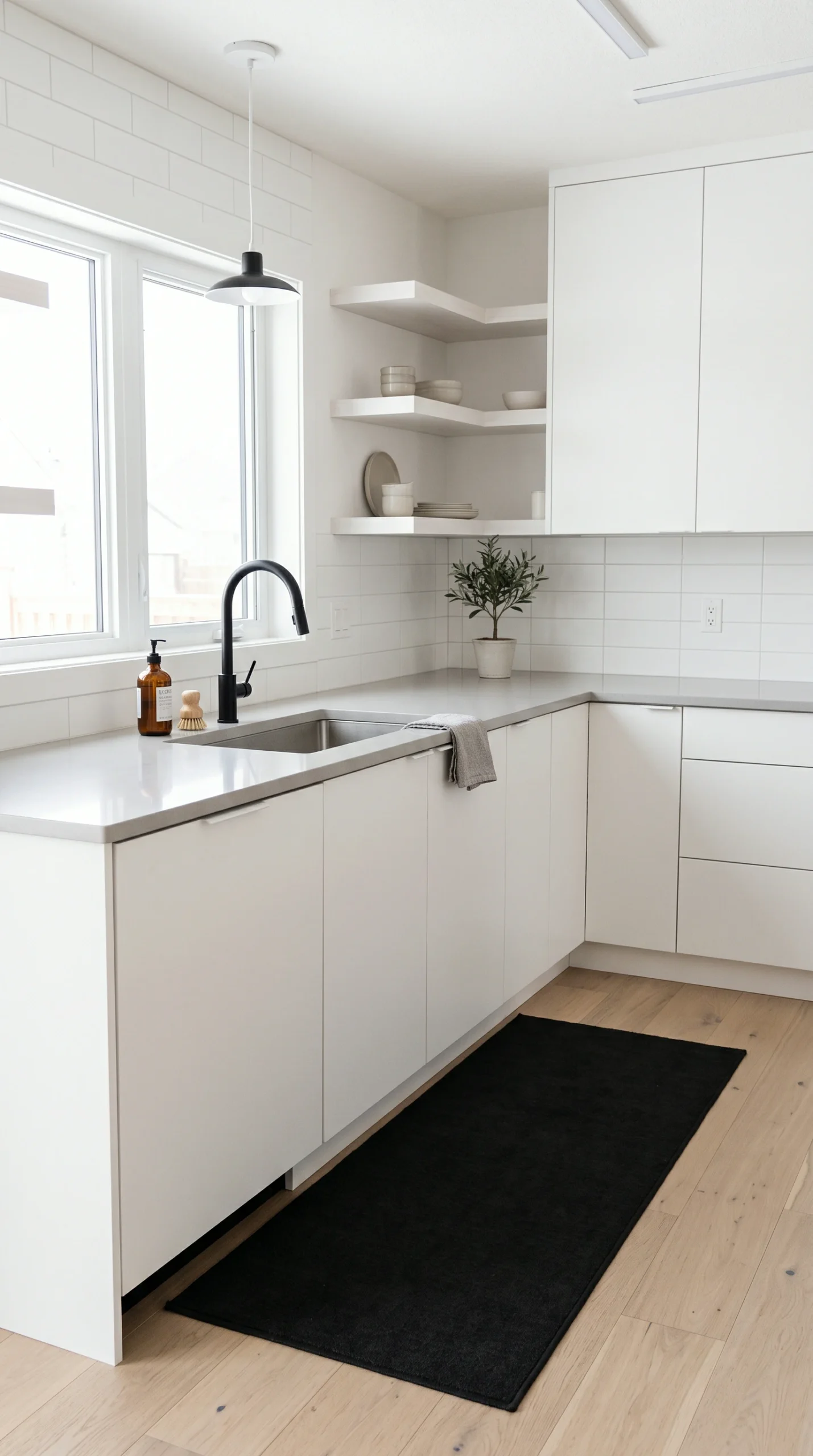
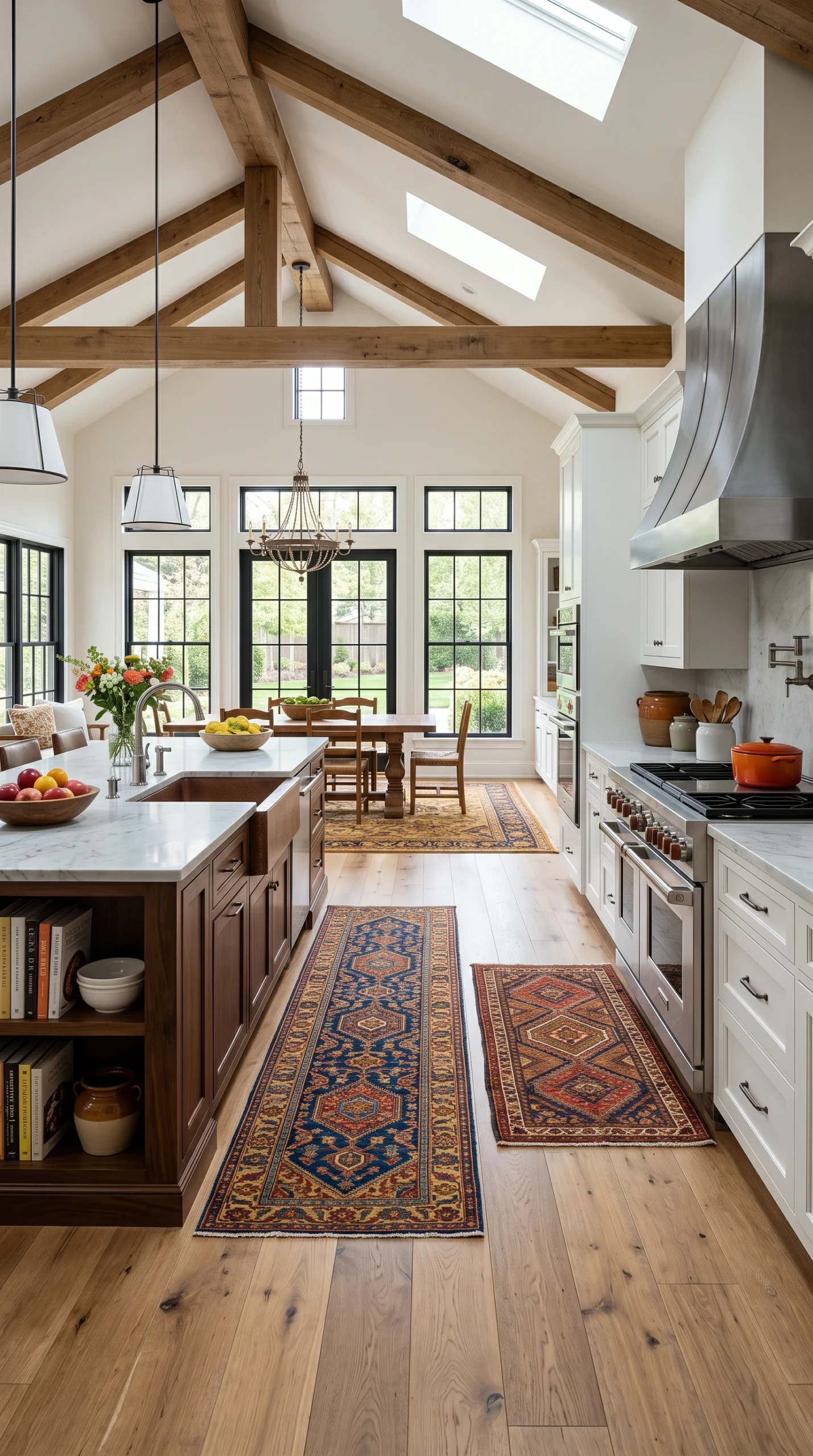
A rug under the kitchen sink must prioritize comfort and water resistance. Opt for a small 2x3 or 3x5 mat with anti-fatigue properties or a highly durable, machine-washable cotton blend to catch dishwashing splashes.
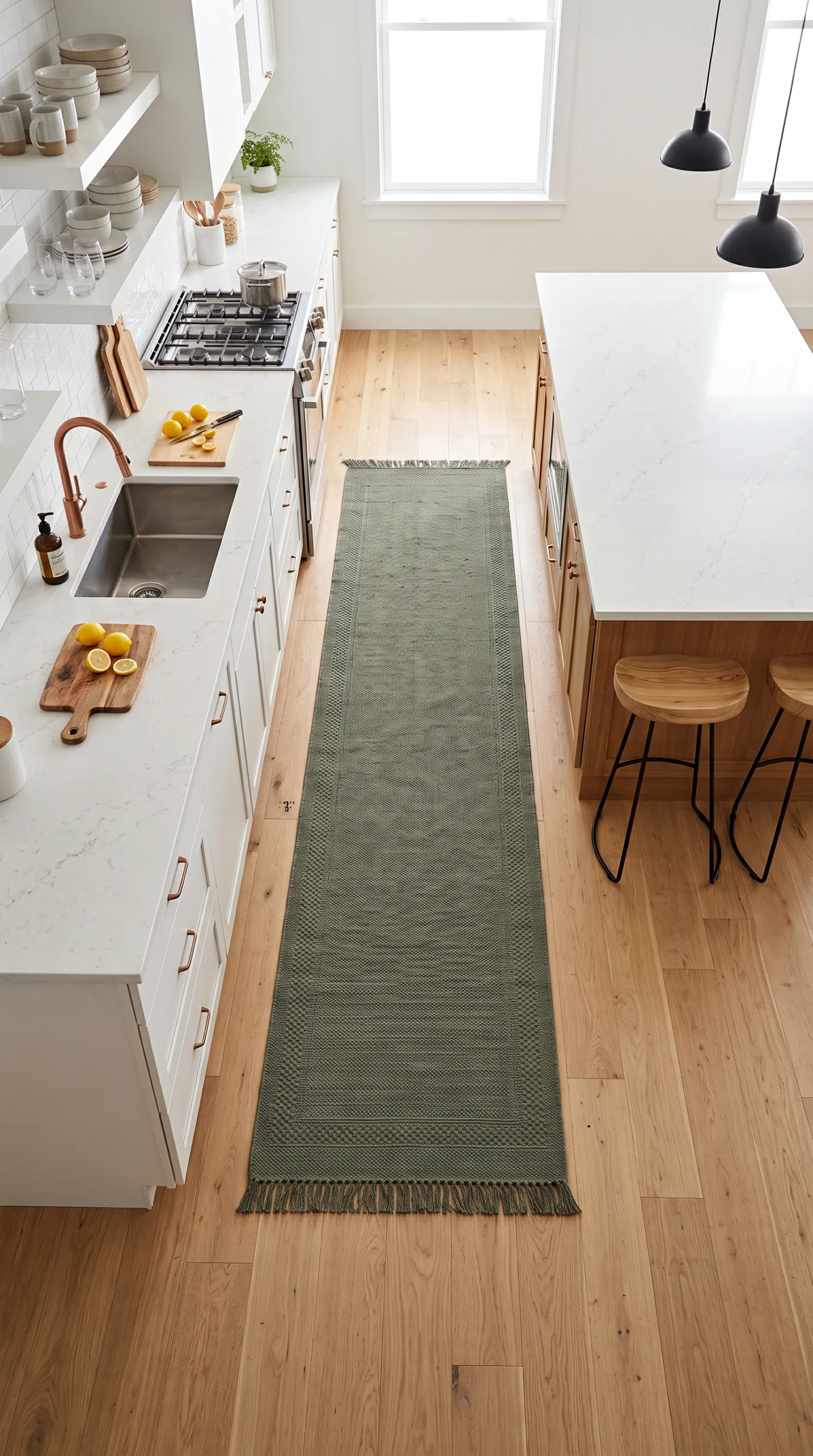
A rug under a kitchen island (or running alongside it) should be a long, narrow runner. Ensure the runner spans nearly the full length of the island cabinetry, leaving about two inches of bare floor at either end for a tailored look.
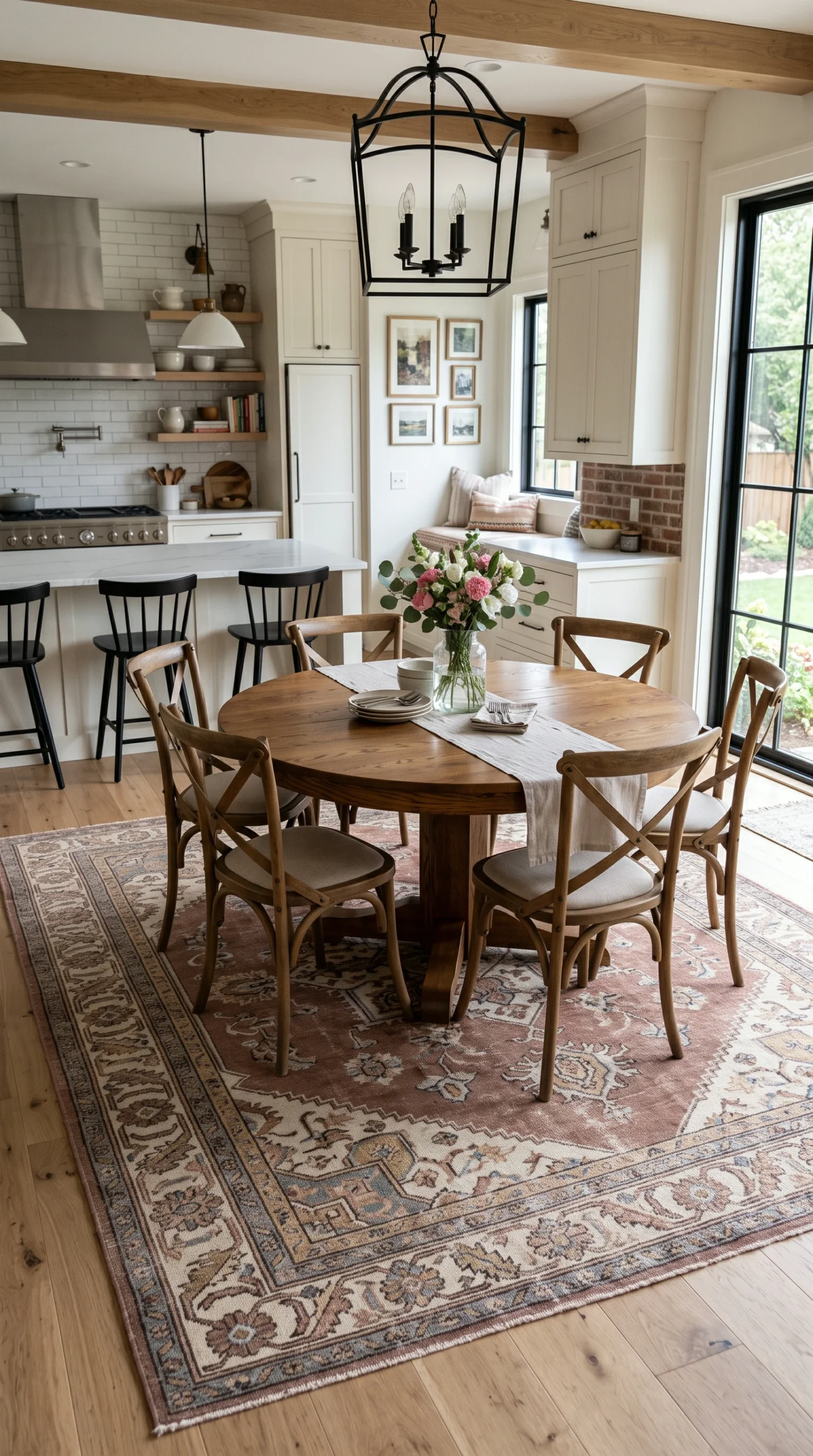
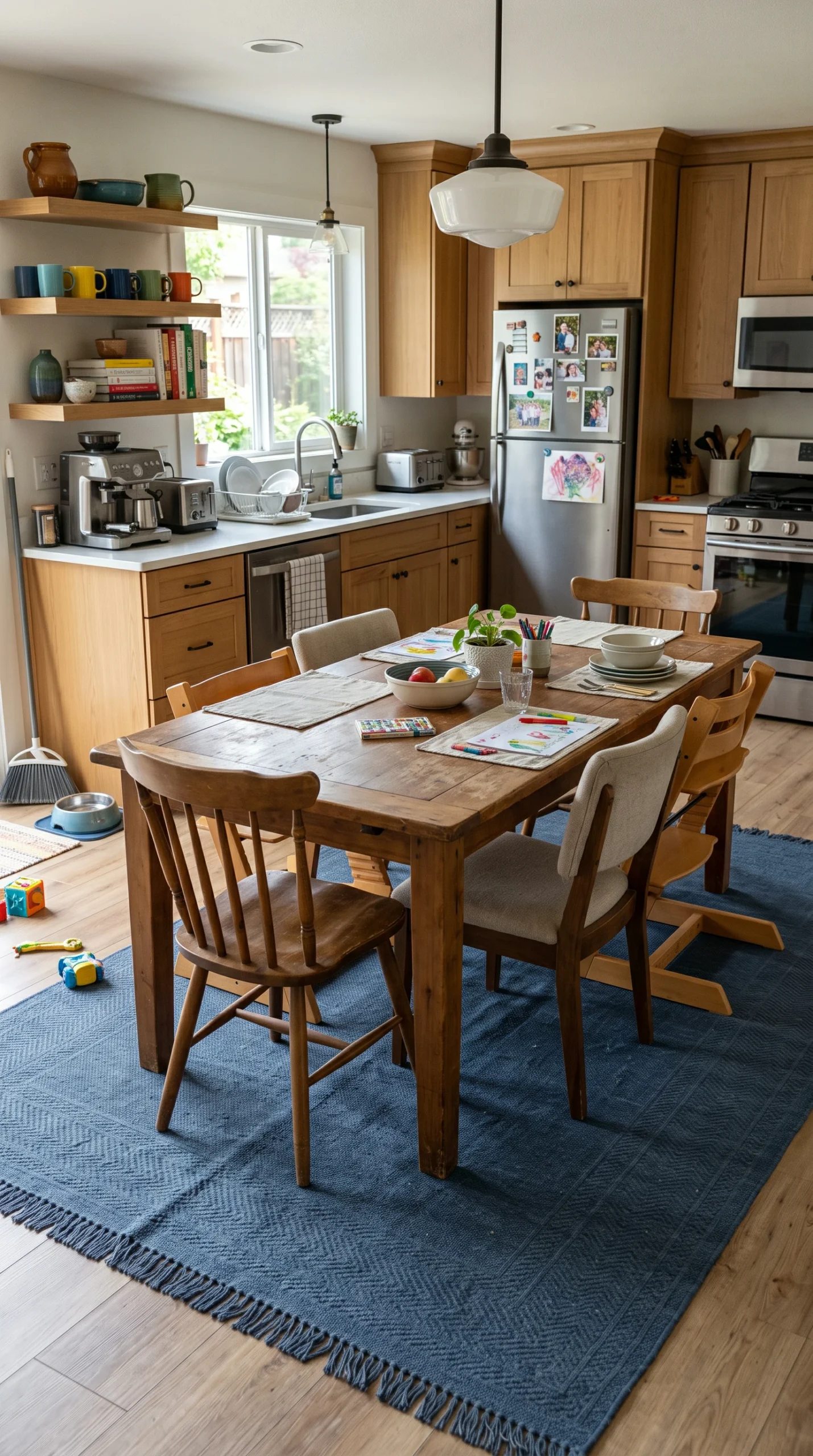
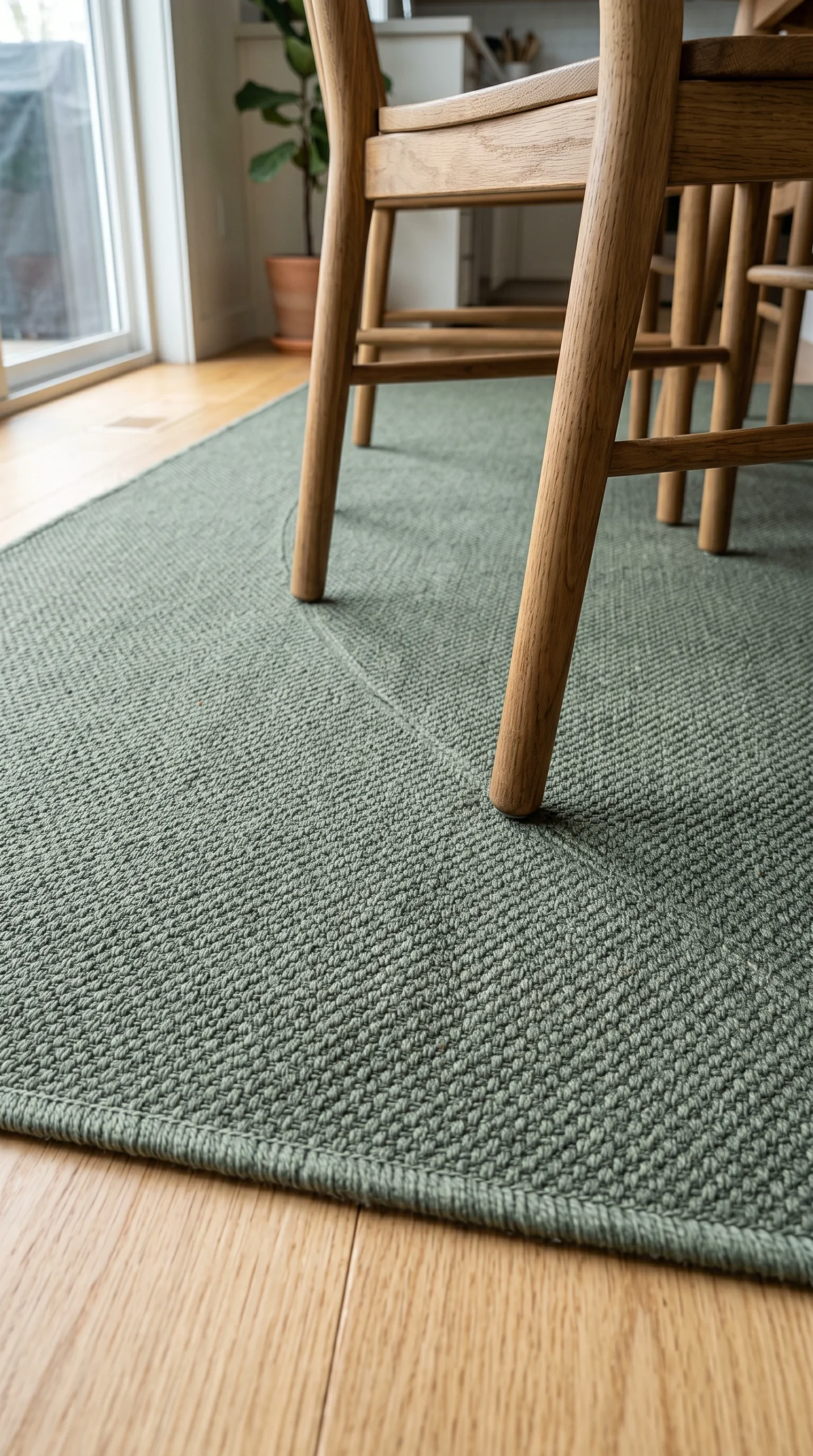
When placing a rug under a kitchen table, size is everything. The kitchen dining rug must be large enough so that when chairs are pulled out, all four chair legs remain comfortably on the rug to prevent tipping and floor scratching.
If you have multiple rugs in one open-plan kitchen, they do not need to match exactly. Instead, coordinate them by pulling one shared color—like a deep slate blue or dusty rosewood—from the larger area rug into the smaller accent rugs.
In a massive, sprawling, or open-concept kitchen, the raw floor plan serves multiple intensely different functions simultaneously. You prep, you cook, you wash, and you dine—often all in the same uninterrupted visual space. Without structural boundaries, a large kitchen can quickly devolve into a chaotic, echoing void. Using highly targeted, deliberately placed kitchen rug ideas to firmly define these distinct architectural zones is the absolute ultimate interior design strategy. Rugs act as visual anchors, creating a highly functional and flawlessly organized culinary sanctuary.
The hard floor areas directly in front of the sink and stove are the absolute highest-stress, most physically demanding zones in the entire room. Placing a high-quality rug under the kitchen sink is completely non-negotiable for essential ergonomic comfort during long, grueling prep and dishwashing sessions. However, do not default to cheap, unsightly foam mats that ruin the aesthetic of the room. Since this area sees constant water drops and heavy traffic, you must prioritize ultra-durable, premium flat-weave washable materials or specialized gel-cushioned mats that mimic high-end textiles. The exact same architectural discipline applies to the stove area, where a durable, deeply saturated, grease-resistant runner is required to violently protect your expensive hardwood or delicate stone tile floors from inevitable, daily cooking splatters.
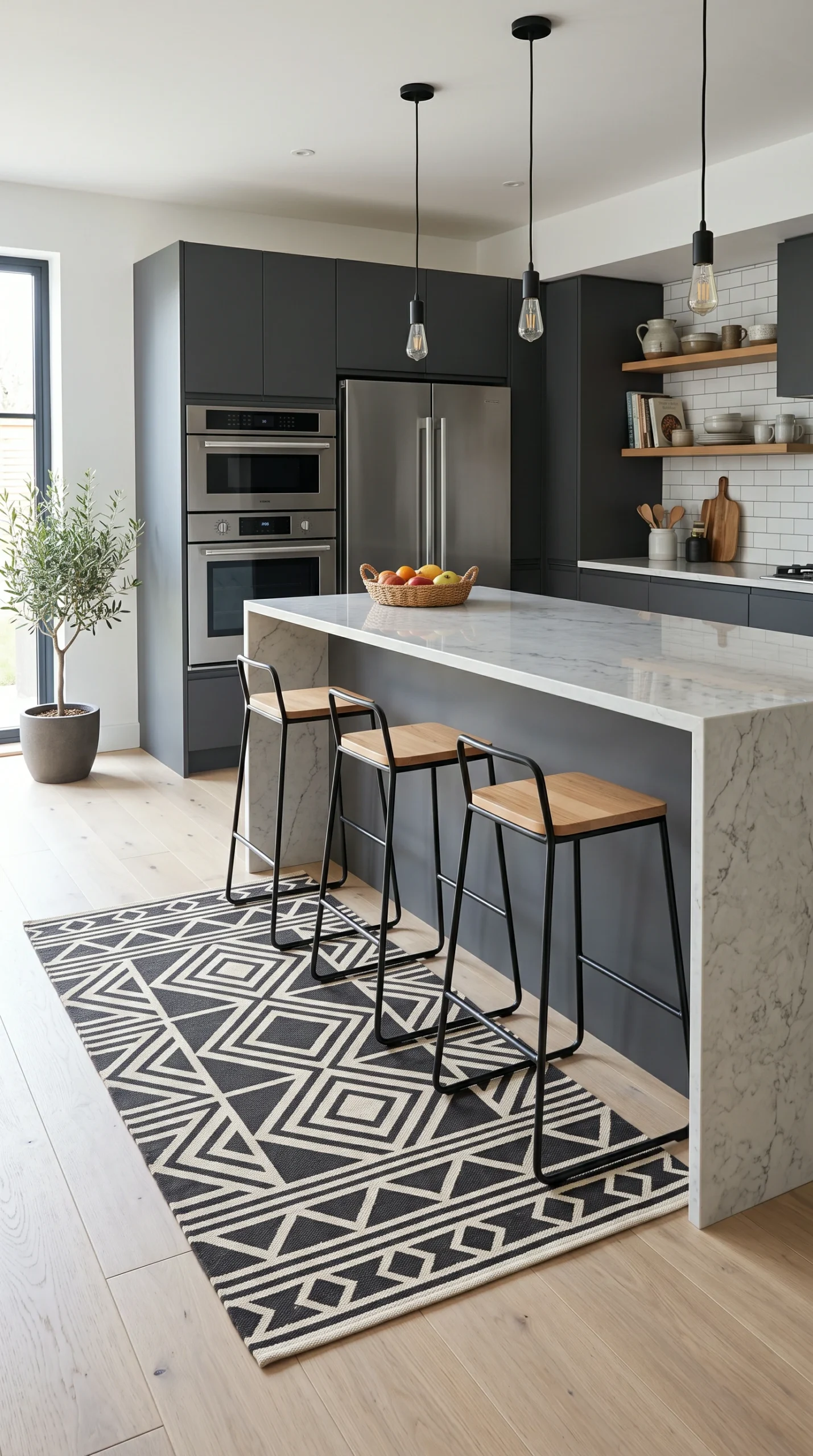
The kitchen island is undoubtedly the massive, monolithic architectural centerpiece of the room. However, if left surrounded by bare flooring, even the most expensive island can look like it is awkwardly floating adrift. A deeply textured, long runner rug placed deliberately in the main walkway between the primary counter and the island instantly and visually grounds this massive piece of cabinetry. Furthermore, if your island features overhanging seating, you possess an incredible opportunity to layer the space. You can confidently place a highly curated rug directly under the kitchen island seating zone. When doing so, you must exhibit extreme discipline by choosing a very low-pile, tight flat-weave rug; this ensures heavy bar stools can easily slide in and out without catching on thick fibers or creating frustrating tactile friction.
In an eat-in kitchen or open-concept dining space, a massive, brilliantly styled kitchen area rug is absolutely essential for visually separating the serene dining sanctuary from the chaotic, active cooking zone. When selecting a rug to anchor a kitchen table, always prioritize a premium low-pile or flat-weave material. Utilizing thick, plush shag rugs in a dining zone is a catastrophic design failure; they will inevitably trap dropped food crumbs and make sliding dining chairs frustratingly difficult. To achieve a flawless, high-end execution, you must ensure the rug extends a minimum of 24 to 36 inches beyond all four sides of the dining table. This non-negotiable architectural rule guarantees that chairs remain comfortably on the rug even when pulled entirely out, preventing the room from looking cramped, cheap, or visually unbalanced.
When executing these three distinct rug zones—under the sink, along the island, and anchoring the dining table—you must avoid the deeply amateur mistake of buying a matching, pre-packaged rug set. Highly curated, expensive-looking kitchens rely on sophisticated layering. While the three rugs should absolutely share a cohesive color palette or similar tonal weight, their patterns and textures should vary to provide rich, layered visual interest. Pair a solid, deeply saturated runner by the sink with a subtle geometric flat-weave under the dining table to master the ultimate high-end, bespoke aesthetic.