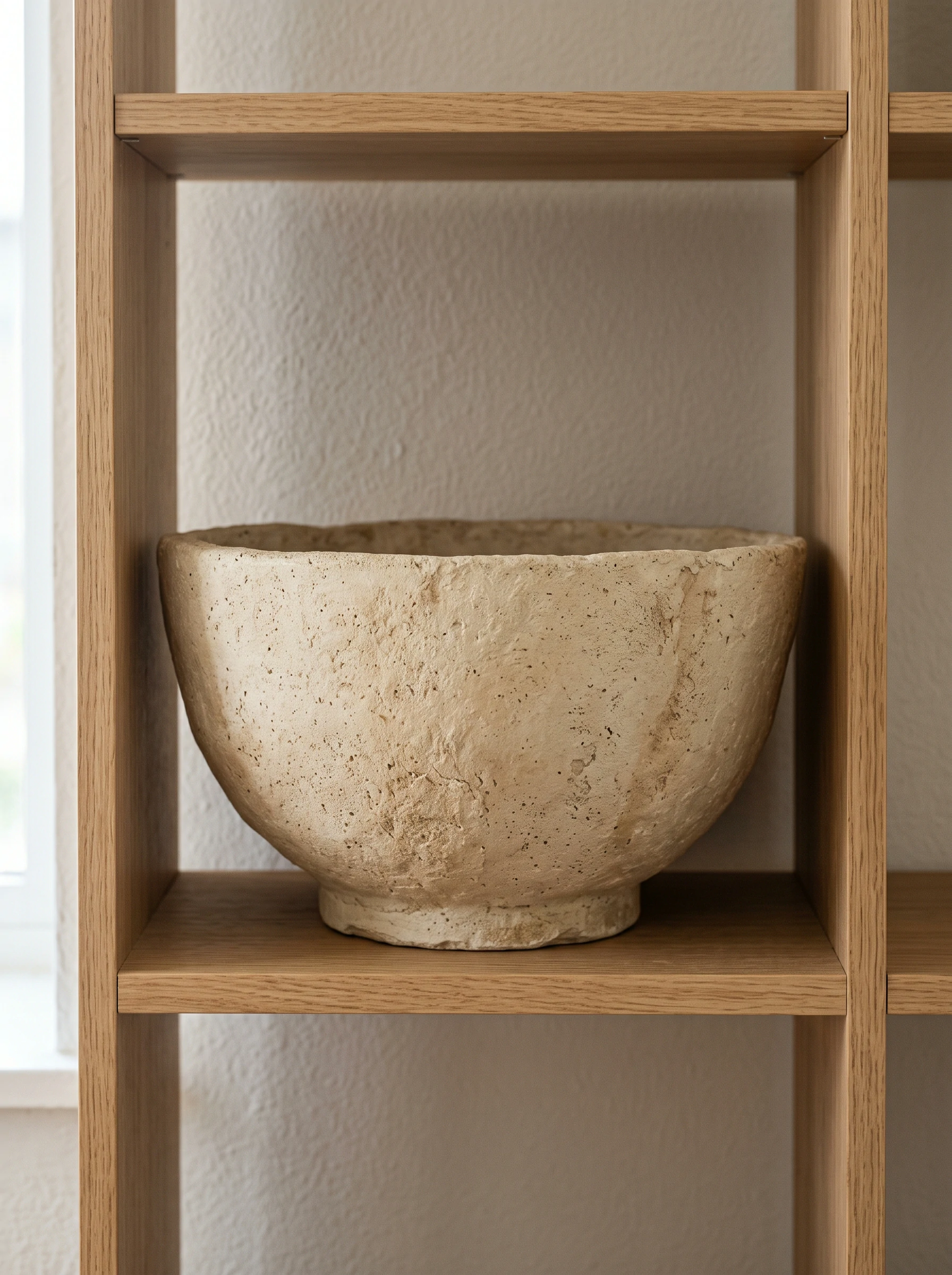
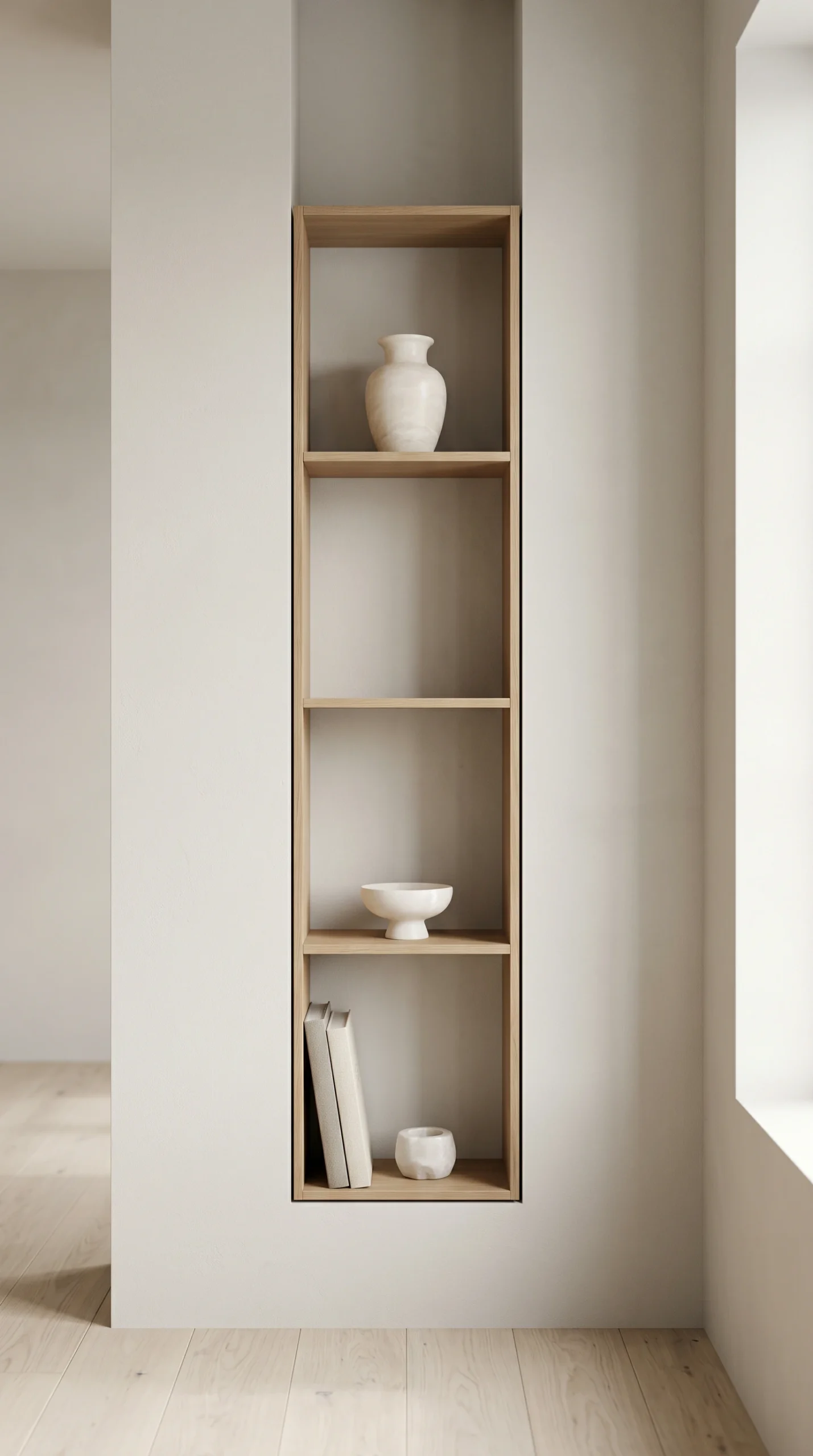
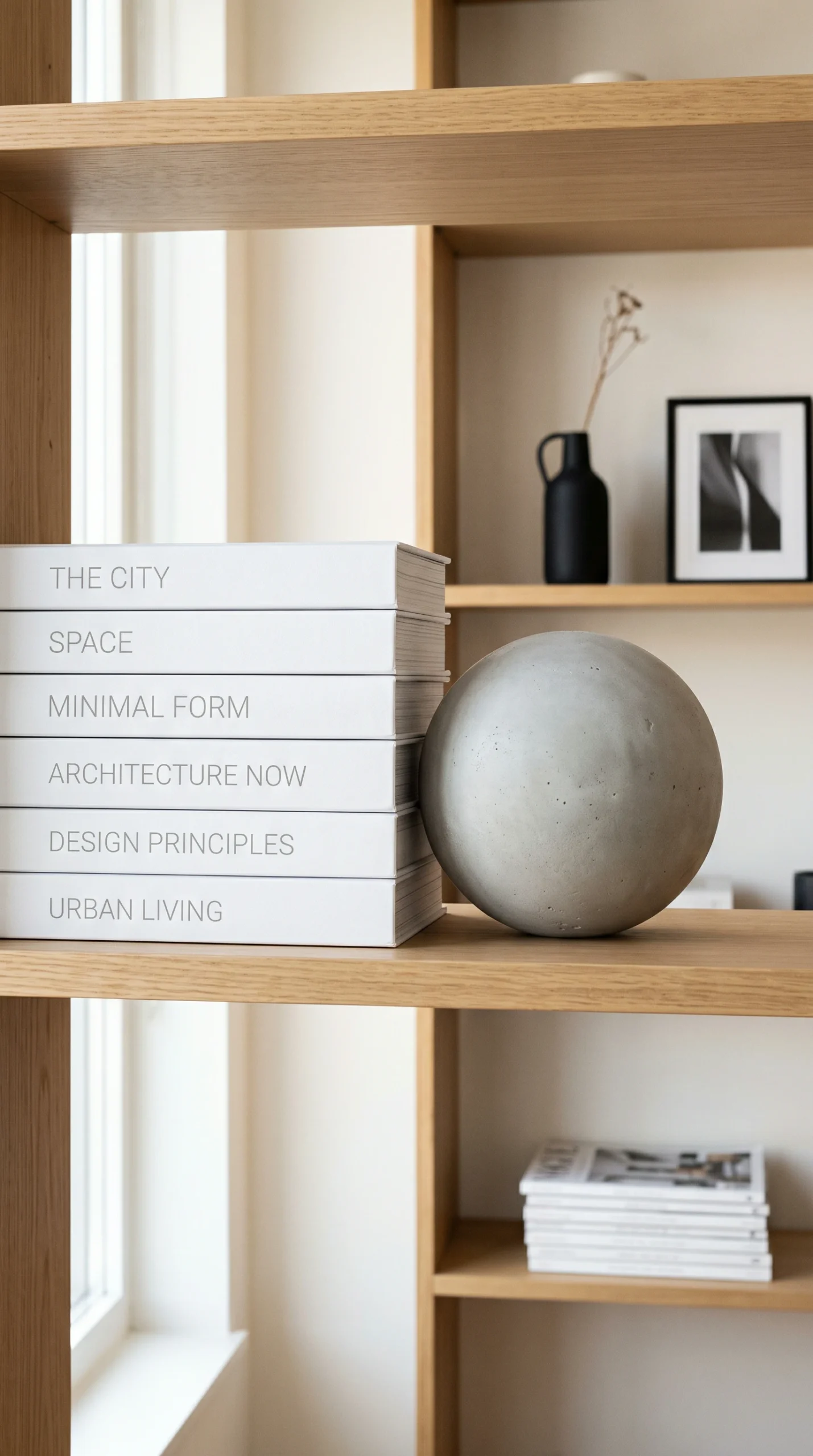
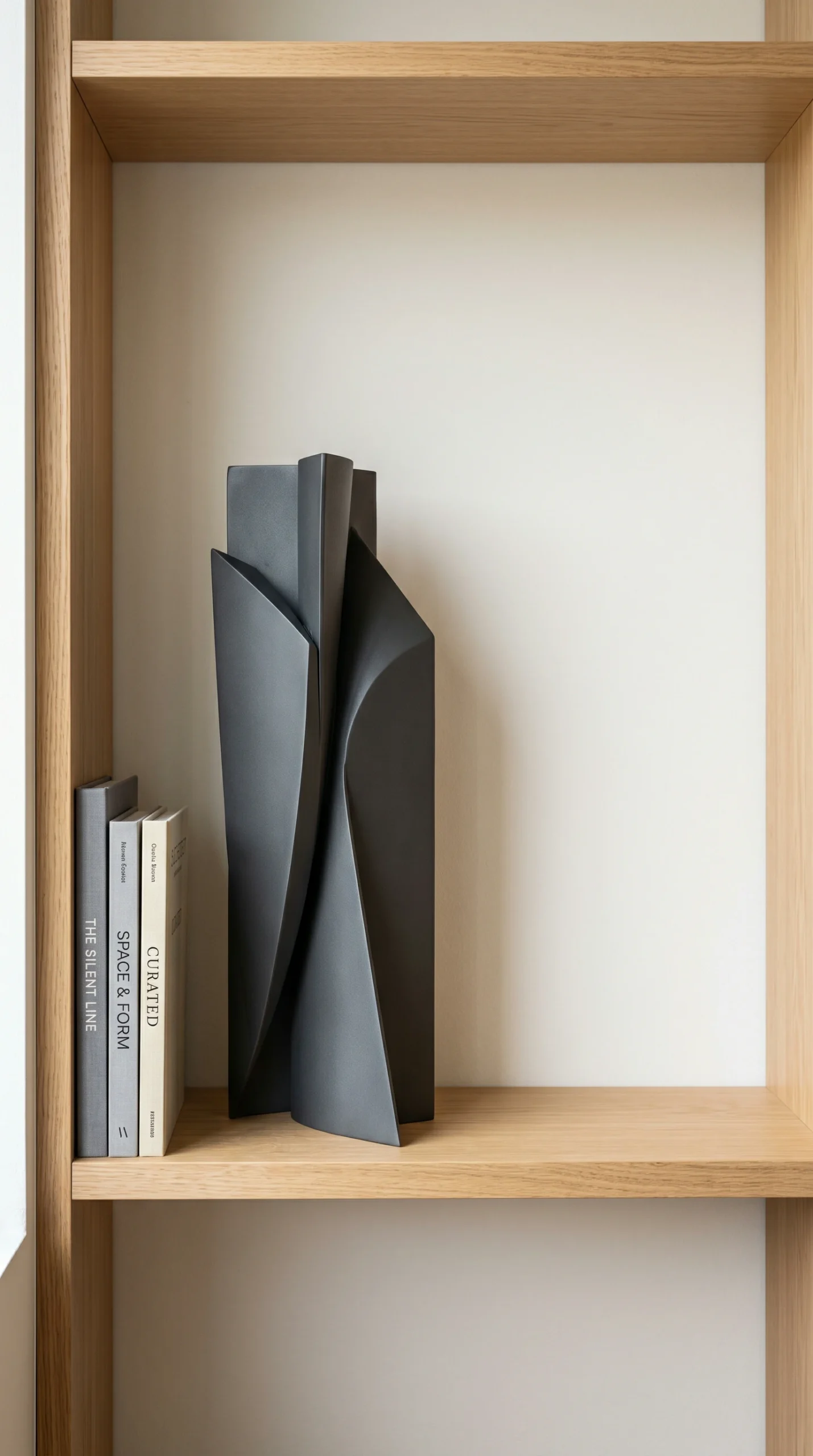
On a very narrow shelf, abandon complex groupings. Dedicate an entire shelf to a single, beautifully scaled object, like a Raw Plaster vase. This extreme restraint instantly makes the small shelf look expensive.
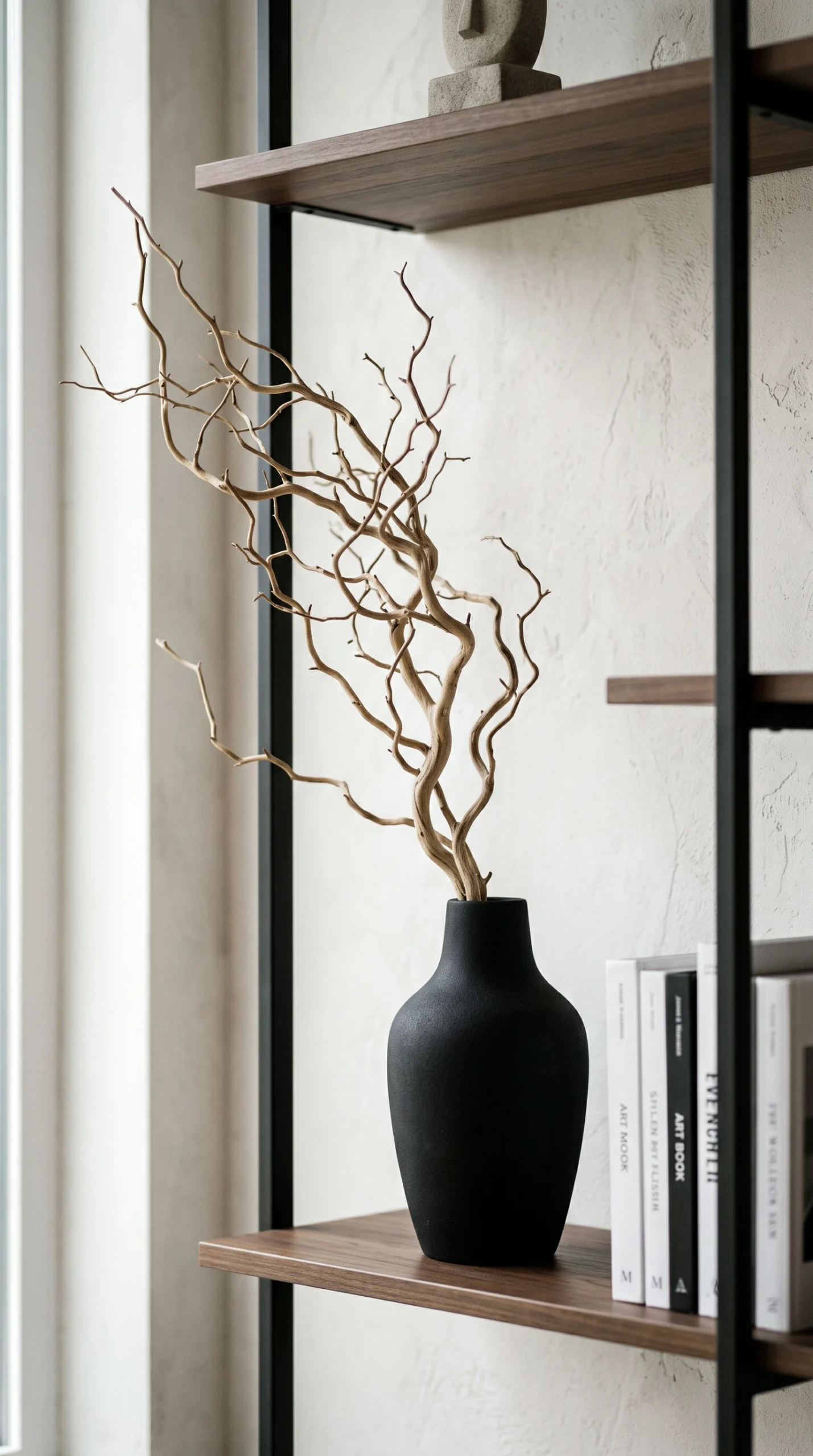
Draw the eye upward to fake height. Place a tall, slender object, such as a sleek taper candle or a tall branch, on the top shelf to force the viewer to look up, making the entire unit feel grander.
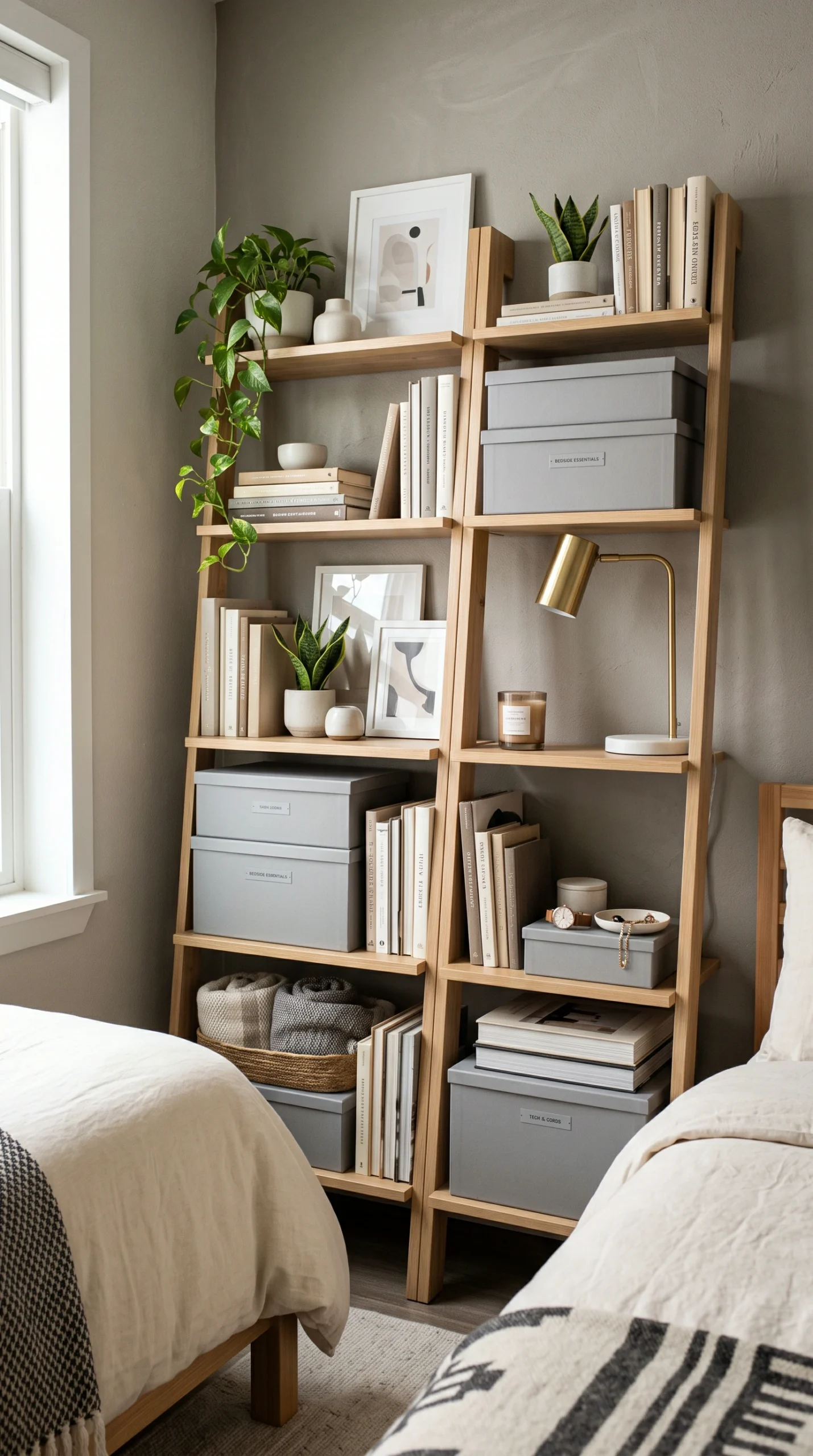
In tight spaces, decor must also be functional. Swap useless knickknacks for beautiful, solid Ash Grey boxes that act as structural anchors while hiding unsightly clutter like keys or chargers.
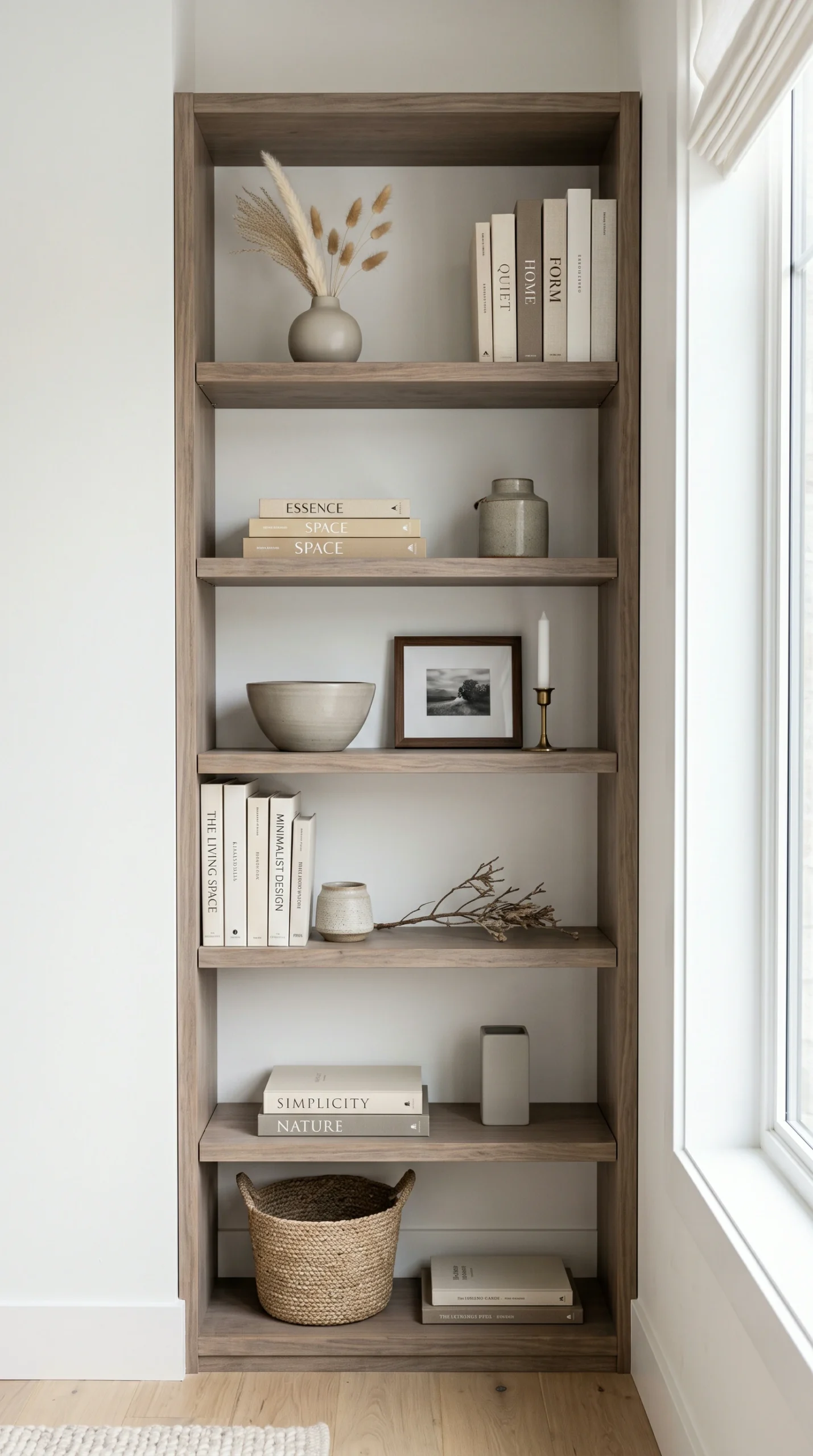
Dark objects absorb light and appear heavier, shrinking a small shelf. Rely heavily on Optical White and Platinum Greige ceramics and books to keep the visual weight as light as possible.
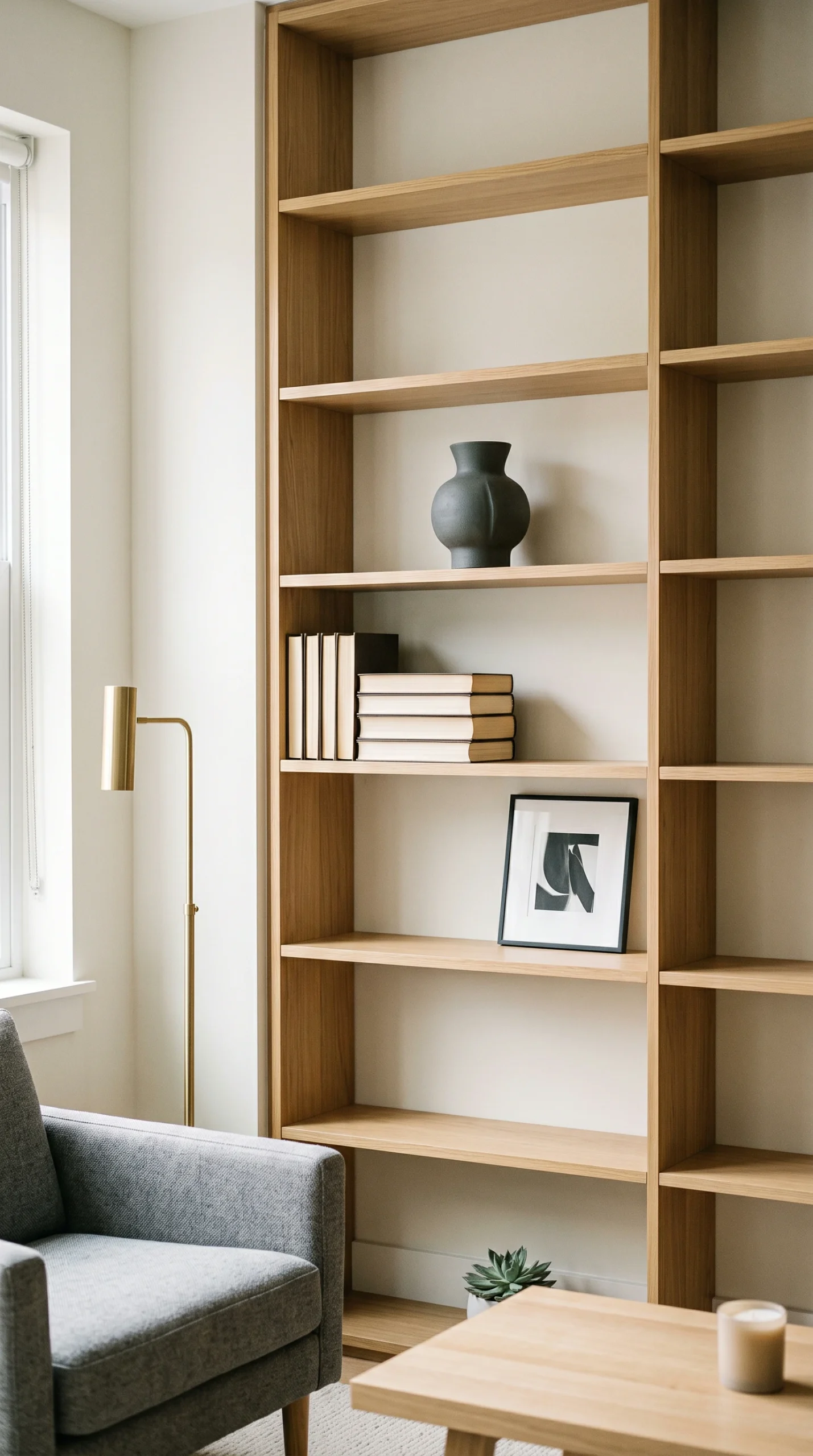
If possible, use an open backed shelving unit. Allowing the wall color to show through the shelves creates immense depth and prevents the small unit from feeling like a solid, blocking piece of furniture.
Colorful book spines create visual chaos in a tiny footprint. Turn the books backward to expose the neutral pages, creating a calm, highly textured foundation that will not overwhelm the eye.
Styling a small bookshelf requires entirely different rules than styling a large built in unit. In a large space, you need heavy objects to anchor the vastness. In a tight apartment, heavy objects will instantly sink the design, making the room feel like a cramped storage closet.
A successful small shelf display is a masterclass in extreme visual restraint. The most brilliant apartment bookshelf ideas rely on a strict editing process, an obsession with light visual weight, and a philosophy of dual purpose luxury. By treating your tiny shelving unit as a carefully crafted vertical gallery rather than a dumping ground, you can create a deeply serene, expansive focal point.
When drafting your small bookshelf styling ideas, the most critical mistake to avoid is overcrowding. If your shelf is only two feet wide, attempting to create a complex scene with books, art, and three different accessories will result in total visual chaos. You must embrace the one item rule.
Dedicate at least one or two shelves in the unit to a single, large and solid object. Place one beautiful Creamy Alabaster bowl perfectly in the center of the shelf and leave the surrounding space completely bare. This large infusion of negative space acts as a visual palate cleanser for the entire unit, making the small footprint feel curated, intentional, and incredibly luxurious.
In a micro apartment, you cannot afford the luxury of purely decorative items. Every piece of decor on a small shelf must pull double duty. You must engineer dual purpose storage.
Instead of displaying a collection of small ceramic figurines, source highly structural, solid boxes in Faded Walnut or Soft Concrete. Stack these boxes to create varying heights, treating them as structural decor. Inside, hide your ugly everyday clutter—mail, charging cables, extra keys.
Furthermore, use heavy, closed woven baskets on the absolute bottom shelf to ground the unit visually while providing large amounts of concealed storage. This ensures the shelf remains perfectly styled while working incredibly hard for your floor plan.
The final layer of your layout planning involves manipulating visual weight through color and material. A small, dark mahogany bookshelf filled with black books will look like a black hole in a tight room. You must actively lighten the load.
Rely heavily on The Expansive Neutral Palette. Use Optical White books (or turn your books backward), transparent glass vases, and sleek Brushed Silver accents. These light, reflective materials bounce light around the tight space rather than absorbing it.
If you must use dark items, limit them to a few Matte Black accents and distribute them evenly in a zigzag pattern to keep the eye moving. By ensuring that every object is functional, strictly color controlled, and surrounded by intense negative space, your small shelves will transform into a highly clean, high end sanctuary.