The core of minimalism is subtraction. Remove every single item from your counters. Only return an item if you use it every single day (like a coffee maker) or if it is a spectacular piece of art. Hide the rest.
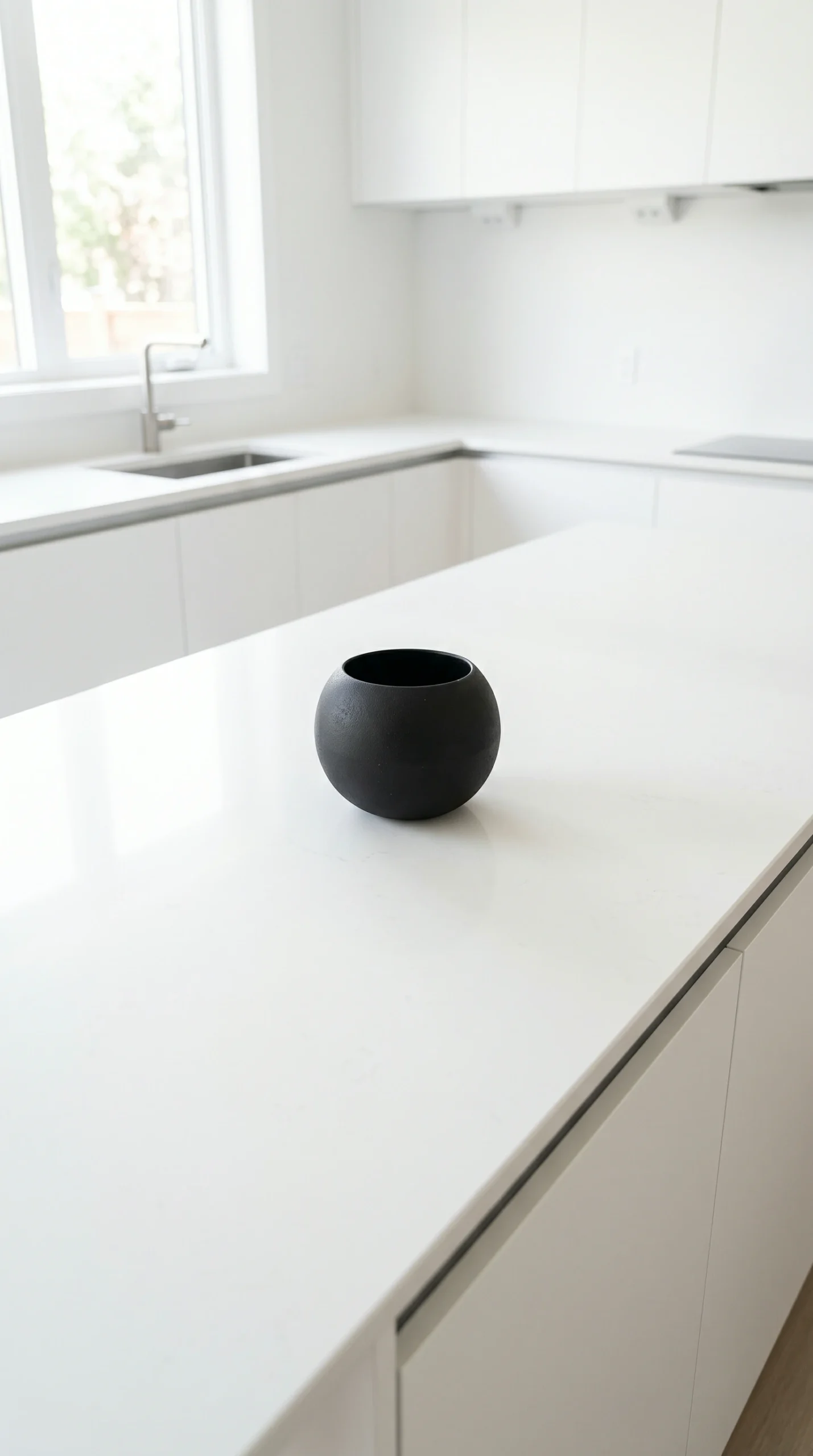
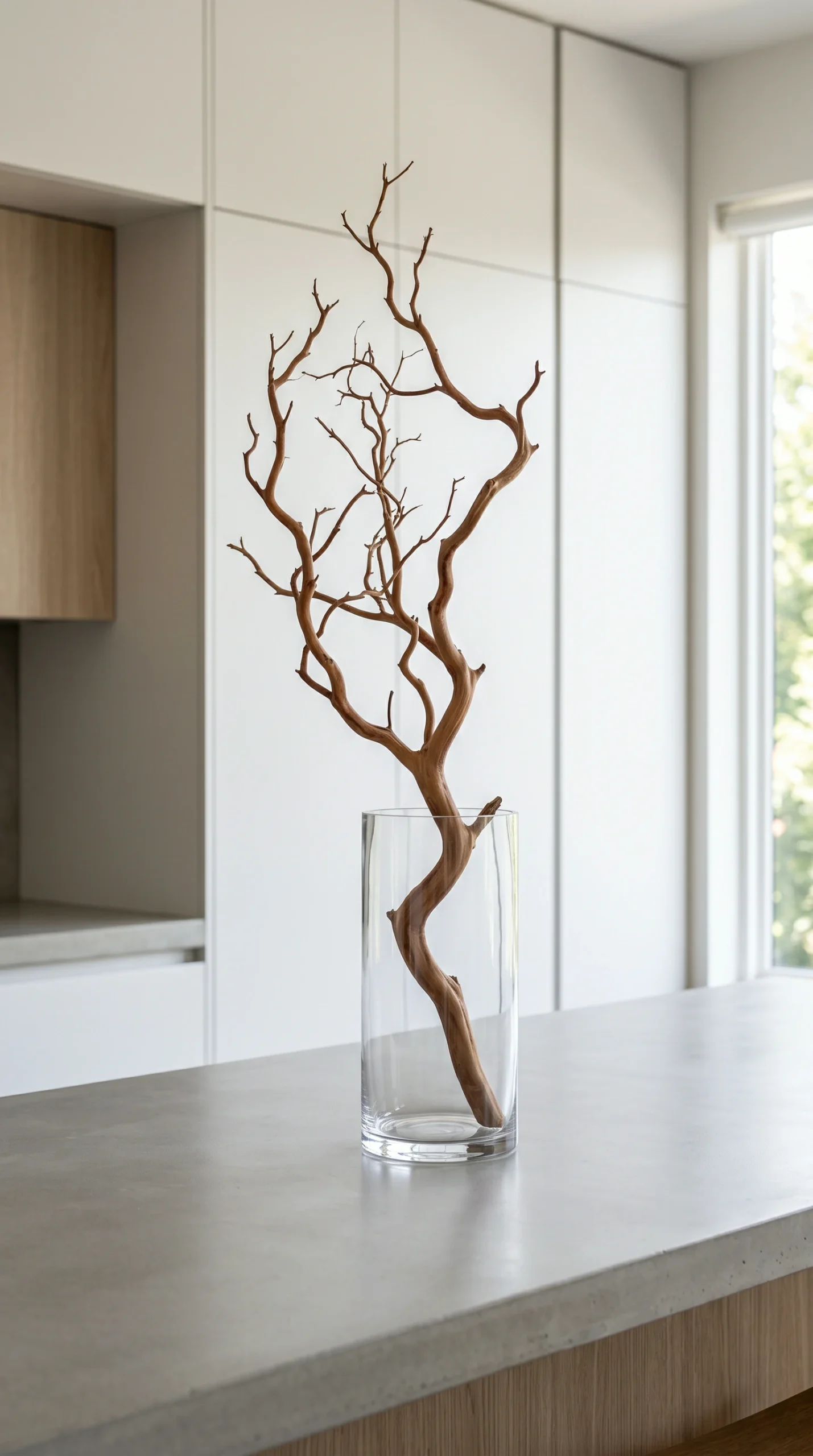
On a large expanse of counter or an island, you do not need a grouping of items. Place one, single, highly sculptural object in the center. The vast empty space surrounding it is what gives it power.
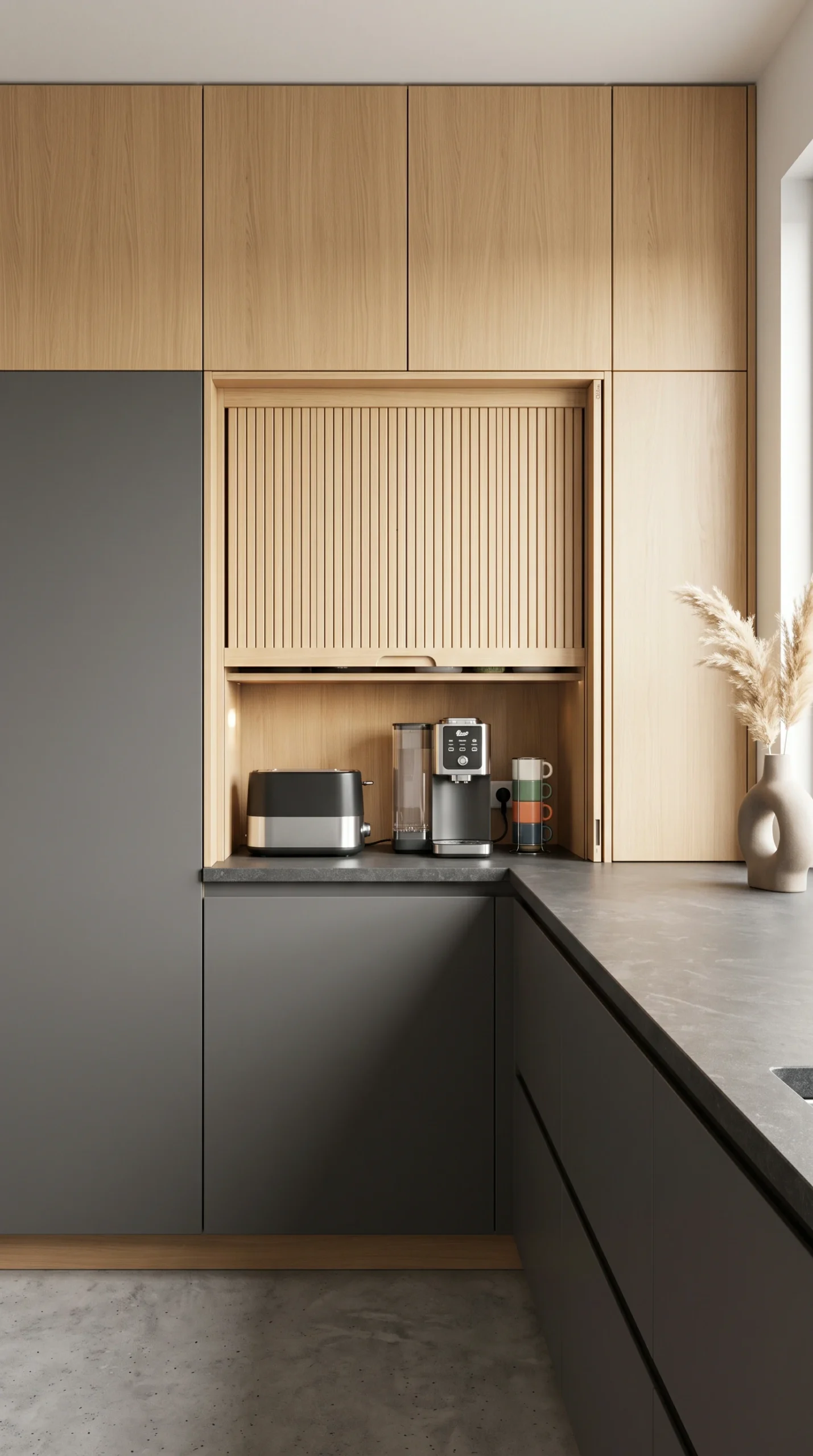
A true minimalist kitchen looks like a paneled wall, not a cooking zone. You must utilize 'appliance garages' with retractable doors to completely hide toasters, blenders, and coffee makers when not in use.
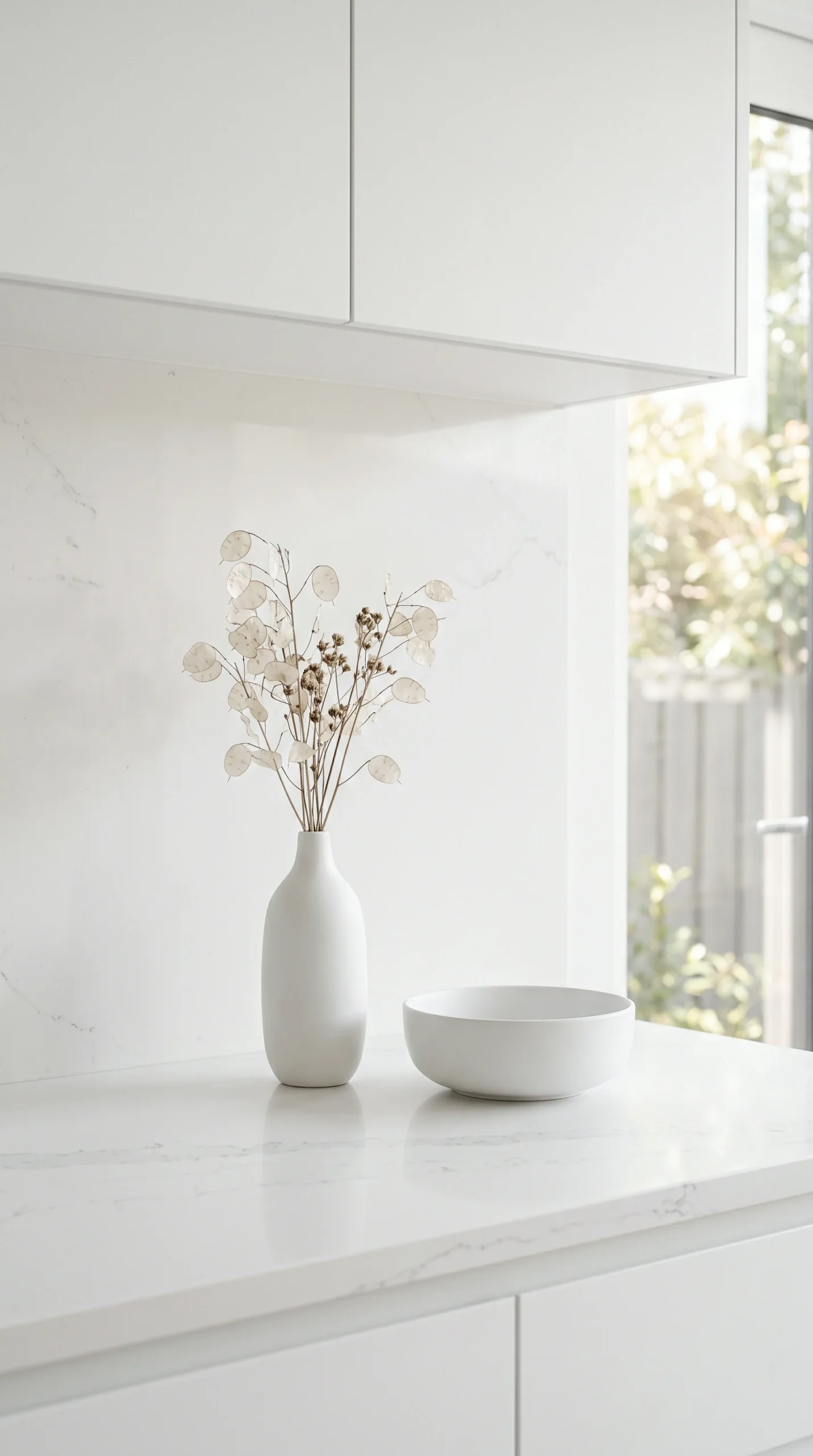
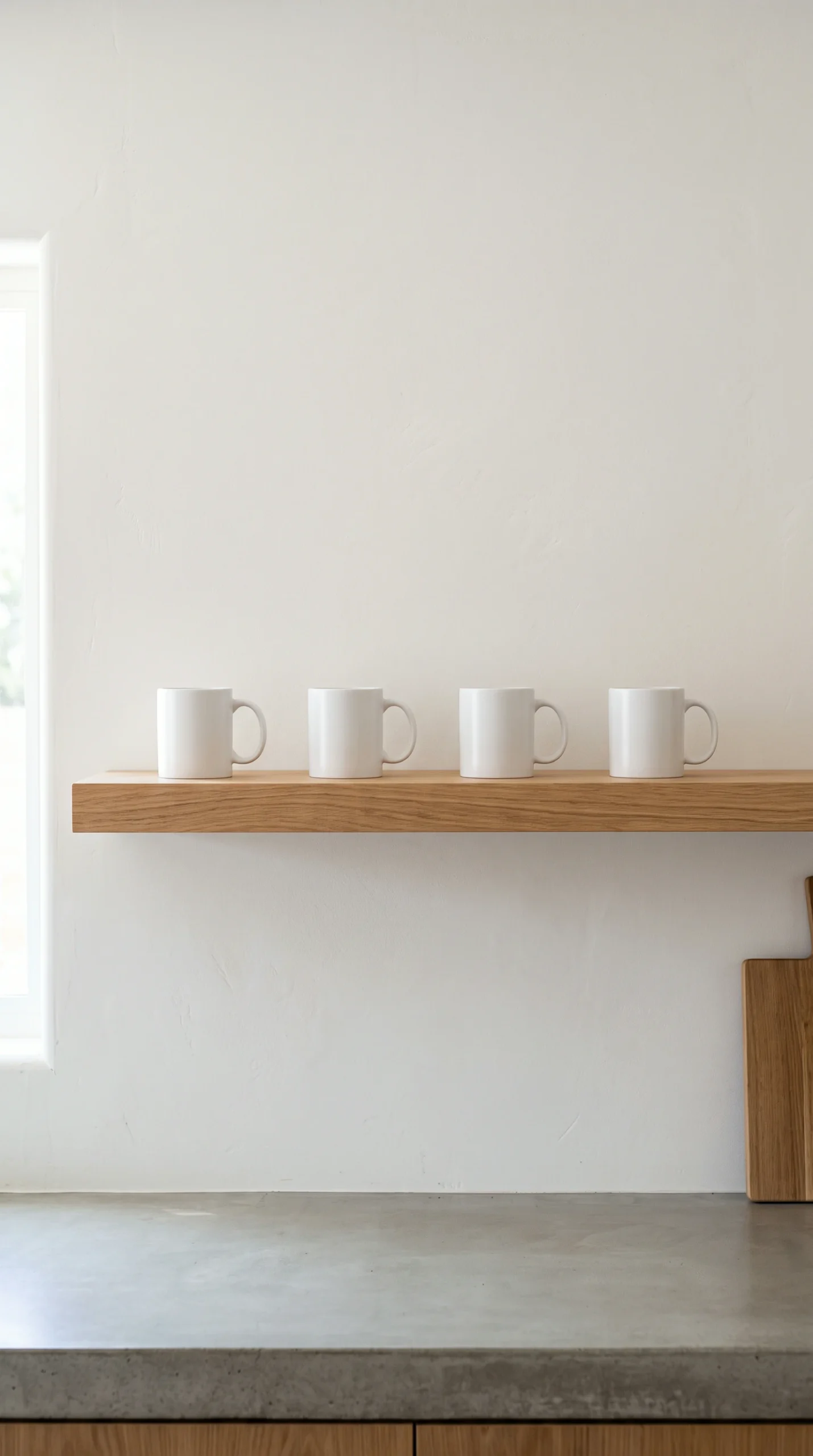
If you must leave items out, eliminate color contrast. Place a white ceramic vase next to a white bowl against a white backsplash. This 'tone-on-tone' styling minimizes visual interruption.
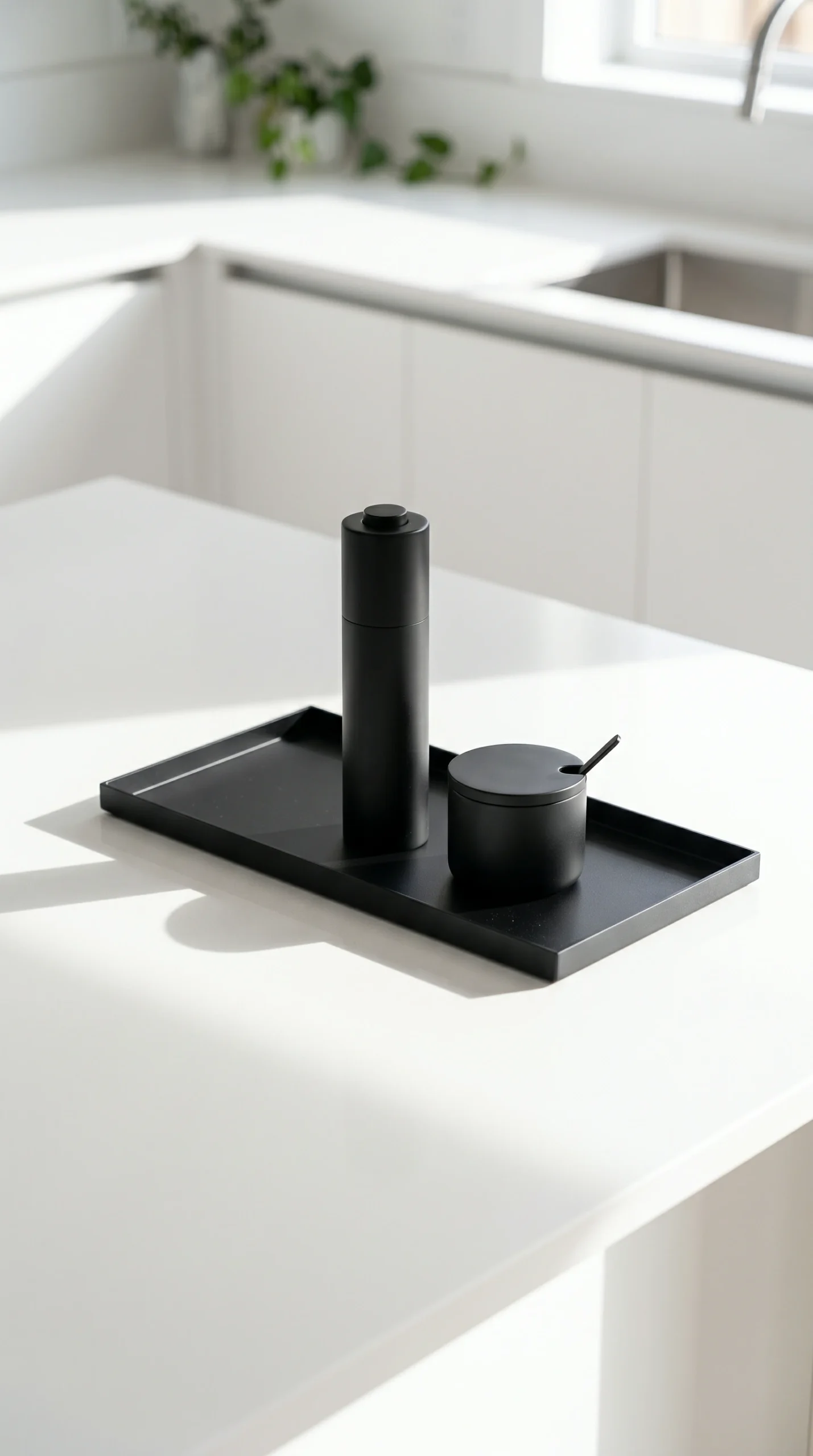
Minimalist decor should lack fussy details or organic curves. Choose items with sharp, defined geometry: perfectly spherical bowls, stark cylindrical vases, or razor-straight rectangular trays.
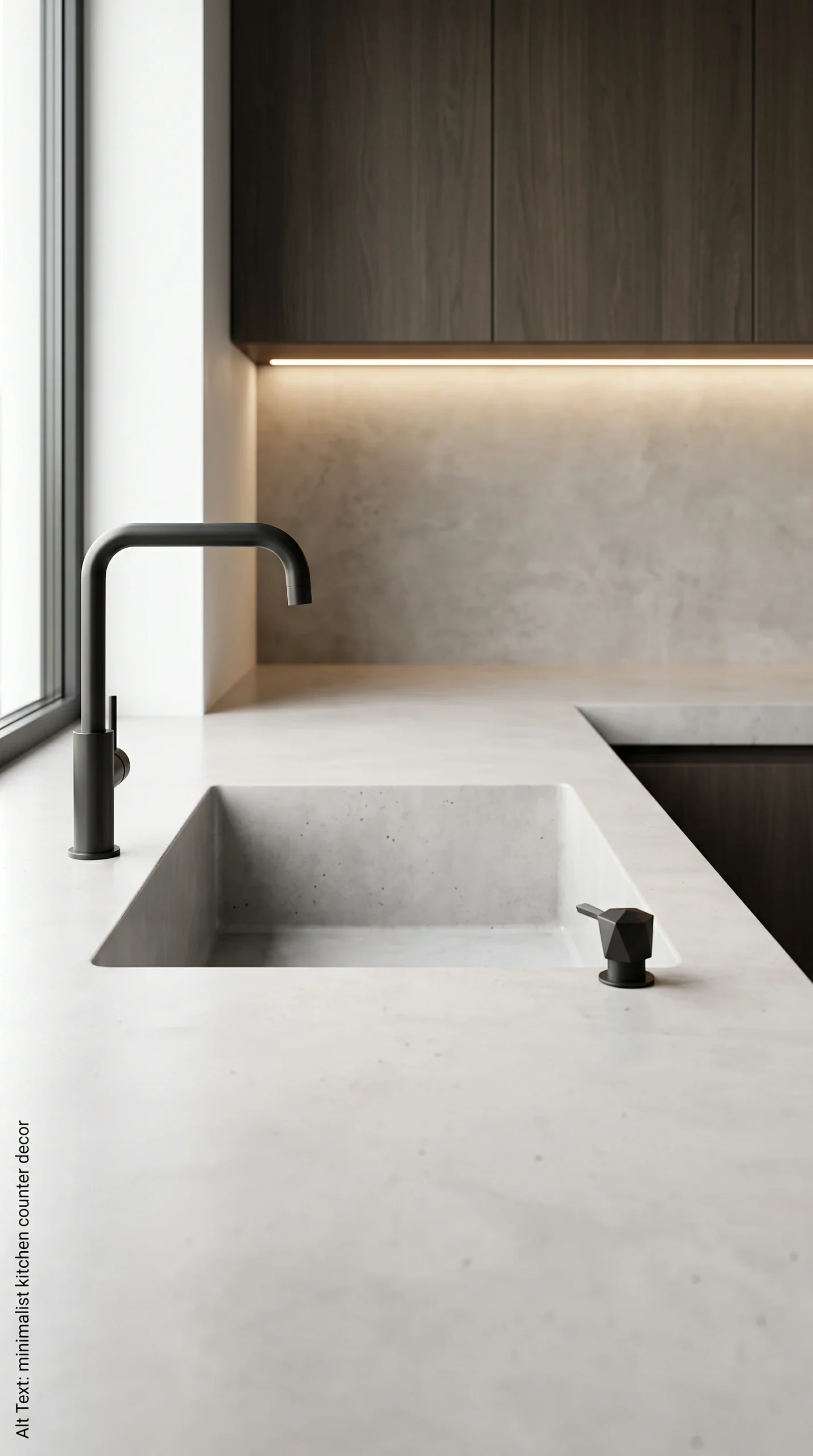
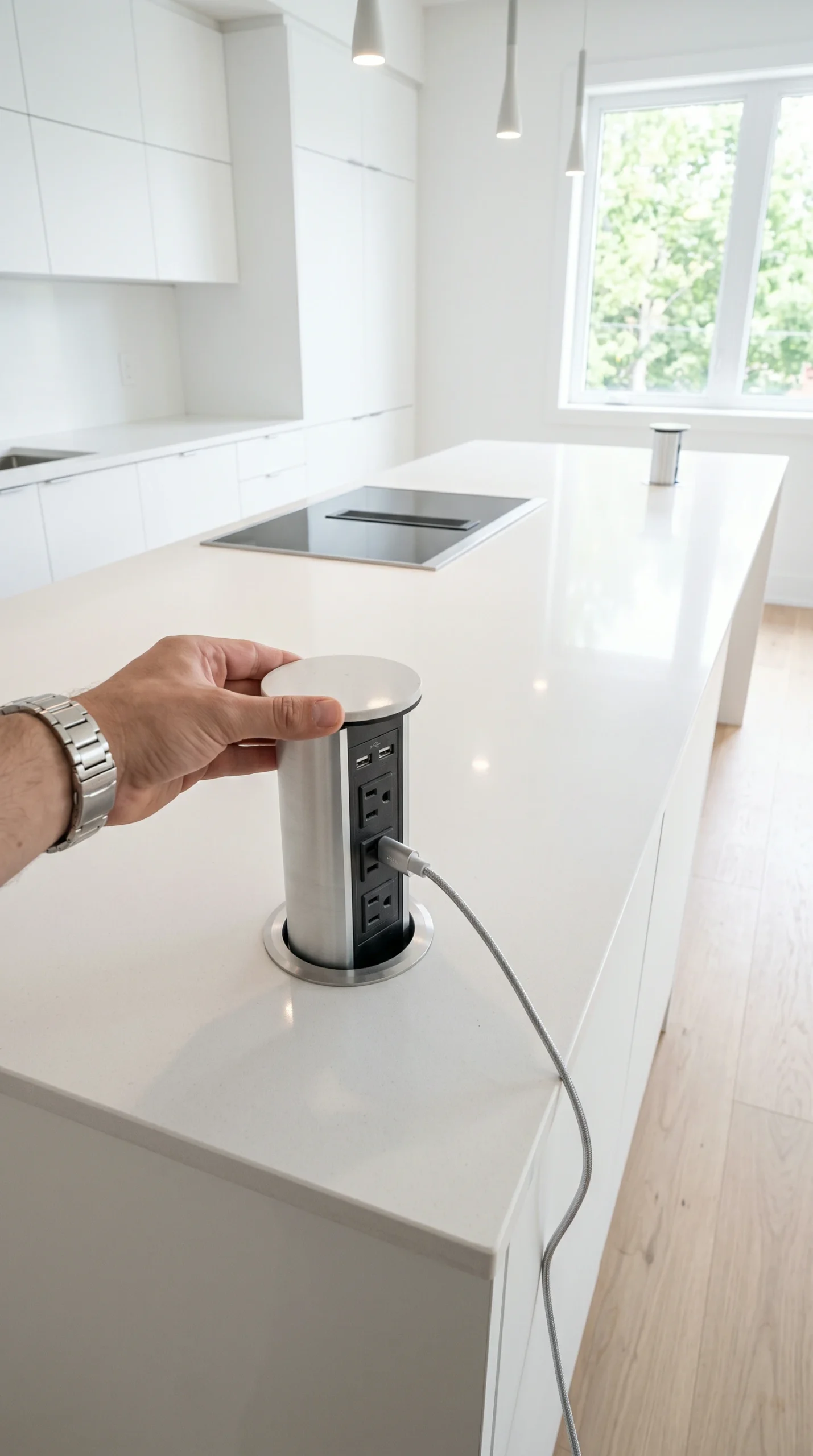
Replace countertop clutter with built-in solutions. Use a soap dispenser installed flush into the counter rather than a bottle. Use a pop-up outlet rather than trailing cords. Seamless integration is key.
The most challenging psychological hurdle in executing minimalist kitchen counter decor ideas is learning to embrace, rather than fear, the empty counter. In traditional decorating, an empty surface is a problem begging to be solved with an accessory. In minimalism, the empty surface is the desired end state. A vast, unbroken expanse of a beautiful countertop materialwhether it be highly polished white quartz, stark concrete, or a dramatically veined marbleis a massive architectural feature. Covering it with small appliances, mail, and decorative jars is a visual disruption. The discipline of minimalism teaches that leaving 95% of the horizontal space completely bare is the most effective way to communicate cleanliness, order, and high-end luxury.
Because minimalist spaces feature so few items, the objects that are displayed must carry immense visual weight. Minimalist kitchen counter decor ideas reject the ‘vignette’ approach of clustering multiple small items together. Instead, the focus is on the singular, sculptural object. A massive kitchen island requires nothing more than one large, beautifully formed object placed perfectly in the center. A stark, matte black ceramic sphere, a heavy, rough-hewn concrete basin, or a perfectly smooth, unadorned white bowl acts as a solitary focal point. The massive amount of negative (empty) space surrounding the object serves to amplify its importance, turning a simple bowl into a museum-worthy installation.
A minimalist kitchen cannot coexist with visual clutter, and small appliances are the primary offenders. Toasters, blenders, and air fryers, with their bulky plastic bodies and trailing black power cords, instantly ruin a sleek aesthetic. Successful minimalist kitchen counter decor ideas rely heavily on the architecture of the cabinetry to hide these necessities. The ‘appliance garage’a cabinet that sits directly on the counter, often featuring a sleek tambour door or a lift-up panelis an absolute necessity. It allows these machines to remain plugged in and accessible for daily use, but completely, flawlessly hidden behind a seamless cabinet face the moment breakfast is over.
When a few functional items must remain visible on the counter, managing their visual impact is critical. Introducing bright, contrasting colors (like a red kettle or a blue vase) creates ‘visual noise’ that disrupts the serenity of a minimalist space. Minimalist kitchen counter decor ideas frequently employ strict monochromatic or ‘tone-on-tone’ styling. If the kitchen features white countertops and a white backsplash, any displayed itemsa fruit bowl, a vase, or a salt cellarshould also be stark white. This ensures the objects blend seamlessly into their background, minimizing their visual footprint and maintaining the pure, unbroken architectural lines of the room.
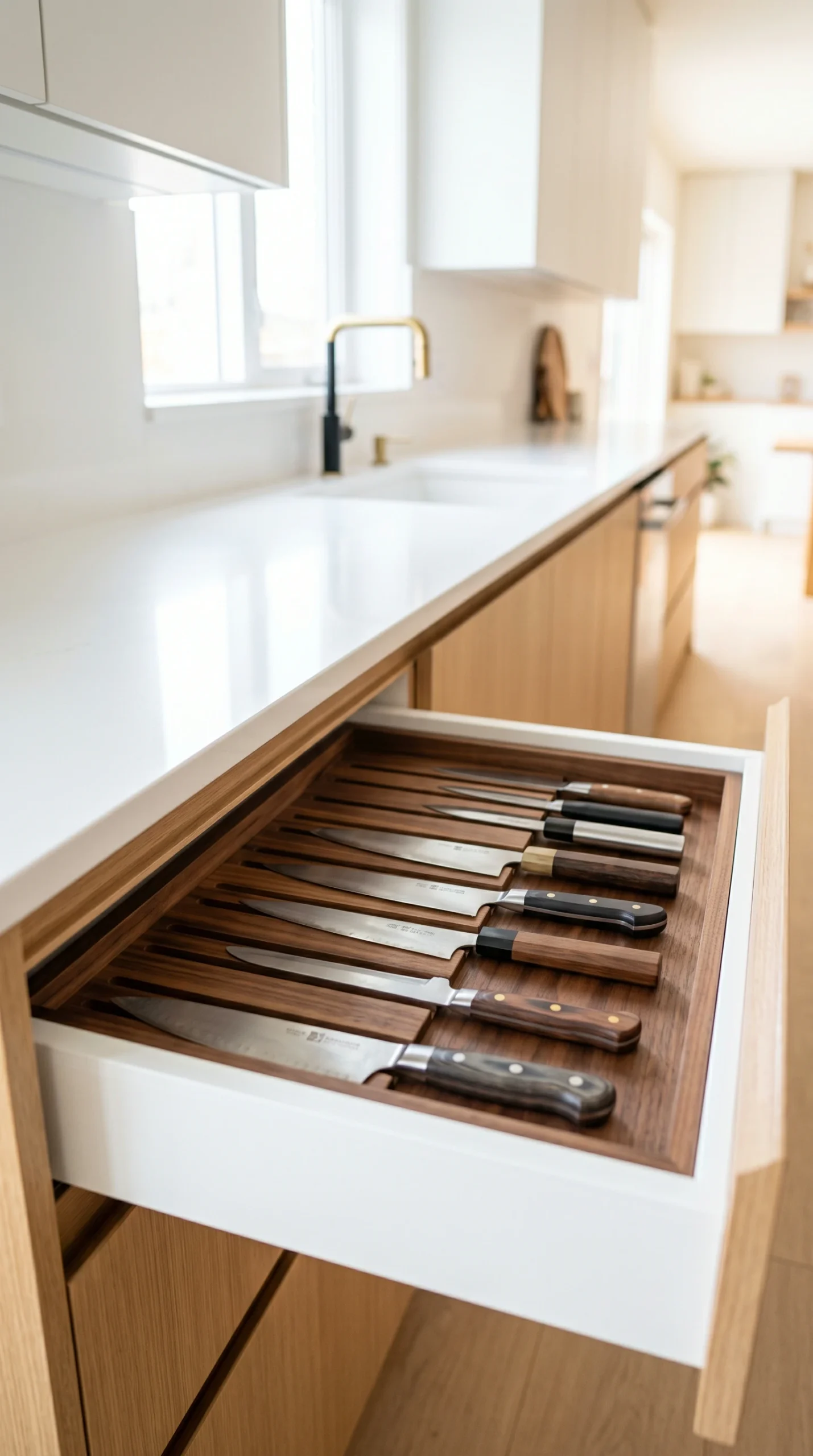
The highest level of minimalism involves completely removing items from the counter by integrating their function directly into the architecture of the kitchen. Instead of a bottle of dish soap sitting next to the sink, minimalist kitchen counter decor ideas dictate the installation of a sleek, flush-mounted soap dispenser built directly into the countertop. Instead of a bulky knife block, knives are hidden in a dedicated, slotted drawer insert. Even electrical outlets, which often clutter backsplashes, can be hidden using ‘pop-up’ cylinders that retract flush into the countertop when not in use. This relentless pursuit of seamless integration is the hallmark of a truly minimalist, high-end design.
The specific shape of the decor items selected plays a major role in reinforcing the minimalist aesthetic. Traditional or farmhouse design embraces soft, organic, imperfect, or highly ornate shapes. Minimalist kitchen counter decor ideas demand rigid, disciplined geometry. Decor should be composed of stark, recognizable forms: the perfect sphere, the sharp cylinder, the strict rectangle. A perfectly round, matte black fruit bowl, a razor-straight, ultra-thin rectangular metal tray, or a tall, completely unadorned cylindrical vase echo the sharp, 90-degree architectural angles of the flat-panel cabinetry. This geometric repetition creates a sense of profound order and highly controlled, modern sophistication.