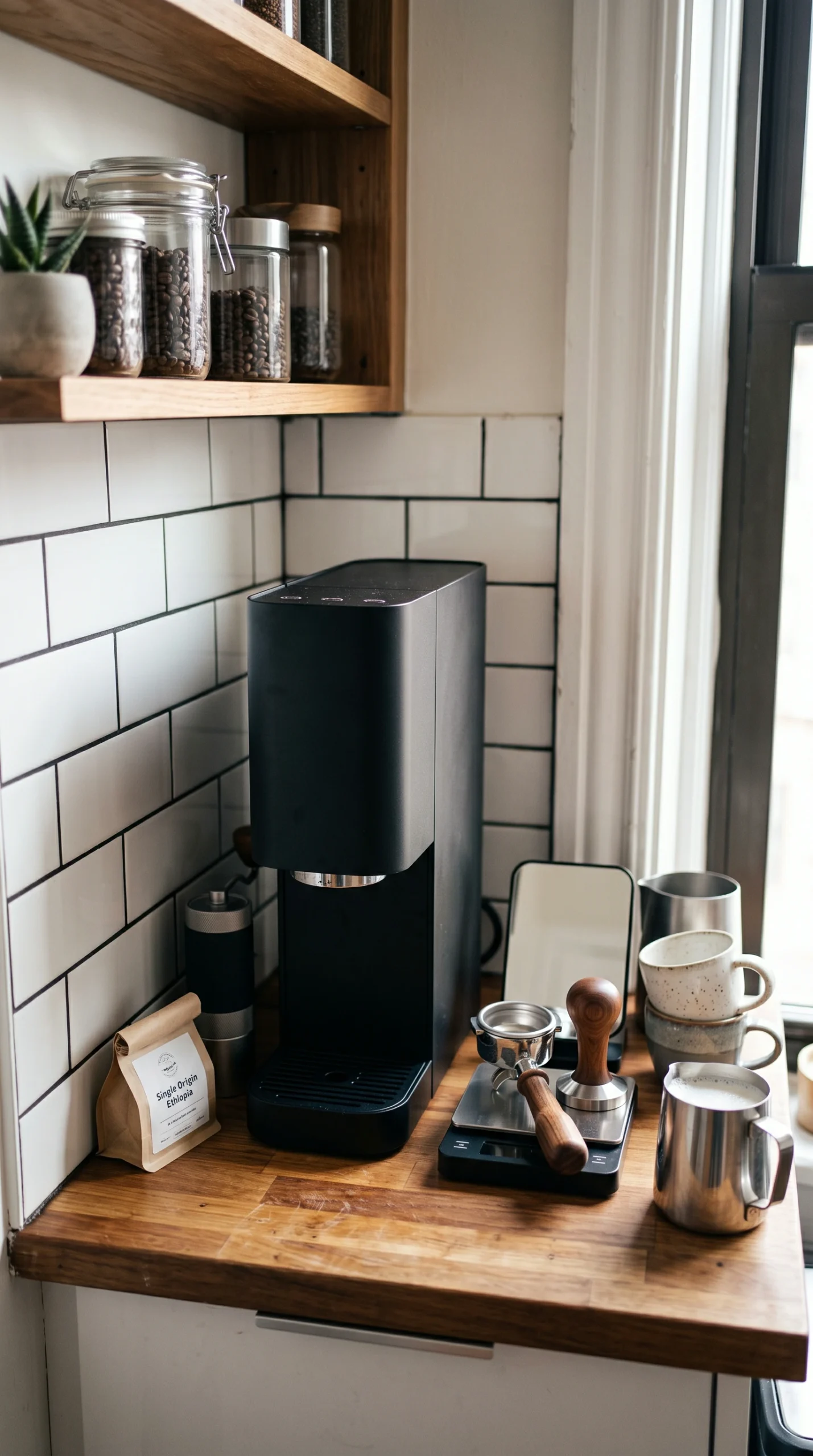
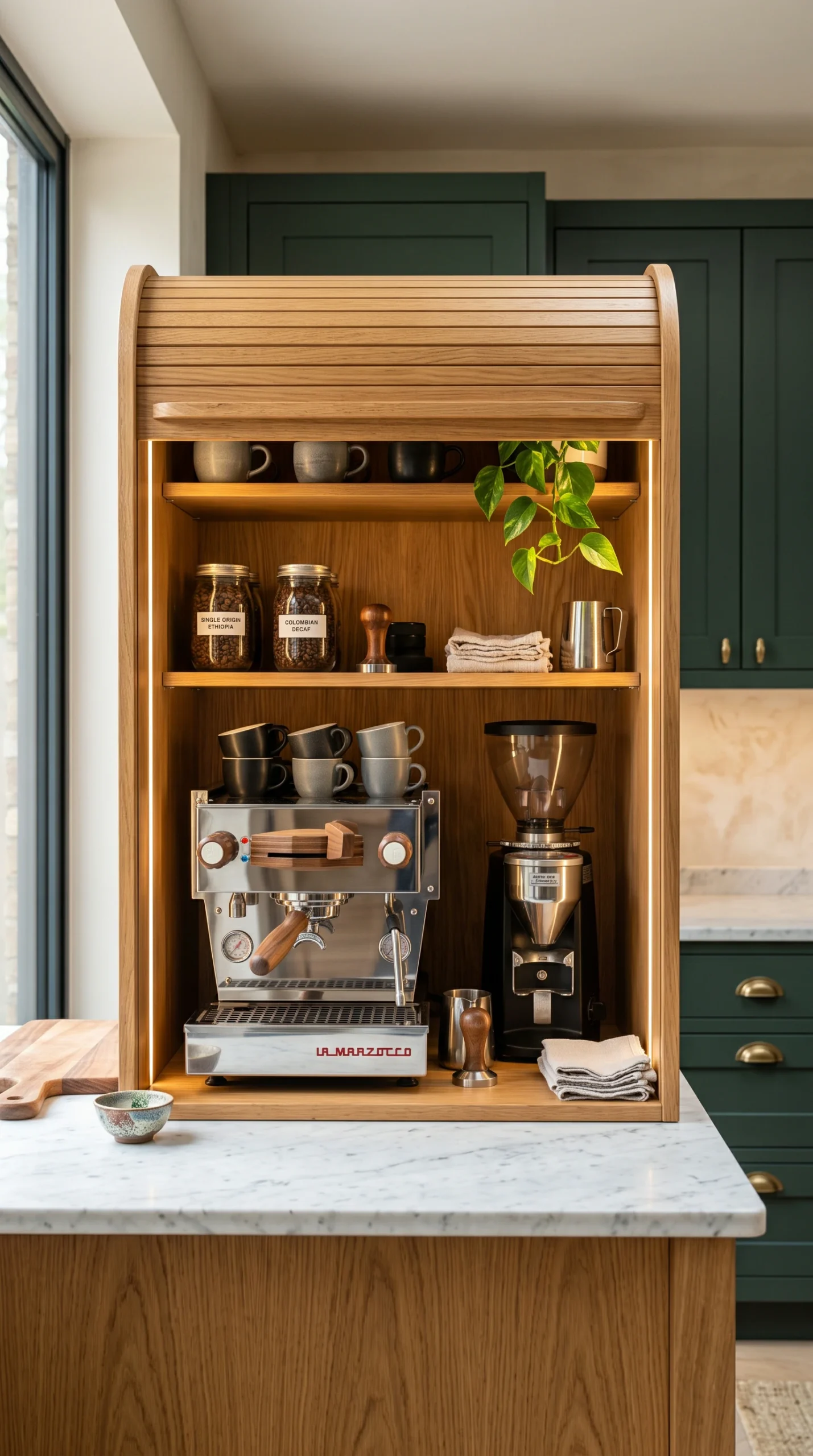
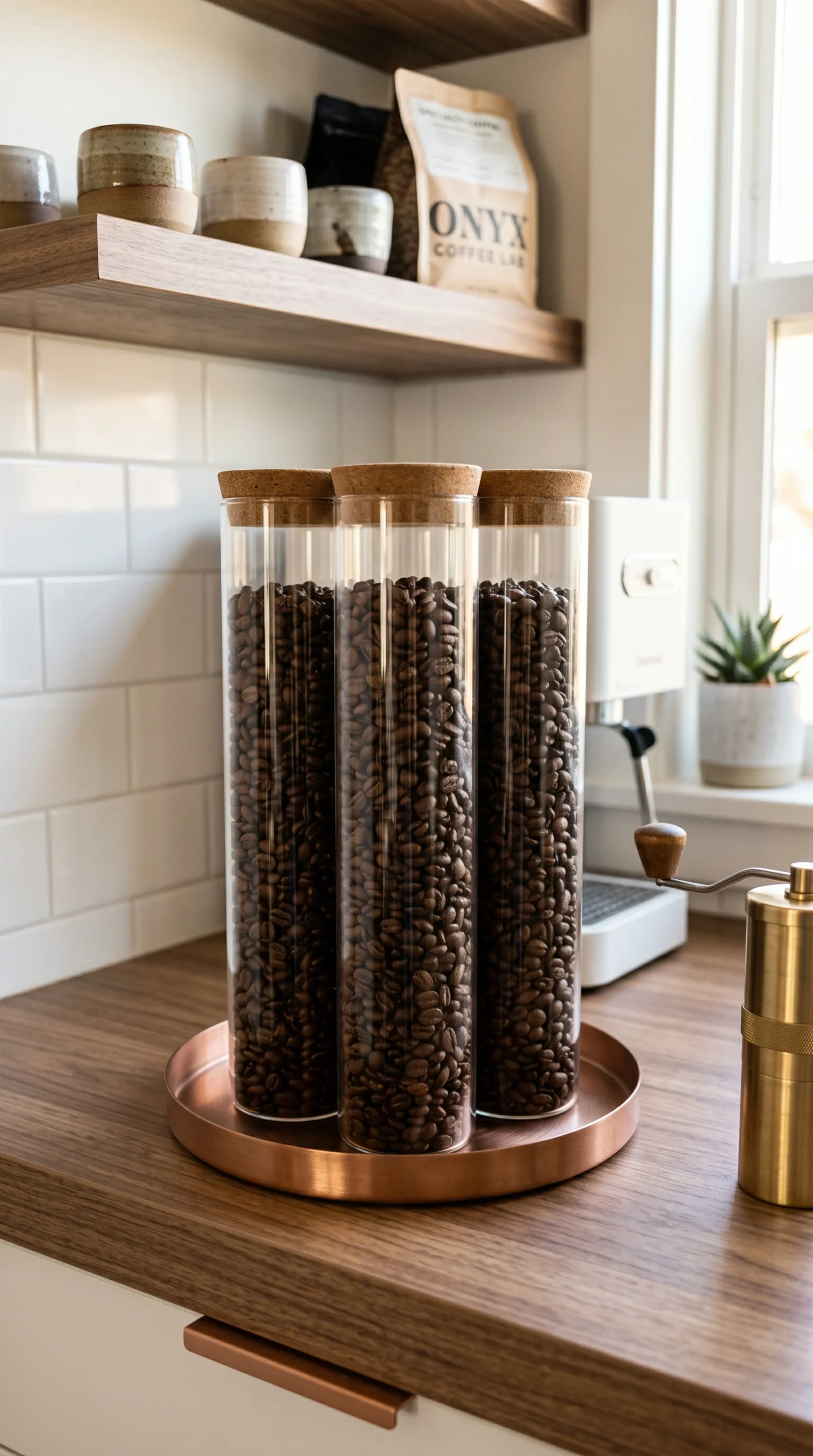
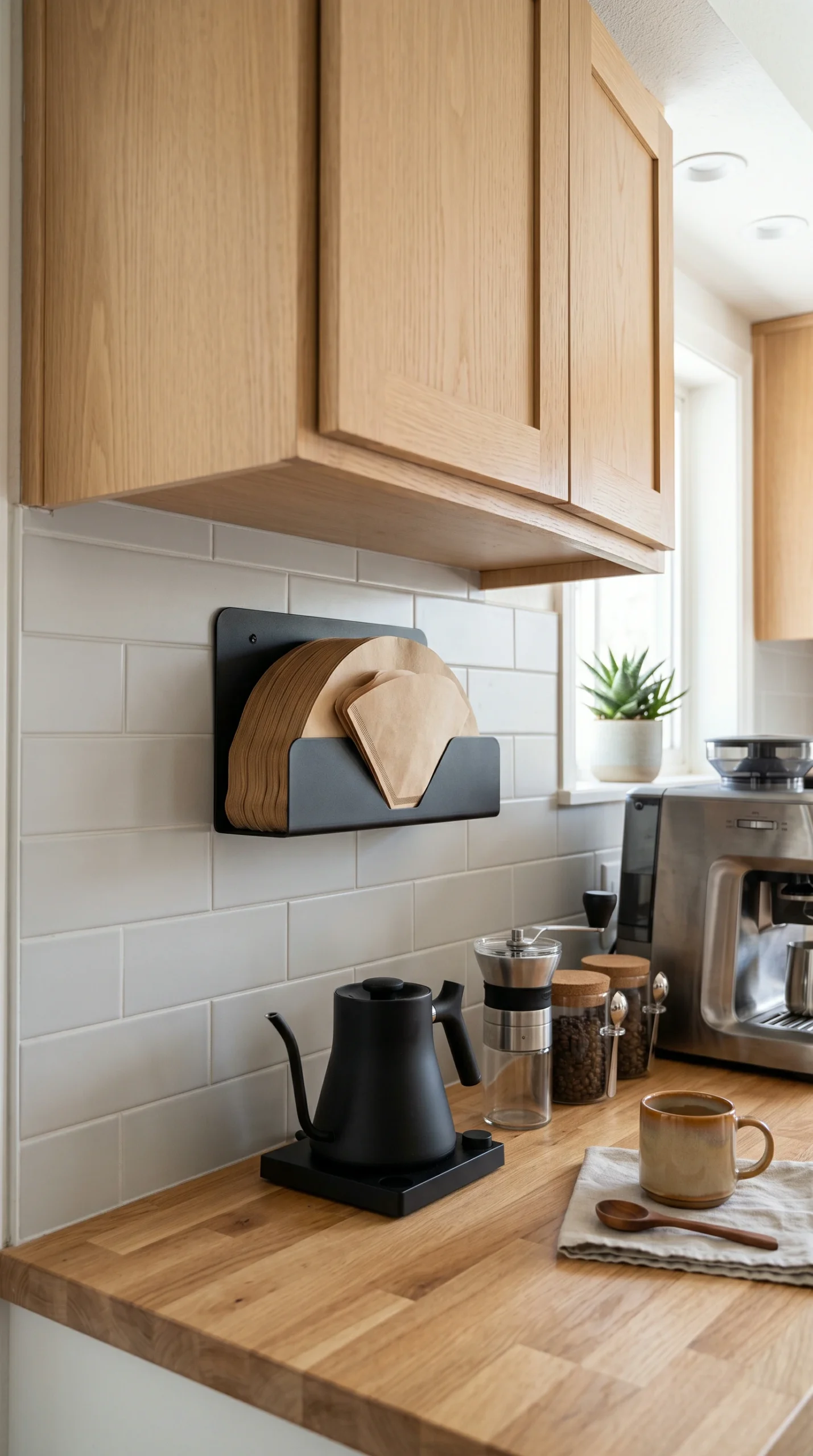
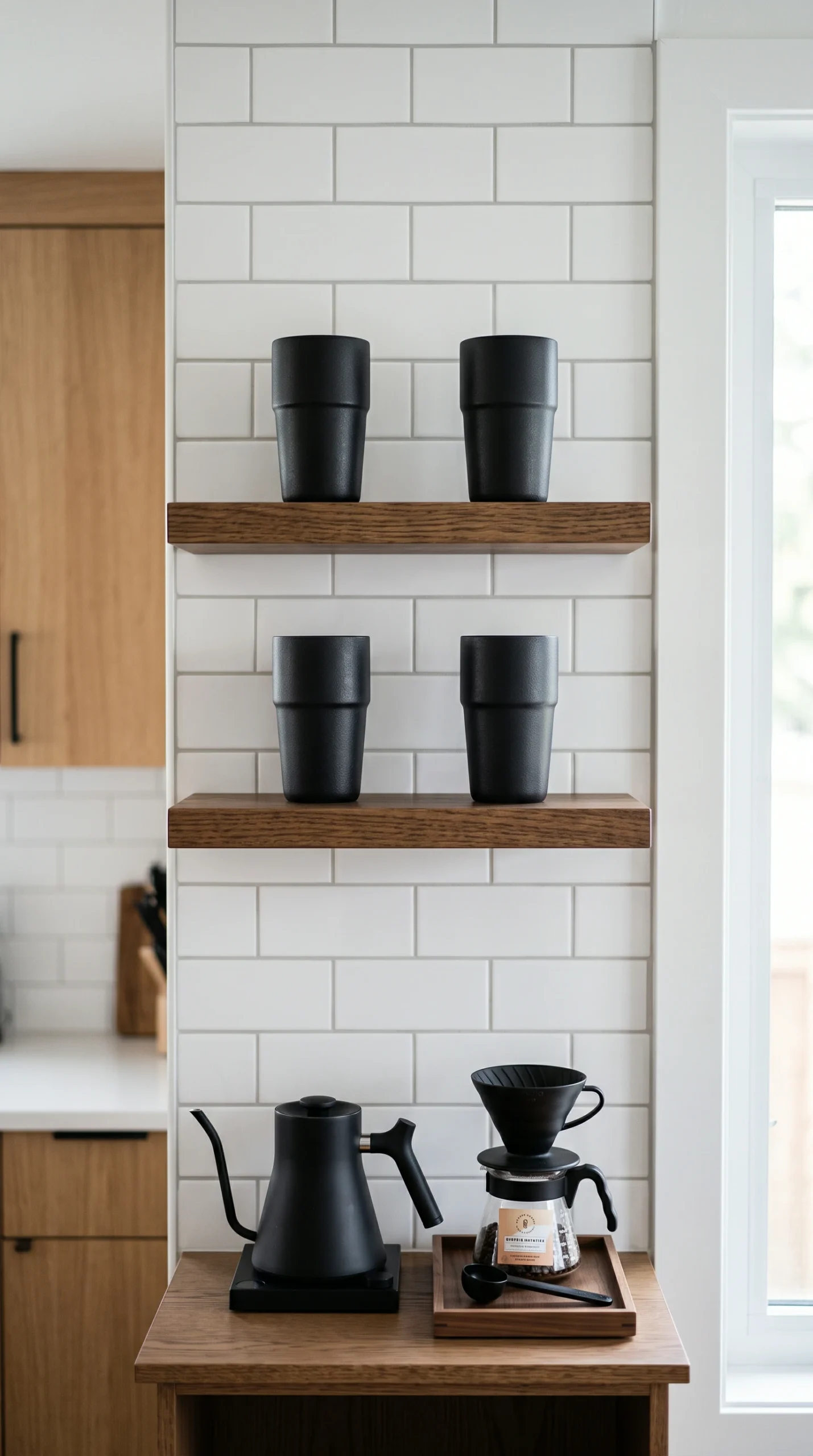
A shallow console table (often used in entryways) placed against an empty kitchen wall or in the dining room provides an excellent, dedicated surface for a coffee bar without taking up much floor space.
A sturdy, low bookshelf can easily be transformed into a coffee bar. The top serves as the brewing counter, while the shelves below offer massive storage capacity for mugs, beans, and small appliances.
The best place for an independent coffee bar is often on the periphery of the kitchen, near the dining table or living room. This allows guests to serve themselves without entering the cooking area.
If you are using wooden furniture (like a sideboard or console) as a coffee bar, you must protect the surface. Place a large, waterproof tray or a custom piece of glass underneath the coffee machine to prevent water damage.
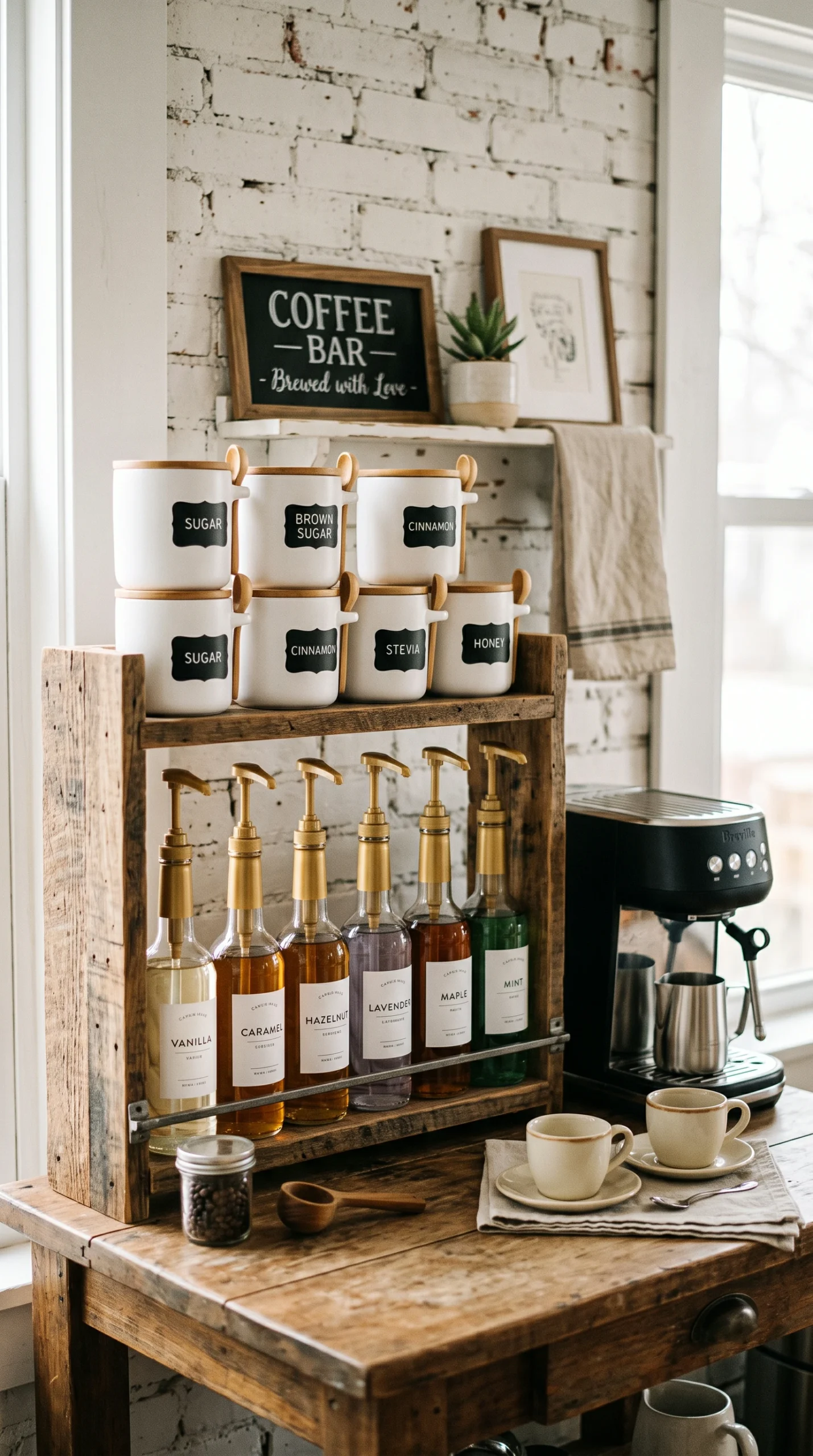
Because freestanding furniture usually lacks upper cabinets, install floating shelves directly above the console or cart to hold mugs and decor, creating a complete, vertical 'bar' aesthetic.
Freestanding furniture against a wall often exposes messy cords. Route the coffee machine's power cord down the back leg of the table using zip ties or tape to keep the setup looking clean and intentional.
When primary counters are unavailable, one of the most effective coffee bar ideas for kitchens involves utilizing an empty wall space. A shallow console table or a sofa table, typically measuring only 12 to 15 inches deep, is often the perfect solution. Placed against a blank wall just outside the main cooking zone, it provides enough surface area to hold a coffee machine, a small tray for sugar, and a few mugs, while keeping the main walkway completely clear. This approach effectively creates a brand new, dedicated ‘counter’ specifically for morning routines without requiring any expensive cabinetry renovations or significant floor space.
The transitional space between the kitchen and the dining area is an ideal location for a coffee setup. A common and highly elegant execution of coffee bar ideas for kitchens is to repurpose a dining room sideboard or buffet. These pieces of furniture are typically sturdy, offer excellent enclosed storage, and are located perfectly for serving after-dinner coffee or allowing guests to help themselves in the morning. By placing the espresso machine on top and storing the beans, mugs, and extra supplies inside the cabinets below, the coffee station feels like a sophisticated, integrated extension of the home’s entertaining spaces rather than a cluttered kitchen spillover.
For ultimate flexibility, a rolling bar cart is an excellent alternative to fixed cabinetry. While typically associated with evening entertaining, bar carts provide fantastic, multi-tiered infrastructure for coffee bar ideas for kitchens. The top shelf serves as the active brewing station, while the lower shelves are perfect for neatly stacking mugs, displaying glass jars of coffee beans, and storing a French press or kettle. Because it is on wheels, the cart can be positioned in a tight corner during the week and easily rolled into the dining room or out to a patio for weekend brunches, offering a highly adaptable brewing solution.
A critical practical consideration when utilizing freestanding furniture for a coffee bar is protecting the surface. Unlike stone or laminate kitchen counters, wooden sideboards and console tables are highly susceptible to water rings and heat damage. To ensure longevity when implementing these coffee bar ideas for kitchens, it is essential to use a large, durable tray. A thick acrylic tray, a sealed metal platter, or even a custom-cut piece of protective glass placed directly underneath the coffee machine acts as a necessary barrier against inevitable drips, steam, and spills, preserving the beautiful finish of the furniture.
Freestanding furniture lacks the upper cabinets that typically define a kitchen counter space. To make an independent console or sideboard look like a complete, purposeful coffee bar rather than just a table with an appliance on it, you must build upward. Installing one or two floating shelves directly on the wall above the furniture piece is highly recommended. These shelves anchor the space, drawing the eye upward and providing essential, easily accessible storage for everyday mugs and decorative items. This vertical element completes the ‘bar’ aesthetic, making the zone feel intentional and fully designed.
One of the fastest ways to ruin the sophisticated look of a freestanding coffee bar is visible cord clutter. When a coffee machine sits on a console table, the thick black power cord often dangles awkwardly down to the wall outlet. Meticulous cable management is vital for elevated coffee bar ideas for kitchens. Route the cord straight down the back of one of the table legs, securing it tightly with zip ties, velcro straps, or clear tape. If the outlet is not directly behind the table, use a cord cover painted to match the baseboard to disguise the wire as it travels to the plug. This small effort makes a massive difference in the overall polish of the setup.