Home Office Lighting Ideas to Improve Focus and Comfort

Lighting is the most frequently overlooked element of workspace design, yet it has the most profound impact on your daily stamina. Working under harsh fluorescent bulbs or sitting in a dim, shadow-filled room will inevitably lead to severe eye strain, tension headaches, and an afternoon energy crash. This guide explores the most effective home office lighting ideas designed to optimize your environment for peak productivity and physical well-being. Discover how to master workspace lighting by implementing a layered approach, utilizing strategic bias lighting to reduce glare, and selecting the perfect office lamp ideas for your specific needs. Whether you are outfitting a dark basement study or a sunlit apartment nook, these expert illumination tips will help you build a comfortable, high-performance sanctuary.

Style Type

Layered Modern / Ergonomic Ambient

Budget

Accessible to Moderate (Focus on strategic LED placement)

Difficulty

Beginner Friendly (Requires minimal installation)

Best For

Remote Workers, PC Gamers, Tech Professionals, Late-Night Creatives
Visual Inspiration

Illuminated Focus

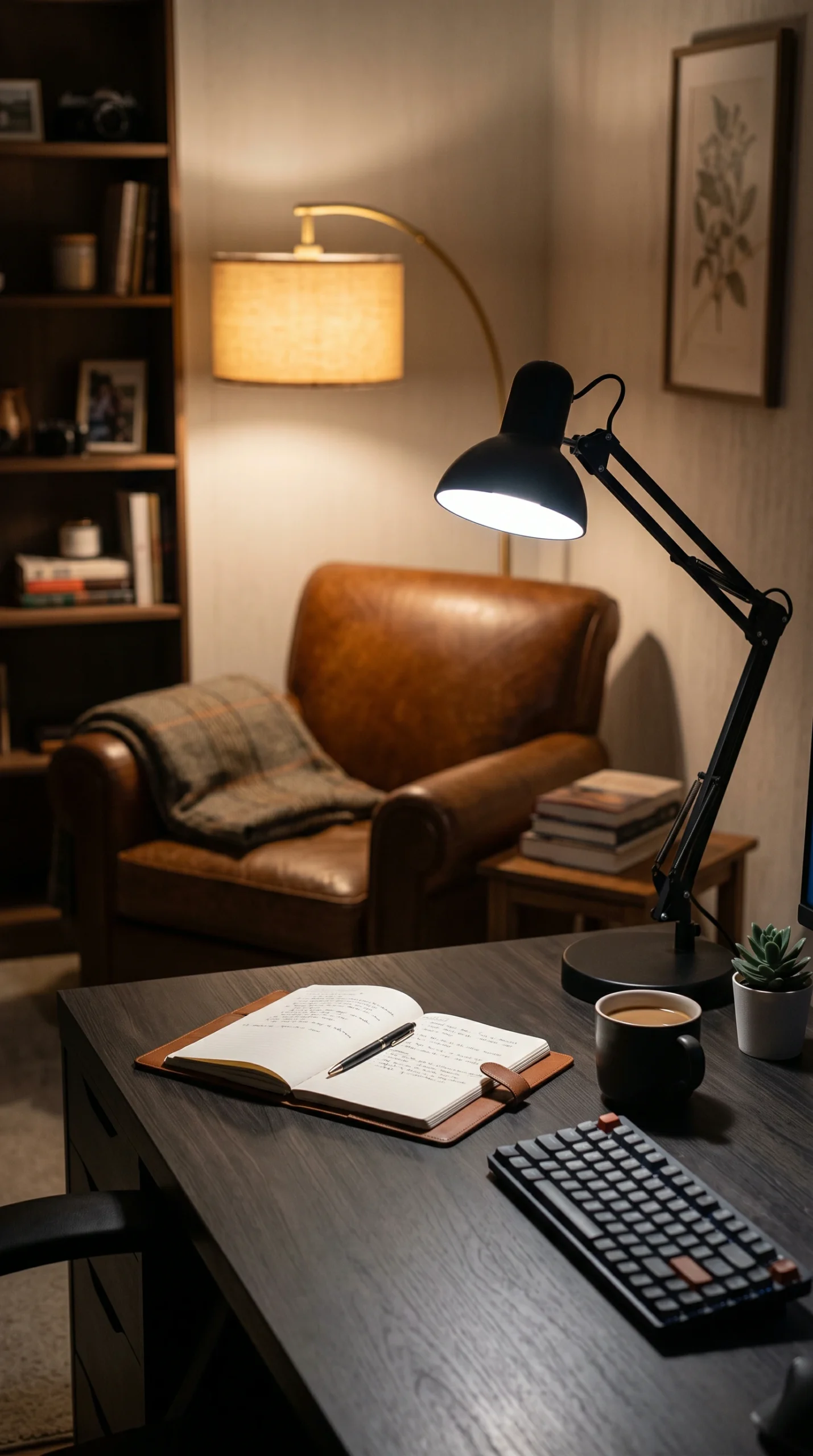
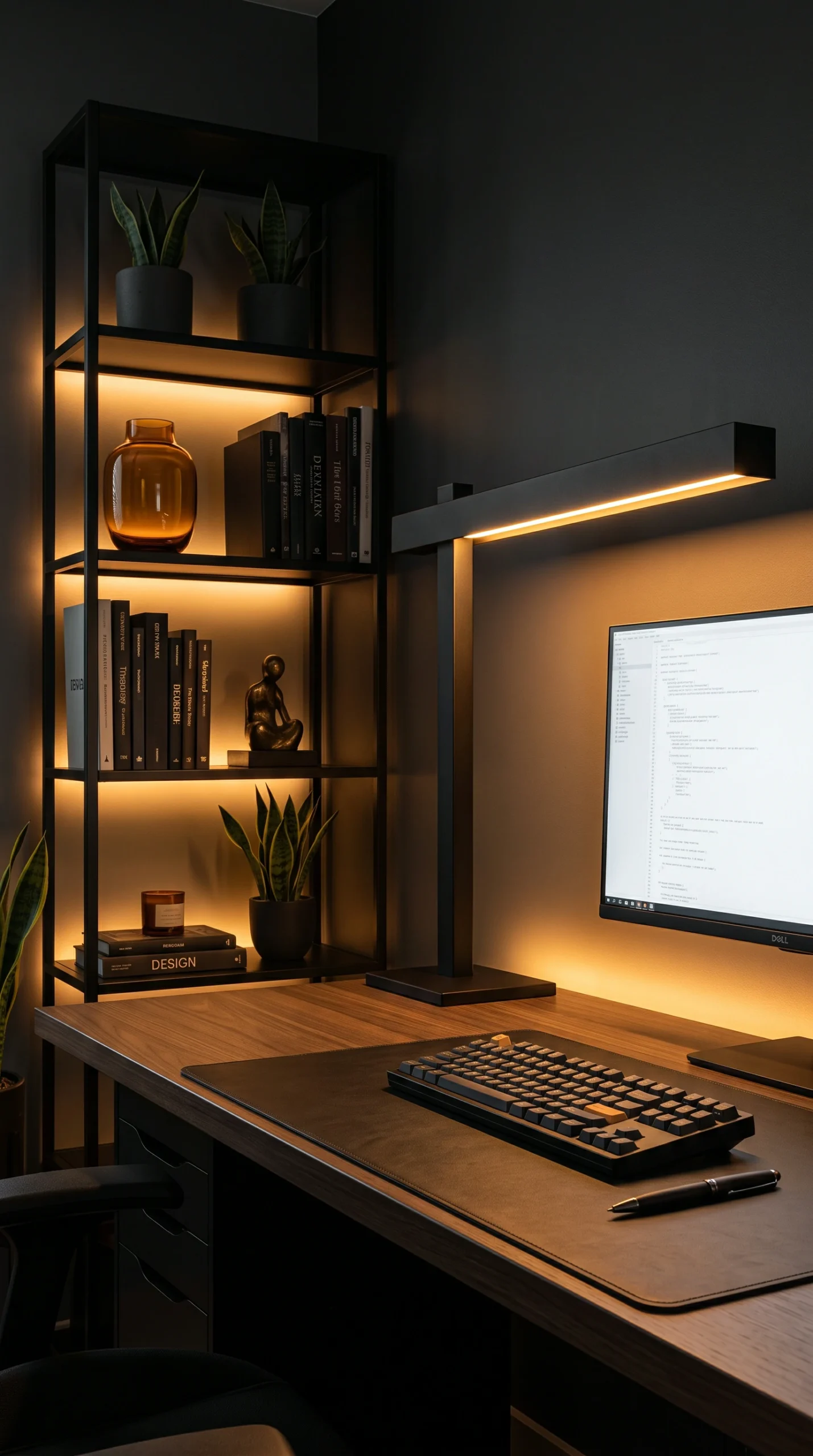
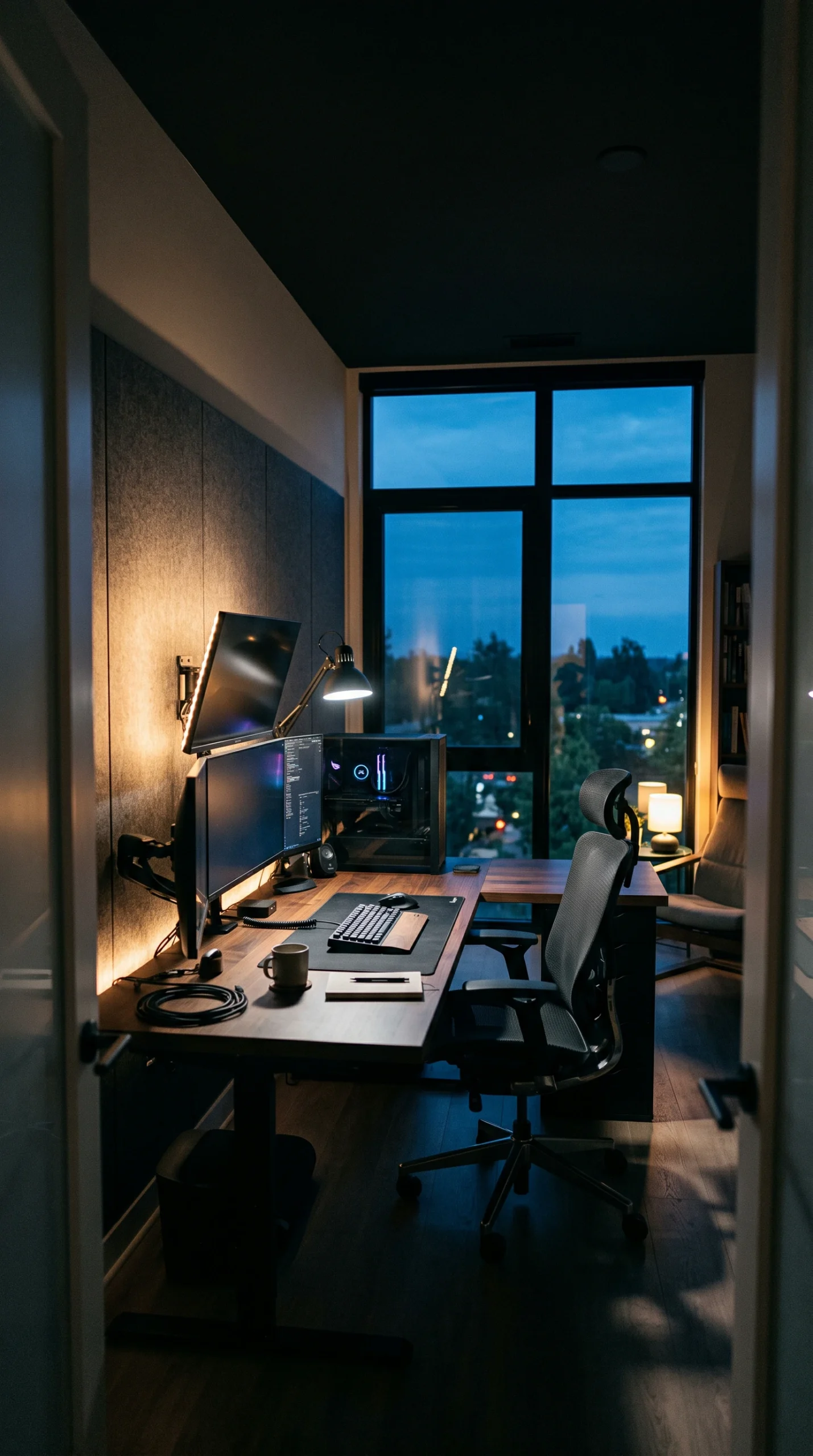
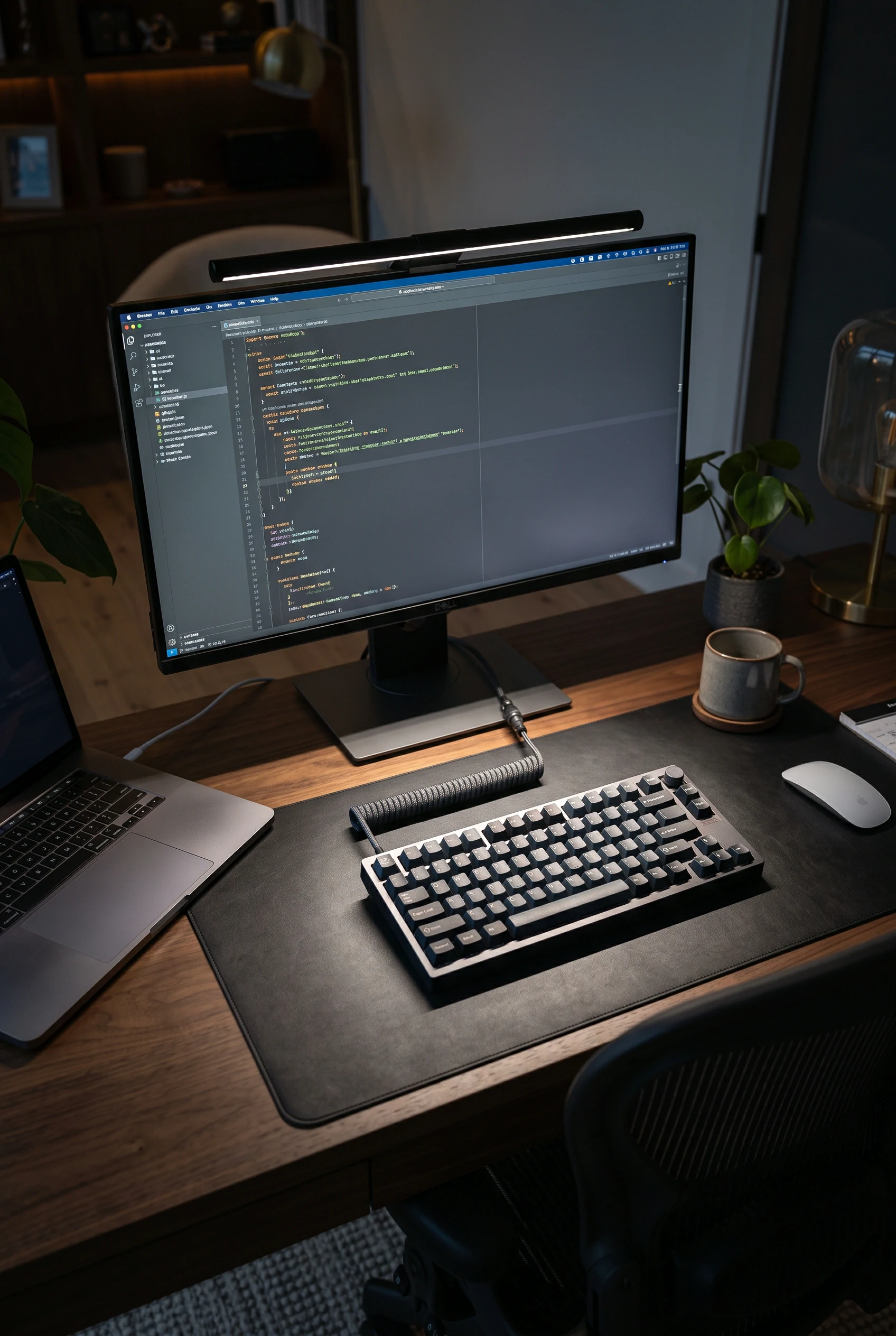
A highly practical visual gallery demonstrating how the strategic combination of crisp monitor light bars, warm ambient table lamps, and glowing bias lighting completely transforms the mood and functionality of a modern desk setup.
Color Palette

The Luminous Focus Palette

A temperature-driven, restorative collection of pure daylights, warm ambers, matte black fixture accents, and soft bias blues designed to mimic natural light cycles and combat visual fatigue.

Pure Daylight (4000K)

#FFFFFF

Warm Glow (2700K)

#FDF5E6

Matte Black (Fixtures)

#1A1A1A

Brass Accents

#D4AF37

Soft Bias Blue

#E6E6FA

Cloud Diffuser

#F5F5F5

Charcoal Base

#2B2B2B

Amber Ambience

#DAA520

Crisp Screen White

#F0F8FF

Brushed Nickel

#C0C0C0

Design Guide

Rules for an Illuminated Workspace

Implement these essential lighting and ergonomic rules to ensure your office actively reduces eye strain while looking impeccably designed.

The Three-Layer Rule

Never rely on a single light source. A healthy workspace requires three layers of lighting: overhead ambient light, focused task lighting for your desk surface, and accent lighting for depth.

Mastering Color Temperature

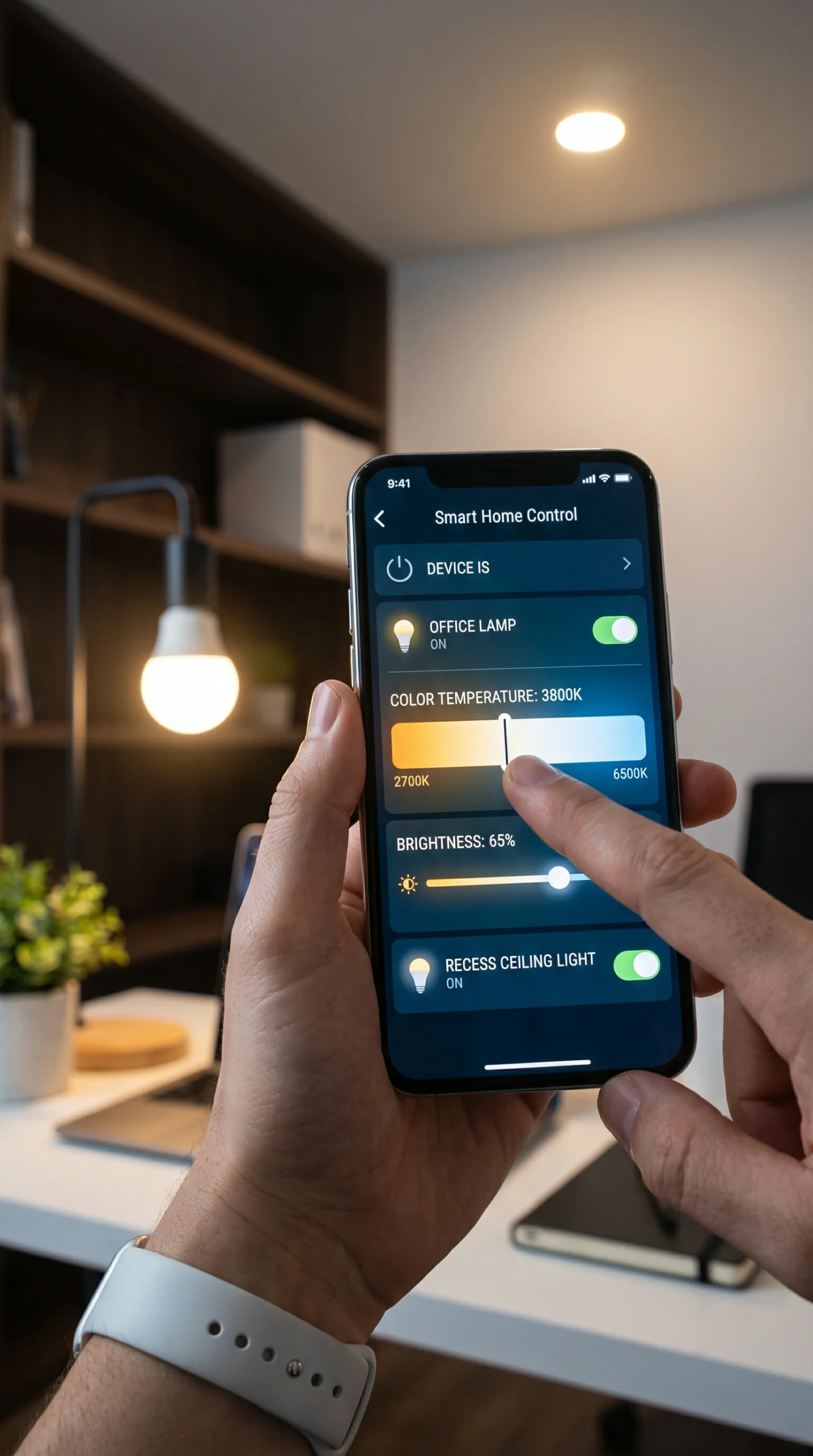
Avoid cold, blue-toned "daylight" bulbs (5000K+) as they feel clinical. Opt for neutral white (3500K-4000K) for active task lighting, and warm white (2700K) for relaxing ambient lamps.

The Monitor Light Bar

Reclaim your desk surface. Swap a bulky traditional desk lamp for a sleek LED monitor light bar that casts a precise pool of light onto your keyboard without ever glaring on your screen.

Incorporate Bias Lighting

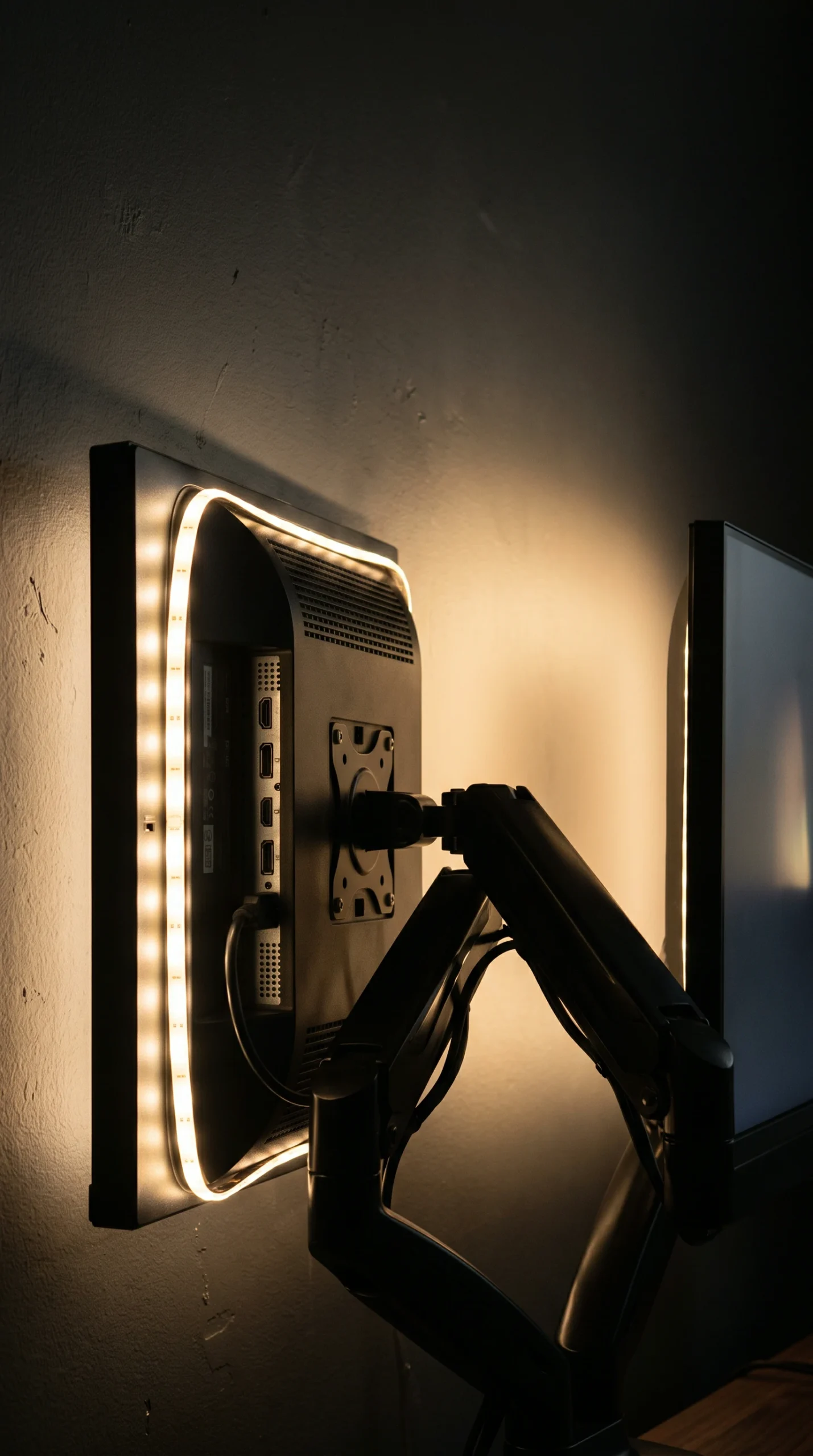
Staring at a bright monitor in a dark room causes massive eye strain. Install an LED light strip on the back of your monitor to cast a soft glow against the wall, reducing the harsh contrast.

Natural Light Placement

If you have a window, position your desk perpendicular to it. Facing the window causes squinting, and having the window behind you causes severe screen glare.

Positioning Task Lamps

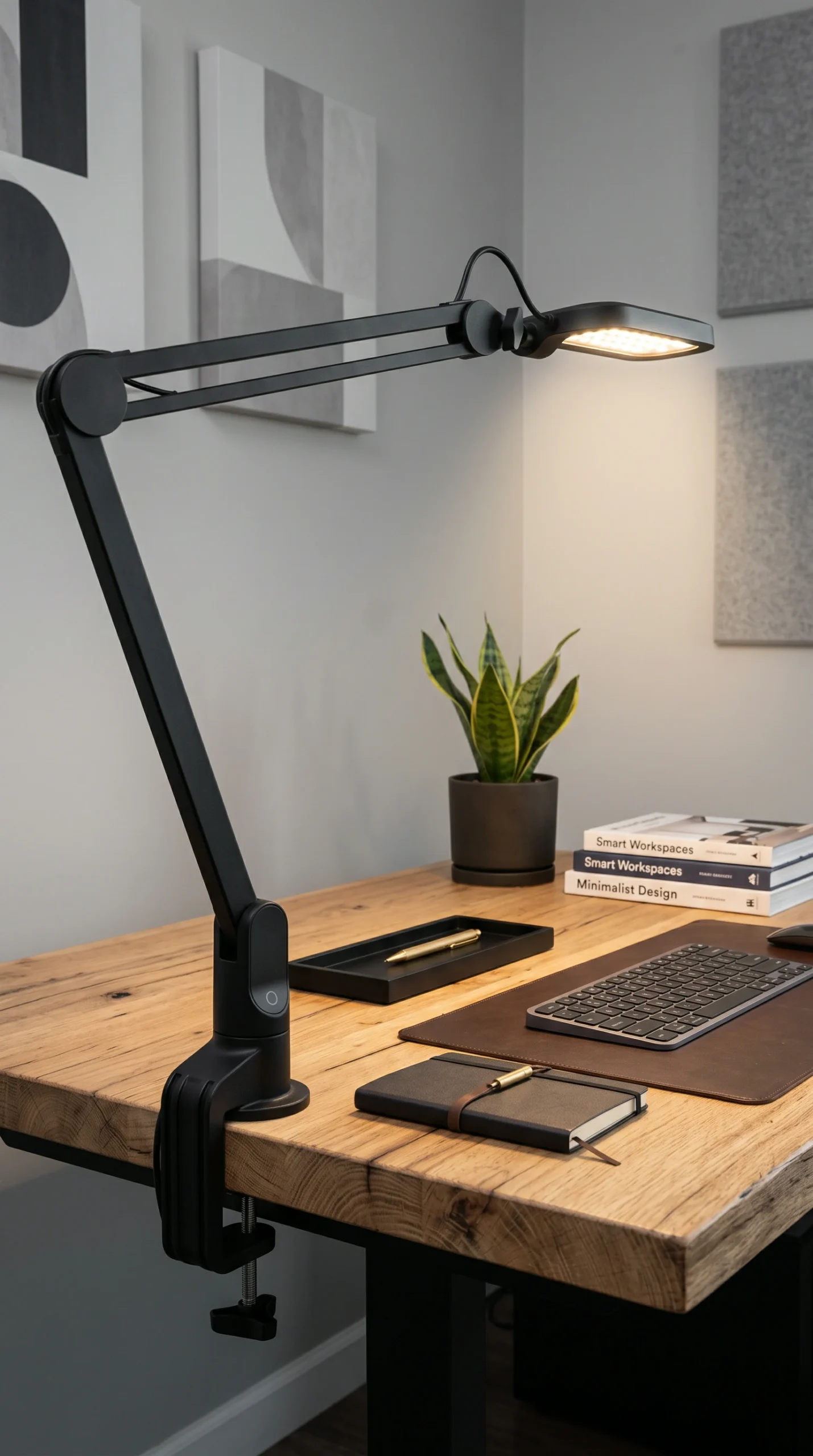
If you use a traditional articulated desk lamp, place it on the side opposite your dominant hand (e.g., on the left if you are right-handed) to prevent your hand from casting shadows while writing.

The Complete Guide

The Complete Guide to Home Office Lighting

A beautifully decorated office is entirely useless if sitting in it gives you a headache after two hours. Workspace lighting is a critical ergonomic factor that directly impacts your circadian rhythm, mood, and cognitive stamina. The most common mistake remote workers make is relying solely on a generic overhead ceiling fixture. Overhead lighting creates harsh shadows on your face during video calls, glares directly onto your monitors, and fails to adequately illuminate the papers on your desk. Executing brilliant home office lighting ideas means taking a deliberate, layered approach to how you illuminate your environment.

Elevating Comfort with Home Office Lighting Ideas

To build a comfortable workspace, you must eliminate the harsh contrast between your bright computer screens and the surrounding room. This contrast forces your pupils to rapidly dilate and constrict, leading to severe fatigue. The ultimate solution is bias lighting. By attaching an inexpensive, warm-white LED strip to the back of your monitor or desk edge, you cast a gentle glow against the wall behind your screens. This simple home office lighting idea raises the ambient light level of your immediate field of vision, dramatically easing the physical strain on your eyes during deep focus sessions or late-night work.

Implementing Smart Office Lamp Ideas

Once your ambient background is set, you must address your active work surface. Innovative office lamp ideas have moved far beyond the traditional brass banker’s lamp. The modern gold standard is the LED monitor light bar. This sleek device rests seamlessly on top of your monitor, utilizing an asymmetrical optical design to throw crisp, neutral-white light directly down onto your keyboard and documents, leaving your screen completely glare-free. If your aesthetic leans more traditional, opt for a heavy-based architect lamp with a long, articulating arm, ensuring it has a dimmable LED bulb so you can adjust the intensity throughout the day.

Mastering Layered Workspace Lighting

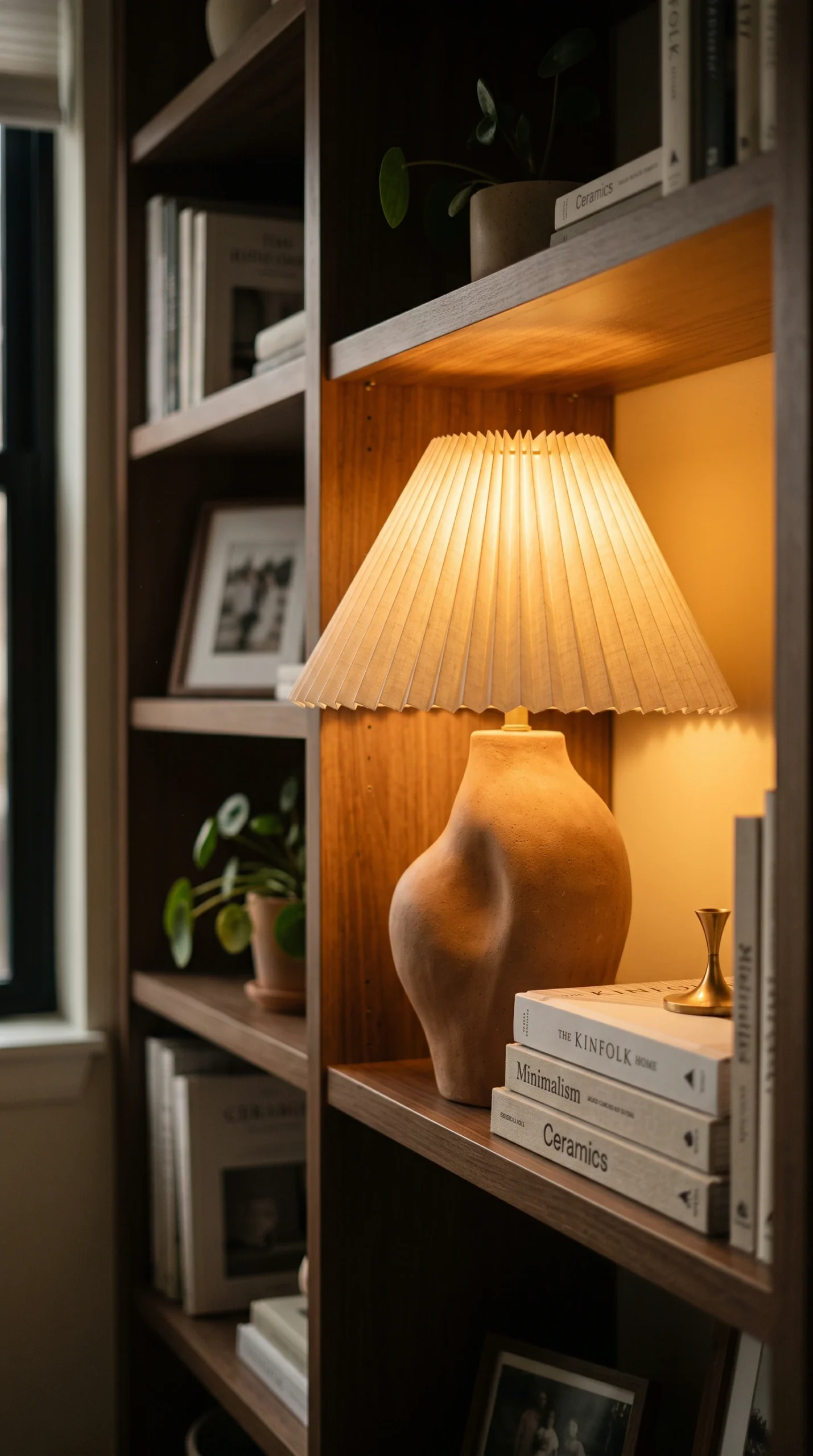
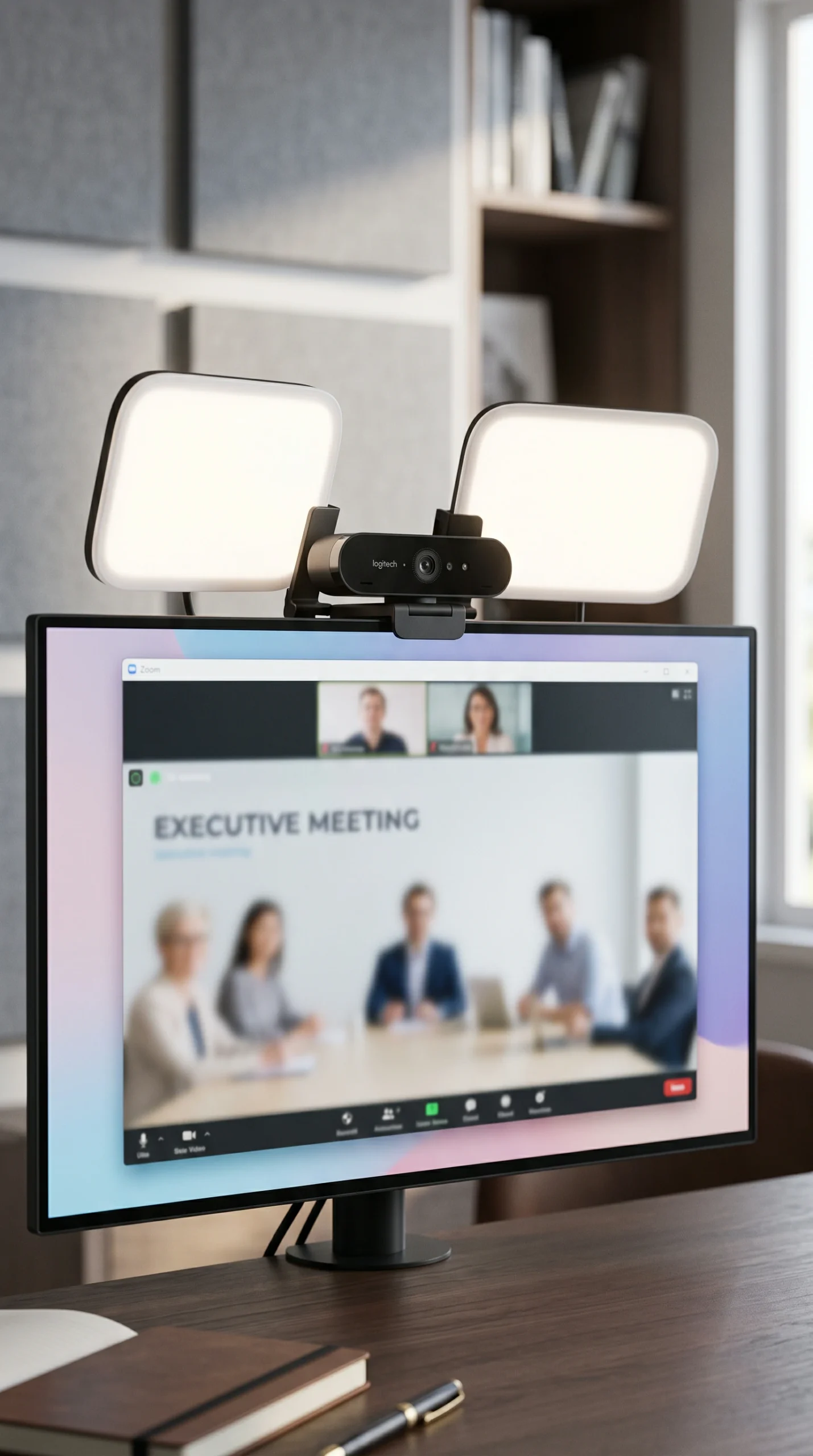
The final step is unifying the room with layered workspace lighting. Your office should not feel like an interrogation room; it should feel like a high-end study. After securing your task and bias lighting, introduce decorative ambient sources to soften the room’s corners. Place a beautiful, sculptural ceramic lamp on a bookshelf or a small accent table. If you take frequent video calls, consider bouncing a small key light off a white wall in front of you, or use soft, diffused ring lights mounted behind your webcam to fill in facial shadows. By layering these various light sources, you create an environment that is highly functional, beautifully dynamic, and deeply comfortable.

Where It Works Best

Illuminated Productivity Zones

The principles of layered lighting, bias lighting, and color temperature control can alleviate eye strain in any tech-heavy space in your home.
FAQS

Frequently Asked Questions

Expert answers on reducing eye strain, choosing the right bulbs, and setting up the perfect lighting environment for remote work.
The most effective combination is adding bias lighting (a soft glow behind your monitor) to reduce screen contrast, and using a glare-free task light (like a monitor light bar) to illuminate your keyboard.
For active work and task lighting, use a neutral white (3500K – 4000K). It keeps you alert without being overly harsh. For ambient lamps intended to make the room cozy, use a warm white (2700K – 3000K).
Absolutely. They save massive amounts of desk space, provide perfect illumination for your immediate work zone, and their asymmetrical design guarantees zero glare on your screen.
Place your desk perpendicular to the window. This allows natural light to wash across your workspace without glaring directly into your eyes (if facing the window) or glaring onto your screen (if the window is behind you).
Overhead lighting casts harsh, unflattering shadows down over your face and your desk, often causing a glare on your screens. It is fine for general room navigation, but terrible for focused desk work.
Bias lighting is the placement of a light source behind a screen (TV or computer monitor) that illuminates the wall behind it. It reduces the contrast between a bright screen and a dark room, easing eye strain.
Monitor light bars are the best for zero footprint. If you want a physical lamp, choose a clamp-on architect lamp that attaches to the edge of the desk, or use a plug-in wall sconce to keep the surface totally clear.
Yes, smart bulbs are fantastic for offices. You can program them to emit crisp, cool light in the morning for alertness, and slowly transition to a warmer, dimmer light in the late afternoon to prepare your brain for winding down.
If you write on paper, place the lamp on the side opposite your dominant hand. If you are right-handed, put the lamp on the left. This prevents your hand from casting a shadow over your pen.
Avoid sitting with your back to a bright window (you will be a silhouette). Rely on soft, diffused front lighting. Bounce a strong desk lamp off a white wall in front of you, or use two small panel lights on either side of your webcam to evenly light your face.
Recent Inspiration

Discover More Home Decor Ideas

Explore the latest interior design trends, decorating inspiration, and beautifully curated spaces to spark new ideas for every room in your home.
Accent Wall Bedroom Ideas That Transform Your Space

Transform your sleeping space with expert accent wall bedroom ideas. Discover the best bedroom accent…

Modern Accent Wall Bedroom Ideas for a Stylish Look

Elevate your sleeping space with modern accent wall bedroom ideas. Discover contemporary bedroom decor, integrated…

Small Bedroom Accent Wall Ideas That Make a Big Impact

Maximize your space with small bedroom accent wall ideas. Discover clever small bedroom wall ideas,…

Accent Wall Ideas for a Cozy and Relaxing Bedroom

Transform your sleeping space with cozy bedroom accent wall ideas. Discover expert tips for warm…

Small Half Bath Sink Ideas That Save Space Without Sacrificing Style

Discover small half bath sink ideas to maximize your space. Explore modern pedestal sink ideas…

Bedroom Accent Wall Color Ideas for Every Style

Transform your space with expert bedroom accent wall colors. Discover top accent wall paint colors,…

✦ Showome

Welcome! Please enter your details to chat with our interior designer.