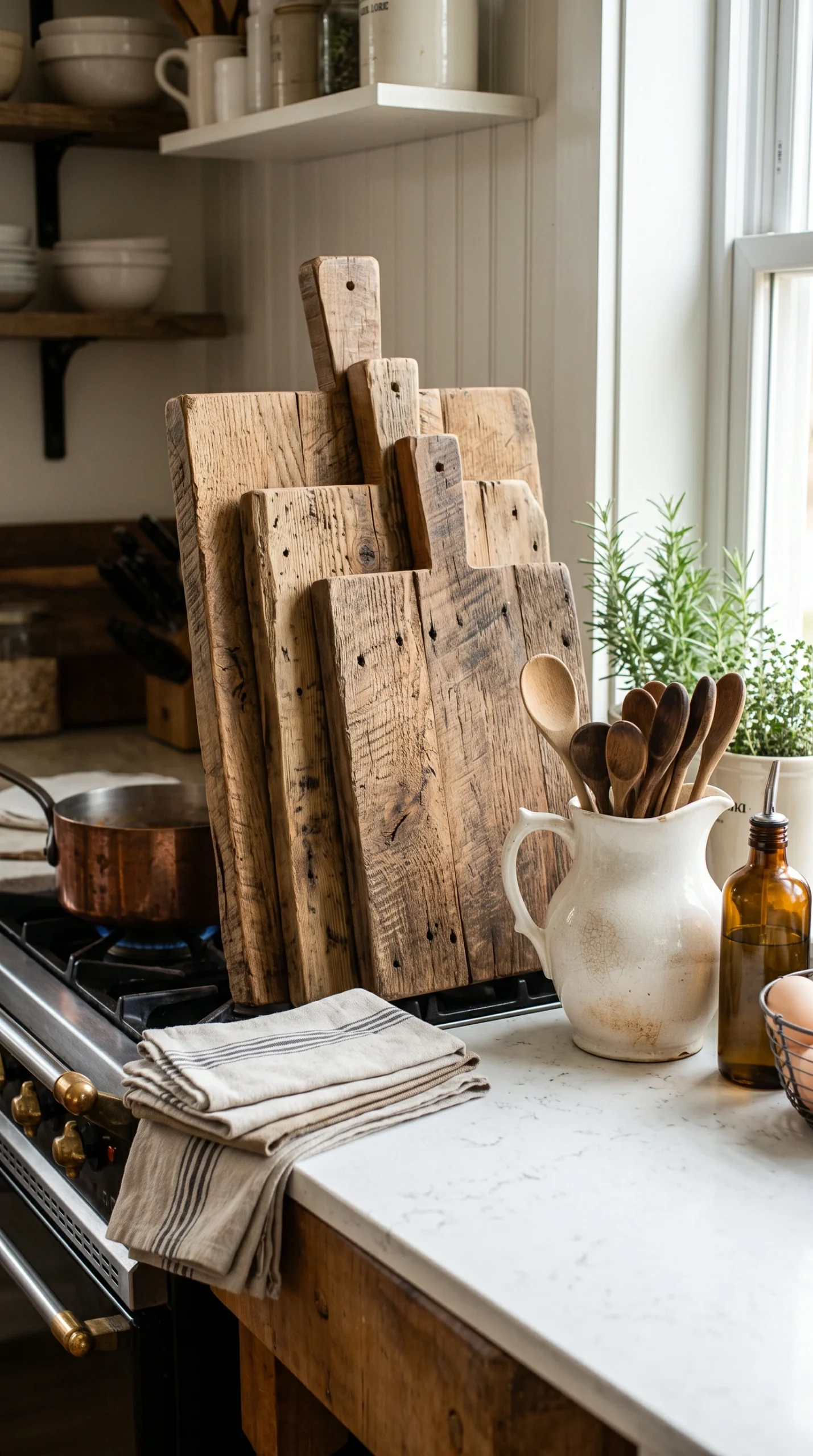
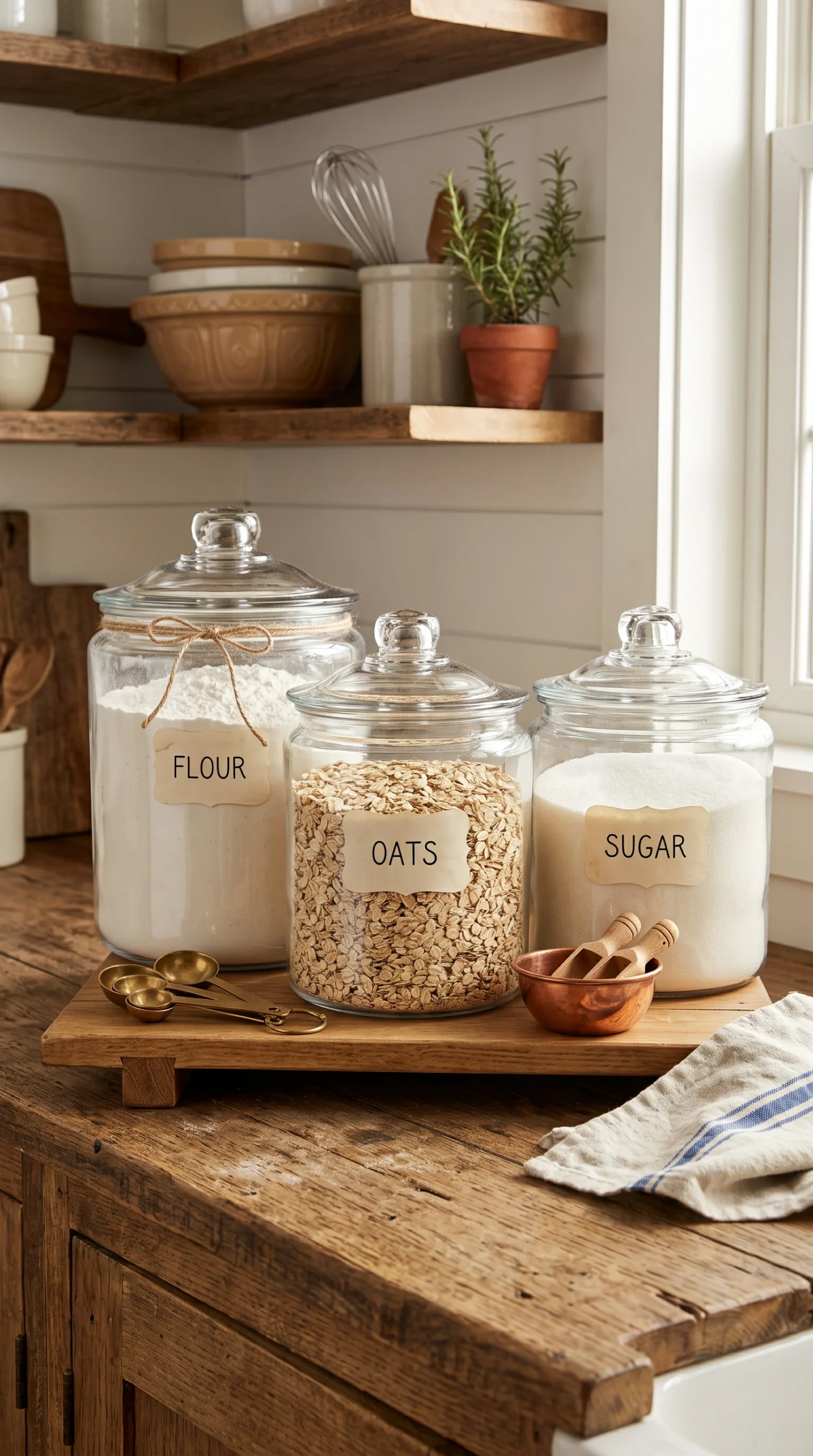
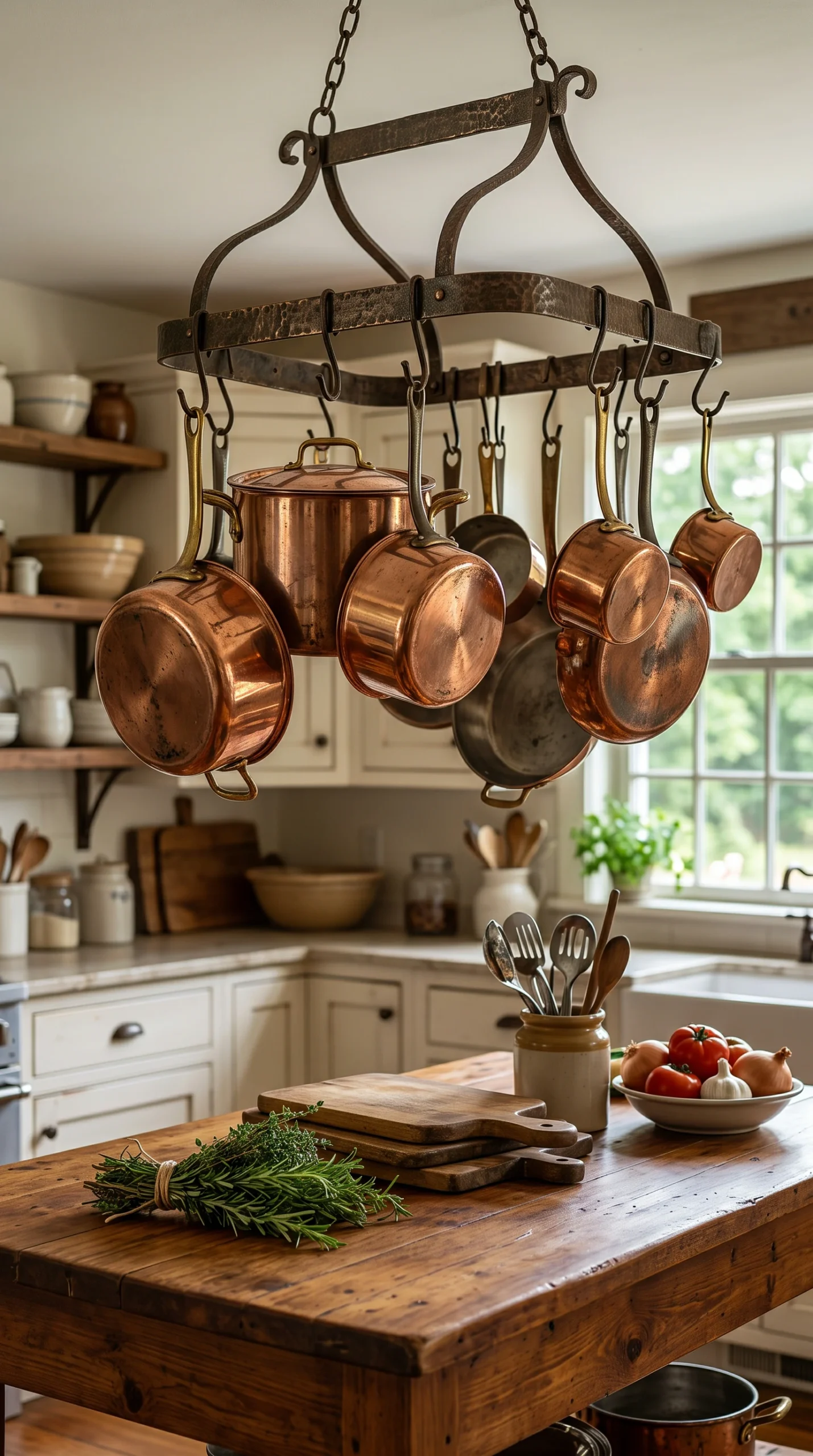
A farmhouse kitchen is a working kitchen. Do not hide everything away in sleek drawers. Leave your wooden spoons in a crock, hang your copper pots, and display your cutting boards. The tools are the decor.
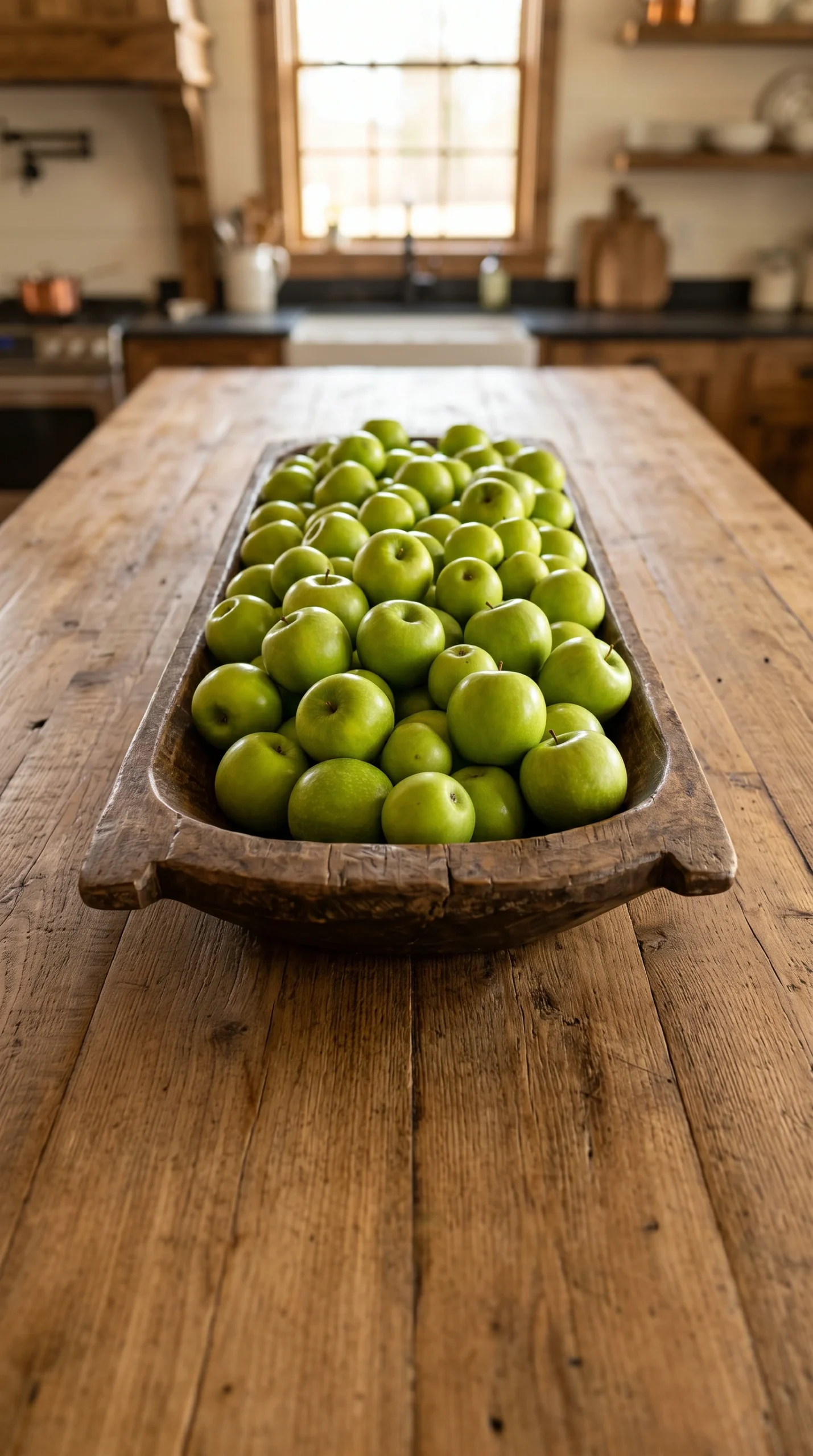
Smooth, perfect surfaces look too modern. Introduce massive rustic texture by layering thick, rough-sawn, reclaimed wood cutting boards or a large, hand-carved wooden dough bowl on the island.
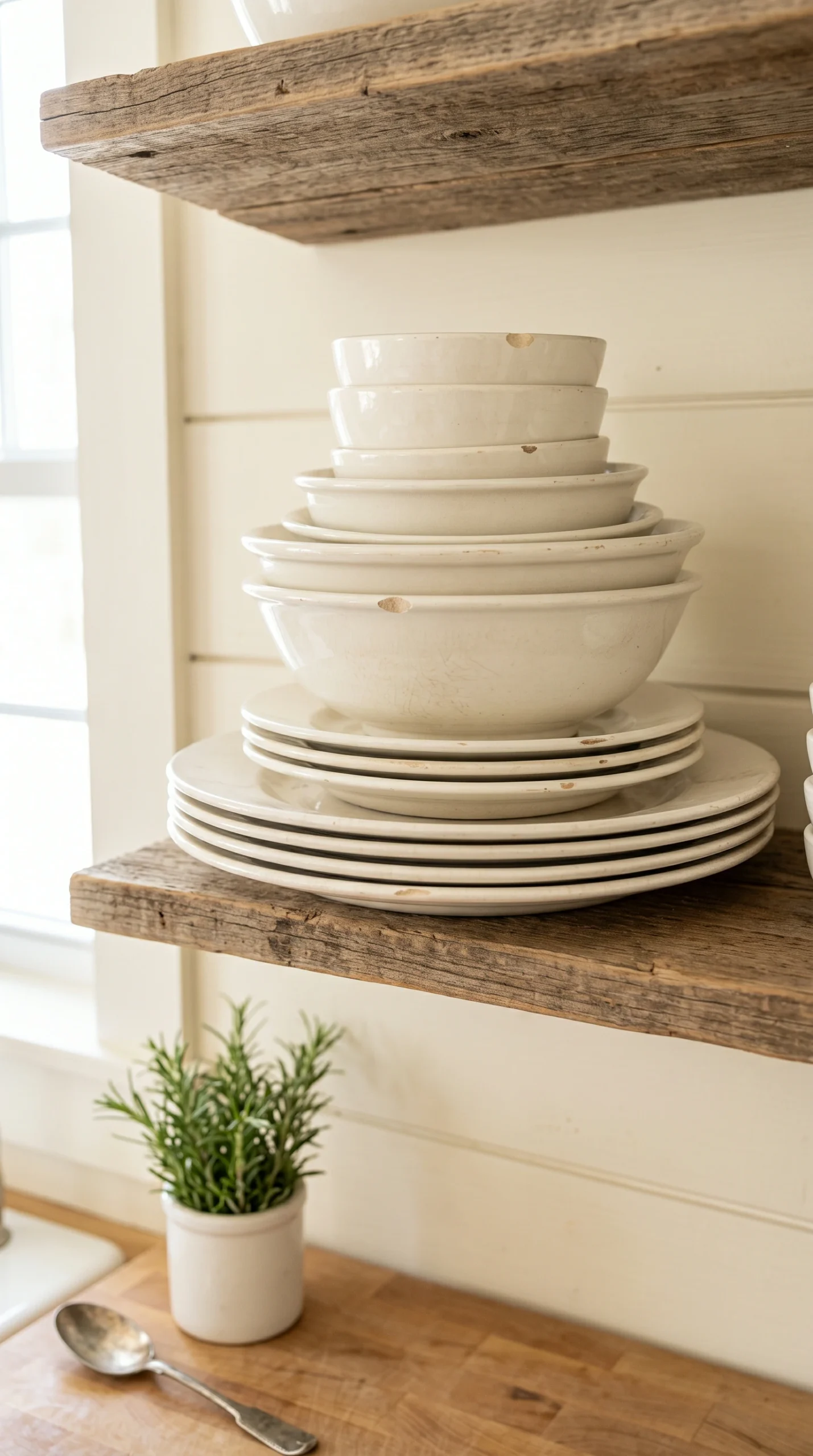
The ultimate farmhouse collectible. Stack heavy, imperfect, vintage white ironstone pitchers, bowls, or plates on open shelves or directly on the counter for bright, historic contrast.
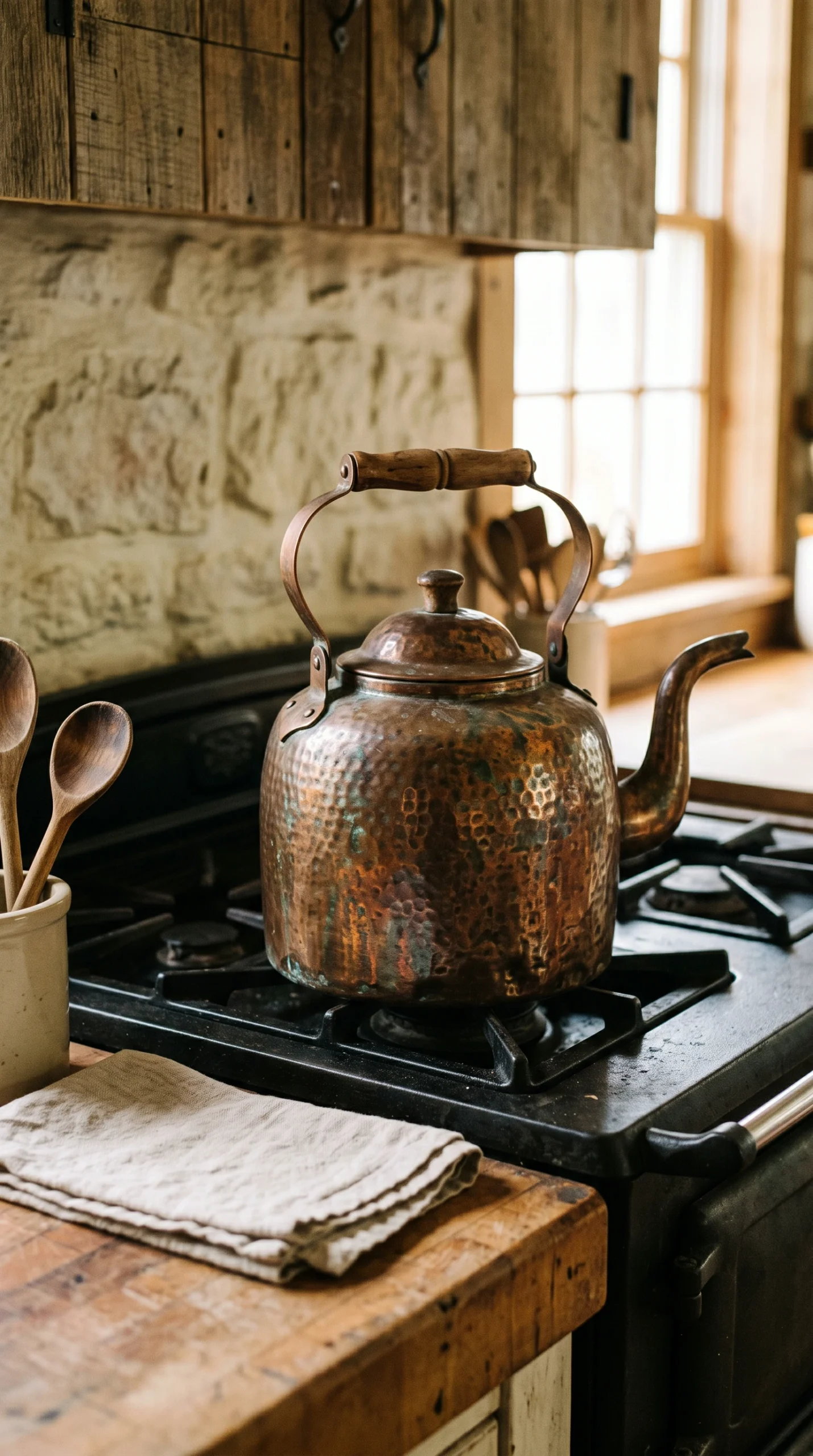
Avoid shiny, polished chrome or pristine gold. Authentic farmhouse charm relies on metals that show their age: unlacquered brass that has darkened, tarnished copper, or matte, heavy wrought iron.
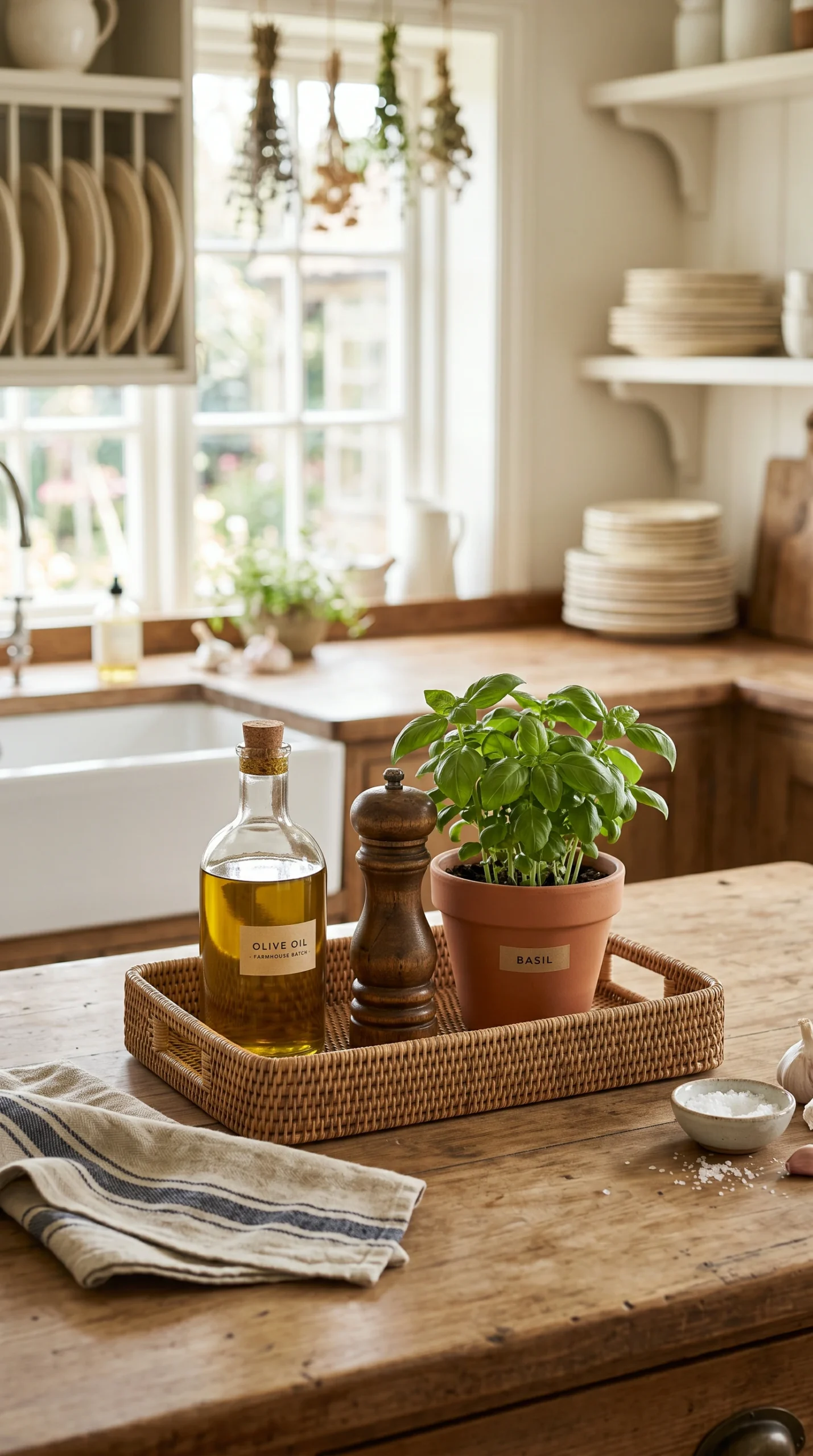
Soften the hard surfaces of the kitchen by introducing woven elements. Use a shallow rattan or wicker basket as a tray to hold fruit, bread, or even to corral your cooking oils.
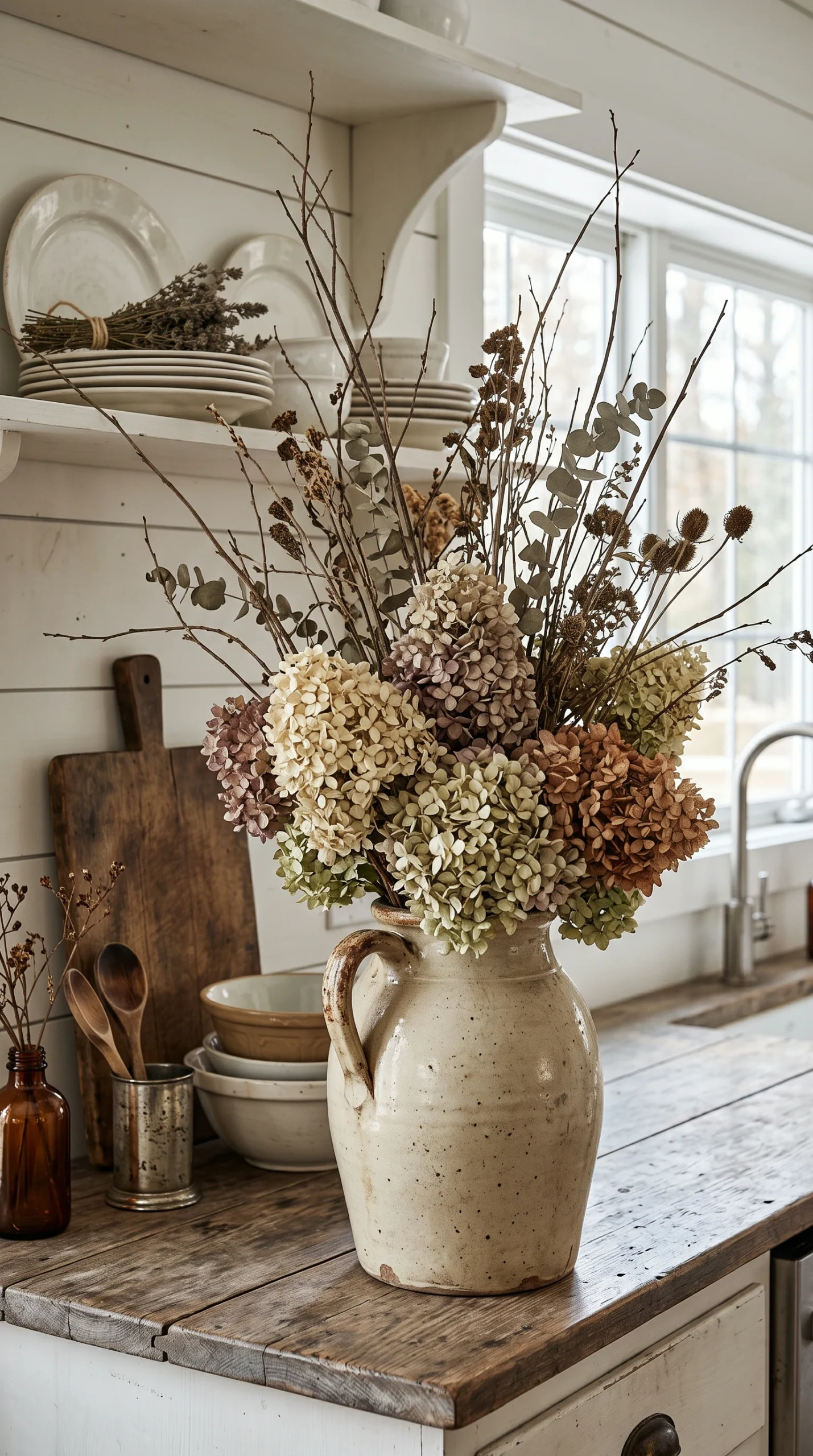
Avoid tight, formal, florist-arranged bouquets. If you bring in nature, use loose, wild, slightly messy arrangements in a vintage pitcher: wild branches, dried hydrangea, or a simple pot of messy, overgrown herbs.
The fundamental philosophy behind farmhouse kitchen counter decor ideas is the celebration of the ‘working kitchen.’ While contemporary design dictates that countertops must remain entirely sterile and empty, farmhouse design embraces the beautiful chaos of daily life. The goal is not a pristine showroom, but a space that looks like a bustling, joyful hub of cooking and gathering. This means that utilitarian objects are proudly displayed rather than relentlessly hidden. A heavy cast-iron Dutch oven left sitting on the stove, a rustic rolling pin resting on the counter, and a massive ceramic crock overflowing with wooden spoons are not considered clutter; they are the essential, authentic decorative elements that define the welcoming, unpretentious farmhouse charm.
Smooth, perfectly manufactured finishes can make a kitchen feel cold. The farmhouse aesthetic requires the friction and history of aged materials. Incorporating massive doses of wood is the most effective strategy within farmhouse kitchen counter decor ideas. Interior designers frequently utilize heavily textured, rough-sawn reclaimed wood. Stacking three or four thick, antique cutting boards against the beadboard backsplash, or placing an enormous, hand-carved wooden ‘dough bowl’ in the center of the kitchen island, instantly grounds the room. These substantial wooden pieces add essential tactile warmth, organic color, and a sense of historic permanence that pristine white quartz or painted cabinets cannot provide on their own.
To balance the heavy, dark textures of reclaimed wood and wrought iron, a farmhouse kitchen requires a specific type of brightness. Crisp, modern white ceramics can look too harsh and new. The most celebrated collectible in farmhouse kitchen counter decor ideas is vintage (or vintage-reproduction) white ironstone. These heavy, durable, slightly creamy-white pitchers, bowls, and platters often feature subtle crazing (tiny cracks in the glaze) and charming imperfections. Grouping a collection of white ironstone pitchers on the counter, or stacking thick ironstone bowls on open shelving, provides beautiful, bright, high-contrast moments that feel entirely historic, authentic, and perfectly suited to the rustic environment.
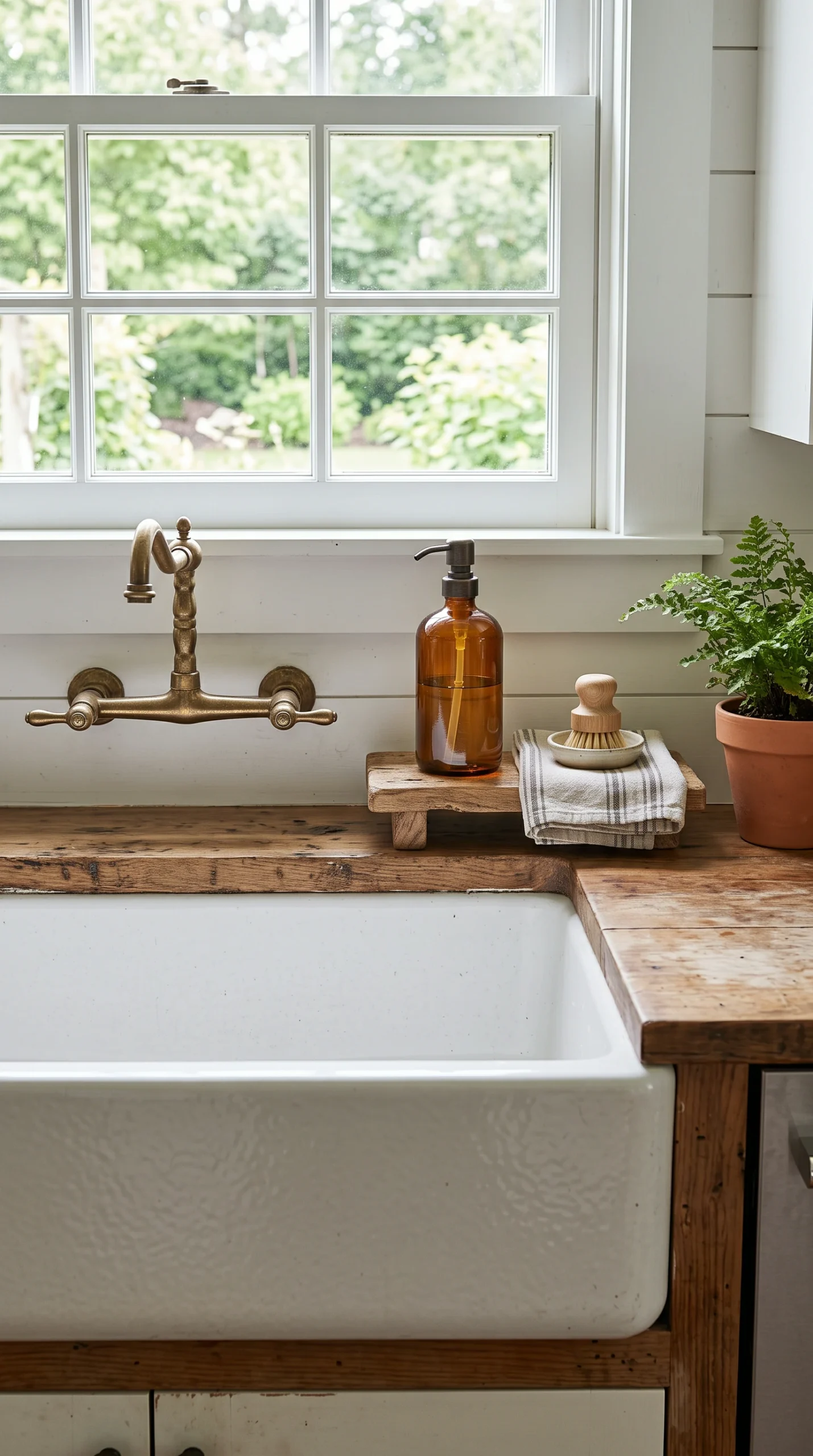
The jewelry of a farmhouse kitchen should never look brand new or perfectly polished. Highly reflective chrome or bright, pristine gold instantly shatters the illusion of historic, country charm. Successful farmhouse kitchen counter decor ideas rely on metals that possess a ‘living finish’metals that age, darken, and tarnish over time. Unlacquered brass that has developed a deep, muddy patina, heavily tarnished copper pots displayed on a rack or counter, or dark, matte, forged wrought iron hardware are essential. These aged metals provide a muted, authentic warmth and a sense of enduring quality, looking as though they have been utilized and loved by generations of cooks.
Kitchens are inherently filled with hard, cold surfaces: stone countertops, tile backsplashes, metal appliances, and wooden cabinets. To achieve the deep coziness required of a farmhouse, it is vital to introduce softer, more forgiving textures. Farmhouse kitchen counter decor ideas frequently employ woven natural materials to achieve this balance. Utilizing a shallow, woven rattan or seagrass basket as a tray to corral cooking oils near the stove, or placing a large, wicker basket on the island to hold a massive pile of fresh apples or onions, introduces essential visual softness. These woven elements add a layer of relaxed, tactile comfort that makes the kitchen feel inviting and deeply livable.
A farmhouse is, by definition, connected to the land, and the decor must reflect this relationship with the outdoors. However, tight, formal, perfectly symmetrical floral arrangements look incredibly out of place. Farmhouse kitchen counter decor ideas demand a more ‘wild’, relaxed, and seemingly foraged approach to nature. Placing a massive, loosely arranged bunch of dried hydrangeas, tall, unruly olive branches, or simple, wild Queen Anne’s lace into a heavy, crazed vintage ironstone pitcher looks spectacularly authentic. Similarly, keeping a slightly overgrown, messy pot of fresh rosemary or basil directly on the counter provides beautiful, unpretentious life and culinary aroma to the hardworking space.