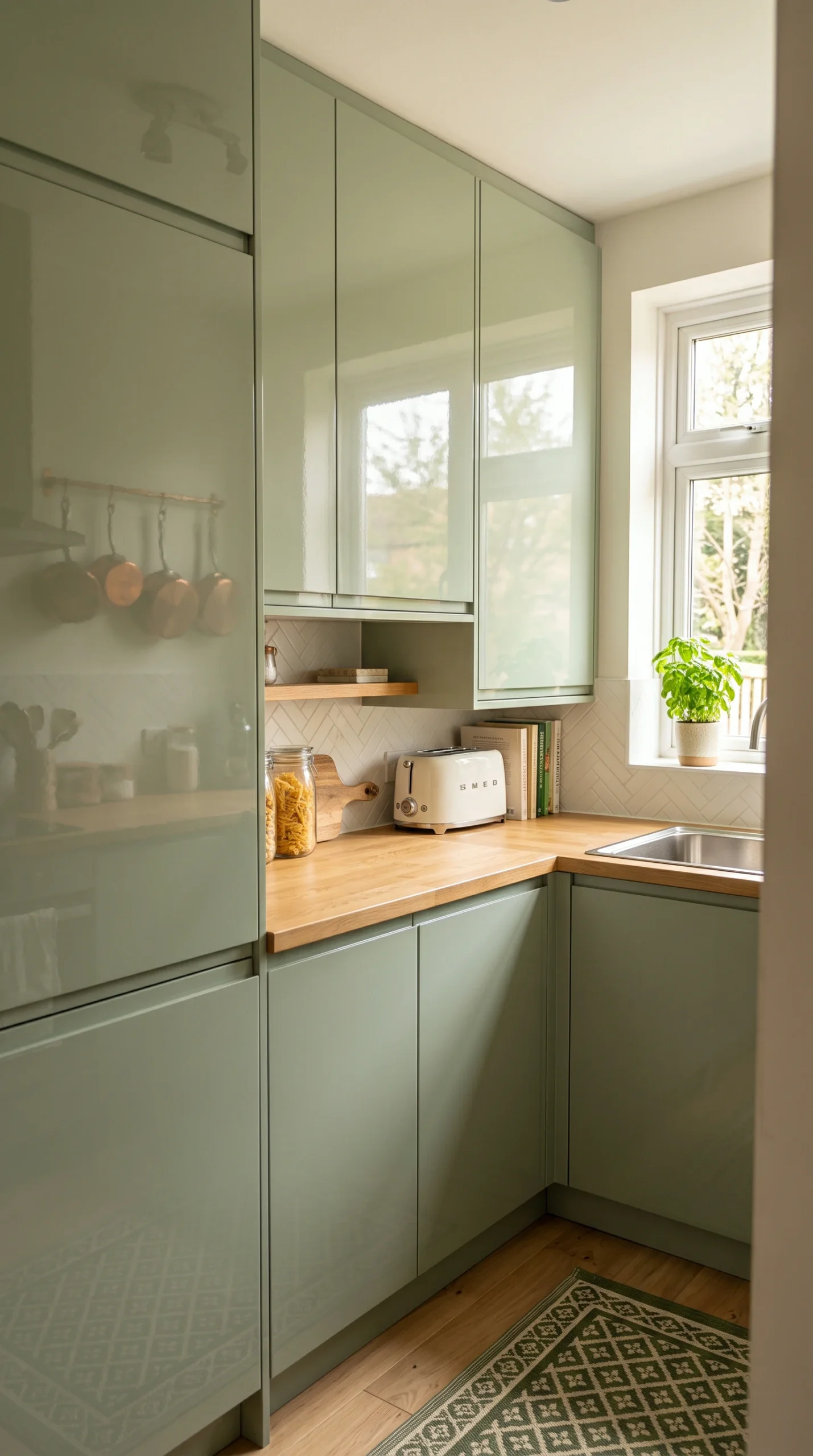
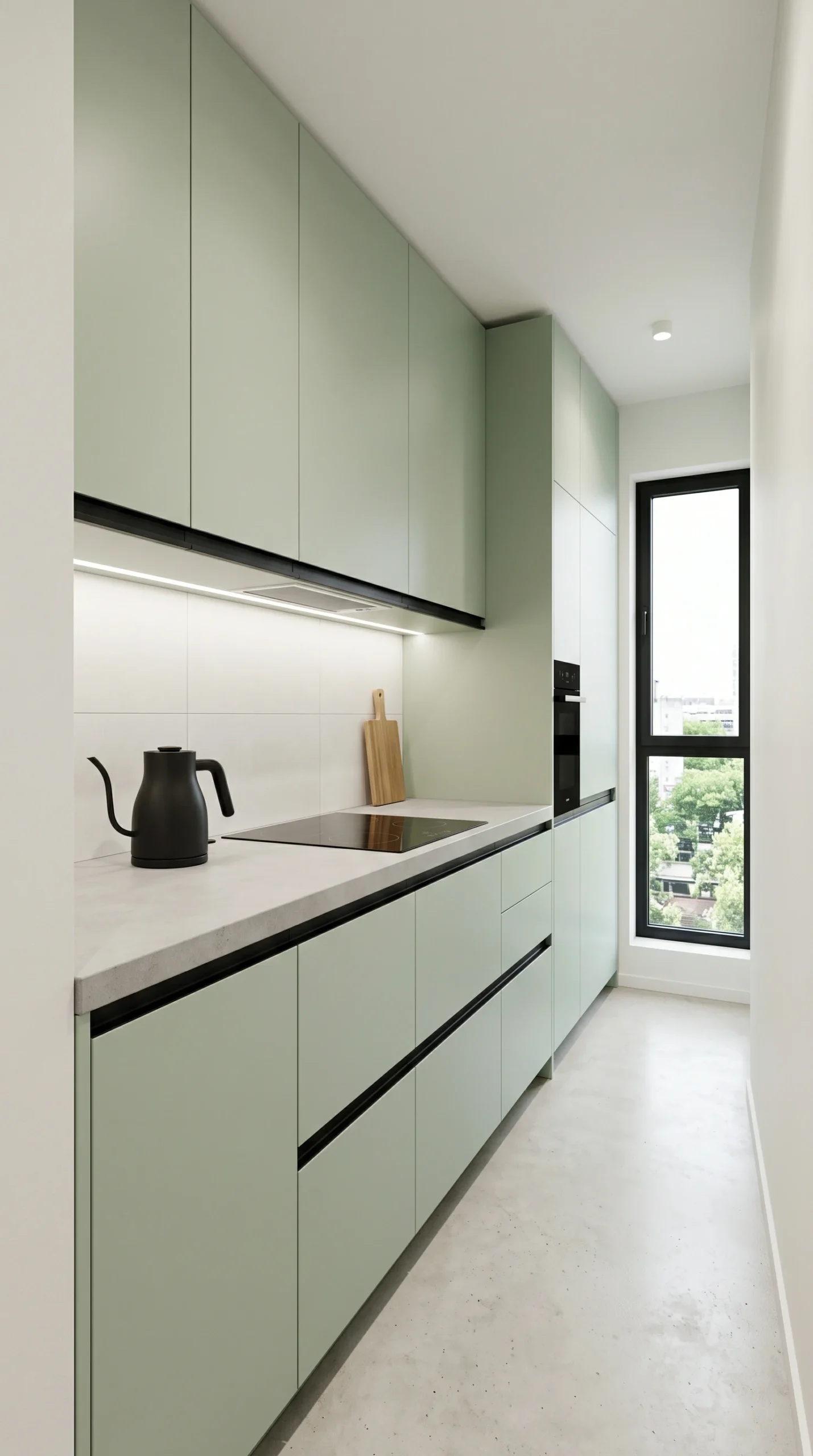
In very small, poorly lit kitchens, avoid deep forest greens. Lean heavily toward pale sage or soft mint greens, as they have a higher Light Reflectance Value (LRV) and bounce light around the room.
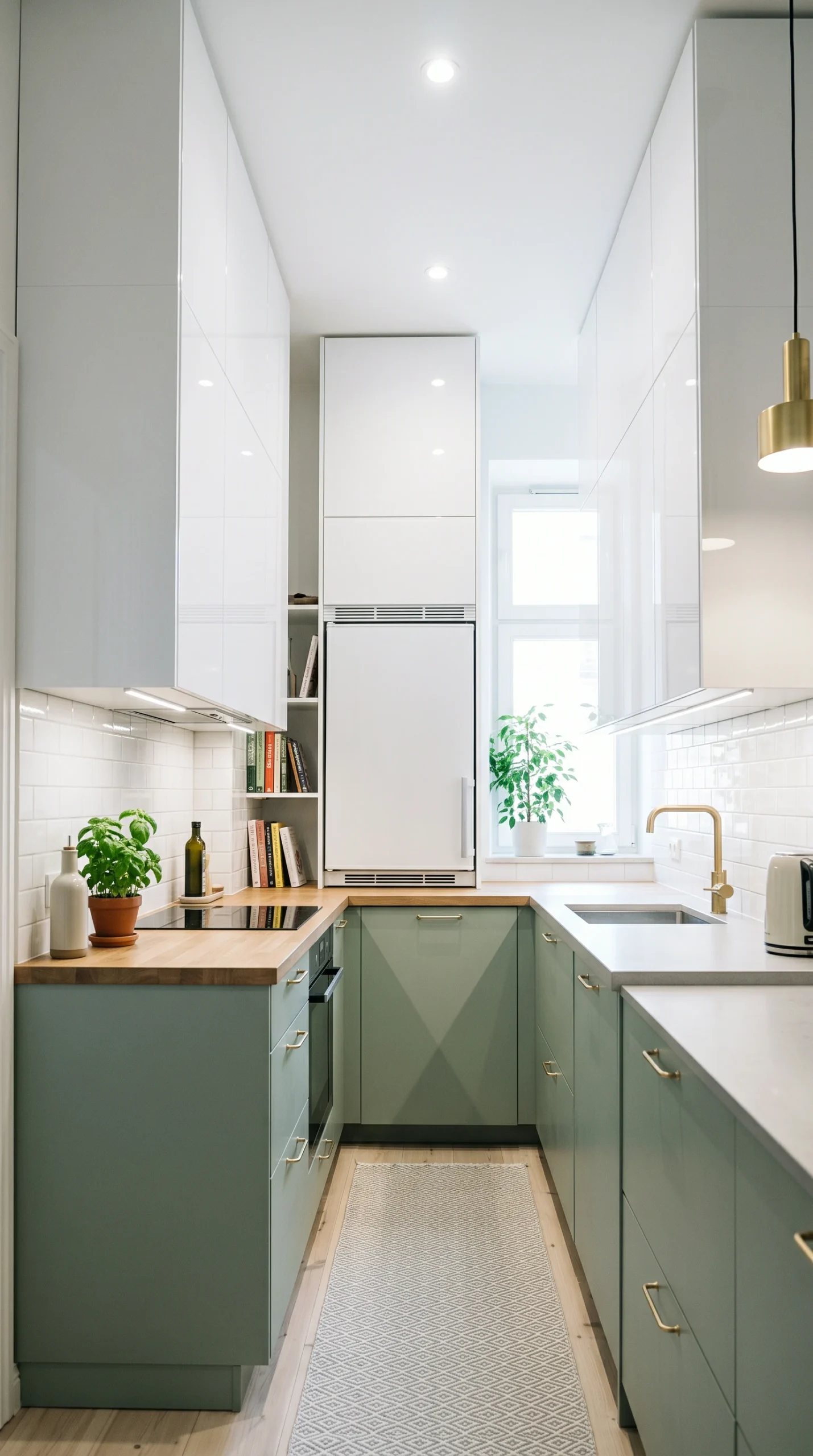
The most effective strategy for a small space is painting only the lower base cabinets green. Keep all the upper cabinets and walls bright white to maintain a completely open, airy upper sightline.
To counteract any light absorption from the green paint, use high-gloss materials elsewhere. A glossy ceramic tile backsplash, a polished quartz counter, and shiny chrome hardware reflect light beautifully.
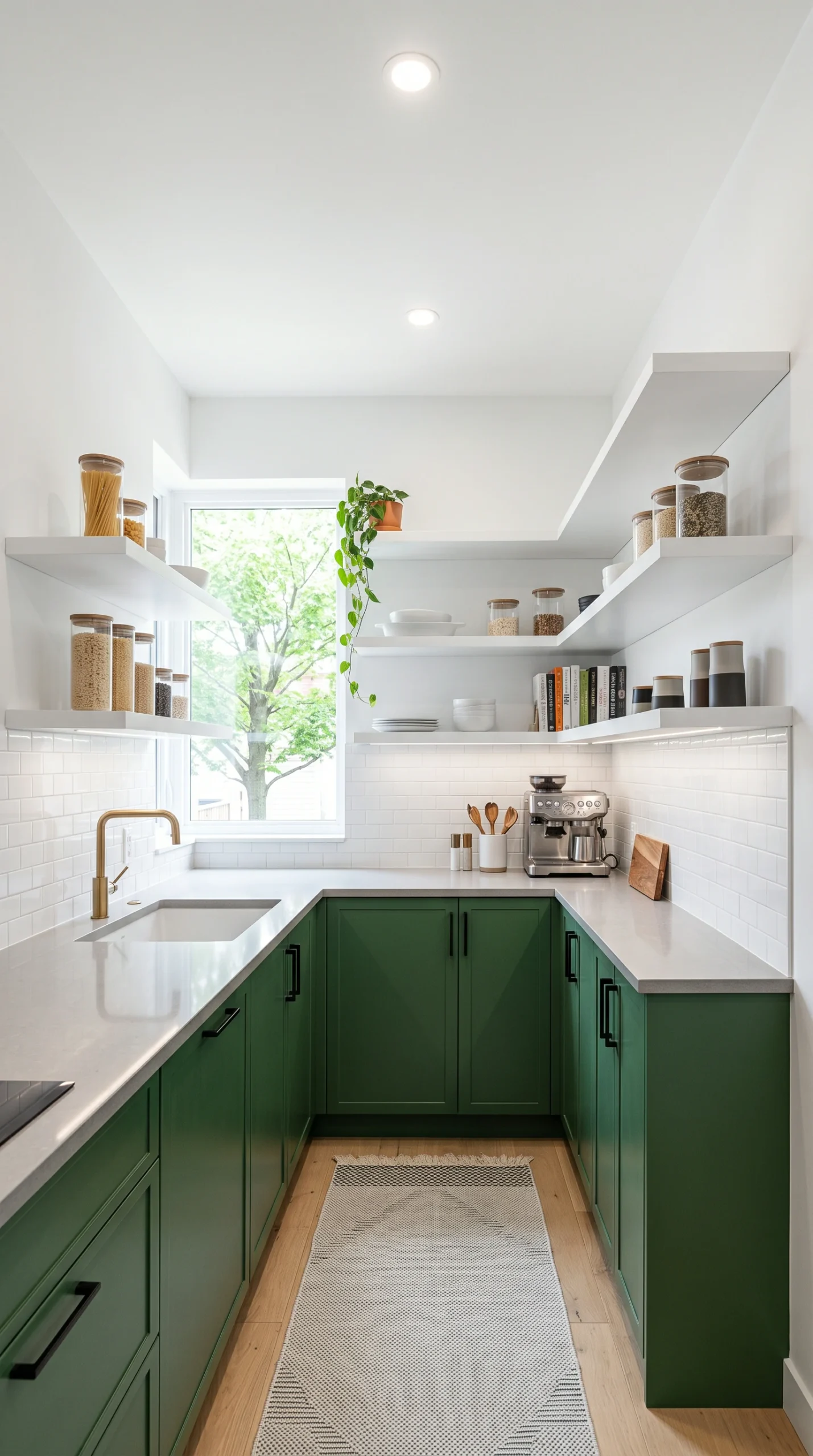
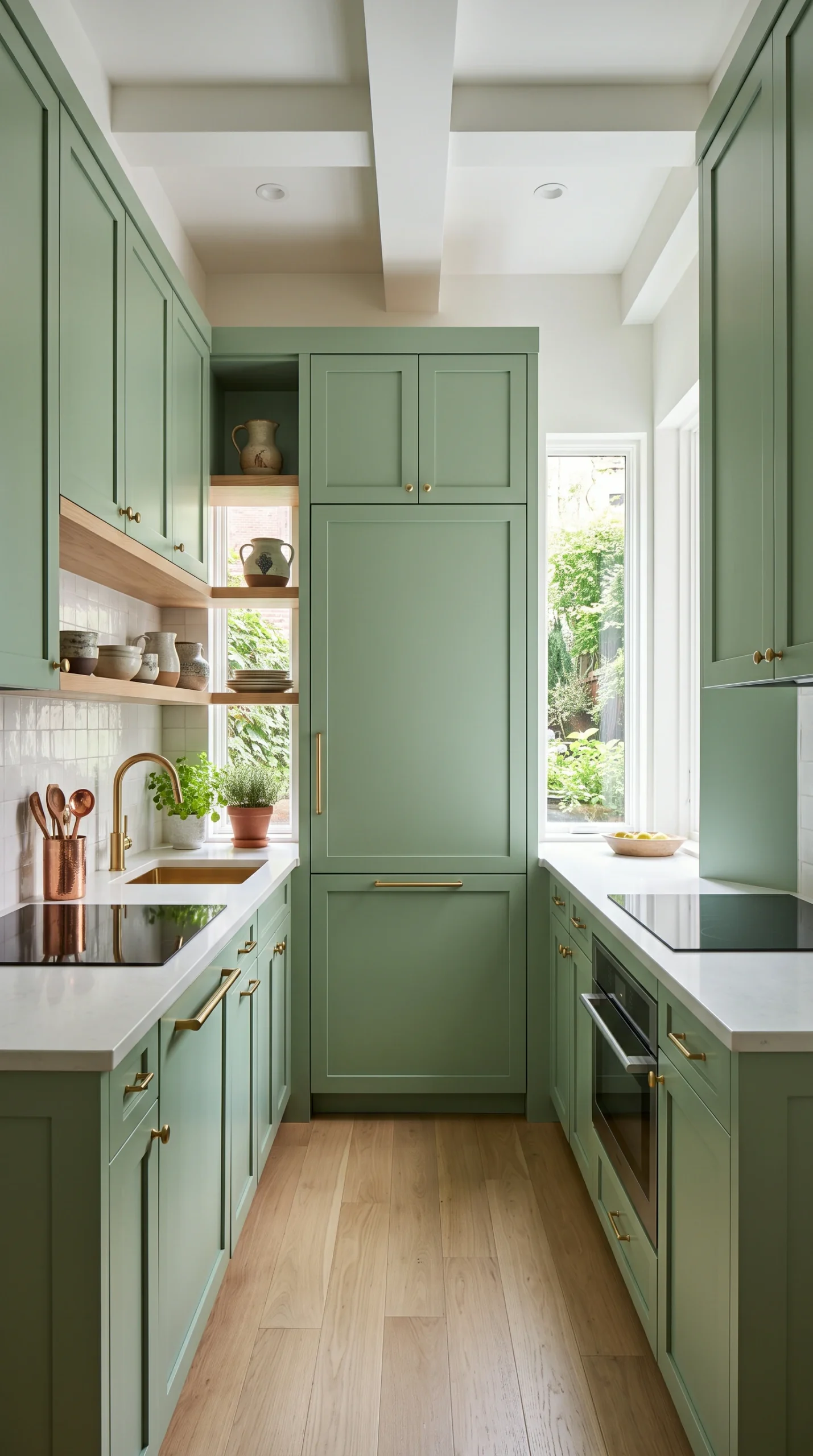
If storage permits, entirely replacing bulky upper cabinets with open floating shelves prevents the small kitchen from feeling 'boxed in' and allows the green base cabinets to shine.
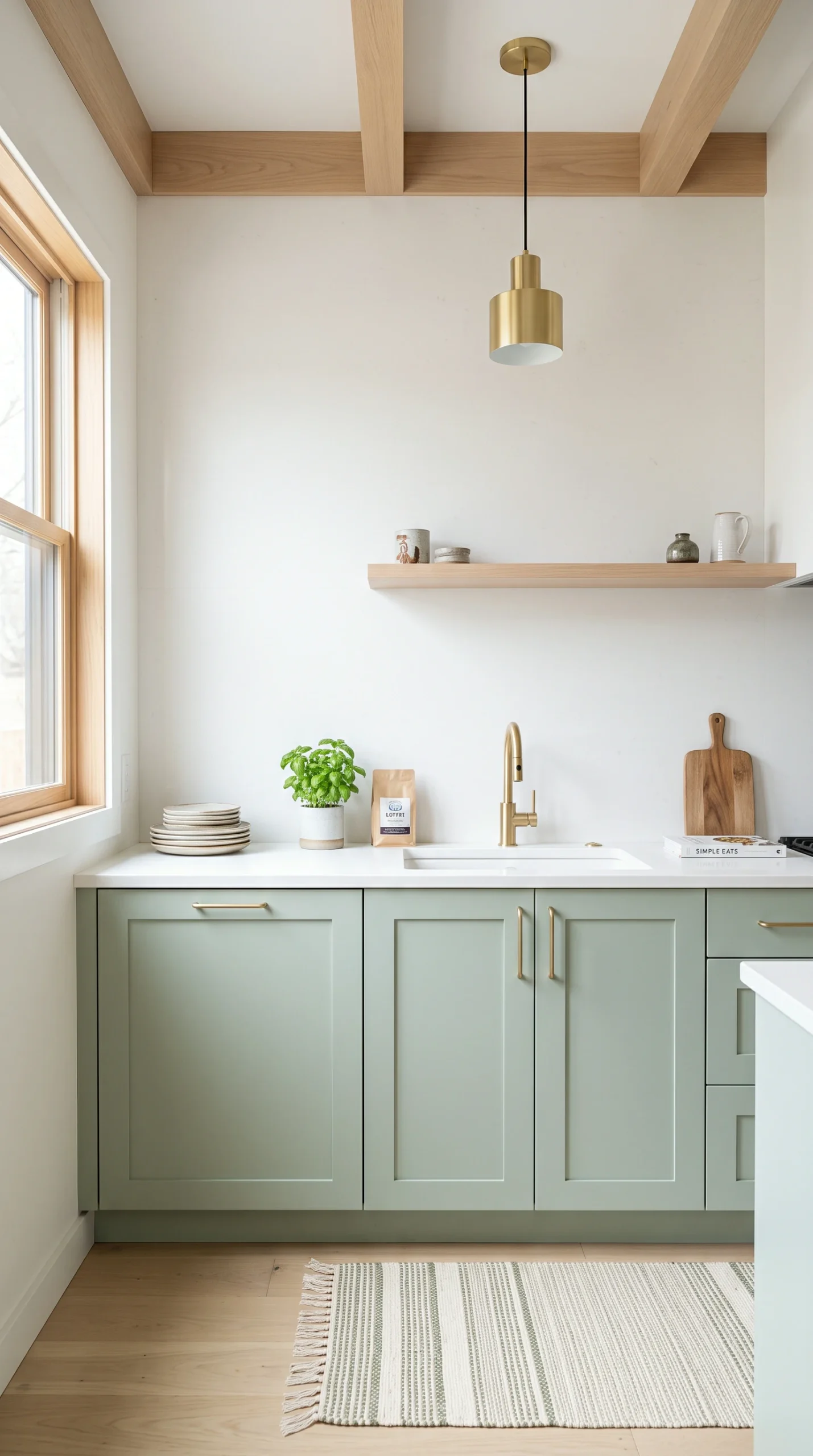
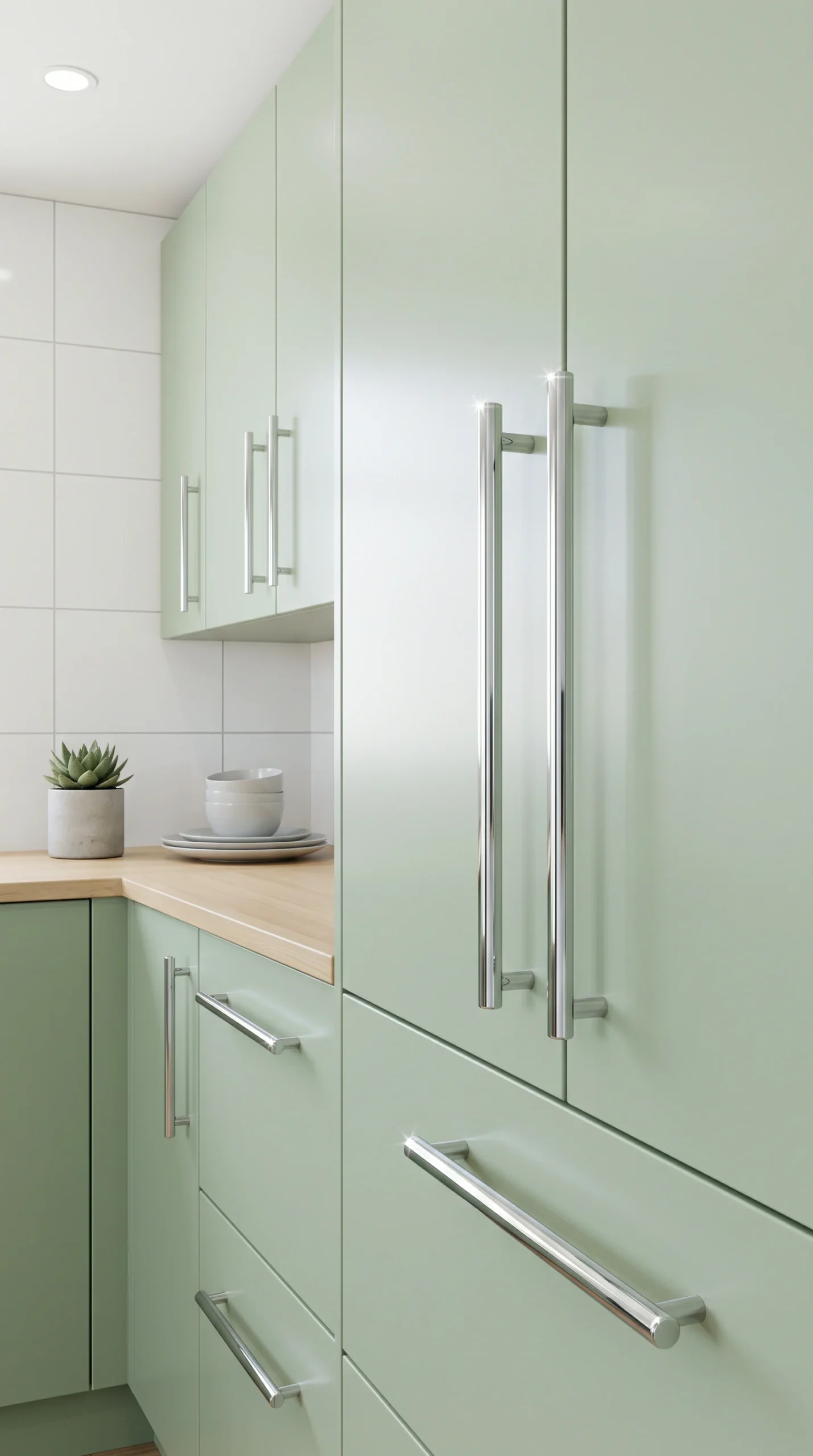
Large, ornate handles add visual clutter to a small space. Use sleek, minimalist edge pulls or small, simple knobs to keep the cabinetry looking clean and unobstructed.
If the kitchen is open to an adjacent living area, run the exact same flooring seamlessly through both spaces. This optical trick makes the small green kitchen feel like an extension of the larger room.
The traditional advice for small spaces has always been a relentless application of stark white paint. While white reflects light, an entirely white, small kitchen can often feel sterile, flat, and devoid of architectural interest. Small kitchen green cabinets ideas challenge this myth by introducing depth. A soft, muted green provides a sense of boundary and character that white lacks. When a color like pale sage is applied to the cabinetry, it draws the eye and creates a deliberate, designed aesthetic. This intentionality often makes a small space feel much more sophisticated and ‘finished’ than a plain white box, transforming a cramped layout into a cozy, charming jewel box of a room.
When selecting a paint color for a compact kitchen, the Light Reflectance Value (LRV) is a critical technical metric. LRV measures how much light a color reflects on a scale from 0 (absolute black) to 100 (pure white). Successful small kitchen green cabinets ideas prioritize greens with a relatively high LRV. A dusty, pale sage or a soft, silvery olive will reflect a significant amount of the kitchen’s natural and artificial light, helping the space feel buoyant. Conversely, a very dark, low-LRV hunter green absorbs light; if used indiscriminately in a tiny room without large windows, it will make the walls feel like they are closing in.
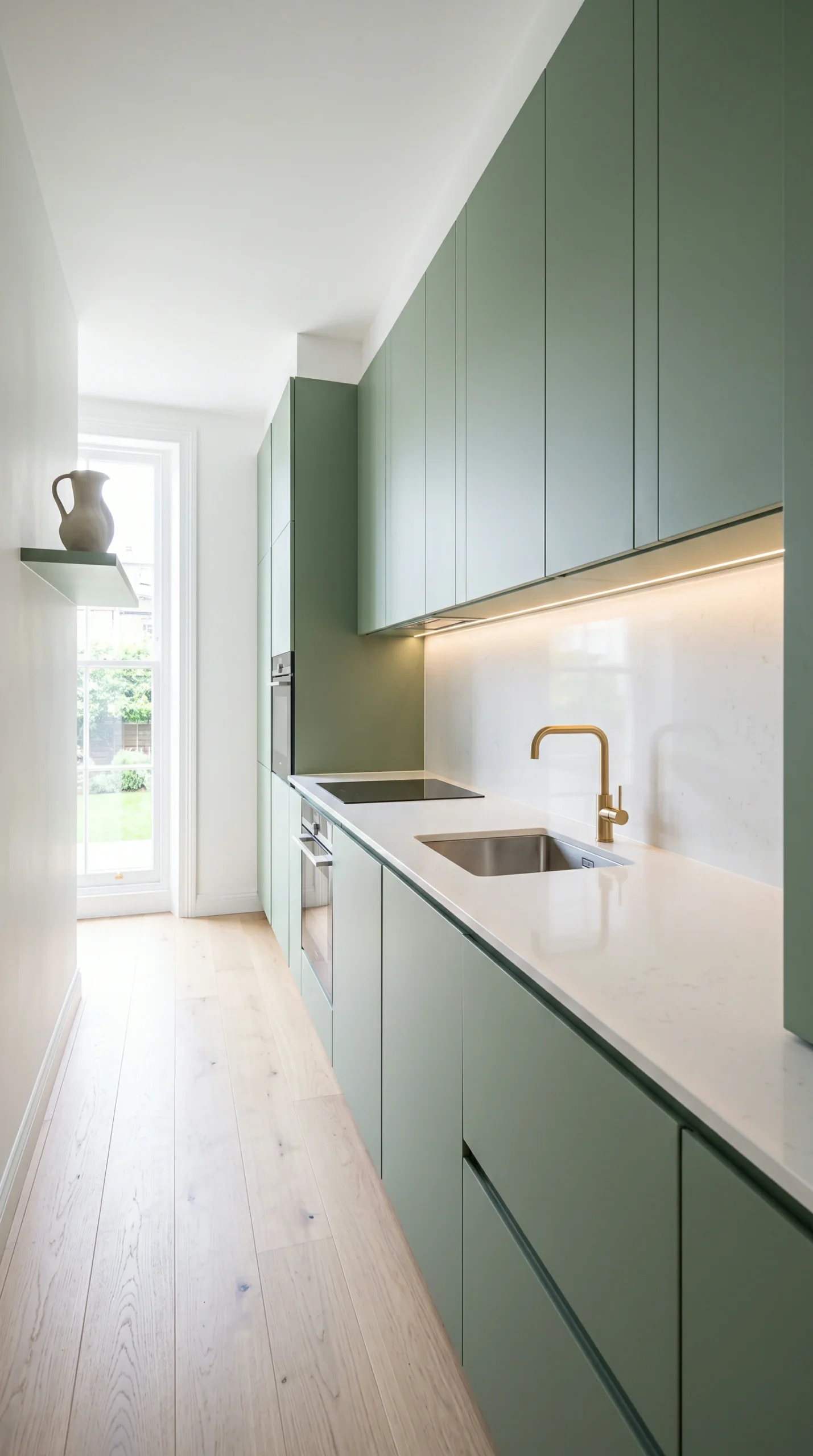
If you are determined to use a darker, moodier green in a small space, the absolute safest and most effective method is the ‘tuxedo’ or two-tone application. By confining the deep green exclusively to the lower base cabinets, you successfully anchor the room with rich color. Crucially, by painting the upper cabinets, the backsplash, and the ceiling a brilliant white, you preserve the visual height of the room. This specific execution of small kitchen green cabinets ideas ensures that the eye level remains completely unburdened and airy, allowing you to enjoy dramatic color without sacrificing the perceived spaciousness of the kitchen.
Because any colored paint absorbs more light than pure white, a small green kitchen must compensate by maximizing reflective surfaces elsewhere. Interior designers frequently employ high-gloss materials to achieve this. Utilizing small kitchen green cabinets ideas alongside a highly polished, brilliant white quartz countertop or a backsplash composed of glossy, glazed ceramic subway tiles acts almost like installing mirrors. These shiny surfaces catch the light from the windows and the under-cabinet LEDs, bouncing it back into the room. This aggressive light reflection counteracts the visual weight of the green cabinets and keeps the tiny space feeling energetic and bright.
In a small kitchen, every visual detail matters immensely. Heavy, ornate, or overly complex cabinet hardware can quickly clutter the visual field, making the tight space feel chaotic. When executing small kitchen green cabinets ideas, it is highly recommended to select sleek, minimalist hardware. Simple, small brushed brass knobs or ultra-discreet, finger-pull edge profiles that sit flush with the top of the drawers keep the lines of the cabinetry clean and unbroken. This minimalist approach allows the beautiful green color to be the primary focus, preventing the tiny kitchen from looking overly ‘busy’ or over-decorated.
Upper cabinets, while necessary for storage, are essentially large boxes protruding into the room at eye level, which can make a small kitchen feel cramped. A highly effective strategy within small kitchen green cabinets ideas is to remove some or all of the upper cabinets and replace them with open floating shelves. Painting the wall behind the shelves a crisp white and installing warm wood or white shelves instantly creates a feeling of depth and openness. While it requires keeping your displayed dishware neat and organized, this sacrifice in concealed storage yields a massive return in making the compact green kitchen feel significantly wider and more breathable.